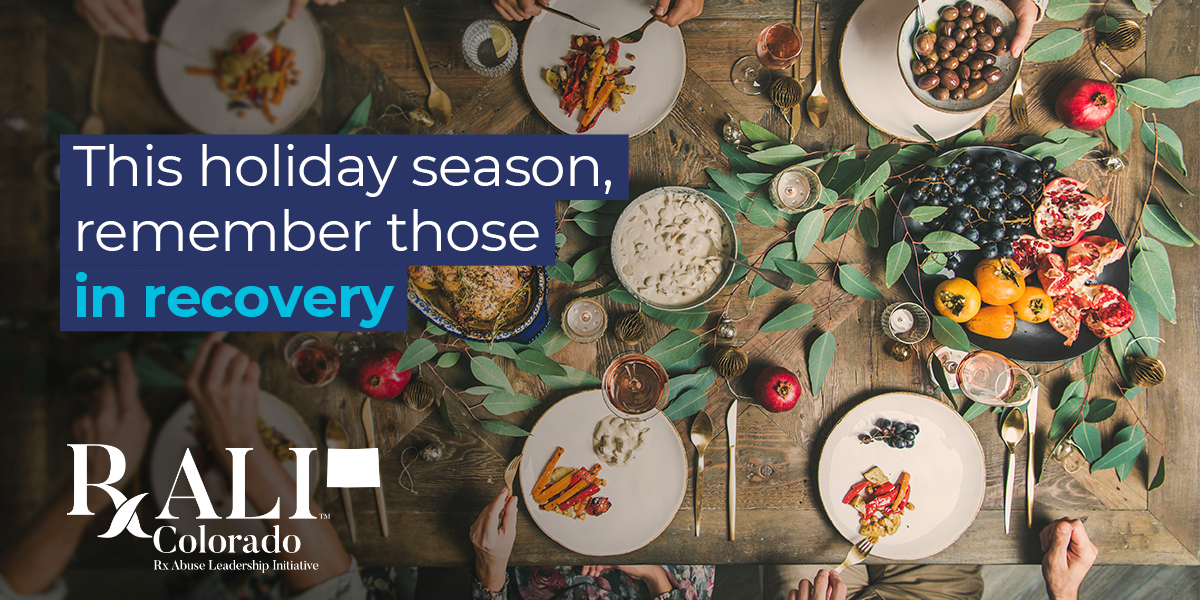
Our Colleagues at RALI Colorado have published some ideas for supporting our loved ones during the holidays (and beyond) |
|
Supporting Loved Ones During the Holidays
After a year and a half of Covid-related lockdowns and restrictions, many of us are looking forward to spending more time with friends and family this holiday season. Many of the holiday traditions that used to be an annual part of our lives will resume this year, even if we have to modify them a little to keep people safe. The holidays can be a time of anticipation, joy, and connection. But there is another side to this season, and one we must keep in mind. The holidays can be a time of stress, anxiety, and worsening mental health, increased risk for those living with mental illness or substance use disorder, and painful grief for those living with the loss of a loved one from these diseases.
Mental Health
For many of us, holidays can be a time of stress, anxiety, and depression. Many factors can make the holidays more stressful than other parts of the year: the increased financial burden of travel and gift-giving, packed holiday schedules with parties and events that interfere with other responsibilities, strained relationships with family members that become more difficult with more family time, pressure to find the perfect gift for a loved one, and loneliness for those who aren’t spending holidays with family or friends, to name a few.
Substance Use Disorders
Grief
Grief can also make the holidays a tough time for some of us. In addition to over a half million deaths from COVID, we continue to lose far too many friends, family members, and neighbors to suicide and overdose. Nearly 50,000 people a year die from suicide, and we are approaching 100,000 deaths a year from overdose. These tragic deaths leave behind loved ones who grieve all year long, but the holidays can be especially painful. For people living with grief, the holidays can be the most difficult time of the year. Time with family and friends can be a reminder of who is missing, and memories of special holiday times with a deceased loved one can sharpen the pain of loss. With so much excitement and cheer around, it can feel inappropriate to express feelings of sadness and loneliness that exacerbated during this time. But it’s important to find ways to let these feelings out.
What Can We Do?
Given that the holidays can be a challenging time for people experiencing stress or anxiety, increased symptoms of mental illness, pressure to use substances, and painful grief, here are five things you can do to manage the challenges of the holidays:
Be aware of your needs and triggers: Put your well-being first. Take time to recognize the specific aspects of the holidays that may be difficult for you, and to the extent possible, limit your exposure to these triggers. Have a plan for handling those situations that cause you stress that you cannot avoid.
Take care of your physical health: Exercising, eating right, and getting enough sleep will help your body handle the increased stress of the season.
Manage your time: Don’t try to do more than you can, and make sure to build in time to care for yourself and relax.
Surround yourself with the right people: While holidays sometimes mean spending time with people who make things harder, focus on spending more of your time with people who support your well-being, don’t add stress to your life, and allow you to express the feelings you need to express
Stay active in therapy, treatment, or self-help: Part of the challenge of the holidays is they sometimes interfere with our normal healthy behaviors, like going to therapy, treatment, or self-help groups that help us manage behavioral health. Make keeping these appointments a top priority.
Conclusion
The holidays can be a time of great joy, but they can also challenge our mental health and recovery from substance use disorder. For people grieving a lost loved one, they can be especially difficult. As we celebrate the opportunities for togetherness that are returning this holiday season, let’s also take steps to protect and improve our well-being.
|
|
Employment Opportunity
Colo Springs
|
|
Resource Development Coordinator
Springs Recovery Connection
|
|
Job details
Salary
$18.24 - $23.72 an hour
Benefits & Perks
Professional development assistance
Job Type
Part-time
Number of hires for this role
1
Qualifications
High school or equivalent (Required)
Microsoft Office: 1 year (Required)
Full Job Description
Resource Development Coordinator
Part-Time (24 hours/week) Non-Exempt $18.24/hour - $23.72/hour DOE
Reports to Director of Resource Development and Communications
Purpose: This individual will support the growth and development of SRC’s fundraising and communication goals. Reports to the Director of Resource Development and Communications
***ALL INTERESTED CANDIDATES MUST SUBMIT BOTH A RESUME AND A COVER LETTER***
ESSENTIAL JOB FUNCTIONS
- Assists with cultivating and managing donors, treatment center and sponsorship relationships.
- Assists with facilitating fundraising campaigns and related events from start to finish.
- Assists with developing and implementing a resource development and communications annual plan.
- Provide ongoing and timely donor recognition and appreciation.
- Assists with training and managing volunteers who help with fundraising initiatives and events.
- Manages donor relations data base with current and potential donors and acknowledges donors.
Will compile and didact donor reports.
- Coordinate materials needed for fund development and donor appeals.
- Supports efforts to create new relationships for SRC such as social enterprises and earned revenue streams.
- Post Donor information (unless requested to remain anonymous) to website
- Support Development of Print Materials for fundraising events and written appeals.
- Duties may include some project management.
- Attend weekly and monthly SRC meetings.
- Other duties as assigned.
EDUCATION
- High school diploma or graduate equivalent degree required.
- Bachelor’s degree preferred.
- Certificate of completion of the Peer Coach Academy within two months of hire date.
OTHER QUALIFICATIONS
- Must be an ally in recovery OR a person with lived experience with substance use disorder. Must have a sustained recovery of 2+ years or more (Subject to the discretion of the CEO).
- 3+ years of relevant work experience with resource development.
- Previous sales experience is preferred.
- 3+ years of experience with CRM, Donor Database or Data Entry preferred.
- Excellent verbal written and communication abilities.
- Must possess knowledge and understanding of Recovery Oriented Systems of Care, Trauma Informed Services and Motivational Interviewing.
- Work well independently and in a team environment.
- Perform job duties and responsibilities in a professional manner at all times and comply with the SRC and AFP Code of Ethics.
- Experience with Constant Contact.
PHYSICAL REQUIREMENTS
- High comfortability with computer-based programs and able to enter and retrieve data utilizing
SRC’s computer system application, printers or other office equipment, ZOOM and telephone.
Job Type: Part-time
Pay: $18.24 - $23.72 per hour
Benefits:
- Professional development assistance
Schedule:
- Day shift
- Monday to Friday
COVID-19 considerations:
We have a COVID process, we encourage masks, and we ensure that people who feel ill at all do not come into work. We operate in a hybrid office model, and we are set up to work remotely if needed.
Ability to commute/relocate:
- Colorado Springs, CO 80904: Reliably commute or planning to relocate before starting work (Preferred)
Education:
- High school or equivalent (Required)
Experience:
- Sales and/or Resource Development: 1 year (Required)
- Microsoft Office: 1 year (Required)
- Sustained Recovery OR an ally in recovery: 2 years (Preferred)
- Constant Contact: 1 year (Preferred)
- CRM, Donor Database or Data Entry: 2 years (Required)
|
|
Embark PCA Recovery Services | 800-604-8978 | 1102 S 21st St | www.embarkpca.com |
|
|
|
|
|
|