The Season of Sensory Learning
Children who are blind or visually impaired learn by touching, listening, smelling, tasting, moving, and using whatever vision they have. Parents can teach their child to use their senses during natural interaction times. The more sensory experiences parents can provide during everyday routines and family occasions, the better. This develops a child’s sensory efficiency, which is one of the domains of the Expanded Core Curriculum.

The holidays are full of sensory experiences. Here are some of our favorites.

  1. Bake sugar cookies with this sensory recipe HERE.
  2. Make cinnamon applesauce ornaments HERE and hang them on your tree.
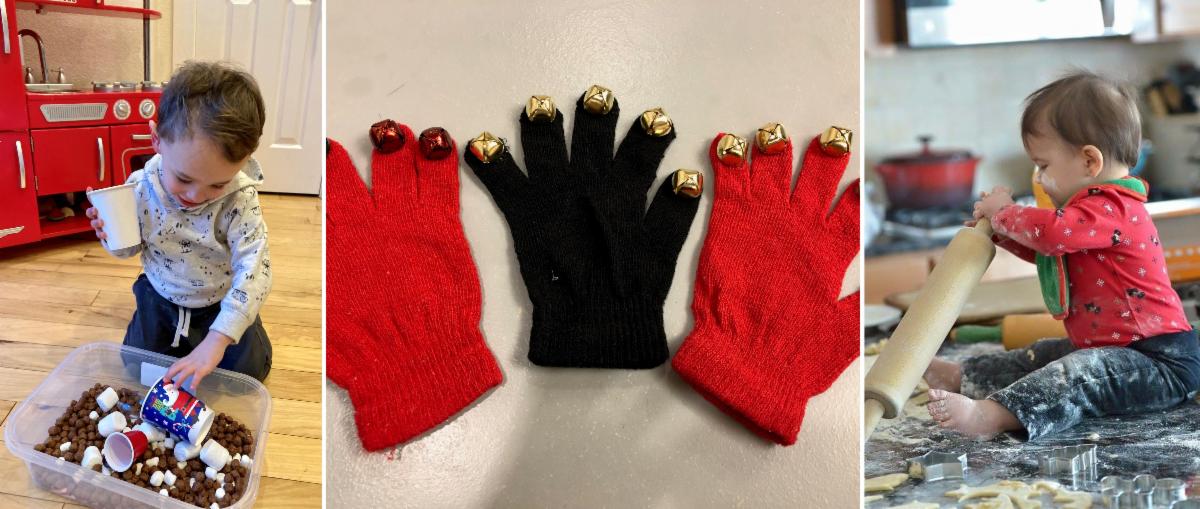
  3. Ring the bells with jingle bell mittens.
  4. Touch the needles of an evergreen tree. Are they pointy? Sticky? Do they have a smell?
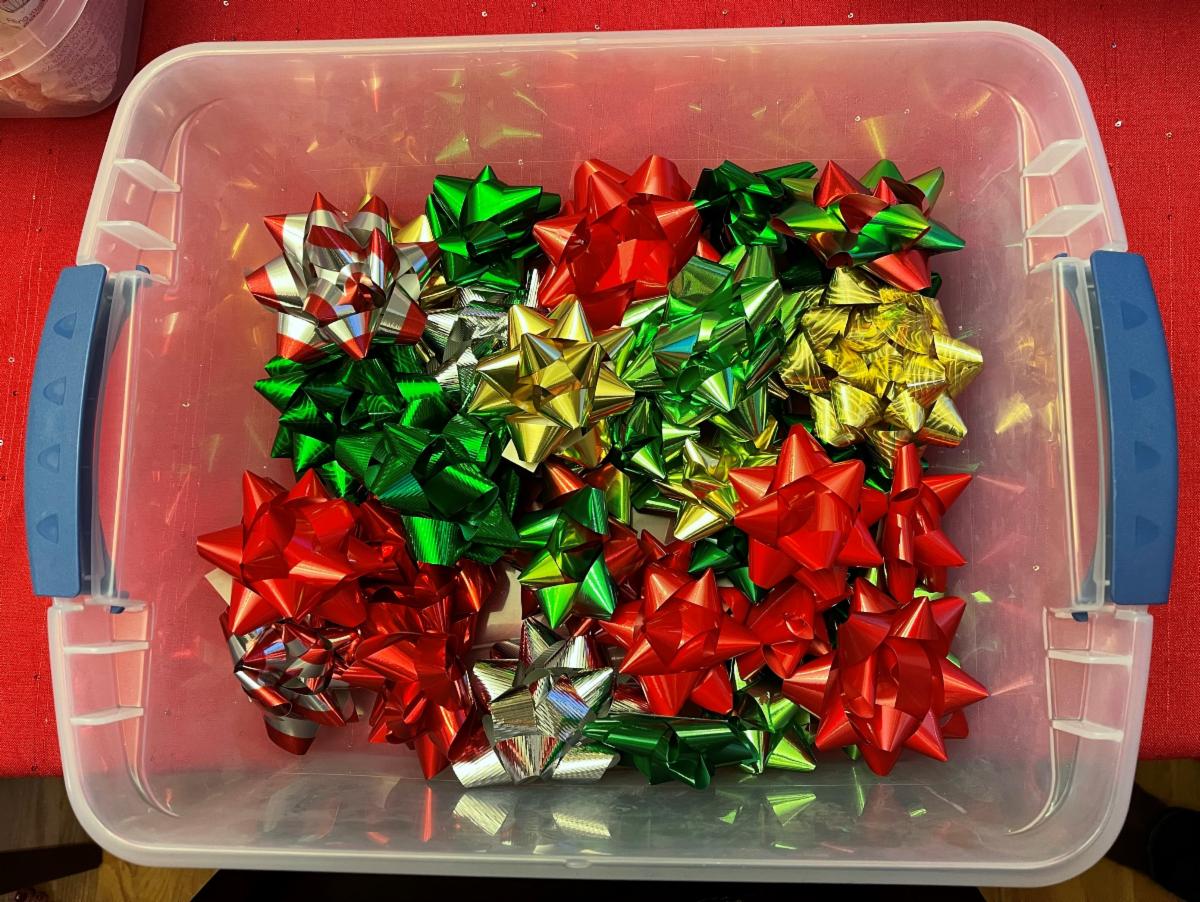
  5. Make a sensory box out of Christmas bows or shredded paper.
  6. Make a hot cocoa sensory box out of Cocoa Puff cereal and marshmallows.
  7. Wrap or unwrap presents. What does the wrapping paper sound like when you cut it, fold it, or crush it?
  8. Sing Christmas carols. What’s your favorite?
  9. Catch snowflakes on your tongue or your hands. What happens to them?
  10. Give a hug to someone special.
NEW! Christmas Tree Bread Sensory Recipe
One of our teachers makes this recipe every Christmas as an appetizer for her holiday party.

Rolling the dough into balls, filling them with cheese, and building a tree shape makes this recipe a tactile experience for the whole family to enjoy. When the bread is warm out of the oven, pull the balls apart from the tree and dunk each one in pizza sauce, Ranch dressing, or your favorite dip. Try the recipe HERE.
It's a Wrap
Now that you’ve done your shopping (hopefully), let your child engage with the items associated with gift giving this season: wrapping paper, gift bags, tissue paper, bows, ribbon, and cards. They offer many opportunities for you and your child to explore using their senses.

Explain what your wrapping paper looks like – is there a theme? Give contextual information that your child may not be able to see.

Encourage your child to touch the different materials. Talk about the different textures and even the sounds they make – the shiny wrapping paper, the crinkly tissue paper, the ridges in the curling ribbon.

Introduce new vocabulary and directional concepts like “in” and “out” with gift bags and boxes. Talk about how you OPEN a present. It’s different than opening a door.

Wrapping gifts also provides lots of great opportunities for your child to build fine motor skills: folding, ripping, cutting with child-size scissors, using a tape dispenser, removing the sticker from the back of a bow, tying ribbons, etc.

Need a last-minute gift or a stocking stuffer? We’ve got the list of perfect sensory toys! We compiled three years of our teachers’ favorites HERE.
Thank You to Our Donors!
Thank you to everyone who donated to A Shared Vision on Colorado Gives Day! These gifts will help us ensure appropriate compensation and support for our teachers and further our impact of identifying and supporting families with young children who are blind or visually impaired.
 
“Our vision teacher has been the number one resource for our child's developmental growth and overall happiness. Vision drives learning, and it's comforting to know we are not alone.” -- Western Slope parent
 
It’s not too late to support A Shared Vision for the 2023 tax season! Remember, your cash gift qualifies for the Colorado Child Care Contribution Tax Credit. Half of your qualifying donation is offset dollar-for-dollar against your Colorado incomes taxes --- 50%! You may also deduct your fully qualifying contribution on your federal income taxes if you itemize deduction
A Shared Vision is a 501(c)(3) nonprofit and the leading provider of in-home and community early intervention vision services in Colorado. We inspire and empower families to nurture the development of their very young children who are blind or visually impaired so that all children may discover their brightest future.
Share this email: