Weekly Digest Number 23 - June 08, 2021 |
|
Federal court orders UP to put BLET officers, member back to work |
|
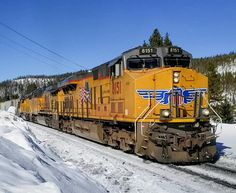
A federal judge in El Paso, Texas has ordered Union Pacific Railroad (UP) to reverse the unlawful suspensions of a group of six members of the Brotherhood of Locomotive Engineers and Trainmen (BLET) — five of whom are elected officers of Division 192 in El Paso.
The judge ruled that all these union members had been wrongfully suspended by the UP in violation of the Railway Labor Act (RLA). UP had suspended these union members for a physical altercation at a private union meeting that was off-duty and completely off company premises.
On June 2, the U.S. District Court for the Western District of Texas, El Paso Division, issued a Temporary Restraining Order (TRO) to halt Union Pacific’s unjust suspension of the union officers, and the member, and condemned UP for its illegal interference in union activities. The court order further prohibits the railroad from spying on union activities.
“The TRO is in the public interest because the public has a strong interest in vindicating the RLA’s public policy permitting employees to organize, choose their own representatives and bargain collectively free from interference, influence, or coercion by carriers,” the Court wrote.
The court further determined that UP’s suspension of the employees “... sends a clear message that the Carrier is willing to violate the law to coerce employees in their choice of representatives.”
|
|
STB chairman critical of Wall Street influence on railroads, questions need for mergers |
|
The chairman of the Surface Transportation Board says he’s concerned that pressure from Wall Street is undermining railroad service and questioned the need for major railroad mergers.
“Our mandate as an agency … is to ensure and protect a strong national rail network. That’s why we exist. And everything we do should be aimed at that outcome,” STB Chairman Martin Oberman told an investor webcast this week.
The influence of Wall Street — including the push for ever-lower operating ratios and aggressive share buyback programs — conflicts with the board’s mandate, he says.
“There’s been a huge decrease in the level of the workforce over the last few years, I think something like 25%. I am concerned it has left the Class I’s with too little cushion to respond to a major crisis like the pandemic or the [polar] vortex, which is more likely to keep coming around. So we are keeping a close watch on the situation,” Oberman told an investor conference last week.
|
|
Tell Congress: REJECT Bigger, Heavier Trucks!
|
|
Right now -- even before any future infrastructure plans are public -- high-priced lobbyists are swarming Capitol Hill. They’re pressing hard to allow longer, heavier and more dangerous trucks onto our nation’s Interstate highways. These bigger trucks would dump more than 50 million tons of carbon emissions into our environment.
These behind the scenes efforts to allow dangerous, gas-guzzling, road-crushing behemoths -- trucks weighing 91,000 pounds and Double 33 foot trailer trucks -- onto our highways must be nipped in the bud.
The key legislative decision-makers on this issue need to hear from you immediately.
|
|
Analysis: Can railroads ever tap the potential of watershed traffic? |
|
Intermodal is having a moment in the sun thanks to the impact of the pandemic. Consumers are buying goods faster than retailers can refill their shelves and warehouses, so imports are surging and ports are clogged. Parcel shipments are soaring as a decade’s worth of e-commerce growth was crammed into the past year. April brought a new record for U.S. intermodal volume, and railroads have struggled to handle the onslaught of containers and trailers.
This is a good problem to have. But sooner or later things will settle into a new normal. What then? Intermodal growth was slowing before volume peaked in 2018. The U.S. Class I systems have pruned interline service since then, dropping steel-wheel connections between hundreds of city pairs in the name of simplicity.
Today’s North American intermodal network is all spine and no ribs, as intermodal analyst Larry Gross likes to say. In fact, three-quarters of all intermodal traffic moves in just 10 lanes, with Los Angeles and New Jersey to Chicago by far the busiest. So, where can railroads turn to put meat on the bones of the intermodal network?
Intermodal veteran Ted Prince — who is equal parts intermodal visionary, champion, and critic — is brimming with ideas. The easy business has already migrated to the railroads, he says, but intermodal’s potential is far greater than what moves on rails today.
|
|
New blood at Wall Street’s old guard rattles Corporate America |
|
A new generation of executives at the world’s biggest asset managers is helping drive an uprising against Corporate America that environmental and social justice activists have long campaigned for.
The big mutual fund firms, whose stock holdings amount to trillions of dollars, used to be loyal members of the corporate establishment. They cast their votes at shareholder meetings largely as instructed by the management of companies in their portfolios, on issues ranging from CEO pay to carbon emission reporting. They rarely discussed their decisions publicly.
This year marks a sea change as top funds throw more of their weight behind investor challenges to companies on environmental, social and governance (ESG) issues and put companies on notice by often choosing to publicize how and why they voted, a Reuters review of voting results and fund firms’ new disclosures shows.
Among major companies that lost votes this year was railroad operator Union Pacific Corp, whose board was rebuked by 86% of shareholder votes cast that backed a call to disclose diversity information about its workforce. A Union Pacific spokeswoman said it will soon release the workforce details sought by investors.
|
|
EDITOR'S NOTE: Here is one example of a union that pressures a company BEFORE bargaining by building coalitions, educating and involving members and creating community demands for safety.
|
|
Gearing Up for Bargaining, Canadian Union Pushes for a Greener, Better Postal Service |
|
With its contracts expiring in 2022, the Canadian Union of Postal Workers is stepping up the fight for its own vision of the post office of the future.
It’s a model for exactly the kind of Green New Deal campaign that U.S. unions should be launching now for a post-Covid economic recovery.
For several years, CUPW and its allies have proposed a visionary plan called Delivering Community Power. It advances a big but simple idea: take Canada Post, an institution that’s already publicly owned and embedded in communities, and reinvent it to drive a just transition into a post-carbon economy.
The origins of the plan go back nearly a decade to CUPW’s defense against austerity measures that aimed to privatize the postal service and crush its union.
What will it take to win? The union’s campaign for DCP has emphasized coalitions with the public, especially environmentalists—but also building support in the union’s own rank and file.
“We focused on trying to mobilize the membership, going work floor to work floor all across the country,” said former CUPW staff organizer James Hutt. “For me, just seeing the network of leaders that was built across the country was phenomenal.”
CUPW tried to advance DCP demands in bargaining during 2018. As negotiations stalled, postal workers carried out rolling strikes; that November, the Canadian government passed legislation to force strikers back to work. Arbitration began in January 2019 and lasted nearly 500 days until June 2020. The DCP campaign slowed down.
But now CUPW is gearing up for a new round of negotiations next year. Brahm Enslin, the DCP campaign coordinator for the western Prairie region, says the union is trying to spread its public message far and wide.
“[T]here is a plan to hit it from different angles, whether that’s advertising, through worker interaction, conversations through our labor groups, labor affiliates,” he said. The campaign is also trying to win endorsements from municipalities and provincial and federal parties.
|
|
Virginians for High Speed Rail host Virtual Transportation Town Hall Series |
|
On June 15, 2021 at 1 PM, Virginians for High Speed Rail hosts a virtual Town Hall with Federal Railroad Administration acting Administrator Amit Bose who will discuss the Biden Administration's vision for rail. It's going to be a great event!
|
|
Fight ongoing to keep Union Pacific in Palestine |
|
Palestine and Anderson County are continuing their fight to keep Union Pacific in town.
Earlier this year, Federal Court Judge Jeremy Kernodle ruled in favor of Union Pacific, citing that state law can be preempted if it has the effect of unreasonably burdening or interfering with rail transportation and determined that Union Pacific presented substantial, undisputed evidence to that effect.
“By requiring the railroad perpetually to maintain office and shop employees in Palestine, despite the railroad's need to adapt in a competitive and rapidly changing market, the agreement substantially interferes with and burdens Union Pacific's facilities related to the movement of passengers or property," the ruling stated.
The city of Palestine and Anderson County filed a motion for a new trial, which was also denied and from that date of denial, they have 30 days to file an appeal to the Fifth Circuit Court of Federal Appeals with regard to Kernodle.
“We’re confident that the 1954 contract will be enforced by the original court of jurisdiction,” said County Judge Robert Johnston.
|
|
Investors wonder why CSX would buy a trucking company. Here's an answer from management. |
|
CSX Corp.’s acquisition of Tampa-based Quality Carriers will allow the railroad to better connect with its customers, CEO Jim Foote said Thursday, driving more chemical shipments to the railroad.
Speaking at the Bernstein Strategic Decisions Conference, Foote was asked why the railroad would buy a trucking company, which brings with it an impact on the company’s operating ratio: CSX’s operating ratio — a measure of efficiency — is one of the best in the industry, and adding the trucking company to its financials will worsen it.
"Can you talk about the rationale for buying a trucking business?" asked Sanford C. Bernstein & Co. Senior Analyst David Vernon. "I'm just sort of giving you the question, as I've gotten it for some investors: Why buy a trucking business when you got to a 60 OR in the railroad business?"
The operating ratio hit is just optics, the railroad CEO said, while bringing the trucking firm in house will increase cash flow and help the railroad provide a better service.
“It's much more strategic than just saying ‘I want to be in the trucking business,’” Foote said. “It's all about combining the two services to create a better service that sells well in the marketplace.”
|
|
Illinois DOT seeks input for statewide rail study |
|
The Illinois Department of Transportation (IDOT) is inviting the public to comment and offer suggestions on a new study assessing the state's rail system.
The goal of the study is to seek input on current conditions, capacity concerns and safety challenges to help identify potential improvements and solutions.
Comments will be collected through June 14 via illinoisrailneeds.org.
The public input will be used to help draft a statewide rail plan, a requirement of states seeking federal funding under the Passenger Rail Investment and Improvement Act, IDOT officials said in a press release.
Illinois is the only state in which all seven Class Is operate. Illinois has more than 10,000 miles of track and an extensive passenger-rail network, with Amtrak connecting 30 communities statewide and Metra operating 11 lines in the Chicago area.
|
|
Is Amtrak’s 2035 Map Riding on the Surf Board? |
|
Whether or not Amtrak’s expansion plans end up going very far is the ultimate issue now before the Surface Transportation Board (STB), in a case concerning Amtrak’s proposed restoration of Gulf Coast service, which would consist of two trains in each direction between New Orleans and Mobile.
Amtrak filed a petition before the Board on March 16 (Docket No. FD-36496), under statutory authority of 49 U.S.C. §24308(e), which allows Amtrak to ask for STB intervention to establish a new route or a new train if the potential host railroad does not provide for such operation. As we reported, Amtrak argued that CSX and NS refused to do their part to get the new service going.
In Railway Age’s first report on this initiative, posted Feb. 26 and headlined New Orleans – Mobile Amtrak Service in Development, Executive Editor Marybeth Luczak speculated: “The proposed service may serve as a test case for how the STB handles future intercity passenger rail proposals involving Amtrak, state entities and host freight railroads, when reaching an agreement proves problematic.” In reality, that speculation may prove to be an understatement, as the matter now at issue is looking more like a hard-fought litigation than an effort at mediation overseen by the Board.
|
|
North American Rail Supply and China:
Why We Should Be Concerned
|
|
China, specifically CRRC (China Rail Rolling Stock Corp.), is a clear and present danger to the health of the North American rail and rail supply industry, and the thousands of people who rely on it for their livelihoods and high standard of living. That is a very bold statement, but here is why I now believe it to be true:
China covets our standard of living, and to elevate 1.4 billion people to our level requires big plans with ambitious goals. The country views our markets as wide open and available for their growth.
CRRC is a huge, $30 billion SOE (state-owned enterprise) with 163,000 employees, focused on the design and manufacture of passenger/transit and freight rail components and rolling stock. It has directed its focus to global growth in support of China’s doctrine to project China’s influence and to keep its people employed.
|
|
Union Pacific Ignores Employees - Rewards Shareholders |
|
Union Pacific Corporation, one of the leading railroad companies in the United States, is making an all-out effort to reward its shareholders. Earlier this month, the company announced a 10% hike in its quarterly dividend to reach $1.07 per share (annually: $4.28 per share).
More recently, Union Pacific, currently carrying a Zacks Rank #3 (Hold), entered into accelerated buyback programs (ASRs) for $2 billion of its shares of common stock. Notably, 7.2 million shares of common stock bought back under the accelerated authorizations were received by the railroad operator on May 26, 2021.
Notably, Union Pacific anticipates share repurchases worth of roughly $6 billion in 2021. Additionally, the company expects a dividend payout ratio in the 40-45% (of earnings) band for the ongoing year. Its strong free cash flow generating abilities are supporting its shareholder-friendly activities.
|
|
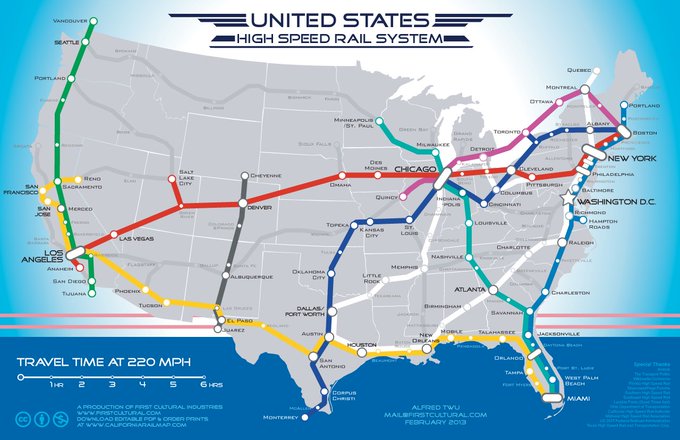
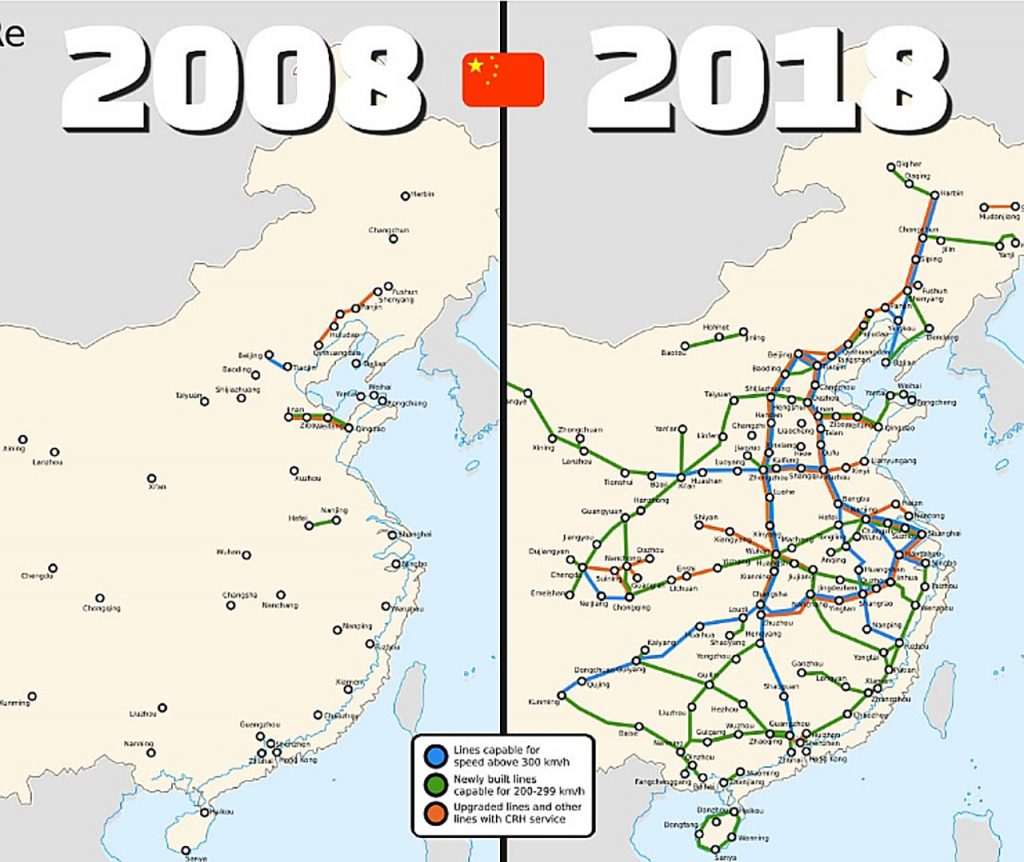
When President Eisenhower created the Interstate Highway System, the United States was in desperate need of new transportation infrastructure to meet the 20th-century economy. Four generations later, the United States’ infrastructure again needs an upgrade and modernization to meet the needs of a high-tech, globalized 21st-century economy.
This is a once-in-a-generation opportunity to build a New Interstate System. One for the next century: the Interstate High-Speed Rail System. The original Interstate Highway System revolutionized travel in the United States, but the nation is overdue for another mobility revolution. This is why the High Speed Rail Alliance supports the vision for a New Interstate of high-speed electric rail lines. Now is the time for President Biden and Congress to pass policies and funding mechanisms that support high-speed rail development projects at all levels of government and to connect U.S. towns and cities like never before.
Just as the Interstate Highway System connected communities across the country and supported new transportation needs, the New Interstate high-speed rail system will transform travel while easing congestion on our roads and at our airports. It will shorten trips and bring communities closer than ever. Thousands of jobs will be created to produce, design, build, and operate the New Interstate high-speed rail system. Long-term investment will flow from the newly created economic opportunities made possible by the connectivity which high-speed rail facilitates.
|
|
|
|
|
|
|