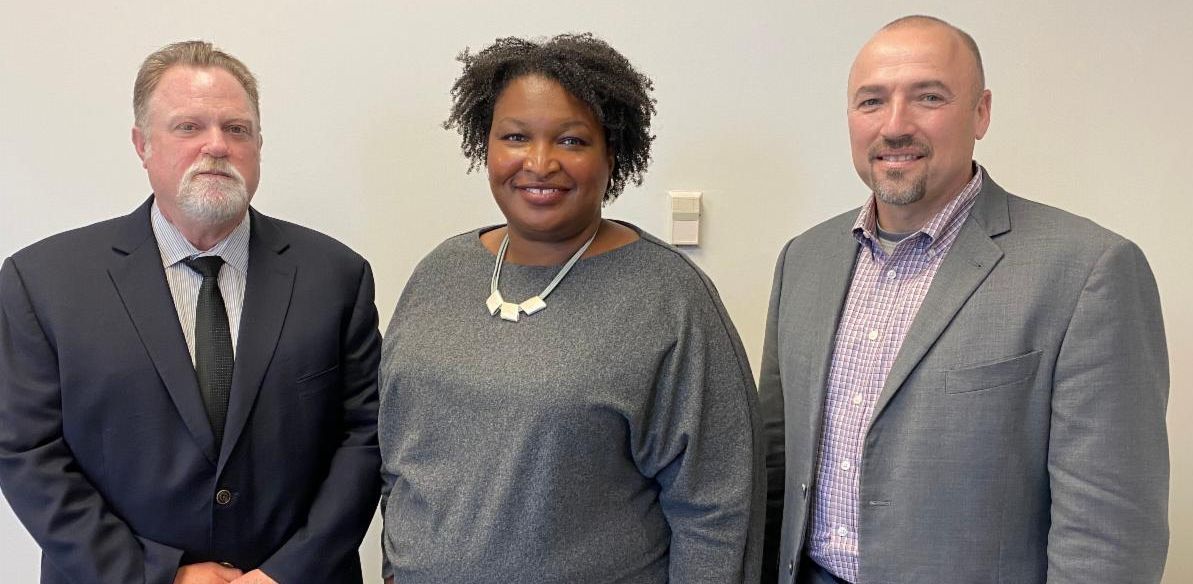
Council EST and political director discuss labor issues with Georgia gubernatorial candidate Stacey Abrams |
|
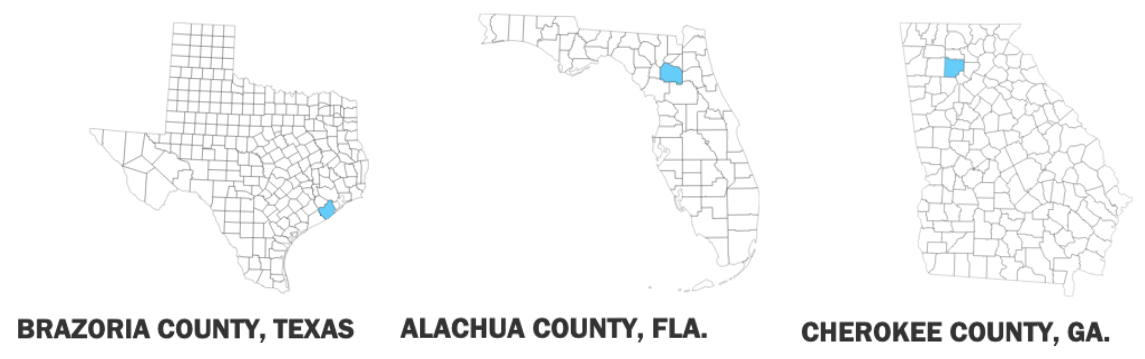
In a meeting with Georgia gubernatorial candidate Stacey Abrams on Jan. 31, SSMRC leaders discussed labor issues including visa-program abuses, project labor agreements, and tax and workers’ compensation fraud by unscrupulous contractors. “She knew about every one of those topics,” said Wayne Jennings, SSMRC executive secretary treasurer, who met with Abrams along with Rick Halford, SSMRC political director. “She shared great concern for the labor issues we also have concerns over.”
If elected, Abrams said she would use the tools of the governor’s office to fight poor work practices. Abrams served in the Georgia House of Representatives for 11 years and narrowly lost the governor’s race in 2018. Read more about the meeting here. |
|
Council staff meet with Alabama politicians, industry leaders |
|
Three SSMRC representatives discussed the benefits of our workforce with Alabama political and industry leaders during the Manufacture Alabama Annual Legislative Reception and Dinner held in Montgomery Jan. 11.
“Many people were interested in the SSMRC, and it was one of the best meetings we’ve ever been to in terms of contractors, owners, and politicians of importance to the industries we serve being under one roof,” said Jeff Smith, director of the SSMRC's Central Region. Read more about the event here. |
|
Tennessee voters will decide whether to add falsely named 'right-to-work' amendment to state constitution |
|
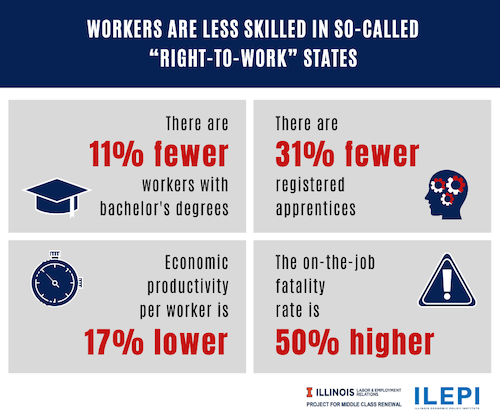
In November of this year, members who live in Tennessee will have the opportunity to vote on a proposed amendment – Amendment No. 1 – that would add a falsely named “right-to-work” clause to the state constitution. Watch the video above to hear SSMRC Political Director Rick Halford explain how the amendment would hurt working families. Click here to read Halford's message. Read more about the effects of right-to-work laws below. |
|
Study reveals so-called ‘right-to-work’ states have worse economic, health, social, civic outcomes |
|
During an eight-year period of U.S. economic expansion following the 2008 recession, the 27 states with so-called “right-to-work” laws experienced slower economic growth, lower wages, higher consumer debt, worse health outcomes, and lower levels of civic participation than states without those laws, according to a study released last year by the Illinois Economic Policy Institute and the Project for Middle Class Renewal at the University of Illinois at Urbana-Champaign.
“For years, anti-union zealots have presented so-called ‘right-to-work’ laws as a panacea to growing the economy,” said study co-author Frank Manzo IV. “Yet surveys of CEOs say ‘right-to-work’ has little effect on business relocation decisions, and the data shows that so-called ‘right-to-work’ states are performing substantially worse than their peers on wages, growth, poverty, and other core economic outcomes.” Learn more about the study here. |
|
President signs executive order requiring union agreements on large federal construction projects |
|
President Joe Biden signed an executive order Feb. 4 requiring project labor agreements on federal construction projects that cost more than $35 million. Project labor agreements are collective bargaining agreements between building trade unions and contractors that determine wages, employment conditions, and dispute-resolution processes. Biden signed the order at the hiring hall of Ironworkers Local 5 in Maryland.
“The executive order I’m going to sign today is going to help ensure that we build a better America, we build it right, and we build it on time, and we build it cheaper than it would have been otherwise,” Biden said, adding that the order will “ensure that major projects are handled by well-trained, well-prepared, highly skilled workers.” Read more here. |
|
Southeast Carpenters help pass law clamping down on contractor non-payment of workers’ compensation premiums |
|
A law enacted in Tennessee last year with the help of the Southeast Carpenters Regional Council will make it tougher for unethical contractors to get away with not paying workers' compensation insurance premiums.
As in many other states, the Tennessee construction industry suffers from contractors and labor brokers cheating on workers’ compensation premiums. As a result, cheating contractors underbid law-abiding competitors. The new law "revises and rearranges certain provisions governing construction services providers, the penalties for noncompliance of insurance requirements, and the exemption from having workers' compensation insurance," according to a summary. Read more here. |
|
Georgia bill would help protect workers from misclassification, loss of benefits |
|
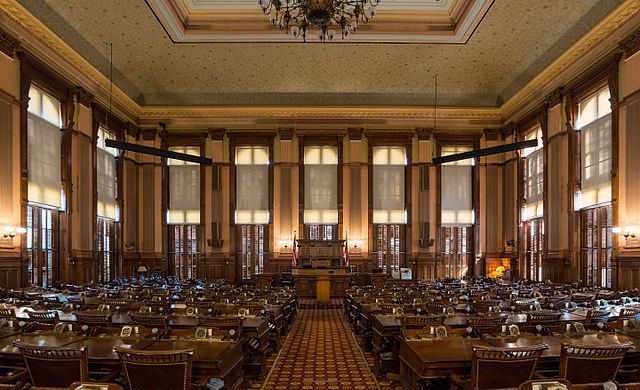
A bill in the Georgia House of Representatives would help prevent employers from misclassifying workers as independent contractors rather than employees. By classifying a worker as an independent contractor, an employer can avoid paying employee benefits and the employer portion of employee taxes.
House Bill 389 would change the definition of "employment" to include "services performed by an individual for wages unless the Department of Labor makes a contrary determination based upon evidence that such individual has been, and will continue to be, free from control or direction over the performance of such services."
|
|
Re-vote begins at Alabama Amazon warehouse |
|
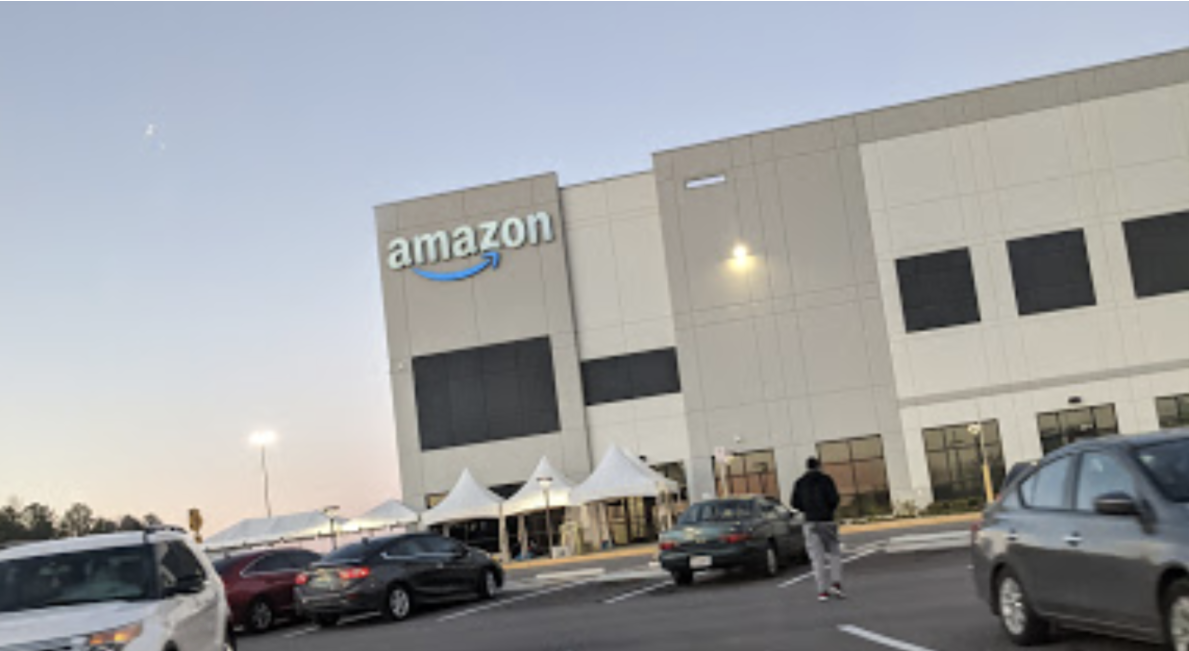
Workers at a Bessemer, Alabama, Amazon warehouse are voting for a second time in less than a year on whether to join a union. If they vote in favor this time, the Bessemer facility will be the first unionized Amazon warehouse in the United States.
After 71% of employees voted against unionization last year, the National Labor Relations Board ruled Amazon violated labor law during the vote and mandated a new election, which began Feb. 4 with the NLRB sending ballots to approximately 6,100 workers. The ballots must be returned to the NLRB by March 25.
For a detailed recap of events leading up to the re-vote, listen to the NPR segment here. |
|
OLMS rescinds Trump administration rule that unjustly burdened unions |
|
The Office of Labor-Management Standards has rescinded a Trump-administration rule that imposed unjustified and burdensome paperwork requirements on labor unions.
According to the U.S. Labor Department under the Biden administration, the Form T-1 Trust Annual Report was redundant to existing filing requirements, such as Internal Revenue Service reporting, and thus unnecessary to detecting or deterring wrongdoing or preventing the circumvention or evasion of reporting requirements under the Labor-Management Reporting and Disclosure Act. Read more here. |
|
Bipartisan infrastructure law expected to add 2 million jobs per year |
|
The bipartisan infrastructure plan signed into law in November is expected to add an average of 2 million jobs per year in the United States during the next decade. Millwright work will be created through investments of $73 billion in electric-grid and power-generation infrastructure, $55 billion in water and wastewater infrastructure, and $25 billion in airports. In many sectors, the infrastructure plan will make the largest investments in history or in decades.
Learn more about what's in the plan here and read the full bill here. See fact sheets about funding the infrastructure law will deliver for projects in each state here.
The Bipartisan Infrastructure Law also includes many protections for workers who will build the projects it funds. Click here to learn about those worker protections. |
|
U.S. Senate considering legislation that would reduce costs for working families, invest in union-built projects and rural communities |
|
Efforts continue in the U.S. Senate to pass legislation that would assist working families with child- and elder-care costs, reduce health-care costs, housing, and education costs, and invest in union apprenticeships, rural communities, and union-built clean-energy projects including wind-turbine installation.
According to a statement by our parent organization, the United Brotherhood of Carpenters and Joiners of America, “the Build Back Better Agenda will ease the burden of high costs on working families, create good-paying, union jobs, and grow our economy, ensuring that all the wealth that is built in the country doesn’t go only to the wealthiest.”
Read more here. If you would like to send a letter to your representatives in Congress asking them to support Build Back Better legislation, you can do that in less than two minutes here. |
|
See county-level information on projects the American Rescue Plan Act is funding |
|
A provision of the American Rescue Plan Act allocated $65.1 billion to every county in the United States. According to the National Association of Counties, this funding is providing “direct, flexible aid.”
To see how funds are being spent in your county or state, visit this site, where the National Association of Counties is tracking investments using documents and budgeting materials counties have submitted. Hundreds of projects are listed, and projects can be filtered by county size, topic, and state. |
|
Study shows 39% of construction families need public assistance |
|
A report the University of California Berkeley Labor Center released in January reveals that 39% of construction worker families nationwide are forced to enroll in one or more safety-net programs to make ends meet. The yearly cost to state and federal governments is $28 billion. Additionally, 31% of construction workers lack health insurance, compared to 10% of all workers. A state-level study found almost half of construction workers’ families in Texas, where the construction industry employs about one in 12 workers, are enrolled in at least one safety-net program.
Researchers attribute their findings to low pay, wage theft, and illegal employment practices in the construction industry. “This report shows just how outrageous the common, illegal business practices in the construction industry really are,” said Douglas J. McCarron, general president of the United Brotherhood of Carpenters and Joiners of America.
Read more about the report here. The Southern States Millwright Regional Council and other regional councils affiliated with the UBC will protest worker abuse and tax fraud in our industries April 13-16. |
|
NBC Nightly News: Unpaid construction workers go hungry while others profit |
|
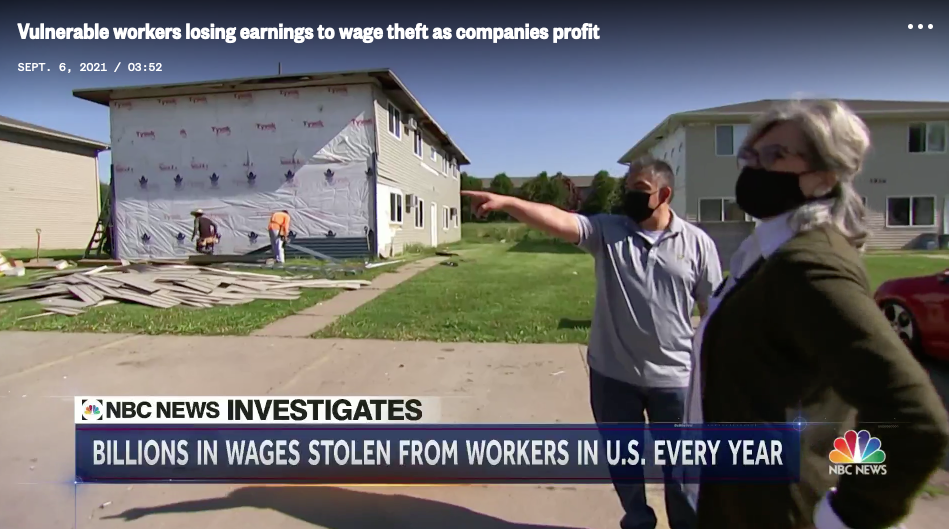
Focusing on a case that began in Iowa with the North Central States Regional Council of Carpenters giving aid to six construction workers who were starving, NBC Nightly News broadcast a special segment on wage theft in the construction industry.
The NBC segment investigates this particular case as well as the larger issue of wage theft in the construction industry. Click here or above to watch it. Click here to read more about the Iowa case. |
|
Congress passes bipartisan legislation to ban goods from China’s Xinjiang region |
|
Bipartisan legislation that bans U.S. importation of goods produced with forced labor in China's Xinjiang region was signed into law Dec. 23. The Uyghur Forced Labor Prevention Act applies to “all goods, wares, articles, and merchandise mined, produced, or manufactured wholly or in part” in Xinjiang. The Chinese government is accused of carrying out genocide against the Uyghur Muslim minority and of forcing ethnic minorities to work in Xinjiang.
“If you’re a company who is manufacturing in that area, you’re going to need to prove that slaves didn’t make it," said Sen. Marco Rubio. "The presumption is on you.”
|
|
What's behind rising gas prices? |
|
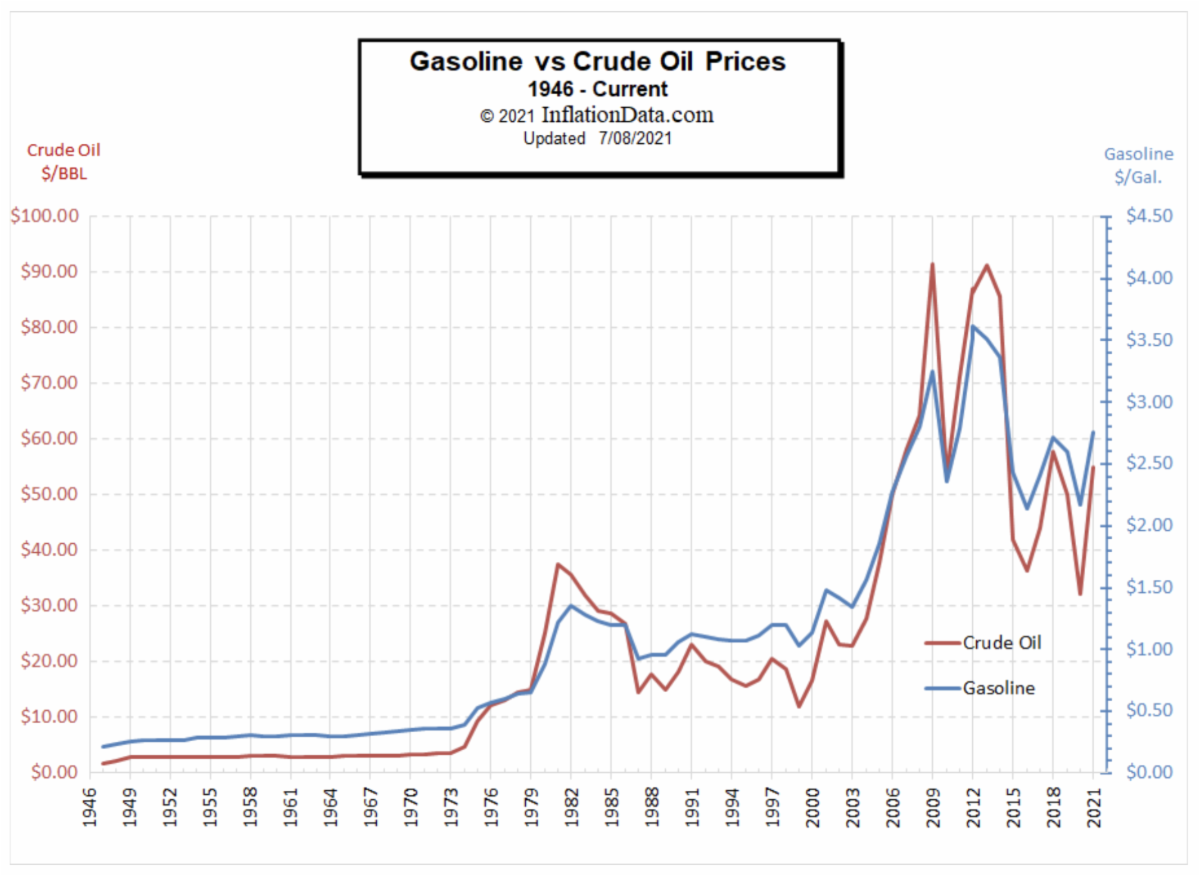
Check out a historical and scientific analysis of gasoline prices and the forces that drive them. How much power do U.S. politicians have to affect gas prices? Listen to the Civics 101 podcast here to take a deep dive into that question and answer. |
|
|
|
|
|
|