California Asphalt Pavement Association

Vol. 16, Issue 38 || Sept. 18, 2023

Dear Russell,
This weekly report contains news and information of interest to the asphalt pavement industry, customers and agency partners in California. Please feel free to distribute this newsletter to others who may be interested in asphalt pavements. To provide feedback or story ideas click HERE. Having difficulty viewing this newsletter? View as Webpage

SPECIAL REPORT: Advancing the state of knowledge on asphalt rubber mixtures, recycling and performance

Tech Report Logo v 2

Although rubber in asphalt mixes has been in widespread use in California since the 1990s, field experience, training in best practices and research continue to add to the knowledge base. CalAPA highlighted the state of practice last April 18 when the association held a daylong technical workshop, “Where the Rubber Meets the Road” in Sacramento and on-line. Presentations from that event can be found on CalAPA’s SlideShare page HERE.


The University of California Pavement Research Center (UCPRC) was one of the presenters at the workshop, and previewed the center’s ongoing research on Rubberized Hot Mix Asphalt (RHMA) with a special emphasis on performance. The initial findings from the Caltrans-funded research effort have now been published and are available for download on-line HERE.


Caltrans and industry representatives, working collaboratively as part of the Pavement and Materials Partnering Committee (PMPC), have several outstanding questions that resulted in the development of this research study. Those questions include:


  • Can Reclaimed Asphalt Pavement (RAP) be used in asphalt rubber mixtures with acceptable performance? Agencies that allow for an increase in the use of recycled materials, such as RAP, can demonstrate they are responding to public clamor for sustainability by producing asphalt mixtures locally with locally sourced materials.
  • Can asphalt rubber be placed in lift thicknesses greater than 0.2’? The state requires Caltrans to use a minimum percentage of asphalt rubber materials in their pavement program each year as identified in state law (often referred to by its original Legislative bill designation, AB338). Asphalt rubber mixes are primarily used as a wearing surface. As Caltrans delivers more reconstruction projects due to the increased gas taxes from state and federal sources, there is a concern that they may not meet these minimum use requirements. 
  • Is there is a significant performance difference between ½” and ¾” Nominal Maximum Aggregate Size (NMAS) asphalt rubber mixtures? Agency engineers have expressed a concern that smaller NMAS mixes have lower strengths or stability compared to mixes with larger NMAS aggregates. The mix requirements for ½” and ¾” RHMA-G mixes are the same (such as Hamburg Wheel Track Test rutting requirements). This should mean that the mixes should perform similarly even though their NMAS is different. As the NMAS of a mixture increases, the challenges related to segregation during laydown and the permeability of the mixture increases (even at acceptable in place density values). Research in this vein from the National Center for Asphalt Technology at Auburn University (NCAT) RR 03-02 have studied and reported on this concern. To view the NCAT study, click HERE.


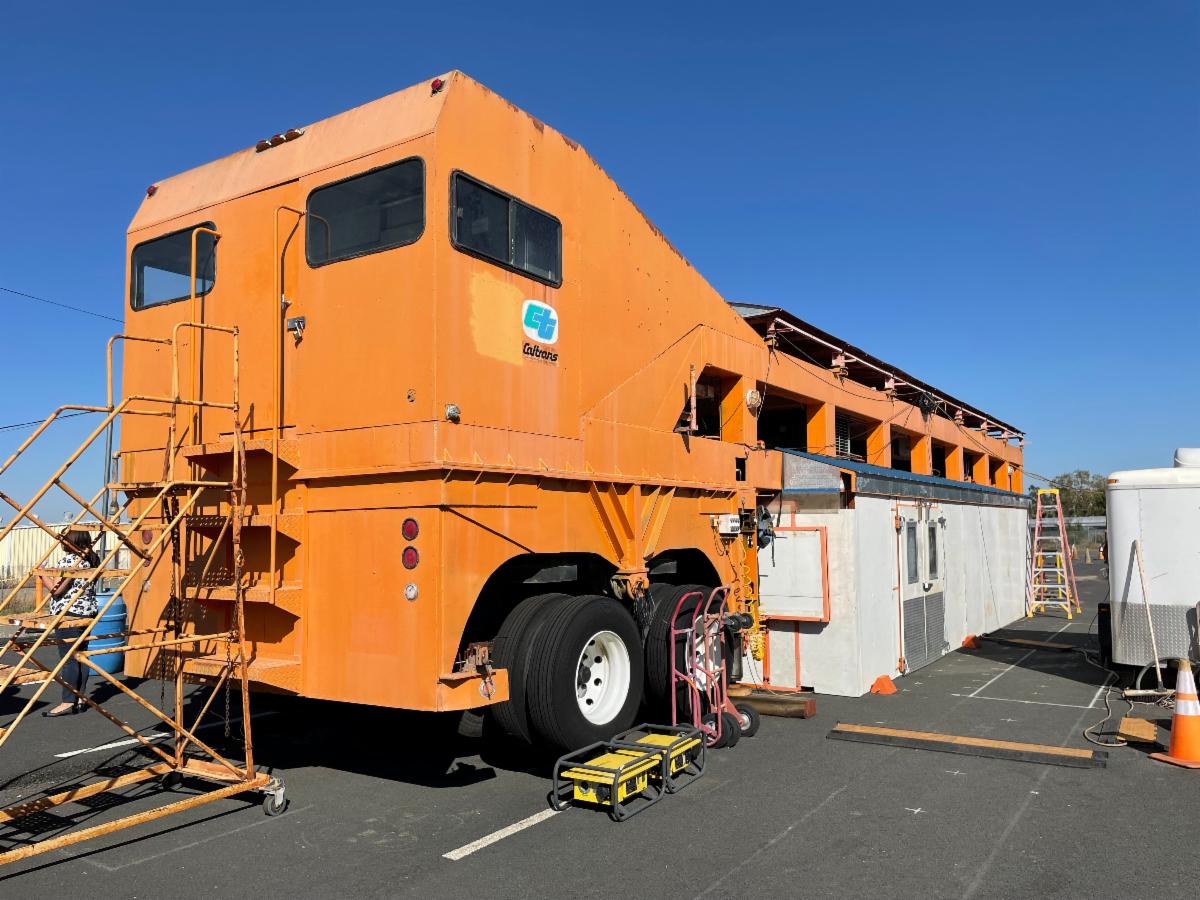
The UCPRC study evaluated four RHMA-G mixes ( ½” 0% RAP , ¾” 0% RAP, ½” 10% RAP, and ¾” 10% RAP) in segments from 0.2’ to 0.5’ thick. Several of these sections were trafficked utilizing the UCPRC Heavy Vehicle Simulators (HVS). The massive mobile testing machines can simulate decades of traffic in a few months. The machines also can control the environmental conditions of the pavement section (temperature and moisture) during operations.


Based on the initial HVA testing of these segments, UCPRC researchers reported a few significant observations. The segments did not exhibit cracking of the pavement surface. The performance for all of the mixes in the segments related to rutting were deemed “satisfactory.” NMAS as well as the incorporation of RAP did not have a significant impact on the segment performance, the researchers found.


After completing the HVS testing of the segments, UCPRC researchers also tested material samples utilizing mechanistic simulations (such as research-level rutting and fatigue testing) to ascertain mix performance characteristics. The results of this testing and any recommendations based on these results will be published in a second-phase report. The Caltrans-industry Pavement and Materials Partnering Committee (PMPC) RAP and RHMA Work Product Groups are anxiously awaiting the second phase of the report to determine the need for changes to the Caltrans design methodology, construction guidance, and/or specifications.


The Tire Recycling Act of 1989 levied a fee on all tires sold in California to be used for programs to create markets for waste tires. In 2005, the Legislature passed and the governor signed into law AB338, authored by then-Assemblyman Lloyd Levine, a Democrat representing the 40th Assembly District in the San Fernando Valley, which set targets for CRM use each year. The mandate is now referred to as Public Resources Code 42703. Another bill, SB876 of 1999, requires the department to report on rubber usage each year. The most recent published report is dated 2021 and is available on-line HERE.


California generates an estimated 51 million waste tires each year, and the state has been working to divert those tires from landfills to consumer products. The lead agency for this effort is a state agency known as CalRecycle (formerly the California Integrated Waste Management Board until 2010 when its responsibilities were folded into CalRecycle). Paving asphalt is the No. 1 source of Crumb Rubber Modifier (CRM), and it has been celebrated by the environmental community for its sustainability and by motorists for its smooth and quiet ride. The CalRecycle Tire Recycling and Market Development page on the CalRecycle website has more information on this topic and can be found HERE.


However, placement of RHMA can be tricky for the unaware. Experienced paving contractors have learned over the years to be mindful of the specific requirements for placing RHMA that differ from conventional Hot Mix Asphalt, including placement temperatures and weather conditions.


CalAPA has long supported the use of credible research to inform collaborations with public agencies on proposed changes to design and construction standards, specifications and test methods, including with regard to the use of rubber in asphalt mixtures. Additional updates on this and other relevant research on asphalt mixtures and rubber will be published in future issues of Asphalt Insider.


---[


Research Report information:

First-Level Analysis of Phase 1 Heavy Vehicle Simulator and Laboratory Testing on Four RHMA-G Mixes to Investigate Nominal Maximum Aggregate Size, Layer Thickness, and Performance with Aggregate Replacement from Reclaimed Asphalt Pavement.   

This UCPRC Research Report can be found by clicking this LINK.


A previous Asphalt Insider article on the CalAPA workshop on rubber pavements was published April 24, 2023 and can be found on-line HERE.

The Heavy Vehicle Simulator (HVS) on the campus of the University of California, Davis. The HVS was utilized to simulate years of traffic on pavement test sections to inform research on the use of rubber in asphalt mixtures. CalAPA photos by Brandon Milar.

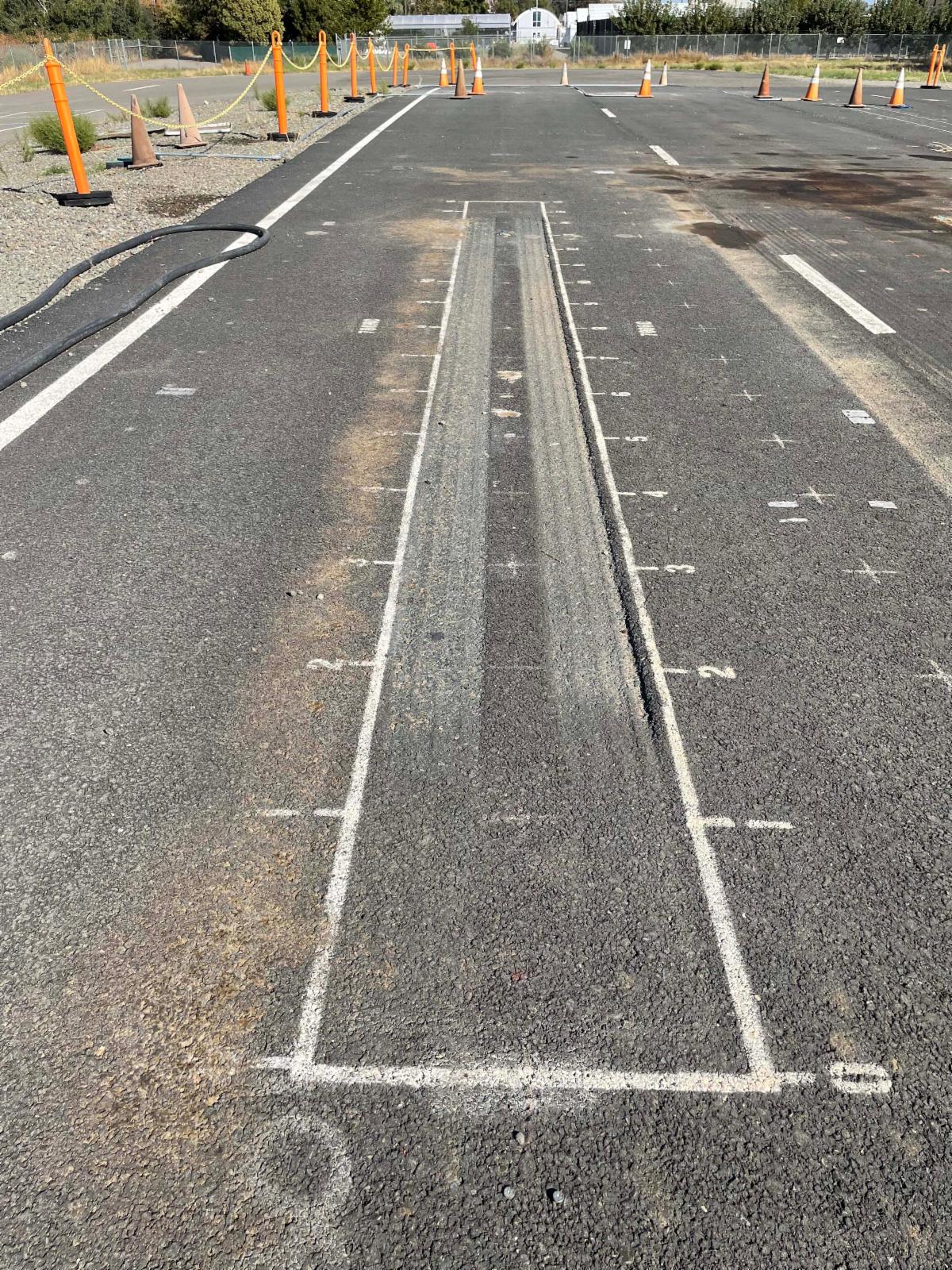
A test section of pavement after the Heavy Vehicle Simulator (HVS) completed its work.

Speakers added for CalAPA EPD workshop Oct. 25 in Sacramento

Speakers have been added to the agenda for a special CalAPA workshop Oct. 25 in Sacramento devoted exclusively to Environmental Product Declarations. Seats are limited so early registration is encouraged and can be done on-line HERE.


The daylong event will take deep-dive on EPDs -- including what they are and are not, understanding the challenges in compiling and understanding data that feeds into EPDs, and the interplay between EPDs and procurement and the evolving discipline of environmental Life Cycle Assessment (LCA). Heavy emphasis will be on practical considerations for industry and agency personnel.


The special workshop is meant to further advance the knowledge and understanding of EPDs that was previewed in the current issue of CalAPA's association magazine, California Asphalt, which can be viewed on-line HERE.


The EPD workshop will feature nationally known experts who will approach the topic from all angles, and will walk attendees through the process of developing EPDs, what they tell us, what asphalt mix producers need to know in order to develop and EPD for their mixes, what agency personnel need to know before requesting them, and frank conversations about challenges in implementation. A detailed agenda with topics and speakers can be viewed HERE.


The workshop will take place on Wednesday, Oct. 25 from 8 a.m. to 4:30 p.m.at the Hilton Sacramento Arden West Hotel, 2200 Harvard Street in Sacramento. The event will include morning refreshments and lunch. For sponsorship opportunities, contact Sophie You of CalAPA at (916) 791-5044.

Legislature wraps up work for the year; noteworthy bills come up short

The California Legislature wrapped up work for the year last week, sending scores of bills to Gov. Gavin Newsom's desk for consideration. Many more bills, including several closely watched by CalAPA, stalled as they wound their way through various committee hearings this year. Some failed to make enough progress and died, while others, according to the arcane rules of the Legislature, may be revived and considered next year. Of the bills that made it to the governor's desk, he has until Oct. 14 to either veto them or sign them into law.


As previously reported in Asphalt Insider, the most noteworthy bills of interest to the asphalt pavement industry in California that failed to advance related to Environmental Product Declarations (AB1250), Warm Mix Asphalt (SB312) and Cold In-Place Recycling (AB981). Several bills and other budget machinations to suspend the fuel tax that helps pay for road repairs also fizzled.


CalAPA's Legislative Committee will present the association's legislative scorecard to the CalAPA Board of Directors at its meeting next week in Southern California. To learn more about the association's Legislative engagement on behalf of the asphalt pavement industry, click HERE.


Looking ahead to next year, the Legislature will have new leadership as Assembly Speaker Robert Rivas (D) will still be only months into the job, and state Sen. President Pro Tem Toni Atkins announced she will be stepping aside in favor of state Sen. Mike McGuire, a North Coast Democrat. Democrats currently hold a two-thirds super majority in both houses of the Legislature and all statewide offices.

Tech Term of the Week

Each week we highlight a word, acronym or other term commonly used in the asphalt pavement industry in California.


MINERAL DUST: The portion of the fine aggregate passing a No. 200 sieve.

Paving Pointer of the Week

Each week we highlight a key point or best practice of interest to asphalt paving crews, inspectors and others working in the field. We welcome suggestions. More tips can be found in our "Asphalt Parking Lot Construction Checklist" HERE. Information on the CalAPA "Quality Paving Certificate" program is HERE.


TONNAGE CALCULATION: Ask yourself: Are there enough trucks on the run to haul the mix needed to complete the job? If you have five trucks on the round each carrying 25 tons = 125 tons per round. If each round takes one hour to make, then the production rate is 125 tons per hour. If the job requires 1,000 tons at 125 tons per hour = eight hours to get the mix to the job.

Climate Term of the Week

Each week we highlight a term that is specific to climate-change issues related to the asphalt pavement industry. This feature is intended to raise awareness of the asphalt industry's climate-change initiatives and the specialized terminology that goes with them. More information on "The Road Forward" asphalt industry climate initiative can be found HERE.


ADAPTION: Changing behaviors or systems to reduce negative impacts. 

Quote of the Week

“You grow up the day you have your first real laugh at yourself.”


– Ethel Barrymore

CALAPA CALENDAR:


View all CalAPA events HERE.


*

SORRY! SOLD OUT!

Annual CalAPA Golf Classic

Thursday, Sept. 21

Journey at Pechenga

45000 Pechanga Pkwy, Temecula, CA 92592

Contact Sophie You at CalAPA for sponsorship opportunities!

Details HERE.


*

SIGN UP NOW!

Statewide Technical Webinar on E-ticketing

Wednesday, Oct. 4, 9:30 a.m. to 11 a.m.

HERE.


*


RESERVE YOUR SPOT!

Fall Technical Workshop focusing on EPDs

Oct. 25, 2023

8 a.m. to 4:30 p.m.

Hilton Sacramento Arden West, 222 Harvard Street, Sacramento.

Details HERE.


*

SAVE THE DATE!

CalAPA Annual Dinner & Awards

Friday, Jan. 12, 2024

Jonathan Club, 545 S. Figueroa St. Los Angeles.

Details soon!


business_handshake_men.jpg

There's never been a better time to join the California Asphalt Pavement Association! Members receive insight and advanced notice on critical issues that impact every company's bottom line. CalAPA members also receive invitations to exclusive member-only events, in-depth "Member Alerts," our comprehensive asphalt market forecast for California, discounts and industry-specific networking opportunities not available anywhere else. CalAPA's new searchable on-line membership directory helps connect potential customers with member companies. A brief video about CalAPA is HERE. Click HERE to download our Member Service brochure. Click HERE to view Vol. 1 of recent testimonials. Not convinced? Click HERE to view Vol. 2 of recent testimonials. With so much changing in the asphalt pavement industry, what you don't know can cost you! Click HERE to send us an e-mail inquiry, or contact Russell Snyder with CalAPA at (916) 791-5044.

We hope you enjoy CalAPA's Asphalt Insider newsletter. We are committed to providing you with the most up-to-date information on technical issues, regulation, news, analysis, events and trends in California that is of interest to the asphalt pavement industry and our various agency partners. Click HERE to contact us with any comments or suggestions.

Sincerely,

Russell W. Snyder, CAE
Executive Director
California Asphalt Pavement Association (CalAPA)®
 
The "Asphalt Insider" is an official publication of the California Asphalt Pavement Association. For more information or to inquire about membership, call (916) 791-5044, or click HERE to contact us. Copyright © 2023 California Asphalt Pavement Association -- All Rights Reserved. The CalAPA name (No. 5,621,794) and logo (No. 5,621,795) are registered trademarks with the U.S. Patent & Trademark Office.
P.O. Box 981300, West Sacramento, CA 95798
1550 Harbor Blvd., Suite 120, West Sacramento, CA 95691
PHONE: (916) 791-5044 WEB: www.calapa.net
Est. 1953 <> Code of Ethics
Submit An Inquiry
 
Facebook  Twitter  Pinterest  Linkedin  Instagram