Kratom is an herbal product from the leaves of the Mitragyna speciosa tree, which grows in swampy regions in Southeast Asia. It’s used by the local people to relieve fatigue and muscle aches and to manage pain, diarrhea and opioid withdrawal.
Over the past decade, kratom has been used increasingly in Western countries as a natural supplement to counteract fatigue and anxiety and to relieve opioid withdrawal symptoms. Kratom can be purchased legally online and in shops in the United States. It has been made illegal in several countries and has been placed on the FDA watch list. It has not been well studied.
Reports of toxicity from kratom have been growing as its use has grown. There are numerous reports of toxicity and adverse events. The most common complication has been linked to its opioid effects, including confusion, stupor, coma and respiratory arrest. There are increasing reports of cholestatic liver injury.
|
|
Contingency management -- receiving material incentives based on behavioral changes -- may be an effective way to address comorbid behaviors like psychomotor stimulant use and cigarette smoking in patients receiving medication for opioid use disorder (OUD), according to a systematic review and meta-analysis.
These incentive-based plans were associated with medium-to-large effect sizes for four of the six comorbid behaviors that were separately analyzed, including psychomotor stimulant use (Cohen d=0.70, 95% CI 0.49-0.92), cigarette use (Cohen d=0.78, 95% CI 0.43-1.14), illicit opioid use (Cohen d=0.58, 95% CI 0.30-0.86), and medication adherence (Cohen d=0.75, 95% CI 0.30-1.21), reported Stephen Higgins, PhD, of the University of Vermont in Burlington, and colleagues.
The other two behaviors fell into the small-to-medium effect size range: polysubstance use (Cohen d=0.46, 95% CI 0.30-0.62) and therapy attendance (Cohen d=0.43, 95% CI 0.22-0.65), they noted in JAMA Psychiatry.
|
|
The Good, The Bad, and The Ugly |
|
What you need to know about the
proposed 2022 Physician, HOPD, and ASC fee schedules.
|
|
GOOD
For ASCs, the update is changed similar to the HOPDs.
BAD
Multiple procedures, which were covered in ASCs are eliminated and changed to the inpatient-only list.
UGLY
An addition of 6% cuts, 2% stemming from sequester cuts of the Budget Control Act of 2011, and 4% statutory PAYGO sequester resulting from the passage of the American Rescue Plan Act lasting 10 years, totaling 6%.
On July 19, 2021, the Centers for Medicare and Medicaid Services proposed Medicare Payment rates for hospital outpatient departments and ambulatory surgical center services. The comment period ends on September 17, 2021.
|
|
The Good, The Bad, The Ugly, and the Uglier
GOOD
Telehealth services are preserved through 2023 and evaluation management services are expanded.
BAD
Expiration of the congressionally enacted 3.75% temporary increase in Medicare physician fee schedule conversion factor, reducing the conversion factor by 3.75%.
UGLY
Addition of 6% cuts, 2% from 2011 of Obama era, and 4% from American Rescue Plan Act of 2021, totaling 6%.
UGLIER
It could get even uglier if Congress passes infrastructure bills as one unit or 2 units, which may add an additional 4% or more to the cuts.
|
|
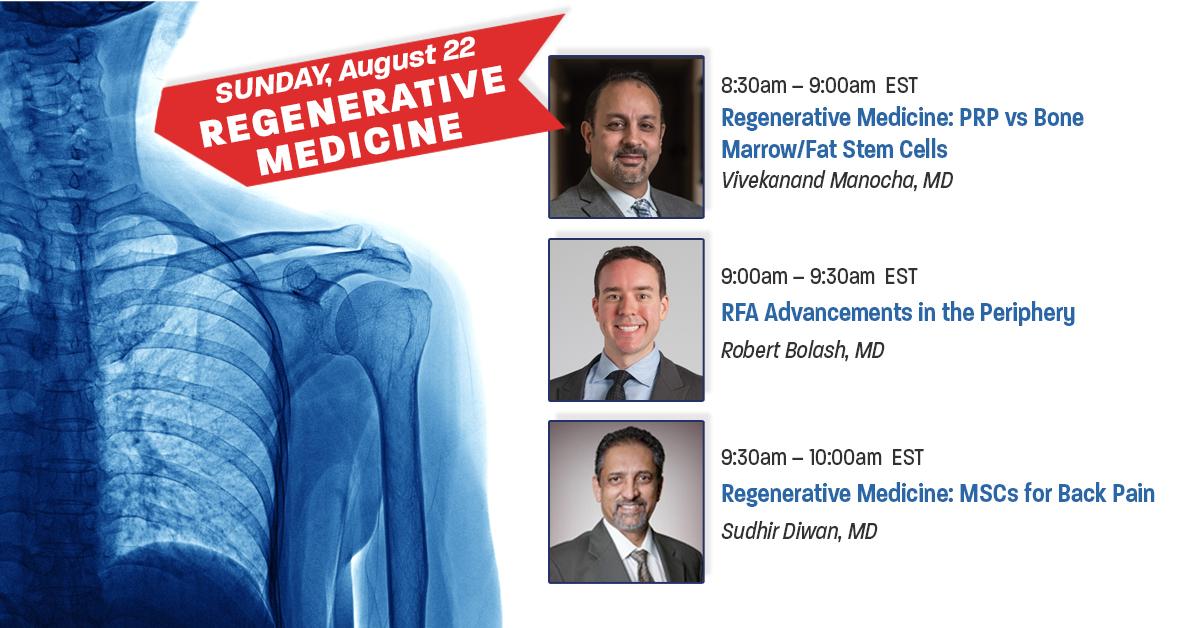
Great News!
The Annual Meeting of the Ohio & Kentucky Societies
of Interventional Pain Physicians is back -
at The Westin, Cincinnati
Designated for 15 AMA PRA Category 1 Credits™
|
|
Despite many unknowns, healthcare professionals want reassurance, especially with Delta threat
With the threat of the more transmissible Delta variant and questions around waning immunity following vaccination, healthcare workers are thinking more and more about a third dose of the COVID-19 vaccine.
That's despite the many unknowns on what the true "correlates of protection" are when it comes to immunity, and a lack of hard clinical data that vaccine effectiveness is truly waning.
Still, physicians have been watching as many countries -- including Israel, and Germany, France, and the U.K. -- have pulled the trigger on booster doses, especially for more vulnerable populations. Now, they are talking about getting a "booster" for themselves -- even if they're not immunocompromised, and especially if they're 65 and older or if their antibody titers are low.
|
|
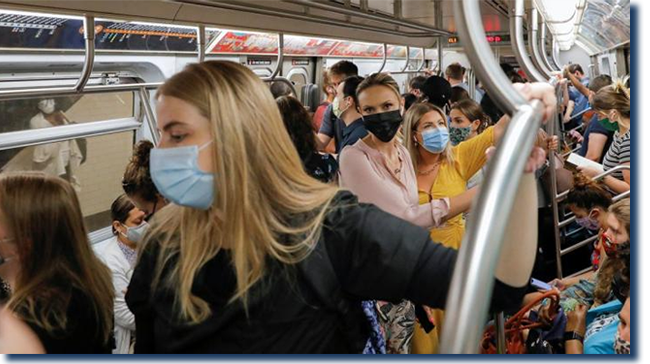
New York City recommends them, with emphasis on vaccinations, as COVID-19 cases rise with more contagious Delta variant
Louisiana and seven San Francisco Bay Area counties will mandate that people wear masks indoors starting this week, while New York City officials are recommending that residents do so to curb rising COVID-19 cases.
Last week, the Centers for Disease Control and Prevention urged all people in counties with high or substantial transmission of the virus to wear masks in indoor public settings. That announcement came as health officials said they had found vaccinated people can transmit the more contagious Delta variant, which is driving much of the recent increase in COVID-19 cases.
“It’s important that this mask mandate be for vaccinated as well as unvaccinated individuals because we’re facing a much more aggressive and contagious opponent right now known as the Delta variant,” said Dr. Sundari Mase, health officer for Sonoma County, north of San Francisco.
|
|
More detail about outbreak in vaccinated people that led to the change in masking, test guidance
Breakthrough infections were responsible for three-quarters of COVID-19 cases in an outbreak during large public gatherings on Cape Cod, Massachusetts, and nearly all sequenced cases were the Delta variant, researchers found.
Of 469 cases linked to multiple summer events and large summer gatherings in a small town, 346 (74%) occurred in fully vaccinated people, and almost 80% of those cases were symptomatic, reported Catherine Brown, DVM, of the Massachusetts Department of Public Health, and colleagues.
There were five hospitalizations, four among fully vaccinated people, and no deaths. Of 133 cases with sequence information available, 89% were from the Delta variant (B.1.617.2), the authors wrote in an early edition of the Morbidity and Mortality Weekly Report.
|
|
ASIPP® is pleased to offer a new feature for
its members to help provide value to you and your practice.
Click here to visit ASIPP®'s newly created site where you can
make purchases on our Amazon Store, learn more about and
join the ASIPP® GPO and ASIPP®’s partnership with
Fedora Billing & Revenue Cycle Management Company.
|
|
REGEN-COV becomes first monoclonal antibody treatment with EUA following exposure alone
FDA expanded the emergency use authorization (EUA) for the monoclonal antibody cocktail casirivimab and imdevimab, to include post-exposure prophylaxis (PEP) among certain people exposed to COVID-19, manufacturer Regeneron announced on Friday.
Casirivimab-imdevimab (REGEN-COV) is the first monoclonal antibody treatment that can be used either as a treatment for COVID-19 or after exposure but prior to a positive COVID-19 test, Regeneron said.
The new indication covers individuals ages 12 and older who were exposed to someone with the virus or who were exposed to the virus in an institutional setting.
|
|
Recommendation and empathy are key
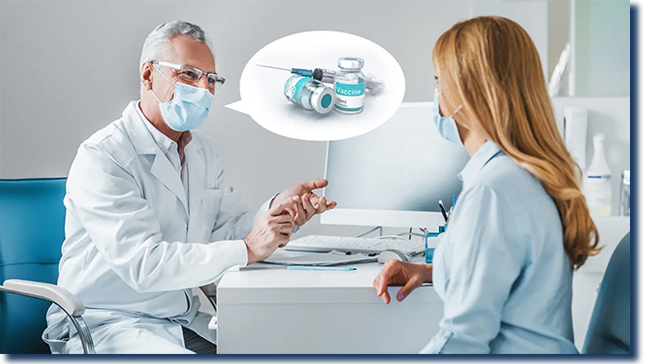
Ms. Clark comes for her annual visit. You notice on her medical record that she has not yet been vaccinated against COVID-19. Near the end of the visit, you ask her why she hasn't been vaccinated yet. She replies that she has heard conflicting information from her friends and family about the vaccine and is not sure she trusts it.
Convincing patients like Ms. Clark to consider the vaccine may be more important than ever, as COVID-19 cases are increasing in nearly 90% of the U.S. states and territories with the rise of the more infectious Delta variant. Only half of the U.S. population is fully vaccinated and the latest surge is highlighting the disparities in outcomes between the vaccinated and the unvaccinated. The COVID-19 vaccine is increasingly available in outpatient clinics, pharmacies, and other readily available locations, so clinicians may be facing conversations with patients like Ms. Clark more often and wondering how best to guide their patients.
Communicating effectively with vaccine-hesitant patients is critically important to increase the number of vaccinated individuals in all countries. Research on communicating with vaccine-hesitant patients in other contexts (e.g., HPV) has demonstrated that good communication can make a difference in patients' vaccine choices.
The CDC published five techniques to guide healthcare professionals and pharmacies in discussing the COVID-19 vaccine with patients.
|
|
Opinion
The agency spreads needless worry about vaccinations.
As the coronavirus evolves, so does the science. The Delta variant is creating uncertainty about how much vaccines prevent transmission, but the overwhelming evidence shows they are highly protective against severe illness. Please get vaccinated if you aren’t already.
That should have been the Centers for Disease Control and Prevention’s straightforward message to Americans this week, along with a candid analysis of its evidence.
|
|
A proposed LCD on Epidural Procedures for Pain Management services was announced on June 10, 2021. This nationwide policy contains many onerous changes that will detrimentally affect patient access to care. ASIPP has written comment letters with detailed explanations of the issues and needed changes to each Medicare Contractor. The following are examples of the ASIPP comment letters:
|
|
Pain Medicine Case Reports (PMCR) and Editor-in-Chief Alaa Abd-Elsayed, MD, PhD would like to invite you to submit case reports and case series to the PMCR journal. Your article will be published free of charge.
Open access journals are freely available online for immediate worldwide open access to the full text of published articles. There is no subscription fee for open access journals. Open access journals are no different from traditional subscription-based journals: they undergo the same peer-review and quality control as any other scholarly journal.
Interested in becoming a member of the PMCR Editorial Board?
Editorial board members are asked to review 2-6 manuscripts per year. Please submit your most up-to-date CV to sgold@asipp.org for consideration.
For more information or to submit your articles, click here.
|
|
| CASE REPORT |
Gustaf Van Acker, MD, PhD, Richard D. Wilson, MD, and Chong H. Kim, MD
Abstract
BACKGROUND: Osteoarthritic knee (OAk) pain is common, yet the standard of care often yields unsatisfactory pain relief. There remains a role for novel treatment options. Percutaneous motor peripheral nerve stimulation (mPNS) of the knee is a novel minimally invasive procedure that stimulates motor end points leading to muscle contraction associated with the painful joint. Pain relief is hypothesized to be achieved through central pain modulation.
CASE REPORT: We report the case of a patient who experienced refractory osteoarthritic knee pain after 9 months of conservative care. Following 7 weeks of mPNS treatment, the patient achieved improvement in OAk pain relief and activities of daily living as measured by notable improvements in the Brief Pain Inventory-Short Form and Knee Injury and Osteoarthritis Outcome Score at 8- and 12-weeks postimplant. The Patient Global Impression of Change at the end of stimulation was much improved.
|
|
As we move through difficult issues of management of chronic persistent pain, interventional pain management modalities have been under scrutiny. One of the ways controls are being established is based on medical necessity and indications, trends in expenditures, and utilization by developing cost-utility analysis.
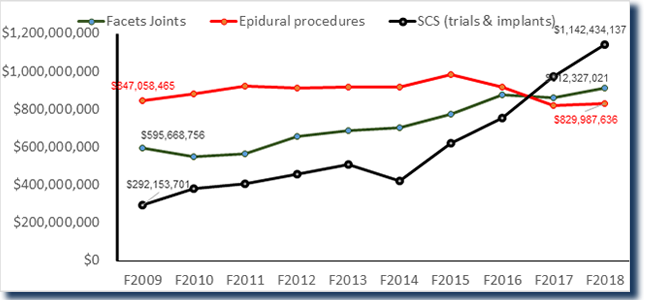
We have studied trends of utilization and expenditures in the Medicare population from 2009 to 2018 for facet joint interventions, epidural injections, and spinal cord stimulation interventions.
The data shows significant increases of utilization patterns and expenditures of spinal cord stimulation in all settings with 186% increase or 12.4% annual increase of spinal cord stimulation trials. Similarly, pulse generator implants increased 201% or an annual increase of 13%.
Expenditures also showed a significant increase in expenditures of 291% increase from 2009 to 2018.
|
|
Total cost for facet joints interventions, epidural services, spinal cord stimulators.
|
|
Surprisingly, these expenditures were 125% higher than facet joint interventions and 138% higher than epidural interventions in 2018; however, these expenditures were 55% below the expenditures of facet joint interventions and 66% lower than epidural injections in 2009. Overall expenditures increased from $292,153,701 in 2009 to $1,142,434,137 in 2018. As we move through difficult issues of management of chronic persistent pain, interventional pain management modalities have been under scrutiny. One of the ways controls are being established is based on medical necessity and indications, trends in expenditures, and utilization by developing cost-utility analysis.
We have studied trends of utilization and expenditures in the Medicare population from 2009 to 2018 for facet joint interventions, epidural injections, and spinal cord stimulation interventions.
The data shows significant increases of utilization patterns and expenditures of spinal cord stimulation in all settings with 186% increase or 12.4% annual increase of spinal cord stimulation trials. Similarly, pulse generator implants increased 201% or an annual increase of 13%.
Expenditures also showed a significant increase in expenditures of 291% increase from 2009 to 2018.
Surprisingly, these expenditures were 125% higher than facet joint interventions and 138% higher than epidural interventions in 2018; however, these expenditures were 55% below the expenditures of facet joint interventions and 66% lower than epidural injections in 2009. Overall expenditures increased from $292,153,701 in 2009 to $1,142,434,137 in 2018.
|
|
| SYSTEMATIC REVIEW |
Cochrane reviews have been considered as objective and reliable, even though there has been significant criticism of these reviews. Cochrane reviews routinely have shown that epidural injections are not effective in managing lumbar radiculopathy or sciatica.
In this comparative review, with stricter criteria of only chronic pain patients and with 6-month follow-up and reporting of improvement in functional status, only 6 of the 25 trials from Cochrane review met the inclusion criteria, with additional 15 RCTs meeting the criteria, which were excluded by Cochrane review.
Contrary to the conclusions by Cochrane review, the present evidence shows that epidural injections with or without steroids for radiculopathy showed significant effectiveness with Level I, or strong evidence, for local anesthetic with steroids and Level II to I, or moderate to strong evidence with local anesthetic alone.
|
|
| NARRATIVE REVIEW |
Rafaela F. Rodrigues, MSc, Taila Kawano, PhD, Rodrigo V. Placido, MSc,
Lellis H. Costa, MSc, Marcia H.M.C Podesta, PhD, Rafaela S. Santos, MSc, Giovane Galdino, PhD, Carlos M. Barros, MD, and Vanessa B. Boralli, PhD
Abstract
BACKGROUND: The presence of pain decreases survival rates in cancer. Pain management in clinical settings is often suboptimal and secondary to other cancer-related treatments, leaving many people undertreated. Opioid use is associated with side effects and decreased survival rate in cancer patients. Hence, there is an urgent need for considering factors such as perceived injustice that sustain post-cancer pain and trigger a behavioral pattern associated with opioid use. Injustice beliefs represent a maladaptive pattern of cognitive appraisal that may be a salient target for improving pain-related coping in these patients. Perceived injustice is associated with increased opioid prescription and prospectively predicted opioid use at 1-year follow-up, urging the need for targeted interventions to diminish perceived injustice.
OBJECTIVES: Explain the importance of screening for perceived injustice in patients with pain following cancer treatment, its potential relevance for opioid abuse, and its potential impact on the management of pain following cancer. Also, prove clinicians with a clinical guide for an approach comprising of modified pain neuroscience education, motivational interviewing, and acceptance-based interventions to account for perceived injustice in patients having pain following cancer.
|
|
KSIPP ANNUAL MEETING
Location: Intercontinental Kansas City at The Plaza
|
|
CALSIPP ANNUAL MEETING
Location: Terranea Resort, Rancho Palos Verdes, CA
|
|
Registration & Agendas Coming Soon! |
|
Since this malpractice insurance program officially launched in November 2018, ASIPP has signed up hundreds of providers with an average savings of 30%. This is professional liability insurance tailored to our specialty and will stand up for us and defend our practices.
Norcal Mutual is 'A' Rated by AM best and is license in all 50 states. To read a few important points to keep in mind about the program, including discounts, administrative defense, cyber coverage, aggressive claims handling, and complimentary award-winning risk management CME activities, click here.
|
|
ASIPP® is now offering our members the benefit of a unique revenue cycle management/ billing service. We have received a tremendous amount of interest in the ASIPP® billing and coding program.
Click here to learn more about the negotiated rate for practices and more!
|
ASIPP® has formed a partnership with Henry Schein and PedsPal, a national GPO that has a successful history of negotiating better prices on medical supplies and creating value-added services for the independent physician. Working with MedAssets, PedsPal provides excellent pricing on products like contrast media that alleviate some of the financial pressures you experience today.
|
|
up-to-date news related to you, your practice, and your patients!
|
|
|
|
|
|
|