According to a new poll commissioned by Groundwork Ohio, nearly one in two parents with children under five have had serious problems affording child care, meeting work and family responsibilities, or have had child care issues impact their work.
|
|
“To this point, our country has never really had a coherent approach to early childhood education... We don't invest in it to cover even those who we think should be eligible for child care or pre-K. We vacillate between viewing early care in education as a work support versus early learning or early childhood development. And because they are both in this bill in a pretty significant way – both pre-K and child care – this is really an opportunity for the country, for states to build a more coherent 0 to 5 system that’s more equitable, that works better for kids, families, providers and educators.” |
|
who:
Albert Wat, senior policy director of Alliance for Early Success
where:
|
|
|
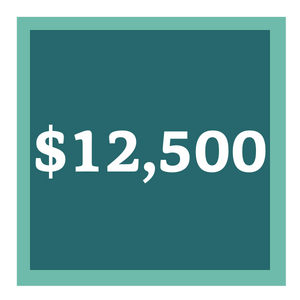
According to the National Institute for Early Education Research (NIEER), and highlighted in this article from Politico, the estimated cost of full-day, high quality pre-K that pays early childhood teachers equivalent to K-12 teachers is about $12,500 per child per year.
|
|
|
City
According to a Columbus City e-blast, a new ordinance would route $1.13 million in grant funds from the Ohio Department of Medicaid toward supporting the city’s Celebrate One program. Specifically, the funds will support “a number of priority areas including: prenatal home visiting teams at OhioHealth, Nationwide Children’s Hospital and Columbus Public Health; culturally informed doula care through Restoring Our Own Through Transformation; trauma-informed prenatal support through Moms2B; information and referral line through StepOne for a Healthy Pregnancy, and outreach to teens through The Center for Healthy Families.”
|
|
State
The Ohio Department of Job and Family Services announced a new round of grant opportunities for child care programs to help cover pandemic-related costs. The $150 million in funds come from the federal American Rescue Plan Act. Details on the application can be found here.
|
|
Along with our executive director Dr. Laura Justice, we published a research brief this week looking at the evidence behind book distribution programs like the Ohio Governor’s Imagination Library as a way to scale practices of caregiver-child shared reading. We found that participation rates tended to be higher in counties with higher percentages of people of color, which may suggest that Ohio’s Imagination Library is an equitable way of expanding book access and literacy development among children birth to age 5. Read the brief here and check out our page on the importance of caregiver-child shared reading.
|
|
North Carolina lawmakers passed reforms this spring that will require a uniform approach to literacy instruction, as the Hechinger Report describes.
In 2016, Michigan passed a law requiring students who are more than a grade level behind in reading by the end of third grade to be retained; the 2020-21 school year was the first year this took effect. A report from Michigan State University found that schools planned to hold back less than 7% of the state’s students who scored poorly on the reading portion of the state’s standardized test. While few students overall were held back due to their reading scores, the report found that Black students were more than twice as likely to be retained as white students.
|
|
A joint resource guide from The U.S. Department of Agriculture – Rural Development, and the U.S. Department of Health and Human Services – Administration for Children and Families addresses the need to strengthen and expand child care in rural areas and Tribal communities. Child care options in rural areas remain limited.
|
|
This piece published in The Conversation describes research on the efficacy of everyday tasks and chores in helping children develop language, literacy, and math skills. Making grocery lists, cooking, and storytelling at dinner are described as ways that parents can “support their young children’s learning without much added burden or spending.”
|
|
This edition written by: Jamie O'Leary, Associate Director of Policy and Caitlin Lennon, Communications & Policy Specialist |
|
|
|
|
|
|