|
|  | |
A Message from the Executive Director | |
As elders we know there are far less winters left in our seasons as compared to when we were young. We spent our youth dreaming about what our lives would be like; the people we would fall in love with and how we would fulfill our dreams.
As we shake our heads and waken ourselves to “what is”, we wonder where it all went and why didn’t we notice that it had slipped away. Too busy trying to be a “somebody” and thinking we are a person the world cannot live without.
These days are becoming shorter and shorter as we look around. Friends that we knew are no longer here, relatives that were here yesterday are now past tense and we have begun to realize the miniscule time we have in this space. And we ask, “Did we use our time wisely in this space which was allocated to us by the Great Spirit?” Did we squander this time? Did we do what we could to ensure that Our People survive the next two millenniums?
On a personal note, I have looked at my life and found that there were many things that I could have done in the time that was allotted to me, but also feel confident that I did what I could with the opportunities that were given me. The fall, for me, has always been a time for reflection and introspection. The leaves turn different colors and drop to the floor of the forest signaling the end of a season and the beginning of another.
The National Indian Council on Aging (NICOA) has been through all these different seasons with at least seven different leaders at the helm, guiding this vessel through the storms they encountered. Each took their stand in ensuring that our elders received the best care and consideration. As one of the original co-founders of this organization, I returned five years ago to venture once again into the fray.
It sometimes becomes frustrating to hear our tribal leaders say that “we respect our elders” because it is a convenient and political thing to say. I understand the politics of tribal governments and elders are the reliable voting bloc. NICOA has fought for over 47 years to ensure that our elders’ voices are heard on the Hill and in the halls of the bureaucratic labyrinths of Washington, D.C.
It is time that the words uttered by our tribal leaders about “respecting our elders” manifest themselves by actively and financially supporting the work of NICOA. We have been asked many times, “What have you done for us lately?” The increase in Title VI funding, the increase in COVID funding for Title VI grantees, supporting prescription decrease costs, support for over-the-counter hearing aids, and advocating for increased flexibility of Title VI regulations in the recent Notice of Proposed Rulemaking (NPR).
More than these activities initiated by NICOA, the work, the education, and the advocacy has been for one important reason: THE CONTINUED EXISTENCE OF TRIBES FOR THE NEXT TWO MILLENNIUMS. Without the knowledge, the language, the culture and history of the tribe that our elders possess, the tribe no longer exists. For that reason alone, the protection and care that our elders deserve is up to the leadership of the various tribes.
This message is a wakeup call to our tribal leadership: The 24tth national American Indian Elders Conference is being held in Cherokee, NC, September 25-29, and provides the opportunity for tribal leaders to voice their “respect for our elders.”
We do not know what the future holds for each of us, but we had better do what we can in the time we have been given. For those of you who do give more than just verbal concurrence but give generously to the efforts of NICOA, thank you. For others, a rethinking of priorities might be in order. Nonetheless, be well and we shall meet again in Cherokee, North Carolina.
Sincerely,
Larry Curley (Navajo Nation)
NICOA Executive Director
| | | |
NICOA Conference Only Two Days Away | |
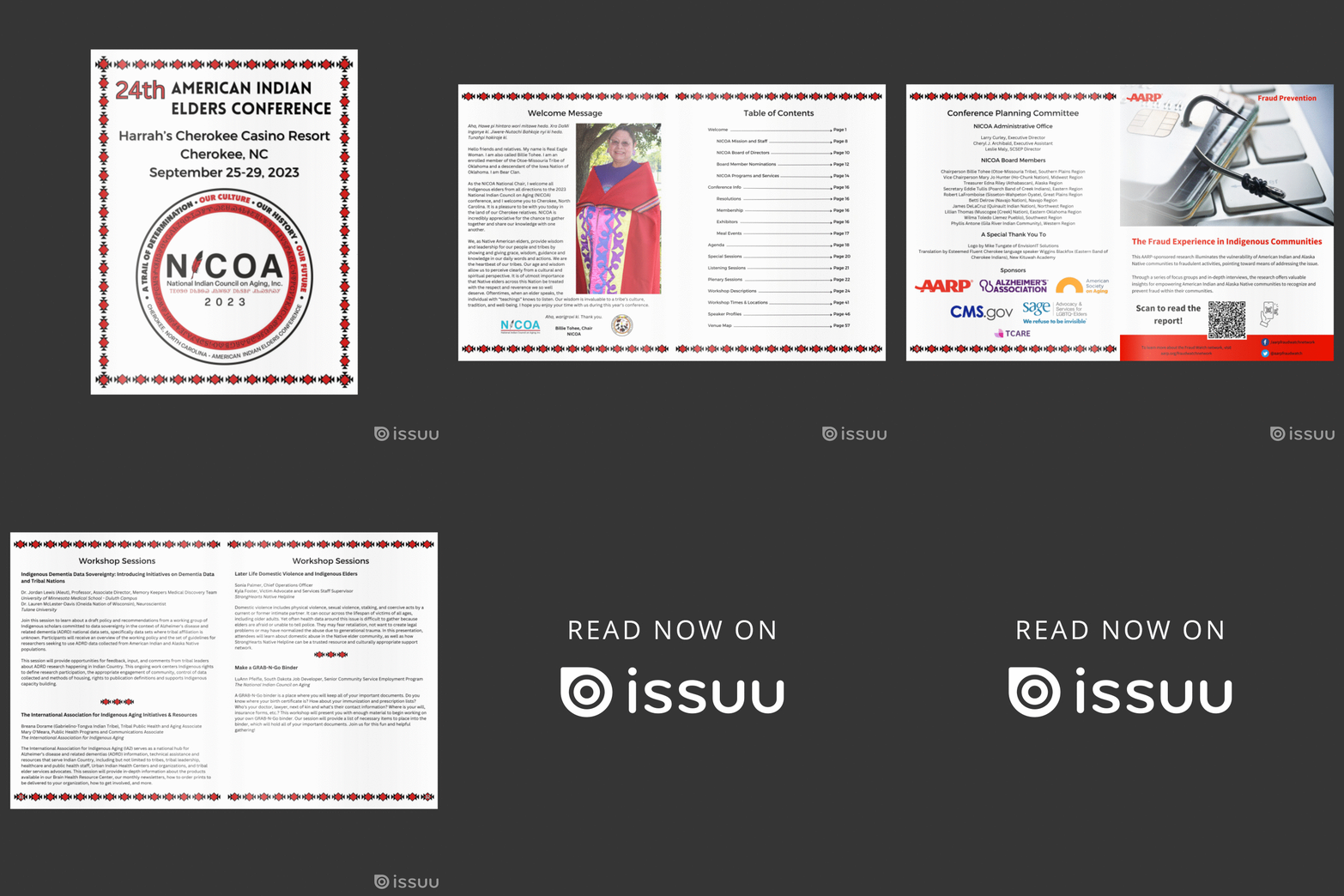
We are two days away from NICOA's American Indian Elders Conference. The conference will take place September 25-29 at the Harrah’s Cherokee Casino Resort in Cherokee, North Carolina.
If you haven't already become a member and registered online, you will need to do so on site. Conference registration is open beginning on Sunday, September 24, 10:00 a.m.–5:00 p.m., and will remain open during those times throughout the week.
To stay apprised of each day’s events, you can find a copy of the conference agenda, workshop schedule and full conference booklet online.
| | | |
Taco Sale Raises Money for Elder Trip | |
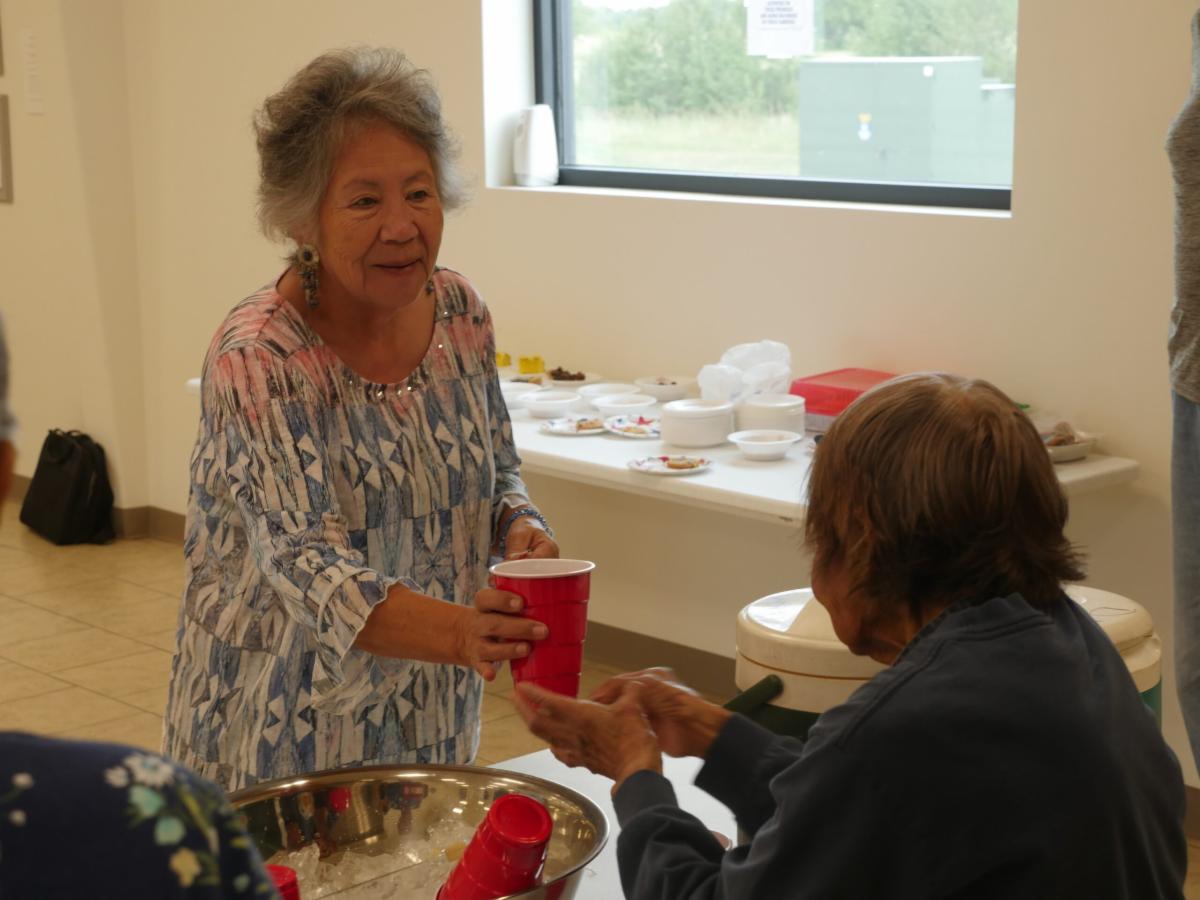
The Okmulgee Indian Community elders had a taco sale fundraiser to raise money for their trip to Cherokee, North Carolina, for NICOA’s American Indian Elders Conference. For ten dollars you got a taco, drink and dessert. Every sale helped the elders get to the conference.
Esther Gee, an Okmulgee Indian Community member, has attended four or five of the conferences and says that it’s an enjoyable event where elders make friends and see people again. She also expressed that the conference is a great opportunity to see what is happening all over the United States. A highlight to Gee is the conference’s culture night where attendees can wear cultural dress and share their cultures.
Thirty-three elders from the Muscogee (Creek) Nation are attending, and seven of those are from the Okmulgee community. Fundraising for the trip began last June.
| | | |
A Message from the Senior Community Service Employment Program | |
The Senior Community Service Employment Program (SCSEP) is a remarkable program that is specifically designed to empower and support our esteemed elders. This initiative offers a wide range of opportunities and benefits that can help elders enhance their skills, find meaningful employment, and build a solid financial foundation for their retirement years.
One of the greatest advantages of SCSEP is its focus on providing on-the-job training and job placement assistance to individuals aged 55 and above. This program not only helps elders gain valuable work experience but also enables them to stay active and engaged in their communities. Through SCSEP, elders have the chance to pursue various forms of part-time employment within their local community, which can make a positive impact on their lives and the lives of those they serve.
For instance, many participants in SCSEP are placed in nonprofit organizations or public agencies where they can contribute their skills and expertise. These opportunities allow elders to utilize their knowledge, talents, and experiences while giving back to their community in a meaningful way. Whether it involves mentoring younger individuals, assisting with administrative tasks, or engaging in community outreach initiatives, SCSEP ensures that elders remain an essential part of our society.
It also offers financial benefits that can significantly improve elders’ quality of life. Participants receive minimum wage or higher for their work, ensuring that they are compensated fairly. This not only supports their current financial needs but also strengthens their future financial security by allowing them to build a retirement fund and supplement their existing income.
The program provides assistance in finding permanent employment outside of SCSEP, equipping elders with the necessary tools to navigate today's job market successfully. It's important to note that the availability and specific offerings of SCSEP may vary depending on one's location. Visit our website to gather more information about SCSEP and its implementation in your area.
The Senior Community Service Employment Program is an exceptional opportunity for our elders to continue their journey with purpose, vitality, and stability. From providing on-the-job training to facilitating job placement assistance and financial compensation, this program ensures that elders can thrive and make significant contributions to their communities.
Let's promote and support initiatives like SCSEP to create a society where everyone can prosper, regardless of age. Remember, it's never too late to embark on a new career path and make a difference!
|
Leslie Maly
Senior Community Service Employment Program Director
| | | |
SCSEP Success Story – Juan Rico | |
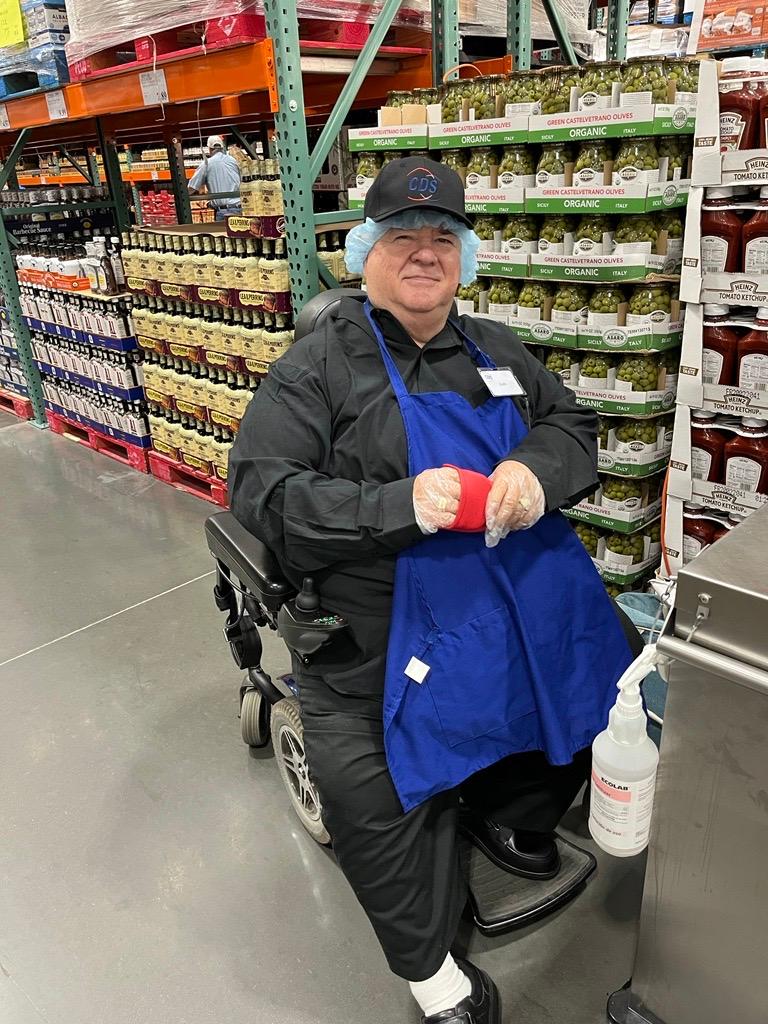
Juan Rico joined the National Indian Council on Aging’s (NICOA) Senior Community Service Employment Program (SCSEP) to help him get back into the workforce.
He trained as a cashier with a wonderful host agency called 2nd Chances Thrift Store in Bismarck, North Dakota.
He has a great attitude and they loved him there. He even overcame his mobility barriers. He has a wonderful personality and would sometimes sing to his customers. With the assistance of a NICOA employee, he was able to apply for permanent positions and interview.
Juan was able to find employment with a food vendor at Costco and has been happily serving customers food samples and singing ever since. His new employer was even willing to accommodate his mobility issues. He is a true SCSEP success story.
| | | |
Federal Program Aims To Help Seniors Get Back Into the Workforce |  | |
North Dakota's local news station KXNET recently featured NICOA's SCSEP North Dakota staff in a news article and video. Listen to what they have to say about the Senior Community Service Employment Program:
“Once we get you into the program, we find a host agency that you’ll be able to go in and get some training, on-the-job paid training,” said State Program Director Lynnette Wise. “It is paid, we do pay for it, we pay for the wages and we also pay for the workers comp insurance.”
Wise says the host agencies are always non-profit organizations or government agencies. At the host agency, people learn different skill sets to prepare them for the career avenue of their choosing.
“Once we feel that you’re job ready, we will help you make a resume, we’ll help you get registered with Job Service ND and we will also help you find a job,” said Wise.
She says just because you’re older doesn’t mean you don’t have skills to offer. Many employers need determined, mature, and reliable employees, making it a win-win for everyone, seniors included.
“We have a lot of rural people that we actually work with and even people that aren’t rural. If they are in a town, they get lonely, they’re just sitting there, they’re not doing anything, they’re bored and when you’re not using your brain, it’s not a good thing,” Wise explained.
| | | |
Older Adults Equity Collaborative | |
A Message from the Older Adults Equity Collaborative | |
It feels like currently there are many forces aiming to separate and divide us. Politics, opinions, and fear seem to be triumphing over laughter, reason, and compassion. As the NICOA team works diligently to bring a conference worthy of our members and all elders, I see us standing firmly on the side of goodwill and fun.
Don’t get me wrong there are many weighty, important topics that will be addressed at the 24th American Indian Elders Conference. But there will also be the simple joy in seeing old friends, laughing, teasing, and remembering. Being impressed with how good people look, how strong they are, how much they accomplish in a day.
I can’t wait because each new conference will always be the best one ever. Even if there are challenges, the drive we all have to get together is what makes the magic. The conference gains its energy and passion from the people attending.
Thank you for all you have gone through to make plans and find the funding to be with us; we appreciate all of you. I hope you have a chance to explore Cherokee, North Carolina — one of the most beautiful places on earth. The weather will be cooler and perhaps the leaves will be turning. Let’s have a wonderful time together!
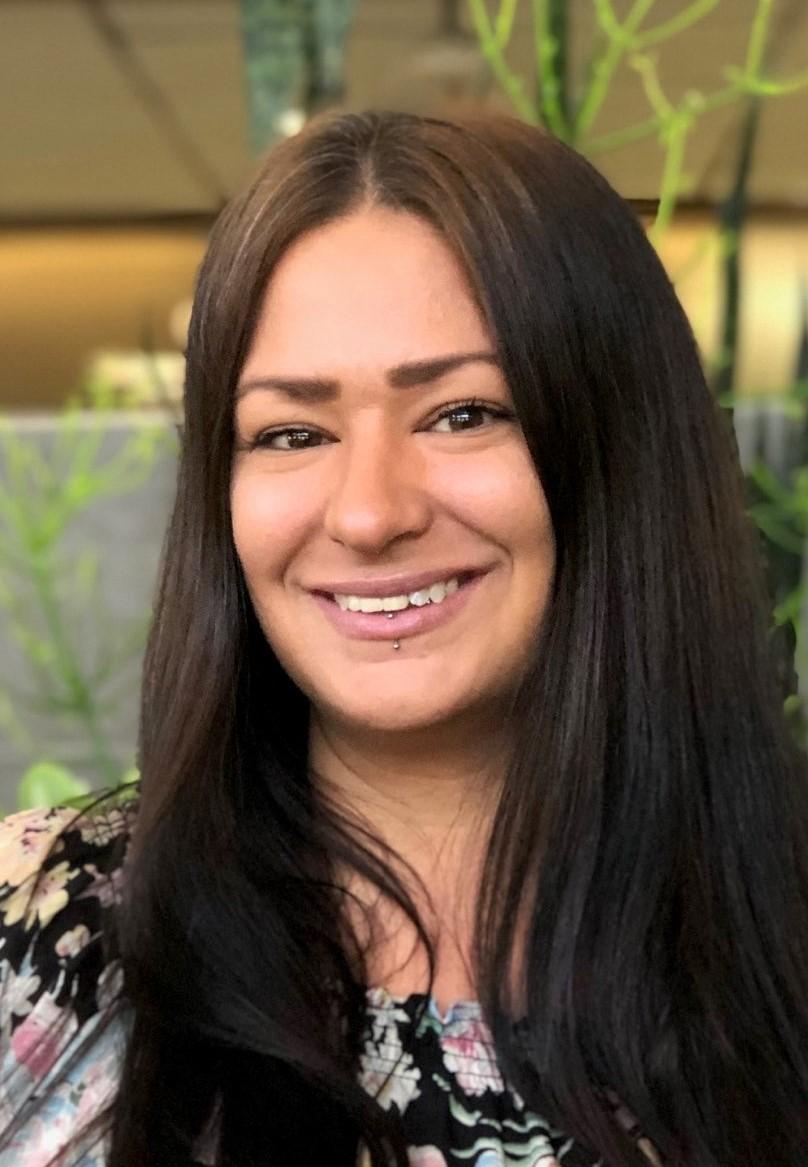
Rebecca Owl Morgan (Eastern Band of Cherokee Indians)
Older Adults Equity Collaborative Project Coordinator
| | | |
Black Feathers: A Toolkit on Disability for Indian Country | |
Dr. Crystal Hernandez, host of the Black Feathers Podcast, talks with NICOA Executive Director Larry Curley (Navajo Nation), NICOA Data Analyst Desiree Lapahie (Navajo Nation), and NICOA Project Coordinator Rebecca Owl Morgan (Eastern Band of Cherokee Indians). They discuss updates to the toolkit “Understanding Disabilities in American Indian & Alaska Native Communities”.
| | | |
Become a NICOA Member:
2023-2024 Membership Available
| |
|
Do you want to improve aging services for American Indian and Alaska Native elders?
If so, become an advocate and learn more about supporting Native elders! NICOA is the premier organization on Native aging, and we invite you to become a member. Anyone can become a member, regardless of their age or tribal affiliation (or lack thereof).
All elders are encouraged to join and have their voices heard. Be an important part of a national membership network and become a NICOA member by applying today. Memberships are for two calendar years.
| | | | | | | |
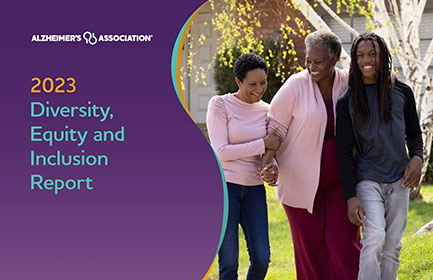
Alzheimer’s Association’s 2023 Diversity, Equity and Inclusion Report | |
An estimated 6.7 million Americans age 65 and older are living with Alzheimer's in 2023. Seventy-three percent are age 75 or older. About one in nine people age 65 and older (10.7 percent) has Alzheimer's. Almost two-thirds of Americans with Alzheimer's are women.
Find more facts and figures in the Alzheimer’s Association’s 2023 Diversity, Equity and Inclusion Report. The Alzheimer’s Association has been a long-time partner with NICOA and we appreciate their commitment to inclusion.
| | | |
Indigenous Pact: Health Equity in Indian Country | |
Private sector engagement offers the capacity for fundamental shifts in health equity. Indigenous Pact, a privately held company, grounds their work in Indigenous culture and values. A woman-owned, Native-American owned organization, Indigenous Pact’s mission is to create health equity for American Indians and Alaska Natives in one generation.
Indigenous Pact works in partnership with tribes (as opposed to for them) on developing sustainable revenue, increasing access, and improving health outcomes for all Native Americans. They aim to build a PACT between all Native Nations who are committed to health equity for Indian Country. Their goal is to get tribal communities “all-in” on a more equitable healthcare system with access to high-quality care, no matter where they are.
| | | |
Online Certificate Program Is One of Three in the U.S. Focused on Native Health | |
The Certificate in American Indian & Alaska Native Health program is an online course that is directed toward helping students develop the skills necessary to meet the most important healthcare challenges for Native people. The program, which was approved two years ago and recently began taking applicants from outside the Colorado University system, joins Johns Hopkins University and the University of North Dakota as one of just three in the nation with a focus on American Indian and Alaska Native health.
The required coursework focuses on the foundations of Native health, social determinants of health, ethical considerations of research, and community and participatory research. Students can then choose from more than two dozen electives, from nutrition to public health administration. The course is designed to give them skills to address the specific needs of the communities they serve.
| | | |
Native Researchers Stress Sovereignty Over Biomedical Data | |
The Native BioData Consortium (NativeBio) is a nonprofit research collective led by Indigenous scientists and scholars seeking to use health data to improve and protect the health, welfare and cultures of Indigenous peoples.
Government agencies and scientific researchers have a history of unethical research among Native Americans. In the 1950s, for example, the U.S. Air Force gave capsules filled with radioactive Iodine-131 to Alaska Natives as part of a thyroid function study, putting them at risk of developing thyroid cancer.
In the early 1990s, an Arizona State University professor took blood samples from the Havasupai Tribe to understand the prevalence of diabetes in that community. Those samples ended up in the hands of researchers in other institutions, who used them for research on schizophrenia, inbreeding and theories about ancient migrations from Asia to North America.
| | | |
Native America Calling: What to Think About When it Comes to Retiring | |
Retirement doesn’t just mean spending your days playing dominoes at the senior center. A lot of Native elders are taking up second careers or at least new part time jobs after retiring. A 2022 survey by U.S. News and World Report found the percentage of workers over age 62 has increased significantly in the past 10 years.
Inflation is part of the reason. So is the desire for meaningful work. From per caps to the availability of senior housing, Native workers considering retirement have specific concerns when it comes to winding down their working years.
Listen as NICOA Executive Director Larry Curley (Navajo Nation) discusses retirement in Indian Country with Jim Cordry (Rosebud Sioux), a retired federal employee and investment advisor for 21 years; and Leilani Wilson Walkush (Tlingit), chief compliance officer for Breakwater Investment Group, LLC.
| | | |
Report Shows How Native Americans Can Improve Economic Resiliency | |
Over the course of the pandemic, analysts discovered how COVID-19 exposed social inequalities from health care to the economy among different ethnic groups, including American Indians and Alaska Natives. Wells Fargo released a report on how tribal communities can thrive in case of another economic downturn.
Wells Fargo partnered with Boston Consulting Group for the report, which covers 574 federally recognized tribes in the U.S. An analysis shows some of the challenges in knowing how to move ahead is a lack of data and not knowing how tribal economies work.
Having to shut down Indian gaming, which created a record 39 billion dollars in the fiscal year 2021, according to the National Indian Gaming Commission, during COVID negatively impacted tribal government. The report offers tribal leaders a framework to think about other economic development opportunities with the profits they make from the casinos.
The report also addresses the digital divide, acknowledging that the federal government has been spending upwards of a billion dollars to support the build-out of broadband in tribal communities, but that it's going to take a while for those networks to get done.
| | | |
5 Recent Tribal Newsletters | | | |
Profile: Eastern Band on Cherokee Indians | |
The Eastern Band of Cherokee Indians is a federally recognized Indian tribe located in western North Carolina.
They are descended primarily from about 800 Cherokee living along the remote Oconaluftee River who were not forcibly subjected to the Trail of Tears to Indian Territory (now Oklahoma). They remained in the Eastern United States after the U.S. military, under the Indian Removal Act, moved the other 15,000 Cherokee to west of the Mississippi River in the late 1830s.
The Reservation is composed of 57,000 acres known as the Qualla Boundary. Cherokee people do not live on a reservation. Instead, in the 1800’s, tribal members purchased 57,000 acres of property. This land, called the Qualla Boundary, is owned by the Eastern Band of Cherokee Indians and kept in trust by the federal government. Qualla Boundary encompasses untouched mountains, rivers, and forests and is located next to the Great Smoky Mountains National Park.
The Eastern Band of Cherokee Indians has a total of 14,000 tribal members. According to the U.S. Census, the population of the reservation is approximately 9,600 people, and is 77 percent Indian and 23 percent non-Indian.
| | | |
Tribal Nations Face More Limited 2020 Census Data | |
During the 2020 census, American Indian and Alaska Native leaders across the U.S. invested time and resources to make sure their members were tallied during the head count, which determines political power and federal funding.
But the detailed data sets that resulted from the 2020 census are more limited and less accurate than they were in the previous census — and it isn’t because the COVID-19 pandemic severely limited outreach efforts but because of new privacy methods implemented by the U.S. Census Bureau in order to protect the confidentiality of participants, one of which introduces intentional errors, or “noise,” to the data.
Accurate data helps tribal leaders make decisions about where to locate grocery stores or schools and estimate future population growth. Census numbers determine funding for social programs, education, roads and elder care for tribes that have been historically undercounted.
| | | |
HUD Awards $8.6 Million to Provide Rental Assistance to Native Veterans Experiencing Homelessness | |
The U.S. Department of Housing and Urban Development (HUD) awarded 29 Tribal HUD-Veterans Affairs Supportive Housing (Tribal HUD-VASH) renewal awards, totaling $8,588,580, to provide rental assistance and supportive services to Native American Veterans experiencing or at risk of homelessness. See the full list of awardees here.
The Tribal HUD-VASH program provides housing and supportive services to Native American Veterans experiencing or at risk of homelessness by combining rental assistance from HUD with case management and clinical services provided by the U.S. Department of Veterans Affairs (VA). Currently, over 440 Native American Veterans are housed under the Tribal HUD-VASH program. Since its inception, the program has provided rental assistance or case management services to more than 1,000 Native American Veterans across the country.
| | | |
Native Healing Coalition Releases Digital Map of Indian Boarding Schools | |
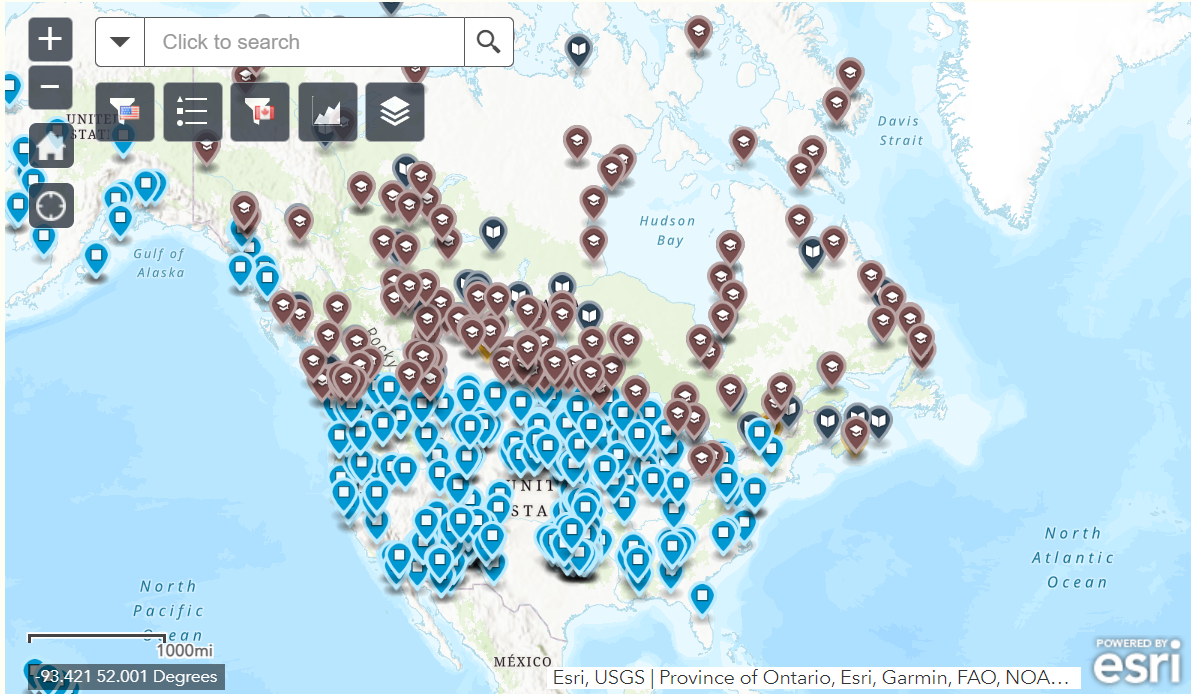
To uncover the truth about the historical impact of Indian boarding schools in the United States, the National Native American Boarding School Healing Coalition (NABS) has released a digital map containing a total of 523 Indian boarding schools across the U.S. This is the most extensive known list of schools to date and encompasses both federally operated boarding schools and institutions run by various religious entities.
The 523 schools are shown alongside known Indian residential schools in Canada, demonstrating an international scope and context geographically for the first time. Users will be able to find the locations and general information about all 523 schools, including known dates, operators, and historical notes.
Explore the interactive digital map.
| | | |
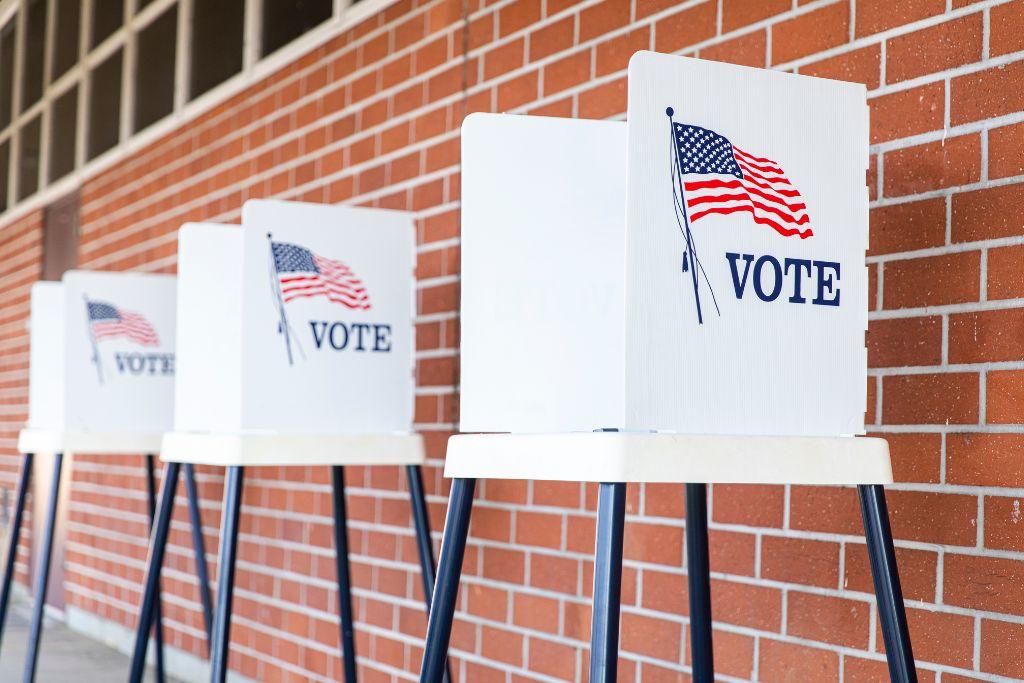
Voting Victory in Arizona | |
Earlier this month the U.S. District Court in Arizona ruled in favor of the Tohono O’odham Nation, the Gila River Indian Community and Native youth against a voter suppression law requiring proof of a physical address. Considering more than 40,000 homes on Indian reservations across Arizona do not have physical addresses, the decision is viewed as a victory for Native Americans in the state.
The order holds that the proof of address requirements in Arizona HB 2492 are preempted by the National Voter Registration Act. Under the judge’s ruling, the bill’s address requirements must be liberally interpreted so that no one is required to have a standard street address in order to vote and so that numerous documents can be used to satisfy the requirement, including an Arizona-issued ID listing only a P.O. Box or any tribal identification document, regardless of whether it has an address.
| | | |
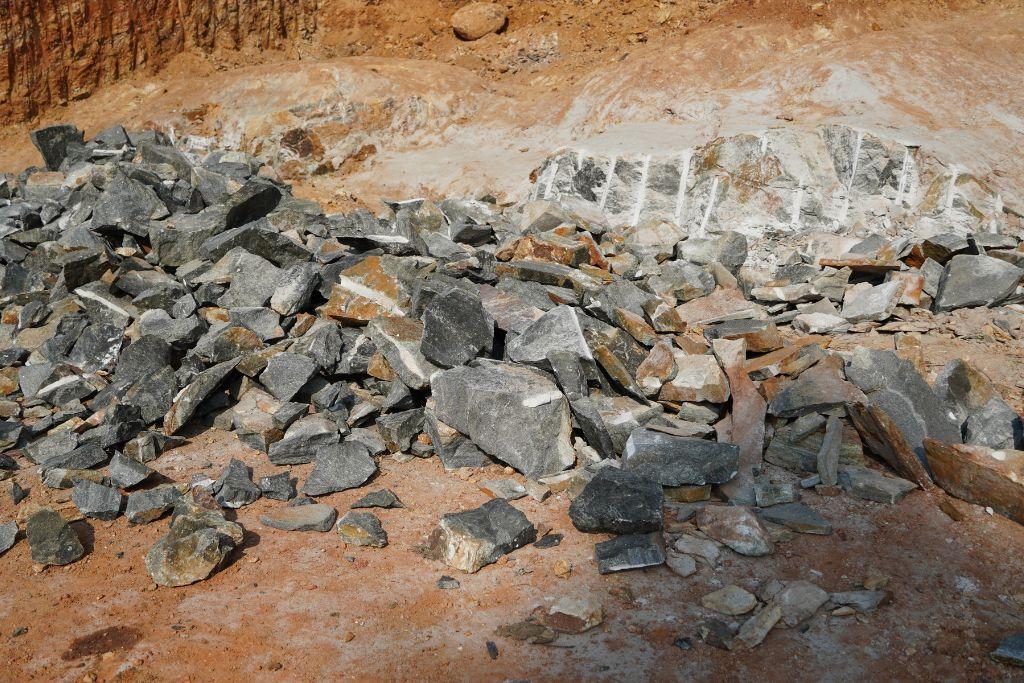
Massive Lithium Find in Nevada Puts Tribes at Odds With Mining Groups | |
Scientists say that lithium discovered three years ago in a collapsed supervolcano in Nevada could meet global demand for decades. A new analysis of the southern portion of the McDermitt caldera in Nevada called Thacker Pass shows that claystone made up of the mineral illite contains 1.3 percent to 2.4 percent of lithium in the crater, nearly double the levels in more common lithium-bearing magnesian smectite clay.
Since 2021, local tribes and environmental groups have tried without success to halt mining construction at Thacker Pass, which lies in the traditional homelands of the Paiute, Shoshone and Washoe people.
Lithium extraction methods can lead to water pollution, land degradation, and potential groundwater contamination, per Earth.org. An estimated 79 percent of lithium reserves in the U.S. are within 35 miles of Native American reservations, according to the MSCI Sustainability Institute.
| | | | | | |
|
We are committed to providing services for Native elders, but the power to provide starts with you.
Your support brings attention, education, and improved services to elders and people with disabilities across Indian Country. Every elder deserves access to the services and resources necessary to age independently, with dignity, and in their chosen community.
Consider donating to us directly to help us with our mission to improve the lives of American Indian and Alaska Native elders. Your financial support will go directly to supporting our mission to improve health, social services and economic well-being for all Native elders.
| |
The National Indian Council on Aging | 8500 Menaul Blvd. NE, Suite B-470, Albuquerque, NM 87112 | 505-292-2001 | www.nicoa.org
| | | | |