Weekly Digest Number 3 - January 17, 2023 |
|
Welcome to the RWU Rail & Labor News! This news bulletin is produced and emailed out each Tuesday morning. We hope you find each week's news and information useful. If so, please share with co-workers, friends, and colleagues. If you like, you can sign them up to get all the news from RWU HERE. Or forward them the link. Note: If you read over this news bulletin each week, you will be sure to never miss the important news of what is going on in the railroad world from a worker's perspective!
|
|
(Editor's Note: While UP and the other Class Ones have "lost their way", this phenomenon did not start recently, nor was everything rosy beforehand. UP and the Class Ones as a group have moved less freight than in 2006. The massive stock buybacks, lack of investment in the physical plant, the long and heavy trains, failure to court new traffic, and the push to downsize the employment roles has been going on for years. The most recent meltdown was simply a logical conclusion of the trajectory that the rail industry has embarked on for years. Remember, UP has made record profits through all of this. Ask the stockholders if they think UP has lost its way ...) |
|
Union Pacific Has Lost its Way: Analysis
Railroad has sacrificed service and resilience in pursuit of lower operating ratio
|
|
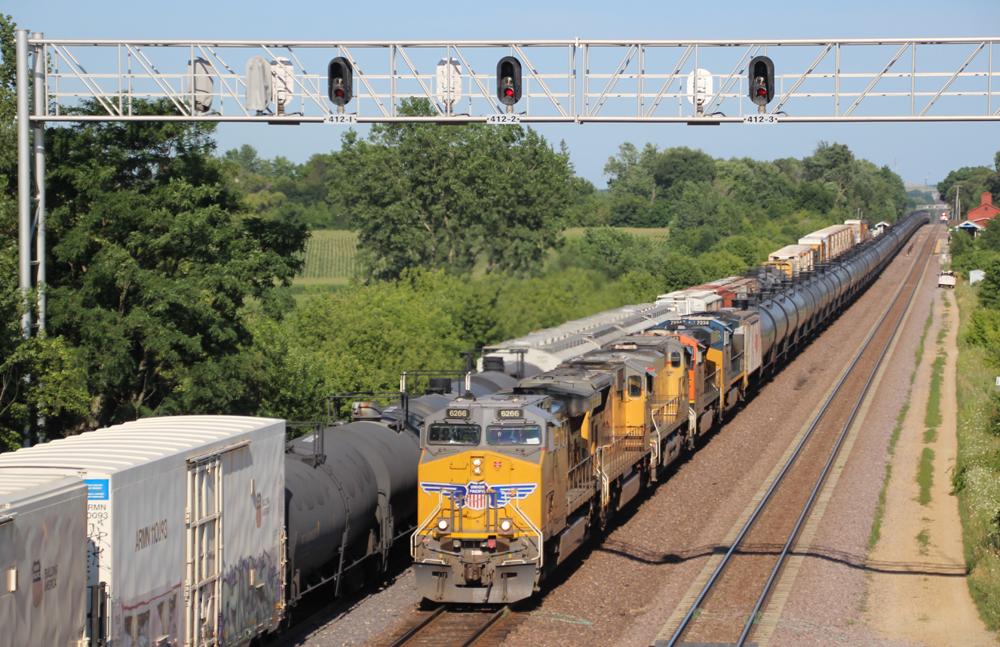
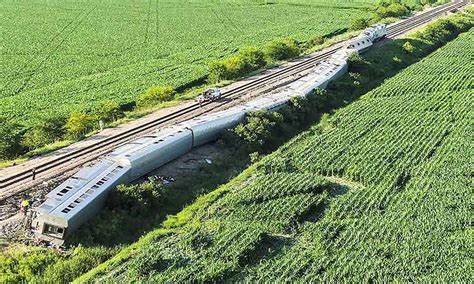
It’s fitting that Union Pacific’s logo is a shield. The beleaguered railroad needs one given the barrage of arrows coming its way.
UP has a long list of problems, many of them self-inflicted as a predictable result of its pursuit of a 55% operating ratio. There are so many issues confronting UP that it’s hard to know where to begin.
Amtrak could have chosen practically any host railroad as the target for its first regulatory complaint over the handling of its passenger trains. But in December it chose UP, whose woeful treatment of the Sunset Limited makes it the long-distance train with the worst on-time performance in the land.
How bad, you ask? Well, Amtrak says that in its worst quarter last year Sunset pasen-
gers arrived late more than 90% of the time, with UP bearing responsibility for roughly 75% of the delays the train encountered between New Orleans and Los Angeles.
The primary culprit, Amtrak claims, is UP’s practice of running freights that don’t fit in passing sidings. When the Sunset gets behind a long train that can’t make track speed, there’s nowhere to overtake the no-fitter. And so the Sunset plods along, getting later and later despite a schedule that has more padding than a sumo wrestler.
If Amtrak trains are the canary in the freight railroads’ coal mine, they’re giving plenty of warning about the state of UP’s overall operations and the service it provides.
Yes, like the other three big U.S. railroads, UP has experienced crew shortages, as it’s become harder to hire conductors amid the tightest job market in decades. But CEO Lance Fritz admits UP was already running too lean when crew shortages cropped up. So when harsh winter weather raked the railroad in early 2022, UP coagulated and never fully recovered.
One symptom of UP’s operational morass is its skyrocketing use of embargoes. Last year UP issued more than 1,000 embargoes in response to congestion, compared with just 27 in 2017 — the year before it adopted a Precision Scheduled Railroading operating model.
UP issues the vast majority of congestion-related embargoes, which alarms regulators. The Surface Transportation Board and shippers called UP on the carpet during two days of hearings in December. Congestion, STB Chairman Martin J. Oberman has said, is a euphemism for “we don’t have enough crews to move our trains and keep our network fluid.”
|
|
(Editor's Note: There has never been more potential for Amtrak to grow, expand and thrive. We need to come together - unions, enviros, communities, rail advocates and social justice groups - and keep the Class Ones from derailing this great opportunity.) |
|
Passenger Rail Outlook: Amtrak at the Crossroads |
|
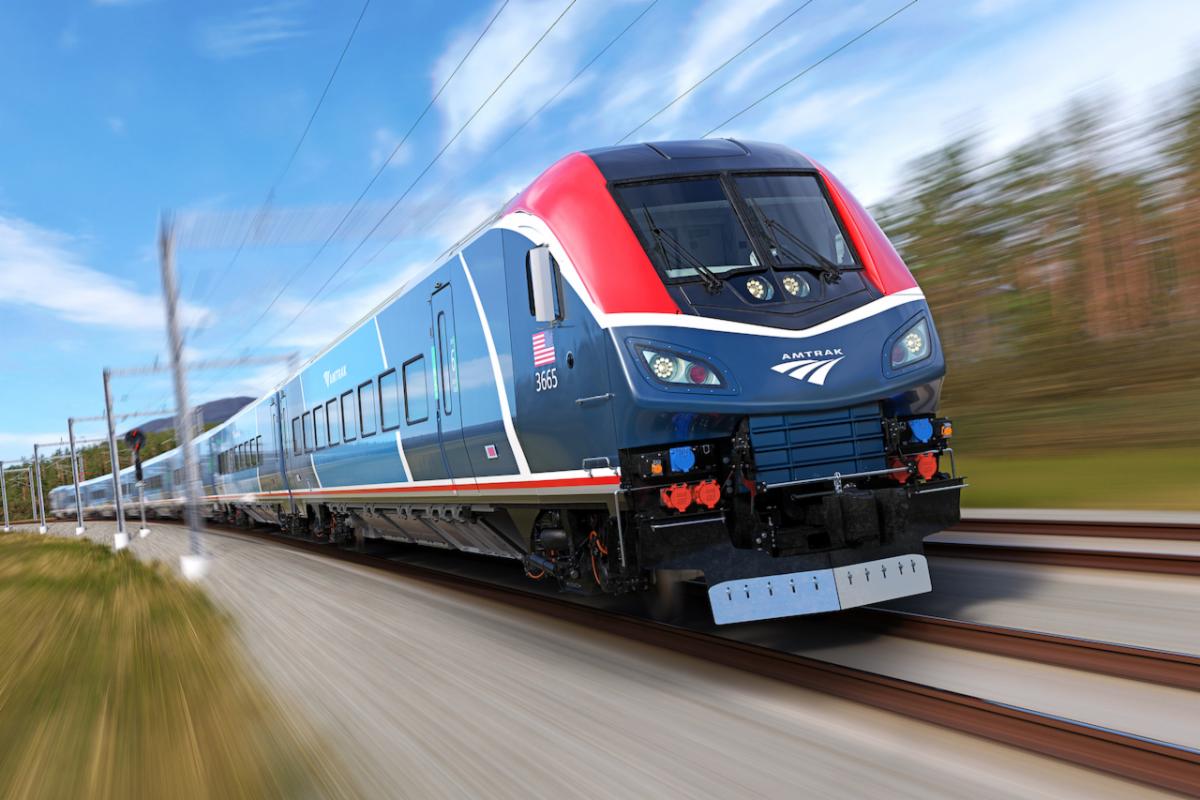
It was the best of times; it was the worst of times.” So goes the opening of A Tale of Two Cities, Charles Dickens’s 1859 saga of the French Revolution. Amtrak and its riders have experienced the best of times in some respects, along with the worst of times in others, during the half-century since “America’s Railroad” was founded in 1971, but Amtrak’s prospects stand in stark contrast today.
The present could be “the best of times” for Amtrak, at least on the capital side. Because of the Bipartisan Infrastructure Law (BIL, also known as the Infrastructure Investment and Jobs Act, IIJA), there is federal money available for capital improvements on lines where Amtrak runs. It includes money for projects along the Northeast Corridor (NEC), as well as other places on Amtrak’s National Network.
For the first time in decades, Amtrak is talking about starting service on new lines. None would be new long-distance trains, much to the consternation of some civic leaders and many rider-advocates. Still, Amtrak’s ConnectUS plan calls for dozens of new lines to start service by 2035. However likely or unlikely any of these new starts might be, Amtrak is finally talking about expansion. These are corridor-length routes, and most of the money would come from the states through which the trains would run, at least after Amtrak financial support expires after the first few years of operation.
Amtrak tends to play its proverbial cards close to its proverbial vest, but there are signs of enthusiasm about the proposed new routes. Railway Age has provided extensive coverage of the slugfest at the STB about Amtrak’s proposal to run two new passenger roundtrips daily between New Orleans and Mobile. During a public hearing last February, advocates made enthusiastic statements in support of the proposed service. So did Amtrak President Stephen Gardner, whose own statement was as strong as those from the advocates. It was refreshing to hear Gardner’s favorable and forceful statement, and advocates hope there will be more.
|
|
(Editor's Note: Some of these factors are beyond the rail carriers' control. But look at the ones that he points to that are self inflicted, particularly staffing shortages, slowing average train speed, and a lack of competitive pricing.) |
|
Railroad Freight Outlook Isn’t Good for 2023, Analyst Says
No growth seen for intermodal, carload, and coal volumes
|
|
Rail traffic is expected to have another tough year as intermodal, carload, and coal traffic will all struggle to show growth.
That’s the view of Todd Tranausky, vice president of rail and intermodal at freight forecasting firm FTR Transportation Intelligence.
North American rail traffic was down 1.9% overall last year, according to the Association of American Railroads.
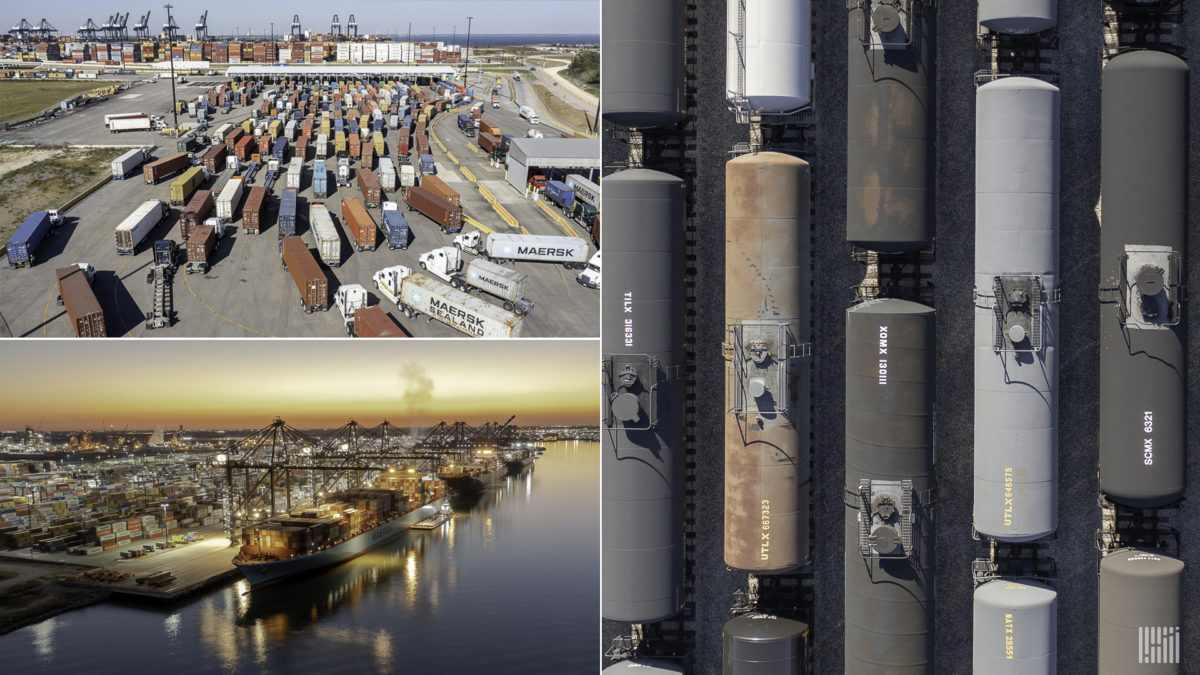
International and domestic intermodal aren’t likely to grow this year as imports are down, rail service hasn’t fully recovered from the impact of ongoing crew shortages, and rates are not competitive with trucks, Tranausky said on a webcast today.
Compared to its five-year volume average, intermodal traffic has slumped for most of the past 18 months, Tranausky noted.
Congestion at labor uncertainty at West Coast ports has prompted shippers to seek alternatives on the East Coast and Gulf Coast, which are less friendly for intermodal moves because of the relatively short length of haul.
The congestion is gone at West Coast ports, but shippers are unlikely to shift volumes back until a new labor agreement is reached, Tranausky says. And the longer labor negotiations drag on the less likely it is that shippers will divert all of their volume back to the West Coast, he says.
Overall carload traffic is expected to be flat this year, Tranausky says, as a slowing economy will reduce freight demand. When coal, agriculture, and petroleum products are stripped out of the mix, however, the remaining carload segments may grow by 1% to 3%.
“It’s not gangbusters growth,” Tranausky says.
Coal traffic was up 3.3% last year as a surge in natural gas prices prompted utilities to burn cheaper coal. That trend won’t continue, Tranausky says, because of the scheduled retirement of coal-fired power plants this year, which will permanently reduce the market for thermal coal.
|
|
(Editor's Note: Railroad workers are sophisticated enough to know that talk is cheap. And they know that the railroads' problems did not simply start with PSR, nor will those problems end with new CEO Shaw's new "formula." Prior to the PSR fiasco, NS and the rest of the Class Ones for years have put short term profits ahead of long term investment, good customer service, positive labor relations and all the rest. For example, the industry has moved fewer loads than it did in 2006. And while we welcome the change in furlough policy - if in fact it comes to fruition - there is a lot more to correcting the labor relations side of things than this!) |
|
Norfolk Southern CEO Alan Shaw’s Winning Formula: Analysis
Railroading’s future depends on service. So cost-cutting and a focus on the operating ratio are out at NS, Shaw says.
|
|
You have to give Norfolk Southern CEO Alan Shaw a standing ovation for his performance at the railroad’s investor day last month. Using logic as a sledgehammer, it took him just 10 minutes to demolish two of the things that have hurt rail service and put a lid on traffic growth: Excessive cost-cutting and an overemphasis on the operating ratio.
Shaw told a roomful of Wall Street analysts point blank that his railroad would no longer have a singular focus on its operating ratio. With the notable exception of Union Pacific, the Class I railroads have been heading in this direction. But Shaw publicly and forcefully explained why railroads need to turn the page in order to grow.
Instead of trying to cut its way to prosperity, NS aims to build a railroad with the resources required to provide reliable service year in and year out. The really big news here is that NS is attacking the root cause of the railroad industry’s recurring bouts with service problems: The practice of furloughing train crews at the drop of a hat, then acting surprised when they don’t return to the railroad.
“Our traditional approaches for dealing with business cycles — by furloughing temporarily surplus employees and tightening other spending when demand falls off — did not work well,” Shaw says. “When the time came to rebuild our ranks as freight transportation demand returned, we were unable to rehire quickly enough to operate fluidly. Today, we are still recovering from the disruption of the pandemic. Our service has turned the corner, but we are not yet at our desired level of staffing, or at the level of service that our customers expect.”
The Class I railroads get caught short of crews every three or four years. In the short term, this creates congestion, increases costs, and means railroads can’t handle all the freight that wants to move on rail.
|
|
(Editor's Note: Like so many judges, they see the world through the lens of the the wealthy, the privileged, the elite. We wish these folks well in their fight for justi) |
|
Lac-Mégantic Residents Appeal Decision Finding CP Not Liable for 2013 Disaster
Document claims railroad knew of unsafe practices by Montreal, Maine & Atlantic; argues judge made errors
|
|
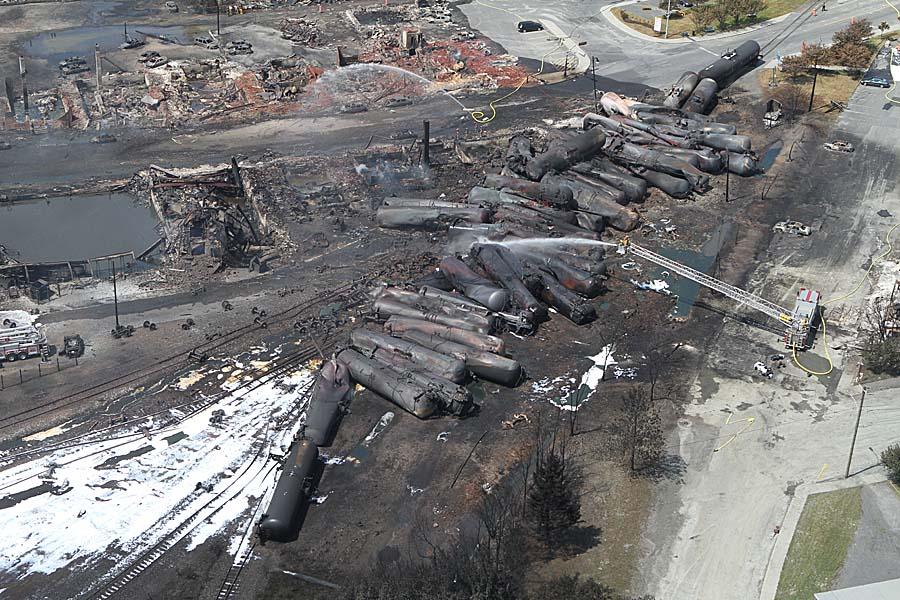
The plaintiffs in a class-action lawsuit by residents of Lac-Mégantic, Quebec, are appealing a December Superior Court decision that found Canadian Pacific was not liable in the 2013 oil-train disaster that killed 47 people in the community.
The Canadian Press reports that the three individuals involved the suit, on behalf of some 4,500 members of the class action, say CP remains a target of their action because the railroad organized the transport of the Bakken crude oil from North Dakota to its ultimate destination, a refinery in New Brunswick. They also claim that CP chose to use the Montreal, Maine & Atlantic route despite the railroad’s unsafe practices, and that the Bakken crude was not properly classified as highly volatile.
In his ruling in December, Quebec Justice Martin Bureau found the actions of which CP was accused were not the “direct, immediate, and logical cause” of the July 6, 2013, derailment and fire, and that primary responsibility rested with the Montreal, Maine & Atlantic and engineer Thomas Harding [see “Judge rules Canadian Pacific is not liable …,” Trains News Wire, Dec. 16, 2022].
While other parties were found “somewhat responsible” by Bureau, the plantiffs had ended suits against those parties after they agreed to a $430 million compensation fund for victims. Canadian Pacific did not contribute to that fund.
The appeals notice criticizes Bureau for rejecting or ignoring what it calls “credible evidence” that CP knew of the MM&A’s practice of leaving oil trains parked overnight outside of Lac-Mégantic, and that he reached an “erroneous conclusion” that Harding’s failure to properly set brakes caused the accident.
|
|
(Editor's Note: Sadly, whatever incentive may be provided by this legislation to switch from truck to train is being offset by the Class Ones' lousy customer service, skyrocketing rates, and inability to handle the freight they now have - less than 17 years ago - let alone to move additional carloads.) |
|
Biden Climate Blueprint Promotes Modal Shift Away from Trucks
Maritime and rail offer ‘cleanest options’ for achieving net-zero GHG, administration asserts
|
|
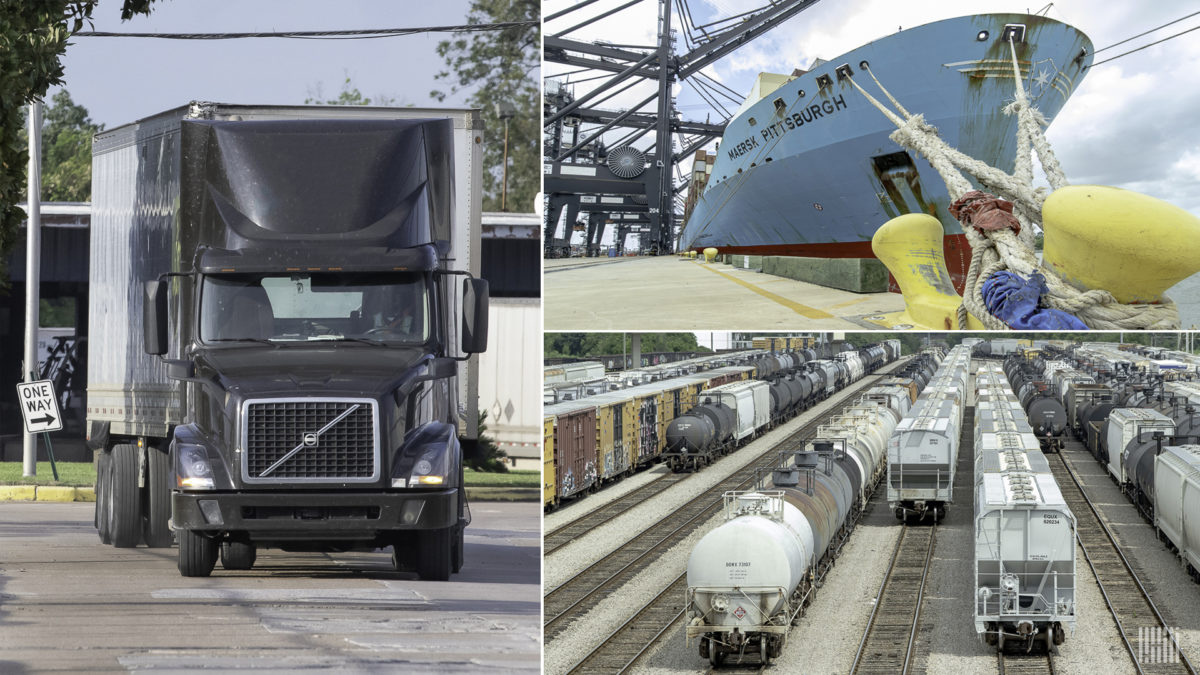
A formal strategy for reducing greenhouse gas emissions in the transportation sector prioritizes maritime and rail over trucking to more quickly get to net-zero emissions by 2050.
The U.S. National Blueprint for Transportation Decarbonization, released Tuesday by the Biden administration, is billed as a “first-of-its-kind” plan to cut GHG emissions in both passenger and freight transportation, building off funding incentives included in the 2021 infrastructure package and the 2022 Inflation Reduction Act.
The blueprint lays out three main strategies for attaining its goal: increasing user convenience, improving vehicle efficiency and transitioning to clean fuels and vehicles.
“While the first two strategies will contribute to reducing GHG emissions and produce significant co-benefits, transitioning to clean options is expected to drive the majority of emissions reductions,” according to the plan.
But in detailing the vehicle efficiency strategy, the blueprint points out that trucks and vans are the largest contributor to freight emissions. “Heavy road freight vehicles in particular can be difficult to decarbonize,” the administration states. “This energy- and emissions-intensive paradigm is a significant reason why transportation has become the largest GHG emissions source in the United States.
|
|
(Editor's Note: Looks like the Transport Canada is taking its cue from the Surface Transportation Board south of the border.) |
|
Canadian Government to Require Railroads to Report More Information on Traffic, Performance |
|
OTTAWA — The Canadian government will require railroads to provide more detailed information on traffic and performance under amendments to Canada’s Transportation Information Regulations, Transport Canada announced on Monday, Jan. 9.
Information to be reported will include origination, destination, and commodity types for railcars; waybill information; and weekly service and performance information including the average daily number of loaded and empty cars on line; dwell time at origin, destination, and terminals; average velocity; locomotive fleet status; and the number of available railway operating employees. Complete details are available here.
The changes are part of the government’s response to the final report issued last year by the National Supply Chain Task force, which called for more transparency in supply-chain performance.
|
|
(Editor's Note: Chicago Englewood is one of Chicago's hardest hit Black neighborhoods. While RWU supports expansion of rail industry infrastructure, safeguards to the local population in terms of jobs, environment, and quality of life must be honored and respected. A decade earlier, NS attempted to build a terminal in Elliston, VA where the company likewise encountered fierce opposition, that time from residents who were largely rural and white.) |
|
Community Resistance Meets Norfolk Southern Effort to Expand Chicago Rail Yard
Residents near 47th Street Yard project question lack of local hiring, road and pollution impacts
|
|
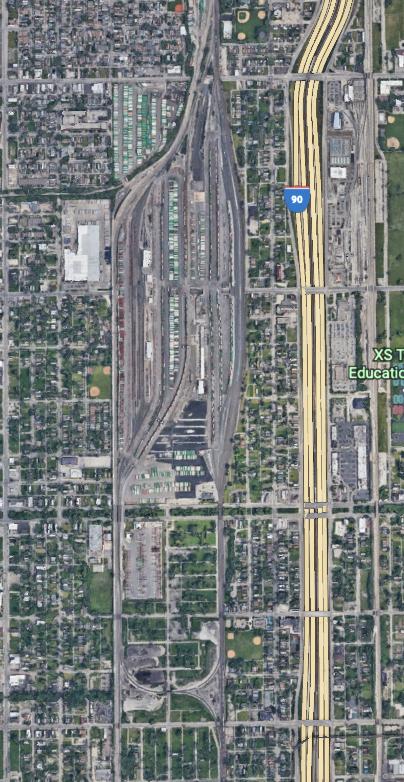
CHICAGO — Norfolk Southern efforts to expand a rail yard on Chicago’s South Side have run into resistance from local residents concerned the railroad has not followed through on promises of job opportunities, as well as on the effects of the surrounding neighborhood.
Local news site Block Club Chicago reports the railroad is continuing work to expand its 47th Street Yard, with plans to add intermodal trailer parking between Garfield Boulevard and 59th Street. A pending City Council ordinance would transfer streets and alleys in that area to NS. The city had previously sold 105 city-owned vacant lots to the railroad for $1.1 million under a 2013 agreement, and agreed to swap additional land with the railroad in a 2014 deal. The land the city received will be used to create a new trail.
Alderwoman Jeanette Taylor, who represents the area, and about a dozen residents attended a meeting this week at Kennedy King College with railroad officials on the latest expansion plans. Those in attendance voiced concerns that the expansion had not led to jobs that had been promised. They also said truck traffic to and from the yard was damaging streets and increasing pollution.
The railroad says it has exceeded requirements from a 2013 agreement requiring it to hiring a minimum of 24% minority-owned and 4% woman-owned business for its construction work, and that a large number of other jobs will be going to bid once the current project is able to move forward. In response to a query from local residents, it said has hired 50 residents from seven South Side zip codes since 2014, only five of which were actively employed as of November 2022.
Taylor had delayed the ordinance regarding the street transfer while seeking studies on the health impacts of the project and more employment of local residents. She now says she plans to “hold the railway company accountable,” with community meetings, and will vote against the ordinance if it comes up for a vote later this month.
“Norfolk Southern needs to listen to my community and do what they have asked,” Taylor said, according to Block Club. “I’m not working against the betterment of my community.”
|
|
(Editor's Note: This is a lengthy article and worthwhile reading. We have taken some excerpts from it that directly talk about rail.) |
|
Trains, Planes, Parasitism and Decay |
|
The recent operational, economic, and political debacles in the railroad and airline industries – as evidenced by the Biden regime strikebreaking of the rail workers rebellion, followed by the airline industry meltdown at Christmas time – both episodes clearly exhibit all the hallmarks of what Lenin referred to as the “parasitism and decay” inherent in the developed capitalist system.
Both railroads and airlines are trustified industries. Both occupy near-monopoly status in their respective markets. Both enjoy super profits and extraordinary public subsidy. Both operate with a de facto immunity from any significant government penalties. Both industries increasingly drain out massive capital quantities in the form of stockholder dividends, stock repurchase schemes, and enormous management salaries and compensation. The outrageous state of both key industries in the current imperialist era is a virtual advertisement for a truly socialist nationalization and public ownership and operation of both critical sectors.
We have entered yet again a new stage of monopoly parasitism and decay, with endemic speculation having been substituted for productive investment – parasitism – and epic destruction – decay – left for the public and taxpayers to grapple with once the corporate leaders have completed their looting and departed for greener pastures. Lenin’s work on imperialism deserves fresh study in view of current events on several fronts, not the least of which is the burgeoning monopoly crises ....
... Monopoly realities now dominate entire industries in the U.S. today, as best evidenced by the deplorable situation in the railroad and airline industries. Today, after an era of unfettered deregulation and merger-mania blessed by both political parties for the past 50 years, the number of Class 1 railroads has been reduced from several hundred 100 years ago to just 5 today. The Class 1 railroads are the largest in both size, revenue, and profits, and dominate the entire industry on a truly national scale.
|
|
(Editor's Note: The country desperately needs rail infrastructure projects to facilitate the movement of freight by rail like those described below. But is spending taxpayer dollars to do what the rail industry itself should be doing - but do not do because they are too busy lowering their OR, buying back stocks, and paying big dividends - is politically a quagmire. Why should the citizens support billions on subsidies to Class One railroads while these same corporations are simply in effect passing those along to their investors? One more reason that the railroads need to be publicly owned. See the RWU webpage HERE.)
|
|
Collaboration Must be Key for Railroads to Thrive, Experts Say
Infrastructure investors, local governments seek rail presence in developing projects
|
|
WASHINGTON — The near-term future of freight rail might be one marked by collaboration, whether that’s through private or public partnerships among other supply chain stakeholders or between the railroads themselves as they compete against the trucking industry, according to panelists at the Transportation Research Board annual meeting this week.
One idea that continues to be discussed is that infrastructure investors are interested in developing giant rail industrial parks in North America, said James Miller, a partner with Deloitte Canada, during a Wednesday session. The industrial parks would serve as a way to consolidate activity between transportation modes, with distribution occurring through each individual mode to markets farther inland.
“We see a lot of investors, particularly infrastructure investors, going into this space and creating and building large industrial hubs to do transloading, taking trucks off the road,” said Miller, whose work at Deloitte involves advising infrastructure investment funds on M&A activity.
An example of such a development is a planned major logistics hub in Alliance, Texas, which will have access to the rail lines of Union Pacific (NYSE: UNP) and BNSF (NYSE: BRK.B), as well as BNSF’s intermodal facility. The facility will also have access to Perot Field Fort Worth Alliance Airport, an Amazon regional air hub, a FedEx Southwest regional sort hub, a UPS ground sort hub and Interstate Highway 35 as well as other state highways.
|
|
(Editor's Note: International renegade company KEOLIS has wreaked havoc on rail and bus transit workers and passengers at Amtrak, MBTA (Boston), RTC (Reno), and numerous other transit agencies across the U.S. We need a united cross-union strategy to defeat companies like this and send them packing.) |
|
Virginia Transit Strikers Fight Privatized Race to the Bottom |
|
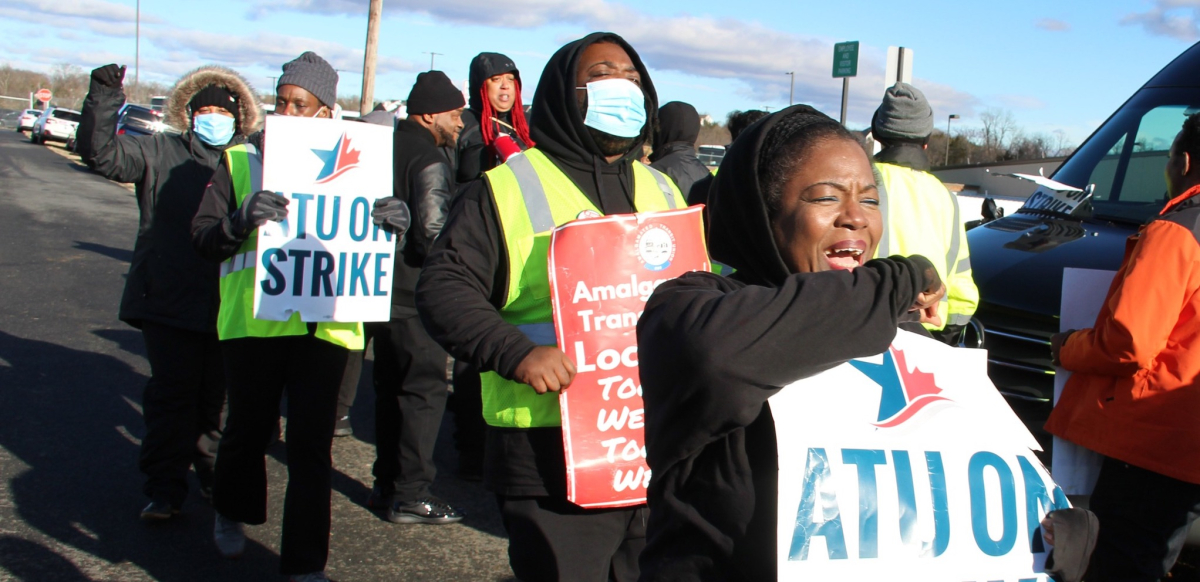
Around 130 workers who operate, fix, and dispatch buses in Loudoun County, Virginia, went on strike Wednesday morning.
They’re up against Keolis, a French multinational and one of the largest private operators of public transit systems in the U.S. The company has challenged the union’s right to strike, its right to a contract, and even its existence.
The Loudoun County workers join a movement of bus operators, mechanics, dispatchers, and call center operators striking around greater Washington, D.C. It’s the eighth transit job action in the region in just over three years. Hundreds of strikers have faced down major private contractors—not only Keolis but also Transdev, MV Transportation, and RATP Dev.
For Amalgamated Transit Union Local 689, these fights are not just over bad behavior from this or that private operator, they’re about whether buses should be a public service or a source of private profit.
In 2019, 120 workers at the Cinder Bed Road garage in Virginia struck against Transdev for 84 days, in the first strike at a Washington Metro Area Transportation Authority bus garage in four decades. They penned an iconic strike anthem and pushed WMATA to bring its operations back in-house—a rare de-privatization win.
At the heart of this strike are low wages. Loudoun County is one of the most expensive places in the country. Keolis took over the contract to operate Loudoun County Transit bus service in 2021 from another multinational operator, Transdev. In that deal, the County also merged its paratransit operation into a single contract with Keolis. g
|
|
(Editor's Note: This is nothing short of phenomenal. The Class One carriers of North America have practically no incentive nor ability to undertake such a project. And as we have seen in Texas and California, this is simply not an easy feat in this country. But we could rehabilitate tens of thousands of miles of lightly used running tracks, branch lines and secondary mainlines, and we could double track and electrify existing mainlines, and pull millions of tons more freight and hundreds of millions of passengers down them. And we could do it for far less cash than the Chinese are forking out, because they are building from the ground up, whereas the U.S. has the largest existing network of railroads in the world, complete with gradient, culverts, bridges, and infrastructure. They just are underutilized. Let's get to work! Oh yeah .. not possible. The rails are owned privately and the carriers have no interest in making such investments.) |
|
China Building More Than 1,800 Miles of Rail Lines in 2023
2,400 miles of line built in 2022
|
|
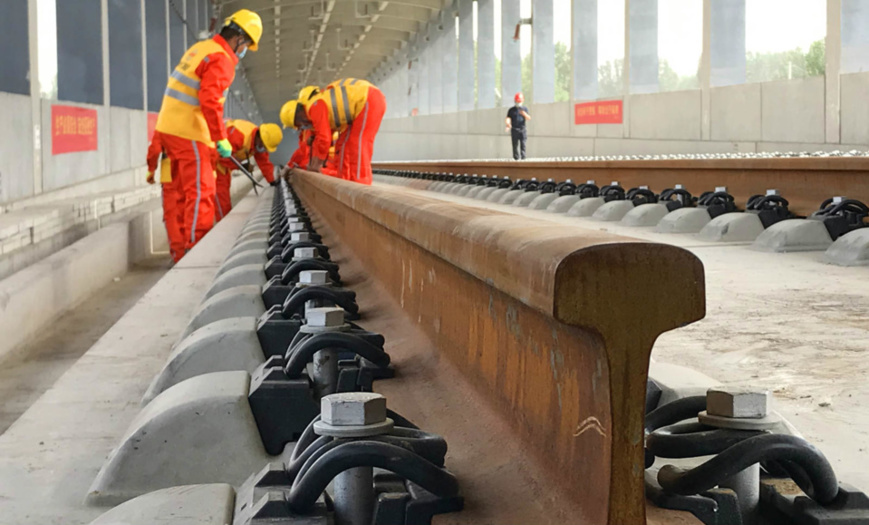
BEIJING – China is planning to build more that 1,800 miles of new railway lines this year, including 1,500 miles of high-speed railroad, Chinese media reports. Construction includes a total of 102 railway projects planned in the Outline of the 14th Five-Year Plan (2021-25) for National Economic and Social Development and Vision 2035 of China.
China Railway this year hopes to achieve $118.5 billion in business revenues, up 18% over 2022, and restore overall revenue to the level of 2019, according to a statement China Railway sent to the Global Times, the English-language, state-affiliated Chinese newspaper. A total of 1.61 billion rail passenger trips were made in 2022 and China Railway expects to carry 2.69 billion passengers in 2023. Its target for freight is to ship 3.97 billion tons of goods, up 1.8% compared to last year.
China Railway says it spent $103.9 billion in capital investment in railways in 2022 and put 2,547 miles of new lines in operation, including 1,293 miles of high-speed railways. This brought the total length of railways in operation in China to 96,312 miles at the end of 2022, including 26,097 miles of high-speed lines.
|
|
|
|
|
|
|