Rail Workers Weekly News Digest
Number 33 - August 18, 2020
|
|
Below is a series of articles compiled over the previous week.
They are of interest to railroad workers and activists.
|
|
ARTICLE #1 - INTERNATIONAL NEWS NEWS
China Outlines Ambitious Long-Term Expansion Plans
|
|
(Editor's Note: When contrasted with the U.S. investment in rail - both public and private - these numbers are staggering. When is the U.S. going to get on board and once again become a worldwide leader in rail transportation development? Given both the environmental crisis and now the mass levels of unemployment, there really is no time like the present!)
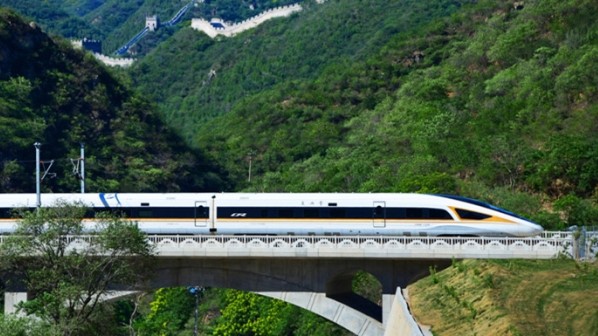
CHINA National Railways (CR) has outlined its long-term ambitions with a goal of increasing the network to 200,000km, including around 70,000km of high-speed rail, by 2035.
All cities with more than 200,000 residents will be connected to the conventional network, while cities with more than 500,000 residents will be connected to the high-speed network. The country’s network of eight vertical and eight horizontal corridors will be further enhanced. According to the World Population Review, there are currently 129 cities with more than 500,000 residents and 231 cities with more than 200,000 residents in China.
China has invested around Yuan 800bn ($US 115bn) a year in rail since 2016, with the network reaching 141,000km by the end of July. The high-speed network is now 36,000km long, connecting 94.7% of cities with more than one million residents.
CR says rail is a strategic, critical infrastructure and forms the main artery of the Chinese economy. The plan focuses on accelerating the promotion of high-quality rail development including world-class facilities, equipment, services, safety and management, focusing on nine points:
- expansion of the network
- innovation and research
- service improvements
- high levels of safety
- improved operational efficiency
- strong governance
- promotion of rail’s environmentally friendly credentials
- improving rail’s role in developing the economy, and
- increasing rail’s competitiveness internationally.
|
|
ARTICLE #2 - DERAILMENT NEWS
TSB: 'Ice Jacking' Led to CN Train Derailment
|
|
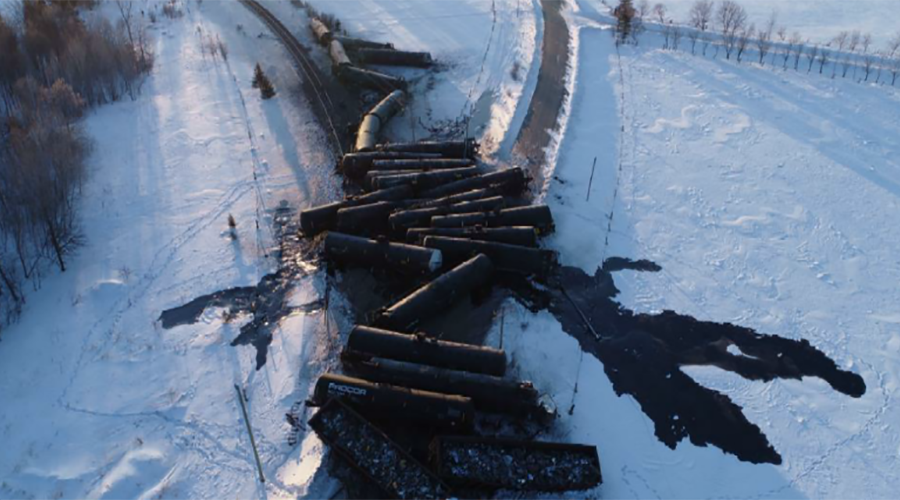
The train derailed Feb. 18 on a curve as it traveled from Winnipeg to Fort Frances, Ontario, on CN's Sprague and Fort Frances subdivisions,TSB officials said in their report. The train was hauling 144 freight cars, 33 of which left the track. Some of the cars spilled crude oil.
The derailment caused no injuries. Six homes in the area were evacuated as a precaution, TSB officials said.
"Closer examination revealed that the snow and ice had built up between the underside of the rail base and the tie plate rail seats. This caused the rail to become unseated from the tie plate and left the rail susceptible to gauge spreading under the load of the train, which led to the derailment," the report states. "This is a phenomenon commonly referred to in the rail industry as 'ice jacking.'"
A combination of weather conditions and track conditions is required for ice jacking to develop. The TSB has observed the phenomenon in at least one other investigation, according to the report.
|
|
ARTICLE #3 - PRECISION SCHEDULED RAILROADING NEWS
Panel Looks at PSR Impact on Class I, Shortline Railroads
|
|
A trio of experts discussed the pros, cons, and reality of Precision Scheduled Railroading this week during the Midwest Virtual Rail Conference.
C. Tyler Dick, a lecturer and principal research engineer at the Railtec program at the University of Illinois at Urbana-Champaign, says the late E. Hunter Harrison’s operating model aims to combine the best elements of two opposing strategies: hold for tonnage and schedule adherence.
The hold-for-tonnage approach aims to reduce cost by running long trains, Dick notes. Trains might be annulled or delayed until tonnage hits the desired level. The schedule adherence philosophy, in contrast, uses short trains to make service frequent, transit times shorter, and to reduce costs by requiring less equipment.
PSR, on the other hand, aims to provide consistent, frequent service to reduce both terminal dwell and transit time — but uses long trains and reduced rolling stock requirements to minimize costs, Dick says.
|
|
ARTICLE #4 - POSITIVE TRAIN CONTROL (PTC) NEWS
FRA: PTC Operating on Nearly All Route Miles as of Q2
|
|
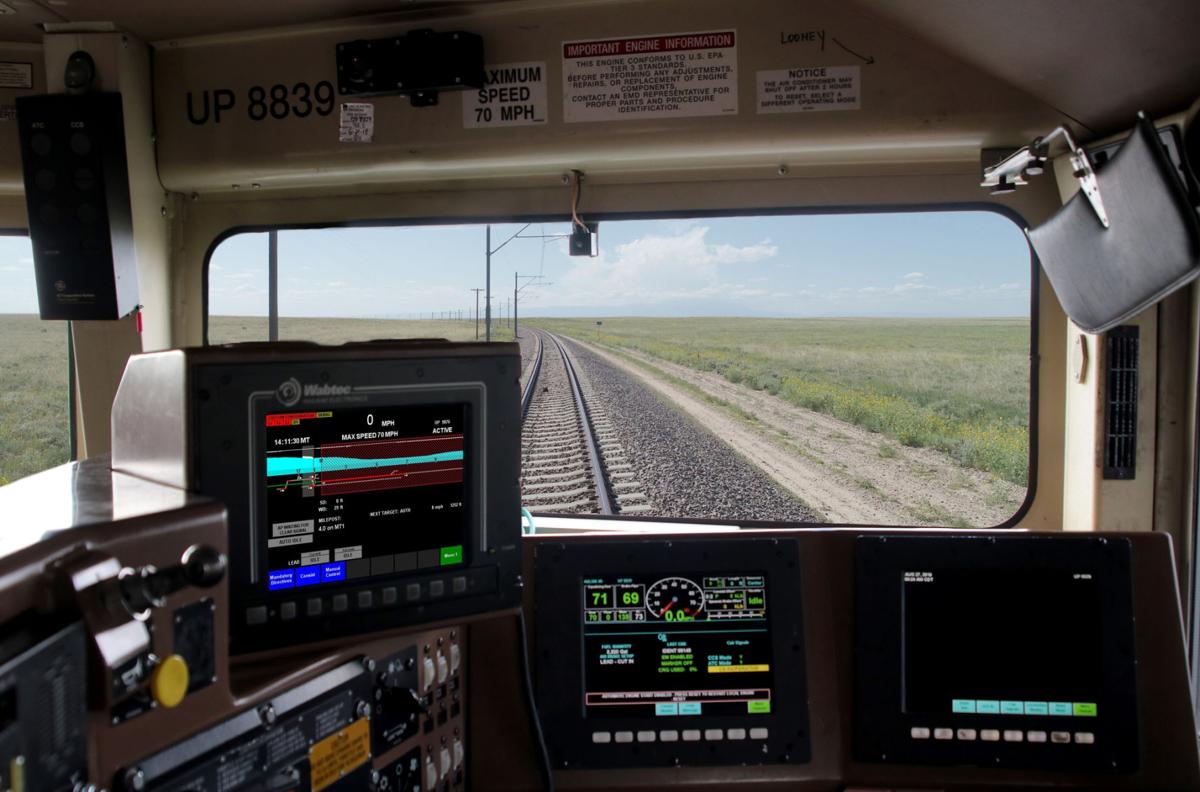
The news is based on the railroads' quarterly reports on their progress toward implementing PTC systems on their railroads as required by federal law. As of the end of the second quarter, nearly all railroads subject to the federal mandate are operating their systems in revenue service or in advanced field testing, also known as revenue service demonstration (RSD), FRA officials said in a press release.
PTC technology remains to be activated on about 700 required route miles, they said. PTC systems were in RSD or in operation on 56,846 route miles, 98.8 percent on the miles subject to the mandate. That figure represents a 0.7 percentage point increase since first-quarter 2020 and indicates that PTC technology was activated on an additional 305 miles during the second quarter, according to the FRA.
Currently, the FRA considers two host railroads "at risk" of not fully implementing PTC on all required main lines by the federal government's Dec. 31, 2020, deadline: Those railroads are New Jersey Transit and New Mexico Rail Runner Express.
Two railroads — Chicago's Metra and TEXRail in Tarrant County, Texas — were removed from the at-risk list based on their "substantial progress" on their PTC implementation in Q2, FRA officials said. Both railroads have entered RSD on 100 percent of their required main lines, submitted their PTC safety plans to the FRA and now are focused on completing interoperability by the Dec. 31 deadline.
|
|
ARTICLE #5 - AMTRAK NEWS
Amtrak Releases Criteria for Restoring Long-Distance Service
Passenger railroad says three metrics will determine when to restore daily operation after planned Oct. 1 cut to triweekly service
|
|
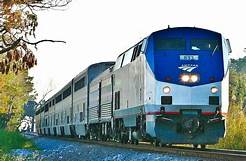
Amtrak has released information on the measurements it will use to determine restoration of long-distance service after the service is cut to triweekly, which is currently planned for Oct. 1. The three metrics to be used are:
— Public health: COVID-19 hospitalizations must be stable or declining as of Feb. 15, 2021.
— Future demand: Advance bookings for June 2021 must be at least 90% of the available seat-miles or room-miles of the figure for June 2020, as of Feb. 15, 2020. Calculations will take into consideration caps on ticket sales to promote social distancing, as well as other COVID-related measures.
— Current performance: Ridership in the first quarter of Amtrak’s 2021 fiscal year, which begins in September, must be at least 90% of projections in Amtrak’s 2021 operating plan.
If all three criteria are met for a given route, service will be restored to daily levels as early as May 2021 and no later than June 30, 2021. In releasing the metrics, Amtrak notes that the plans for reductions and subsequent restoration are dependent on sufficient federal assistance, which it says requires at least $3.5 billion for fiscal 2021.
|
|
ARTICLE #6 - AMTRAK NEWS
Q&A: Flynn Takes the Helm at Amtrak as Pandemic Persists
|
|
In early March, Amtrak announced William Flynn would succeed Richard Anderson to become the national intercity passenger railroad’s next president and chief executive officer. The former CSX senior vice president and Atlas Air Worldwide Holdings Inc. CEO began his new job on April 15 as Amtrak — like other transportation service providers — braced for an extreme financial crisis brought on by the global COVID-19 pandemic.
How quickly times had changed. At the end of fiscal-year 2019, Amtrak delivered what its executives described as its "best operating performance," logging 32.5 million passenger trips and $3.3 billion in total operating revenue. And with strong ridership and revenue levels in first-quarter 2020, the railroad was on track to achieve another high-performing year.
Prior to the Flynn announcement in March, Amtrak had submitted to Congress the railroad’s annual grant request for FY2021 in the amount of $2 billion. The proposed grant took into consideration Amtrak’s projections for another successful year of ridership growth.
Then the pandemic hit, and the railroad faced a sudden and dramatic drop in business, as cities and states declared stay-at-home restrictions in an effort to slow the spread of COVID-19. Amtrak’s ridership plummeted from 2.6 million passengers in March to just 197,000 in April, making it clear to Amtrak executives that the $2 billion grant request wouldn’t be enough to cover the railroad’s pandemic response and recovery for the next fiscal year.
After Congress passed the Coronavirus Aid, Relief and Economic Security (CARES) Act in late March, Amtrak received $1.018 billion in emergency funding to get through the immediate crisis. In May, Flynn — by then on the job for just a few weeks — wrote to Congress to request another $1.475 billion in supplemental funding to address the longer-term impacts of the pandemic and economic recession. (That request comes on top of the pending $2 billion grant request for FY2021.) In the letter, Flynn acknowledged that Amtrak now estimates ridership will be down 50 percent next fiscal year.
Last week, Flynn talked with Progressive Railroading about his and Amtrak’s response to the crisis. His answers to interview questions have been edited for length.
|
|
ARTICLE #7 - INTERNATIONAL RAIL NEWS
Three Dead After Passenger Train Derails in Scotland
|
|
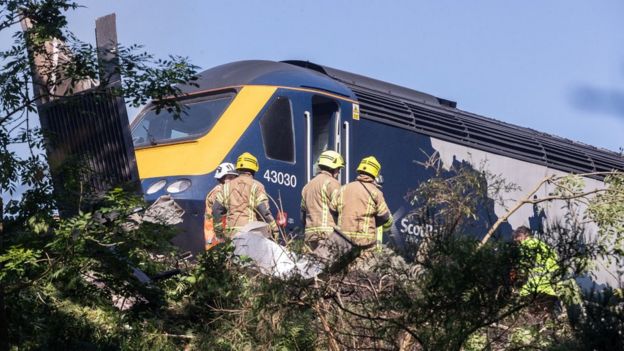
Three people, including the driver and a conductor, have died after a passenger train derailed in Aberdeenshire.
A major incident was declared and about 30 emergency service vehicles were called to the scene.
It involved the 06:38 ScotRail service from Aberdeen to Glasgow Queen Street.Six people have been taken to hospital but their injuries are not believed to be serious.
British Transport Police said the families of the driver and the conductor had been informed and were being supported by specially-trained liaison officers.
It's long been recognised that landslips are one of the greatest risks to Britain's railways and that a changing climate will make them more likely. Heatwaves and droughts can dry out the steep embankments beside the tracks, and over the years will start to weaken them.
Add to that the effects of heavy rain, of the kind seen just now in Scotland, saturating and eroding the soil, and undermining its strength. And with rising global temperatures set to bring extremes of weather never anticipated by the Victorian engineers who built the lines, Network Rail has been studying how best to keep the tracks safe.
But it admits that "we know we can't rebuild every mile of railway".
|
|
|
|
|
|
|