|
|
Defending wildlife and habitat through:
Advocacy
Conservation
Education
|
|
|
News & Updates: December 2022 |
|
In this issue:
- AOK vehicle graphics highlight wetlands
-
Where have all the birds gone?
- AOK fights against a rock quarry in Pottawatomie County
-
End-of-Year Giving: Tax-savvy ways of giving are a Win-Win
- Registration now open for Kansas Lek Treks Prairie-Chicken Festival
-
Chapter Spotlight: Southeast Kansas Audubon Society records record number of Trumpeter Swans on Christmas Bird Count
- Save the date!
-
AOK Nature Walk Recommendations: Black Jack Battlefield and Nature Park in northeast Kansas
|
|
|
AOK vehicle graphics highlight
wetlands
|
|
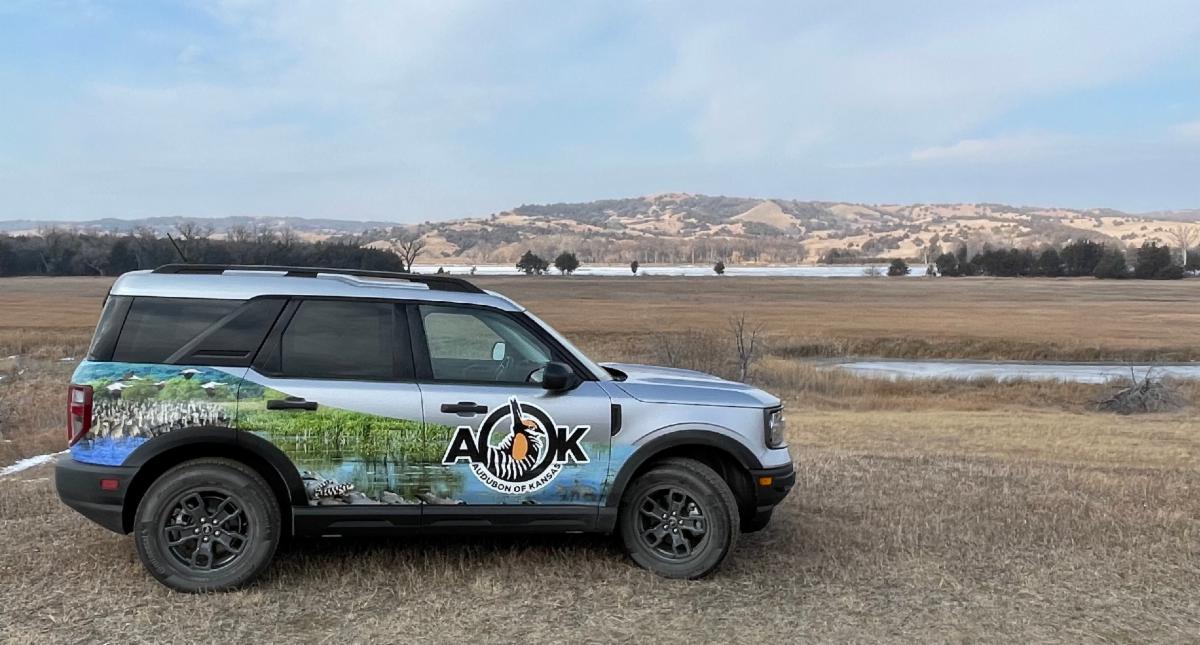
In last month's newsletter, we highlighted the prairie graphics on the left side of AOK's new-to-us vehicle. Recap: The 2021 Ford Bronco Sport was a used vehicle purchased in June using donations to the Greater Manhattan Community Foundation: Grow Green Campaign in April. The new vehicle allows AOK to spend less on transportation costs when compared to reimbursing staff for mileage. Thanks to the contribution of a generous donor, we were able to add graphics to AOK's new vehicle. We thank David Rintoul and Bob Gress for providing photos.
This month, I would like to highlight the wetland side. It features Whooping Cranes, Sandhill Cranes, a barred tiger salamander (Kansas' state amphibian), and Topeka Shiner. Wetlands are not just marshes. The term can also include ponds, wet meadows, river ecosystems, and other wet habitats. Four wetland types can be seen in the photo above taken at AOK's Hutton Niobrara Ranch Wildlife Sanctuary. There is a pond in the right foreground which is used by Blue-winged Teal and American Coot in the breeding season. Surrounding the pond is taller cattails which makes an ideal marsh habitat for Virginia Rail and Sora. In the background, you can see the Niobrara River. The sandbars in this river are used by endangered Piping Plover and Interior Least Tern for nesting. In winter, Bald Eagles congregate near open water. Between the pond and the river is a wet meadow. Bobolink love nesting in this area, and elk graze it in winter.
Did you know that Kansas hosts two wetlands which are globally important stopover sites for thousands of migratory shorebirds and waterfowl? The wetlands are Cheyenne Bottoms and Quivira National Wildlife Refuge. Both sites support threatened or endangered birds during nesting, staging or wintering periods. Cheyenne Bottoms is one of the top migratory shorebird staging areas in the United States, with 10 species of shorebirds having a significant percentage of their populations stopping at Cheyenne Bottoms in a given year. Cheyenne Bottoms also provides important staging and nesting areas for waterfowl species including Mallards and Blue-winged Teal. Cheyenne Bottoms is made up of KS Department of Wildlife and Parks’ Cheyenne Bottoms Wildlife Area (19,857 acres) and The Nature Conservancy’s Cheyenne Bottoms Preserve (>8,500 acres). Quivira National Wildlife Refuge represents an excellent example of an inland salt marsh, a rare habitat type in the USA’s midwestern region. A diversity of habitat is provided by native grass uplands, fresh and saltwater marshes, and salt flats. Quivira NWR is managed by the U.S. Fish & Wildlife Service in the National Wildlife Refuge System.
Can you guess which habitat is featured on the back of the vehicle? Hint: it is another major habitat found in Kansas! The answer will be revealed in next month's newsletter.
|
|
Where have all the birds gone? |
|
This time of year, AOK's Executive Director, Jackie Augustine, fields many questions about where the birds have gone. People accustomed to seeing their backyard full of birds suddenly finds them empty, and they want to know why.
The answer to this question is two-fold: one a natural explanation; the other a human-caused one.
There are many natural reasons why a person might be seeing fewer birds during fall and winter. First, many birds only spend their summers in Kansas, with fewer only spending winters in Kansas. Sometimes a lack of birds is seen when the summer residents leave, but before the winter birds arrive. Second, year-round residents often change their behavior. In summer, they may be territorial and spread out evenly over an area. In winter, they may form mixed-species flocks for safety. Because birds are concentrated in smaller flocks, you may have to travel farther before seeing them. Third, there is an abundance of fresh food in late summer and fall. Birds may not be visiting your backyard feeder because there is plenty of fresh food available.
Now for the human-caused reasons for lack of birds. And in case you think that bird populations are healthy, this is not the case for the majority of bird species. A recent study estimated that we have lost 3 billion individual birds from North America since 1970. That means that we have lost 25% of total bird abundance. Grassland birds have experienced the sharpest declines with 53% of their population lost since 1970. This study identified the following reasons for the decline:
- habitat loss and degradation
- depredation by feral cats
- collisions with windows, vehicles, power lines, wind turbines, communication towers, and other industrial structures
- direct and indirect effects of pesticides
Even though the loss of birds is depressing, there is reason to hope. Waterfowl, raptors, and woodpeckers have increased due to conservation efforts. And there are many things you can do to help protect birds:
- plant native plants. Native plants support more insects than non-native plants. Insects are fed to the young of 96% of landbird species. If you don't own property, encourage native plantings at churches, schools, parks, government offices, and other public spaces.
- keep cats indoors. Besides, indoor cats are healthier than outdoor cats.
- reduce or eliminate the use of pesticides and herbicides to protect the insects that feed the birds
- do not pick up fallen leaves. Moths and other insects need leaves to help them overwinter. Moths provide a great source of food for birds.
- make windows safer by applying UV silhouettes, netting, or other visual or physical barriers
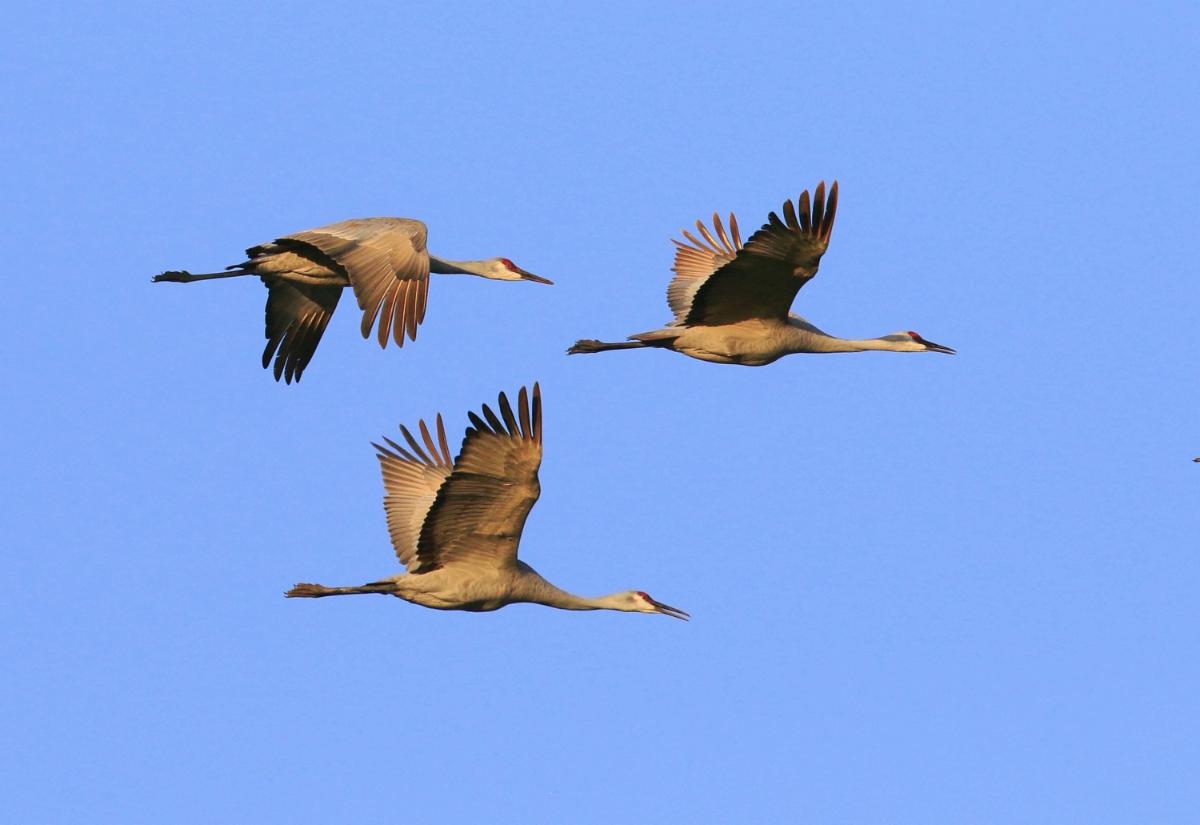
Photo: Sandhill Cranes by Bob Gress
|
|
|
AOK fights against a rock quarry
in Pottawatomie County
|
|
Although those outside of AOK might think we are against all development, we only speak up when development threatens declining species or sensitive habitats. We rely heavily on The Nature Conservancy's Site Renewables Right map to determine when and where our advocacy efforts are warranted.
In April, Audubon of Kansas testified against a proposed rock quarry in Pottawatomie County. The proposed rock quarry in Pott County was not only sited on pristine tallgrass prairie habitat, it also was located in a critical corridor connecting populations of Greater Prairie-Chicken. These upland game birds have experienced a 30% decline in Kansas since 2015.
We recommended that prairie-chicken surveys be conducted before construction. If prairie-chickens were found on the site or within 0.75 miles of the site, the site should not be developed to conserve this declining species with economic importance as a game bird. If a lek is discovered between 0.75 and 1.5 miles from the site, noise mitigation should be enhanced. No noise (including blasting and truck operation) should occur between an hour before sunrise until 2 hours after sunrise between March 15 and May 15 while the quarry is in operation. This time period is critical for prairie-chicken males to display and produce a low-frequency ‘boom’ vocalization to attract females. The boom can be heard over a mile away when winds are calm.
The cooperation between neighboring landowners and environmental groups has attracted statewide attention. A recent article in the Kansas City Star entitled, "KS farmers worried rock quarries will damage water. So they banded together to fight back" outlines the efforts made by landowners and environmental groups to fight the quarry.
Our efforts resulted in the Planning and Zoning Commission recommending that the quarry's permit be denied. However, the Pott County Commissioners approved the permit. The matter is currently being litigated in courts.
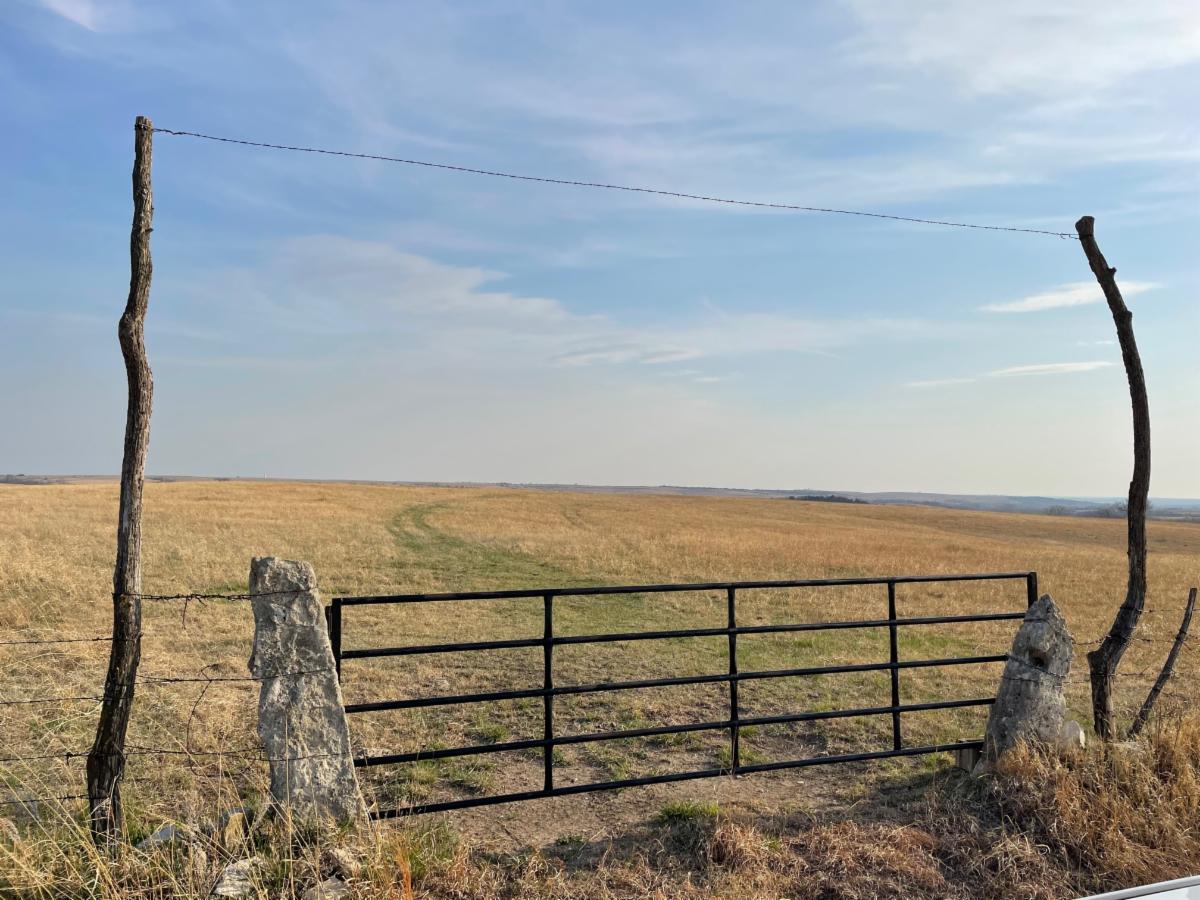
Photo: The proposed quarry site in Pottawatomie County by JK Augustine.
|
|
|
End-of-Year Giving:
Tax-savvy ways of giving are a Win-Win
|
|
With the end-of-year giving season fast approaching, AOK would like to remind its generous supporters that there are ways of giving that provide tax benefits to the donor. Read about two of these options below.
IRA Charitable Rollover
If you’re 70-½ or older and do not depend upon your required minimum distribution from your IRA (Individual Retirement Account) for living expenses, you may be able to make a tax-free distribution from your IRA to AOK. Contact your IRA representative to ask about this option.
Gifts of Stock
You can avoid capital gains tax and derive other tax benefits through making a gift of appreciated securities—publicly traded stocks, bonds, and mutual fund shares—to AOK. Contact AOK's Director of Philanthropy (contact info below) and AOK's endowment manager, Bryan Ramsay at Probitas Wealth, LLC, to make arrangements to transfer the stock (phone 785-764-0629).
Kelley is happy to answer all your questions about giving:
Kelley Hurst
Director of Philanthropy
785.917.0400
|
|
|
Registration now open for
Kansas Lek Treks Prairie-Chicken Festival
|
|
Audubon of Kansas (AOK) held its first annual Kansas Lek Treks Prairie-Chicken Festival from April 7-10, 2022 in Hays, KS. Hays was chosen because opportunities to see both Greater and Lesser Prairie-Chickens are within an hour’s drive of Hays. National advertising attracted 90 participants from 25 different states and one international attendee. About 25% of attendees were from Kansas. Participants saw both Lesser and Greater Prairie-Chickens on private lands in eastern Gove and western Trego Counties in Kansas, and Sharp-tailed Grouse during pre- and post-festival trips to AOK’s Hutton Niobrara Ranch Wildlife Sanctuary in northern Nebraska. There are also social events and field trips focusing on wetlands, geology, or prairie grouse habitat management.
Next year’s festival will be held Apr 13-16, 2023. We will offer the same prairie-chicken tours, field trips, and social events. Tiffany Kersten will speak at our banquet about “Birdie Big Year: Elevating Women Birders”. Tiffany Kersten didn't set out to do a big year, but after a series of unanticipated and serendipitous events, she suddenly found herself amidst one. As a sexual assault survivor, she spent 2021 traveling to all corners of the Lower 48 States, tallying birds and gifting personal safety alarms to women she met along the way. Her goal was to see 700 species, and to raise awareness of women's safety in the outdoors. She ended up surpassing her goal and setting a new Lower 48 Big Year record of 726. In her presentation, Tiffany will lead us through the fear, empowerment, struggles and healing that all played vital roles in the personal growth she experienced on this wild adventure.
New for this year is our partnership with Sabrewings Nature Tours. They are offering two post-festival trips: one to see sage-grouse in the front range, and one prairie-chicken photography workshop. Click on the links below for more information.
Register for the festival today! Over 90 people have already registered!
|
|
|
Chapter Spotlight: Southeast Kansas Audubon Society records record number of Trumpeter Swans on Christmas Bird Count |
|
Most Audubon chapters in the state sponsor at least one Christmas Bird Count. The November newsletter described how the counts are not only a great opportunity for new birders to learn from experienced birders, but also a fabulous way to contribute to community science.
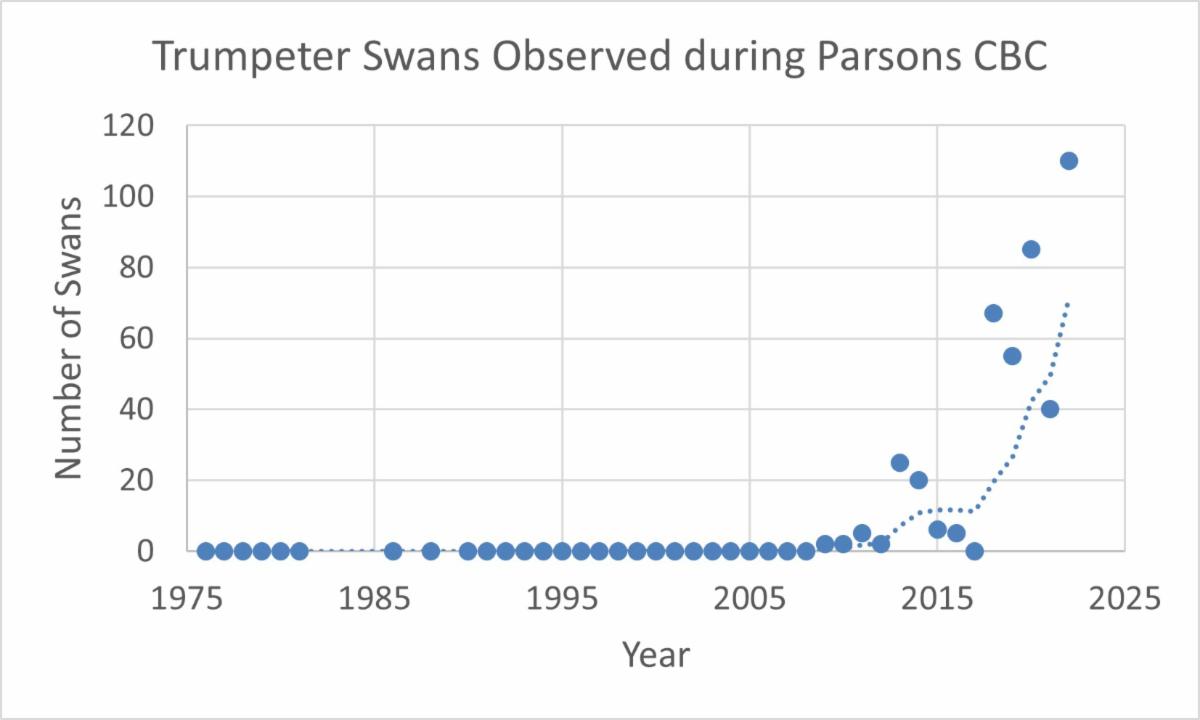
AOK's Executive Director, Jackie Augustine, was able to participate in the Parsons count sponsored by Southeast Kansas Audubon Society. This count started in 1976 and is currently coordinated by Andrew Burnett, the chapter's Vice President. In this count, birders meet at sunrise at Neosho Wildlife Area to count waterfowl before splitting up to cover the entire circle. A record number of 110 Trumpeter Swans were observed during the count! No swans were observed in the first 33 years of the Parsons Christmas Bird Count with the first two being observed in 2009. They have been seen during the count in nearly every year since. The data are plotted in the graph below, and can be described as exponential growth where there is a rapid increase following a long period of slow growth. What is responsible for this conservation success story?
Hunting nearly wiped out Trumpeter Swans. By the 1935, only 69 individuals were known to exist in the contiguous United States. In the 1940s, they were still considered one of the four rarest birds in America. In the 1930s through the 1950s, conservations efforts included protecting them from hunting, controlling predators, feeding in winter, and translocating them to other breeding areas. Today, Trumpeter Swans are still illegal to hunt, but conservation focuses on restoring wetland habitat needed by the birds for breeding, migration, and wintering. Partners in Flight estimates the current global breeding population to be 63,000 individuals.
Trumpeter Swans are the largest native waterfowl in North America, and one of the heaviest flying birds. They are named for their trumpet-like call often heard when disturbed or in large flocks. Trumpeter Swans can live over 25 years in the wild, but high juvenile mortality means the average life span of swans is 3-4 years. They can pair with a mate at 2-3 years of age, but typically do not start nesting until 4-7 years old. They lay 4-6 eggs, but hatching success is usually less than 75%.
Look for these magnificent birds on a wetland near you!
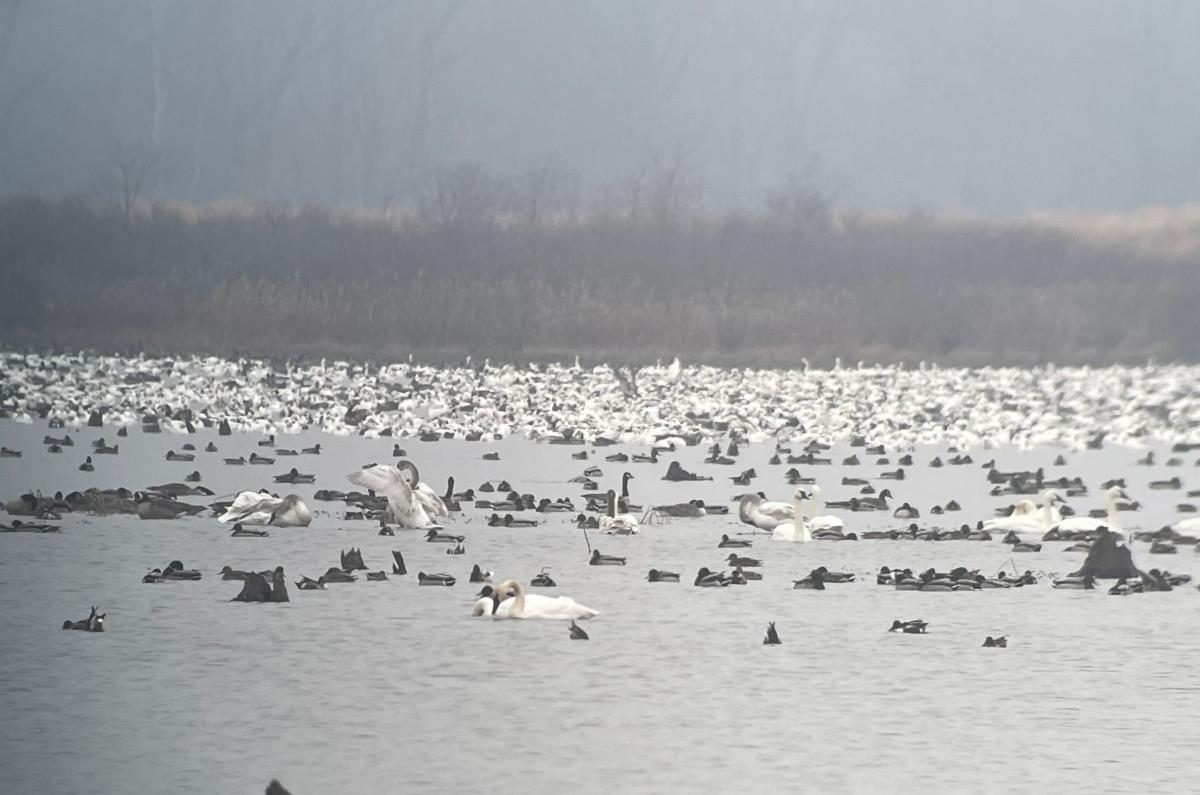
Photo: A view through the spotting scope at Neosho Wildlife Area showing the Trumpeter Swans in the foreground, Snow Geese in the background, along with Canada Geese, Mallards, and Northern Shovelers. Photo taken by JK Augustine.
|
|
|
Audubon of Kansas is starting to plan events for the coming year. Mark these events on your calendar!
February 18: Great Backyard Bird Count, location and time TBD
April 22: Earth Day, location and time TBD
May 7: Achterberg Work Day
May 22-26: Hutton Work Week
June 4: National Prairie Day, location and time TBD
July 24-28: Hutton Work Week
September 10: Achterberg Work Day
September 25-29: Hutton Work Week
Oct 1: Open House at Hutton
November 3-5: Celebration of Cranes at Quivira National Wildlife Refuge
Hutton is AOK's sanctuary near Bassett, Nebraska
Achterberg is AOK's sanctuary near Lincoln, Kansas
|
|
|
AOK shares favorite walks,
hikes and birding spots!
|
|
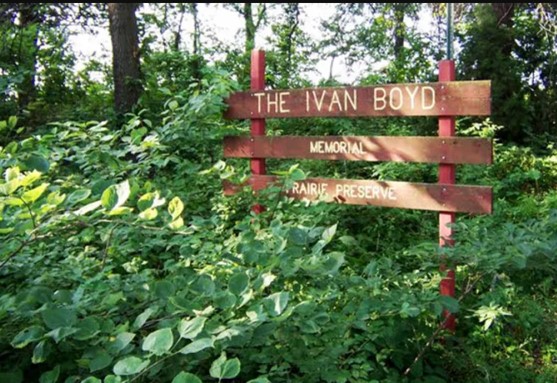
Photo from the Ivan Boyd Prairie Preserve website
|
Located 3 miles east of Baldwin City on Hwy 56
Address:
2011 N 200th Rd
Wellsville, KS 66092
|
|
Ivan Boyd Prairie Preserve in the Black Jack Battlefield and Nature Park in northeast Kansas
In the last newsletter, I introduced you to the Cimarron National Grasslands and its hiking path along the Santa Fe Trail. Today, I'm bringing you to the other end of the trail in Kansas. Remnants of the Santa Fe trail can be seen at the Ivan Boyd Prairie Preserve within the Black Jack Battlefield and Nature Park, located in south Douglas County, near Baldwin City, Kansas. Ivan Boyd was a faculty member of Baker University and enjoyed walking through this prairie and sharing his love of nature with children.
The presence of the ruts indicates that the area is unplowed native prairie. The area is maintained with periodic prescribed burning, cattle grazing, and mowing.
The area is also seeped in history. At dawn on June 2, 1856, the abolitionist John Brown led a Free-State militia in an attack on the camp of a pro-slavery militia led by Henry Clay Pate that was encamped along the Santa Fe Trail in southeastern Douglas County, Kansas Territory. Brown himself called the action "the first regular battle between Free-State and proslavery forces in Kansas". Self-guided tours of the battlefield are available, with free guided tours at 1pm on Saturday and Sunday from May through October.
A 2-mile trail takes you past the Santa Fe trail ruts, Black Jack Battlefield, and forested and prairie restoration areas.
|
|
|
|
Lana Arrowsmith - Hutton Niobrara Coordinator - Hutton Sanctuary Management & Reservations lanamicheel@gmail.com
Audubon of Kansas
PO Box 1106 - Manhattan, KS 66505
785-537-4385
|
|
|
|
|
|
|