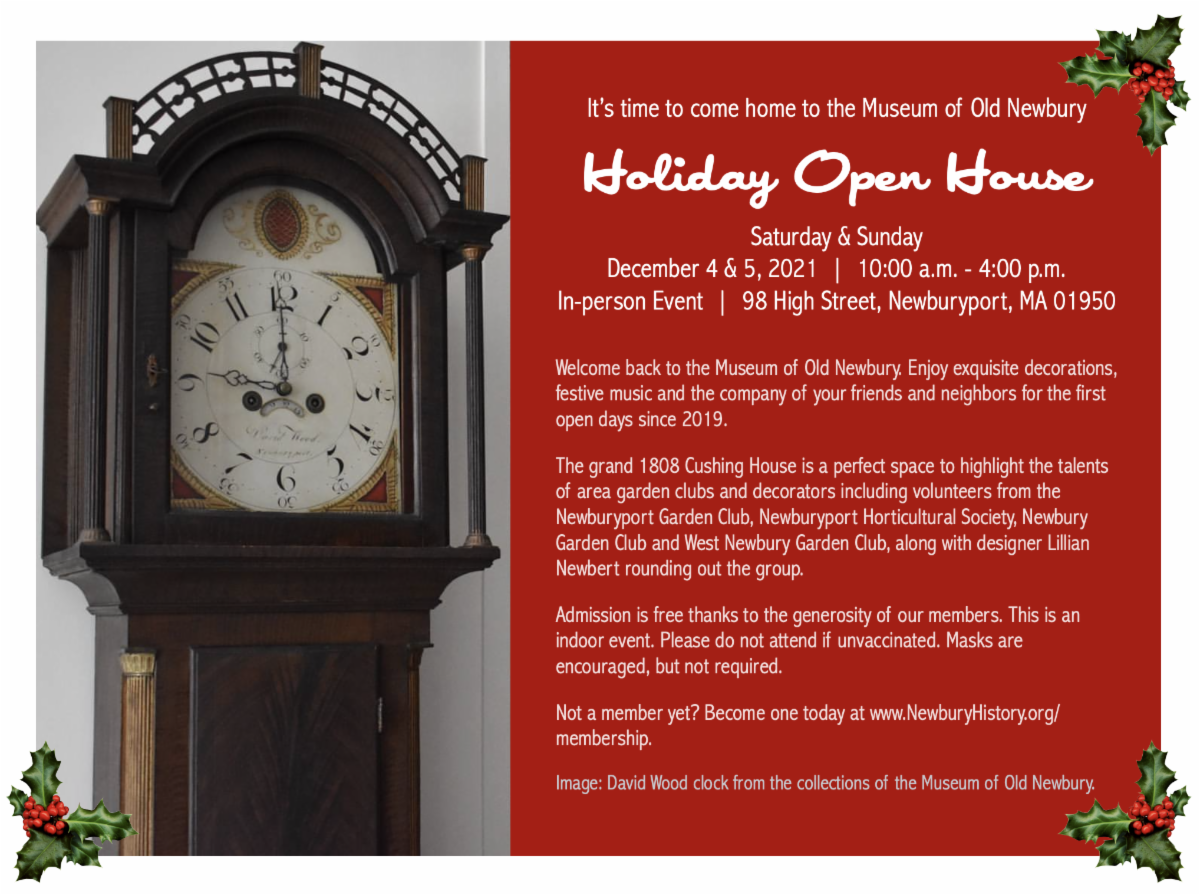
e-Newsletter | November 19, 2021 |
|
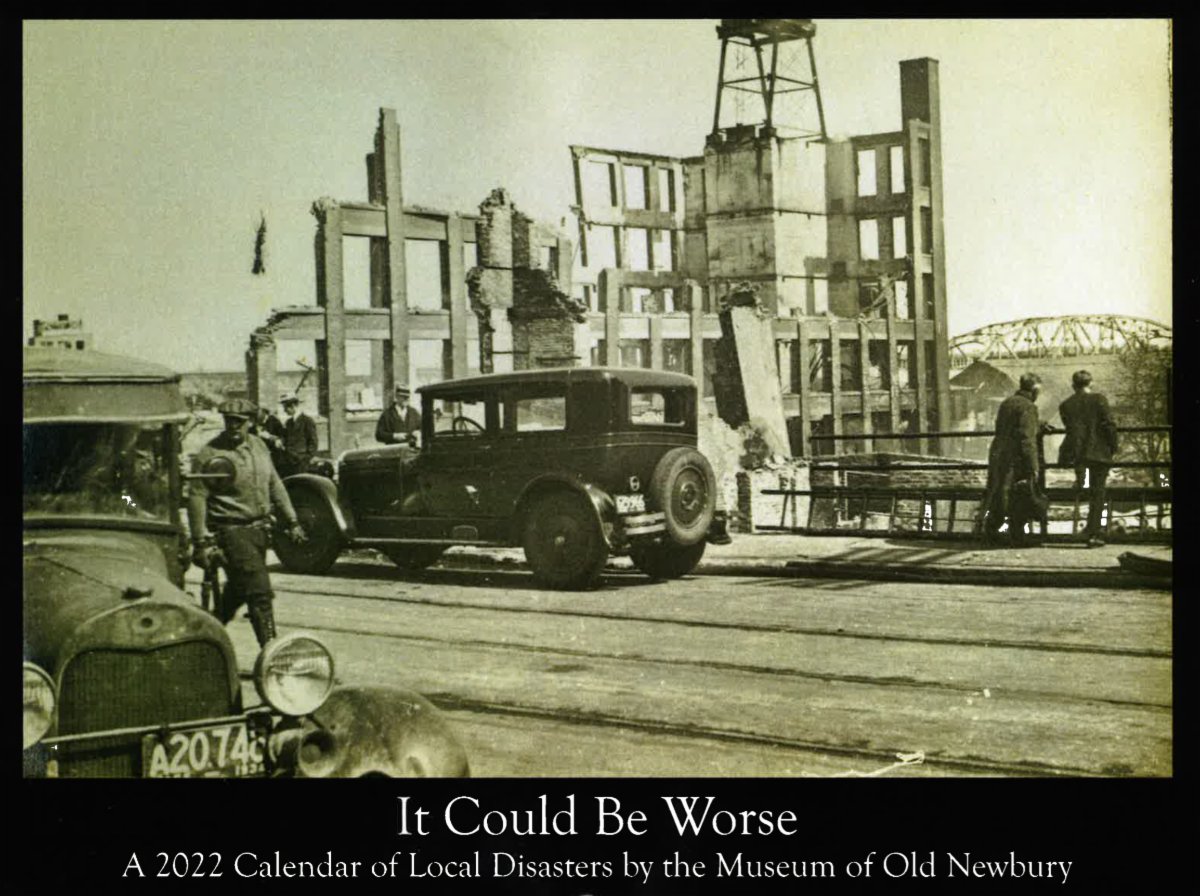
Another Dodge factory disaster, this one on Merrimack Street in 1934, made the cover of the calendar. From the collections of the Museum of Old Newbury. |
|
2022 Museum of Old Newbury Calendar Announced
It Could Be Worse: A 2022 Calendar of Local Disasters
By Bethany Groff Dorau
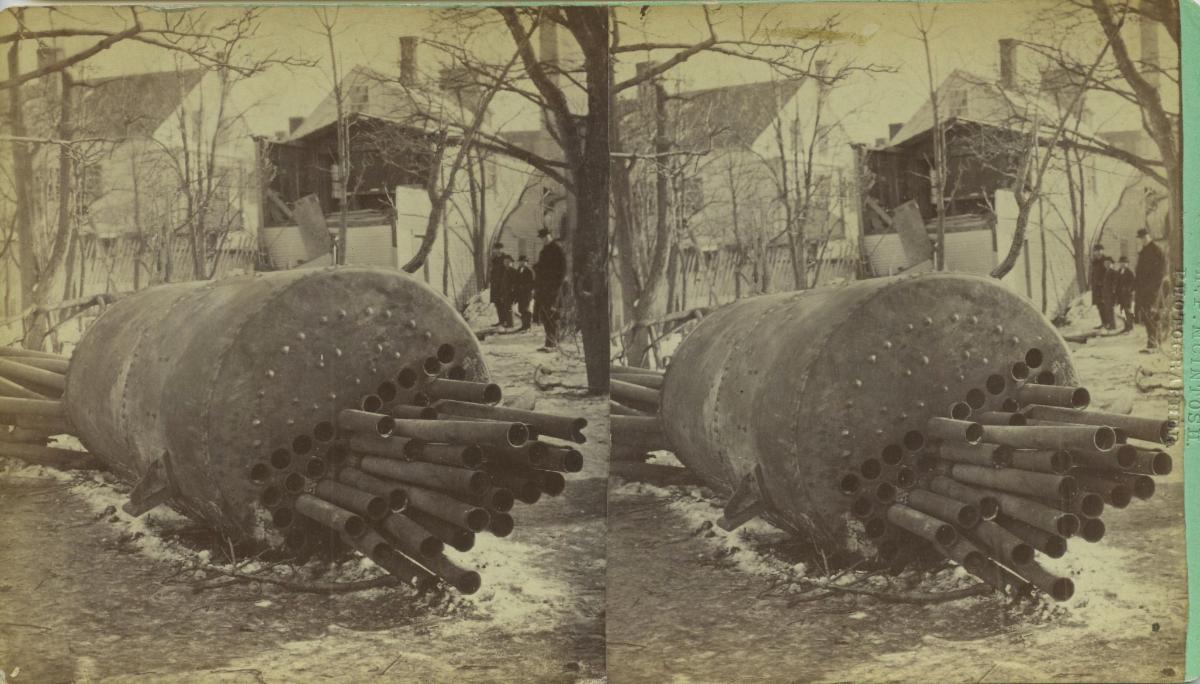
It started with a boiler and a hole in the side of a factory building. Assistant director Kristen Fehlhaber and I were bemoaning the approaching death of the HVAC system in the basement. “It could be worse,” she said. “Look at this.” And there, in an archival box marked “Disasters and Fires,” was an 1880 stereo view picture of E.P. Dodge’s ruined shoe factory on Prince Place, with a gaping hole in the side and a massive hydra-headed boiler that had blown across the street. We went in deep.
|
|
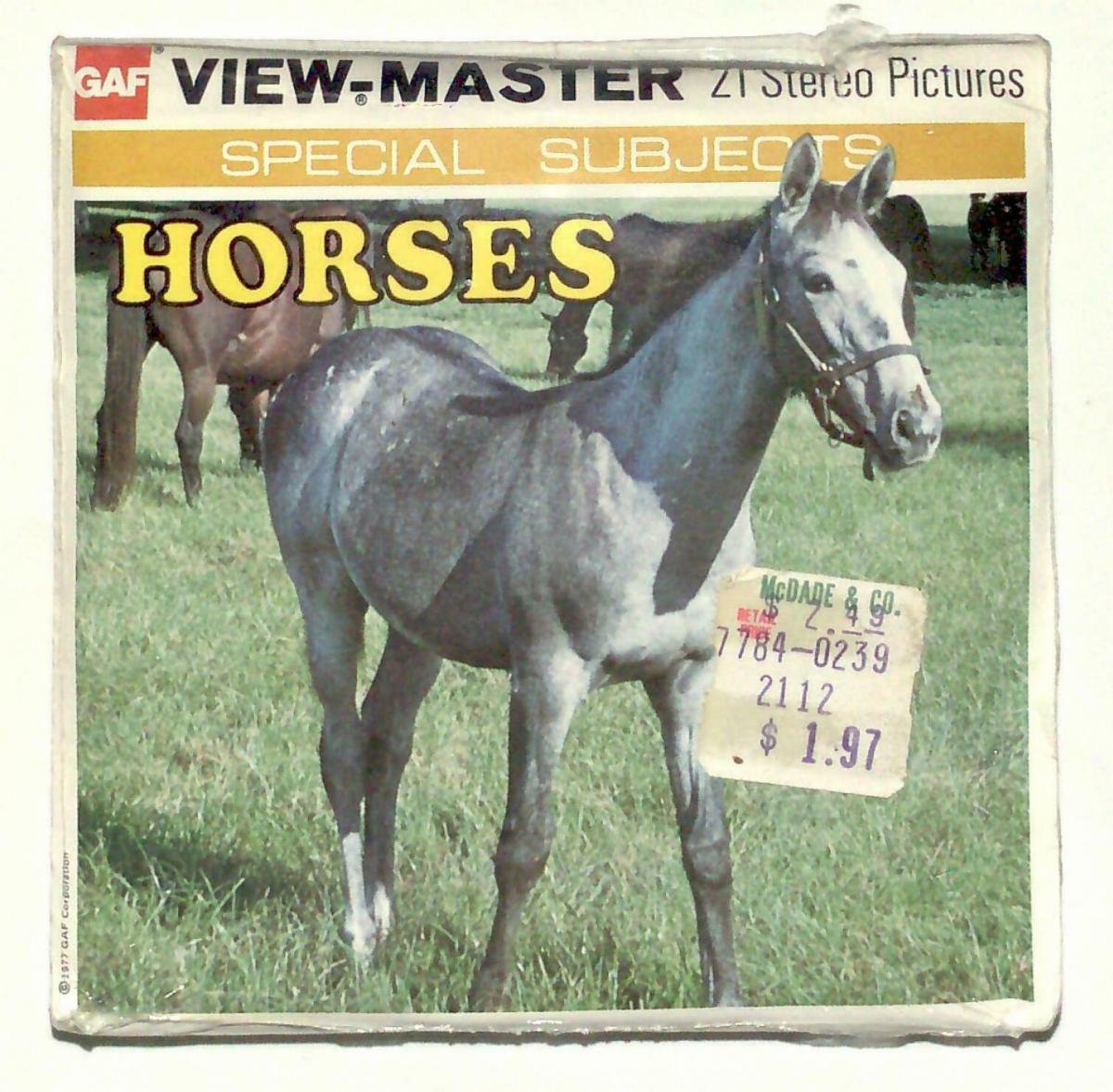
Stereo views had a brief resurgence in popularity in the late 20th century. This is author Bethany Groff Dorau's favorite series. |
|
I am of the View Master generation, with the uniqueness of having no other media (outside of books and the occasional cassette) to entertain me, my parents having eschewed television and film.
I spent long hours staring at my Special Subject: Horses View Master wheel, along with a few tattered stills from Disney movies. My adult obsession with stereo views is, therefore, completely understandable.
I popped the boiler explosion card into my late 19th century viewer, and there I was, standing in Hale’s Court, a thin crust of snow on the ground, two men and two boys, their faces blurred, watching me from the edge of the screen. I noted trees, windows, chimneys, fences and, of course, the rubble where the factory had been, a crater in the middle of its dense neighborhood.
|
|
The E.P. (Elisha Perkins) Dodge factory incident was a particularly newsworthy explosion, destroying the factory building, killing three people instantly and wounding several more, but explosions, fires and other disasters were widespread in industrial Newburyport. The announcement of the Dodge explosion in the Herald noted that it was similar to the Essex Hat Factory boiler explosion a decade before, and the third boiler explosion that resulted in multiple deaths in Newburyport.
|
|
The image that inspired a calendar, one of three boilers in the Dodge factory that exploded. This one shot out of the wall of the building and landed across the street, destroying the orchard of Joseph B. Morse. From the collections of the Museum of Old Newbury. |
|
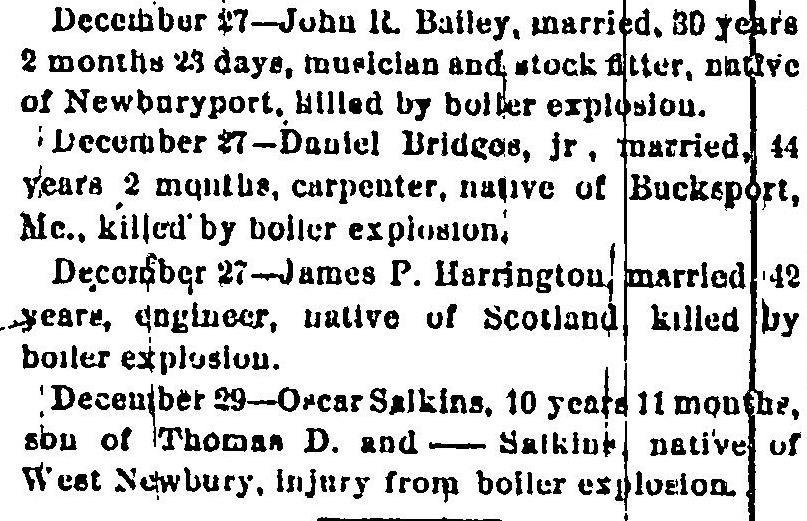
The "Violent Deaths of 1880" column in the Newburyport Herald, dated January 17, 1881, carried details of the victims of the E. P. Dodge explosion.
|
|
Nearly every issue in the Newburyport Herald from 1870-1920 carried some record of an accident, injury or fire in one of the city’s industrial establishments. Less than a year later, the Bartlet Steam Cotton Mills just around the corner on Pleasant Street was levelled by another explosion.
There are multiple views of the Dodge factory explosion, and the Museum of Old Newbury holds hundreds of stereo views and single images of other disasters from the area, each one telling a story beyond the incident that made it temporarily infamous.
|
|
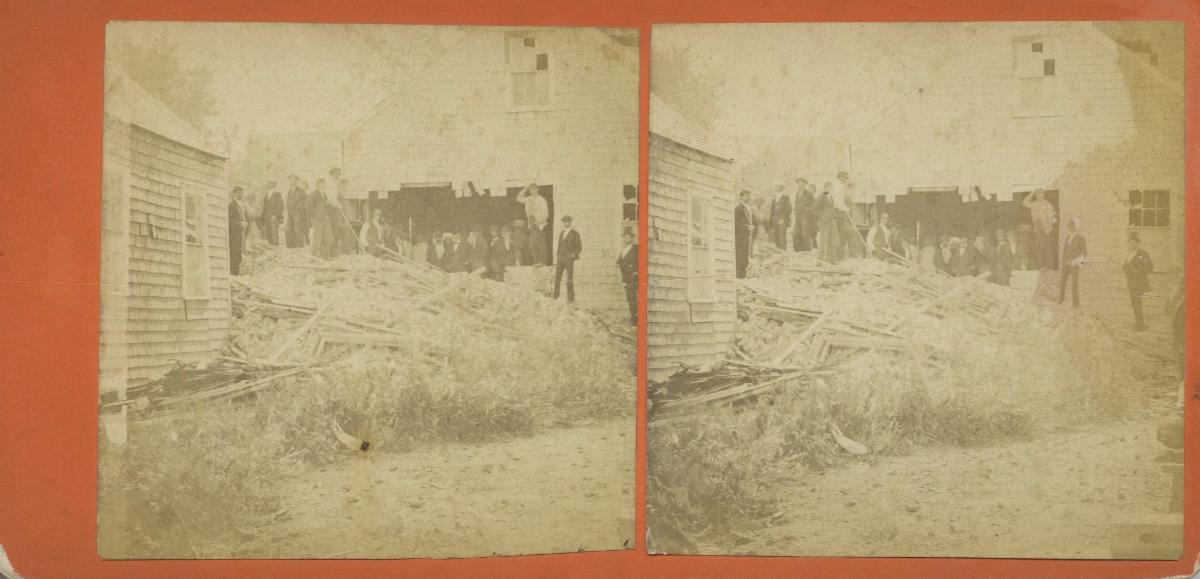
Stereo view of bystanders and rescuers posing atop the rubble of the Dodge factory. From the collections of the Museum of Old Newbury. |
|
There are details about architecture, dress and how Newburyporters lived and worked in the past that are captured in the background of these images. There are intimate stories – the death of a 10-year-old boy in a neighboring building, killed by falling debris; the terror of the animals who lived cheek by jowl with the factories and homes in the neighborhood; a young woman who miraculously survived a cavalcade of falling brick. There is a story here on an international scale about corporate responsibility, technology outpacing safety and the value of human life.
But there is also spectacle, the human desire to see how things go wrong, to gossip and gawk, but also to learn. As my father said upon seeing some of these images, “There’s nothing that an engineer enjoys more than studying failed engineering.” So, images of disasters and accidents were widely distributed as drawings, lantern slides and stereo views, and proper 19th century men and women gazed upon them for hours in their parlors.
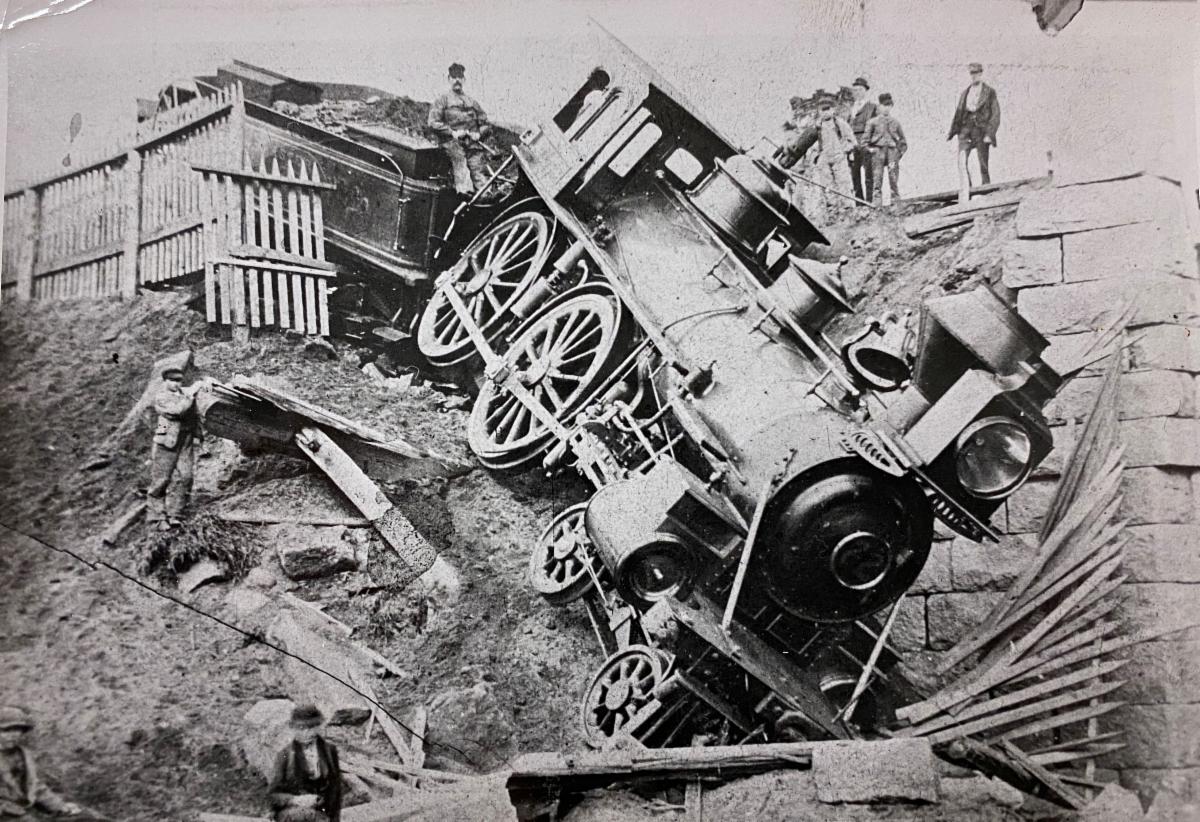
Some images of Newburyport disasters are so spectacular as to be iconic. The 1873 photograph of an engine and tender dangling from an embankment (seen as the puzzle image below) is well-represented in the collection of the Museum of Old Newbury, and numerous views are also held at the Newburyport Public Library Archival Center.
The image of the Harris Street Greek Orthodox Church in flames in 1983, its golden dome rising above billowing smoke, is instantly recognizable to many in town, and nearly always prompts a story.
When it came time to put together the 2022 calendar for the Museum, it seemed like a good time to share some of these lesser-known images with all of you, and to take a lesson from the past that seems applicable to the present.
History isn’t always easy or pretty, but there is always something to be learned, and reason to look forward with optimism. Because, really, it could be worse.
|
|
Running now through the end of the year, the team at the MOON will share their favorite family recipes, including a blog about its evolution and the significance of the item. Next week, Susan shares her Cranberry Frappe recipe. |
|
Just Don't Break the Mold...a guest blog by Kristen Fehlhaber
In 2009, my brothers and I met up in Burlingame, California, just south of San Francisco, to pack up the family home. My father had died the year before and at a moment like this, it’s hard to make rational choices, but I did okay.
I grabbed my childhood brass bed that my mother proudly salvaged, as well as a table that she bought at an auction of furniture from the ocean liner RMS Queen Mary.
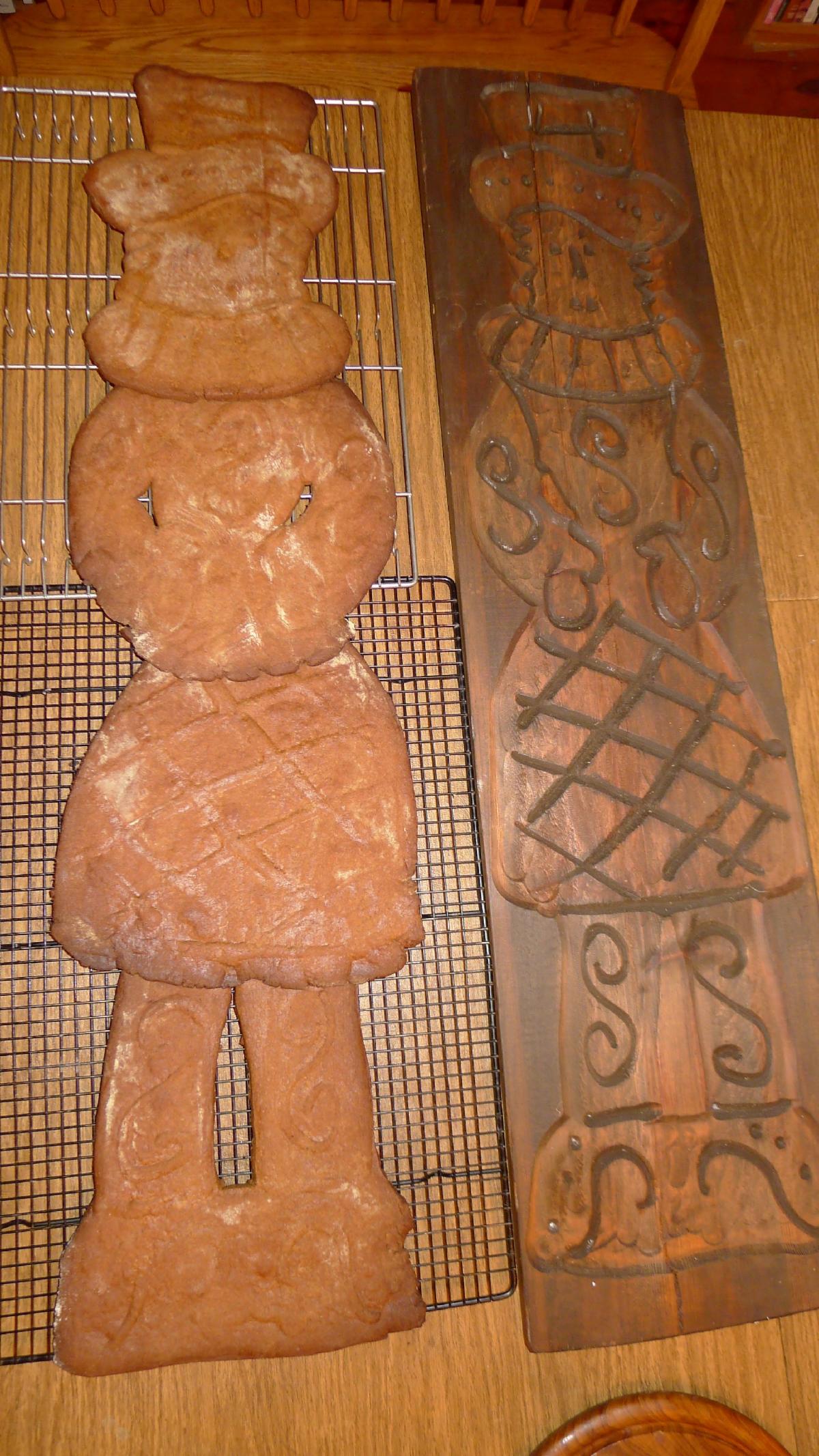
I packed up her pale blue Pyrex bowl set, her pastry blender, her rolling pin – and a giant wooden cookie mold.
The cookie mold came from the Netherlands, bought on my parents’ delayed honeymoon trip. But first, let’s back up a bit.
|
|
My dad, an Illinois farm-boy, went to Venezuela for his first job after college. Creole Oil needed petroleum engineers and my dad needed to see the world. He was given a leave from the job to return to the U.S. to do his military service and was stationed with the Navy in San Francisco. While in SF, he met my mom, from Seattle, employed at Stanford Hospital as a dietician.
No one would have ever called my parents unconventional (or God-forbid, radical), yet they did something unusual after they got married. They delayed having children - for three years! My mother told me she got a lot of guff about this. They married in 1958 and went together back to Venezuela for the next two years.
|
|
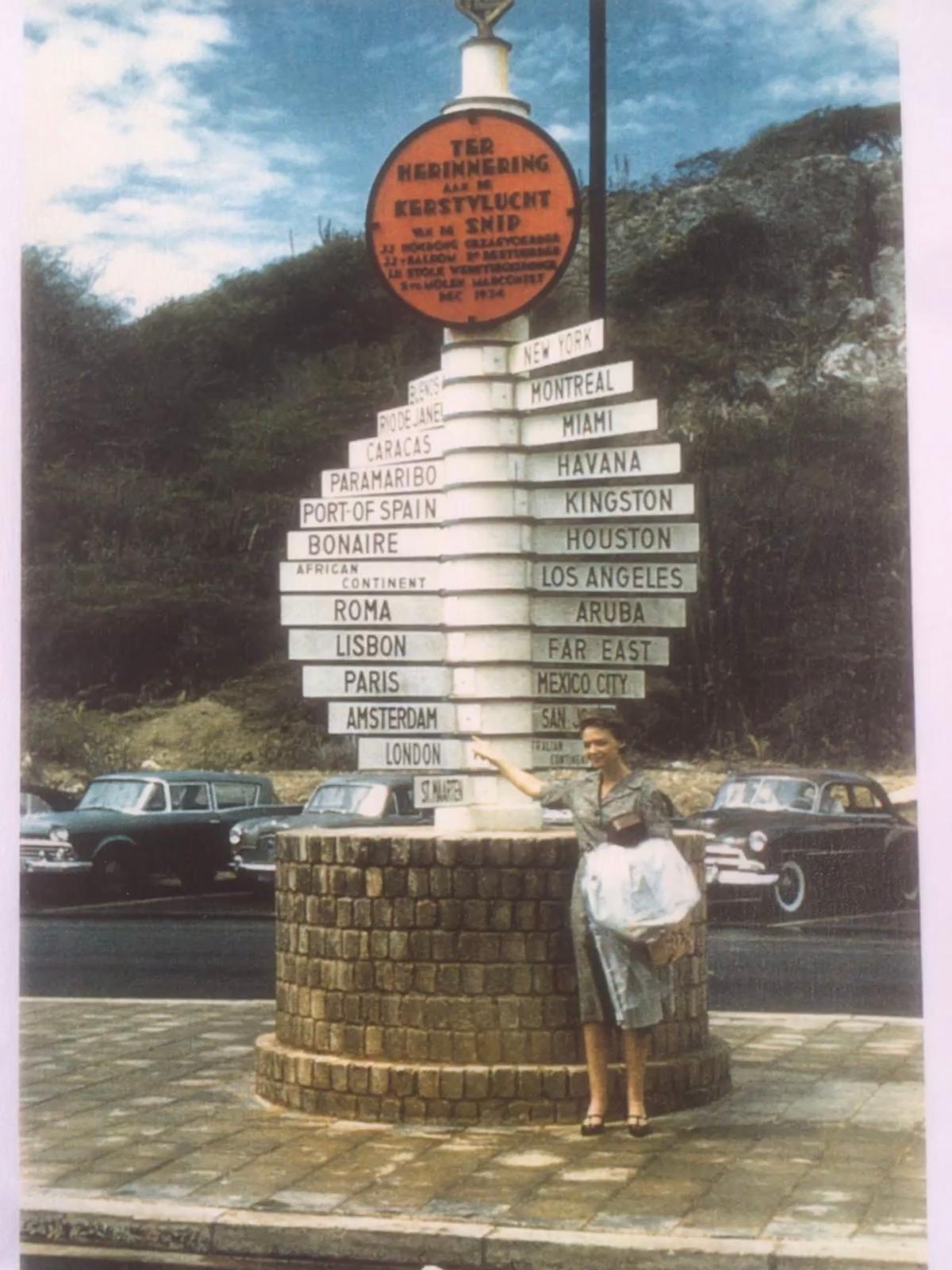
My mom in Curaçao, pointing to their destination. |
|
Not wanting to start a family overseas (I always regretted that choice), they decided to return to the U.S. Wisely, they inserted a honeymoon trip to Europe in their itinerary. A co-worker had a car that my dad liked, so before they flew on KLM to Amsterdam (with two refueling stops along the way), my dad ordered a blue-green Peugeot 403 sedan that would take them on their grand tour. If you have ever seen the TV show “Columbo,” this is his car.
Fun facts about the Peugeot: it had a four-on-the tree manual transmission, the gas cap was hidden under the tail light, there was a “city horn” and a “country horn,” and it originally had no ignition key – just a push-button start. It carried me on many adventures through college and now lives with my brother in Washington State.
|
|
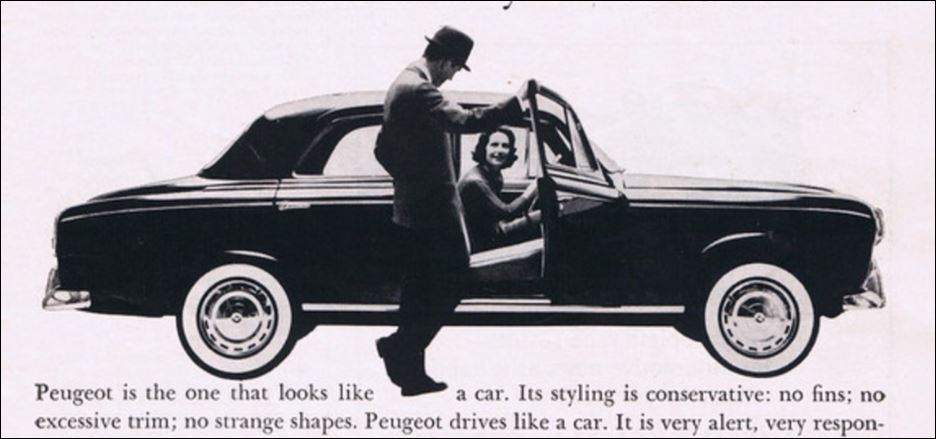
Conservative styling! No wonder my dad liked this car. |
|
I mention the car because that’s how I believe that the 3 ½ foot tall Dutch cookie mold came back to the United States. The car was shipped to New York where my dad had a job and later headed out West when the couple returned to San Francisco, my oldest brother in tow (the middle brother and I not having yet arrived).
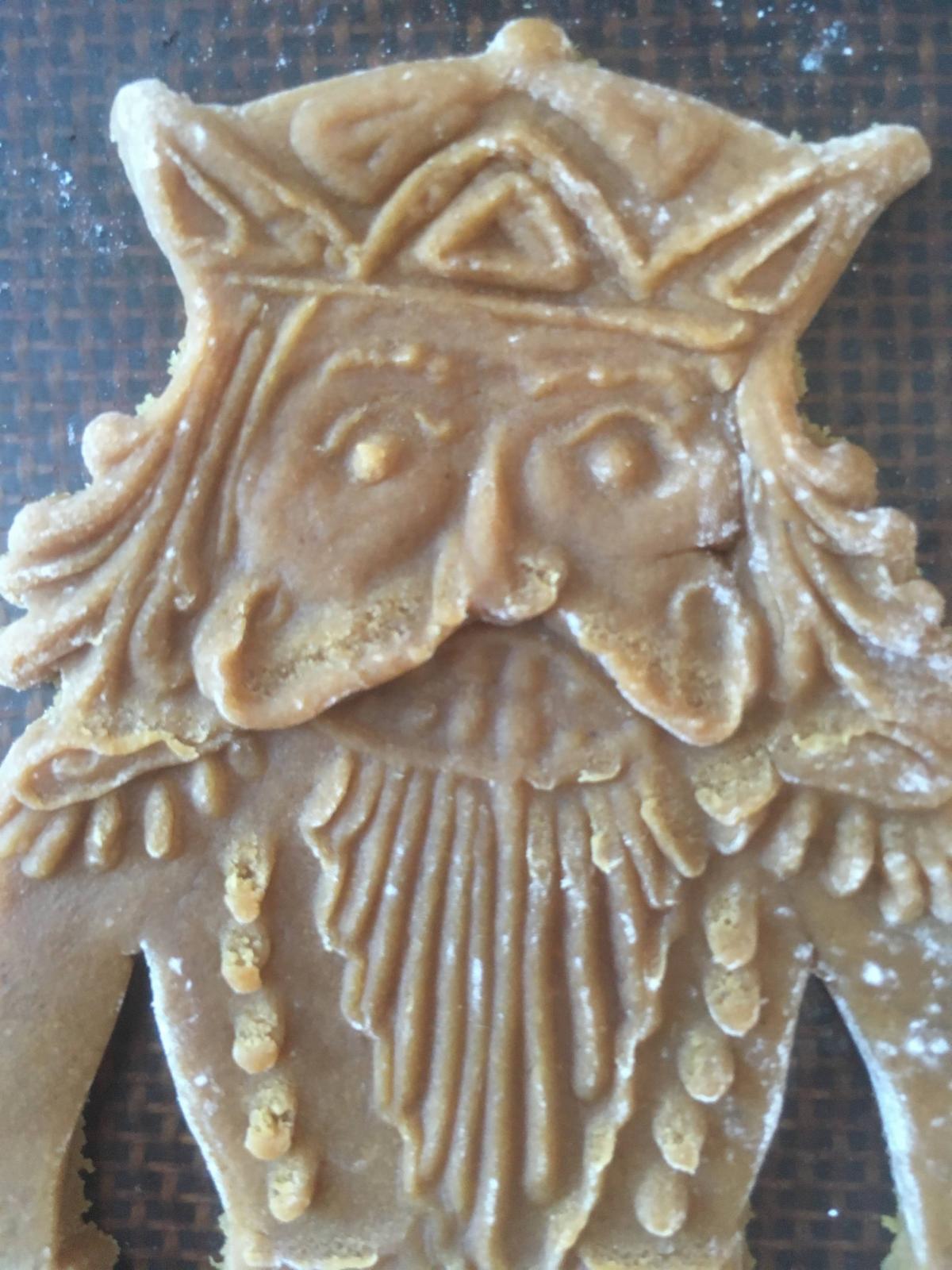
The Dutch man, in fancy dress, with tall boots and a ruffled collar, went along for the ride. It hung in our living room for as long as I could remember. He was beautiful, functional, and had a good story - just the kind of antique my mom liked, though I don’t think she ever imagined actually using it. It’s probably from the early 1900s and would have been used to make “speculaas” – a Dutch word meaning mirror, as the cookie that emerges is a mirror-image of the mold.
I’ve always loved baking, taught to me by my mother, who died when I was 12. From her I learned about cookies, cakes and, most importantly, pies. After my father’s passing and feeling a bit lost, my partner encouraged me to attend the Kneading Conference in Skowhegan, Maine. It’s a wonderful gathering of farmers, millers, oven builders and bakers. Think of it as “Bread Camp.” There I learned to build my first wood-fired oven and met a wonderful teacher who would become a friend and mentor – Richard Miscovich. I took in-person classes with him later at King Arthur Baking and dove into the world of artisan bread making.
|
|
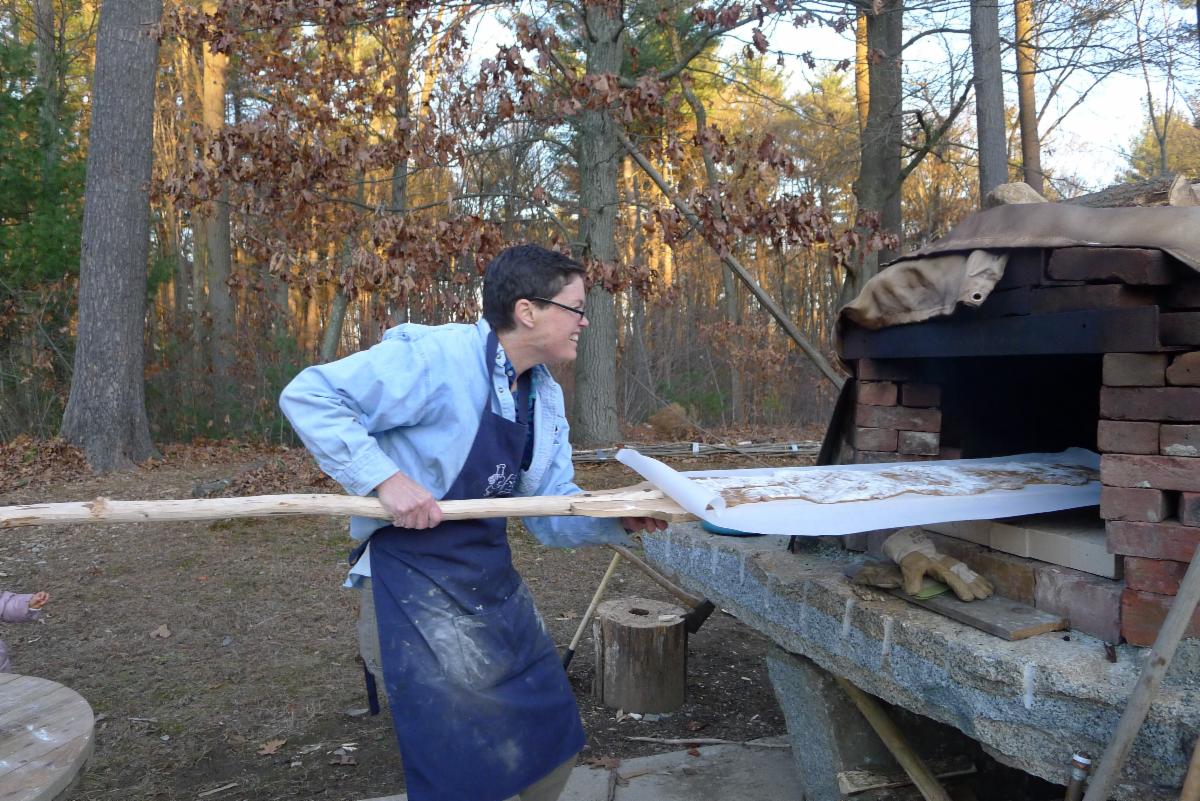
The author loading the oven. |
|
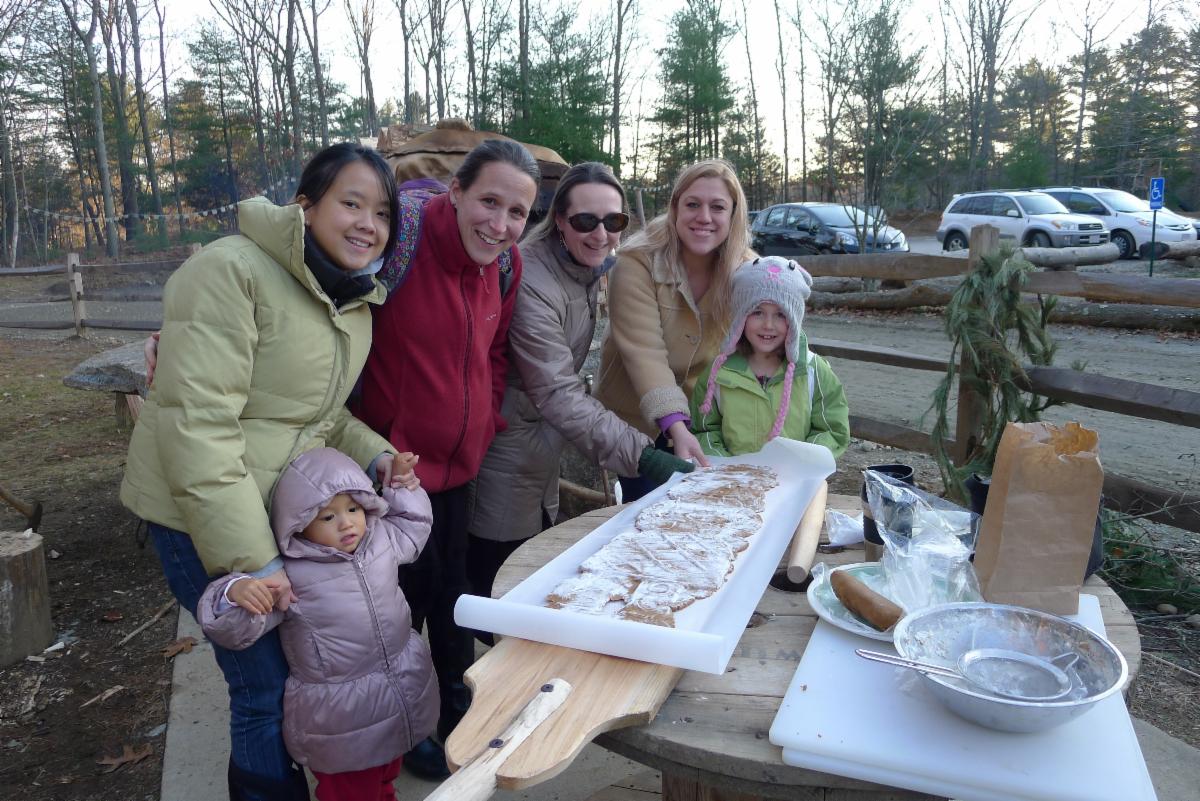
The stars aligned in 2012 and I finally had the skills and the oven to bake the giant Dutch cookie. A friend made me a huge wooden peel that could deliver it into the outdoor oven that we had built at our children's Waldorf school. We loaded the cookie in the oven, shut the door, and hoped for the best. And it worked! The students devoured the life-sized cookie and the Dutch man went back on its hook on our dining room wall, now with a little flour in its crevices. |
|
To test the cookie at home, I had to bake it in four parts. Upper right: lots of helpers to make the giant cookie and smaller cookies I make today. |
|
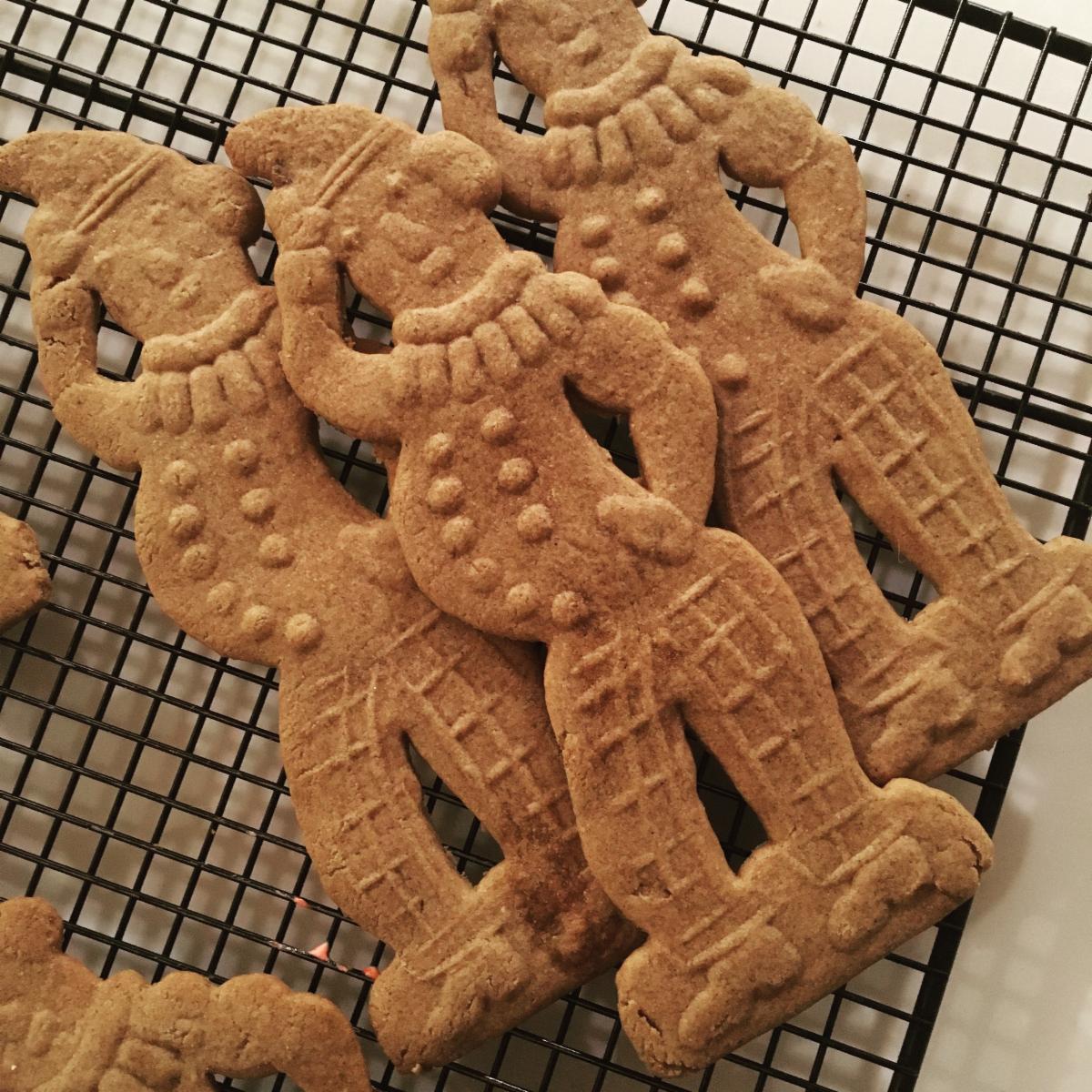
In the years since, I’ve picked up some smaller molds and enjoy using them every year. Below is a recipe and a few tips. If you have one of these molds at home, I hope you’ll give it a try. The recipe can also be rolled thin and cut with cookie cutters.
Note: Cookie molds like these can be found used online or new at cookiemolds.com. Richard Miscovich is teaching a virtual holiday baking class Dec 3 & 4 – go to King Arthur for details. And then share your baked goods with museum staff!
|
|
Cookie Mold Cookies
Ingredients:
1 cup molasses (Grandma’s brand, mild – not blackstrap)
1 cup butter or margarine
1 cup dark brown sugar, packed
5 cups sifted flour
3 teaspoons ground ginger
3 teaspoons cinnamon
1 1/2 teaspoons ground cloves
3/4 teaspoon salt
1 large egg
2 teaspoons vanilla
Directions:
1 – Heat molasses in large saucepan. Remove from heat, stir in butter & brown sugar. Cool.
2 – Sift flour and dry ingredients.
3 – Slowly, a cup at a time, stir most of this flour mixture into the molasses-butter-sugar mixture.
4 – Add egg and vanilla, mix well.
5 – Stir in remaining flour, blend well.
6 – Cover dough and refrigerate 4 hours or overnight.
7 – Follow the instructions below for molding.
8 – Place cookies on lightly greased cookie sheet. Bake in preheated oven at 325 degrees for 10-15 minutes. Smallest cookies at 10 minutes, largest at 15 minutes.
Using cookie molds:
1 – Before baking, coat inside of mold with a vegetable oil, including all crevices. Blot dry. This only needs to be done once per baking session.
2 – Before each cookie is molded, sift powdered sugar into the mold. Turn it over and bang on counter to get excess sugar out. Watch this video (Aga-recept speculaaspop) to see how the next steps work.
3 – Take a chunk of chilled dough and press into the cookie mold with your fingers. Make sure all parts of mold are filled. Excess dough on top is needed for the next step.
4 – Using a chef’s knife or bread knife, cut the dough nearly parallel (but with a little downward force) across the top of the cookie mold to remove the excess dough. Press the dough down as you cut.
5 – Invert molded cookie onto baking sheet. If it sticks, be patient and loosen edges gently where needed. Refrigerate dough again if it gets too sticky.
|
|
Learn about upcoming programs, register, find Zoom links and catch up on previous presentations here. All of our virtual programs are free, however donations are gratefully accepted to help defray speaker fees.
|
|
Members’ Holiday Party
Sunday, December 5, 2021
4:00 p.m. - 7:00 p.m.
Join your fellow members of the Museum of Old Newbury for a special evening reception featuring festive music and song by Newburyport’s own sea shantymen, The Portermen, and traditional music masters, O’Carolan, Etc.
Enjoy festive drinks, light appetizers and good cheer as we celebrate the history of our beautiful community. Admission is free for members.
Registration required, please click here.
This is an indoor event. Please do not attend if unvaccinated. Masks are optional.
|
|
Newburyport's Annual William Lloyd Garrison Lecture featuring Edward Carson
Friday, December 10, 2021 | 7:00 p.m.
Old South Presbyterian Church | 29 Federal Street, Newburyport, MA
Every year, Newburyport celebrates William Lloyd Garrison's legacy on his birthday with a lecture from a well-known author, historian, or public speaker about Garrison's life, and how it is still relevant today.
This year the talk is “The Gospel According to William Lloyd Garrison: Anti-Racism and the American Truth” and will be given by Edward Carson, the Dean of Multicultural Education at the Governor’s Academy and a leading organizer and activist in the Greater Boston area. Carson will discuss Garrison’s relevancy in twenty-first century issues like voting rights, Critical Race Theory, and Black political thought.
Join us in-person (masks required for attendees) on December 10, 2021 at the Old South Presbyterian Church in Newburyport at 7:00 p.m. For more information and to watch live go to lecture.porthistory.com. No registration required.
|
|
The Civil War: Crucible of American Christmas
In-person Event | 98 High Street, Newburyport, MA 01950
Bill Hallett, a former radio announcer covering Baltimore to Boston, as well as locally at 100.3 WHEB and 92.5 the River, has always had a passion for the past with an emphasis on Civil War history.
A re-enactor and board member of two Civil War Roundtables, he’s given talks on various Civil War topics from Maine to Maryland. He stumbled upon some small stories of soldiers at Christmas and further digging brought him to his topic, “The Civil War: Crucible of American Christmas.”
He will take us through the early years, when Americans did or didn’t celebrate Christmas, depending on their location in the new country. But with European immigrants arriving in the early 19th century, the American Civil War accelerated the customs and manners nationally bringing the holiday to what we know today.
When the Civil War began, Christmas was slowly on the verge of becoming what we see now, but as with many parts of our culture, the war accentuated and promoted such a holiday. We owe so much of our American Christmas customs to the years 1861-1865, as the country fought itself. Small customs in various corners or part of the country, emerged with new national traditions that are still carried on today.
This is an in-person event. Free for members of the Museum of Old Newbury; $10 for non-members. Not a member? Join now by clicking here.
|
|
Don't forget to play "Yeat, Yeat! Don't Tell Me!" before Dec. 1
Enjoy Jack Santos and Colleen Turner Secino's witty riposte here or skip right to the questions by typing joinmyquiz.com/pro into your browser, then enter the code 5771 9233 to join. As of today, Jean Berger is in the lead with four correct on her first attempt.
Remember to hit "SUBMIT" in the bottom right corner after making your selection for the answer. NOTE: this is a timed quiz, so read the questions and get your choice made as quickly as possible.
|
|
Puzzle Me This...
It really could be worse!
I wouldn't want to be on the wrong side of this 1873 train accident where Merrimac & Winter Streets meet. Revel in the disasters and calamities from the Old Newbury area with the 2022 Museum of Old Newbury Calendar: It Could be Worse. Perfect for gift-giving. Click here to order.
From the collections of the Museum of Old Newbury.
Click on image to begin.
|
|
During this difficult period of COVID-19, we rely on your support more than ever. We continue to develop new, online programs for you to enjoy and keep us connected and look forward to in-person events as protocols for safety loosen. We hope, if you are able, that you will consider a donation to the museum. Thank you for your continued support.
|
|
Museum e-Newsletter made possible through the
generosity of our sponsors:
|
|
|
Museum of Old Newbury
98 High Street
Newburyport, MA 01950
978-462-2681
|
|
|
|
|
|
|
|