A terminal lake, sometimes called an endorheic lake, is one that does not have any outflows to streams and other water bodies. Examples in Nevada include Pyramid Lake and Walker Lake, while in California there is Mono Lake and the Salton Sea. These lakes are often characterized by rising salinity levels, as evaporation leads to a buildup of salt.

When thinking of terminal lakes, Lake Tahoe does not come to mind, however next week it will join this class of lakes. How could this be? What does it mean for the lake?
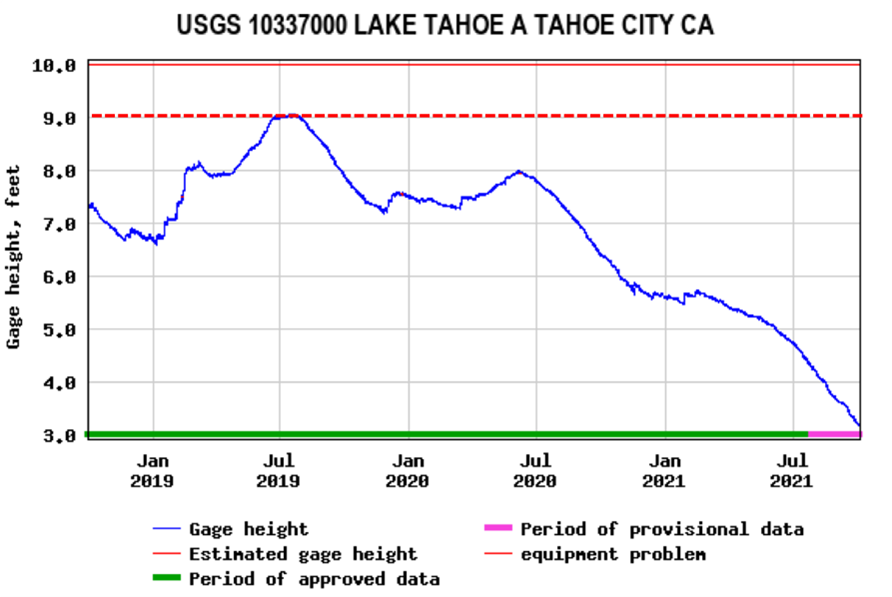
The reasons why are simple - the water level will fall below the natural rim due to a combination of lake evaporation and lake outflow exceeding the inflows from streams and groundwater that supply water. Once the lake level is below the natural rim, water ceases to flow from the only outlet, the Truckee River, and the lake effectively becomes terminal. The figure below shows the water level over the last 3 years. The top of the dam at Fanny Bridge is shown as the red dashed line at a gage height of 9.0 feet. This water level was reached in July 2019, but since that time the water level has generally fallen. The usual increase due to snowmelt in May and June was almost completely absent in 2021.

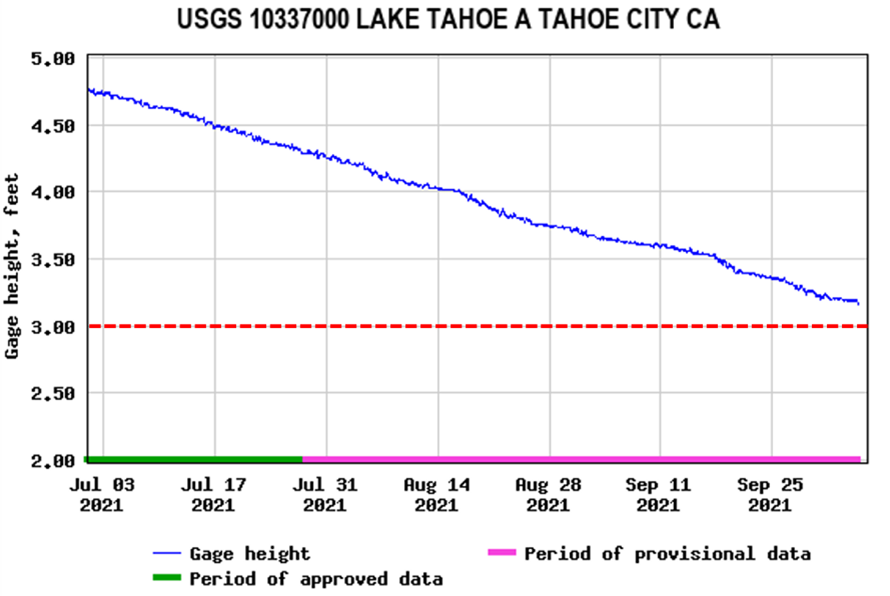
The water level over the last three months is shown below. Here the level of the lake’s natural rim at a gage height of 3.0 feet is shown with a red dashed line. At this rate of decline, Lake Tahoe will become a terminal lake by the middle of October 2021.
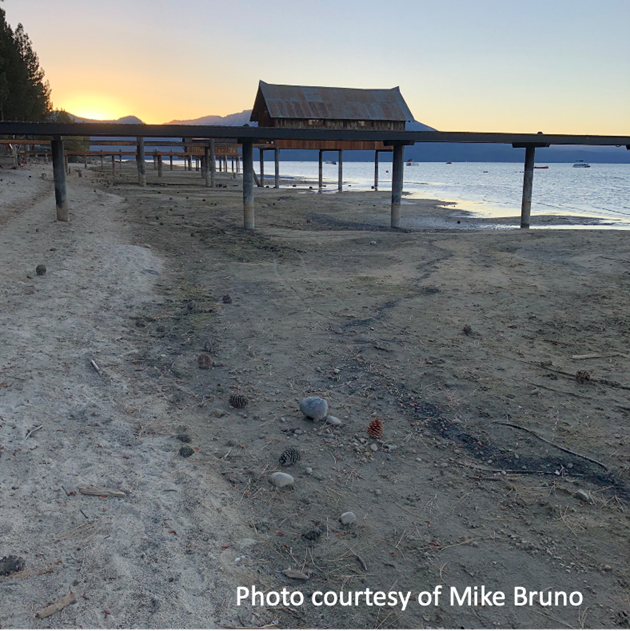
The low water levels are already impacting the shoreline, with accumulating deposits of rotting algae on the beaches of the south shore and a scene of docks out of water on the north shore. It is likely that winter will arrive in the next few months and the lake level will rise above the natural rim soon after. But if the 21/22 winter turns out to be below average, next year the lake will fall below the natural rim much sooner and likely stay there for most of 2022. This will impact recreation in 2022, as many docks and boat ramps will be further away from the shoreline. The growth and the washing up of filamentous algae on the very wide beaches will increase. The sill across Emerald Bay may end up above the water surface, physically turning Emerald Bay into a separate lake a similar issue that may occur at the mouths of many streams cutting off access to spawning kokanee salmon next fall.
El Dorado beach on September 29, 2021. Note the decomposing algae washed up on the shore.
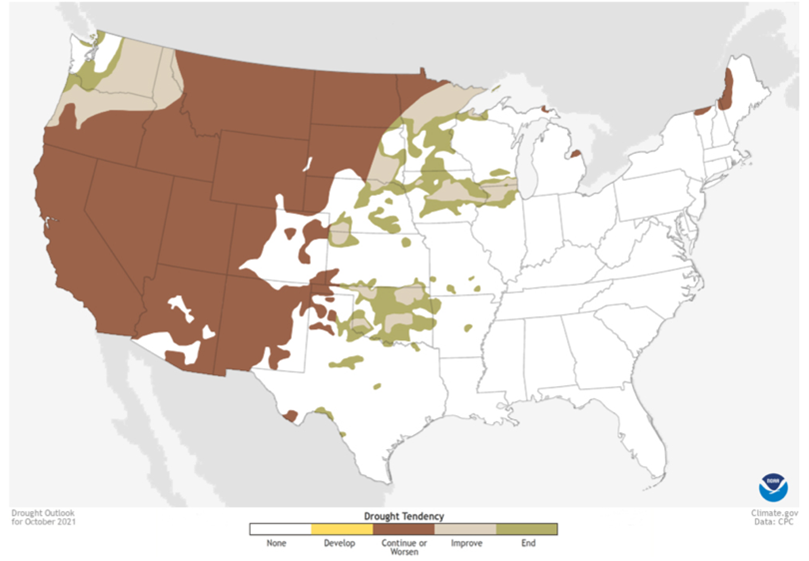
Could things get worse? Absolutely. There is no limit to how many years drought conditions may persist and how low the water level may go. The most recent estimates suggest continuing drought conditions.
Drought forecast for the Lower 48 U.S. states in October 2021. Brown indicates areas where experts believe drought will persist or worsen
What can we do? When you live in the west, this is a question that should be asked when water is plentiful and actions to conserve water can serve some purpose. Possibly the best we can do is to consider what the consequences of another dry year might be, when the water level could conceivably drop another 5 feet by this time next year. If that was to happen at Tahoe, then conditions would be even more dire in most other parts of California and Nevada.
Support Science to Save the Lake