Young Wildlife - If You Care, Leave It There | |
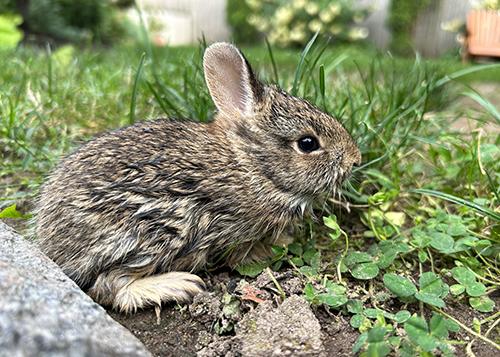
May is the time of year when many species are raising their young, and there is a good chance of encountering young wildlife. Young animals may appear to be “abandoned”, but in most cases, an adult is likely out of sight close by, waiting for you to leave.
The best thing you can do for young wildlife is to leave them alone. If you are certain that a wild animal has been injured or orphaned, before touching it or moving it, please consult the DEEP website for a list of licensed wildlife rehabilitators.
More on wildlife rehabilitators . . .
| Help Keep Bears From Learning Bad Behavior | |
|
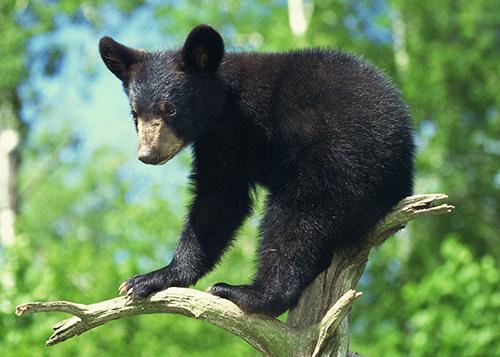
Black bear cubs weigh around nine ounces when they are born in January or February, but they do not stay that size for long! In just one year, a male bear can go from nine ounces at birth to nearly 100 pounds!
This is the time of year when cubs are perfecting their climbing and communication skills and are learning where to find food.
Black bears are smart, and the adults will often visit places where they reliably found food last year -- even if that location is not a good lesson for youngsters to learn. A hungry sow with cubs will not turn down a quick meal of bird food or garbage, and that kind of undesired behavior is quickly learned by the cubs, leading to more poor behavior, and risks to their survival, down the road.
Removing human-related attractants from your property will greatly reduce your chance of having a bear-related conflict.
Black bear FAQs . . .
| |
Winner of the 2024 Migratory Bird Conservation Stamp Contest | |
|
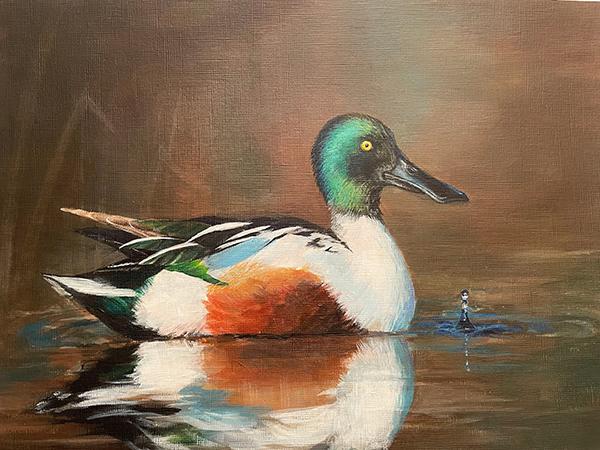
Congratulations are extended to Storrs resident, Alice Han, whose beautifully illustrated painting of a Northern Shoveler, which is entitled "In the Fall", was selected as the "Best in Show" for the 2024 Connecticut Junior Duck Stamp Art Competition and also won first place in the 7th-9th grade age category of the competition. Alice's painting will be featured on the 2025 Connecticut Migratory Bird Conservation Stamp!
The Connecticut Migratory Bird Conservation Stamp Program is the only dedicated source of funding for wetland protection in the State. Since its creation in 1993, the Program has contributed and leveraged over $4 million towards wetland protection and restoration in the State. Ninety-nine percent of every dollar of each Migratory Bird Conservation Stamp purchased is spent to protect and enhance homes for migratory birds like the American black duck, red-winged blackbird, and great blue heron.
Connecticut Migratory Bird Conservation Stamps can be purchased by hunters, collectors, conservationists, and others for $17 each wherever hunting and fishing licenses are sold: participating town clerks and retail agents, DEEP License and Revenue (79 Elm Street in Hartford), and through DEEP's Online Outdoor Licensing System or the online DEEP Store.
More on the CT Migratory Bird Conservation Stamp . . .
| |
Turtles and Roads Are a Deadly Combination | |
|
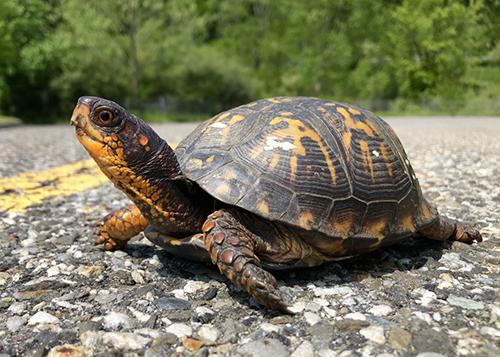
From May through July, egg-bearing female turtles often travel great distances in search of a good place to dig a nest and lay their eggs. Connecticut’s landscape is highly fragmented by busy roads, and many turtles are forced to cross these roadways in order to find suitable nesting habitat. Unfortunately, many turtles are killed while trying to cross.
Although turtles have a long lifespan, it often takes nearly a decade for certain species to reach sexual maturity. Most turtle nests are lost to predators such as raccoons and skunks, and the chances of a turtle hatchling making it to adulthood are quite slim! These factors, and other challenges, result in long-term decline in turtle numbers.
While you are driving, watch out for turtles. Helping a turtle across the road can be the difference between life and death for the animal, and for future generations, but your safety comes first. Be sure to assist a turtle in the road only when it is safe to do so and do not attempt to stop traffic. Always help the turtle across in the direction it was heading, and do not attempt to relocate the turtle to a different area.
More on turtles of Connecticut . . .
| |
Piping Plover Nests are Easy to Overlook | |
|
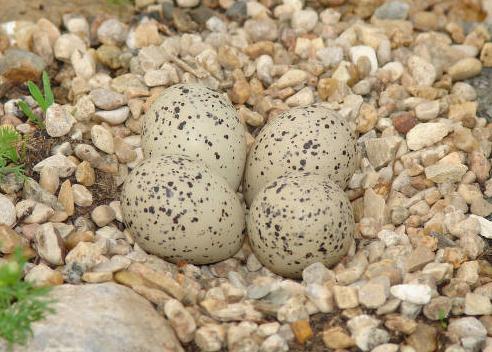
Piping plover nests are notoriously cryptic, consisting of only a small depression along a beach above the high tide line. Plovers will often line the depression with small pebbles or bits of shell. Their eggs are a pale buff color with brownish black splotches, making them nearly impossible to spot among the sand.
Staff from the DEEP Wildlife Division, Audubon Connecticut, The Connecticut Audubon Society, along with some very dedicated volunteers, are busy this time of year keeping tabs on nesting plovers and other shorebirds. Once a nest has been identified, special exclosure fencing is often set up. This fencing allows the adult plovers to access the nest, but keeps out larger predators and keeps people from accidentally stepping on the nest or young chicks.
Beaches are habitat, and there are only so many places these birds can nest to try and successfully raise their young. The next time you visit the beach, please help share the shore by giving these birds plenty of space. Their survival depends on it.
Please Note: The Dr. William A. Niering Preserve (embedded within Harkness Memorial State Park) in Waterford, Charles Island in Milford and Duck Island in Westbrook are currently closed to the public to prevent disturbances to nesting birds. All three sites have been designated by DEEP as Natural Area Preserves, primarily due to their importance as nesting habitats for several state-listed birds, including piping plovers, least terns, snowy egrets and great egrets, glossy ibis, and little blue herons. The two islands also have been designated as Important Bird Areas by Audubon Connecticut.
| |
2023 Wild Turkey Program Report Available | |
|
The 2023 Connecticut Wild Turkey Program Report is now available on the DEEP website.
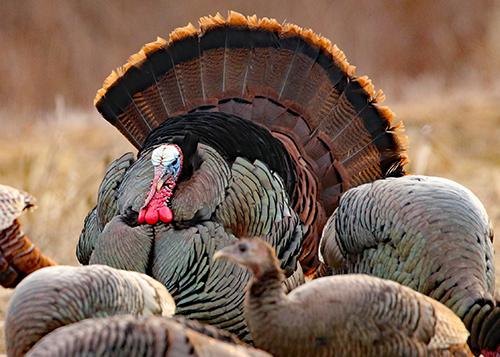
The wild turkey is an important component of Connecticut’s wildlife diversity. The goal of the Wildlife Division’s Wild Turkey Management Program is to manage the wild turkey population at a level compatible with available habitat and land uses, while also allowing a sustained harvest of turkeys. Wild turkeys continue to be of moderate abundance throughout the state, providing the public with hunting and wildlife viewing opportunities. Photo courtesy of Matthew Balnis.
View the 2023 report . . .
| |
Celebrate "Bats Count" at White Memorial | |
|
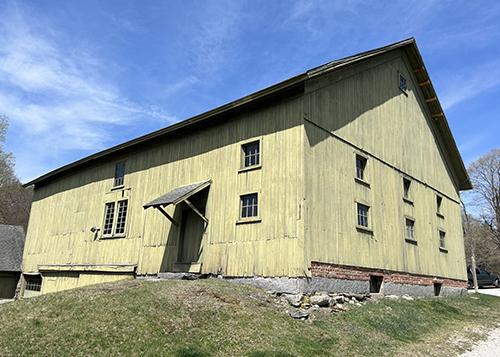
Last year, the DEEP Wildlife Division and White Memorial Conservation Center in Litchfield established a live "Bat Cam" in a barn at White Memorial to learn more about a big brown bat maternity colony. Each year, the bats return to this barn for the warmer months of the year to give birth and raise their young.
Join DEEP Wildlife Division Biologist Devaughn Fraser on Wednesday, June 5, 2024 at 7:00 PM at White Memorial for a recap of information gathered from a year of viewing the bat colony. New developments regarding a nearby little brown bat colony will also be discussed.
Participants will also have the opportunity to meet a LIVE big brown bat, courtesy of wildlife educator and licensed bat rehabilitator Maureen Heidtmann. The program will be followed by a bat count, so come out to support Connecticut's bats! Registration is required for this event. Register HERE.
More on "Bats Count" . . .
| |
Celebrate World Migratory Bird Day May 11 | |
|
World Migratory Bird Day (WMBD) is an annual awareness campaign that highlights the need for the conservation of migratory birds and their habitats. The conservation theme for 2024 is Protect Insects, Protect Birds, and focuses on the importance of insects as essential food sources for migratory birds.
The timing of bird migration is highly dependent on when food resources, like insects, will be abundant for birds to replenish their energy reserves at stopover locations in grasslands, forests, and wetlands, along their migratory journeys.
Across the globe, insect populations appear to be declining at unprecedented rates, which limits birds and their ability to migrate, breed, and produce young.
How can you help? There are plenty of steps residents can take to support insect populations, including planting or maintaining native trees, shrubs, grasses, and flowers that are native to your area. Refer to our Connecticut Native Tree, Shrub, and Perennial Availability List.
More on WMBD . . .
| |
Eavesdropping on Connecticut's Bats | |
|
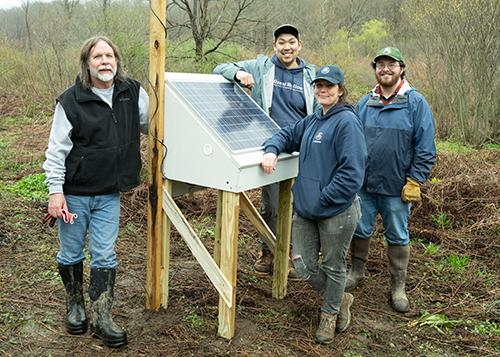
Last month, DEEP Wildlife Division staff teamed up with Great Hollow Nature Preserve and Ecological Research Center in New Fairfield to install a bat detection station on the Center’s property.
Biologists can analyze bat sounds recorded by the detector to determine which species are present. All nine of Connecticut’s bat species are on the list of Species of Greatest Conservation Need, and over half of these species occur at this location.
Several bat detection stations are being deployed across the state. The data collected at these stations will tell biologists how bat numbers are changing over time or geographically, informing conservation work moving forward. Connecticut’s State Wildlife Action Plan determines what this work will be and is now being revised for 2025-2035.
We encourage everyone to follow and engage in the development of the State Wildlife Action Plan! The Plan protects not only wildlife, but also habitat and our natural ecosystems.
More on the Wildlife Action Plan . . .
| |
|
Stay Connected!
Follow us on Social Media
| |
|
-- Quick Links --
Your Feedback Is Important to Us!
Send your comments or suggestions to deep.ctwildlife@ct.gov
|  | |
The Connecticut Department of Energy and Environmental Protection is an Affirmative Action/Equal Opportunity Employer that is committed to complying with the requirements of the Americans with Disabilities Act. If you are seeking a communication aid or service, have limited proficiency in English, wish to file an ADA or Title VI discrimination complaint, or require some other accommodation, including equipment to facilitate virtual participation, please contact the DEEP Office of Diversity and Equity at 860-418-5910 or by email at deep.accommodations@ct.gov. Any person needing an accommodation for hearing impairment may call the State of Connecticut relay number - 711. In order to facilitate efforts to provide an accommodation, please request all accommodations as soon as possible following notice of any agency hearing, meeting, program or event.
This program receives Federal financial assistance from the U.S. Fish and Wildlife Service.
Under Title VI of the 1964 Civil Rights Act, Section 504 of the Rehabilitation Act of 1973, Title II of the Americans with Disabilities Act of 1990, the Age Discrimination Act of 1975, and Title IX of the Education Amendments of 1972, the U.S. Department of the Interior prohibits discrimination on the basis of race, color, national origin, age, sex, or disability. If you believe that you have been discriminated against in any program, activity, or facility, or if you need more information, please write to:
Office of Diversity, Inclusion and Civil Rights
U.S. Department of the Interior 1849 C Street, NW
Washington, D.C. 20240
| | | | |