Weekly Digest Number 19 - May 9th, 2023 |
|
Welcome to the RWU Rail & Labor News! This news bulletin is produced and emailed out each Tuesday morning. We hope you find each week's news and information useful. If so, please share with co-workers, friends, and colleagues. If you like, you can sign them up to get all the news from RWU HERE. Or forward them the link. Note: If you read over this news bulletin each week, you will be sure to never miss the important news of what is going on in the railroad world from a worker's perspective!
|
|
(Editor's Note: RWU Co-Chair Ross Grooters is featured in this expose by The Progressive's Sarah Jaffe that takes up questions of Precision Scheduled Railroading, safety, bargaining, sick time, staffing, and other issues of concern to rail workers.) |
|
Work Won’t Love You Back: We Were Warned
The East Palestine disaster is a reminder that rail workers’ fight for safety is also a form of bargaining for the common good.
|
|
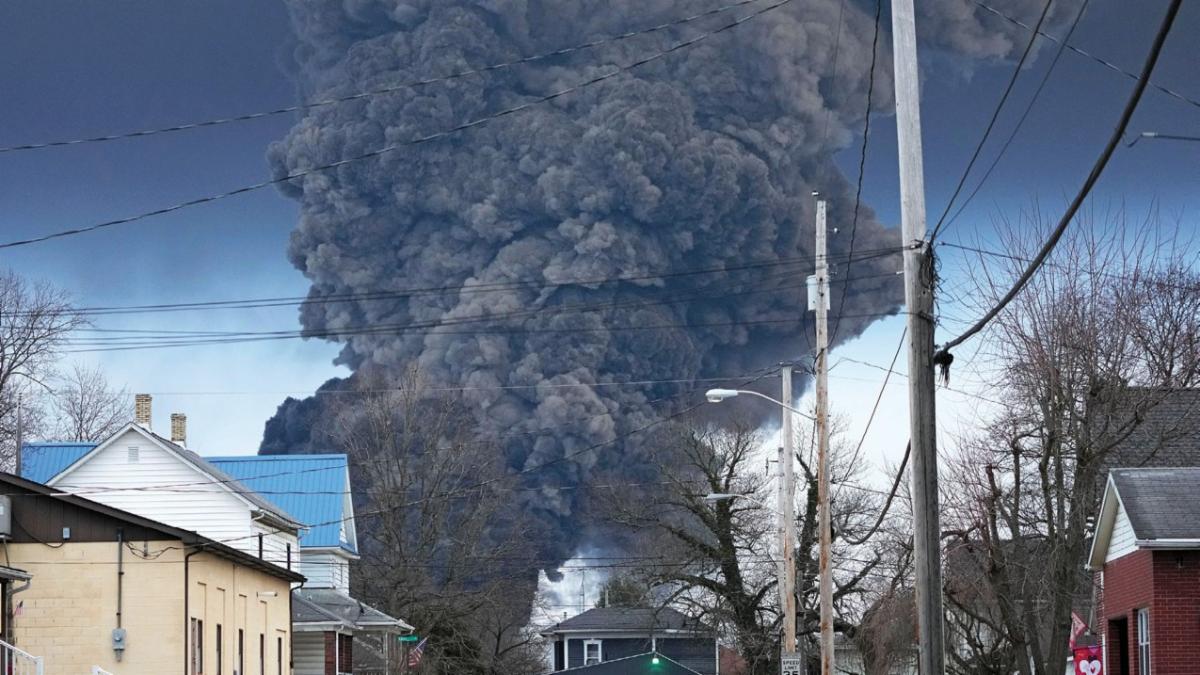
It was the workers’ nightmare come true. The Norfolk Southern freight train that derailed in East Palestine, Ohio, on February 3 sent a toxic barrage of hazardous chemicals into the air, soil, and water and caused untold damage to waterways, wildlife, air quality, and people’s health. It was a grim confirmation of what rail workers have been saying would happen for years. And it could have been worse.
No one was killed or badly injured in the derailment itself, and most of the 149-car train’s cargo was nontoxic. Fears of a massive explosion, which led to the evacuation of nearby residents, did not happen. But it’s hard to say there’s a silver lining to a disaster that prompted a “controlled burn” of toxic chemicals producing a cloud visible from passing airplanes, says Ross Grooters, a longtime railroad worker and co-chair of Railroad Workers United, a caucus of rail workers that spans multiple unions. Still, they add, after an attempt by rail workers to strike over working conditions—including ongoing safety concerns—was squelched by members of Congress and President Joe Biden late last year, at least there is renewed attention on the rails.
But if the politicians and the rail companies had listened to the workers, this accident, and others, might have been prevented. In the weeks following the disaster, three more Norfolk Southern trains derailed—in Ohio, Michigan, and Alabama—the latter occurring just before the company’s CEO, Alan Shaw, appeared before Congress to answer questions about the Ohio disaster.
I first spoke to Grooters in late January for a story about the rail workers’ fight for paid sick leave. At the time, they described a constant pressure to do more with less, exemplified by a system known as precision scheduled railroading, or PSR.
“The ‘precision’ part of ‘precision scheduled railroading’ is how precisely can we cut the operation to the bone and still have it walk around as a full skeleton,” Grooters told me. “They’ve cut so deep that it just doesn’t function and they don’t have people to fill the jobs.”
There had been cutbacks to track and equipment maintenance, and more equipment fatigue and derailments. “It just feels really unsafe when you’re in the workplace. It’s like we’re rolling the dice with all these things.”
In 2020, for example, The Washington Post reported that more than 20,000 rail workers had lost their jobs in the previous year, of which more than 3,500 had been at Norfolk Southern. Simultaneously, train lengths were increasing, adding more cars to the workload of the same tiny train crew. A rail engineer told the Post at the time, “They found they can hook two trains together and cut a crew.”
|
|
(Editor's Note: As we approach the 10th anniversary of the tragic wreck, a new 4-part film series by Oscar winning film director Philippe Falardeau has taken first prize at the recently held "Hot Docs" film festival in Toronto.)
|
|
No More Lac-Mégantics, No More East Palestines - We Want Rail Safety Now!
RWU's Fritz Edler speaks in Toronto where a new film on the Lac-Mégantic train wreck opened last month
|
|
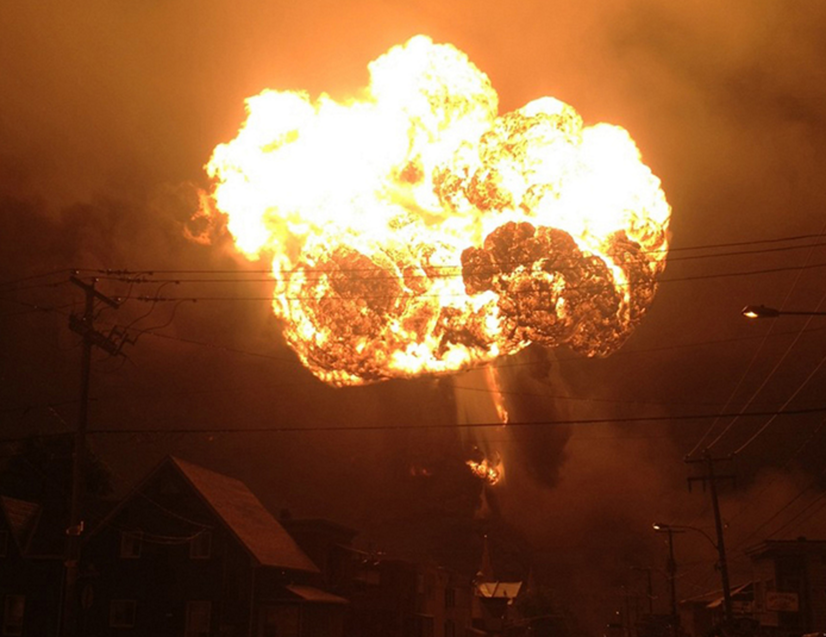
No other train derailment in our railroading history showcases the systemic failure of the private railroad industry more comprehensively than the tragedy of Lac-Mégantic in Quebec, Canada, when a runaway train disaster sparked a series of events revealing an abyss of corporate greed, regulatory capture, disregard for human life, and scapegoating embedded in daily private corporate operations.
From the decimation of Lac-Mégantic to a recent intentional release and burn of vinyl chloride in East Palestine, OH that ignited to create phosgene gas, a chemical so deadly its use as a weapon was banned in warfare after WWI, North America can only draw upon a single conclusion: “These events reveal completely that after 200 years of North American railroading, private ownership of this industry can never possibly work. It never has, and it never will,” affirms Karl ‘Fritz’ Edler, Special Representative of Railroad Workers United, Washington D.C.
|
|
(Editor's Note: The movement for two person train crew minimums is picking up steam. With Ohio, Pennsylvania, New York, and now Kansas all heading in this direction, we might have a dozen or more states with such regulations before the end of the summer.) |
|
Kansas Gov. Kelly Pushing ‘Commonsense, Necessary’ Regulations of Powerful Railroads
BY KEVIN HARDY UPDATED MAY 04, 2023 4:40 PM
|
|
Kansas Gov. Laura Kelly is proposing a new rule that would require trains traveling through the state have at least two crew members on board. The Democratic governor announced on Thursday that she has directed the Kansas Department of Transportation to propose the rule, which would be implemented following a public comment period of at least 60 days. It would apply to all railroads regardless of size, but includes no enforcement mechanism. “Railroads across the country have faced issues ranging from crew member fatigue to derailments, all of which pose a threat to Kansans’ safety and security,” Kelly said in a statement. “Requiring a two-person crew is a commonsense, necessary measure to protect our state’s railroad crew members and keep every community along the tracks safe.”
Kelly said the rule, once implemented, would make Kansas the ninth state to require two crew members on trains. The proposed rule comes at a time of greater scrutiny of the nation’s powerful freight railroads, which narrowly avoided a national strike late last year only by an act of Congress. The federal government, which is also proposing its own two-person crew rule, has been imposing stricter standards on railroads following high-profile derailments early this year. In March, a bipartisan group of U.S. senators led by the Ohio delegation introduced legislation that would set new rules on hazardous material trains and require the largest freight companies to operate trains with a crew of at least two people.
|
|
(Editor's Note: We have been having trouble obtaining much information about this fatality. If anyone knows of the details, please forward them along to us at info@railroadworkersunited.org. Thank you.) |
|
'Fatal Incident' Leads to Death of CN Railway Employee in Montreal's East End
Authorities are investigating a "fatal incident" on company property which lead to the death of an employee on April 28, 2023.
|
|
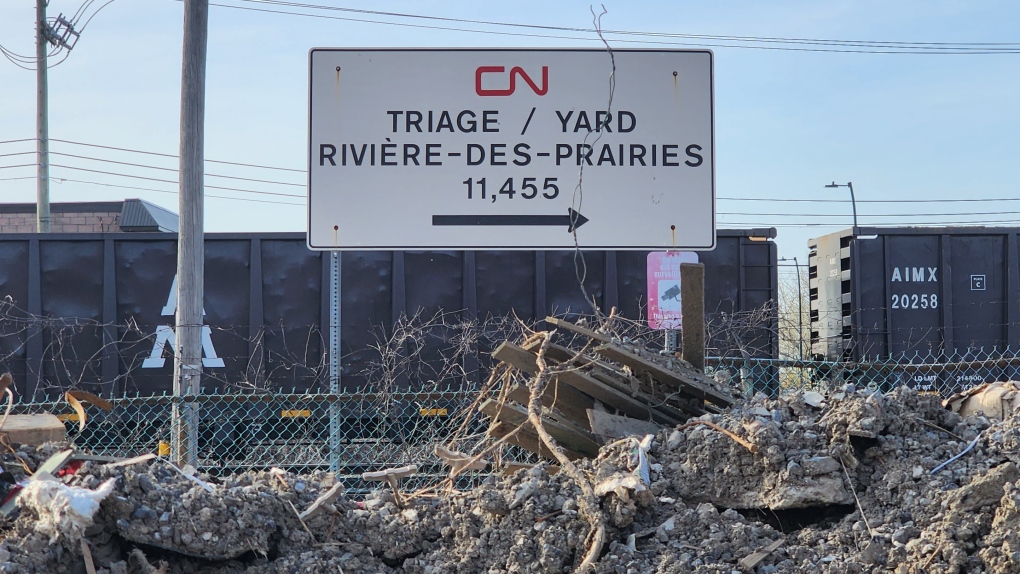
Authorities are investigating after a "fatal incident" occurred on Canadian National Railway (CN) property in Montreal's east end.
An employee is said to have died during the incident, which took place in the Rivière-des-Prairies–Pointe-aux-Trembles borough.
CN would not confirm the time or nature of the incident.
"This afternoon, a fatal incident occurred on CN property involving a CN employee," wrote spokesperson Jonathan Abecassis in a statement to CTV.
|
|
(Editor's Note: If this idea were to take off, the railroad stands to make billions in selling easements AND have a ready supply of electricity at its disposal to power its trains electrically, gaining all of the many benefits of rail electrification. Check out Solutionary Rail's idea HERE.)
|
|
The SOO Green HVDC Link Proposes to Utilize Existing Rail Corridors to Transport Renewable Energy |
|
The SOO Green HVDC Link is a 350-mile 2,100 MW, 525KV underground high-voltage direct current (HVDC) transmission line running along existing rail corridors from Iowa to Illinois.
The SOO Green HVDC Link will utilize modern grid technology to build the first link of a national HVDC clean energy power grid.
By connecting the nation’s two largest power markets – MISO in the Midwest, and PJM in the east – the SOO Green HVDC Link will help meet America’s growing demand for affordable, zero-carbon electricity.
The SOO Green HVDC Link will utilize a unique development approach to avoid the siting and permitting challenges that have historically hindered development of new overhead power transmission. The project seeks to replicate the model used to successfully build America’s fiber optic network by placing an underground HVDC transmission line along an existing railroad from North Central Iowa to Northern Illinois.
This innovative, minimally invasive and environmentally superior way to build transmission avoids the visual impact of overhead transmission lines, minimizes tree clearing, avoids sensitive wildlife habitat and limits impacts to neighboring landowners.
SOO Green will create new value for renewable energy suppliers, power marketers and consumers by linking generation produced in the Midwest electricity market (operated by MISO, the Mid-Continent Independent System Operator) to consumers in the Eastern electricity market (operated by PJM Interconnection). SOO Green will supply residential, municipal and commercial customers in PJM with reliable, affordable and clean energy.
|
|
(Editor's Note: It is fascinating just how fast rail safety legislation can get adopted at the state level with bipartisan support if/when there is a rail disaster in the proximity.) |
|
Rail Regulation Bill Advances in Pennsylvania Legislature
Bill with train-length, crew-size, blocked-crossing provisions approved 19-2 by committee
|
|
HARRISBURG, Pa. — A bill seeking to introduce a broad range of rail regulations in the wake of the East Palestine, Ohio, derailment easily advanced out of a Pennsylvania House committee on Wednesday, despite concerns voiced by some members that the matter is one for federal, not state, action.
PennLive.com reports that House Bill 1028 was approved by the Consumer Protection, Technology, and Utilities Committee by a 19-2 vote. The bill includes provisions limiting train lengths to 8,500 feet; prohibiting delay of an emergency vehicle at a blocked grade crossing for more than five minutes; and requiring two-person crews.
Committee chair Rob Matzie (D-Beaver County), a co-sponsor of the bill with Jim Marshall (R-Beaver County), told PennLive, “We believe we have every right under federal law to implement enhanced safety measures.” He acknowledged those who believe otherwise but said the matter will be determined as the bill proceeds.
The bill also seeks to set standards for reporting and tracking of the transport of hazardous materials, as for the use of wayside detectors.
|
|
(Editor's Note: RWU is proud to partner with the UE, Solutionary Rail, SWA, DSA, LNS, Stand.Earth, the Sunflower Alliance, and dozens of other unions and community organizations in support of public ownership of the railroads. For an incomplete listing, check HERE.)
|
|
Expressions of Solidarity: United Electrical union Calls for Public Ownership of Railroads
"Our nation can no longer afford private ownership of the railroads; the general welfare demands that they be brought under public ownership." ~ From the STATEMENT OF THE UE GENERAL EXECUTIVE BOARD, January 30, 2023
|
|
On Wednesday, March 1, Solutionary Rail hosted an important virtual panel discussion with Carl Rosen, General President of the United Electrical Workers (UE), Scott Slawson, President of UE Local 506 that represents workers at Wabtec, in Erie, PA, and some leading Environmental Justice (EJ) organizers from around the country.
This resolution builds upon the Green Locomotive program they lobbied for at the beginning of the Biden Administration. Both address important impacts on and demands of EJ communities. Rosen and Slawson spoke about their work and engaged in an inspiring conversation with some of Solutionary Rail's Environmental Justice allies, including:
mark! Lopez of East Yard Communities for Environmental Justice (EYCEJ); Ivette Torres of Peoples Collective for Environmental Justice (PC4EJ); Yvette Arellano of Fenceline Watch; Bakari Height of Labor Network For Sustainability; and Molly Greenberg of the Moving Forward Network.
Watch and share this important conversation - one that is likely to launch exponentially more collaboration for putting U.S. railroads in service of 21st Century Public interests. Learn more at SolutionaryRail.org/20230301 where an edited version and one with Spanish translation is available.
|
|
(Editor's Note: While things appear in some ways to be improving, we are far from being out of the woods. Total carloads handled still down from last year, and shippers continue to be unhappy with service levels. Amtrak trains are still suffering big freight train interference caused delays.) |
|
STB Requires BNSF, NS, and UP to Continue to Provide Detailed Service Progress Reports
May 2, 2023
CSX Transportation dropped from reporting requirement as railroad has met its service targets for several months, board says
|
|
WASHINGTON – Federal regulators will require BNSF Railway, Norfolk Southern, and Union Pacific to continue to provide biweekly service progress reports through the end of the year.
The Surface Transportation Board, in a decision released today, said the three systems had not yet made enough progress toward the operations, service, and employment goals they had hoped to reach this month.
But the board let CSX Transportation off the hook, noting that the Eastern railroad consistently has been meeting most of its service improvement targets for several months. CSX, like Canadian National and CPKC, will only be required to provide the STB with expanded weekly performance data and monthly employment figures.
“This is a clear affirmation from the STB of CSX’s leading service performance among the four U.S. Class Is and a direct result of our focus on improving the work experience of our railroaders and improving the reliability and overall quality of the service we provide to our customers,” CSX spokesman Bryan Tucker says.
The STB began requiring the railroads to provide more detailed operating metrics last May amid widespread service problems caused by crew shortages on the big four U.S. railroads. The order was extended in October.
“BNSF, NSR, and UP performance data show continued service challenges relative to the targets the carriers set for their own service improvement by the end of the current temporary reporting period,” the board said in its decision. “While data submitted in recent weeks show some improvement for some performance indicators, these carriers generally are not meeting their service performance targets on average. Therefore, and because service issues continue to affect the network, the Board finds that it must continue to monitor service performance and hiring efforts.”
|
|
(Editor's Note: The citizens of Cincinnati will have the final say in all of this. When the referendum comes before them probably later this year, RWU urges them to vote NO. There is a citizens organizing drive afoot to keep the railroad publicly owned where it can serve the citizens of the city for decades to come.) |
|
Norfolk Southern Seeks Regulatory Approval for Purchase of CNO&TP
May 2, 2023
Cincinnati voters must still back the $1.6 billion deal
|
|
WASHINGTON — Norfolk Southern yesterday sought regulatory approval for its acquisition of the Cincinnati Southern Railway, the municipally owned railroad that forms the 338.2-mile Chattanooga-Cincinnati backbone of NS’s key corridor linking Chicago with Atlanta and the Southeast.
NS asked the Surface Transportation Board to approve the $1.62 billion acquisition as a minor transaction. Norfolk Southern subsidiary Cincinnati, New Orleans & Texas Pacific has leased and operated the line since 1881.
No operational changes would come to the route as a result of the transaction, which is subject to the approval of Cincinnati voters and the STB. NS and Cincinnati officials announced the deal last year.
The NS regulatory filing, which was posted to the STB website today, gives a snapshot of the traffic that moved over the line between Dec. 20, 2022, and Jan. 25, 2023. The line hosted an average of 16.2 general merchandise trains per day, along with 8.4 intermodal trains, and eight or so coal, grain, fuel, and other bulk trains. On average, 40 trains per day, including locals, operate on all or a portion of the line.
The Ohio legislature agreed earlier this year to allow the proceeds of the sale to be put toward current infrastructure needs in Cincinnati, rather than toward paying off debt. The city wants to put the proceeds into a trust fund that would be devoted to improving streets, bridges, and parks.
The city’s voters must still approve the sale, which is backed by the mayor. The Cincinnati Southern board of directors is expected to decide this month when the matter will be placed on the ballot.
|
|
(Editor's Note: The Legislative directors of both BLET and SMART-TD in Nevada team up here to support safety legislation in the state. Both are members of RWU.) |
|
Lawmakers Should Stand up to Railroad Lobby in Name of Safety
Jason Doering, Matt Parker May 2, 2023
|
|
In response, railroad activists and unions have been advocating for rail safety legislation nationwide. AB456 was introduced in Nevada and, in its current form, the bill would provide for increased use of devices for detecting overheated axle bearings (a primary cause of several recent derailments, including two here in Nevada) and the regulation of blocked railroad crossings.
The bill calls for reducing the length of trains to 7,500 feet as a result of multiple derailments involving excessively long trains. In 2019, there were two accidents within weeks of each other here in Nevada in which the predominant cause was cited as the excessive length and makeup of the trains involved. While these two accidents resulted in approximately $4 million in damage to railroad equipment and cargo, fortunately, they did not lead to injuries, deaths or damage to private property.
Other parts of the country have not been as fortunate, however. For instance, the recent derailment in East Palestine, Ohio, which involved 20 cars filled with highly flammable toxic chemicals, resulted in a "vent and burn" operation to dissipate the chemicals safely. Sadly, this triggered a fireball that sent a dark plume of smoke over the region, prompting the evacuation of 1,500 people.
|
|
Railroad Workers United Gives Insight into the Rail Industry
by Joshua Oculam Monday, April 24th 2023
RWU's Nick Wurst Speaks to a group in Northeast Pennsylvania
|
|
Following the train derailment in East Palestine and other recent derailments, many are wondering if one could happen in Northeast Pennsylvania. A member of Railroad Workers United spoke today in Scranton about what rail workers are seeing across the continent. |
|
Union Organizer to Railroads: ‘It Doesn’t Have to be This Way’
RWU’s Kaminkow says railroads have been in crisis management mode for years
|
|
The way to achieve good labor relations between U.S. freight railroads and their craft employees is “not a mystery,” according to Ron Kaminkow, organizer of the Railroad Workers United (RWU), an interunion group that consists of union members from various crafts.
FreightWaves recently caught up with Kaminkow to discuss labor morale, as well as what long-standing issues the Class I railroads and the unions are grappling with at the national and local level. While RWU is not one of the groups that participates in labor negotiations, its members are voting members of the various unions.
This interview follows an April 21 announcement from 14 rail labor organizations calling for U.S. freight rail companies to halt stock buybacks until the railroads make significant investments in rail safety. The groups — which included the AFL-CIO Transportation Trades Department, the Brotherhood of Locomotive Engineers and Trainmen, the Brotherhood of Maintenance of Way Employes Division and the International Association of Sheet Metal, Air, Rail and Transportation Workers-Transportation Department — contend that the six publicly traded freight railroads have spent more than $165 billion in stock buybacks. That figure is at least $46 billion more than what was invested in rail safety, according to the labor organizations, which launched their public campaign during the earnings season of the Class I railroads.
Separately, RWU recently noted the inclusion of the Class I railroads on a list of employers that have unsafe environments. That list was produced by the National Council for Occupational Safety and Health, a coalition of 26 grassroots worker groups calling for improvements to worker health and safety.
(This interview was edited for length and clarity.)
FREIGHTWAVES: What other negotiations do the unions and the Class I railroads need to hash out beyond sick leave?
KAMINKOW: The individual carriers basically started plans for single-person operation negotiations, of which we’ve been pushing back against now for almost 19 years. But [Norfolk Southern] CEO Alan Shaw, who has been on the hot seat for Norfolk Southern especially since the East Palestine wreck, was in the spotlight in front of a congressional committee. They’re asking him, “What is your plan to negotiate single-person train operations?” And of course, he doesn’t answer. He says all options are on the table and all this kind of stuff, but he doesn’t say that they’re pursuing it, because he knows if he says that in front of Congress and the American people and the people of East Palestine, there’s going to be a s–tstorm and so he can’t say that.
|
|
(Editor's Note: It has taken well over a decade but finally it is here. This improvement will enable faster transit times Chicago - St. Louis, resulting in more passengers, more frequencies, and more Amtrak jobs. This could serve as a model corridor for such expansions across the Midwest and the nation.) |
|
Chicago-St. Louis Trains Begin 110-mph Running
Schedules to be shortened to reflect higher speed at a later date
|
|
CHICAGO — Starting today, Amtrak’s Lincoln Service trains will begin operating at 110-mph maximum speeds over Union Pacific’s former Gulf, Mobile & Ohio speedway between Laraway Road, south of Joliet, Ill., and the Alton, Ill., Amtrak station.
Shortened schedules will be established at a later time “to ensure everything on the system is running properly and to monitor the actual travel time between stations,” says John Oimoen, Illinois Department of Transportation deputy director, rails.
The state and federal investment in Chicago-St. Louis corridor speed increases has totaled about $2 billion over more than 20 years. Infrastructure upgrades include installation of four-quadrant crossing gates, fencing in populated areas, complete roadbed rehabilitation, and installation of more passing sidings with high speed turnouts.
Reaching the upgraded corridor’s design speed has been a struggle, primarily because finding a functional train control signal system has been elusive. Trains first reached 100 mph north of Springfield, Ill., during a 2002 media demonstration, and 110 mph over a short stretch of track south of Bloomington-Normal, Ill., beginning in 2015, but neither of those systems proved to be reliable.
|
|
(Editor's Note: Union Pacific's actions are so absurd that this article was not going to run ... but then the RWU Media Outreach Committee text thread lit up on Saturday afternoon... "UP, the ultimate unaccountable monopoly is suing over the CPKCS merger!"; and "UP is flipped out to find itself in the position of having to do what it is incapable of doing under PSR - compete;" and this "This has ZERO chance of success and comes from a company that is in no position to be pissing off the STB." So we decided to run it ...) |
|
Union Pacific Challenges STB’s Canadian Pacific-Kansas City Southern Merger Decision
UP asks federal court to vacate the board's March 15 decision
|
|
“Union Pacific requests that this Court vacate the order under review and grant such additional relief as may be necessary and appropriate,” the railroad said in its court filing.
UP asked the court to consider whether the STB’s decision-making process was based on relevant factors and whether the board made an error in judgment.
“The merger of Kansas City Southern and Canadian Pacific is likely to reduce competition and negatively impact shippers and stakeholders. In approving the merger, the Surface Transportation Board acknowledged these concerns, but did not adopt solutions to remedy the harms,” a Union Pacific spokeswoman said.
CPKC said the STB’s review of the first merger of Class I railroads in two decades was thorough.
“We don’t know what UP’s argument is, but in our view, the STB conducted a comprehensive, thorough and thoughtful review of the combination which produced the right final decision clearly recognizing the combination’s many benefits,” the railway said in a statement.
|
|
Pass the Stock Buybacks Act Now! |
|
In the airline and railroad industry, the oil and gas industry, in entertainment, and in food -- companies spent over $1 trillion on stock buybacks last year.
That’s money they could’ve spent investing in workers’ wages, benefits or working conditions. They could’ve invested in industry innovation or expanding products and services. They could’ve actually invested in their company, improving its value and stability… for real.
Instead, CEOs spent it on themselves using a Wall Street magic trick to enrich wealthy insiders at the expense of workers. That’s what stock buybacks are. It’s what it’s called when a company buys its own stock to decrease the amount of shares in the market and raise the worth of the remaining shares.
The real-life consequences of investments directed towards stock buybacks instead of more productive channels like safety upgrades or workers’ wages are all around us:
Less than one year ago, Norfolk Southern -- the rail company responsible for the train derailment and massive spill of hazardous chemicals in East Palestine, OH -- announced its plan to spend $10 billion on stock buybacks.1 If they had invested some of that into safety upgrades such as electronic braking systems, the derailment could’ve been prevented.2
|
|
(Editor's Note: This article makes it sound as if there is nothing the rail industry has done to create this sad situation, and nothing it can do to rectify it. The shuttering of intermodal facilities, shutting down intermodal lanes, providing lousy service and high prices might be at least partially to blame for the drop off in traffic. Given the sorry state of the trucking industry, intermodal should be booming.) |
|
US Railroads Faced Intermodal Headwinds in April |
|
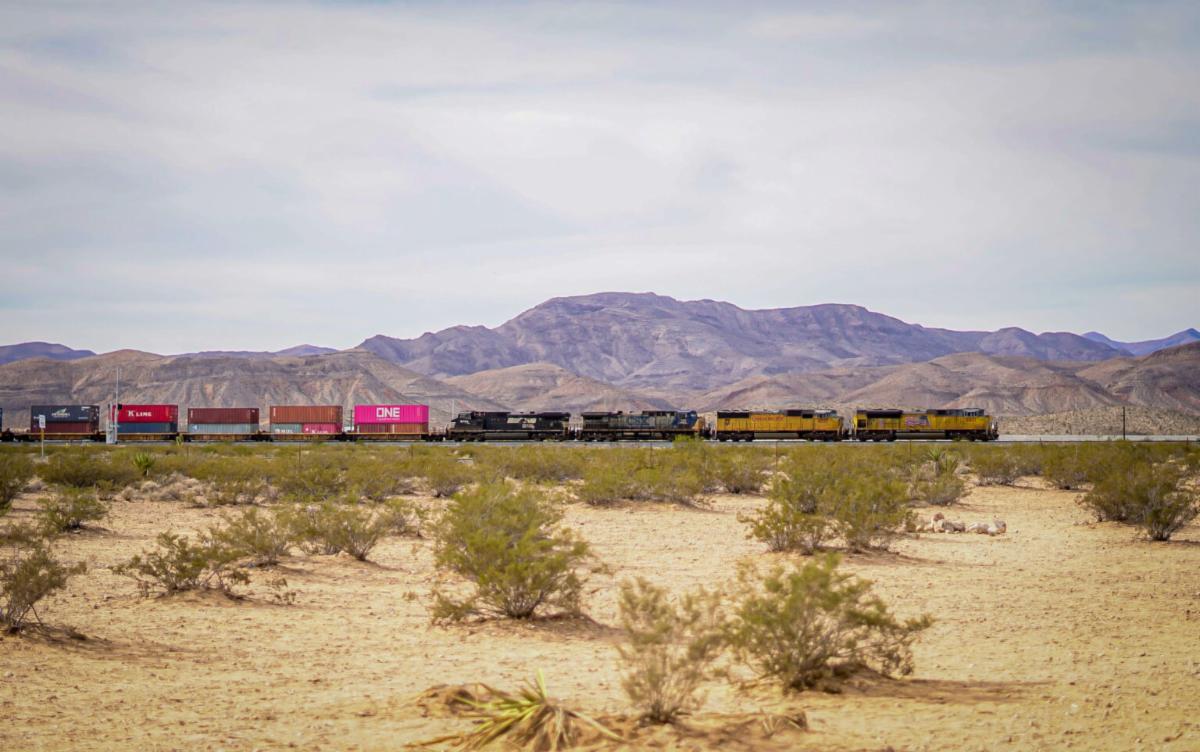
Intermodal continued to be a drag on U.S. rail traffic in April, with railroads logging a 6% decrease in combined volume compared to the same month a year ago, according to Association of American Railroads data.
U.S. railroads reported carloads last month increased 1.8% to 936,637 units, while the number of intermodal units fell 12.7% to 945,313 containers and trailers. The railroads posted a total of 1,881,950 carloads and intermodal units.
Seven of the 20 carload commodity categories tracked by the AAR each month logged gains in April. They included coal, up 4.1%; crushed stone, sand and gravel, 9.7%; and motor vehicles and parts, 12.3%.
Commodities that posted declines included chemicals, down 3.4%; grain, 3.7%; and nonmetallic minerals, 14.9%.
|
|
Weekly Derailment Department |
|
|
|
|
|
|