Stronger Together: Legacies of Collective Care | | |
Hello from the Shaping Legacy project! Over the last several years, artists and community partners have invited us to reflect on the impact of moving beyond individual hero-worship with opportunities to experience public memory as a collective act of communal story-shaping. Instead of spotlighting singular figures, their activations and installations celebrate movements, mutual aid, shared survival, and cultural continuity. They are invitations to see ourselves not as spectators of history but as co-authors and co-creators.
Our pasts, like our futures, have been shaped by communities, coalitions, movements, and quiet revolutions. We all have a role to play in shaping public memory. And when we do it together thoughtfully, expansively, and with care, we’re not just reflecting who we are. We’re creating something better to pass down.
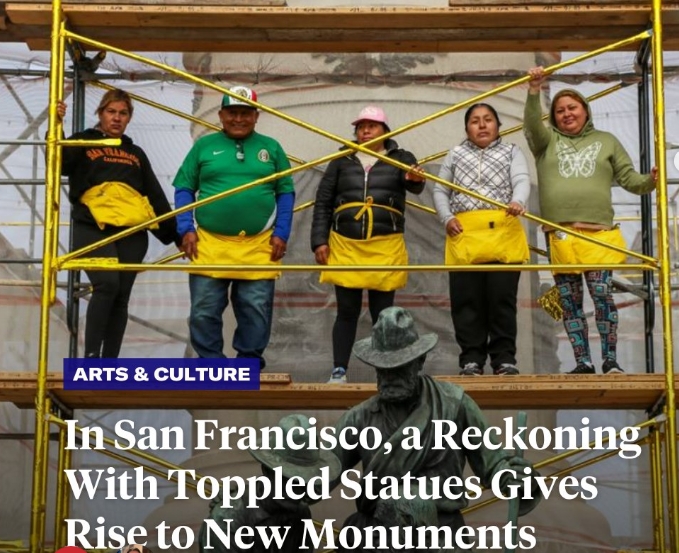
Shaping Legacy: San Francisco Monuments & Memorials commits to a multi-year critical examination of the monuments and memorials in San Francisco's Civic Art Collection and a reimagining of the commemorative landscape.
Funding from the Mellon Foundation propels Shaping Legacy, aligning with the San Francisco Arts Commission’s dedication to cultural equity and positive social change.
| | |
What the Community Actually Said
Quote from one community member on who gets remembered. Shaping Legacy community circles create space for collaboration and stories that build power together.
| | “I want to memorialize the fact that legacy is within the community. Collectively, we are here to help each other and to find ways to show how important this fact is to maintain and support each other for generations to come by believing in it enough to act on it.” | | |
From the Audit: What the Data Shows
The audit documented 105 monuments and memorials in San Francisco's Civic Art Collection. Who gets remembered. Who doesn't. Where power lives in public space. This isn't abstract theory. This is what's actually standing in our city right now.
| | Spotlight: Bay Area Legacies | | |
Artist Mattie Loyce reflects on collective story shaping
“It takes a village. Let’s tell the stories of how our communities come together and celebrate how artists create spaces for healing and collective liberation.”
- Quote, Angela Carrier, SFAC Senior Program Manager for Shaping Legacy
One of the greatest attributes art has to offer is its ability to connect us as people, by resonating to our experience in both universal and specific ways. Through art we have the opportunity to see ourselves and each other uniquely, casting lasting impressions on what our human experience can be. The role monuments and memorials provide in society offers a place to amplify or diminish the connectivity we experience as a people.
No history can be told in a vacuum, and for that reason it ‘takes a village’ of artworks and artists to share the true picture of how we as individual threads in history, combine to make the full tapestry. Historically monuments and memorials were created by the few, to celebrate the few, and these creations were regularly tied to specific capital resources. Communities at times celebrated these formally honored figures and events, and were equally left with the question which heroes, heroines, and triumphs are still left to behold.
The more artists we engage to create works that expand the breadth of experiences reflected, as well as methods of creative engagement - the more meaningful our (hi)storytelling will become as our future unfolds. Artists like Ruth Asawa, Lava Thomas, Caleb Duarte, and Precita Eyes Muralists have led by example, allowing their artworks and methods of presentation to be conduits for the storytelling of the many instead of the few. These artists and their work create spaces for collective remembering, honoring, and dreaming- which encompass the inherent purpose and aspirational impact of monuments or memorials at their core.
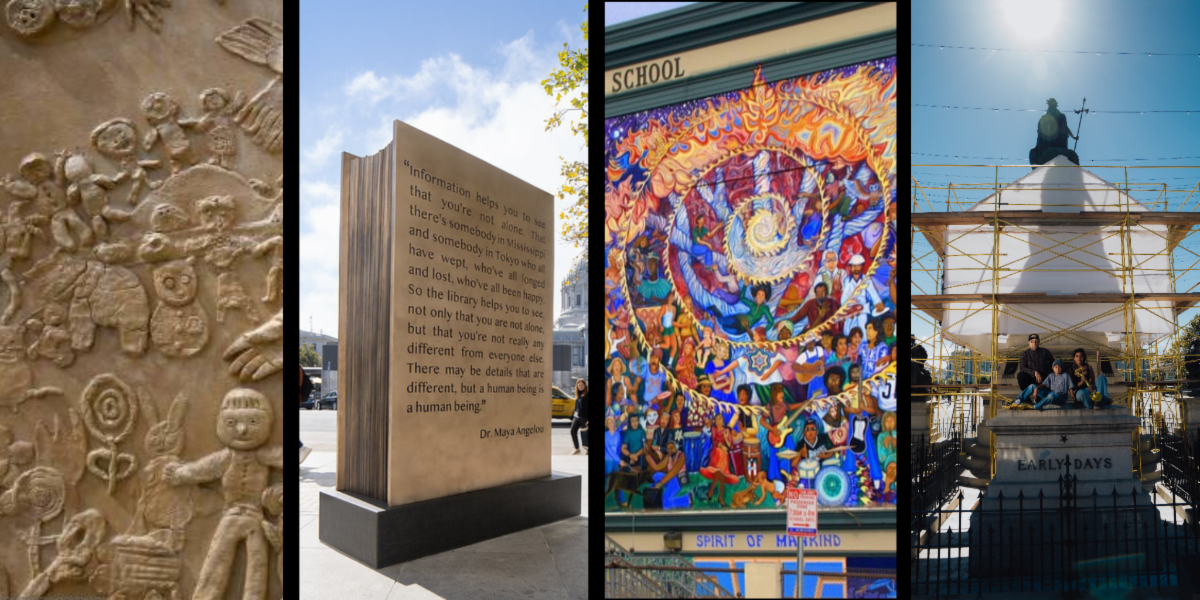
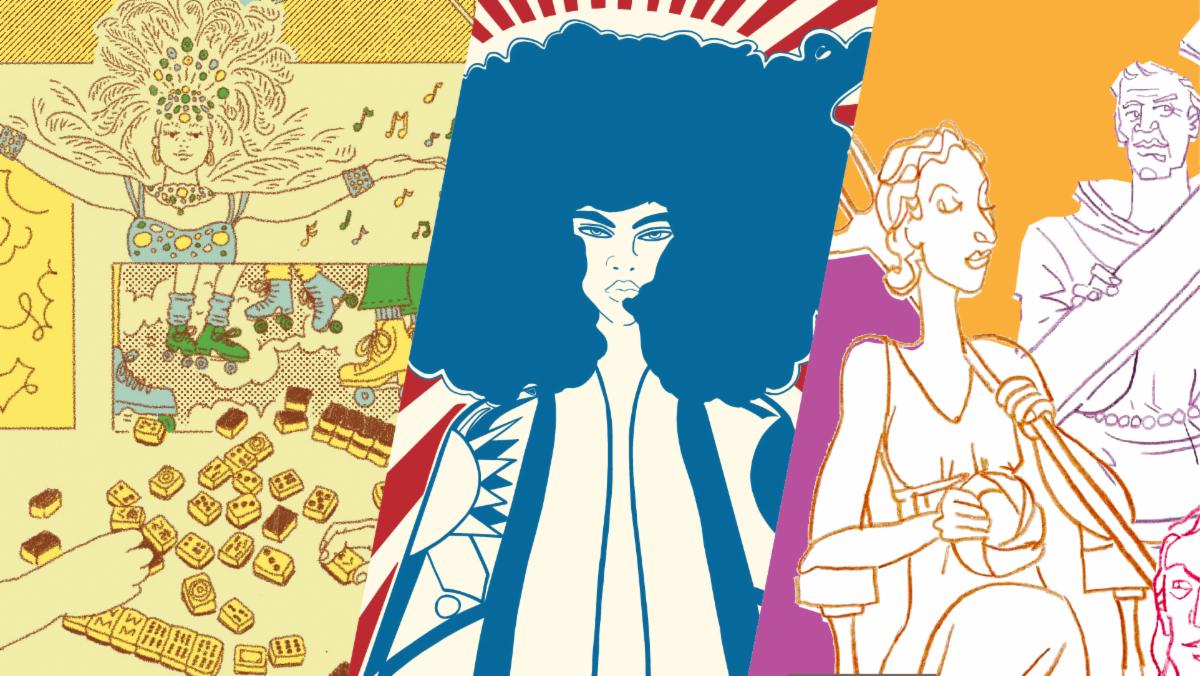
Some examples that you can experience around the city (pictured above):
-
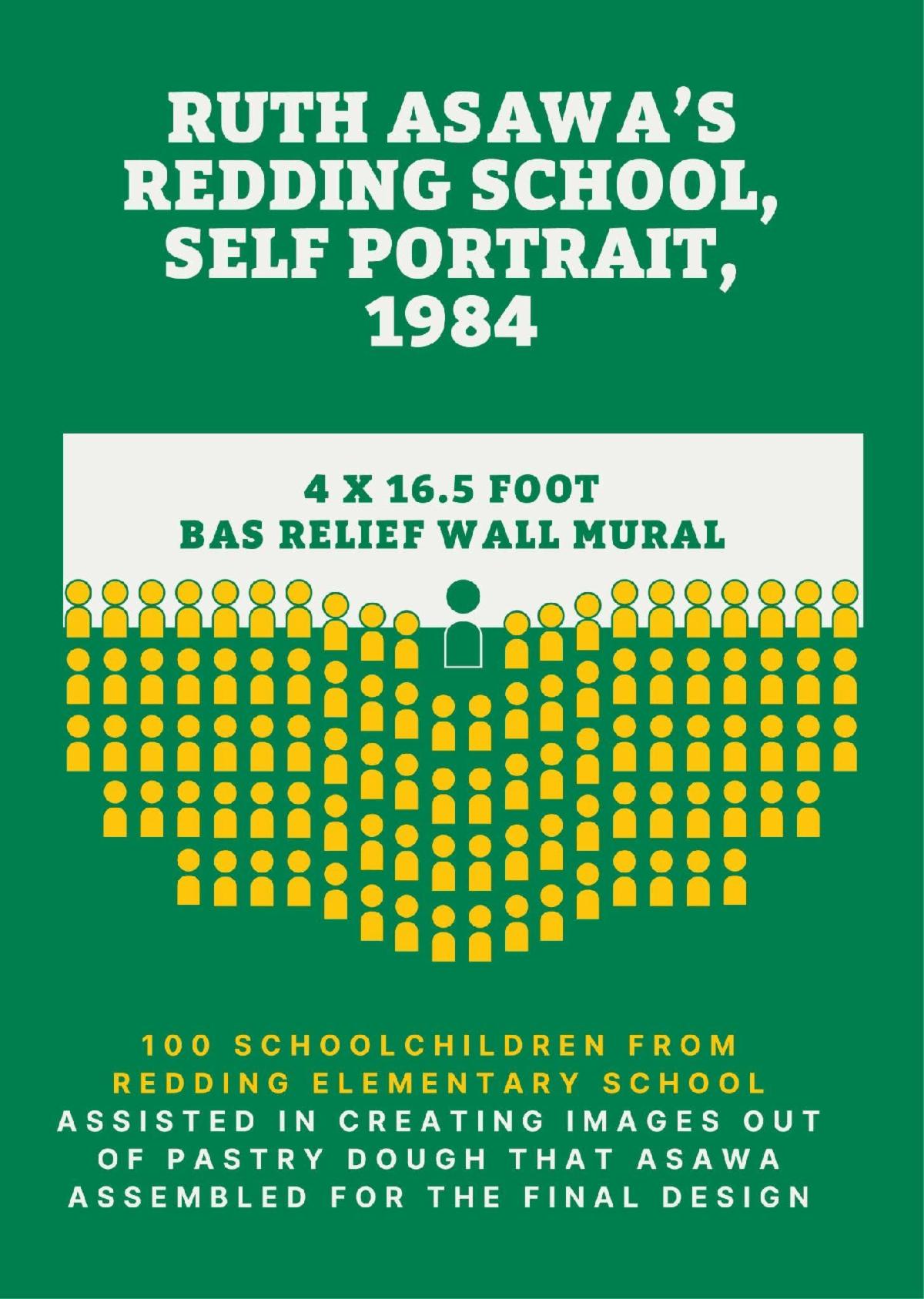
Ruth Asawa - Redding School Self Portrait by Ruth Asawa and Children of the School, Boeddeker Park, 295 Eddy Street, The Tenderloin
-
Lava Thomas - Portrait of a Phenomenal Woman, SFPL Main Branch entrance, 100 Larkin Street,
-
Precita Eyes Muralists - Family Life and Spirit of Mankind, located on Leonard R. Flynn Elementary School, Precita and Harrison Streets
-
Caleb Duarte - Embassy of the Refugee, at the Pioneer Monument in Fulton Plaza, Civic Center (up through September 2026)
The future of monuments and memorials has the opportunity to expand into a sounding board for collective inspiration and liberation, instead of concretizing the past. What would it be like to build a monument or memorial to what our hopes are for society - instead of what has already occurred?
Mattie Loyce is an interdisciplinary artist/curator and community advocate originally from and currently based in San Francisco.
| | |
Op-Ed
The invisible Hands of the City
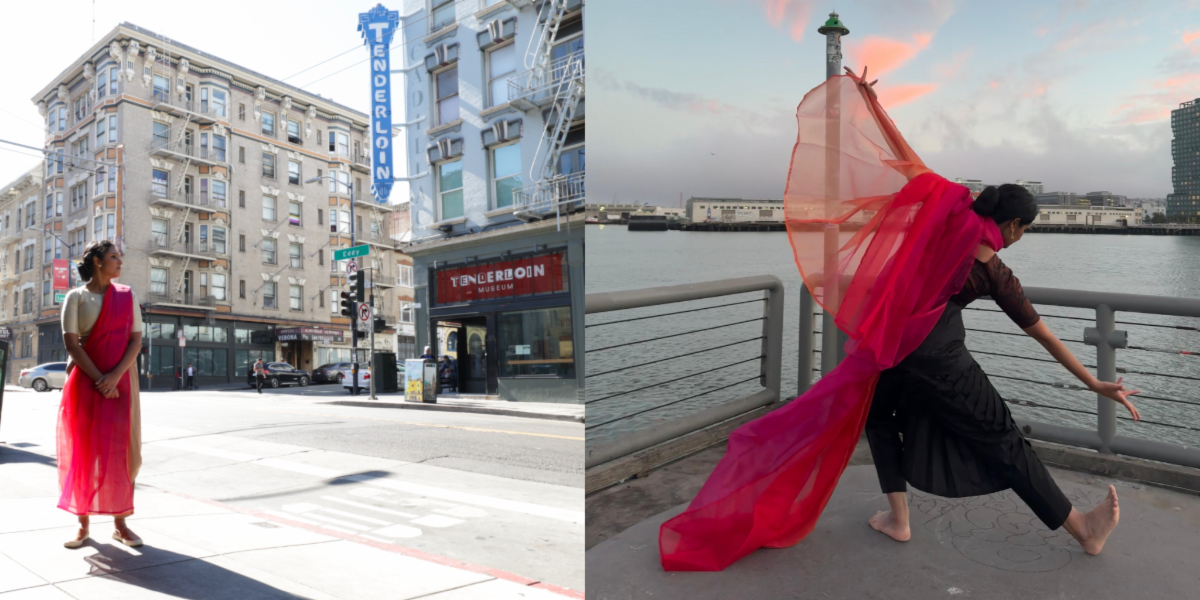
| | Images from Yours, Tenderly by Preethi Ramaprasad | | |
Why I Want My Daughter to See the Labor in San Francisco's Art
When I walk through Yerba Buena Gardens or along the Embarcadero with my young daughter, I see her eyes light up at the "magic" of San Francisco. She has experienced her share of playgrounds, climbed on numerous sculptures, and watched many dance performances. But as an artist and a mother, I find myself wanting her to notice something else entirely: the work.
In a city that prides itself on being a global capital of creativity, we are strangely disconnected from the actual labor that sustains it.
As a practitioner of South Asian dance for three decades, I am intimately familiar with the "invisible" side of the arts. When I completed my doctorate in Critical Dance Studies, the questions were predictable: What will you do with that? What jobs exist for a PhD in dance?
These questions betray a fundamental misunderstanding of the arts as a hobby or a stroke of inspiration rather than a rigorous profession. To be a dancer is to be an academic, a curator, and a physical laborer. It involves years of conditioning, the constant pursuit of grants, and the maintenance of a body that is both the instrument and the producer. When we overlook this, we treat art as a commodity that simply "appears," rather than a product of sweat and persistence.
This disconnect has real-world consequences. As national arts funding is slashed and local support wavers, San Francisco’s reputation as a sanctuary for creators is at risk. We consume art as an "escape" from the news or the grind of daily life, forgetting that the "fun-filled museum" on a rainy day is the result of immense, often precarious, labor.
Every polished composition or towering sculpture is a testament to an artist who had to find a studio they could afford, navigate the bureaucracy of city permits, and physically strain to bring a vision to life.
Thankfully, the tide of how we memorialize work in this city is shifting. Through my involvement with the San Francisco Arts Commission’s Shaping Legacy project, I’ve seen how we are finally beginning to honor the labor—both artistic and industrial—that built our streets.
Historically, we’ve looked at the Golden Gate Bridge or Coit Tower as symbols of "The City." But new monuments are asking us to look closer at who did the heavy lifting. Stacey Carter’s “CRANE” will shine a light on Black migration and the Shipyard community stories often left in the shadows of World War II history. Adrian Arias’ “A Sweet Route” honors the immigrant ice cream vendors who are as much a part of the Dolores Park ecosystem as the grass itself. Caleb Duarte’s “Embassy of the Refugee” focuses on the refugees and labor forces systematically erased from public memory.
These aren’t just "art pieces." They are corrections to the record. They celebrate the people who made the piers what they are and the people who provide the paleta we enjoy on a warm Saturday.
I want my daughter to grow up knowing that culture isn’t something that happens to a city—it is built by people.
I want her to look at a mural and think of bodies balancing on scaffolding to create art; to watch a performance and think of the hours of rehearsal; to understand that in San Francisco, beauty is a byproduct of grit.
Perhaps someday, at a dinner party or a city hall meeting, she will talk about this city not just as a collection of beautiful views, but as a vibrant ecosystem of cultural laborers. If she learns to see the work behind the art, she will learn to value the person behind the work. In a city as expensive and challenging as ours, that awareness is the most important legacy I can leave her.
Preethi Ramaprasad is a dancer, curator, and researcher based in San Francisco. She is greatly influenced by scholars Priya Srinivasan, Anusha Kedhar, and Aihwa Ong’s articulations of how transnational labor and citizenship are made visible in cities and art.
| | The City is Always Telling on Itself | | |
A new series of kiosk artworks across San Francisco explores how public memory is shaped, shared, and encountered in civic space.
The city is always telling on itself.
Not only through its monuments or official histories, but through what it chooses to place in public view. Through what it lifts up. Through what it lets the eye pass over and what it asks the body to stop and reckon with.
A new series of kiosk artwork throughout San Francisco will extend the conversation at the heart of Shaping Legacy. These works ask us to consider public memory as something living. Something still being formed. Something shaped not only by what a city remembers, but by what it is willing to see.
The kiosks offer more than information. They offer encounter. They turn ordinary passage into a site of reflection and recognition. They ask what legacy looks like when it leaves the pedestal and enters the flow of daily life. What becomes possible when civic space makes room for more history, more complexity, more imagination.
Each work enters that question differently. Some move through history. Some through symbolism. Some through the collective force of culture, memory, and shared life. Together, they widen the frame. They open a public conversation about how a city remembers, how it changes, and how art can press gently, insistently, on both.
There is a particular power in meeting a work of art outside the expected frame. No ticket. No threshold. No need to arrive prepared. Just the city, the street, the passerby, and the chance of being stopped by something that shifts the air around you.
That is part of what these kiosks hold.
They are invitations to witness. To reflect. To imagine. To consider that public memory is never fixed, and that the future of civic space is still taking shape.
| | The Work Happens Together | | |
Because this is about all of us, not just one hero. Here's where circles convene, artists activate, and community shows up. See where the camaraderie continues over the next 60 days.
-
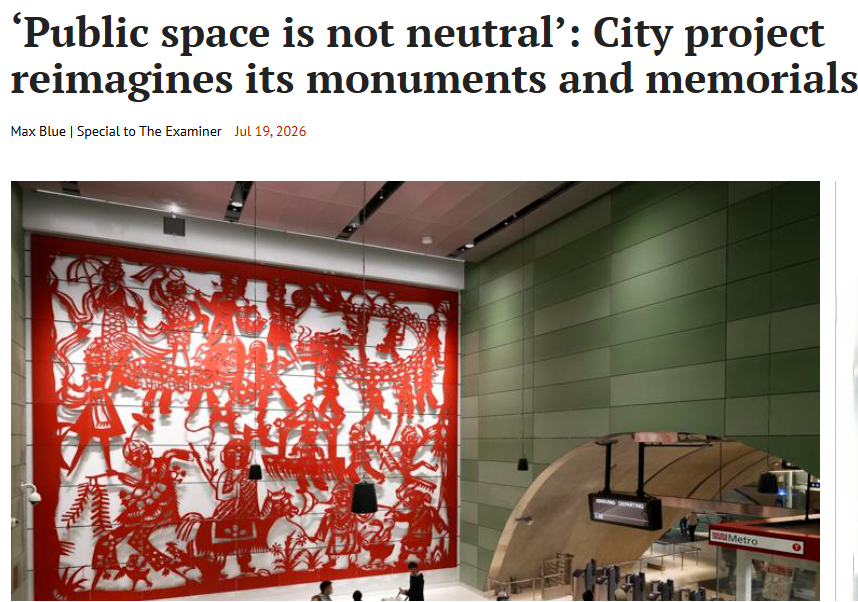
Public Art in Chinatown celebration with Threaded Histories, Saturday, September 12, 2026, 11:00am-4:00pm, Chinatown-Rose Pak Station
| | Our primary actions for the Shaping Legacy project: supporting the Art Makers and documenting the Community Moments. This connects the creative work with the public impact. Here’s what's happened over the past several months. | | | | |