Licensing Requirements and Interstate Compacts
Telemedicine for medical care took off quickly during the COVID pandemic and quickly it has become commonplace. Most states and the Centers for Medicare & Medicaid Services temporarily waived rules requiring licensed clinicians to hold a valid license in the state where their patient is located. Those restrictions don't keep physicians from treating patients from other states, but problems could arise if those same patients used telemedicine.
If you live in one state, does it matter that the patient you are treating online is in another state? The answer is yes. However, providers can deliver telehealth services across state lines, depending on rules set by state and federal policies. Interstate compacts simplify cross-state telehealth for specialists in participating states.
States are now rolling back many of those pandemic workarounds which can be confusing. To assist our members in deciphering the various state rules and regulations, ASIPP has compiled a list outlining each state’s status on telemedicine.
|
|
Why You Should Have a Specialty Designation of 09 for Interventional Pain Physicians
Specialty codes are used by CMS for programmatic and claims processing purposes. Medicare and commercial payers use the primary specialty designation in processing claims. Physicians in a group of the same specialty must bill and be paid as if they were one physician. Appropriate use of specialty codes helps reduce inappropriate suspensions and improves the quality of utilization data.
Physicians should monitor their specialty status to ensure that they are enrolled in the specialty type that most accurately represents their practice. This is particularly important as physicians change the focus of their practice and become more specialized. Failure to notify Medicare of specialty changes can affect reimbursement. If you are performing interventional pain procedures but your primary designation is Anesthesiology (5) or Pain Management (72) this will negatively affect the reimbursement for pain procedures. Interventional pain physicians’ primary designation should be 09 – Interventional Pain Management, a designation that ASIPP fought for and gained to assure more representation and reimbursement.
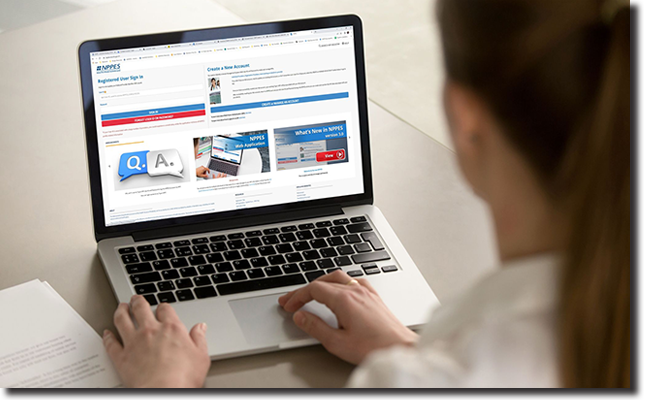
You may check your current specialty designation and/or to change it to Interventional Pain Management (09) on the following CMS website: https://nppes.cms.hhs.gov/#/please
Before doing so, CLICK HERE for a step-by-step instructional guide created by ASIPP member Dr. Rohit Choudhary to assist members in this process.
|
|
NEXT EXAM DATES:
Part I
May 28, June 18, July 30, August 27, September 17, October 22, November 19 & December 17
Part II
September 23
|
|
The American Society of Interventional Pain Physicians (ASIPP) and Louisiana Society of Interventional Pain Physicians (LSIPP) actively opposed Louisiana HB 941 which would restrict access to minimally invasive spine procedures performed by appropriately trained interventional pain management physicians.
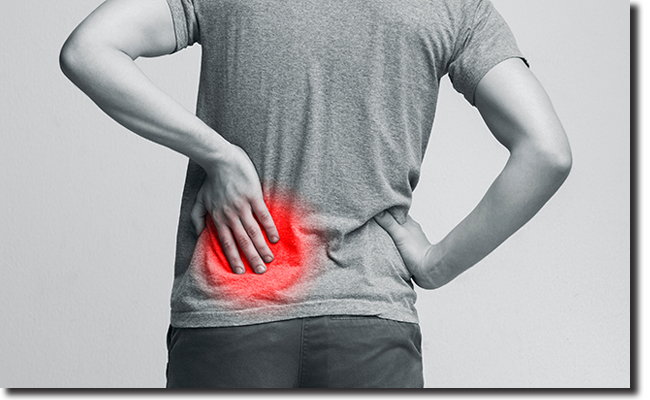
The bill would restrict access to care, prevent new minimally invasive techniques from being accessed in LA which are currently readily available across the country, and ultimately harm patient care by forcing patients to have much larger and more invasive procedures completed by surgical specialists who only seek to protect their financial well-being by restricting access only to themselves to complete more invasive procedures.
It was to be acted upon two weeks ago, Tuesday, May 2, but because of the ASIPP/LSIPP lobbying and opposition, this onerous bill has been tabled at this time. LSIPP Executive Director and President, Paul Hubbell, was set to testify our opposition when the bill was tabled in the final hour. We must keep this issue in our sights as it may be reintroduced with edits in the future.
Please keep in mind that bills such as these can occur in all states, and often are introduced quietly without much notice. This is an example of the importance of the ASIPP affiliate state societies! If you are not a member of your state society, please consider joining today. https://asipp.org/join-us-renew-2/
Click here to see ASIPP/LSIPP letter to the Louisiana House of Representatives, Health and Welfare Committee.
|
|
Trial followed patients with Senza System for 18 months
Pain relief from a spinal cord stimulation device for diabetic neuropathy was durable long-term, according to 18-month results from the SENZA-PDN trial.
When added to conventional medication management, patients treated with 10-kHz of high frequency spinal cord stimulation using the implantable Senza System saw an average 73% reduction in pain, said Christian Nasr, MD, of the Cleveland Clinic in Ohio.
By month 18, 85% (121 of 142) of patients were considered "responders" to treatment and 54% were even considered "profound responders" -- defined as achieving 80% or greater pain relief, Nasr said at the American Association of Clinical Endocrinology (AACE) annual meeting.
|
|
Three reports show success in reducing opioid prescribing
Urologists are doing their part to try to keep the opioid epidemic under control, according to three studies presented during a press briefing at the American Urological Association (AUA) annual meeting.
Among 6 million kidney stone disease-related emergency department (ED) visits, the proportion of patients receiving opioid prescriptions fell from 33% in 2012 to 16% in 2017, while non-opioid prescriptions increased from 67% to 84%, reported Rajat K. Jain, MD, of the University of Rochester Medical Center in New York.
The odds of receiving an opioid prescription decreased significantly in 2016 and 2017 compared with 2012 (OR 0.27, P=0.01 and OR 0.12, P<0.0001, respectively), they noted, while the odds of receiving a non-opioid prescription increased (OR 2.02, P=0.03 and OR 2.63, P=0.01, respectively).
|
|
Recommendation of Pfizer’s extra dose paves way for pharmacies, doctors and other vaccination sites to begin making shots available
Following the recommendation Thursday, many of the nation’s doctors, pharmacies and other vaccination sites are expected to begin offering the extra doses to the 28 million U.S. children in the age group.
|
|
- ASIPP Members Only Site Information - |
|
-
To log in for the first time you will need to click “forgot password” at the bottom of the login window.
- Check your email and then log in as directed.
-
If you have problems logging into your account, click here.
|
|
Pain Medicine Case Reports (PMCR) and Editor-in-Chief Alaa Abd-Elsayed, MD, PhD would like to invite you to submit case reports and case series to the PMCR journal. Your article will be published free of charge.
Open access journals are freely available online for immediate worldwide open access to the full text of published articles. There is no subscription fee for open access journals. Open access journals are no different from traditional subscription-based journals: they undergo the same peer-review and quality control as any other scholarly journal.
Interested in becoming a member of the PMCR Editorial Board?
Editorial board members are asked to review 2-6 manuscripts per year. Please submit your most up-to-date CV to sgold@asipp.org for consideration.
For more information or to submit your articles, click here.
|
|
| CASE REPORT |
Damla Yuruk, MD, and Ilknur Aykurt Karlibel, MD
Abstract
BACKGROUND: The most common entrapment neuropathy of the median nerve (MN) is carpal tunnel syndrome (CTS), in which the MN is compressed at the wrist level; however, MN compression can also occur at the elbow level, as in pronator teres syndrome (PTS).
CASE REPORT: In this article, we present 2 cases of PTS: one had developed as a result of repetitive and compelling forearm pronation movements due to the patient’s profession, and the other had developed as an iatrogenic response to coronary angiography. The former case recovered with conservative treatment, whereas the latter case required surgical treatment.
CONCLUSION: PTS should be differentiated from CTS, anterior interosseous syndrome (AIS), brachial plexus lesion, and cervical radiculopathy because it has overlapping symptoms with all of these. Examination findings should be confirmed by electrophysiological tests in patients with suspected MN lesion. The first choice in treatment should be conservative, but surgical treatment should be considered in patients whose complaints do not regress.
KEY WORDS: Median nerve, pronator teres syndrome, forearm pain
|
|
| ARTIFICIAL/MACHINE LEARNING |
Amisha D. Dave, BSE, Gualberto Ruano, MD, PhD, Jonathan Kost, MD, and Xiaoyan Wang, PhD
Abstract
Background: Pain costs more than $600 billion annually and affects more than 100 million Americans, but is still a poorly understood problem and one for which there is very often limited effective treatment. Electronic health records (EHRs) are the only databases with a high volume of granular pain information that allows for documentation of detailed clinical notes on a patient's subjective experience.
Objectives: This study applied natural language processing (NLP) technology to an EHR dataset as part of a pilot study to capture pain information from clinical notes and prove its feasibility as an efficient method.
Study design: Retrospective study.
Setting: All data were from UConn Health John Dempsey Hospital (JDH) in Farmington, CT.
Methods: The JDH EHR dataset contains 611,355 clinical narratives from 359,854 patients from diverse demographic backgrounds from 2010 through 2019. These data were processed through a customized NLP pipeline. A training set of 100 notes was annotated based on focus group-generated ontology and used to generate and evaluate an NLP model that was later tested on the remaining notes. Validation of the model was evaluated externally and performance was analyzed.
Results: The model identified back pain as the most common location of experienced pain with 40,369 term frequencies. Patients most commonly experienced decreased mobility with their pain with 7,375 term frequencies. Pain was most commonly found to be radiating with 26,967 term frequencies and patients most commonly rated their pain as 8/10 with 2,375 term frequencies. All parameters studied had statistical F-scores greater than 0.85.
Limitations: A single-center, pilot study subject to reporting bias, recording bias, and missing patient data.
Conclusions: Our customized NLP model demonstrated good and successful performance in extracting granular pain information from clinical notes in electronic health records.
Keywords: automation; electronic health records; natural language processing; pain location; pain quality; pain quantity; pain symptoms; Pain ontology.
|
|
| ORIGINAL MANUSCRIPT |
Laxmaiah Manchikanti, MD, Radomir Kosanovic, MD, Vidyasagar Pampati, MSc, Mahendra R. Sanapati, MD, Amol Soin, MD, Nebojsa Nick Knezevic, MD, PhD, Bradley W. Wargo, DO, and Joshua A. Hirsch, MD
Abstract
Background: Chronic low back pain secondary to facet joint pathology is prevalent in 27% to 40% of selected populations using controlled comparative local anesthetic blocks. Lumbar facet joint nerve blocks and radiofrequency neurotomy are the most common interventional procedures for lower back pain. Nonetheless, questions remain regarding the effectiveness of each modality. Moreover, there is no agreement in reference to the superiority or inferiority of lumbar facet joint nerve blocks when compared with radiofrequency neurotomy. Centers for Medicare and Medicaid Services (CMS) and almost all payers prefer radiofrequency ablation. Both procedures have been extensively studied with randomized controlled trials, systematic reviews, and cost-utility analysis.
Objective: To assess the clinical outcomes and cost-utility of therapeutic lumbar facet joint nerve blocks (lumbar facet joint nerve blocks with L5 dorsal ramus block) compared with radiofrequency neurotomy in managing chronic low back pain of facet joint origin.
Study design: A retrospective, case-control, comparative evaluation of outcomes and cost-utility.
Setting: The study was conducted in an interventional pain management practice, a specialty referral center, and a private practice setting in the United States.
Methods: The study was performed utilizing the Strengthening the Reporting of Observational Studies in Epidemiology Analysis (STROBE) criteria. Only the patients meeting the diagnostic criteria of facet joint pain by means of comparative, controlled diagnostic local anesthetic blocks were included. The main outcome measure was pain relief measured by the Numeric Rating Scale (NRS) evaluated at 3, 6, and 12 months. Significant improvement was defined as at least 50% improvement in pain relief. Cost-utility was calculated utilizing direct payment data for the procedures with the addition of estimated indirect costs over a period of one year based on highly regarded surgical literature and previously published interventional pain management literature.
Results: A total of 326 patients met the inclusion criteria with 99 patients receiving lumbar facet joint nerve blocks (lumbar facet joint nerve blocks with L5 dorsal ramus block) and 227 receiving lumbar radiofrequency neurotomy. Forty-eight patients in the facet joint nerve block group and 148 patients in the radiofrequency group completed a one-year follow-up. Patients experienced significant improvement in both groups from baseline to 12 months with significant pain relief (≥ 50%) Significant pain relief was recorded in 100%, 99%, and 79% of the patients in the facet joint nerve block group, whereas, it was 100%, 74%, and 65% in the radiofrequency neurotomy group at the 3, 6, and 12-month follow-up, with a significant difference at 6 months. Cost-utility analysis showed average costs for quality-adjusted life-year (QALY) of $4,664 for lumbar facet joint nerve blocks and $5,446 for lumbar radiofrequency neurotomy. Twelve patients (12%) in the lumbar facet joint nerve block group and 79 patients (35%) in the lumbar radiofrequency group were converted to other treatments, either due to side effects or inadequate relief.
Conclusion: This study shows similar outcomes of therapeutic lumbar facet joint nerve blocks when compared with radiofrequency neurotomy as indicated by significant pain relief and cost-utility.
Keywords: controlled comparative local anesthetic blocks; lumbar facet joint nerve or medial branch blocks and L5 dorsal ramus block; lumbar facet or zygapophysial facet joint pain; lumbar radiofrequency neurotomy; Chronic low back pain.
|
|
Since this malpractice insurance program officially launched in November 2018, ASIPP has signed up hundreds of providers with an average savings of 30%. This is professional liability insurance tailored to our specialty and will stand up for us and defend our practices.
Norcal Mutual is A-Rated by AM best and is licensed in all 50 states. To read a few important points to keep in mind about the program, including discounts, administrative defense, cyber coverage, aggressive claims handling, and complimentary award-winning risk management CME activities, click here.
|
|
ASIPP® has formed a partnership with Henry Schein and PedsPal, a national GPO that has a successful history of negotiating better prices on medical supplies and creating value-added services for independent physicians. Working with MedAssets, PedsPal provides excellent pricing on products like contrast media that alleviate some of the financial pressures you experience today.
|
|
ASIPP® is now offering our members the benefit of a unique revenue cycle management/ billing service.
We have received a tremendous amount of interest in the ASIPP® billing and coding program.
Click here to learn more about the negotiated rate for practices and more!
|
|
|
up-to-date news related to you, your practice, and your patients!
|
|
|
|
|
|
|