Newsletter of the Alliance's EPIC Learning Health System | | Decolonizing Care for Two-Spirit Health | | Support Caregivers to Strengthen your Team | | EPIC Learning Health System Update | | Learning Events
& Programs | | Get Involved: Research & Sharing | | |
Caring for Two-Spirit Health
Part 1 | Stepping Back:
Decolonizing how we think about being Human
Missy Fishman, Two-Spirit Educator and Advocate
| | |
What does it mean to decolonize health care? How and why do we need to think differently?
How will we draw from Indigenous knowledge when planning and delivering care for Two-Spirit people?
We recently spoke with Missy Fishman, a Two-Spirit woman who works as an educator and Advocate for 2SLGBTIA human rights, about these questions. She is sharing her wisdom in series of three articles built on themes that emerged from our conversation.
This article has been shortened from the original. Read the full version here.
| | |
The first step is a step backward – zooming out see a bigger picture.
This means learning to see people in a more holistic way, to understand the complex and interrelated systems within each person and among people. It also means understanding the context in which people live - historical and ongoing colonial systems and how they affect health and access to care. And it means understanding our own place in those systems and the opportunity to effect real change.
| |
Why is it necessary for people working in health care to understand Two-Spirit identities?
Identity directly affects whether someone receives and experiences care as safe, respectful and affirming. Two-Spirit identity encompasses gender, sexuality, culture, spirituality, community relationships and responsibilities. Its meaning can differ according to the person, their Nation and their community.
When health care providers understand only one part of someone’s identity, other important parts of that person are omitted. An LGBTQIA+ service may be welcoming around gender and sexuality while lacking cultural safety for Indigenous people. An Indigenous health service may understand colonialism and racism while still carrying assumptions about gender and sexuality. Two-Spirit people can find themselves moving between systems that each recognize only part of who they are.
Healthcare providers don’t need to be experts in every Indigenous culture, but they do need enough knowledge and humility to recognize what they don’t know, avoid assumptions, ask respectful questions and honour how people define themselves. Training can provide an important foundation, but cultural safety is demonstrated in what happens afterward—in everyday practice, relationships and decision-making.
| |
What are the ongoing impacts of colonialism on Two-Spirit people?
Colonialism attempted to reorganize Indigenous life according to European Christian ideas about gender, sexuality, family, governance and authority. Indigenous languages, kinship systems, ceremonies and ways of passing on knowledge were disrupted and suppressed.
Over time, these new social norms brought fear and shame into families and communities, contributing to lateral violence and pushing many Two-Spirit people away from places where they should have belonged. Today, Two-Spirit people continue to experience racism, homophobia and
| | |
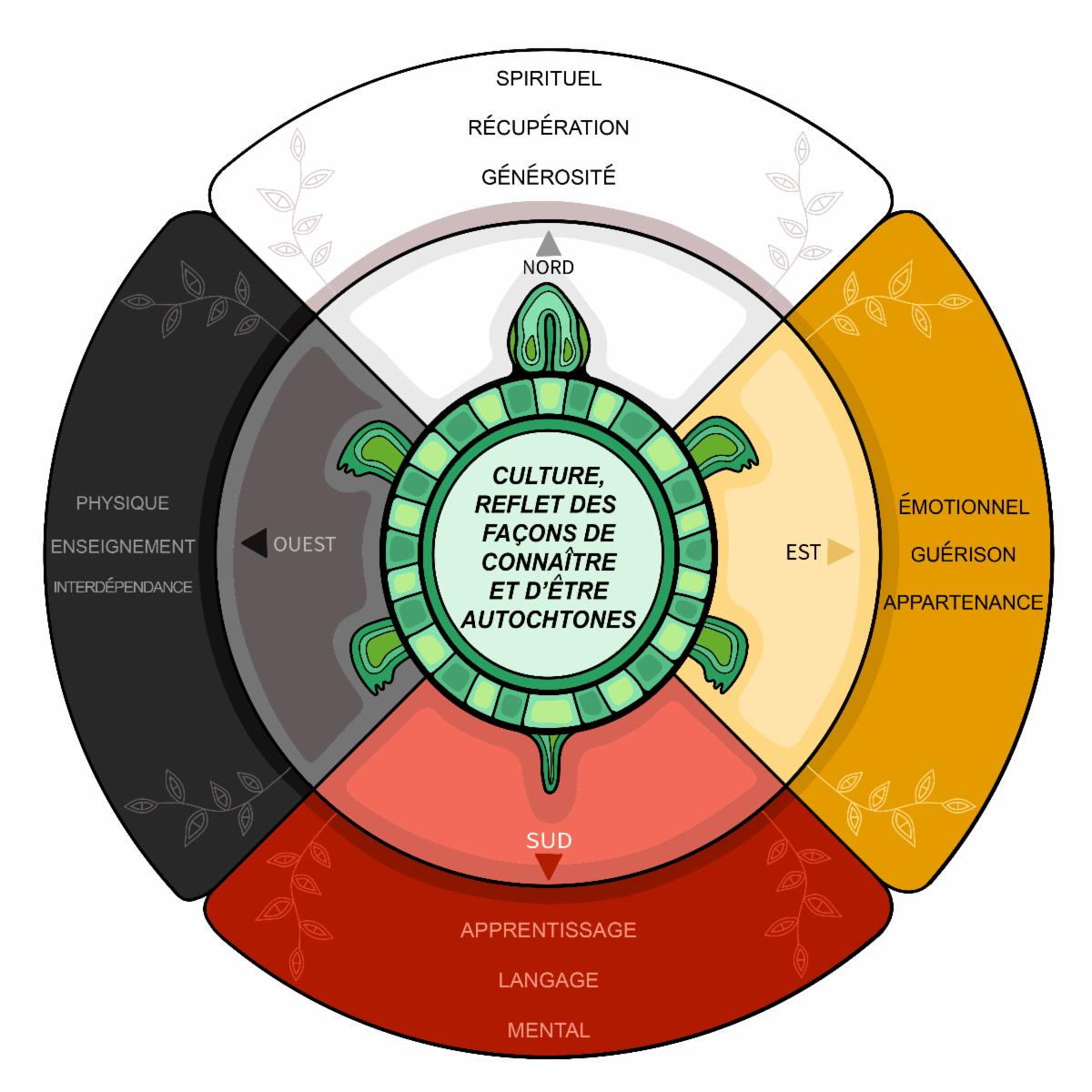
One of the teachings that has most shaped how I understand health comes through the medicine wheel—how our physical, emotional, mental and spiritual well-being are connected to one another, and to community, culture, water, land and the conditions in which we live, and that neglecting one area of well-being has impacts on the others. Although these teachings won’t look the same across all Indigenous Nations, many Indigenous knowledge systems invite us to see the relationships among parts of life that Western health systems often separate. A health system divided into specialties can become very good at treating one symptom or diagnosis while losing sight of the person carrying it.
Seeing health relationally also changes how we understand responsibility. A policy can strengthen or weaken trust. An intake form can recognize someone or make them disappear. A treatment plan can support a person’s relationships and cultural practices or separate them from what helps keep them well.
| | The Model of Wholistic Health and Wellbeing reflects the teachings of the medicine wheel; the interconnectedness of emotional, physical, mental and spiritual health; and the ways health is deeply interwoven with land, culture, and values in many Indigenous cultures. (courtesy of the Indigenous Primary Health Care Council (IPHCC) and used with permission). | | | |
Melissa (Missy) Fishman is a 2-Spirit woman of the Thunderbird clan, raised in Treaty 13 and a member of the Xaxli’p First Nation in B.C. She works as an educator and advocate for 2SLGBTIA human rights supporting Indigenous reconciliation and resilience. | |
|
The Winter 2026 of EPIC News will feature the second article in this series, “Leaning in: How two-eyed seeing can enrich our understanding of gender, sexuality, and intersectional identities.” Watch for it in December. In Spring 2027, we will conclude the series with the third article, “Walking forward: Resources to support continued learning and better care for Two-Spirit people.”
This article has been shortened from the original. Read the full version here.
| | |
Supported Caregivers Strengthen Primary Health Care
Fardowsa Halane, the Ontario Caregiver Organization
| |
Family and community caregivers can be a key part of a holistic, person-centred health care team, sometimes providing a majority of the care a patient receives. However, the caregiver's role is challenging. Without proper support, caregivers can experience stress and burnout, causing their own health and wellbeing to suffer. Properly supporting caregivers strengthens the health care team and improves patient outcomes, but many primary care providers don't know how best to do this.
This guest article from the Ontario Caregiver Organization provides strategies and resources that primary heath care teams can use to help ensure that their patients' family and community caregivers are recognized, empowered, and supported to contribute to the work of the team without burning out.
| | |
Primary health care teams are uniquely positioned to meet people in their communities and address the full scope of their experience—at every stage of care, through evolving conditions, and in collaboration with other community supports.
One of the most important, and least recognized, of those supports is family and community caregivers. These essential partners in care bring knowledge about a person’s daily life that can help providers make informed, practical, and culturally safe decisions.
Yet caregivers’ own needs are often overlooked. Someone who says “I’m just helping my dad” may be managing appointments and medications while struggling to find time for their own health.
The Ontario Caregiver Organization (OCO)’s 2025 Spotlight Report shows how much pressure caregivers face: 69% said they had felt so burnt out that they were unsure how they could continue. With caregivers providing up to 90% of the care in our healthcare system, supporting a patient means we can’t neglect the well-being of the person helping them at home.
| |
Start with a conversation
Primary health care teams are well placed to recognize caregivers for their role and help them connect to support. A few steps can make that easier:
-
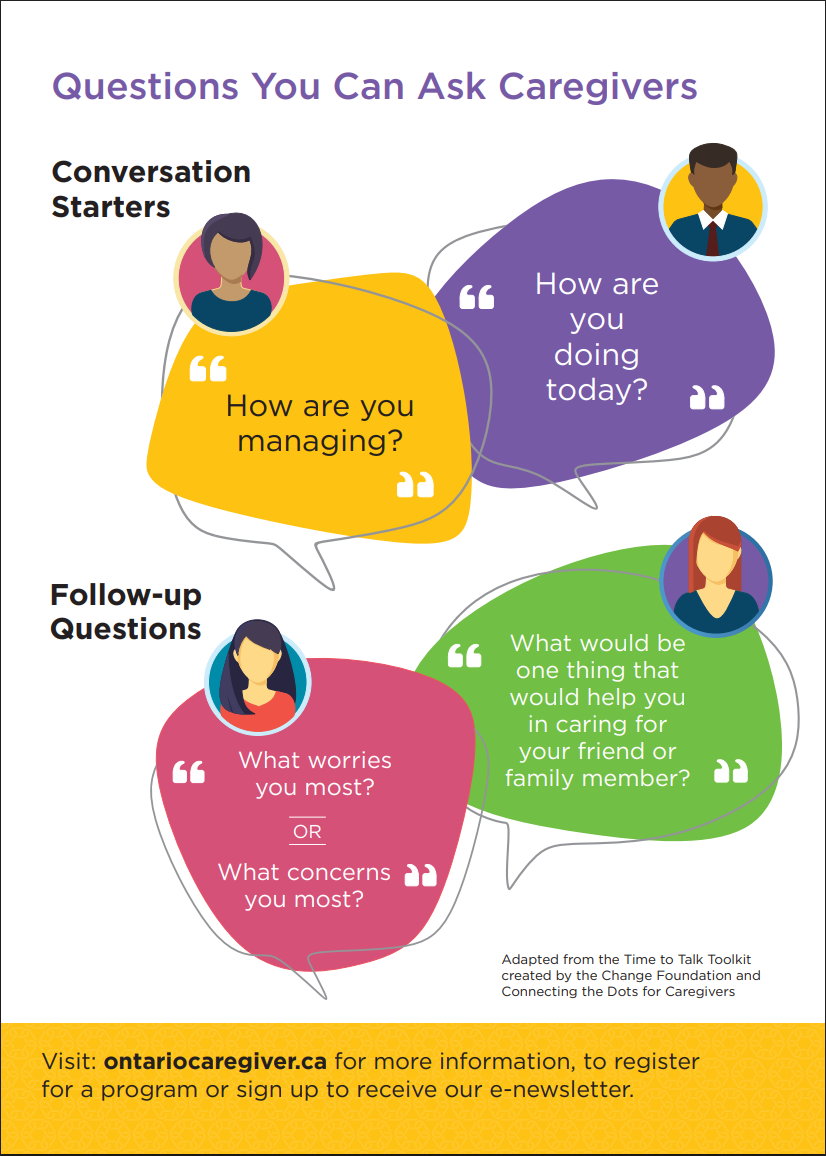
Identify: Ask patients about who helps them manage their health day-to-day. A simple “Taking Care of Someone?” poster can help people recognize that they are caregivers.
-
Include: With the patient’s consent, invite the caregiver to share what they have noticed and take part in relevant care conversations. Caregivers are more likely to speak up when they feel welcome. Conversation tips for providers offers ways to acknowledge their role and invite their perspective.
-
Check in: Ask the caregiver how they are managing and what support they might need. The OCO’s I Am a Caregiver toolkits offer caregivers practical support for every stage of their journey. Tailored versions of I Am a Caregiver are available for Black and Indigenous caregivers.
| | Make space for caregiver mental health | | |
Caregiving can bring stress, guilt, grief and isolation. Caregivers need support for their own well-being.
SCALE Together™ helps organizations offer high-quality mental health support in their setting. This free eight-week program combines OCO webinars and workbooks with in-person group discussions led by a regulated health professional from the partner organization hosting the sessions. Addressing topics such as burnout, stress and setting boundaries, caregivers learn ways to care for themselves while connecting with others who understand the experience.
After organizations identify a space, a qualified facilitator, and a group of caregivers, the OCO provides program materials and implementation support to help run the program. For a primary care team, sharing a program like SCALE Together can turn “How are you doing?” into a meaningful next step.
Create a clear path to support
Caregivers may also need help finding services and
opportunities to connect in their community. Through
| | A page from the OCO's tip sheet for primary care providers. (Courtesy of OCO). | | |
Caregiver Social Prescribing, OCO Link Workers help caregivers identify their needs and connect with relevant local support. Participating in care teams can use an e-referral pathway, so caregivers do not have to navigate services alone.
Together, these approaches give primary care teams three ways to respond:
-
SCALE Together™ provides structured support for caregiver mental health and connection.
Teams looking to strengthen their approach can explore the Ontario Caregiver Organization’s primary care resources.
Any provider can also share the free Ontario Caregiver Helpline at 1-833-416-2273 (CARE), available by phone 24/7 for caregivers to find information about supports in their community.
Supporting caregivers is an essential part of strengthening primary health care teams, and, ultimately, the health and well-being of the people and communities they serve.
| | Fardowsa Halane is the Knowledge Exchange Lead at the Ontario Caregiver Organization's Partner Support Hub. | | The Ontario Caregiver Organization (OCO) is funded in part by the Ministry of Health and exists to improve the lives of Ontario’s 4.2 million caregivers. | | | |
EPIC Learning Health System Update: Fall 2026
EPIC LHS Team, Alliance for Healthier Communities
| | The past few months have been busy for our learning health system! We are grateful to the many Alliance members who have joined us on our EPIC journey of integrated practice, research, learning, and quality improvement. Here are some recent highlights: | |
Supporting Primary Care Attachment through IPCT Expansion, Neighbourhood Health Homes, and a Regional Attachment Model
As IPCT expansion continues, the Alliance is providing ongoing and adaptive support.
- We continue to maintain and expand our Access & Attachment Toolkit (also available in French) to support the needs of primary health care teams that are increasing their operational capacity in order to improve access and attachment to care.
- We recently published a report summarizing of some of the promising practices outlined in Chapters 5 and 6 of the Toolkit.
- A new Neighbourhood Home Toolkit is currently being developed in response to high demand from Alliance members. It will feature case studies from WellFort, Flemingdon, and Scarborough.
- The Alliance has just submitted a policy paper (also in French) to Ontario Health, proposing a complexity-adjusted regional attachment methodology. The more complex a provider's clients are, the fewer people they would be expected to attach.
| |
NPLC-ICES Data Linkage Reports
For the first time, Nurse Practitioner–Led clinics in Ontario have received data-linkage reports created from practice-based and health system data. These are similar to the Practice Profiles prepared by the Alliance for our member CHCs and the MyPractice reports prepared by Ontario Health for other primary care providers and teams in Ontario. Dr. Jennifer Rayner partnered with ICES to create the reports using EMR data provided by ten NPLCs, including six Alliance members, and health system data from ICES. Individualized reports were provided to participating organizations; a summary and aggregate date were presented to the Ministry of Health and INSPIRE-PHC.
This project will be presented by our LHS team as a poster at the upcoming North American Primary Care Research Group (NAPGRG) conference.
| |
Defining an Attributable Population for an Indigenous Ontario Health Team (OHT)
The Alliance worked with the Ministry of Health, ICES, and the Maamwesying Ontario Health Team, which is led by Maamwesying North Shore Community Health, to co-design a methodology for determining an Indigenous Attributable Population. Using this new methodology and linked health system data, they were able to identify 33,000 people in the region who are currently being served by an Indigenous-led primary health care organization or could benefit from having access to one. This study followed the First Nations principles of Ownership, Control, Access, and possession (OCAP®); accordingly, the data was shared with the community first.
| |
Recap: Fall 2026 Learning Opportunities for Alliance members
Learning Collaborative 4 (LC4): Increasing attachment through intake process improvements - Using an equity-based approach
Building on the foundations of our last learning collaborative - and by request from Alliance members - LC4 supported teams working to increase attachment and access to care with a focus on equity. A total of eleven teams participated. We interviewed six participants and created an evaluation report (available in English and French) that describes their projects, experiences and key learnings. It concludes with lessons that we will take forward and apply to future learning collaboratives and RALI.
Rapid Action Learning Intensive for Access and Attachment (RALI-AA)
Coming soon! Our next RALI will support the spread and scale of learnings from LC4 and help Alliance members implement a 7-Step Intake Process to improve efficiency while centring equity and ensuring clients are connected quickly to the most appropriate care and supports. A How-To Guide & Workbook will be launched in English and French, along with a toolkit of relevant resources, at our upcoming Data & QI Professional Learning Event on October 28. Although RALI is a self-paced learning program, participants will be invited to attend optional learning sessions where they can ask questions and seek support from peers or the Alliance's Quality Improvement & Performance Leads (QIP-Ls).
In-Person Professional Learning Events (PLEs)
-
Our Social Prescribing and Health Promotion PLE took place on September 29. It featured presentations about using sociodemographic data and intersectional perspectives to improve care as well as experiential workshops demonstrating a variety of social prescription activities. See the photo gallery here.
- Our Data and Quality Improvement PLE on October 28 featured a mix of didactic sessions and educational activities about using data to inform quality improvement.
- Our Invest in Yourself PLE for Finance and HR professionals took place on October 29. This full day of in-person learning, networking, and solution-finding was designed to participants become more confident leaders, communicators, and collaborators.
Social Prescribing Learning Collective and Webinar Series
- If your team is interested in ad-hoc coaching to support implementing or improving a social prescribing referral pathway contact our social prescribing team.
| |
Learning Events & Programs
| | |
Designing Effective Teams Series Webinar #1
November 26, 11:00 am - 12:00 pm | Online | Free
This webinar is presented by the Association of Family Health Teams of Ontario as the first one in their Designing Effective Teams learning series, which showcases how optimizing the scope and role of interprofessional primary care providers can help improve attachment, access, and quality of care. This session focuses on pharmacists. Register here.
| | |
Putting the Professional in Interprofessional Collaboration
November 26, 12:00-1:00 pm | Online | Free
This webinar is presented by the Alliance for Healthier Communities as part of our Social Prescribing Clinical Champions Webinar Series. Hear from three interprofessional health care workers about how social prescribing fits into their role and supports their team's practice. Register here.
| | |
Advance Health. Avoid Harm. Data & AI That Don’t Hurt the Communities You Serve
November 26, 1:00-2:00 | Online | Free
This webinar is presented by Health Data Research Network (HDRN) Canada as part of their Big IDEAS About Health Data speaker series. Drawing on the We All Count Data Equity Framework, Data Scientist Heather Krause shows how to translate equity commitments into operational data and AI practices across the health data life cycle. Register here.
| | ONCA: Is Your Organization Compliant?
December 1, 12:00-1:00 pm | Online | Free
Leadership staff (executive leaders, directors, and managers) whose role includes supporting governance and board administration, as well as as well as executive assistants who work directly with boards, are encouraged to attend this webinar. Adrianna Tetley, governance coach and former CEO of the Alliance, will lead participants through an exploration of key compliance questions and their implications. Register here. | | Mapping Together: The Messy, Meaningful Work of Co-Design
January 28, 1:00-2:00 PM | Online | Free
This webinar is presented by Health Data Research Network (HDRN) Canada as part of their Big IDEAS about Health Data Speaker Series. It will explore the messy, meaningful work of co-design through a project that brought researchers and public partners together to co-create maps and tools for equity-informed climate adaptation in Prince Edward Island. Hear how co-design worked in practice, what made the process meaningful, and how it challenged conventional approaches to data-driven research. Participants will also hear about unexpected deliverables: the relationships, insights and ways of working that continue to influence future work. Register here. | | |
Public Health 2027 Conference
March 16-18. 2027 | In Person (Vancouver) | $225-925
Public Health 2027 is the national conference where public health professionals, researchers, policy-makers, academics, students and trainees come together to strengthen efforts to improve health and well-being, to share the latest research and information, to promote best practices and to advocate for public health issues and policies grounded in research. Learn more and register.
| |
Ongoing Training and Collaborative Learning
ECHO at UHN
Echo at UHN is an interactive, interprofessional, collaborative learning program funded by the Ontario Ministry of Health. It's free and open to all health care providers, and CPD credits are available. Participants get access to weekly didactic lectures and anonymized, peer-led case discussions. Register here to join any of the following ongoing cohorts. Learn more at the links below.
| | |
Rapid Action & Learning Intensives (RALI)
RALI is offered by the Alliance for Healthier Communities and is currently available only to Alliance member organizations. Developed as a way to help organizations apply what we learn in our learning collaboratives and implementation pilots, RALI will help you develop a tailored strategy for implementing validated processes. Email QI@AllianceON.org to sign up and get access to online modules, curated resources, a workbook to help track your progress, and expert coaching support.
| | OHT Data Sharing & Privacy Series
RISE - Rapid-Improvement Support and Exchange - is hosting a series of one-hour training workshops this fall. Participants will learn more data sharing and privacy in the OHT context. Register here. | |
Research & Sharing Opportunities
| | Compendium of Integrated Care
North American Centre for Integrated Care (NACIC) | Ongoing
Designed as a living resource for people, communities, and organizations, the Compendium offers a centralized, searchable directory to connect efforts, accelerate shared knowledge, and amplify collective impact. The Compendium will highlight key elements of integrated care efforts that will be comparable across submissions. This will serve as a foundation for shared knowledge and understanding that will inform future partnerships, models of care or system improvements to advance integrated care and population health. Share what you are doing to advance integrated care and population health to contribute to Integrated Care Compendium. | | Clinical Trials and Participatory Research | | Brain Markers of Midlife Depression and Cognitive Behaviour Therapy
Baycrest Hospital (Rotman Research Institute) | Deadline: January 31, 2027
People aged 40-75 are invited to participate in a clinical trial of cognitive behavioural therapy (CBT) treatment. Neuroimaging (MRI), blood sampling, and clinical psychological assessments will be used to measure outcomes. | | Focus Groups and Interviews | | |
Provider Experiences of Social Prescribing in Canada
Nuffield Department of Primary Care Health Sciences, Oxford University
Healthcare providers in Canada who refer patients/clients to social or community-based services are invited to share their experiences in a 45- to 60-minute interview.
| | |
Exploring the Lived Experiences of Internationally Educated Nurses Practicing in Ontario Healthcare Settings
Trent University | Deadline: December 31, 2026
Researchers are looking for internationally educated nurses working in Ontario health care settings. Participants must have completed their nursing education outside of Canada, be licensed to practice in Ontario, and currently working in a health care setting in Ontario for at least six months to participate in a 30-to-14-minute Zoom interview about barriers and facilitators to enacting their full scope of practice..
| | |
Co-creating a research agenda to support return-to-work after stroke
University of Toronto |
Researchers are looking for interprofessional and clinical service providers who have professional experience providing, coordinating, or supporting stroke-related return-to-work services or interventions, to participate in two 2-hour focus groups. This is part of a broader study that will also include people living with stroke as well as employers. To participate, email Fairuz Karim at fairuz.karim@utoronto.ca.
| | |
Telehealth Access and Preferences Among Immigrants in Ontario
Toronto Metropolitan University and Access Alliance | Deadline: January 16, 2027
Researchers are studying how adults in Ontario (both immigrants and non-immigrants) experience healthcare visits conducted by telephone or video, in order to better understand barriers to accessing and benefiting from these services and make them more equitable. Survey respondents will also have the opportunity to participate in a one-hour follow-up interview. Access the survey here.
| | Tools for Improvement and Highest-Quality Care | | Clinical Tools for ME/CFS, FM, and POTS Care
Toolkit | Centre for Effective Practice
These tools are designed to support better Management of Myalgic Encephalomyelitis/ Chronic Fatigue Syndrome (ME/CFS), Fibromyalgia (FM) , and Postural Orthostatic Tachycardia Syndrome (POTS) in primary health care settings. They are designed to guide discussions and decision-making between clinicians and their patients with FM, ME/CFS, and POTS. They can help clinicians identify core symptom patterns, conduct focused assessments, and build individualized management plans that include both pharmacologic and non-pharmacologic strategies. | | |
Medical uncertainty, structural inequities and disease: The experiences of long-COVID among racialized immigrants and racialized non-immigrants in Canada
Article | Social Science & Medicine | June 2026
This article explores how long COVID reinforces societal inequities and generates new forms of social difference and how medical uncertainty about long COVID creates inequities in access, use and control of resources for illness management.
| |
A continuum of disconnection: the impacts of safer supply program closures on continuity of care, transition, and total loss of service access
Article | Harm Reduction Journal | May 2026
This study examines how the expiration of federal pilot funding for Safer Supply Programs, combined with restrictive provincial legislative changes, impacted client health, social stability, and overdose risk.
| |
Lived experiences of racialized emerging adults in Canada during the COVID-19 pandemic: ‘we still have to adapt and survive because, after all, we must live’
Article | Critical Public Health | April 2026
This paper examines how racialized emerging adults in Peel Region, Canada experienced pandemic lockdowns through the lens of their intersecting identities.
| |
A different kind of health equity: Creating conditions for action on the structural determinants of health
Report | National Collaborating Centre for Determinants of Health | 2026
This environmental scan describes how the public health community in Canada has evolved in its approach to health equity, adopting an intersectional and structural lens. It also identifies barriers faced by public health practitioners and provides calls for reflection and action by practitioners and policymakers in order to mobilize action on the structural determinants of health.
| |
Looking for more?
Consider subscribing to these newsletters to receive regular updates from Alliance system partners:
| |
Got a moment?
Tell us what you think of EPIC News
| |
| Is the content of this email relevant to you? | | | |
| Is the content of this email relevant to you? | | | | |
Thank you!
Your responses will help us make EPIC better.
Please send comments, suggestions, or story ideas to LHS@AllianceON.org.
| | | | |