News and information to help journalists serve the public and stay safe.
|
|
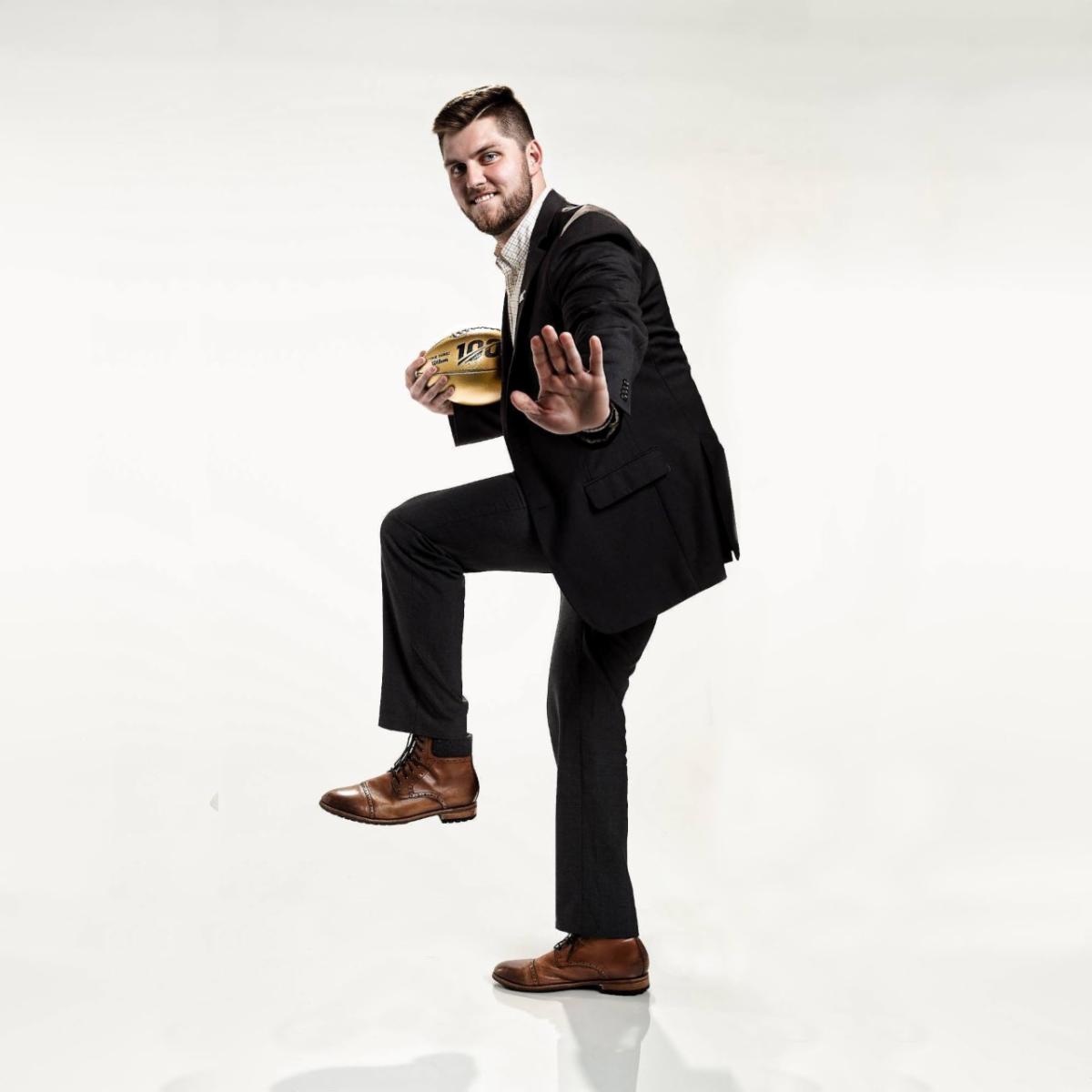
“While I was in a class in sports marketing, I had access to football highlights ... and I was inspired to make a Mizzou football hype video, because that's what I saw other creatives doing across sports,” said Minter, who graduated from Missouri in 2015. “So, when I did that and posted it to my own YouTube, it ended up performing better than the official Mizzou football video. And so the people in Athletics said, ‘Hey, you shouldn't have done that, but cool video, you have a job if you want.’ So, that is how the first gig in sports happened.”
That reel led him to work for the university and then for the Kansas City Royals, where he landed a job after messaging 10 different people named Jana until he found the right one on their social marketing team. The Royals didn’t have a job, but they “had a lot of work,” so he started doing it until he became an employee.
From the Royals, he moved to L.A. to work for Fox Sports and then to the NFL, where he is currently a Social Media Creative Producer who oversees a team of seven.
When
George Floyd was killed by a Minneapolis police officer
, Minter spent time listening to his Black colleagues and the League’s players. Being with the League since 2017, when players protested police brutality by taking a knee during the national anthem, Minter knew “the turmoil and frustration on the field, on the sidelines and off the field.” He attributes his ability to “understand those perspectives” and address “my own biases as a white man” to “what I learned at Mizzou, in courses such as cross-cultural journalism with
Dr. (Cynthia) Frisby
.”
Based on what he heard and what he believed, Minter wanted the League to take
a clearer and stronger stand against racism
. So he went rogue again, and messaged New Orleans Saints receiver Michael Thomas the night of Thursday, June 4. Thomas responded within moments.
|
|
Bill Plante Chair in Leadership & Media Integrity, Loyola University Chicago
Freedom Fo
rum Fellow in Women’s Leadership
The state of Mississippi voted Sunday to
replace its state flag
, the last in the U.S. to feature the Confederate battle emblem.
“Dismantling systemic racism does not happen in one day or with one decision, no matter how hard. And changing symbols without addressing structures does not fully address the institutional racism being confronted in this moment.”
Her message should resonate with news organizations, as they undergo their own
racial reckoning
with employees, past and present,
speaking out
— about staffing, promotions, coverage and culture.
A few new hires and task forces on racial and gender equity are symbolic actions. But digging into the very structure of news organizations — the values, skills, tools, assumptions and systems that drive them — is the real work ahead.
This work demands exceptional leadership, something that doesn’t automatically come with the title of “manager.” Newsroom supervisors are often promoted for their craft skills, but what made them good at front line journalism doesn’t guarantee they can challenge, re-imagine or dismantle the very structures they supervise.
This is a moment for news managers to look inward. To truly lead change, they need to ensure they can do the important work ahead.
So let’s be clear on what you must not do in this important moment:
- Don’t default to defensiveness when criticized. It’s common to protect one’s own sense of self-worth in the face of negative feedback, but leadership requires the ability to tamp down that impulse. Rather than jumping to defend your intentions or worse, attacking those who call attention to your shortcomings, leaders need to listen with an open mind and be prepared to find the truth, rather than first looking for flaws in criticism.
- Don’t hear critiques of organizational practices as personal attacks on you. Your company’s track record of racial and gender equity may be deeply flawed, even as you, personally, have worked for change. If you haven’t worked for change because you didn’t see the depth of the problems or felt you lacked the power to change things, do your part now.
- Don’t resist change, especially as it affects things you created or supervised. You may have developed strategy, assigned beats, launched programs or teams — and now need to determine whether any of your creations is contributing to inequity. Don’t protect your turf, perfect it.
- Don’t invoke rules and standard operating procedures without examining their history, application and impact. There’s comfort in citing rules or guidelines, but not when those traditional constructs are contributing to injustice. Re-examine style guides, language use, social media policy and even your definition of objectivity through the lens of how they do or don’t foster racism.
- Don’t focus on incremental successes rather than institutional failures. This is where the symbolic can’t overshadow the systemic. Quick wins like new hires, salary adjustments, and new assignments aren’t insignificant. They prove good intent — and should be the start of a new story, not proof of “mission accomplished.”
- Don’t assume the absence of complaints is evidence of success. When people don’t feel safe, they talk to each other, not you. Even in this historic moment of reckoning, people have genuine concerns about their job and career safety and may hold back unless you make it safe to speak up.
Finally, don’t see humility as a weakness. While
confidence is seen as a positive
attribute of leaders, those with
intellectual humility
confront their blind spots, reflect, learn and apologize, all of which help build the trust and credibility that are essential to creating meaningful change.
|
|
|
The National Press Club Journalism Institute is spotlighting
the next generation of journalists
, students who graduated from college or Master’s programs this spring into
a challenging job market
. We hope they’ll meet future bosses and colleagues here, who will reach out and support them in building journalism’s future together.
School
:
University of Oklahoma
Location
:
Norman, OK
Leadership
: President, OU’s chapter of the Native American Journalists Association; secretary, OU's chapter of the Society of Professional Journalists; member, OU President’s Leadership Class
What have you learned from your involvement with student media on your campus?
Kliewer
:
Over the last four years at OU, I have learned how to be a better storyteller, co-worker and person. My college provided me with opportunities to work as a real, professional reporter, and I was never made to feel like I was unable to do something simply because I was a student.
Working in student media brought me to Washington, D.C., where I was able to work as a congressional reporter along with two other OU students. During the fall semester of 2019, we were the only congressional reporters working for an Oklahoma outlet on Capitol Hill at the time. Being a part of this program, which is called Gaylord News, taught me not only how to write stories that are important, but how to write them in a way that would make the people back home care. I spoke to senators and politicians nearly daily, and I learned how to ask important people hard questions. I was even able to be a member of the National Press Club during this time, thanks to my professor
Gil Klein
, and I met some of the most amazing people and attended eye-opening events!
Student media also took me on the campaign trail, where I was able to cover the 2020 Iowa caucus and Super Tuesday from California. These experiences truly taught me everything I know, and I will always remember the lessons I gained from it.
What's been your best moment in journalism?
Kliewer
:
This is tough. My absolute favorite moment was probably in Iowa, a few days before the 2020 caucuses. During a press gaggle following an event, I was able to ask former presidential candidate Pete Buttigieg a question about rural hospital closures in the Midwest. After the gaggle, Jennifer Palmieri approached me and told me she was encouraged to see a reporter ask him a question that actually mattered. That statement, coming from such a prominent person in the media, let me know that I was doing something right. After the stress of caucus week, her compliment allowed me to take a breath and give credit to myself for doing the work that I do.
|
|
Ed Yong of The Atlantic shared professional
advice to the Class of 2020
that got us thinking about how journalists could apply it in their personal lives: Park downhill at the end of the day, leaving a sentence or paragraph or piece unfinished so you don’t wake to an empty screen, he wrote last Wednesday.
How you can personally “park downhill” as part of an evening routine:
- Food and nutrition: Program the coffee maker. Meal prep tomorrow’s breakfast, snacks or lunch. Set out medication or supplements.
- Physical health: Plan your walk/run/bike route. Check the weather forecast. Pick a streaming at-home workout to complete.
- Physical space: Load and run the dishwasher. Set out your work clothes (check the calendar for meetings). Declutter for 10 minutes.
- Financial health: Check bill due dates. Shred old documents.
- Mental health: Meditate with an intention for the day ahead. Schedule a check-in with a friend or family member. Make a to-do list for tomorrow, and an accomplished list for today.
|
|
This newsletter is written & edited by the National Press Club Journalism Institute staff: Beth Francesco, Holly Butcher Grant, Jim Kuhnhenn, and Julie Moos.
Send us your questions and suggestions
for topics to cover.
|
|
|
|
|
|
|