ALTERNATIVE FINANCIAL SERVICE PROVIDERS ASSOCIATION | | Industry News, Regulatory Updates & Market Insights | Edition: September 1, 2026 | | |
Walmart is accepting tap to pay after eleven years of refusing
Walmart starts accepting tap to pay on Monday, eleven years after cutting Apple Pay off and helping build a rival system to replace it. Its own announcement never names Apple Pay or Google Pay. Google named itself the same day.
Walmart is adding tap to pay at its checkouts from Monday, ending more than a decade of refusing the technology.
The retailer will not say so in those terms. Its announcement does not use the word Apple once.
Read more at The Next Web
| | |
Optimize Lending Decisions with Real-Time Financial Data.
Enhance lead purchasing, underwriting, and product line
assignment with ValidiFI’s data-driven solutions
| | |
Mortgage Lending Standards Are Too Tight
Federal policy favors risk reduction over mortgage access for financially ready homebuyers
Overview
Over the last two decades, homeownership has drifted out of reach for many Americans, especially young adults, racial minorities, low- and moderate-income households, and those who live in rural areas. Housing costs play a major role, with the median sale price of new homes in the United States near an all-time high.1 But there’s another important factor limiting the ability of Americans to buy a home that receives less attention: the mortgage lending standards set by the federal government as well as Fannie Mae and Freddie Mac, the two government-sponsored mortgage giants that together purchase more than one-third of all mortgages in the United States.2
Read more at Pew Charitable Trusts
| |
|
Regulating Consumer Finance Should Involve Congress and OMB
The draft of the CFPB Reform Act of 2026 includes provisions that clarify the Consumer Financial Protection Bureau’s duty to perform a cost-benefit analysis (CBA) of proposed rules. Addressing the bureau’s carelessness in conducting CBAs should improve the quality and stability of its rules, so this change is overdue.
The improvements will be greatest if the bureau does not enact rules that fail a CBA. However, subsections 103 (5)(A) (viii) and (ix) require the bureau to publish the justification for a rule enacted even when a CBA shows that another rule would be better or the rule’s costs exceed its benefits. This implies that the bureau may enact rules that fail a CBA, reducing the effectiveness of the reforms.
Read more at Cato Institute
| | |
The next frontier in fintech is understanding the person behind the data
Fintech made financial data accessible but not understandable. Neumetria founder Amr Mohamed argues the next layer must interpret why transactions happen, not just categorize them. As AI agents begin interacting with financial systems, the quality of contextual understanding determines whether decisions are appropriate. The piece cites the Federal Reserve (73% of adults doing well financially), BIS research on AI in financial services, and NIST’s AI Risk Management Framework.
Fintech has spent almost two decades making financial information increasingly accessible, portable, and actionable.
Read more at The Next Web
| |
Bank Secrecy Act Crushes Small Businesses
The Bank Secrecy Act doesn’t just violate our freedoms; it also crushes small businesses.
The Trump administration expanded financial surveillance last year by decreasing the reporting thresholds for currency transaction reports from $10,000 to just $200. After public pushback and a legal challenge by the Institute for Justice, the threshold was raised to $1,000.
Read more at Cato Institute
| | Your Next Capital Raise Starts Here. | | |
Sitting on the Sidelines Until After the Midterms?
You’re not alone. Many business owners and executives are waiting for greater clarity from the November elections before committing to their next phase of growth.
But waiting to make the decision doesn’t mean you should wait to prepare for it.
If additional capital will be part of your growth strategy once the political and economic environment becomes clearer, now may be the right time to begin the conversation.
| | |
Regulating Consumer Finance Should Involve Congress and OMB
The draft of the CFPB Reform Act of 2026 includes provisions that clarify the Consumer Financial Protection Bureau’s duty to perform a cost-benefit analysis (CBA) of proposed rules. Addressing the bureau’s carelessness in conducting CBAs should improve the quality and stability of its rules, so this change is overdue.
The improvements will be greatest if the bureau does not enact rules that fail a CBA. However, subsections 103 (5)(A) (viii) and (ix) require the bureau to publish the justification for a rule enacted even when a CBA shows that another rule would be better or the rule’s costs exceed its benefits. This implies that the bureau may enact rules that fail a CBA, reducing the effectiveness of the reforms.
Read more at Cato Institute
| | |
Fewer Americans use cash today than a decade ago, but many still carry it
Today, 42% of U.S. adults say they don’t use cash for any purchases in a typical week. This is up from 24% in 2015.
Fewer – 12% – say they use cash to pay for all or almost all of their purchases in a typical week. Another 46% say they use cash sometimes, according to a Pew Research Center survey conducted from May 26 to June 1, 2026.
Higher-income Americans continue to be far more likely than those with lower incomes to go cashless.
Read more at Pew Research Center
|
AI collectors for US consumer debt.
Purpose-built AI collectors that recover
more, faster, across portfolios. cf
| |
Just $389m was raised across this week’s 12 FinTech deals
The summer months continue to prove a slow period for FinTech deals, with just $389m raised across 12 deals.
It was a similar picture to last week when just $361m was raised across 16 deals. The largest deal of that week was secured by PayTech Ingenico, which pulled in €150m.
While the total capital raised was quite small this week, the size of the undisclosed funding round from Socure might have painted a different picture. The RegTech giant closed a strategic investment round that was led by Summit Partners. This round put Socure’s valuation to $5.2bn.
Read more at FintechGlobal
| |
US fintech investment tops $80bn in H1 2026, driven by mega-deals
American fintech attracted $80.8 billion across 933 deals in the first half of 2026, according to KPMG's Pulse of Fintech H1 2026 report.
It’s a surge that accounted for the vast majority of the $86.9 billion recorded across the Americas as a whole and placed the United States firmly at the center of the global industry's most active period in years.
The figures, drawn from PitchBook data as of June 30, 2026, represent a dramatic jump from the $47.1 billion logged across the Americas in the second half of 2025.
Read more at Investment News
| |
Our Vision is to become the leading
PAYDAY + ALTERNATIVE LENDER
in NORTH AMERICA
| |
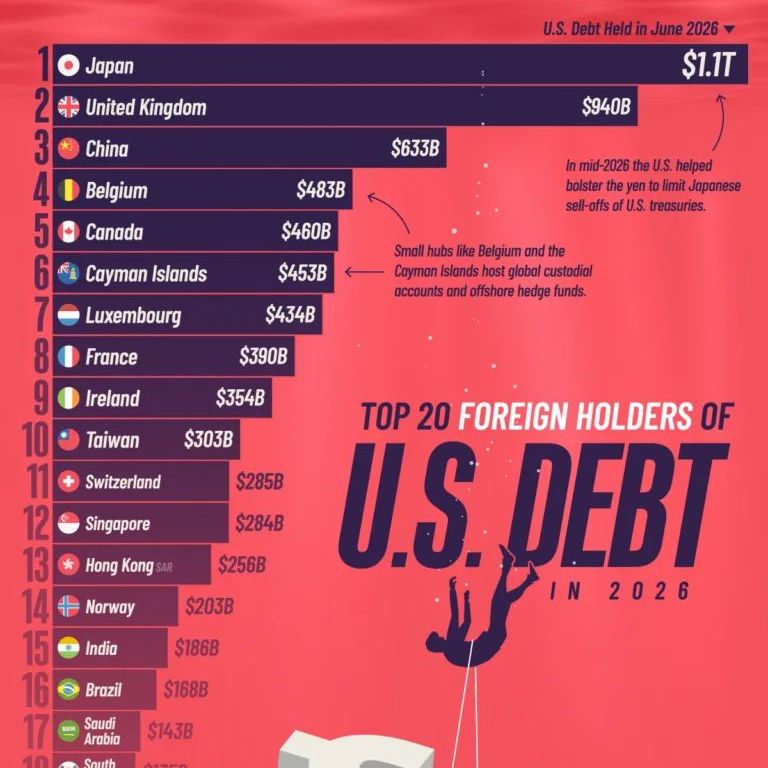
Bond yields are surging: Here's why that could spell trouble
From Japan to Europe and the United States, officials are getting antsy as bond yields hit highs not seen in a decade or more, making borrowing more expensive for governments as well as businesses and consumers.
The main reason is soaring deficits and the resulting debt piles, which are fuelling doubts among investors that countries will get their financial houses in order.
And stubbornly high inflation in Europe and the US has accelerated further as the Middle East war pushes up energy prices, which may require central banks to raise interest rates.
Read more at YAHOO FINANCE
| |
People in Many Countries Now View China More Positively Than the U.S.
More also have confidence in Xi than Trump, according to a survey in three dozen countries
Global views of the United States worsened last year as President Donald Trump’s second term began, though most people still had a more positive opinion of the U.S. than China. This year, that is no longer the case.
Views of China have improved in recent years while opinions of the U.S. have worsened, to the point where China is now seen more positively than the U.S. in most of 36 countries surveyed.
Read more at Pew Research Center
| | |
Payliance enables organizations to streamline
payment acceptance, minimize processing costs,
and reduce the risk of fraud.
| | |
More than Half Your Credit Union Membership Use Someone Else's Card
How a Strong Credit Card Program Strengthens Your Institution’s Brand and Community Ties
A credit card is one of the few products a credit union offers that a customer can use on a daily basis. That makes it one of the most-used products a financial institution puts in a customer’s hands. And, by extension, it’s also one of the most visible ways a credit union can show what it stands for in the community it serves.
But community banks and credit unions are often losing that daily moment. About 61% of credit union account holders use the institution as their primary financial relationship. Yet, according to a recent study from PYMNTS Intelligence, only 48% of cardholders have their credit union’s card at the top of their wallet.
Read more at The Financial Brand
| |
Inspector General Scrutiny Could Curb CFPB Overreach
The Consumer Financial Protection Bureau (CFPB) is suffering a crisis of institutional trust. Its woes have included the adoption of questionable legal theories, shifts in policy without public comment, and sending out poorly justified subpoenas. Reformers wonder how to address this trust crisis, and one option that might help is more intensive scrutiny by an Inspector General (IG).
Currently, the bureau shares an IG with the Fed. The draft CFPB Reform Act of 2026 would (among other reforms) give the bureau its own IG (as does H.R.2513).
Read more at Cato Institute
| | |
THE LEADERS IN ONLINE LENDING ARE AT LEND360
LEND360 is the annual summit for the leaders in online lending
that explores fintech industry trends and new technologies
impacting consumer lenders, small business lenders, service
partners, investors, bank representatives, and more. From
personal to business loans, and everything in between,
LEND360 brings this vibrant community together. Whether
you’re looking to connect with current customers or prospect
for new ones, LEND360 is the premier opportunity to showcase
your brand and solidify your credibility in the industry.
LEND360 delivers a captive audience, ready to learn and
hungry for the solutions you have to offer.
| |
Borrowing Costs Keep Rising While the Fed Stands Still
Every few weeks, fresh speculation emerges about when the Federal Reserve will change its interest rate target, followed by confident claims that this decision will drastically alter the mortgage, auto, or credit card rates that weigh on American households. The assumption beneath the coverage is that the Fed sets the cost of borrowing, so its next move matters more than anything else. People don’t want to hear that the Fed matters less than “everyone” thinks, but at the very least, the past seven months are enough to question exactly how much the Fed controls rates.
Read more at Cato Institute
| |
Young adults in the U.S. are increasingly wary of AI, concerned it will take jobs
Americans have become increasingly worried about artificial intelligence over the years, and young adults’ concern has continued to climb. Worry over job loss, too, is on the rise.
Today, 52% of Americans say they are more concerned than excited about the increased use of AI in daily life – up from 37% in 2021. Another 9% are more excited than concerned and 37% say they’re equally excited and concerned, according to a Pew Research Center survey conducted June 22-28, 2026.
Read more at Pew Research Center
| | |
Maximize Your Call Center
E-Complish, LLC Launches: IntellAgent™, a 24/7
AI Companion for Customer Account Management &
Payment Processing
| | |
An AI Tax Boom Could Curtail America’s Debt. But Not Solve It: Andrew Duehren in NYT
Andrew Duehren argues that the fiscal consequences of a potential AI boom largely depend on how effectively the federal government transforms productivity gains into new tax revenues (“An AI Tax Boom Could Curtail America’s Debt. But Not Solve It,” New York Times, August 18). But America’s fiscal deterioration stems primarily from unsustainable spending growth on health care and Social Security, not insufficient tax revenue—and AI could make that problem worse.
Duehren correctly notes that AI could increase average life expectancy, which would raise spending on senior transfers. Medicare and Medicaid are open-ended entitlements whose commitments grow faster than the economy and inflation, as advances in technology and new drugs increase spending without cost-benefit analysis.
Read more at Cato Institute
| | |
How European fintech is turning regional complexity into cross-border scale
While investment has picked up, today’s European fintech landscape is marked by increasingly selective investors. At the same time, advances in payments infrastructure, AI integration, and the growing adoption of digital assets continue to transform the opportunities available for firms everywhere. The key question is: how can European fintech transform these opportunities into cross-border scale?
This long read series is centred around three key aspects of the 2026 fintech landscape in Europe: regionality and cross-border scaling dynamics, a shifting regulatory landscape, as well as the evolution of AI and digital assets as key fintech enablers.
Read more at FINEXTRA.COM
| | |
Start your FREE trial TODAY.
We'll use this to build free listings and create a
growth strategy for your business.
| |
Why Card-Based BNPL Is Poised to Become the Mainstream Pay-Later Channel
The banking industry’s role in buy now, pay later is shaping up to become a bigger factor in this growing part of the consumer credit business.
Consumers’ affordability challenges, trust in traditional credit sources, and people’s attachment to card-based rewards and product protection are all boosting card-based buy now, pay later options.
The new factor: Beyond credit cards, there has been ongoing adoption of BNPL programs on debit cards.
Read more at The Financial Brand
| |
FinTech Five By Ethan L. Silver and William Brannan
1. CFTC Proposes Rule Changes for CPO and CTA Registration
On Aug. 21, the Commodity Futures Trading Commission (CFTC) published a notice of proposed rulemaking to reduce duplicative registration and compliance obligations for certain commodity pool operators (CPOs) and commodity trading advisors (CTAs). The centerpiece of the proposal is new Regulation 4.13(a)(4), which would exempt Securities and Exchange Commission (SEC)-registered investment advisors (RIAs) from CPO registration with respect to commodity pools whose participants are limited to qualified eligible persons and certain accredited investors, provided additional conditions are met, including that pool interests are privately offered,
Read more at Lowenstein's FinTech, Crypto, Trading & Markets Newsletter
| | ALTERNATIVE FINANCIAL SERVICE PROVIDERS ASSOCIATION | | |
Alternative Financial Service Providers Association
757.737.4088
315 Tuscarora St., Lewiston, NY 14092
dan@afspassociation.com
www.afspassociation.com
Copyright © AFSPA 2007-2026
| | | | |