Insights From The Alliance | | |
Insights from the Alliance: Rooting for the Underdog
Every four years, the FIFA World Cup offers something unique: a moment when countries of every size step onto the global stage and capture the world’s attention. For a few weeks, nations that might otherwise receive little notice in global headlines suddenly become familiar. We learn more about their histories, their cultures, and their aspirations through the lens of sport.
There is something compelling about watching smaller nations step into the spotlight, competing with determination and pride against countries with far greater resources and expectations.
What draws so many of us to teams like Curaçao, Iceland, Morocco, or other nations that enter the global stage without the resources, depth, or expectations of traditional powers is something deeper. We admire resilience. We root for grit. We celebrate organizations and communities that find ways to compete—not because the path is easy, but because commitment, identity, teamwork, and heart matter.
Recently, it struck me that perhaps one reason the World Cup resonates so strongly with me is that it reminds me of rural community colleges.
Like many smaller nations on the world stage, rural colleges are often underestimated. We may not have the enrollment numbers, visibility, or financial resources of larger institutions. Headlines about higher education frequently focus on large universities or urban systems. Yet time and again, rural community colleges demonstrate something important: impact is not determined solely by size.
Across the country, rural colleges are transforming lives every day. They create pathways to economic mobility, educate students who may be the first in their families to attend college, support adult learners returning to education, strengthen local workforces, and serve as anchors of opportunity in communities that are too often overlooked.
And much like a successful World Cup team, success in rural higher education rarely comes from star power alone.
Championship teams succeed because they understand who they are. They play to their strengths. They trust one another. Every player matters. Every role matters. Purpose matters.
That sounds familiar.
At RCCA, we see examples of this every day. Rural colleges succeed because relationships matter. Faculty and staff know students by name. Presidents, trustees, and community leaders remain deeply connected to the places they serve. Partnerships with employers, K–12 systems, workforce agencies, and local organizations create opportunities that extend well beyond campus boundaries.
Innovation at rural colleges often emerges not because resources are abundant, but because creativity, collaboration, and commitment are.
Perhaps most importantly, rural colleges know how to persevere. We adapt. We innovate. We continue to meet students and communities where they are, even when circumstances are challenging.
The World Cup reminds us that people everywhere are drawn to stories of determination. We cheer when smaller nations exceed expectations because those stories reflect something deeply human: the belief that preparation, teamwork, and purpose can overcome longer odds.
Rural community colleges embody that same spirit.
As we continue our work together through RCCA—strengthening communities, expanding opportunity, advocating for rural learners, and supporting one another—I hope we never lose sight of what makes our institutions special. We may not always receive the recognition we deserve, but we know the profound difference rural colleges make in the lives of students and communities.
So yes, this month I will continue enthusiastically following the World Cup and cheering for the underdog. But I will also be reminded of something much closer to home.
At RCCA, we know a thing or two about exceeding expectations and defining what success looks like for us.
| | |
Leading with Care and Balance: Practical Wellness in the Workplace
J. Kyle Dalpe, Ph.D., President, Western Nevada College
In leadership, it is easy to fall into the habit of constant motion – meetings, decisions, events, emails etc. The pace is real, especially in rural community colleges where resources are limited; leaders often wear multiple hats and are typically in the weeds on most things. But over time, I have come to see that effective leadership is not just about managing time, but about managing energy.
Wellness in the workplace is sometimes framed as an added benefit or a personal responsibility. When, in reality, it should be seen as a leadership strategy.
Over the years, I have drawn from a mix of experiences – executive leadership, long-distance running, and yoga – to better understand how to maintain focus and presence throughout the day. Earlier this year, I became a certified yoga instructor to deepen my understanding of a practice I’ve been doing for more than 30 years. That experience reinforced something simple but important: consistency, awareness, and balance matter.
We must blend Yin into Yang in the workplace.
My own routines have evolved. I no longer run the way I used to, recognizing that at this stage it was creating more wear and tear on my body than benefit. Instead, I walk every day. That includes walking around campus – moving from office to office, checking in with people, and simply being visible. It supports my own health, but it also strengthens relationships and reinforces presence as a leader.
What I’ve learned is simple: leadership often operates in a constant state of “yang” – a concept focused on action, movement, and output. That energy is necessary, but without balance, it becomes difficult to sustain over time. Through what I am calling the yin and yang of executive leadership, I’ve found that creating space for reflection, recovery, and awareness is what allows leaders to remain effective and grounded.
This shows up in small, practical ways.
For example, I have become more intentional about how I structure my day. Instead of stacking meetings back-to-back, I try to build in short transition moments – even a few minutes to walk across campus, get some fresh air, and reset before the next conversation. And yes, bio breaks fit here too. These small breaks improve the quality of the next decision or interaction.
Another example is how we show up at events. It sounds simple, but pacing yourself—hydrating, eating intentionally, and managing your energy – can make a significant difference over the course of a long day or multi-day conference. I sometimes think of it as an endurance event, where you need to refuel along the way rather than wait until you are depleted. I pack lunch and snacks deliberately and keep these things on hand.
Equally important is the tone we set as leaders. When we model a constant sense of urgency, that becomes the culture. When we model balance, intentionality, and care, that will become the culture. In rural institutions especially, where teams are close-knit, leadership behavior carries weight.
This is not about doing less. It is about sustaining the ability to do the work well over time.
A simple takeaway: build one intentional pause into your day. Just one. A short walk, a few deep breaths, or a stretch in the office to reset between meetings. Over time, those small practices add up.
Wellness does not have to be complicated. In many cases, it is the small, consistent choices that allow us to lead effectively and support our teams, which ultimately leads to better serving our students.
Namaste.
| |
| | |
June 17 Webinar Postponed
Due to summer scheduling conflicts, the June 17 Building Media Aware Campuses webinar has been postponed. We are working to reschedule and will share a new date soon.
Thank you for your patience, and we look forward to bringing this important conversation to you at a later date.
| | | | Have You Registered for the 2026 RCCA/ATEA National Conference? | |
|
Spotlight: Get to Know Community College Alliance For Agriculture Advancement (C2A3)
Right now, there are many great things happening within agricultural education, and C2A3 is at the heart of this movement. We're shining a spotlight on one of our favorite organizations in the rural higher education space.
C2A3 is a national network of community colleges focused on one common goal: building a strong foundation of agriculture education, research, and workforce development, and doing so in ways that make an impact on rural communities. The organization was formed in 2015 with four member colleges from the Midwest. Today, C2A3 has expanded to over 40 member colleges across 26 states, partnering with both USDA and NRCS to assist its member colleges in strengthening their ag programs, connecting students to real job pathways, and helping them use current best practices in the classroom and field.
One thing that sets C2A3 apart from other organizations is the members' ability to share knowledge and resources among each other, as well as providing faculty with opportunities to collaborate on curriculum, student leadership programming, and applied research projects. Financial support for travel stipends, applied research, student internships, workshops and more can also be received. Additionally, all members receive support through access to their vast network of peer educators and professionals who understand the specific challenges of rural/agricultural education.
If you would like to learn about C2A3 and meet others who share similar interests, please plan ahead to attend the 2026 National Conference for C2A3 (November 1-4th), held at the InterContinental San Antonio Riverwalk in San Antonio, TX. This annual event will provide attendees, including faculty, administrators, students, USDA partners, and industry experts, with three days of educational training, networking, and collaboration.
For more information or to register, visit www.c2a3.org.
| | | | |
Highlands College of Montana Tech is launching three new broadband-focused micro-credential programs this fall, and they're a great example of community colleges doing exactly what they do best. The short-term certificates in heavy equipment operation, fiber optic splicing, and warehousing are designed to get students job-ready fast, with a direct line to Montana's growing broadband infrastructure workforce. TDS Telecom is even putting skin in the game, donating $3,000 to fund three $1,000 scholarships for fall 2026 enrollees. The programs were developed with support from a U.S. Department of Labor Strengthening Community Colleges Grant, in collaboration with Missoula College, Flathead Valley Community College, Education Design Lab, and industry partners.
Read the full story here.
| | Trump further guts Education Dept. by shifting oversight of special ed, civil rights | | |
The federal landscape for students with disabilities and civil rights protections is shifting. The Trump administration announced it will move the Office of Special Education and Rehabilitative Services (OSERS) to the Department of Health and Human Services and the Office for Civil Rights to the Department of Justice, further dismantling the U.S. Department of Education. Disability rights advocates are raising concerns about what these changes mean for students who depend on IDEA protections and civil rights enforcement in K-12 schools and colleges alike.
As community and technical college leaders, staying informed on federal education policy shifts is essential. Read the full story from NPR here: Trump Further Guts Education Dept. by Shifting Oversight of Special Ed, Civil Rights
| | Resources and Opportunities | | |
TICAS Seeking Rural Colleges Supporting Student Parents
The Institute for College Access & Success (TICAS) is conducting a national scan on how rural-serving institutions support parenting students, and they want to hear from RCCA members.
TICAS is looking for institutions with dedicated programming, services, or resources for student parents to participate in a 45-minute virtual interview this June. Findings will inform a report released during National Student Parent Month in September. All participants remain anonymous.
If your college is doing promising work in this area, or if you can connect TICAS with the right staff member, reach out to RCCA President Chris Breitmeyer at president@ruralccalliance.org.
| | |
Federal Grant Opportunities: Deadlines Coming Up Fast
If your institution has been eyeing federal funding, now is the time to act. ACCT's Perspectives recently published a helpful at-a-glance guide to U.S. Department of Education grants currently open for competition, compiled by Amanda Fuchs Miller of Seventh Street Strategies. The roundup covers programs ranging from student basic needs and veteran success to rural postsecondary development and open textbooks, with most deadlines falling in late June 2026. Several programs include competitive preference points specifically for rural-serving institutions.
View the full federal grants resource here.
| |
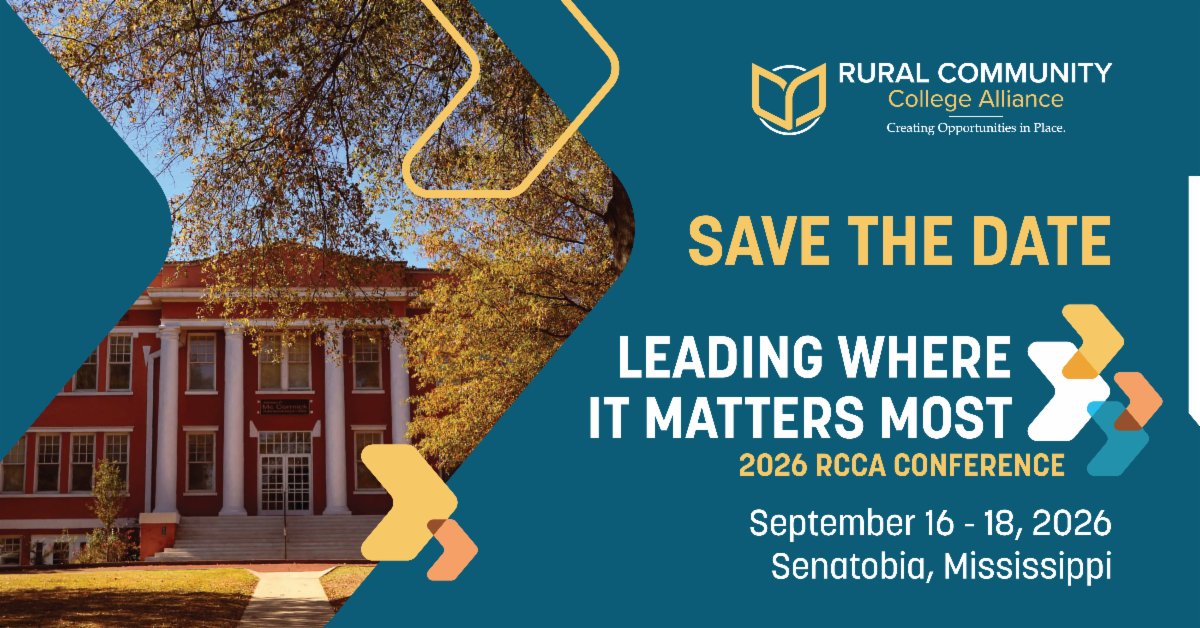
Meet your 2026 RCCA National Conference host!
Watch Northwest Mississippi Community College's welcome video and get excited for the 2026 RCCA National Conference.
| | Follow the RCCA Facebook Page | | | | |