Rail Workers Weekly News Digest
Number 27 - July 7th, 2020
|
|
Below is a series of articles compiled over the previous week.
They are of interest to railroad workers and activists.
|
|
ARTICLE #1 - LEGISLATIVE NEWS
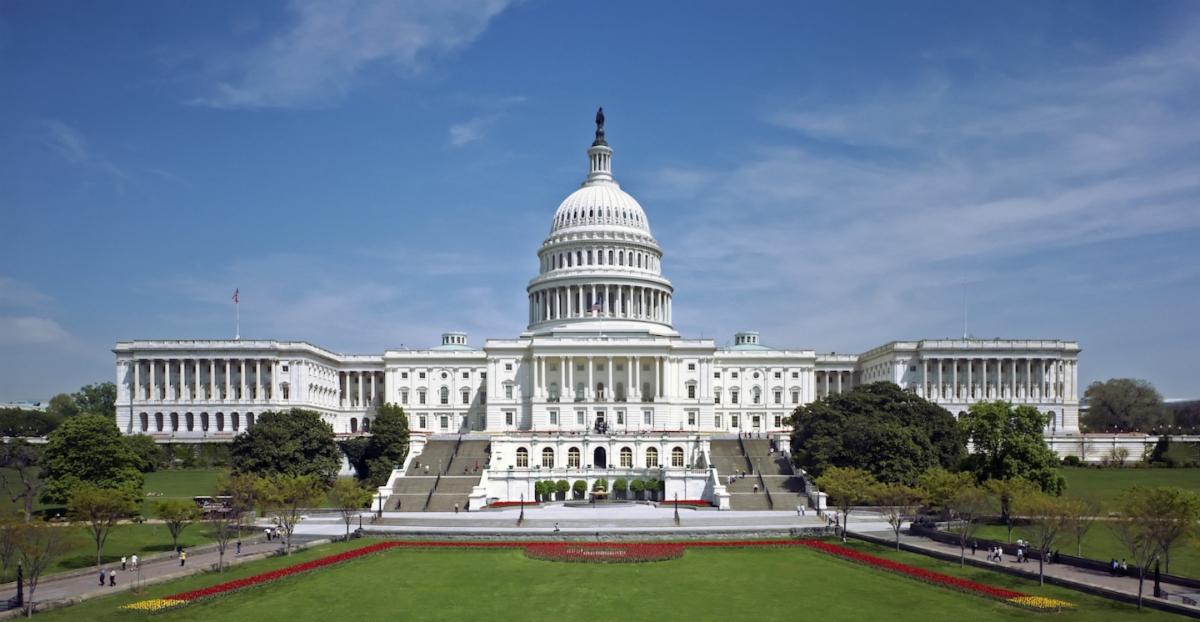
House passes $1.5 trillion infrastructure bill
|
|
(Editor's Note: The TRAIN Act passed the U.S. House of Representatives on July 1st, part of a larger bill called the INVEST Act which was part of the huge infrastructure bill called the
Moving Forward Act
. As reported by RWU the last three weeks, there are countless provisions within the bill that support rail workers and passenger rail. Finally here is a bill to rebuild the nation's roads and bridges, provide millions of good paying jobs, and get the economy moving. It now must pass the Senate. All rails should get aboard this effort!)
|
|
H.R. 2 Passes the House and Moves to the Senate
H.R. 2, the Moving Forward Act, a massive $1.5 trillion infrastructure bill that contains provisions important to members of all crafts in the SMART Transportation Division and to sheet metal workers, passed through the U.S. House of Representatives by a 233-188 vote on July 1.
H.R. 2 contains:
- a two-person freight crew requirement
- bus and transit operator safety measures
- blocked-rail-crossing enforcement
- a cross-border solution
- yardmaster hours of service
- additional funding for Amtrak
- requirements for carriers to meet CDC guidelines and to provide personal protective equipment (PPE) to transportation workers
“This is an unprecedented step ahead for many of our union’s major issues through the legislative process,” SMART Transportation Division President Jeremy R. Ferguson said. “Our concerns were heard and addressed by the writers of this bill — safety for workers and communities alike in the bus and transit operator safety measures and in the crew-size provision, funding for Amtrak, and a number of other provisions intended to rebuild and transform the nation’s roads and rails.
“Federal agencies and big-pocketed lobbyists have tried to obstruct the essential protections that this bill provides to our members and to the people who work on, live near and use our nation’s transportation network. These representatives all had the foresight and initiative to move them forward.”
|
|
ARTICLE #2 AMTRAK NEWS
Opposition Builds to Proposed Amtrak Cuts
|
|
(Editor's Note: In June, new Amtrak CEO Bill Flynn announced deep cuts to Amtrak service which would reduce train frequency on most long distance lines on October 1st to just tri-weekly. In addition, more than 4,000 employees stand to be furloughed under the plan. Is Amtrak simply using these pandemic related service cuts to permanently reduce service and employment? Opposition is building among railroaders, passengers, communities and politicians nationwide. This attack must be the concern of all rail workers!)
|
|
Has Amtrak Declared War?
This writer began working on this series on June 19. It was Juneteenth, the day an increasing number of Americans of all colors and heritages now view as an occasion to celebrate freedom. Part of the freedom that many Americans treasure is the freedom to travel, as stated in the First Amendment of the Constitution. The “right to travel” is one thing, in the sense that government cannot unduly restrict travel (as questionable as that assumption may appear these days), but there is also the issue that this sacred “right” can be limited if access to mobility is also limited. Millions of Americans who depend on Amtrak for part of their travel are about to lose a significant portion of the mobility they have today.
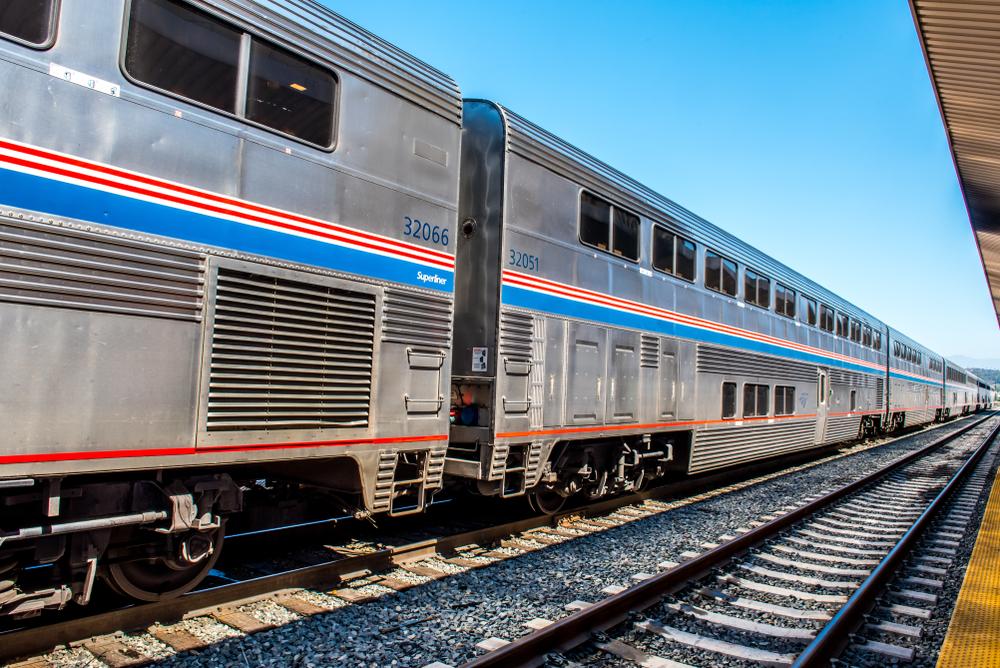
Amtrak declared war on its riders by imposing, effective Oct. 1, 2020 (the first day of it 2021 fiscal year), service cuts on long-distance (LD) trains so severe that the national passenger train network, as we have known it for nearly 50 years, will cease to exist. It could become as irrelevant as Canada’s two famous long-distance trains, the Canadian and the Ocean, that once brought people from Toronto to the western provinces and from Montreal to Atlantic Canada. At the present time, neither of those trains are running.
To make matters worse, Amtrak is implementing additional cuts, eliminating one of the two daily trains between New York and Florida on July 6, without waiting for its own threatened implementation date of Oct. 1. Either the Silver Meteor or the Silver Star, which run on different routes in the Carolinas, will operate on any given day, but not both. In effect, Amtrak has fired the first major volley in its campaign against L-D trains and the people who ride them. For anyone who cares about keeping them, the time for action is now.
Amtrak has announced it will reduce the frequency of every L-D train in its skeletal network to only three times per week, rather than running every day, with only two exceptions. On Oct. 1, not one single person will be able to walk or take transit to any Amtrak station and get on a long-distance train without checking first to see if that train is operating that day, if Amtrak gets its way.
|
|
ARTICLE #3 - RAIL SAFETY NEWS
Have the Lessons of the 2013 Lac-Mégantic Train Disaster Been Learned?
|
|
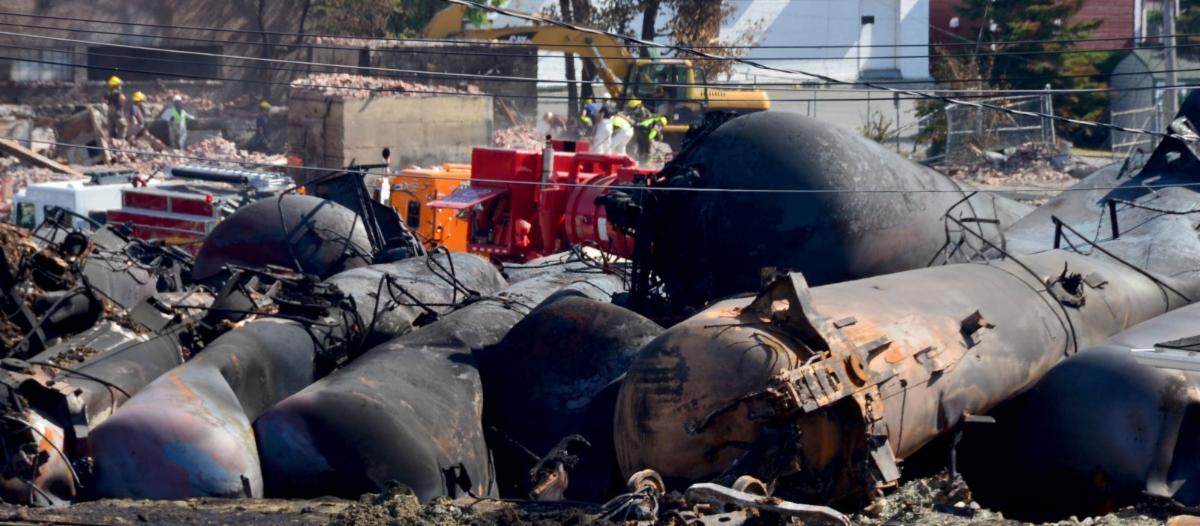
July 6, 2020, is the seventh anniversary of the Lac-Mégantic oil train disaster, which killed 47 people and orphaned 26 children, spilled an unprecedented six million litres of explosive Bakken shale oil, and incinerated the centre of this Québec town.
It was the worst rail accident since Confederation. The people of Lac-Mégantic were victims of a safety regulatory regime that failed catastrophically.
Seven years after this tragedy what has been learned? Is the transportation of oil by rail safer? Are the tracks sound and well-maintained? Are the tank cars sufficiently crash-resistant? Has the government’s safety oversight system improved? Have the railways become more attentive to safety, especially when it conflicts with costs?
In the wake of the disaster, a rebalancing of the relationship between regulator and regulated industry was needed — to shift from a collaborative-deferential-partnership relationship to one of appropriate tension, where the different roles and priorities of regulator and regulated industry are clearly acknowledged.
This has not happened. The railways’ ability to delay, dilute, block, reverse proposed regulations that collide with costs is undiminished. In the months following the tragedy, lobbying intensity soared with precisely this purpose. ...
... Since Lac-Mégantic, there have been
seven major derailments of trains carrying dangerous goods
,
recently near Guernsey, Saskatchewan (December 2019 and February 2020) which together spilled 3.1 million litres of diluted bitumen from the most crash-resistant model tank cars. All were due to broken rails or other track infrastructure problems.
A TSB March 2020 advisory
noted Transport Canada’s track safety rules that companies use in their risk assessments were set in 2012. These rules did not take into account the huge increase in oil by rail traffic since then. They have still not been updated.
A CBC investigation
obtained hundreds of Transport Canada inspection reports documenting track safety problems along that 183-kilometre section of CP Rail’s Saskatchewan line over a four-year period. At no point did it order the company to stop running these mega trains. During this time, CP registered a
seven-fold increase
in oil train traffic along the route.
|
|
ARTICLE #4 - CORONAVIRUS RAIL NEWS
BMWED Insists Nation's Railroads to Immediately Institute Testing and Tracing of COVID-19
|
|
(Editor's Note: RWU promulgated a
Resolution on March 19, 2020
which called for serious intervention to stop the spread of coronavirus on the railroad. We are glad to see one of the major rail unions come out in favor of taking a proactive stand against the spread of Covid-19 among Class One freight carriers. These railroads have done very little to date and it is time to apply the pressure. Kudos to BMWED!)
The BMWED has insisted the nation’s freight railroads immediately institute testing and tracing of the COVID-19 virus amongst all employees, complete with daily temperature testing and other stringent safeguards. The current system of self-reporting and general dismissiveness of the severity of the health crisis we all face is negligent and must come to an end.
Four BMWED members have died from COVID-19, and hundreds more have been affected by the virus. The pandemic is not slowing nationally. Numbers are rising and the death toll is increasing. We understand that train service must continue. We remain willing – as always – to work to that goal. But, we will not be sacrificial pawns to railroads who resist implementing screening and tracing procedures that would greatly help control COVID-19 spread. We are not going to continue to have our members die.
Below are links to the letters sent by President Simpson to the Class 1 freights. They closely mirror those sent to Amtrak and Metra commuter railroads last week.
|
|
ARTICLE #5 - Rail Freight Traffic NEWS
U.S. Freight-rail Traffic Recovery Accelerated in June
|
|
Freight-rail traffic trends in June reflected an accelerated recovery process that began in May, Association of American Railroads (AAR) officials said yesterday.
U.S. railroads originated 1,799,189 carloads and intermodal units last month, a 14.3 percent decrease compared with June 2019, according to AAR data. Carload traffic fell 22.4 percent to 794,256, while intermodal volume dipped 6.6 percent to 1,004,933 units.
Two of 20 carload commodity categories tracked by AAR each month logged gains: All other carloads rose 2.4 percent; and farm products, excluding grain, climbed 11.1 percent.
Commodities that posted declines last month included coal, down 34.1 percent; crushed stone, sand and gravel, down 27.1 percent; and motor vehicles and parts, down 30.3 percent.
"By the end of June, freight loadings had improved by about 60,000 carload and intermodal units weekly over where they had been in late April," said AAR Senior Vice President John Gray in a press release.
After reaching record lows in early May, coal finally stabilized at about 50,000 carloads per week by June's end, Gray said.
|
|
ARTICLE #6 - PASSENGER RAIL NEWS
Southern California-to-Las Vegas High-Speed Rail Service Gets Another Key Nod
|
|
The
California Department of Transportation (Caltrans)
on authority from the California State Transportation Agency has entered into a lease agreement allowing XpressWest, a
Brightline
company, to use existing state right-of-way along I-15 for high-speed passenger rail service between the town of Apple Valley (near Victorville) and Las Vegas.
The proposed XpressWest project will construct a 170-mile-long, electric high-speed passenger rail system that will run along I-15’s median protected by barriers. Approximately 135 miles of the system will be in California. The project will be privately financed.
“This is a major milestone in connecting two world-class destinations—southern California and Las Vegas—with high-speed passenger rail service,” said Caltrans Director Toks Omishakin. “The XpressWest trains will provide a convenient alternative to driving to and from Las Vegas while reducing greenhouse gas emissions.”
An environmental study estimates the completed project will reduce carbon emissions by 300,000 metric tons a year—the equivalent of removing nearly 65,000 vehicles off the road. Additionally, XpressWest expects to create more than 10,000 jobs during the project’s construction with another 500 new jobs post-construction.
This lease agreement follows a 15-day Notice of Intent process that took place in May. The process allowed for public comment on the development of the XpressWest project before the lease agreement was signed. All comments received were supportive of the project and the positive impact it will have for the High Desert communities and southern California.
As the owner/operator of the state highway system, Caltrans will be serving in an oversight/quality control capacity to ensure that XpressWest adheres to state standards for the design and the construction phases of the project.
|
|
ARTICLE #7 - YOUR RIGHTS ON THE JOB
Webinar: An Introduction to "Just Cause"
|
|
(Editor's Note: As a union member, one of your most sacred rights is the right to be free of arbitrary discipline and termination. The rail carrier must have what is called "just cause" in order to take such action against you. If you appeal such action, then the carrier must prove they had just cause. Failing that, the aggrieved worker must be reinstated and/or the discipline retracted).
Labor Notes is pleased to present a series of free webinars taught by veteran Boston labor lawyer Robert M. Schwartz and hosted by Labor Notes staffer Bianca Cunningham.
Topics will be taken from his bestselling Labor Notes guides to stewards' rights, just cause, Weingarten rights, and strikes.
Among the subjects covered will be lax enforcement, due process, hearsay evidence, disparate treatment, and progressive discipline. We will be taking questions from participants.
The webinar will take place on Thursday, July 9 at 7:00pm EDT.
Registration
is free, but if you can contribute, please do! Your support helps Labor Notes offer more trainings like this one.
|
|
ARTICLE #8 - INTERNATIONAL RAIL NEWS
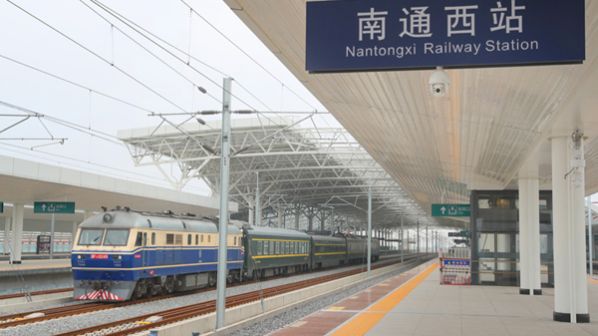
China Opens Shanghai – Nantong Railway
|
|
(Editor's Note: While countries like China, Spain, India, and France all forge ahead with new rail lines, upgraded freight and passenger trains, and higher speeds, the U.S. rail system is bogged down by a lack of public investment, Wall Street gimmickry, abandonment, and retrenchment. Rail is the wave of the future. Much of the world is realizing this. When will we in North America catch on?)
The 143km railway will initially operate a maximum of 44.5 pairs of passenger trains per day, along with six pairs of freight trains daily, at speeds of up to 200km/h. The railway will reduce travel times between the cities of Shanghai and Nantong from 3h30m to 1h6m.
The railway has nine stations at Zhaodian, Nantong West, Zhangjiagang North, Zhangjiagang, Changshu, Taicang Port, Taicang, Taicang South and Anting West.
The railway also incorporates the Shanghai-Sutong rail and river suspension bridge as its primary crossing over the Yangtze river. The bridge has a total length of 8.2km, including a 1088m central span, and incorporates 306m-high support towers. The introduction of rail traffic on the crossing follows its opening to road transport in 2008.
The railway is intended to improve transport links across the economically important Yangtze delta region. The line is also integrated into China’s wider high-speed rail network, with connections to the Lianyungang – Yangcheng, Nanjing – Qidong, Xinyi – Changxing, and Shanghai – Kunming lines. A connection to the Yancheng – Nantong high-speed line will also be available upon the completion of that line’s construction.
|
|
|
|
|
|
|