|
Randy Culpepper, Editor | Todd Williams, Rockwall County Extension Agent
NEWSLETTER CONTRIBUTORS: Lisa Behne, Michele Campbell, Laura Chaney, Brian Cook, Randy Culpepper, Ann Denson, Jacki Lindsey, Lyn Pesta, Kim Townsend, Lisa Walker, Debora Zerneri
| | |
IN THIS EDITION
Fall is upon us. Old Man Winter is knocking on the door. But before we snuggle in for the cold, there is plenty of gardening ahead of us.
In this edition of Envirosmart, you will learn:
- Seasonal To-Do's
- Ask a Master Gardener
- Fall Vegetable Gardening
- Heirloom and Perennial Bulbs
- Vegetable Spotlight- Winter & Summer Squash
- Trees and Tree Care
- Seasonal Garden Care
- Planting Native Plants From Seed
- We Love Bugs!- A Mealybug Destroyer
- Planting Cover Crops
- A Peak In The Garden- Mr. T the Turtle
- Spooky Plants for Halloween
- Pokey
| | |
MARK YOUR CALENDAR
September 18th - North Texas Giving Day
September 19th - Heirloom Bulb Class
September 24th - Youth Butterfly Class
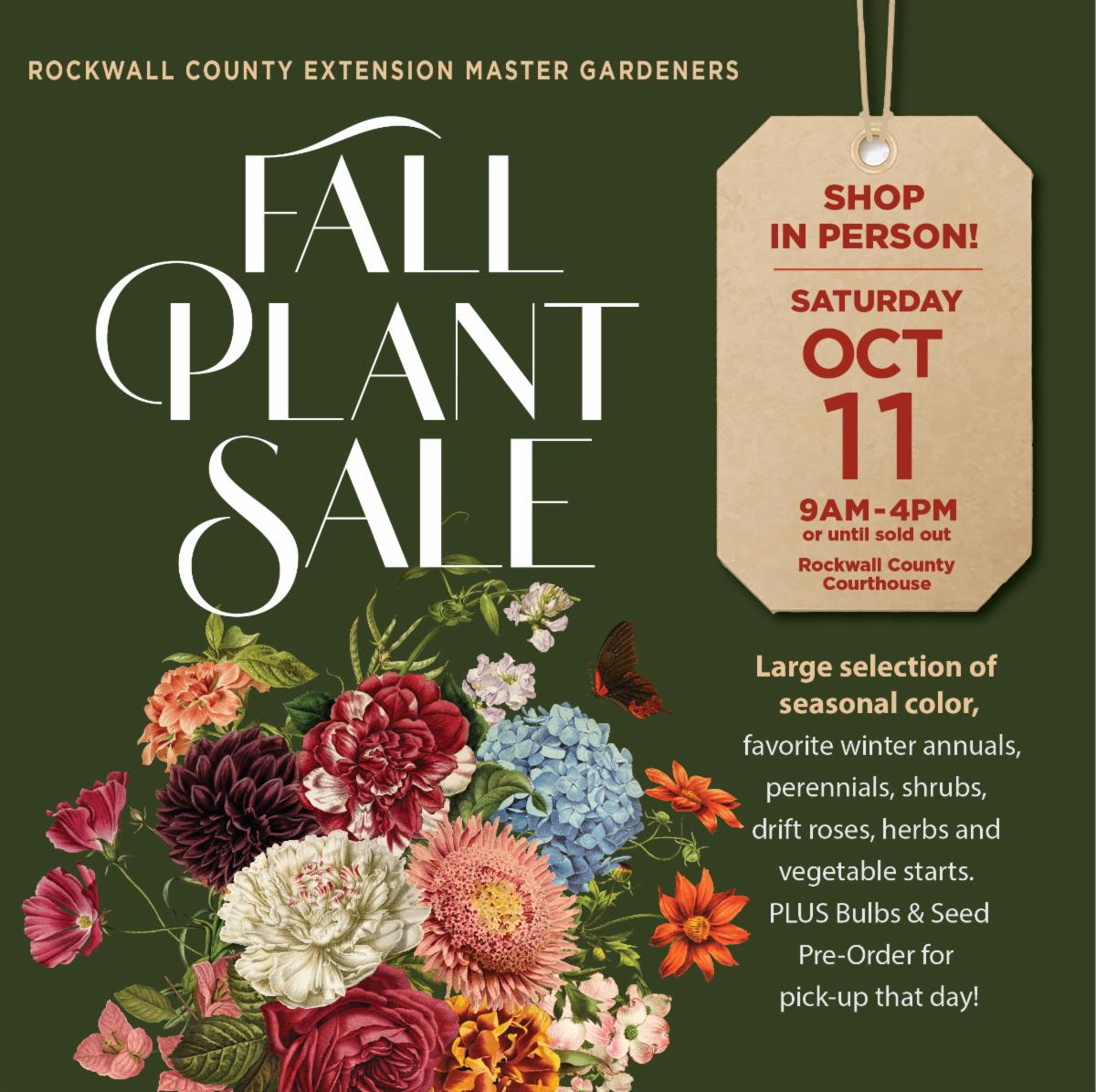
October 11th - In-Person Fall Plant Sale
October 24th - Floral Pumpkin Class
November 8th - Sheriff's Posse Roundup
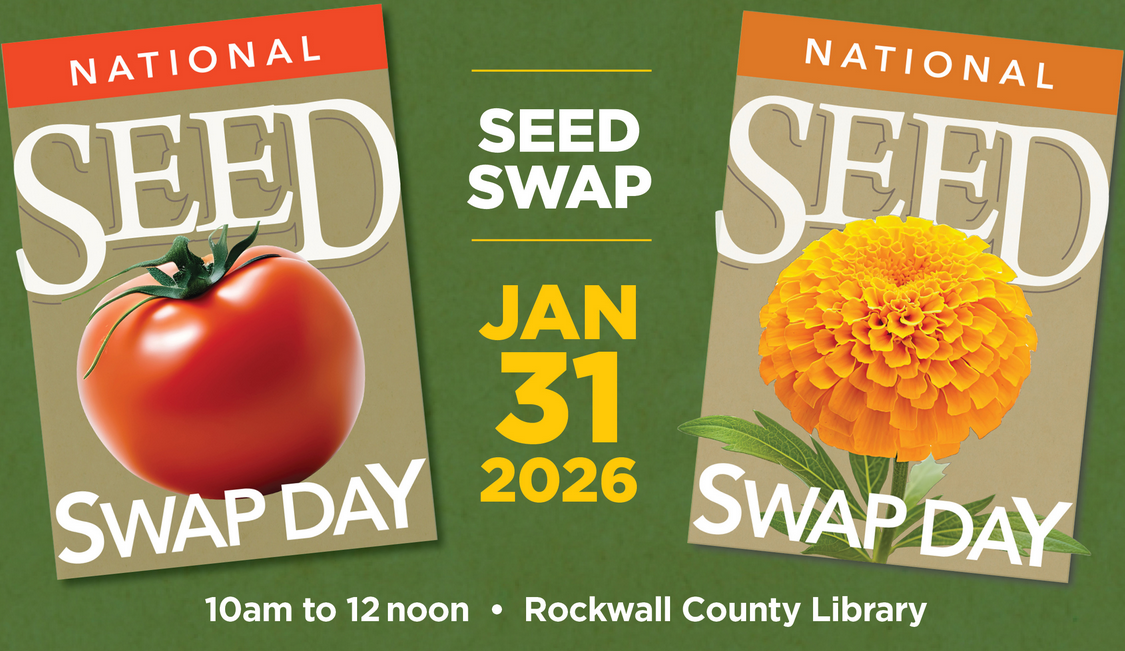
January 31st - National Seed Swap Day
Check our website for updates!
|
QUESTIONS?
Extension Master Gardeners are at the Rockwall County Library the 1st and 3rd Wednesdays of the month from 10am - noon. Also, find us at the Extension Office every Wednesday from 10am - noon. Call (972) 204-7660 or email us anytime at: rockwallmg@ag.tamu.edu
| |
| | |
Shop In Person: Fall Plant Sale!
Enjoy an even larger selection of winter annuals, perennials, shrubs, drift roses, herbs and vegetable starts!
1 and 3 gallon selections.
Ask an MG Help Desk will be there with plant care and instructions.
Pre-order your perennial bulbs and cool season cut flower seed to support our Planting Seeds for the Future Scholarship. Catalog coming soon!
October 11th, 9am-4pm or until sold out!
Rockwall County Courthouse
| | | | |
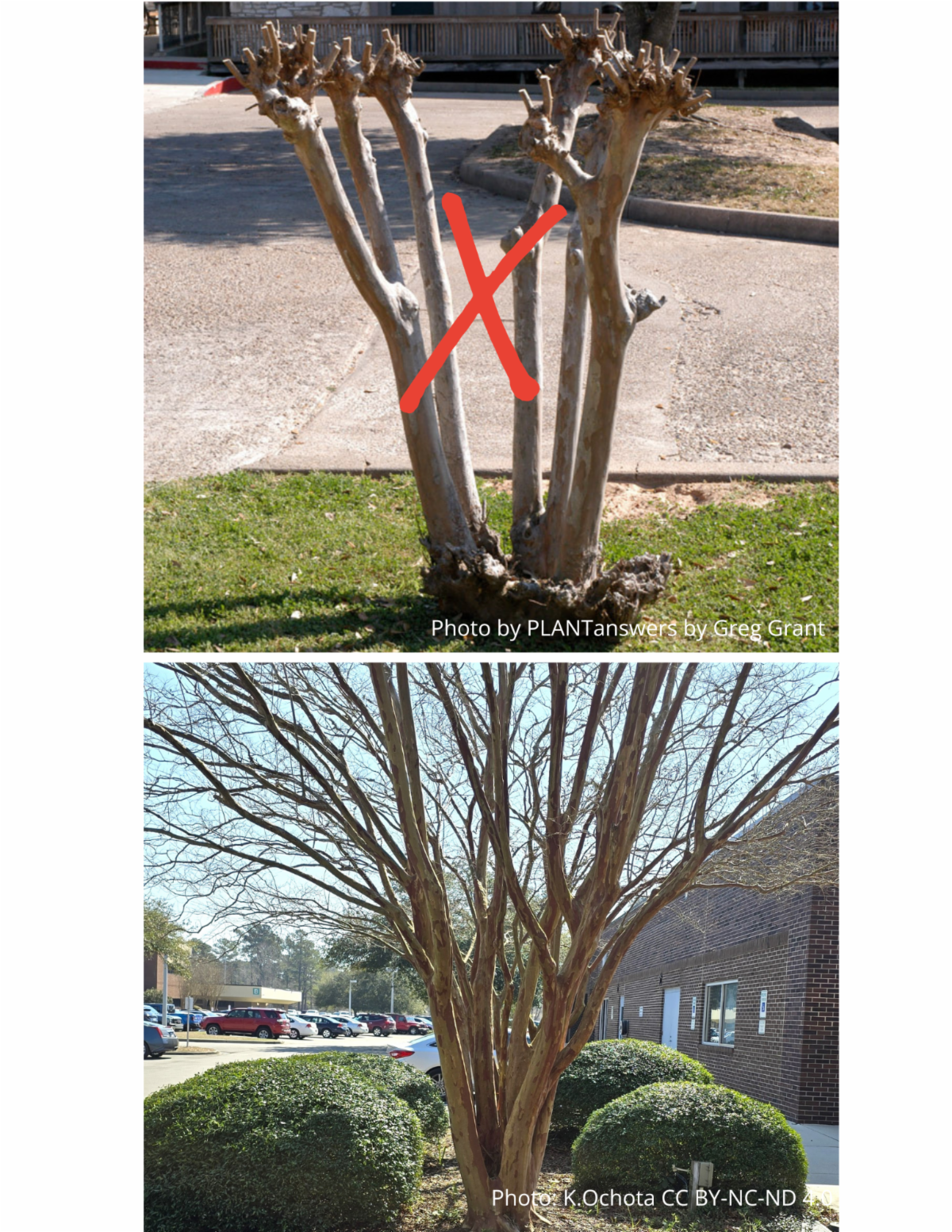
Crape Myrtle pruning is a topic we like to address every year especially as new residents move into the area. As fall arrives, crape myrtle blooms fade and seed heads form. Seed heads do not need to be pruned for next year’s growth. In fact, crape myrtles need very little pruning—only the removal of damaged branches or light thinning for airflow, best done in late winter before new growth begins.
Avoid “topping,” the practice of cutting back all upper branches. Popularized in the 1950s, topping was used by landscapers to train plants into small accent trees for smaller landscapes. The practice is now known to harm tree health, encourage pests and disease, and ruin their natural beauty. It leaves unsightly knots and destroys the elegant cinnamon-colored bark that provides winter interest. Tall crape myrtles (20–30’) are not meant to be forced into small shrubs. When purchasing crape myrtles look for the mature height on the plant label to ensure your space is suitable.
| | | |
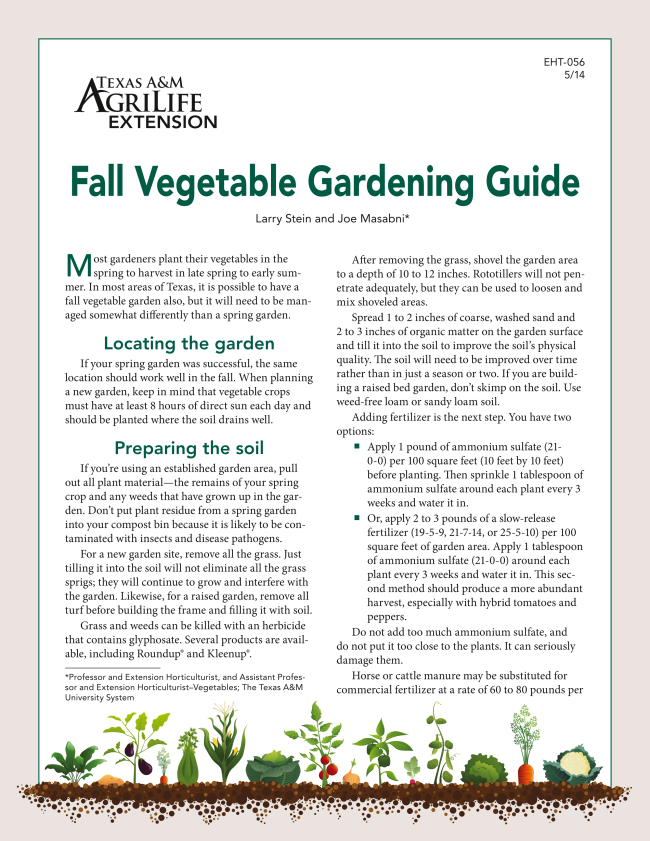
Fall Vegetable Gardening
with Laura!
| | | After a (relatively) mild summer and a very nice last week of August I’m looking forward to Fall more than ever! I always thought it was the miserable-ness of summer heat that made fall so enticing but it turns out I just LOVE fall! Autumn is the perfect time to plant perennials and trees here in Texas. While not technically vegetables, perennial shrubs and trees can be a wonderful addition to the vegetable garden or start incorporating food scaping into your home landscape. | |
For a few ideas I plan to add another pecan tree, two bay laurel trees, some blackberry bushes and another rosemary shrub to my edible landscape in late fall. These perennials will build strong root systems during their dormant season of winter and be well established before their energy is needed for active growth next year. Often times our spring is too short so that new plantings are both trying to establish and actively grow fruit during the stress of high heat.
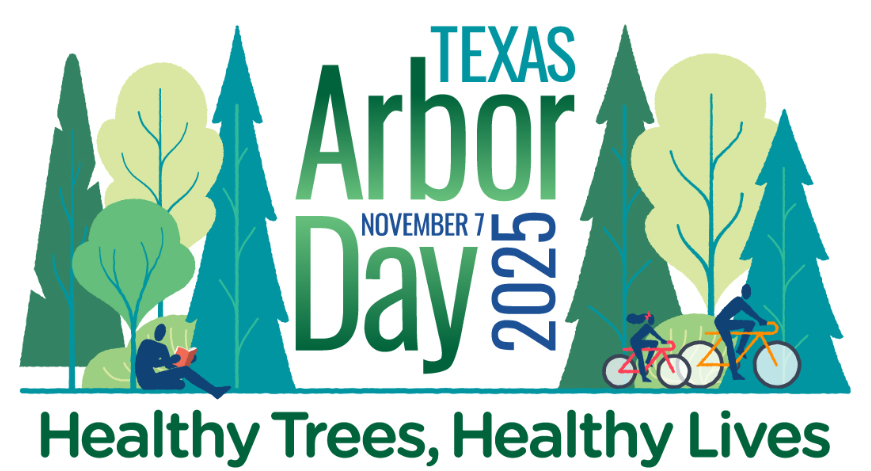
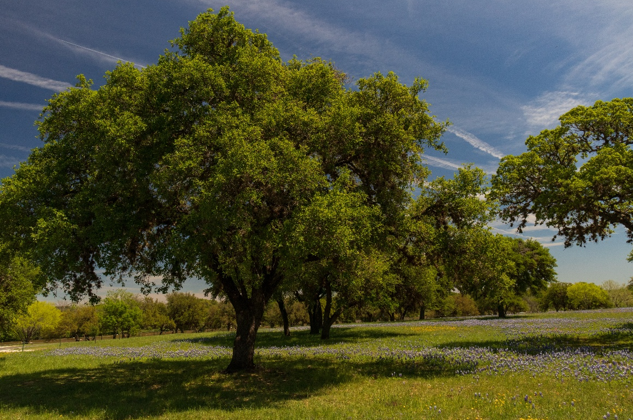
This is why Texas Arbor Day is celebrated the first Friday in November – what better way to celebrate than by planting the Texas State Tree?
| | |
September
Seed Outdoors – Beans (pinto, bush), Beets, Broccoli, Brussels Sprouts, Cabbage, Carrots, Cauliflower, Greens (Collard, Mustard), Kale, Leeks, Lettuce, Onion, Parsnips, Peas, Radish, Spinach, Summer Squash, Swiss Chard, Turnips
Transplant –Broccoli, Brussels Sprouts, Cabbage, Cauliflower, Greens (Collard, Mustard), Kale, Leeks, Lettuce, Spinach, Summer Squash, Swiss Chard
Seed Indoors – Broccoli, Brussels Sprouts, Cabbage, Cauliflower, Greens (Collard, Mustard), Kale, Lettuce, Peas, Spinach, Swiss Chard
October
Seed Outdoors – Broccoli, Brussels Sprouts, Cabbage, Carrots, Cauliflower, Greens (Collard, Mustard), Kale, Leeks, Lettuce, Onion, Radish, Spinach, Swiss Chard, Turnips
Transplant – Broccoli, Brussels Sprouts, Cabbage, Carrots, Cauliflower, Greens (Collard, Mustard), Kale, Leeks, Lettuce, Spinach, Swiss Chard
November
Transplant – Broccoli, Brussels Sprouts, Cabbage, Carrots, Cauliflower, Greens (Collard, Mustard), Kale, Lettuce, Spinach, Swiss Chard
Herbs
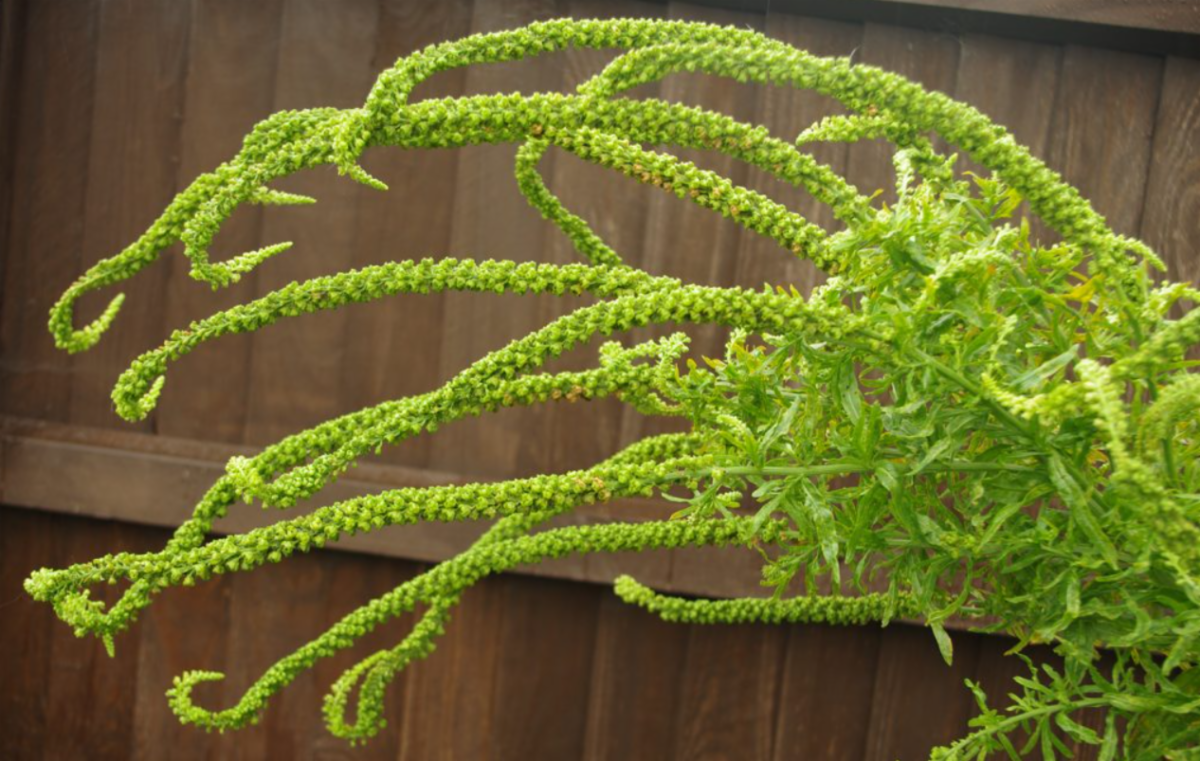
In the summer newsletter, I discussed growing two popular and ancient dye plants – Indigo and Madder. These plants do well in the heat of summer and produce dye to make blue and red. A cool season plant that rounds out the primary colors producing yellow dye – I’d like to introduce Weld.
|
| |  | Weld (Reseda luteola) is a biennial plant that is best planted by seed in the fall. As the seeds are tiny and need light to germinate, sprinkle them on the moist soil surface and do not cover them. Water the soil gently so as not to wash the seeds away or bury them in soil, the mist function on a spray nozzle is perfect for this. Ideally, choose a space that gets full morning sun and some later afternoon shade. Weld is hardy in zones 5-9 and will tolerate our winter frosts and cold temperatures. The foliage may die back in winter, but will resprout from the roots in early spring. However, during our high summer temperatures Weld benefits from regular watering and some afternoon shade. The first year, Weld will grow slowly closer to the ground and will form a rosette. You can harvest some leaves for dye. The second year, the plant will send up a tall flower stalk several feet high. As the second year completes the lifecycle of the plant, harvest the stalks and plant shortly after they start to bloom for dye. Leave some plants to fully bloom and go to seed so that you can have a steady supply of Weld!
photo courtesy of Susan Dye at https://www.naturesrainbow.co.uk/
| | |
Heirloom and Perennial Bulbs
by Lisa Walker
| | | |
If your desire is to have a year-round garden of blooms, bulb gardening is your answer! Whether you are a garden newbie or a seasoned gardener, adding bulbs to your landscape provides an easy, enjoyable, and beautiful part of any southern garden design. They are great indicators of when spring, summer and fall seasons are here and can many times carry on through winter.
Most people think of tulips from Holland farms come spring in reference to bulb gardening; however, Heirloom bulbs are really the foundation of the southern garden – the “comeback stars,” that can last for years to many generations! They can be incorporated into formal, meticulously maintained garden beds or planted into natural yard settings. From varieties of daffodils, narcissus, amaryllis, crinum, lilies, hyacinths, gladioli, our USDA 8B plant hardiness zone allows for some of the most beautiful heirloom bulbs that offer amazing color pallets, heights, and textures to be grown. There is even a native species of tulip, the Texas Tulip (Tulipa praecox), which thrives in the Blackland Prairie region of North Central Texas.
Heirloom bulbs are perennial, propagate well and provide a pretty punch of color! They can also be planted throughout the year. Planning on where to plant, prepping the area to plant and planting appropriately the specific type of bulb is crucial to success! Most bulbs need to be planted in a sunny location. Prepping the soil to ensure proper drainage is very important. Too much water rots the bulbs while not planting deep enough can hinder their growth. Follow the planting guides, which are easy: always place bulbs with the points facing up and the bottom round with roots facing the soil. Many bulbs are forgiving and if they are planted on their sides, can find their way to grow. Using soil mixed with organic material to help with drainage, adding good quality, slow-release fertilizer and then watering the soil well is very important. Mulching is also good. Once planted, they should adapt and naturalize very well. Be prepared to wait, though, as some bulbs may take months to a couple of years before they bloom. This is normal, so patience is the key! Once established and with blooms becoming beautiful and prolific, there is nothing better than sharing your bulbs with friends and family. Heirloom bulb gardening is truly the gift that keeps on giving! Happy bulb planting!
| |
Want to learn more about the treasure of heirloom bulbs?
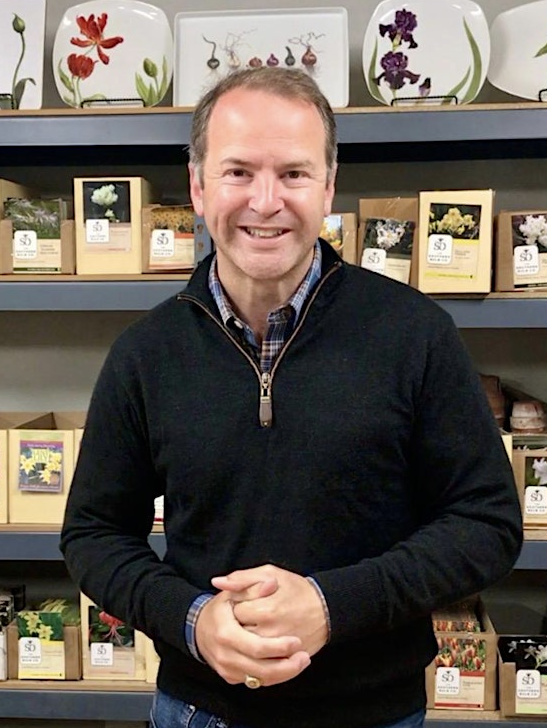
Rockwall County Master Gardeners will host, The Bulb Hunter, author and horticulturist Chris Wiesinger on September 19th at Liberty Hall inside the Rockwall County Courthouse. Chris will be sharing valuable horticultural knowledge on how to grow and care for perennial bulbs. These heirloom bulbs will bring years of floral beauty and timeless charm to your cut flower garden and landscape.
Following the program, will be a catered lunch from The Pie Queen herself, Tara Royer Steele, from Royer’s Pie Haven in Round Top, TX.
Purchase tickets now to reserve your spot.
| |
VEGETABLE SPOTLIGHT
If you planted winter squash this summer, get ready to harvest by mid-fall. Varieties like acorn, butternut, and spaghetti squash are picked at maturity when the skin is hard and can be stored for months. Allowing you to enjoy a warm bowl of butternut squash soup all winter!
If you missed planting winter squash you now have a second opportunity to plant summer squash for a fall harvest. Varieties like zucchini, yellow straightneck, crookneck, and pattypan grow quickly (45–60 days) and thrive in the warm, mild days of autumn. Harvest them young when skins are tender and edible. Have a plan, because unlike winter squash they do not store well fresh.
Your summer squash needs 8 hours of sun per day and prefers amended or raised-bed soil over clay. Plant seeds or transplants by early September to ensure enough time to harvest before the first frost.
| | | |
Consider Planting a Tree This Fall
by Jacki Lindsey
| | | |
As the saying goes “Fall is a great time to plant!” The reason behind this, because here in North Texas our summers are so hot and dry. Anything planted in the Spring or Summer will need supplemental watering and have a sharp eye on to make sure that the roots (entire root ball) of what you have planted does not dry out. Planting in the Fall gives your plant material a chance to settle in and develop more of a root system before going into the heat of the Summer. That being said, the first two years of larger shrubs and trees will need to be hand watered directly to the root ball of the plant. Running your irrigation system will not be enough during this crucial time.
If you are thinking about adding a tree to your landscape, how about considering one that would give you a splash of color? Whether you want purple, red, gold or a little mixture this is something to consider. You can wait until the trees start turning and see them in person at a local nursery, or look online at the different varieties available. Also, something to consider is are you wanting one for sun, or for more of an understory that would get more shade, or are you wanting Fall color or Spring/Summer color?
Below is a list of a few options to consider for adding that splash of color.
SPRING/SUMMER
Redbuds come in many varieties and colors. Some can be planted in full sun, while others are recommended to perform best to be an understory tree. These are the small trees you will see in Spring with blooms purple or white before the leaves emerge.
Purple Leaf Plum has foliage that is dark purple and the leaves will emerge after flowering in the Spring. It makes a nice accent in any landscape.
Chocolate Mimosa has burgundy fernlike foliage and will bloom soft pinkish blooms.
Crape Myrtles come in many varieties and colors. Some of the varieties will have striking foliage color in Spring and Fall. They are for the full sun and grow in many different sizes.
FALL
Maples come in many varieties to be planted in full sun; and will be shades of reds, yellows and oranges.
Japanese Maples in the garden are the smaller trees that really stand out because of the many color changes that they undergo throughout the Spring, Summer, and Fall. Shades of green, yellow, orange, purple, pink and red evolve through the seasons. Japanese Maples typically do best in protection from the hot afternoon sun. There are so many varieties available for each unique landscape need and grow excellent in pots. They make a wonderful focal point.
Ginkgo are a beautiful shade of golden yellow and come in different varieties ranging from a dwarf miniature up to a shade tree size.
Chinese Pistache is a beautiful shade tree and turns multiple shades of red in the Fall.
Sweetgums come in a few varieties. Their foliage will turn shade of oranges to reds. Look for a variety that does not produce the annoying spiky fruit.
Oaks come in many varieties and some of their foliage does turn different colors in the Fall; however, they are not as showy as some of the other selections noted above.
| | |
Growing Health and Harmony: One Tree at a Time
by Ann Denson
| | | |
Trees do more than beautify your yard—they support your health, boost property value, and strengthen your community. With smart planning, each tree you plant becomes a lasting investment in well-being.
1. Trees Are Essential to Our Health
Trees are not only pleasing to the eye—they’re scientifically proven to boost physical and mental health. Research from Healthy Trees, Healthy Lives shows powerful links between trees and human well-being.
Living near trees boosts physical activity, lowers obesity and heart disease risks, and improves mental health. Even small increases in green space reduces anxiety and supports healthier births. For older adults, tree-filled gardens help prevent falls and reduce medication use.
Trees don’t just enhance your surroundings—they actively support your well-being.
2. Preparing to Plant
-
🧪 Test Your Soil: Identify nutrient levels to choose the right tree and support healthy roots.
-
☎️ Call Texas811: Visit Texas811.org to mark underground utilities and avoid damage.
-
🗺️ Know Your Ecosystem: Use the Ecoregion Map from the Native Plant Society of Texas to find trees suited to your area.
-
🏘️ Check with Your HOA: Visit npsot.org for tools to navigate planting guidelines and stay HOA-compliant.
Smart prep leads to healthier trees and fewer headaches.
3. Selecting the Right Tree for Your Property
Choosing the right tree ensures long-term success and lower maintenance.
-
🌳 Use the Texas Tree Selector to find trees suited to your county, soil, space, and energy-saving goals.
-
📘 Visit Trees of Texas for detailed profiles with images and planting tips.
-
📸 Explore Native Plant Society of Texas for visual guides and nursery listings of native trees that conserve water and support wildlife.
4. Planting and Caring for Your Tree
With your site and species selected, it’s time to plant—and care for—your tree for the long term.
When to Call an Arborist
If you’re unsure about placement, pruning, or care, consult a professional through the ISA Texas Chapter. Certified arborists can offer expert advice tailored to your location.
How to Plant and Maintain
The Texas A&M Forest Service Tree Care Guide offers step-by-step instructions and videos on planting depth, nursery tree selection, mulching, fertilizing, and avoiding common mistakes—plus tips for planting near utilities.
Disease and Pest Identification
Use TreeMD to diagnose tree diseases and insect issues common in Texas. This tool helps you catch problems early when they're most treatable.
5. Special Focus: Fruit and Nut Trees
If you’re interested in growing your own food, fruit trees are a rewarding option—but they need special care.
Check out this AgriLife Today article on planting fruit trees. It covers spacing, pollination, pruning, and how to choose the right variety for your microclimate. Then visit the Fruit & Nut Resources site for downloadable fact sheets. You'll find care guides for peaches, pecans, figs, and more—everything you need to start a fruitful garden.
Planting a tree is more than a landscaping choice—it’s a step toward cleaner air, healthier communities, and lasting beauty. With the right tree and thoughtful care, your yard becomes a legacy that grows for generations.
| | |
Adding natural solutions to encourage plant growth
Randy's Seasonal Garden Care
| | | |
With the evolution of chemistry, gardening has been made easier as chemical formulations seem to exist for every problem that a gardener encounters. Chemical solutions, as simple as they have become, have also been formulated for the extremes.
These quick solutions also come with a downside. We may be giving our plants too much of a good thing. Natural solutions can bridge the gap between solving 150% of the problem and providing “just enough love.” Next time you think about feeding your plants, think of the following alternatives before going into the chemistry lab:
Bat guano, chicken droppings, horse or cow manure- Animal waste is a fantastic byproduct of the agricultural industry. When provided with an all-natural diet, the droppings or manure from these animals can add as much as 10% Nitrogen back into the soil. Apply conservatively though. The breakdown process of animal waste can generate a lot of heat. For this reason, it is best to add these additives into the compost bin to let it breakdown before adding directly to the soil.
Blood Meal- Nitrogen can also be found in other natural solutions if animal waste is not up your alley. Blood Meal is a simple way to add a light green up to a plant without causing burn. It can contain as much as 10% Nitrogen for a light green up.
Bone Meal- Need to focus on root stimulation? Bone Meal is commonly added to the planting hole when planting bulbs.
Eggshells or Oyster Shell Grit- To deter blossom end rot in tomatoes, add crushed eggshells or oyster shell grit into the root zone of the plants as the tomatoes start to become established. To aid in a faster soil breakdown, consider heating the eggshells in the oven and breaking them into smaller pieces by adding them into a blender.
Fish emulsion- Not as powerful as other animal byproducts, Fish Emulsion is a mild “all purpose” fertilizer. It contains Nitrogen, as well as Phosphorous and Potassium. It’s a mild snack to give in between major feedings. Be warned though, it comes with a pungent odor that may stick around for a day or two.
Greensand- Low source of phosphorous and potassium which encourages root growth, photosynthesis, and water uptake.
Lime- Excellent soil additive to raise the pH of acidic soils. Although lime may not be necessary for most of Rockwall County, some areas to the southeast, like Poetry, may have higher acidic content as the east Texas influence of the Post Oak Claypan or East Texas Timberland transforms the Blackland Prairie. A soil test can confirm your acid content.
Sulfur- Opposite of the effect that Lime can play in the soil, Sulphur aids in lowering the pH levels of our Blackland Prairie clays. It is often used as a means to acidify the soil for blueberry production. BE WARNED though, this is a GRADUAL application method. Too much Sulphur at one time may lower the pH of the soil, but it can also lead to berry toxicity. Slow and steady wins the race!
Molasses- Molasses is one of those great meals packed into one sweet gift. It is high in calcium, magnesium, iron, and potassium. It also contains sulfur and micronutrients that stimulate plant growth and optimal health.
Earthworm castings- Another gift in a box, Earthworm Castings contain all of the standard ingredients of a well-balanced fertilizer. But it also acts as a plant multi-vitamin that is packed with iron, magnesium, calcium, and a host of other nutrients. If you are looking for a one-stop shop with a little bit of everything, Earthworms deliver.
For more information about alternative soil amendments, click here.
| | |
Native Flowers From Seed
by Lyn Pesta
| | | |
Do you enjoy observing bees, butterflies, beneficial insects, and birds? Do you have a large space to grow flowers that like elbow room? Did you know that many Texas natives grow best when sown in the fall and that September and October are ideal planting months?
Each plant listed below can be sown at the same time and in the same manner as described here.
Select a sunny area. Avoid low terrain where water collects or where rain may wash away seeds. If planting into grass, mow at the lowest setting and rake up debris. In bare areas, loosen the native soil and work in 1-3 inches of finished compost for strong roots. Honestly? These are Texas tough. They’ve survived centuries without any additional TLC. Scatter the seeds over the prepared soil, tamp them down, and water them in. This helps ensure seed-to-soil contact and prevents them from being blown away or eaten. Optionally, use a light sprinkling of topsoil or finished compost on top but avoid mulch. During the dormant season,keep the soil slightly moist -don’t over water or allow the seeds to dry out.
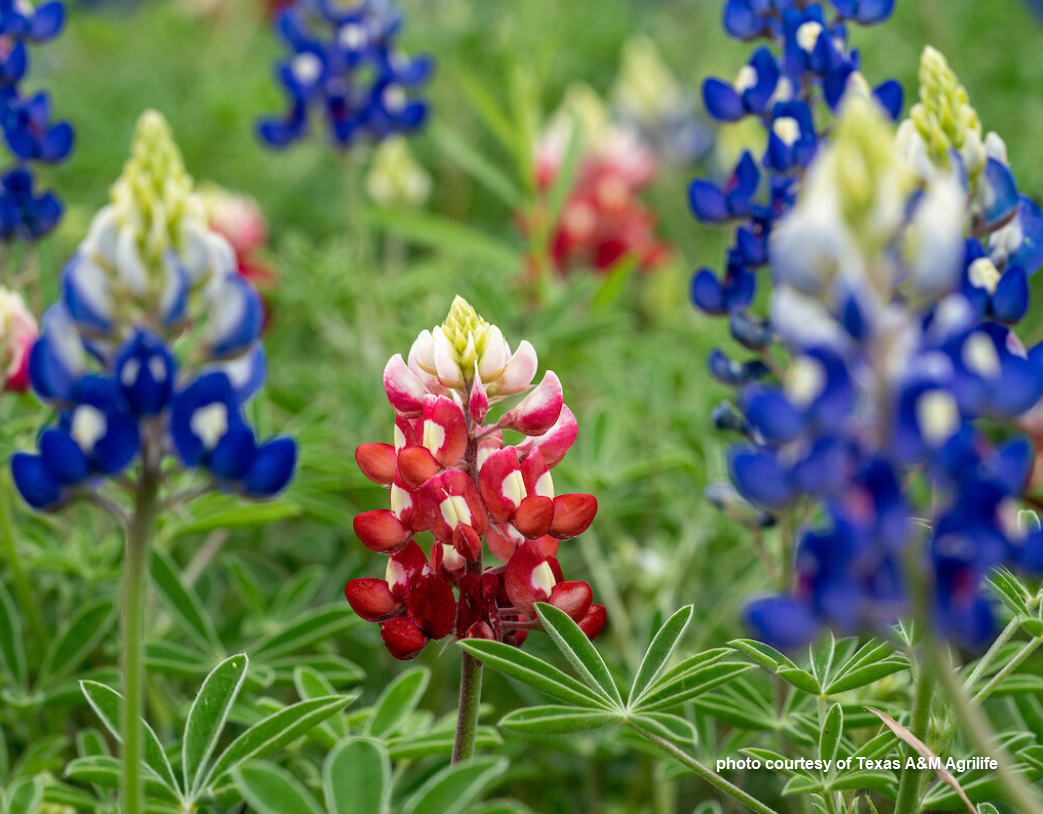
1. Texas Bluebonnet, the state flower of Texas, bloom in early spring to early summer. If managed properly they become plentiful in successive years. After blooming allow seed pods to ripen. When browned they will pop open and scatter. Seeds can also be collected by picking ripe seed pods and planting the hard coated seeds later.
2. American Basketflower is often mistaken for the spiky thistle flowering plant but is actually related to the Sunflower. They grow 2-5 ft. tall and petal colors range from shades of pink, purple, and white. Flowering begins in late spring to midsummer and may rebloom again until frost. The petals appear arranged around a little beige “basket” which eventually opens as the black seeds ripen inside a tuft of soft chaff. Dozens of shiny black seeds can be in each basket. Finches and other birds are attracted to them. American Basketflowers will spread easily for a stunning display year after year.
3. Partridge Pea is also known as bee flower. It is a native prairie wildflower with a height of 2-5 feet. Bright yellow flowers bloom along the stem prized by bumblebees and honeybees from summer to fall. Its sensitive leaves will close when touched adding a childlike charm to this sweet plant. Partridge pea is also a host plant for sulfur butterfly caterpillars. Green pods turn a deep brown as they ripen. Pods will have a popping sound when they open to disperse their seeds in late summer. Partridge pea quickly naturalizes and are great choices for meadows and beekeepers.
4. Purple Coneflower is an outstanding choice. The gorgeous dusty rosy- mauve or white petals surround a large button-like center studded with seeds. They grow 2-3 feet tall and are favorites among a diverse population of pollinators and birds, including hummingbirds. Interestingly, indigenous people used the plant to promote health. The long lasting blooms open in late spring and persist into summer. If faded blooms are cut, new ones will form and bloom into fall. They easily reseed or will spread by roots.
With some planning and sweat equity, these easy growing native flowers will ensure biodiversity and will reward you with years of enjoyment.
| | | | |
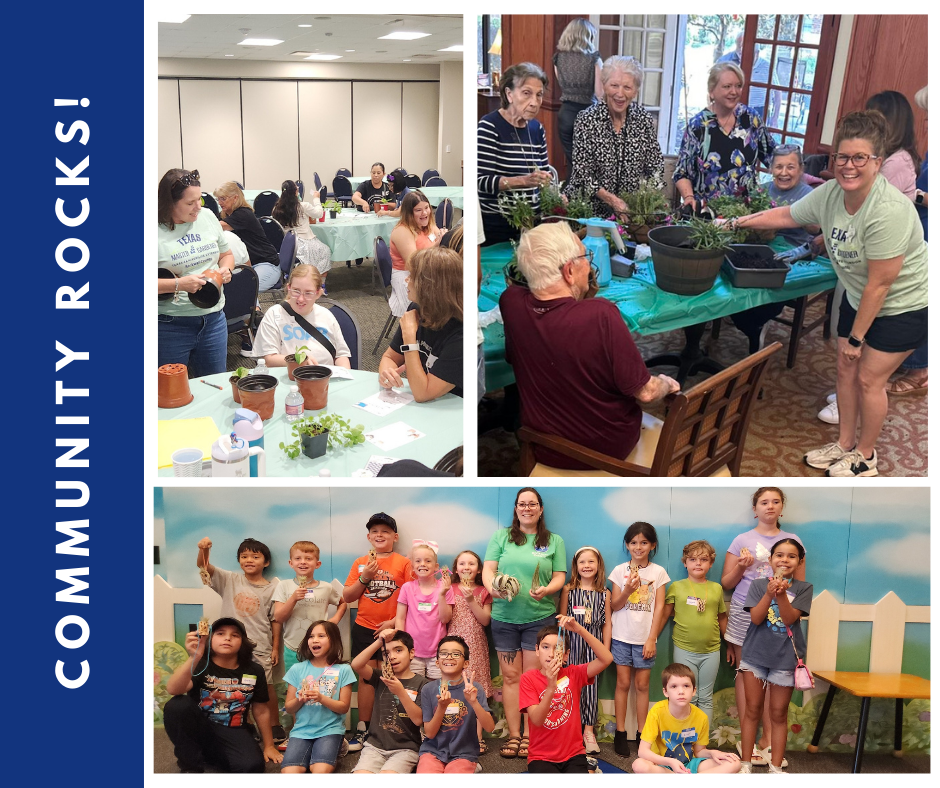
Sharing research-based horticulture with Rockwall’s youth, adults, and seniors.
Ask a Master Gardener & Library Help Desk
JMG Literature in the Garden
Courthouse Annual and Perennial Planting
Blossoming Minds Home School
Rockwall Farmers Market
Lima Bean Youth Class @ Rockwall Library
SOAR Camp @ Lake Pointe Church
Fall Vegetable Gardening Class
Senior Outreach @ Brookdale Summer Ridge
Meals on Wheels Father's Day Bird Feeders
Young Chefs Academy
Blue Ribbon News Contributions
| |
WE LOVE BUGS!
Good Bugs in Disguise
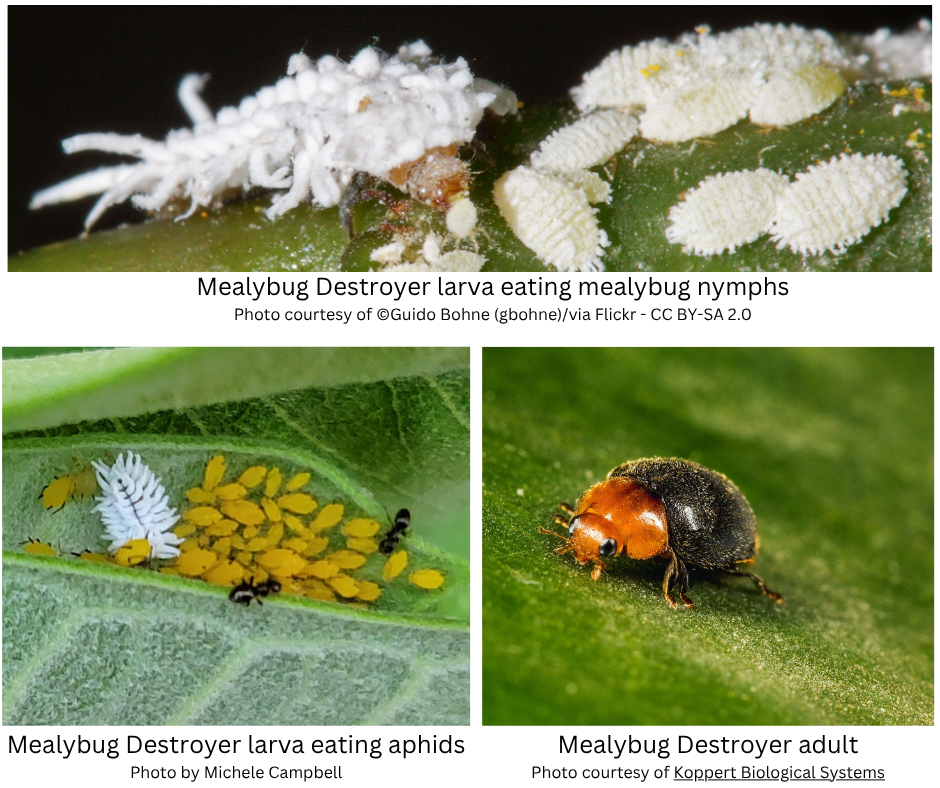
One beneficial insect that often gets mistaken for a pest is the Mealybug Destroyer (Cryptolaemus montrouzieri), a type of lady beetle. In its larval stage, it closely resembles the mealybug—a common plant pest. All stages of the Mealybug Destroyer feed on mealybugs and other soft-bodied insect pests such as aphids and scale. In fact, a single Mealybug Destroyer larva can consume up to 250 mealybug larvae! How can you tell them apart? Mealybug Destroyer larvae are at least twice the size of adult mealybugs and appear more shaggy - like they just rolled out of bed. So before reaching for pesticides, take a closer look - you might already have natural pest control on the job!
| | | | |
Adding Nutrients to the Soil Through Cover Crops
by Brian Cook
| | | |
The importance of cover crops after a productive spring and summer growing season cannot be overstated. Even as far back as the late 19th century it was well known among slaves that consistent planting of one crop (in their case it was cotton) was quite harmful to the soil and stripped it of nutrients vital for plant growth. In 1896 George Washington Carver, who was born into slavery, began to develop a system at Tuskegee Institute where cotton farmers rotated crops after their main crop harvest. The most notable crops were sweet potatoes, peanuts, soybeans, and cowpeas. All of which replace spent nitrogen back into the soil. These crops would not only help to replenish nutrients back into the soil, but they were also good for human consumption and cattle forage. Thus, improving the economic value of the farm.
Fast forward almost 100 years and current scientific research confirms what Mr. Carver “discovered” and taught. After WWII the booming chemical industry began to develop products to assist mass food production in the US. It was very successful and most of that product development is still in use today. However, don’t just think of those products as chemical additives, much of the organic product industry was developed during this same time period. In fact, most practices for sustainable and profitable agriculture have been developed in land grant colleges till this day. No longer is there really a struggle with “chemical v organic” cultivation practices in today’s farmers and gardeners. Today you will commonly find that gardeners at home and commercially have adopted a balanced approach (such as Earth-Kind) to use what works best and causes the least amount of disturbance of natural processes.
So here I find myself in August with a garden that has given me a bounty of 300lbs of tomatoes, filling my cupboard with summer’s red delight which will last me (almost) till next summer’s first harvest. That garden is now (more’s the pity) brown, barren looking, and honestly pitiful. What once was the biggest occupier of my time for the last 4 months is more of an eye sore if it weren’t for the massive amounts of morning glories covering the garden fences. In previous years, I would simply let the garden remain fallow until mid-winter when I would add more manure and compost to revitalize what my beloved tomatoes gladly took from mother earth. For the most part this always worked, but it never did much for how poor my once beautiful garden looked.
The last three years I have decided to stop my tomatoes from growing by mid to end of July and plant a mixture of cowpeas and foraging turnips. This combination allows the soil to regain nitrogen and supplies green manure from the plants. I also get the opportunity to see my garden producing life again. Pollinators love my garden, and my chickens love that they have so many new plants to peck at. By December, that cover crop is mostly spent and has replenished the soil with life and nutrients. I can now plant a late winter garden of greens till the weather is warm enough to plant a spring-summer crop again.
Click here to learn more about cover crops from Texas A&M Agrilife
| | |
Greetings from the backyard pond, otherwise known as Mr. T's place!
Mr. T was enjoying the warmth of the late summer sun. He stretched his neck out from his bumpy shell and pointed his small, green head up to the sky as though looking for a spaceship, or some alien, or even a bluebird. But to be quite honest, Mr. T only knows his pond – the small garden pool that has been his home for as long as he can remember.
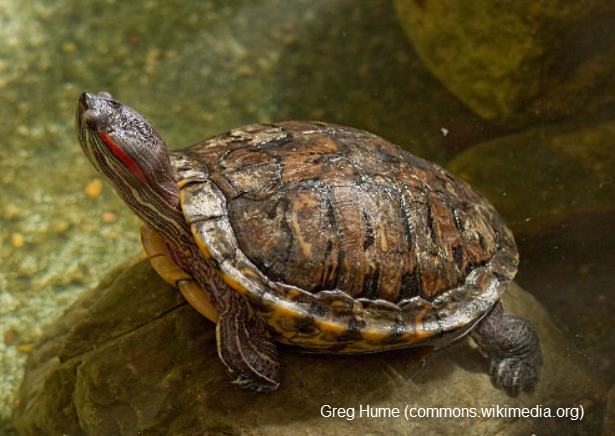
You see, Mr. T is a Red Eared Slider, a small turtle with red stripes behind his eyes. The red stripes aren’t really ears, though. Turtles’ ears are covered by a flap of skin, and Mr. T’s red stripes are close to these flaps. Like other Sliders, Mr. T doesn’t mind being alone, so he enjoys having his pond all to himself. He loves to duck under the water lilies and snack on the dead leaves. And since he is an omnivore, he will also gobble up crickets and small fish and aquatic bugs. But best of all, Mr. T loves to bask in the sun. He’s a cold-blooded animal and depends upon the temperature of his surroundings. So when the sun is high in the sky, Mr. T climbs up on his favorite rock at the pond’s edge, stretches his legs out from his carapace (top shell) as far as he can, and soaks up the warmth of the sunshine.
Now we haven’t talked about Mr. T’s second-favorite thing to do. What do you think it is? Hmmm…he’s called a Red Eared Slider. Do you think he might like to slide? You’re right! Whenever Mr. T gets nervous about something, he quickly slides down his favorite rock and “PLOP,” he’s back in the pond. When Red Eared Sliders get scared, they don’t hide, they slide! And Mr. T is one of the best sliders around! Take, for instance, his encounter with a strange critter just the other day.
As usual, we find Mr. T on his favorite rock, head and neck stretched out to welcome the sunshine. Then, “BLURP,” something lands on the rock next to him. Well, we know what happens next: “PLOP!” Mr. T slides back into the pond faster than you can say “lickety-split!” And the guilty party, our “BLURPer,” is none other than Hoppy, the toad. (He blurps sometimes when he’s been in the mud.). Well, Hoppy isn’t sure why Mr. T is so unfriendly, so he goes on his merry, hopping way. Mr. T peeks out from under a water lily leaf and watches the strange critter as it hops across the rocks and past the pond. As you can imagine, Mr. T is NOT going to be denied his sunshine time, so as quickly as he slid back into the pond, he crawls out, perches on his rock, and resumes his sun-soaking! Obviously, Red Eared Sliders know their priorities!
Learning Questions
Why are Red Eared Sliders called this?
What is a Red Eared Slider’s favorite thing to do?
What is an omnivore?
Try these Crafty Ideas!
|
| |
Spooky Plants for Halloween
by Debora Zerneri
| | | |
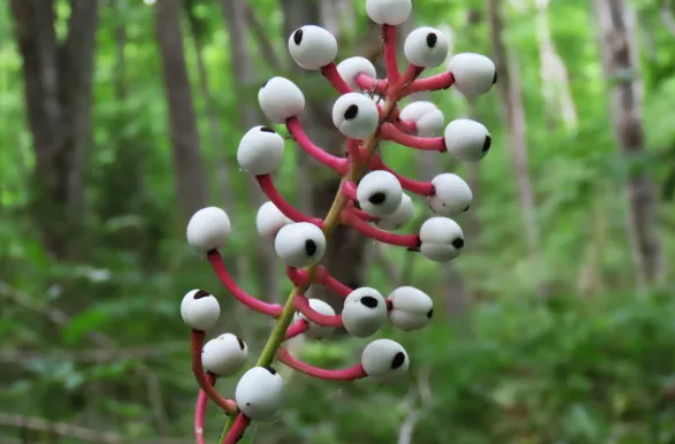
Halloween may be two months away, but nature serves up some SPOOKY plants throughout the growing season. The picture shown on the right is called Doll's Eyes (Actaea pachypoda). These eyes will be watching you as you walk through a deep, dark forest.
Curious to see more plants that gives us the shivers? Check out our Facebook page throughout October to see some of the creepy plants that Debora has found to fill your cobwebs and coffers!
| | |
Master SNAPS!
Photos from Rockwall County Extension Master Gardeners
| | |
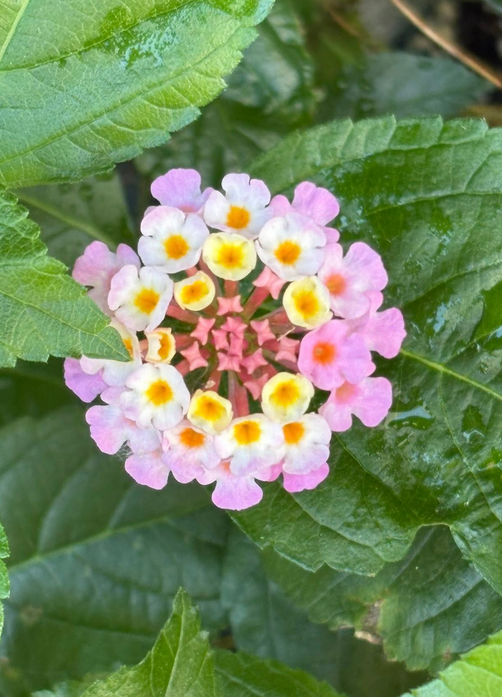
Lantanas loving the sun
-Victoria P.
| | |
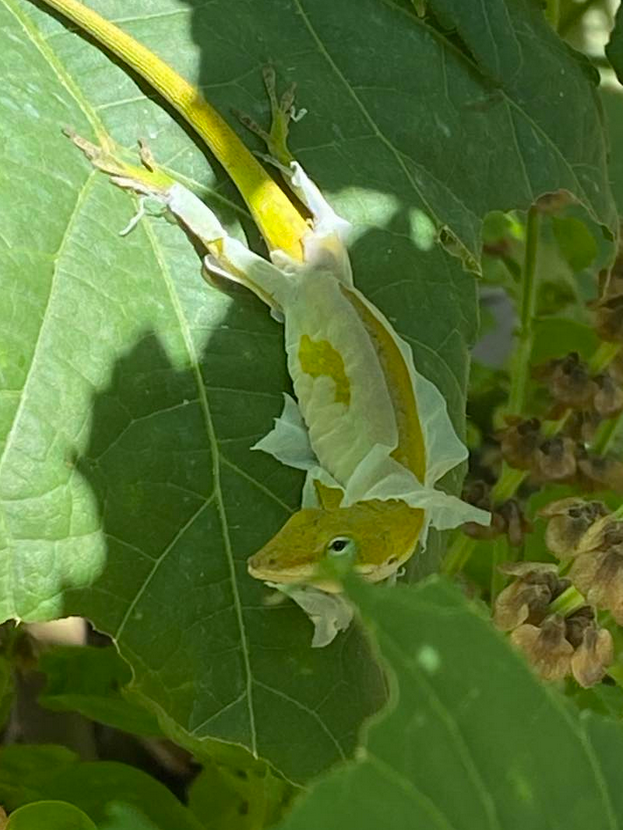
Franklin in the Limelight
-Donna F.
| | |
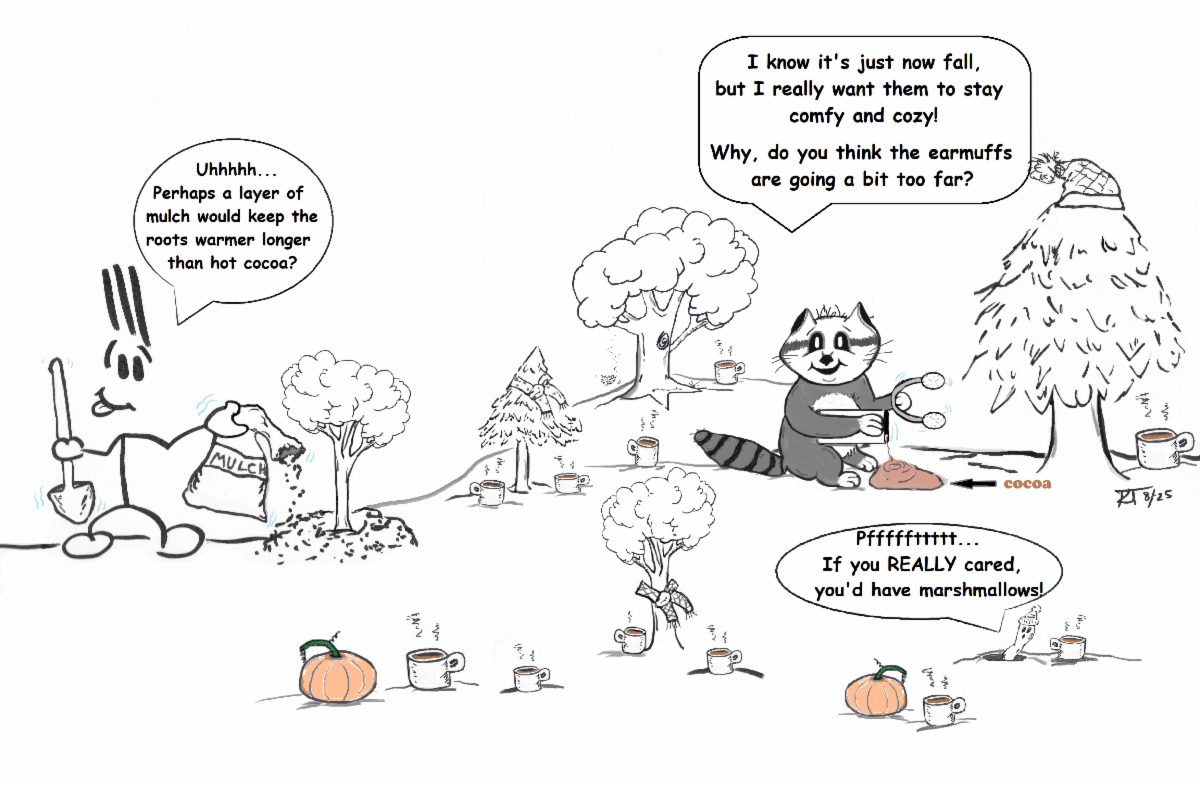
It's too hot for extra layers!
-Rhonda K.
| | Please take our short survey to help improve our educational outreach. | | EnviroSmart is published by: Rockwall County Master Gardener Association part of Texas A&M AgriLife Extension Service, the Texas A&M University System. The information given herein is for education purposes only. Reference to commercial products or trade names is made with the understanding that no discrimination is intended and no endorsement by Texas A&M AgriLife Extension is implied. | |  | |
Todd Williams - County Extension Agent
Ag/ Natural Resources
972-204-7660
tk-williams@tamu.edu
Texas A&M AgriLife Extension provides equal opportunities in its programs and employment to all persons, regardless of race, color, sex, religion, national origin, disability, age, genetic information, veteran status, sexual orientation or gender identity. The Texas A&M University System, U.S. Department of Agriculture, and the County of Commissioners Courts of Texas Cooperating.
| | | | |