|
Disability Pride Month is an annual observance in July that highlights the signing of the Americans with Disabilities Act (ADA), disability culture, history, and community pride.
Many people with disabilities still face barriers to being fully included and valued. Ableism is often ignored, but its effects are real. It limits access to education, jobs, health care, and respect.
Disability Pride Month challenges that. At its core, Disability Pride is about being accepted on our own terms. It says disability is not something to hide or fix—it’s part of who we are. Everyone deserves inclusion, rights, and respect, without having to earn them.
| |
Upcoming Webinar!
SSI and Medicaid for Adults with IDD
Tuesday, July 29th at 1:00pm.
| |
Are you someone that needs help navigating the system? Join Connor Griffin, Director of Health Care Advocacy, for a webinar that will discuss the basics of Supplemental Security Income (SSI) and Medicaid, which is required for an individual to receive services through the NJ Division of Developmental Disabilities (DDD). Learn about why applying for SSI at age 18 can be beneficial, the different pathways for an individual to qualify for Medicaid, and the application process for both SSI and Medicaid.
| | |
Governor Murphy Signs Legislation Eliminating Barriers for Consumers in Health Insurance Appeals Process
On June 30th, 2025, Governor Phil Murphy signed legislation to permanently eliminate fees consumers were required to pay when they appealed their health insurance carrier’s decisions under the Independent Health Care Appeals Program, marking another step forward in ensuring residents receive proper health coverage under their plan. The legislation is in response to the Governor’s Fiscal Year 2026 budget recommendation to enact legislation to permanently eliminate fees for consumer appeals under the Independent Health Care Appeals Program against insurance carriers that deny, reduce, or terminate their benefits. Read more here.
| | |
NJ Register Ready
Hurricane Season Began in June – Stay Prepared!
If you or someone close to you has a disability, you may need to take additional steps to protect yourself and your family.
A hurricane is a huge storm that can be up to 600 miles across and have strong winds spiraling inward and upward at speeds of 75 to 200 mph. They can be life-threatening and cause serious property-threatening hazards such as flooding, storm surge, high winds and tornadoes.
The Atlantic hurricane season lasts from June 1st to November 30th. New Jersey's tropical storm activity is typically between August and late October. Stay prepared with helpful tools, services, and supports from the NJ Office of Emergency Management, NJ 211, and NJ Register Ready. Sign up here!
| |
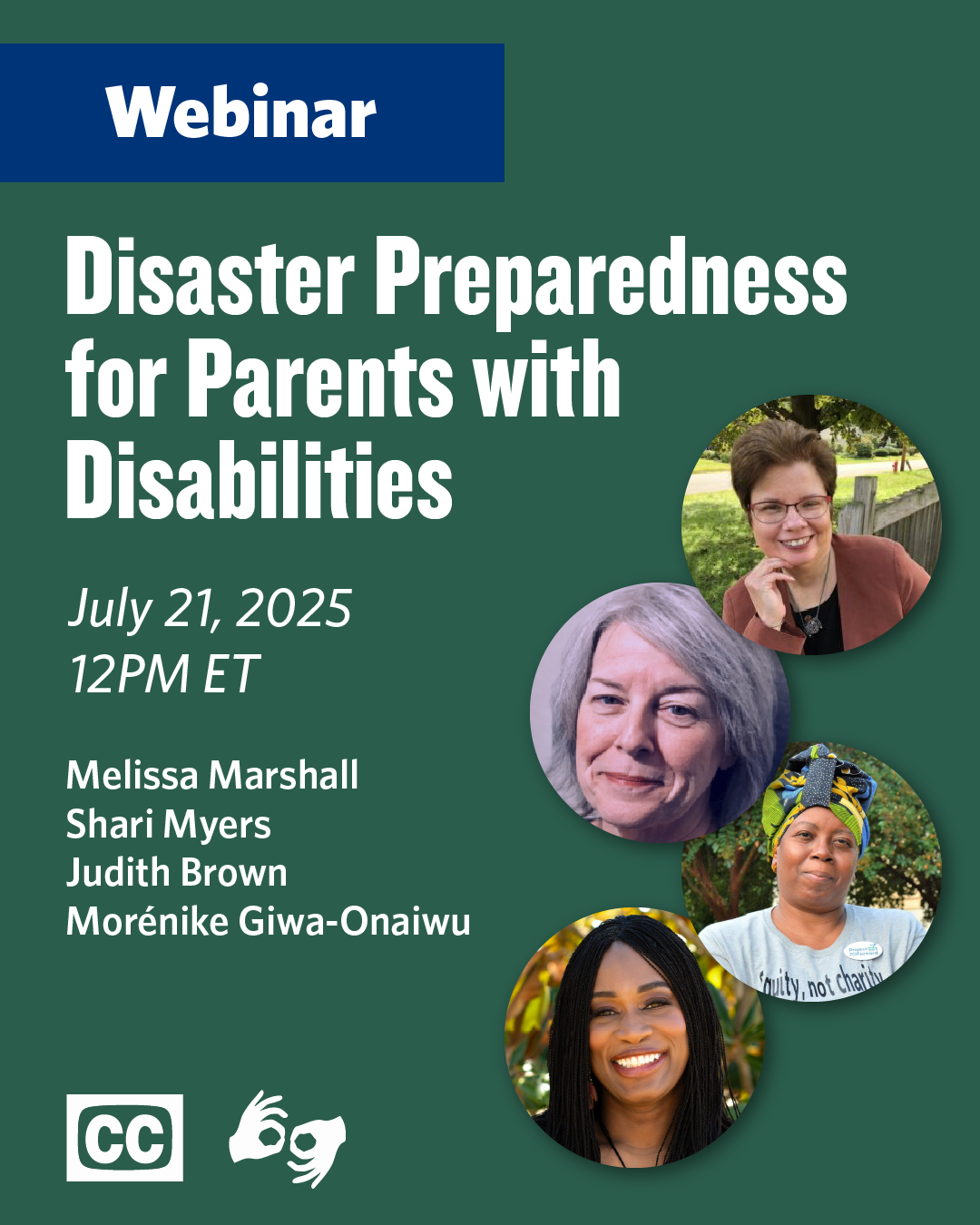
Webinar from The Lurie Institute for Disability Policy:
Disaster Preparedness for Parents with Disabilities
| |
The Truth About the One Big Beautiful Bill Act’s Cuts to Medicaid and Medicare
The Center for American Progress and The Arc break down the One Big Beautiful Bill Act, exposing how its deep cuts to Medicaid and Medicare will lead to benefit losses, increased paperwork requirements, and rural hospital closures that will hurt Americans—especially people with disabilities.
The One Big Beautiful Bill Act passed Congress on July 3 and was signed into law by the President on July 4. It can be difficult to make sense of the expected impact of the Act on the healthcare of everyday Americans over the next ten years, but this article provides an excellent breakdown of what the Act's cuts to Medicaid and Medicare will mean, including:
- Those who need Medicaid most, including people with disabilities and the elderly, will be affected by the bill's cuts.
- The bill will make it harder for states to fund home- and community-based services
- Medicaid paperwork requirements will cause eligible people to lose coverage
- The bill will put rural hospitals at risk
- Medicare benefits will be cut
To read the full article, click here.
| | |
Statement from Human Services Commissioner Sarah Adelman on Impact of Medicaid and SNAP Cuts on NJ
Shared on July 3rd, 2025, the same day Congress passed the budget bill, DHS Commissioner, Sarah Adelman, shared a statement identifying the effects of the cuts on Medicaid and SNAP in New Jersey:
“While we are deeply disheartened by this outcome, NJ Human Services will keep the health, dignity and success of every New Jersey resident and their families at the center of all we do. Those will be our guiding principles as the federal administration next begins directing states on implementation of the law.”
The cumulative effect of these changes to Medicaid will be:
- an estimated 350,000 eligible residents will lose healthcare coverage because of bureaucratic barriers
- $3.3 billion annual cut in funding to hospitals and public health funding
- $360 million annual cut to the state budget due to reductions in federal funding and provider assessments
For NJ FamilyCare Members this bill will:
- restrict the definition of qualified immigrants (Oct. 2026)
- impose work requirements for able-bodied adults (as soon as Jan. 2027, and no later than Jan. 2029)
- require six-month eligibility redetermination for expansion adults (Jan. 2027)
- limits retroactive coverage to one month prior to application for expansion population and two months prior for traditional enrollees (Jan. 2027)
- require expansion adults to pay money out of pocket towards the cost of treatment (Oct. 2028)
Read the full statement (ENGLISH)
Read the full statement (SPANISH)
| | | |
Stay in the Know with Catching Up with Connor!
Live on Facebook every other Thursday at 2:30pm, this series features 10-15 minute educational presentations on specific health care issues, news, and key topics for individuals with IDD and their families.
No registration is required, but please leave a like and comment what topics you would like to see!
| | | |
Pediatricians Receive New Clinical Guidance from American Academy of Pediatrics in Evaluating Intellectual Disability or Global Developmental Delay
| |
According to the report, "Genetic neurodevelopmental disorders are common in the pediatric population, and establishing a specific diagnosis early provides multiple benefits including prognostication, surveillance for disorder-related complications, accurate recurrence risk, and specific management. This report provides an approach to the genetic evaluation of developmental delay/intellectual disability for the general pediatrician."
Read the Disability Scoop article
View the clinical report
| | |
Social Security Transitioning to Electronic Payments
Beginning September 30th, 2025, the Social Security Administration will no longer provide paper checks for benefits payments. This transition only affects a small number of Social Security beneficiaries who still receive their monthly payments by paper check.
For beneficiaries receiving paper checks, you are encouraged to enroll in direct deposit or opt for the Direct Express® card to continue receiving your monthly benefits timely. Read the full article
| | |
The New Jersey Council on Developmental Disabilities (NJCDD) is responsible for identifying the most pressing needs of people with developmental disabilities and their families in New Jersey and advancing public policy and systems change activities.
One of the Council’s most important tasks is creating a five-year state plan. The five-year state plan is like a roadmap. It helps the NJCDD prioritize what issues to work on over the next five years. If you or someone you know has a developmental disability, the NJCDD wants to hear from you.
Take their survey!
| | |
Medical debt is a growing crisis affecting millions of Americans, often pushing families into financial hardship.
This website provides downloadable legal guides, sample forms, FAQs, and video tutorials to help individuals navigate medical debt disputes, insurance appeals, and payment negotiations. The site also connects users with legal aid services and resources, making it easier for them to access the support they need.
Check out the EndMedDebtNJ.org website that was designed to empower individuals and families in addressing medical debt.
| | |
Virtual Office Hours
The Health Care Advocacy Program offers virtual office hours on Mondays from 1:00pm to 3:00pm.
| |
Meet with the Director of Health Care Advocacy to discuss healthcare questions or concerns, for example, regarding Medicaid, Medicare, or Social Security, as they affect your family member or loved one with IDD.
Appointment slots are offered on a first-come, first-served basis and may be limited to 20 minutes, as needed, to accommodate more people.
Sign up here!
| | |
You are encouraged to share this information with others who may also be interested. However, if you are forwarding this email, please delete the "unsubscribe" link at the bottom of this page. If you do not remove the "unsubscribe" option and a person who receives your forwarded email clicks "unsubscribe,"
it would result in your name being removed from our distribution list.
| | | | |