Our office focuses on implementing report recommendations from the last 30+ years that guide UH Mānoa in becoming reflective of Hawaiʻi's language, culture, values, and knowledge systems from which all people learn, connect, grow, and heal:


  • Hawaiʻi-Guided Student Success
  • Hawaiʻi-Grounded Staff and Faculty Development
  • Cultivating Hawaiʻi Environments 
  • Hawaiʻi-Reflective Community Engagement


We cannot do this work alone. It is our mission to foster the potential within each of you to positively contribute to our collective kuleana to make UH Mānoa reflective of Hawaiʻi. These monthly newsletters, with written reflections that cover the preceding month's happenings, are meant to keep you connected, highlight your work and continue to inspire you.

Alice Augusta Ball 2026 Recognition Ceremony

Na Hope Matsumoto

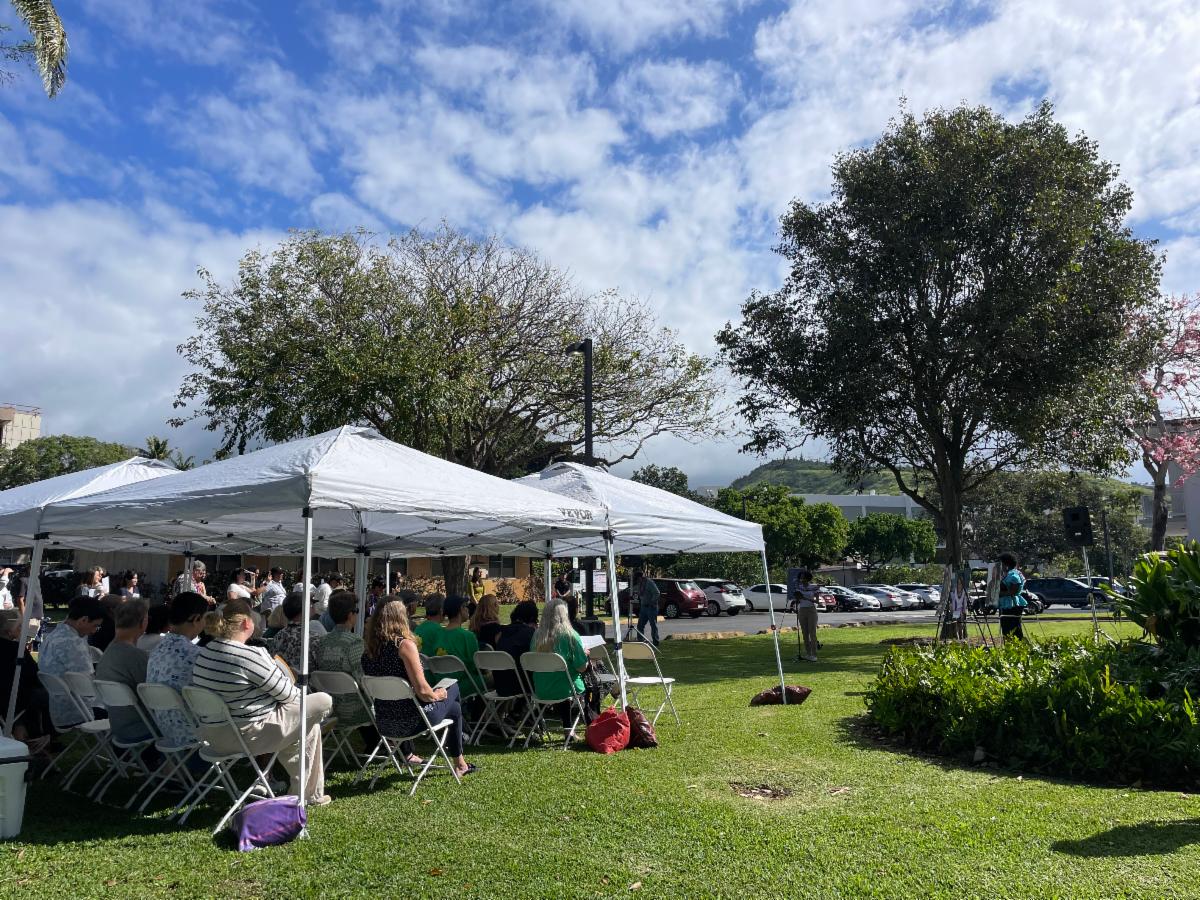
Attendees gathered under white tents on the ʻEwa-side lawn of the Chaulmoogra tree during the remembrance ceremony and program for Alice Ball.

On February 26, 2026, our office participated in honoring the legacies of Alice Augusta Ball, and this day also marked the American Chemical Society’s designation of the discovery of the “Ball Method” as a National Historic Chemical Landmark. As I listened to the speakers sharing their manaʻo beneath the leaves of the Chaulmoogra tree near Bachman Hall, I reflected on the fact that many of the folks chose to speak personally about how Alice Ball’s groundbreaking research continues to impact them and inspire future action. Here at UH Mānoa, she was the first Black woman to receive her master’s degree in chemistry, and as a student, I am incredibly humbled by the tremendous contributions that Alice Ball has given to Hawaiʻi through healing people and easing the discomfort and isolation of Hansen’s disease patients. During the remembrance event, Dr. LaJoya Shelley encouraged the many audience members to think about how we each have the ability to uplift someone else—especially students whose stories might resonate with Alice Ball. 


Read the UH News story here.

Cohort Waikolu: March Session

Na Nick Childs

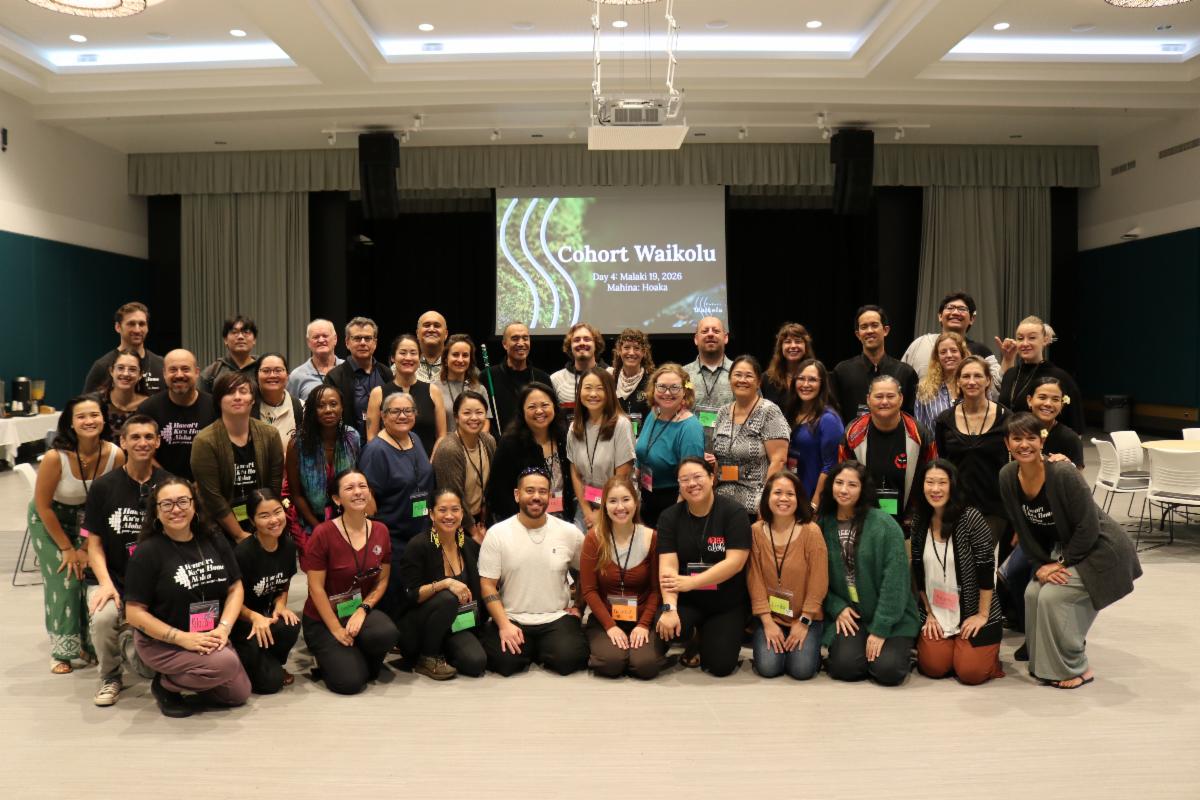
March Cohort Waikolu participants and HPOKA team members gathered for a group photo.

2026 means Cohort Waikolu - our third year of our professional development series. Named after the three streams that traditionally fed Waikīkī, Kuekaunahi, ʻĀpuakēhau, and Piʻinaio, Waikolu follows cohorts Kumukahi and Kaulua in feeding our campus with place-based knowledge, providing tools for pilina building, and creating spaces to imagine how we can fulfill our kuleana to Hawaiʻi and the world. 


This recent spring break invited our March cohort of students, staff, educators, and community members from our university ʻohana to spend five days building relationships with themselves, one another, and ʻāina. While the rain and winds visiting Mānoa defined so much of our experience, our participants fed off those life-giving energies and engaged with foundational Native Hawaiian principles that will make up large parts of their five-year Native Hawaiian Place of Learning (NHPoL) action plans. 


As a facilitator and kākoʻo, these cohorts are such a privilege and joy to be a part of. I have a front row seat in watching our colleagues grow in both their knowledge of important Hawaiian concepts, and in how they build communities of care for themselves and one another. One takeaway is that at the end of the week we collectively cheered! Not because the week is over, but because we see our campus’ capacity to aloha and mālama one another, and maintain a commitment to make this place one that truly loves and serves our Hawaiʻi.

Piʻo Summit 2026: ʻĀinahoʻi

Na Hope Matsumoto

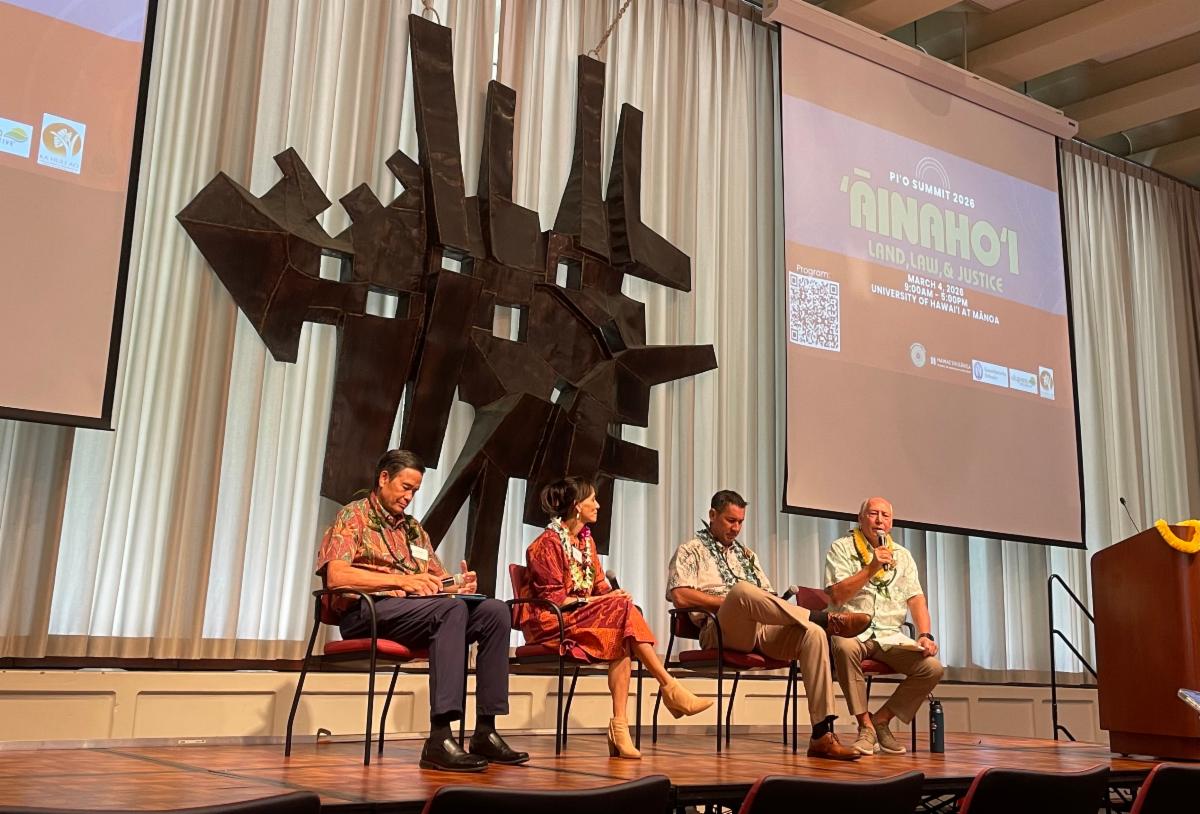
The opening panel of speakers at the 2026 Piʻo Summit (from left to right): Kali Watson, Noelani Goodyear-Kaʻōpua, Kaialiʻi Kahele, and panel moderator Neil Hannahs. 

On March 4, 2026, our office attended the 2026 Piʻo Summit: ʻĀinahoʻi, where we listened to speakers from various organizations and communities share about their ongoing efforts and perspectives on land, law, and justice. The morning began with a condensed overview of Hawaiʻi land tenure by Kumu Kamana Beamer, setting the stage for insightful and informative conversations that followed. As Kumu Noelani Goodyear-Kaʻōpua remarked during the first panel, aliʻi models of land management show us how to hold deep pain while simultaneously recognizing ʻāina as the source of our waiwai. During the years of steep population decline, our aliʻi chose to establish life-affirming institutions (e.g., schools and hospitals) and managed to cultivate a sense of synergy. The panelists continued to discuss how this synergy is still present in today’s landscapes where ea is enacted on community levels, where we are face-to-face with the ʻāina. 

2026 Mālama Hāloa Kalo Festival and Symposium

Na Hope Matsumoto

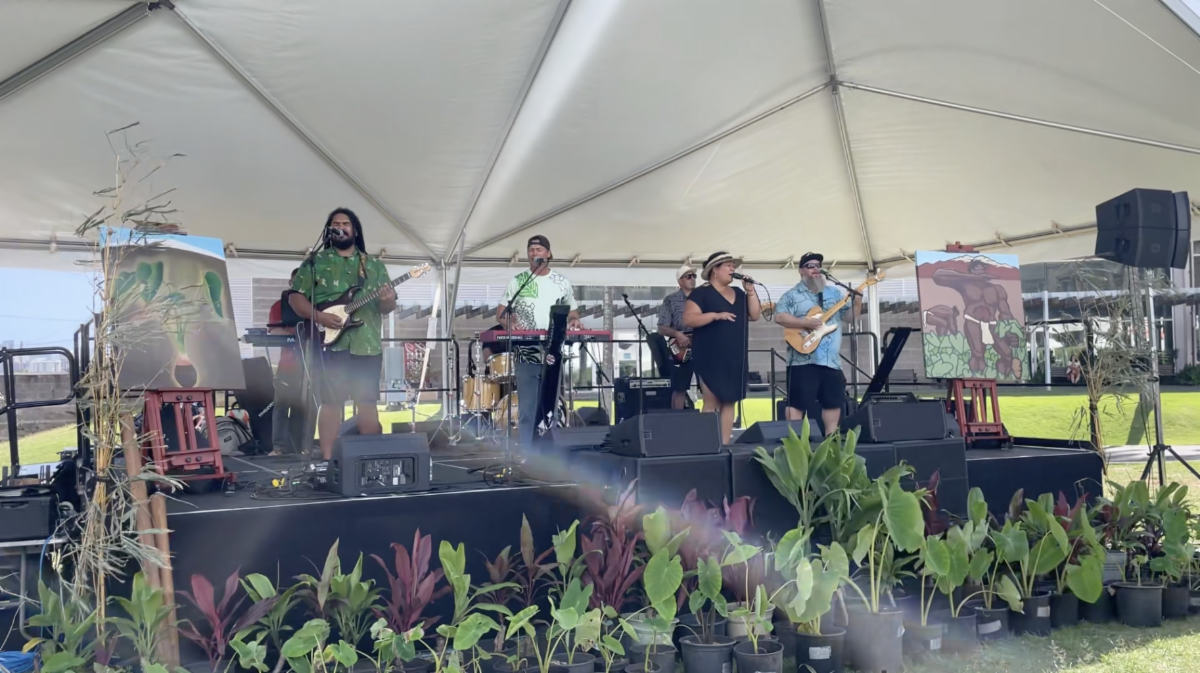
The Vitals performing at Bishop Museum for Mālama Hāloa 2026 on a stage adorned with ʻohe, kalo, and lāʻī (bamboo, taro, and ti leaves).

This year’s Mālama Hāloa celebrated the year of Ka ʻOhe, and throughout the three total days of the event this year, I was filled with hope seeing so many generations of people from different places around the world gathered to celebrate kalo. But out of everyone who visited the kalo tasting booth on Sunday, March 8th, the most enthusiastic folks who were eager to try the different kalo varieties were the keiki. It was a beautiful sight to see the children come back up to the tent for seconds, holding their big and bright new huli (taro slips) to plant at home. Some of the crowd-favorite varieties of kalo at my tasting table included the Kāī Kea, the Piko ʻUlaʻula, and the Kūʻoho.

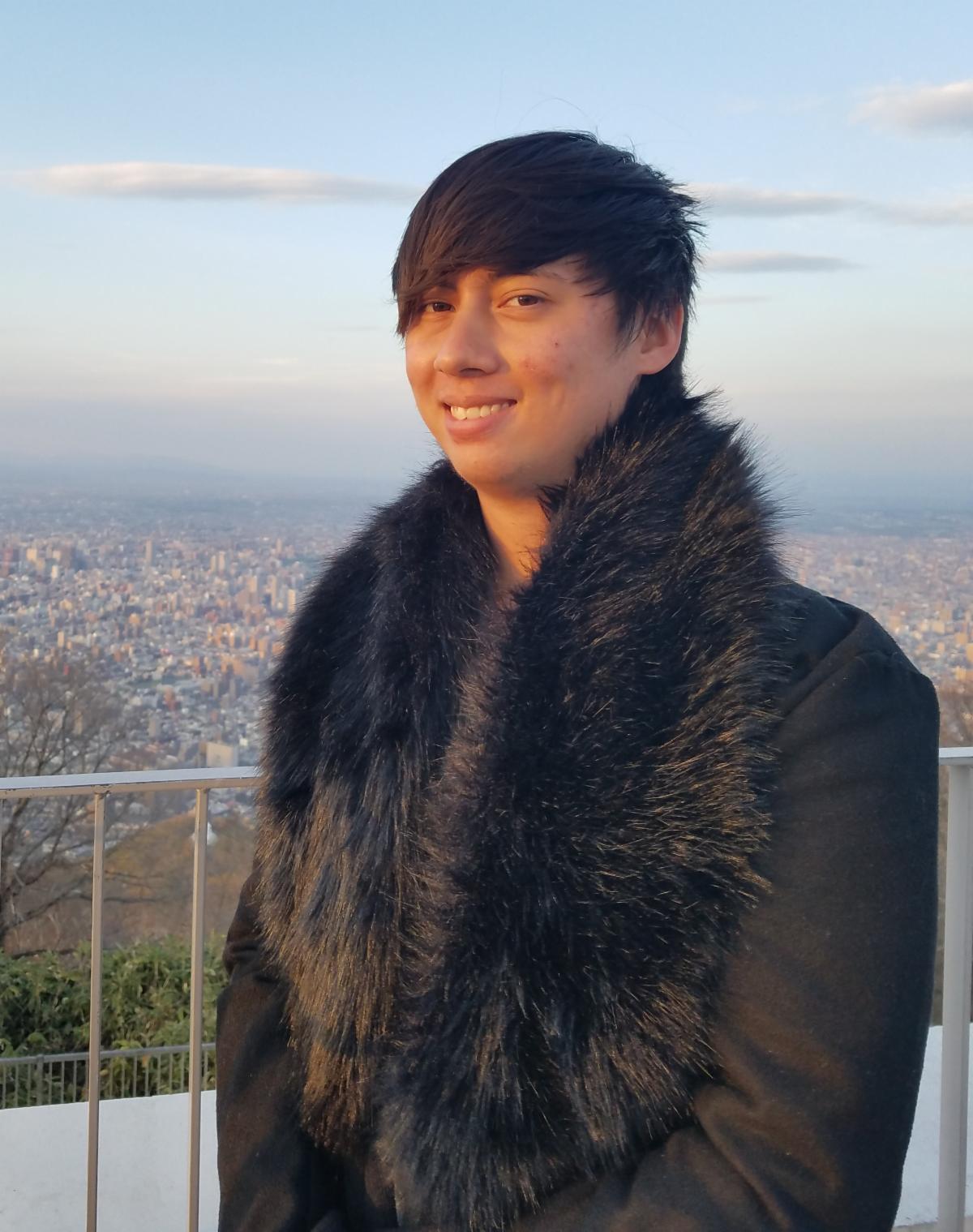
Keaupuni Davis, this month's lamakū feature.

Austin Jay Alika Keaupuni Davis


Birthplace/Hometown:

Wailuku, Maui


High School:

Maui High School


UHM Degrees: 

MA in Sociology-currently pursuing (UH Mānoa)

BA in Sociology, Anthropology, & History

with a Minor in East Asian Studies (UH Mānoa)

AS in Liberal Arts (UH Maui)

CO in Human Services: Dynamics in Family Violence (UH Maui)

CO in Human Services: Youth Practitioner (UH Maui)


Current Occupation:

Graduate Research Assistant: Data & Evaluation Analysis for Hawaiʻi Papa o Ke Ao Native Hawaiian Place of Learning Advancement Office


What inspired/inspires the path for your academic major? 

I study food and identity. I’m a scholar that doesn’t want to be placed in a “box”. Though Sociology is my intellectual home at this moment, my academic journey has led me to a holistic study on the people of Hawaiʻi. As someone who grew up in Hawaiʻi, I was always interested in how I came to be and my identity. I am as mixed as mixed-plate can be; my plate is stacked and filled with generous portions of mostly all who came to Hawaiʻi. It is through food that I learn about who I am and those who came before me. My parents, especially my father, have taught me a whole lot about our identity through our foodways as Kānaka ʻŌiwi and those who immigrated during the plantations. It is my curiosity to understand who I am and my passion for food that inspires my studies.


What are your future goals in your work? 

I have many goals and I am very hopeful that I can fulfill those goals. One of my goals is to continue the importance of indigenous knowledge having space in academic fields that would marginalize these ways of knowing. I try my best to conduct my own research and my current work in decolonial/liberating methodologies like indigenous data sovereignty and “talk-story kine” oral histories. My current position gives me freedom to re-think the way we do surveys and evaluations as we work with communities on how to go about research, provide transparency about our findings and methods, and incorporate ʻike Hawaiʻi as a framework. Another goal I would like to accomplish is to be a great teacher and contribute however I can, especially on topics of epistemic oppression and environmental issues. Education is very important to me and knowledge is endless. So, I hope to ease students in their academic journey and to contribute knowledge of those who are voiceless to finally give them a voice.


How do you see your time at UH shaping the way you aloha ʻāina? 

Having the opportunity to do mālama ʻāina work is one of the ways I commit myself to aloha ʻāina. At the College of Social Sciences, the ACCESS Engagement office has various programs and community engagement opportunities that connected me to the various communities here on Oʻahu. It’s a bit hard to find your place if you’re from the outer islands like Maui, but through that office I was able to learn more about the communities here and how to support them on their terms. From the loʻi at Ulupō to the loko iʻa at Heʻeia, learning doesn’t have to be in a classroom. When I teach, I make it an effort to get my students involved in these programs and engagement opportunities that is deeply rooted in our Kānaka ʻŌiwi values.


What does UH Mānoa as a Hawaiian place of learning mean to you? 

I dream of a place where anyone can learn about our histories, our culture, our being without barriers. I dream that our ways of knowing are at the tables of all our departments and offices with actual power like decision making. I dream of everyone, yes everyone, in UH Mānoa learning our epistemology to better understand us as people but also their own positionality being here. I dream of UHM committing to our values and ʻike Hawaiʻi. We have a lot of work to do to make these dreams a reality. I am very thankful to those who came before us to set the foundations and those right now carrying out their kuleana. I hope to continue to contribute what I can to make my vision of a Hawaiian place of learning real.

Instagram  Email  Web