|
Multi-dose vials pose complications for self-administration
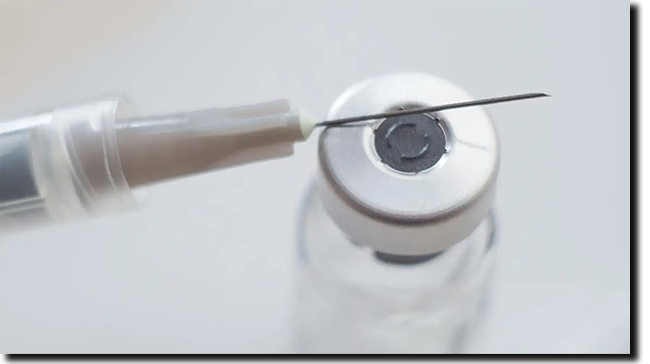
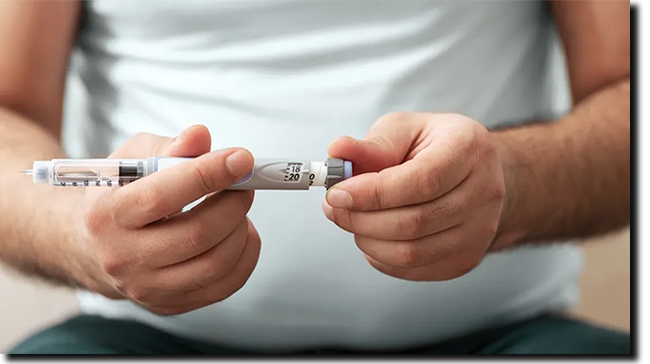
Overdoses, some even requiring hospitalization, have occurred due to patient and physician confusion around compounded semaglutide, the FDA detailed in an alert.
Adverse events reported to the agency have ranged from gastrointestinal events like nausea, vomiting, and abdominal pain -- the most common side effects with GLP-1 receptor agonists -- to fainting, headache, migraine, dehydration, acute pancreatitis, and gallstones.
While FDA-approved injectable semaglutide (Ozempic, Wegovy) is dosed in milligrams and only comes in prefilled pens, compounded semaglutide can come in varying concentrations (depending on the compounder or even by the same compounder) and uses multiple-dose vials.
Read More
| |
ASIPP State Society Meeting | |
Join us in downtown Cincinnati August 9-11 | |
Earn up to 15 CMEs while learning from experts and exchanging ideas with colleagues in beautiful downtown Cincinnati this August 9–11. | |
|
Jordan Stohler, a 42-year-old nurse in Knoxville, TN, was readmitted to Fort Sanders Medical Center in June 2023 with sepsis after a double mastectomy.
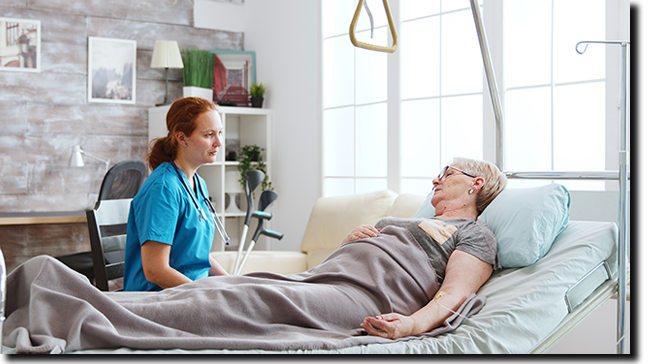
She spent 5 days in the hospital after surgery to clear up the infection. Then she was offered a choice: She could either stay in the hospital while she received IV antibiotics, or she could go home and have the antibiotics given to her there under the Advanced Care at Home program of Covenant Health, the nine-hospital system to which Fort Sanders belongs.
She opted to go home, where she knew she'd be more comfortable and would be close to her beloved dog. In the end, she was very glad she did.
Read More
| |
|
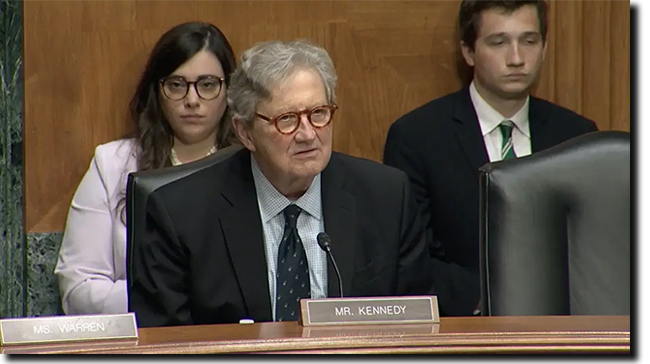
Sen. John Kennedy spars with orthopedic surgeon who fought to leave his practice
Sen. John Kennedy (R-La.) was having none of it when a Florida orthopedic surgeon testified Tuesday about his difficulties getting a new job due to a restrictive noncompete agreement he had signed. The agreement was with the private equity firm that had bought out the group practice for which he worked.
"I think the private equity group came in and offered you and your partners a huge sum of money -- in the millions -- and you took it, and I think later you regretted it and you wanted out of the deal," said Kennedy, the ranking member of the Subcommittee on Economic Policy of the Senate Banking, Housing, and Urban Affairs Committee, during a hearing on banning noncompete agreement.
"I think that violates freedom of contract [law], and I will bet that you wouldn't be willing to give back the millions of dollars you took away from the sale in order to get back the freedom to practice," he added. Noncompete agreements prevent employees from leaving and getting jobs with the competition in the same geographic area, or starting their own business to compete with their former employer.
Read More
| |
|
A new study supports the potential to repurpose glucagon-like peptide 1 (GLP-1) receptor agonists, used to treat type 2 diabetes and obesity, for dementia prevention.
In the phase 2b ELAD clinical trial, adults with early-stage Alzheimer's disease (AD) taking the GLP-1 receptor agonist liraglutide exhibited slower decline in memory and thinking and experienced less brain atrophy over 12 months compared with placebo.
"The slower loss of brain volume suggests liraglutide protects the brain, much like statins protect the heart," study chief Paul Edison, MD, PhD, with Imperial College London, London, United Kingdom, said in a statement.
Read More
| |
|
Virtual
August 31 & September 28
Click here for the complete list of upcoming exams.
ABIPP Part I; ABIPP Path - Combined DCCPM/CSM virtual exam;
ABIPP Competency Exam in IPM; ABIPP Competency Exam in Regenerative Medicine;
CSM Competency Exam; DCCPM Competency Exam
In Person
October 18, 2024
ABIPP Part II - Practical Examination
Lab Venue: MERI, 44 S. Cleveland Street, Memphis, TN 38104
| |
|
Co-infection with seasonal influenza, H5N1 raises concerns about human adaptation, CDC says
The CDC is investing $10 million in a major push to get livestock workers vaccinated for seasonal influenza before the upcoming respiratory season, the agency announced on Tuesday.
Of the $10 million allocated to the effort, $5 million will be used for seasonal flu vaccines for livestock workers and another $5 million will go to the National Center for Farmworkers Health and partner organizations to focus on outreach and education efforts.
The CDC is working with states to develop ways to get the vaccine to approximately 200,000 livestock workers in the U.S.
Although the seasonal flu vaccine will not prevent infection from H5N1 bird flu, getting livestock workers vaccinated for seasonal flu can potentially reduce the rare risk of co-infection with the two viruses, Nirav Shah, MD, JD, the CDC's principal deputy director, said on a call with reporters.
Read More
| |
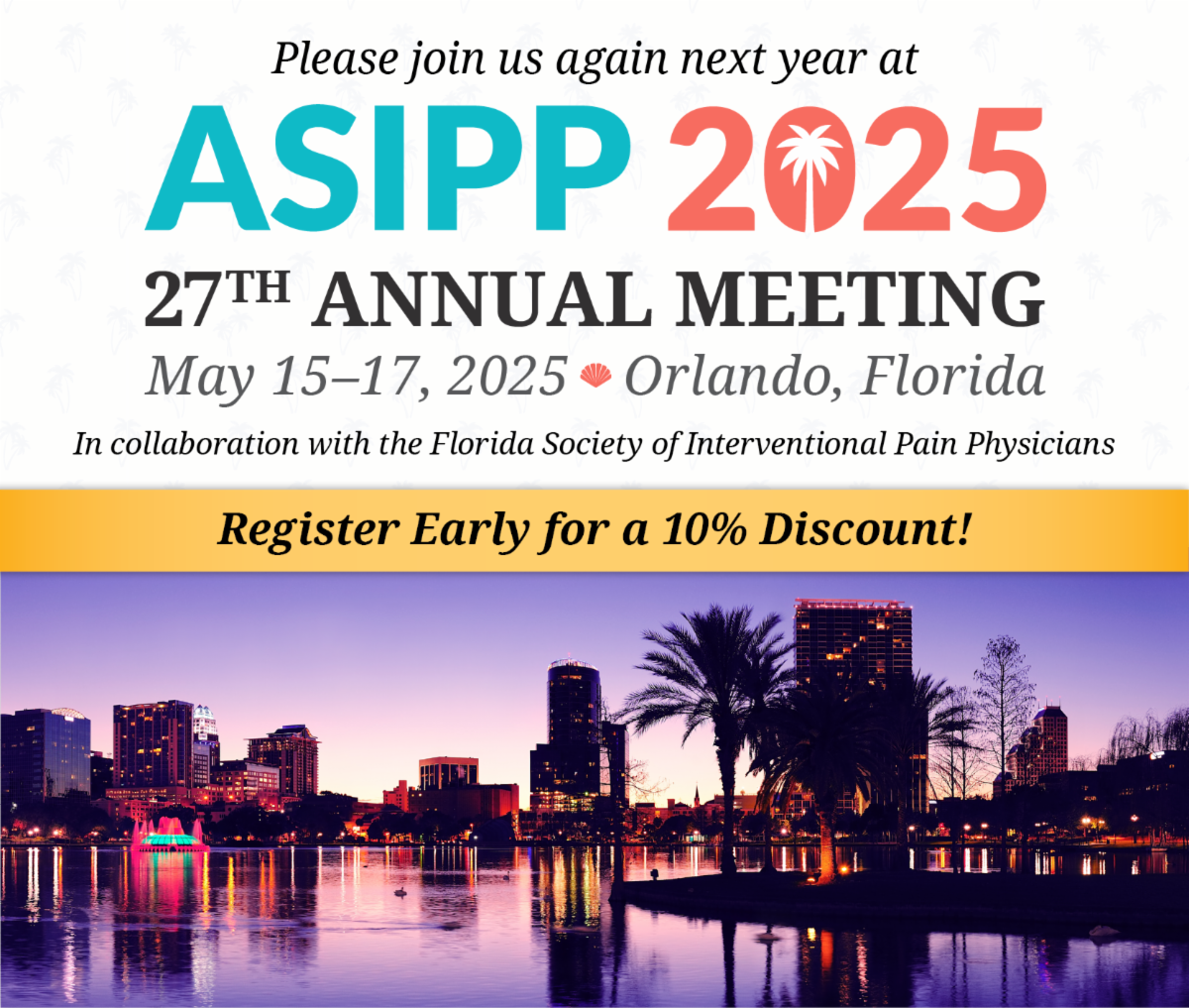
Registration is open for
ASIPP's 2025 Annual Meeting
We would love it if you would register and join us in Orlando!
| |
|
Physicians who fail to help patients suffering from addiction blame their institutions and their own limitations in skill, knowledge, available brainpower, and faith that interventions will help patients, a systematic review found.
Researchers analyzed 283 international studies with data from 66,732 physicians who were asked about their reluctance to address addiction treatment and substance use. Of the studies, 61.5% cited lack of knowledge as a factor, 61.1% cited lack of institutional support, 60.1% cited lack of skills, 48.1% cited lack of available brainpower, and 46.6% cited lack of expectations of benefit, reported Wilson M. Compton, MD, deputy director of the National Institute on Drug Abuse, Baltimore, and colleagues, in JAMA Network Open.
Lack of Priority in Addiction Care
In an interview, Sarah Wakeman, MD, senior medical director for substance use disorder at Mass General Brigham, Boston, questioned the lack of priority given to addiction care. "Many of the perceived barriers that physicians cite for why they don't offer addiction treatment exist for many types of health conditions we routinely manage," said Wakeman, who's familiar with the findings but didn't take part in the study. "Yet we as physicians would never opt out of treating diabetes or heart disease. So why is it acceptable to opt out of treating addiction?"
Read More
| |
ASIPP State Society Meeting: | |
- ASIPP Members Only Site Information - | |
-
To log in for the first time you will need to click “forgot password” at the bottom of the login window.
- Check your email and then log in as directed.
-
If you have problems logging into your account, click here.
| |
|
Pain Medicine Case Reports (PMCR) and Editor-in-Chief Alaa Abd-Elsayed, MD, PhD would like to invite you to submit case reports and case series to the PMCR journal. Your article will be published free of charge.
Open access journals are freely available online for immediate worldwide open access to the full text of published articles. There is no subscription fee for open access journals. Open access journals are no different from traditional subscription-based journals: they undergo the same peer review and quality control as any other scholarly journal.
Interested in becoming a member of the PMCR Editorial Board?
Editorial board members are asked to review 2-6 manuscripts per year. Please submit your most up-to-date CV to sgold@asipp.org for consideration.
For more information or to submit your articles, click here.
| |
|
Danielle Kohr, MD, PhD, Sudhir Diwan, MD, and Michael Kugler, MD
Abstract
BACKGROUND: Neuromodulation techniques can be employed as part of the treatment approach for refractory complex regional pain syndrome (CRPS).
CASE REPORT: We present a case report of a 62-year-old male patient with CRPS of the lower limb who underwent spinal nerve root stimulation using a novel extraforaminal lead placement as a treatment modality after the failed replacement of a defective dorsal root ganglion lead. This case report highlights the successful long-term application of dorsal nerve root stimulation with an alternative extraforaminal lead placement technique, resulting in significant pain relief and improved functional outcomes in a patient with refractory CRPS.
CONCLUSIONS: The novel anatomical approach and neurostimulation technique described in this case provide a promising alternative for patients who have not responded to other treatment modalities.
KEY WORDS: CRPS, dorsal root ganglion stimulation, peripheral nerve root, extraforaminal approach, case report
Read More
| |
|
Alexander Beletsky, MD, Cherry Liu, MD, Kim Vickery, MS, Natalie Hurlock, MPH, Nutan Winston, MD, Munish Loomba, MD, Brittany N. Burton, MD, Ahish Chitneni, DO, Rodney A. Gabriel, MD, and Jeffrey Chen, MD
Abstract
BACKGROUND: Spinal cord stimulator (SCS) surgeries, whether performed using the open or percutaneous approach, are becoming increasingly common for a range of neuropathic pain conditions, including post-laminectomy syndrome and complex regional pain syndrome. However, there is limited knowledge regarding the factors linked to same-day discharge patterns following SCS.
OBJECTIVE: The purpose of this study was to identify factors associated with same-day discharge after SCS placement. The primary outcome was same-day discharge.
STUDY DESIGN: Retrospective, cohort study using a nationwide database.
METHODS: Inclusion criteria included patients who underwent percutaneous or open SCS from January 1, 2014 through December 31, 2021. Exclusion criteria included patients with missing data (n = 178) and those with SCS implants for unlisted indications (n = 1,817). A multivariable analysis was conducted on the outcome data and co-variates associated with same-day discharge after SCS.
RESULTS: After applying inclusion and exclusion criteria, a total of 18,058 patients remained in the final data set, including 7,339 patients who underwent percutaneous SCS and 10,719 patients who underwent open SCS procedures. After analysis, factors associated with increased rates of same-day discharge after SCS included men (odds ratio [OR] 1.16; 95% CI, 1.09 –1.24; P < 0.001), patients on Medicaid (OR 1.64; 95% CI, 0.1.34 – 2.01; P < 0.001), and hospitals in the US Midwest (OR 1.66; 95% CI, 1.45 – 1.90; P < 0.001) and hospitals in the US West (OR 1.32; 95% CI, 1.20 – 1.46; P < 0.001). Factors associated with decreased rates of same-day discharge after SCS included the open approach (OR 0.21; 95% CI, 0.19 – 0.23; P < 0.001), Hispanic ethnicity (OR 0.61; 95% CI, 0.54 – 0.69; P < 0.001) and increased age (OR 0.99; 95% CI, 0.98 – 0.99; P < 0.001).
LIMITATIONS: Since our study is retrospective, the data are subject to various biases, including variable confounding, human error in data entry, and generalizability of the results.
CONCLUSION: These results can be used to help determine hospital bed needs post-SCS surgery. Future research should focus on identifying the specific reasons certain demographic and geographic factors might influence same-day discharge rates. Our study provides important insights into the factors associated with same-day discharge rates post open and percutaneous SCS implant and highlights the need for patient-centered, evidence-based approaches to health care delivery.
KEY WORDS: Spinal cord stimulator, pain medicine, failed back surgery syndrome, neuromodulation, neuropathic pain
Read More
| |
|
Paul Supper, MD, Christine Radtke, MD, and Lena Hirtler, MD, PhD
Abstract
BACKGROUND: Infrapatellar neuropathy arises from traumatic, iatrogenic, or compression injury to the infrapatellar branch (IB) of the saphenous nerve. The risk of infrapatellar neuropathy has been shown to depend on the IB’s anatomical course. The infrapatellar branch of the saphenous nerve (ISBN) has been discovered to take varying courses, and the IB can emerge directly from the femoral nerve. The variety of the IBSN’s courses and the prevalence of cases involving the infrapatellar branch of the femoral nerve (IBFN) call the uniform IB course described in textbooks into question.
OBJECTIVES: In this study, we aim to identify sites of IB emergence and their anatomical relations and evaluate them for their risk of neuropathy.
STUDY DESIGN: The study is an anatomical prospective pilot study.
SETTING: The setting is a single-center cadaveric study performed at the anatomical institute of the Medical University of Vienna.
METHODS: Twenty-two anatomical specimens were evaluated for the relationship of their IBs to anatomical risk sites. The subsartorial course, distal sartorial penetration, and the crossing of the medial femoral epicondyle were assessed. The measurements and relations of the IB were determined with callipers and assessed by computational modelling.
RESULTS: Nine IBs originated from the saphenous nerve, 11 originated from the femoral nerve, and 2 originated from both. The subsartorial course was most frequent in IBs of saphenous origin. Penetrating and profound distal sartorial relations correlated moderately with emergence type and were highest in the saphenous group. The crossing of the medial femoral epicondyle was the most common relation of IBs that emerged femorally.
LIMITATIONS: The study’s limitations were the low number of cadavers to examine and the confining of the exploration of knee extension to anatomical specimens that restricted an inferential analysis.
CONCLUSION: Infrapatellar innervation can emerge from the saphenous nerve, the femoral nerve, or a combination of both, and the origin of the innervation determines the clinical risk for infrapatellar neuropathy. While innervation from the IBSN may lead to compression at the subsartorial course, distal sartorial penetration, and the crossing of the medial femoral epicondyle, innervation from the IBFN carries reduced anatomical risk for infrapatellar neuropathy.
KEY WORDS: Infrapatellar neuropathy, anatomical variation, infrapatellar innervation, anterior knee pain syndrome, compression syndromes
Read More
| |
|
ASIPP is now in collaboration with Curi Medical Liability Program
| |
|
Since this malpractice insurance program officially launched in November 2018, ASIPP has signed up hundreds of providers with an average savings of 30%. This is professional liability insurance tailored to our specialty and will stand up for us and defend our practices.
Curi is a full-service advisory firm that serves physicians and their practices. Their valued advice is grounded in your priorities and elevated in your outcomes. They are driven by a deep understanding of your specific circumstances in medicine, business, and life. To read a few important points to keep in mind about the program, including discounts, administrative defense, cyber coverage, aggressive claims handling, and complimentary risk management CME activities, visit our website.
| | |
|
Group Purchasing Organization Offer Better Pricing and Creates Added Value
ASIPP has formed a partnership with Henry Schein and PedsPal, a national GPO that has a successful history of negotiating better prices on medical supplies and creating value-added services for independent physicians. Working with MedAssets, PedsPal provides excellent pricing on products like contrast media that alleviate some of the financial pressures you experience today.
Learn More
| |  |
|
ASIPP, Fedora Billing,
and Revenue Cycle Management Partnership
ASIPP is now offering our members the benefit of a unique revenue cycle management/ billing service.
We have received a tremendous amount of interest in the ASIPP® billing and coding program.
Click here to learn more about the negotiated rate for practices and more!
| |
|
Like and follow ASIPP® on Facebook, X, and LinkedIn for the most
up-to-date news related to you, your practice, and your patients!
| | | | |