|
|
Tradeline News
The Official Newsletter of the Greater Bowie Chamber of Commerce
|
|
Our Mission: To protect, enhance and promote local business by providing a voice for business at local, county and state levels. |
|
Welcome to Bowie, Maryland! |
|
Welcome to the Greater Bowie Chamber of Commerce Newsletter and to our community, one of the best places in Maryland to live, work and raise a family.
The Greater Bowie Chamber of Commerce understands that in order to have a strong economic environment you must have a strong community. We are truly blessed in our community to have leaders, business owners, educators and citizens who realize that we all share in the responsibility of creating economic success and happiness within our community.
The Chamber’s goal is to work toward improving the quality of life for all through the support and commitment of its members, volunteers and committees. The Chamber is proud to sponsor events throughout the year to help support the community.
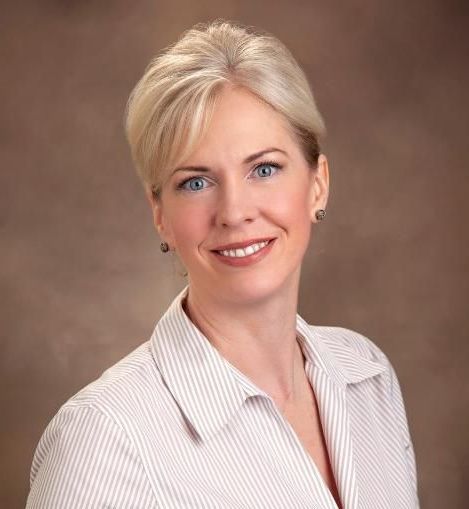
As the Executive Director, I am honored to work alongside our dedicated Board who all share the same vision, business growth and healthy community environment.
If you are not a member of the Greater Bowie Chamber of Commerce, please join us today. Your membership will benefit your business and the community. I look forward to working with everyone.
Be well,
Pauline K. Markward
Executive Director
|
|
News & Notes
Executive Committee
|
|
 |
|
|
|
Message from the President
As the elected President of The Greater Bowie Chamber of Commerce, I want you to know that your businesses are important to the value of our community and that we will make a herculean effort to ensure that they are stabilized and sustainable through the crisis and throughout the recovery period. Bowie is a great city and has the distinction of being the 5th largest municipality in the state of Maryland yet, we are small enough for everyone to become familiar with virtually every business having a physical presence here. One of our primary goals is to connect all the local business owners together within not only our community, but the surrounding area as well.
As I think about our City, our region and our position in the global community I believe that support among families, friends, colleagues, and communities will be instrumental in propelling us through and out of this pandemic. what matters most is that we have a shared vision for our future beyond the pandemic. Right now it’s unsettling, irritating, and unknown as to when this will all end, but it will end and we will prevail.
The Greater Bowie Chamber of Commerce has been the leading voice of the business community since 1983 and through our advocacy we have gained the recognition and respect of our members. Going forward we intend redouble our efforts to provide even greater resources to help ensure that Bowie remains an attractive and welcoming place to grow your business.
I look forward to meeting and working with each business owner in the Greater Bowie Area and explore ways to help you grow your businesses and see how your Chamber be a part of that growth. Your Greater Bowie Chamber of Commerce is OPEN for your business and ready to serve you!
|
|
|
|
News & Notes
Membership Development
|
|
Join a Chamber Committee Today!
Business & Economic Development
Promotes business development for chamber members through seminars and best practices. Works on attracting businesses to Greater Bowie.
Membership Development
Works on expanding the Chamber membership base as well as retaining existing members.
Corporate & Community Relations
Provides opportunities to give back to the community, both in volunteer time and financial and in-kind contributions.
Legislative
Advocates on behalf of the Chamber before the City Council, County Council and General Assembly. Informs the Board and membership of pending issues before those bodies of interest to Greater Bowie businesses.
Women In Business
To offer useful information and networking opportunities focused on helping women to successfully meet the challenges they face in today's business world and learn how to find and maintain balance within. Sponsor events to raise funds for the Women in Business scholarship fund.
Healthcare Committee
Promotes Chamber Healthcare related businesses to the community, healthcare related networking events, bringing healthcare providers together and holds community Health Fair.
|
|
Membership is just a CLICK away! |
|
News & Notes
Healthcare Committee
|
|
Did the pandemic change employee decisions about calling in sick?
Research shows working sick and slacking off have both been part of the pandemic employment story,
which is still evolving
The federal government and some employers have tried to cope with the pandemic’s fallout by expanding employee access to needed sick leave. But whether these efforts made a difference — especially for those working from home — is still a bit of a mystery.
Employees have juggled their work responsibilities and illness in very different ways during the past 20 months than they did before the pandemic arrived, experts say. For those working from home, the calculus behind taking sick time may have changed a lot.
Researchers will be reflecting on two important, but very different questions about sick leave and COVID-19 in the months and years ahead:
- If you got sick while working from home, was there a tendency to keep working?
- And what happened to those who didn’t know about or have access to paid sick leave benefits during the pandemic?
When illness hits home
Axios recently explored what’s probably a fairly common scenario for remote workers: continuing to work even while sick.
“Before the pandemic, if you woke up with a runny nose or a tickle in your throat, it was a simple enough decision to stay home and avoid infecting your co-workers. Now, as more Americans work from home, sick days are disappearing,” the article noted.
Sick days aren’t literally disappearing, of course, but workers may be finding it harder to justify taking time off to be ill, if only to themselves. Axios reported that such behavior “leads to an epidemic of ‘presenteeism’ — showing up for work when you’re not feeling up to it and not doing your best job.”
There’s a serious downside to presenteeism, according to the American Productivity Audit, which said it costs the United States $226 billion in lost productivity annually. Working while you’re sick can hamper recovery and return to full productivity. The audit says presenteeism adds to the nation’s existing job-burnout problem.
A national survey by OnePoll for Cold Calm found that two-thirds of employees working remotely during COVID-19 were reluctant to take sick days because they worried about what their bosses would think of them. And three-fourths said working from home raised the bar on how sick they felt they had to be in order to claim a sick day.
Overall, 7 in 10 of the remote workers surveyed said they’ve worked while feeling ill since they started working from home.
The poll highlighted another potential problem for employers: Some remote workers admitted they didn’t actually work when they didn’t feel well; they just hoped no one would notice they didn’t get things done. That was mostly people who didn’t have paid sick days and felt lousy. Of those who did work while sick, more than half said their performance “decreased considerably.”
But 57% also said they felt the fact they worked remotely while ill “enhanced their credibility with co-workers,” according to a report on the survey that was published on Studyfinds.org.
The Society for Human Resource Management said that remote work is likely not going to shrink back to where it was because COVID-19 proved some jobs can be done remotely. So the group says it behooves employers to provide paid time off and insist ill workers take it.
Fading paid-leave benefits
While health-related benefits seemed to grow in the pandemic, they didn’t cover everyone. And not everyone who was covered knew about the benefit.
Congress provided funding for emergency paid sick leave for COVID-19 in March 2020 in the Families First Coronavirus Response Act and later extended it through September 2021.
A Cornell University-led study published in Proceedings of the National Academy of Sciences found most people didn’t know that extended health benefits might be available if they were sick with COVID-19. The study also said the number of people who got sick but could not afford to take time off or were not allowed to tripled during in the pandemic.
“When the government does not ensure that people have access to paid sick leave, people go to work sick,” study author Nicolas Ziebarth, associate professor of public policy at Cornell, said in a news release about the study. “And when you have a virus going on — it could be the flu or coronavirus, it doesn’t really matter — then the sick people at work infect co-workers who go on to infect other people.”
The Cornell study said the act was used by about 8 million workers in the first eight months. But part-time and foreign-born workers were especially unlikely to know about the pandemic-specific benefits. And the study called out hospitality and service workers — often on the front line in low-paying jobs — as less likely to know.
Men were more apt to use the benefit than women, who are “overrepresented in the hospitality and service industries,” said Ziebarth, who is also the associate director of the Cornell Institute for Healthy Futures. He said that “women tend to have a higher burden of work. They are still more likely to be the primary caregiver for children and have to balance paid work, chores and child care.”
The American Rescue Plan Act passed by Congress in March 2020 also created an emergency paid leave fund to make sure federal employees could take time off for health reasons related to the pandemic. Eligible federal employees had until Sept. 30 to request emergency paid leave — and a lot of them did, according to the Federal News Network, which based its data on the Office of Personnel Management’s ARPA Emergency Paid Leave dashboard. The network reported agencies used nearly 60% of the fund, but claims were still coming in.
As of the report, dated Oct. 25, federal employees had claimed just over 12.3 million hours, with some agencies using just one or two days total of the sick time. The U.S. Postal Service was the heaviest user, with nearly 10 million hours.
The Society for Human Resource Management article quoted Richard W. Warren, principal attorney at Miller Canfield and deputy leader of the firm’s employment and labor group, who said that with federal mandates expired, “nearly all employers have settled back into providing only paid time off provided under their vacation policies or other state law and have not decided to extend any additional voluntary paid leave to their employees.” But he noted “a slow but consistent progression of more states requiring paid sick leave, and we expect that trend to continue.”
And the story of sick leave and the pandemic continue to unfold. As the Dallas Morning News reported a week ago, the Biden administration’s much-disputed requirement that large employers require workers to be vaccinated or tested regularly for COVID-19 carries a provision that workers be allowed paid time to get the vaccine and to deal with the vaccine’s effects.
But there’s still a lot of back-and-forth in the courts on whether that executive order will actually take effect. Meanwhile, many employers have already adopted the mandate independently. And how sick leave related to the virus or vaccination or testing is implemented will likely continue to evolve.
|
|
The flu is a contagious respiratory illness caused by influenza viruses that infect the nose, throat, and sometimes the lungs. It can cause mild to severe illness, and at times can lead to death. Health officials tell us flu shots will be especially important as we move into flu season while still in the midst of the global pandemic. Flu shots are now available for County residents through the County Health Department’s upcoming free flu shot clinics. Adults with insurance are encouraged to get vaccinated by their primary care provider or at a local pharmacy. For more information and to make an appointment for the County’s free flu shot clinics, visit http://health.mypgc.us/flu
|
|
COVID-19 is a disease caused by a virus called SARS-CoV-2. Most people with COVID-19 have mild symptoms, but some people can become severely ill. Although most people with COVID-19 get better within weeks of illness, some people experience post-COVID conditions. Post-COVID conditions are a wide range of new, returning, or ongoing health problems people can experience more than four weeks after first being infected with the virus that causes COVID-19. Older people and those who have certain underlying medical conditions are more likely to get severely ill from COVID-19. Vaccines against COVID-19 are safe and effective.
|
|
|
Your health matters to the Greater Bowie Chamber of Commerce.
Over the next few weeks we will be practicing social distancing by limiting or reducing unessential meetings.
|
|
News & Notes
Women In Business Committee
|
|
I Make Much More Than My Husband
Here's How We Manage
L.W. Northmore | October 28, 2021
During a typical year, I earn 55 percent more than my husband.
Here are five conversations we have to make things work.
I am a woman who makes more than my husband and our situation is growing less unique by the day. The percentage of women breadwinners has been rising steadily over the past 30 years — it’s now 28 percent of all married-couple families, according to the most recent Bureau of Labor Statistics data. And as women continue to earn more higher-education degrees than men, it’s likely this trend isn’t going away.
But it’s one thing to talk about changing social norms when you’re dealing with statistics and another thing to handle them in a real relationship.
Because of the disparity in what my husband and I earn, I’m frequently faced with adjusting my goals or finding a way to negotiate our feelings. In my experience, communicating our needs early and often is a great way to minimize frustration, hurt feelings and hurt pride.
Here are five conversations we have that keep things running smoothly.
Your Talking Points
- Short-Term Goals
- Long-Term Goals
- Student Loans
- Everyday Expenses
- Personal Spending
SHORT-TERM GOALS
We all have things we look forward to, and sometimes the anticipation that comes with saving for something we want brings us as much happiness as the goal itself.
I’m willing to save all year long if it means I’ll be able to take an amazing trip. This is a challenge because my husband enjoys traveling, but not as much as I do. He’d rather save for something he finds more personally rewarding, and because he earns so much less than I do, he can’t afford to split the cost of traveling 50/50.
Our solution: Since my husband enjoys traveling, we share the cost, just not evenly. Most of the time, that means I pay for the elements of the trip that tend to cost the most and need to be decided in advance, like flights and hotels.
When we’re actually on the trip, we evenly split expenses that are easier to decide on an individual basis, such as whether to splurge on a specific meal or special experience.
Because I shoulder so much of the expense of traveling, I don’t contribute financially to my husband’s short-term goals; they don’t interest me to the same degree that traveling interests him. I do, however, support his personal projects in other, nonfinancial ways: by contributing my time, energy and skills. For example, one of my husband’s past short-term goals was to make a small indie film. I didn’t contribute to the film’s budget, but I did help by editing the script and crowdsourcing the equipment.
What I learned: Talking about our personal short-term goals frequently means we both know about and respect each other’s current projects. We agree that traveling is more my passion than his, so there’s none of the hurt pride that might have come with his not being able to evenly split all the expenses, and no resentment that could have accompanied spending all his disposable income on something that brings me more happiness than him. Instead, he has his own short-term goals to look forward to, and he knows that I am ready to be an active participant in them.
LONG-TERM GOALS
Like many couples, my husband and I both share a desire to own a home. When we discuss the financial challenges we will have to overcome in order to buy a place of our own, our conversations always come down to two main goals: saving for a deposit and paying our future mortgage. Because of our disparate incomes, it’s impossible for us to save up equal amounts for our deposit. However, things are less clear about how even or uneven our incomes might be throughout the 20 or 30 years we’ll be paying our mortgage. Because my husband is still a student (and is fortunate enough to know he will most likely have a job upon graduation), it’s likely that our incomes will become more similar down the line.
Our solution: We’ve decided that I will put aside money for the deposit, while my husband will not. His income is low enough that if he were putting aside money right now, he could not afford to save for any short-term goals (like filmmaking, or adding to his impressive collection of ’70s and ’80s horror movies). Because our short-term goals contribute so much to our happiness as individuals, and because my income is enough to allow for both short-term and long-term savings, I’m happy to be the one to helm this ship.
Part of the reason I’m comfortable with this is because I know that my husband’s income most likely will increase significantly within the next three to four years, so the inequality of our contributions does have a foreseeable expiration date.
But what if his future income doesn’t allow him to split the cost of our mortgage with me 50/50 while simultaneously making student loan payments? We recognize that this is one of the money discussions that we will have to revisit from time to time.
What I learned: When it comes to an expense that lasts 20 or 30 years (or more!), it’s hard to determine exactly what’s going to happen. The fact that my husband is a student means there are still elements of our financial future that are not definite. Even if no decisions are being made today, it’s still valuable for me to check in with my own feelings periodically.
STUDENT LOANS
Through a combination of scholarships, informed decisions and extremely generous parents, I’m fortunate not to have any student loan debt.
My husband is a different story.
He enrolled in a costly private college right after high school and, after two years of less-than-stellar grades, decided that school wasn’t for him. He left college to work for a couple of years. When he felt motivated to continue, he enrolled at a less expensive city college for the remainder of his undergraduate career.
He is now a graduate student. The cost of city and state college is a lot less than a private institution, but it still adds up. Combined with the two years he spent at a private school, he’ll have approximately $300,000 in student loan debt when he graduates.
Our solution: Because he owes so much and feels the reason his debt is so considerable is a result of his own poor choices, he is not open to me contributing to the cost of his loan payments.
If he continues to feel this way and is unable to split our future mortgage payments with me 50/50, I know that the option to put the house in my name is there. But who knows what the future holds; he could one day become comfortable with the idea of his debt becoming “our” debt. Or I may, when the time comes, realize I’m not comfortable paying debt that isn’t mine. This is another one of those conversations we will have to revisit.
What I learned: If we had not made it a point to talk about our long-terms goals, we would not have the understanding that we could (if necessary) put just my name on the deed. Of course, it’s not what we prefer, but it’s good to have something to fall back on.
EVERYDAY EXPENSES
There are a lot of little things we pay for that contribute to our basic cost of living: rent, utilities, groceries and dining out are big ones for us. We also would love to one day adopt a dog, which would mean additional costs (pet food, grooming, vet bills, emergencies).
Our solution: My husband and I split the cost of our rent and utility bills evenly, but because doing so consumes such a big chunk of my husband’s monthly income, there are some tradeoffs. We split groceries 70/30. When we go out to eat we split the bill evenly, but we also limit the number of times we dine out each week to once or twice, and only on weekends. We rely on our groceries to get us through the week, including bringing lunch to work.
Splitting our rent and utilities evenly comes with sacrifices elsewhere in our budget; because of the strain owning a pet would put on my husband’s wallet, we’ve put that on hold for the foreseeable future. If we didn’t split those two big-ticket expenses, that might make owning a dog more affordable. But for us the simplicity and equality is more important for our mutual peace of mind right now.
What I learned: When we first moved in together, my husband and I split the cost of our everyday expenses 50/50. As time has gone on and we’ve become more comfortable talking about money and what we can each afford, we’ve tweaked things.
We started splitting our groceries unevenly about a year ago after we decided to make an effort to buy better quality meats and produce, upgrades that can add up over the month. Also, we’ve learned that it’s OK to break the rules every now and then.
Maybe he decides to buy something for lunch rather than eat whatever we’d packed for ourselves. Or maybe we both had a bad week and need to just go have a nice meal. We figure it out. The cost of treating ourselves once in a while is what makes it easier to stick to our plans in the long run.
PERSONAL SPENDING
Personal spending is the way we use our money to treat ourselves. For me, that means occasionally ordering sushi at work, or splurging on new books and clothes. For my husband, that means rare Blu-rays of vintage horror movies. To each their own!
Though the things we’re buying are small and don’t individually impact our lives much, the freedom to treat ourselves makes a big difference in our overall happiness. But given the disparity in our paychecks, how often (and on what) my husband and I can afford to treat ourselves doesn’t always match up.
Our solution: My husband and I had a conversation about money when we decided to move in together, and again four years later when we got married. Both times, we decided to keep our finances separate; he has his checking account and I have mine. Though we obviously know how much the other earns, having separate checking accounts means that neither of us could monitor each other’s spending, even if we wanted to. And because my treats come out of my pocket and his treats come out of his, we have no reason to care. We both have the freedom to treat ourselves when and how we want, without any reason for the other person to be affected or concerned.
What I learned: I want the power to spend my money how I like and the ability to save a safety net should anything in my life not go as planned. Having the ability to do so is a big deal, and I’m happy with the way that keeping our finances separate has allowed me to do that — without answering to anyone by myself.
https://hermoney.com/connect/marriage/earn-more-money-than-my-husband/?hp=1
|
|
News & Notes
Corporate & Community Relations Committee
|
|
Donations Needed for Shop with a Cop |
|
Shop with a Cop is back! This extraordinary event is an annual, collaborative effort between the Bowie Police Department, the Bowie community, and local businesses providing local families, especially children, with the funds to shop for holiday gifts for themselves and family members. It also gives community members the chance to meet and get to know our incredible officers!
To donate to SHOP WITH A COP, send a cash or check donation by December 10 to:
City of Bowie
15901 Fred Robinson Way
Bowie, MD 20716
Checks made payable to "City of Bowie"
For more information or should you have questions about this annual holiday event, contact the Police Department's Community Services Unit at 240-544-5792 or COPS@cityofbowie.org.
|
|
Former Executive Director, David Emanuel
is a member of the Colonial Ringers!
|
|
|
|
Bowie Chamber has adopted the Peanut Butter Shelf in the Bowie Interfaith Pantry. Each month the Bowie Food Pantry goes through approximately 350 jars of peanut butter.
You can drop off your donation at the Chamber office or directly to the Bowie Food Pantry, located at 2614 Kenhill Drive, Suite 134. (Chamber Office is Suite 117.)
|
|
News & Notes
Business & Economic Development Committee
|
Job creation roars back in October as payrolls rise by 531,000
PUBLISHED FRI, NOV 5 20218:31 AM EDTUPDATED FRI, NOV 5 20212:23 PM EDT
KEY POINTS
- Nonfarm payrolls increased by 531,000 in October, beating the estimate of 450,000.
- The unemployment rate fell to 4.6%, a new pandemic low and better than expectations.
- Wages rose 0.4% for the month and were up 4.9% from a year ago.
- Leisure and hospitality led job creation, followed by professional and business services and manufacturing.
The U.S. job market snapped back in October, with nonfarm payrolls rising more than expected while the unemployment rate fell to 4.6%, the Labor Department reported Friday.
Nonfarm payrolls increased by 531,000 for the month, compared with the Dow Jones estimate of 450,000. The jobless rate had been expected to edge down to 4.7%.
Private payrolls were even stronger, rising 604,000 as a loss of 73,000 government jobs pulled down the headline number. October’s gains represented a sharp pickup from September, which gained 312,000 jobs after the initial Bureau of Labor Statistics estimate of 194,000 saw a substantial upward revision in Friday’s report.
The numbers helped allay concerns that rising inflation, a severe labor shortage and slowing economic growth would tamp down jobs creation.
“This is the kind of recovery we can get when we are not sidelined by a surge in Covid cases,” said Nick Bunker, economic research director at job placement site Indeed. “If this is the sort of job growth we will see in the next several months, we are on a solid path.”
The critical leisure and hospitality sector led the way, adding 164,000 as Americans ventured out to eating and drinking establishments and went on vacations again as Covid numbers fell during the month. For 2021, the sector has reclaimed 2.4 million positions lost during the pandemic.
Other sectors posting solid gains included professional and business services (100,000), manufacturing (60,000), and transportation and warehousing (54,000). Construction added 44,000 positions while health care was up 37,000 and retail added 35,000.
Wages increased 0.4% for the month, in line with estimates, but rose 4.9% on a year-over-year basis, reflecting the inflationary pressures that have intensified through the year. The average work week edged lower by one-tenth of an hour to 34.7 hours.
The unemployment rate drop came with the labor force participation rate holding steady at 61.6%, still 1.7 percentage points below its February 2020 level before the pandemic declaration. That represents just shy of 3 million fewer Americans considered part of the workforce and is reflective of ongoing concerns about staffing levels.
“While the strength of employment was an encouraging sign that labor demand remains strong, labor supply remains very weak. The labor force rose by a muted 104,000, which is not even enough to even keep pace with population growth,” said Michael Pearce, senior U.S. economist at Capital Economics.
However, one metric that the Federal Reserve watches closely, the participation rate among so-called prime age workers 25 to 54, ticked higher to 81.7%.
Treasury Secretary Janet Yellen weighed in on the report with a Twitter thread Friday afternoon in which she said the administration’s aggressive fiscal policies that have pumped in more than $5 trillion to the economy helped stave off more dire consequences from the pandemic.
“Bold fiscal policy works,” Yellen wrote. “A rebound like this was never a foregone conclusion. When our administration took office back in January, there was a real risk that our economy was going to slip into a prolonged recession. Now our recovery is outpacing other wealthy nations’.”
Even with the rebound, the Bureau of Labor Statistics’ survey of households in October showed job holders rising by 359,000, leaving the employment level about 4.7 million below its pre-pandemic level.
A separate measure of unemployment that incudes discouraged workers and those holding part-time jobs for economic reasons fell to 8.3% from 8.5%. That rate was 7% before the pandemic.
The report comes amid heightened concerns about the state of the labor market, particularly a chronic shortage that has left companies unable to fill positions to scale back production and cut hours of operation.
Companies have been increasing wages and adding other incentives as the working share of the potential labor force operates well below its pre-pandemic level.
Since adding more than a million jobs in July, the labor market had slowed sharply through the rest of the summer, with sizeable letdowns in August and September as economists greatly overestimated growth in both months.
However, revisions showed that the numbers for those months weren’t quite as dismal. Along with the boost from September’s initial count, August’s final reading came up another 117,000 to 483,000.
Concerns linger, though, that the U.S. economy is slowing. Gross domestic product increased just 2% in the summer months, falling short of even the reduced expectations for gains during the pandemic-era recovery.
Recent data, though, has shown a progressive drop in weekly jobless claims, the result in good part from enhanced unemployment benefits expiring. Data on Thursday showed productivity is running at a 40-year low and the trade deficit notched another record high, passing $80 billion for the first time.
Earlier this week, the Fed said job growth is strengthening enough for the central bank to begin cutting its monthly bond purchases, a cornerstone of its efforts to boost the economy during the pandemic. However, Chairman Jerome Powell stressed that the picture must continue to improve before the Fed starts raising interest rates.
|
Workers are resisting being called back to the office
— and some employers are scrapping their plans
At first, when Kayak launched its new hybrid work policy in July, Vanessa Kafka was surprised how happy she was to be in the office.
After more than a year working in her bedroom, she looked forward to listening to podcasts on her drive from Melrose to Cambridge and experiencing the “magic” of collaborating in person. “The first week I showed up in July was awesome,” she said.
But the novelty soon wore off. She got stuck in traffic with aggressive drivers and missed being home when her kids got out of school. And going to the office three days a week, as the initiative called for, felt unnecessary. Some days, she was one of the only people on her floor and ended up Zooming with colleagues at home.
“It just started to feel like, I’m going in because I have to, not because it makes sense,” said Kafka, senior vice president of product at the travel search engine company, who had always had mixed feelings about the mandate. “Like I was meeting my quota."
Other employees also questioned why they were being required to go back in when they’d been so productive at home. Some of her co-workers quit.
As COVID cases surged over the summer, in-office days quickly became voluntary — and stayed that way. And in October, Kayak and sister company Open Table announced a revamped “work from almost anywhere” policy (anywhere except countries where the organization doesn’t have an office, for tax and legal reasons).
As employers start calling people back to the office, some are finding it difficult to put the genie back in the bottle. Having tasted the freedom of working remotely during the pandemic, and proving they could be effective, employees are resisting directives to return to their desks.
Earlier this month, more than 300 employees at Hearst Magazines signed a petition objecting to the publisher’s plan to bring workers back to the office — in Manhattan, for many — gradually building up to three times a week. Their union even filed a complaint with the National Labor Relations Board.
At Apple, where employees are expected to return to the office three days a week in January at the earliest, workers wrote a “plea” to leaders in June saying their wishes to keep working remotely have at times felt “actively ignored.” A second letter, in July, cited an internal survey in which 68 percent of respondents said Apple’s “lack of location flexibility” could drive them to quit.
“The backlash is real,” said Tsedal Neeley, a Harvard Business School professor who has studied remote work for decades. “Employees are not only requesting that there is an adjustment to the return-to-the-office policy, but they’re also resigning.”
Remote work is still the exception to the rule: Only 11 percent of employed people nationally teleworked at some point during October because of COVID (not counting those who worked remotely before), according to the Bureau of Labor Statistics. But polls consistently show that 80 to 90 percent of workers who are able to work remotely want to continue to do so in some fashion. Employees have proven it works, Neeley said, and during the “fiercest labor market of our lifetimes,” with people quitting their jobs at a record pace and positions going unfilled, employers would be wise to listen.
“The nature of work has changed. Workers have changed,” she said. “This is the greatest work revolution that we will see in our generation.”
With workers holding so many of the cards, some employers are backpedaling on their in-office mandates.
In late June, ride-hailing giant Uber dialed back its plan for corporate employees to return to the office three days a week, instead announcing that people needed to come to the office 50 percent of the time starting in January, in whatever configuration they prefer, such as five days one week and none the next. Amazon reversed course in October, telling office workers that instead of coming back three days a week in January, they could continue working from home indefinitely. The job networking site LinkedIn recalibrated its return-to-the-office plan over the summer and is allowing workers to remain fully remote.
At Kayak and Open Table, which have 2,000 employees and 22 offices around the world, historically high churn rates began to drop after the in-office requirement was rolled back.
“We’re trying to figure out what the new normal looks like,” said chief executive Steve Hafner, who runs both companies. “I’ve been wrong in many things over the course of my career.”
Being open to trial and error is key in this new era of work, said Neeley, the Harvard Business School professor, as is surveying employees to understand what they want. One company she’s talked to was planning to bring everyone back full time until it found that 97 percent of its workers wanted a hybrid model, and then decided to allow remote work.
Employers should have good reasons for when and how often they require people to come in, Neeley said. And the same policies should apply across the board; if a manager who hates remote work requires her department to come in all the time, and a manager who loves it doesn’t, inequities will ensue.
Two days a week is working for the accounting firm Baker Newman Noyes. But that’s two fewer days than it was planning on. The company, which has five offices around New England, decided to “dip our toe in the water” in June and work up to an average of four days a week in the office by Labor Day, said managing principal Dayton Benway. But the Delta variant intervened, as did a growing realization that a significant number of employees had caregiving responsibilities that had been made more manageable by working from home.
The firm is about to survey employees again, but Benway doubts the firm will ever consistently require four days a week. Ideally, he said, the schedule would be a “roller coaster,” which could mean several days in the office some weeks, and fewer on others. Whatever the plan, the leadership team will figure out how to maximize employees’ time together.
“Those companies who don’t listen to their employees, they’re going to find themselves in a challenging position,” he said.
LogMeIn, the Boston tech company behind GoToMeeting video conferencing software, was one of the first local companies to announce, in July of 2020, that employees could be remote forever if they wanted. Back then, based on employee surveys, the company estimated that 20 percent of its workforce would come back to the office full time. But only a few months later, based on another survey, that was scaled back to 5 percent.
“The longer people are home and enjoying the flexibility, the less likely they are to want to give it up,” said Chris Perrotti, LogMeIn’s vice president of digital workplace, who moved to Vermont during the pandemic.
Jen Mathews, the company’s director of public relations, had originally planned to go in twice a week. But now she’s only in the office a few times a month, reassured by the new remote-centric culture that she’s not missing anything if she stays home.
“I’m doing laundry right now,” she said. “I’ve got a crockpot going. My dog is sitting right next to me.”
Perrotti said he knows people who are considering quitting their jobs if they’re required to go back to the office: “It’s almost like a fear.”
“I joke about how offices may end up being like museums of how people used to work in the past,” he said. “They all went in and they sat at these little desks all next to each other to hammer away at keyboards.”
“It seems a little wacky.”
|
City of Bowie Tree Lighting Ceremony
Sunday, December 5, 2021
Starts at 7:00 pm
Veterans Park
12700 9th Street
Bowie, MD 20720
Join friends and neighbors at the annual Tree Lighting Ceremony. Watch as the mayor lights the tree, marking the beginning of the holiday season in Bowie. There will be caroling, then Santa will make an appearance with the help of the Bowie Volunteer Fire Department. Due to COVID precautions Santa will not greet each child or invite them on his lap. Instead, he will ask children to write him a letter and to put it in his North Pole mailbox. (Materials and mailbox provided at the event.) Santa’s elves will also share treats that are reported to be coming from the North Pole.
* * *
In-Person Networking Opportunity
Bowie Chamber 5:35!
Comfort Inn & Conference Center - Bowie
2nd Wednesday of the Month (December 8, 2021)
Starts at 5:35 p.m.
**CASH BAR**
No registration required.
* * *
Holiday Party
You are cordially invited to our 38th annual
holiday appreciation celebration!
Woodmore Country Club
12320 Pleasant Prospect
Mitchellville, MD 20721
Tuesday, December 14, 2021
6:00 pm - 8:00 pm
Limited Tickets Available
Early Bird Special
$25/Two Event Tickets
Ends December 7th!
Regular Event Price
$25/Member & Non-Member
Buffet Dinner/Cash Bar
Meet new people and have the opportunity to catch up with friends, in a fun, casual environment!
|
For additional information call 301-262-0920 or email info@BowieChamber.org
72-Hour notice is required on cancellations
|
Bowie Business Journal
In conjunction with the GBCC, Bowie Business Journal (BBJ) is a cable television program designed to help Bowie business owners start and grow their business. The 30-minute show features GBCC members. If you would like to be a guest and showcase your business please email info@BowieChamber.org
|
|
News & Notes
Legislative Committee
|
|
Legislative Update
Bills Introduced: November 22-26, 2021
Appropriations- The House is scheduled to consider a continuing resolution (CR), as-yet-unnumbered, to fund the government and avoid a government shutdown. The current CR expires on December 3.
Health- On Tuesday, the House is scheduled to vote on H.R. 951, the Maternal Vaccination Act.
The House also is scheduled to consider H.R. 1550, the Promoting Resources to Expand Vaccination, Education and New Treatments for HPV Cancers, or PREVENT HPV Cancers, Act.
Military- The Senate is scheduled to continue consideration of H.R. 4350, the FY2022 National Defense Authorization Act. The legislation contains provisions to address Selective Service registration for women and military sexual assault.
Women’s History- On Wednesday, the House is scheduled to vote on H.R. 3531, the Women Who Worked on the Home Front World War II Memorial Act.
|
|
|
|
Kudos!
If your business has reached a milestone or received an award, please email the Chamber at info@bowiechamber.org. We look forward to giving kudos in Tradeline!
|
|
Corporate Partnership Program
The Chamber Corporate Partnership Program is an affordable and effective way to plan your marketing strategy during your annual budget preparation. Each year the Chamber offers its membership an opportunity to participate in the Chamber Corporate Partnership Program which allows our members to receive maximum recognition and to maximize the return on their investment by choosing from one of five Chamber Corporate Partnership Program sponsor levels. Three great events which are very popular with our Corporate Partners are the Annual Meeting, the Annual Golf Tournament and BowieFest. We also have many other major events from which to choose, including the State of the City and the State of Prince George's County. Contact the Bowie Chamber to secure your sponsorship today!
Thanks to our Corporate Partners
Corporate Partners
Presenting
Kaiser Permanente
Platinum
BGE an Exelon Company
Bowie Baysox
Gold
Todd Turner, Chair, County Councilman- District 4
Silver
O'Malley, Miles, Nylen & Gilmore, P.A.
St. John Properties
Total Tax Service
Visiting Angels Homecare Agency
Widmann Financial Services
NAI Michael
|
|
2021 - 2022 Board of Directors
|
|
Terry Rogers
President
NAI Michael
Chair, Nominating Committee
|
|
Michael Oleru
Vice President
BGE
Chair, Business & Economic Development Committee
|
|
Christopher Rizzi
Secretary
Bohler
|
|
Vikki Kalitsi
Treasurer
Visiting Angels
Chair, Budget Committee
|
|
Stephanie P. Anderson
Past President
O'Malley, Miles, Nylen & Gilmore, P.A.
|
|
|
Tom Zizos
Beall Funeral Home
|
|
R. Anthony Pasciuto
Byrd & Byrd, LLC
|
|
Reginald Forbes
Forbes Financial
Chair, Golf Tournament
|
|
Eddie Pounds
Holy Trinity Episcopal Day School
|
|
Tonga Y. Turner
Kaiser Permanente
Chair, Healthcare Committee
|
|
Tony Perez
LA Perez Consulting
Chair, Legislative Committee
|
|
Muriel Evans-Buck
Luminis Health
Co-Chair, Golf Tournament
|
|
|
Craig Muckle
Marketing Consultant
Co-Chair, Golf Tournament
|
|
Catherine Newman
Melvin J. Berman
|
|
Wanda Rogers
Realty Transaction Services Inc.
Chair, Women in Business Committee
|
|
Andrew M. Roud
St. John Properties
|
|
Michael Byrd
Sydian Systems, LLC
Chair, Membership Committee
|
|
Diane M. Polangin
Total Tax Service
|
|
Pauline K. Markward
Executive Director
|
|
Greater Bowie Chamber of Commerce can't thank our members enough for all they do... and of course, we would love to see even more NEW members, so everyone, please try to make it part of your mission to bring in at least one new member!
For more information, contact our Membership Committee membership@BowieChamber.org.
|
|
|
|
|
|
|