ConTex Conversations

July 2025

 
To celebrate the achievements of our doctoral fellows, we periodically feature conversations with various members of the ConTex family. They talk to us about their research, goals, and enthusiasm for binational research.


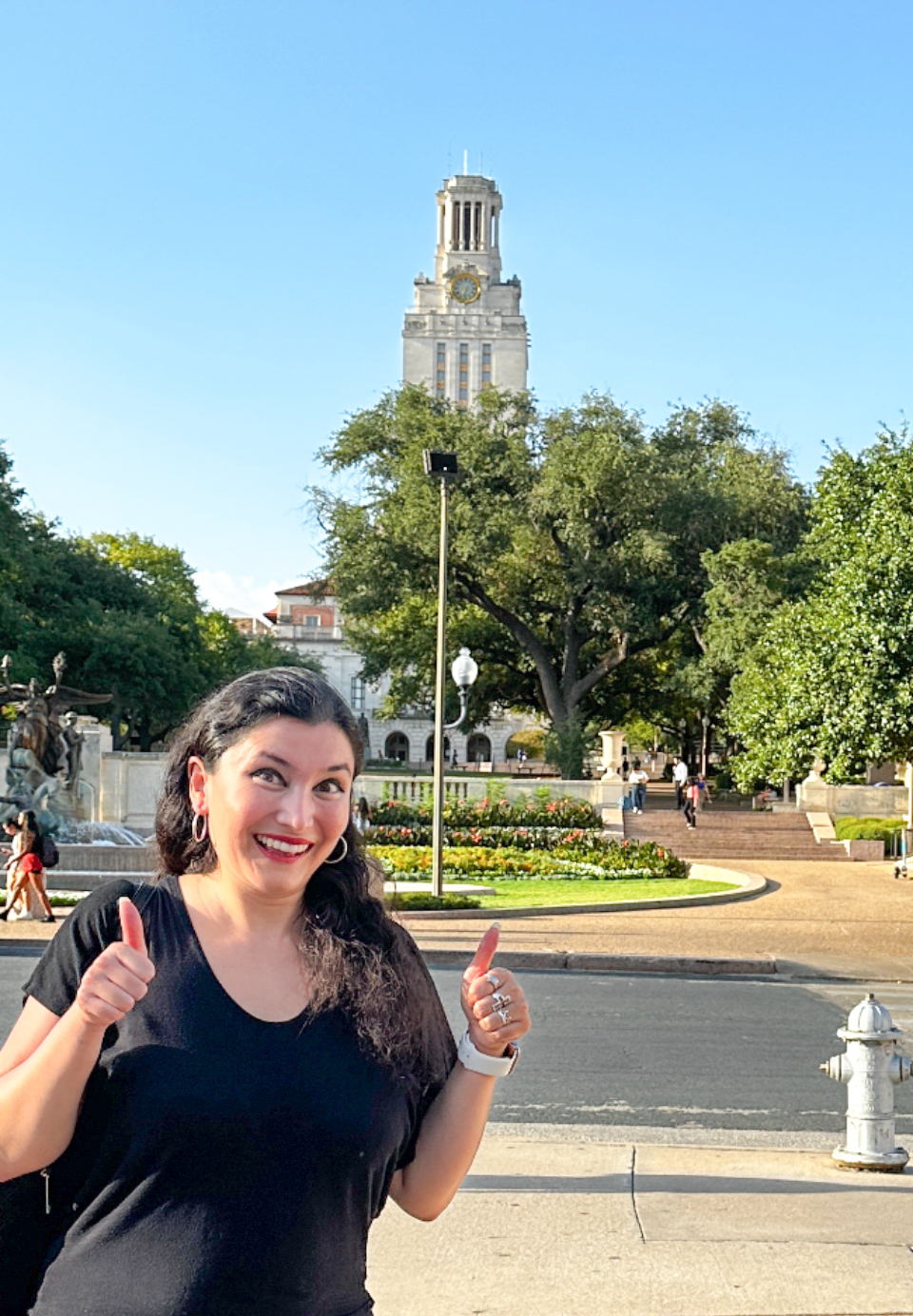
Paulina Ivonne Chapa Blanco 

Hometown:

Chihuahua, Chihuahua 


Degree Program:

Ph.D. in Bilingual and Bicultural Education


Institution:

The University of Texas at Austin


Advisor:

Dr. Sylvia Celedón-Pattichis 


Tell us about your research project and why it is important to you?  


My research focuses on the Willingness To Communicate (WTC) of bilingual pre-service teachers. This research is important to me because, after 16 years of experience as a foreign languages and bilingual teacher in different countries, I have realized that both students and teachers need to have greater confidence to communicate in languages they learned or are developing.


I have often observed that, even though a person takes language classes and has the places and resources to practice and develop their skills, for various reasons they tend not to want to communicate in the language. In my research, I explore precisely those reasons: what makes a person willing or unwilling to communicate in a language they are learning or developing, whether it is a heritage language, a native language, or a second language.


I believe that bilingual teachers need to be willing to communicate in the language they are developing, not only to use it with assurance, but also to motivate their students to use it more naturally and confidently. The purpose of my research is to promote the use of the language being learned or developed (heritage language, native language, or second language) within the educational setting and to contribute to improving the training of bilingual teachers from an emotional, social, and pedagogical perspective.


Have you presented or published your research anywhere? Tell us about the experience.  


I have presented work from a project in which I participated as a Graduate Research Assistant (GRA). Although this work was not on the subject of my dissertation research, but on mathematics and computer sciences within education, it was very interesting to be part of the research and give the presentation. I am very grateful to my advisor and her entire team for allowing me to be part of this research and present at the National Science Foundation (NSF) Advisory Board Meeting. I learned about different research methods, which was very helpful for my own research process. 


In addition, I published a book review on Becoming Bilingual Readers by B. Kabuto in the International Journal of Bilingual Education and Bilingualism. This publication was the result of work I did in one of my classes. It was very interesting to be able to publish a review of this book. It is great that some of the assignments we do in class can culminate in a publication. I am grateful to my professors for all the feedback and help they have given me to develop and strengthen my work and publications.


I will soon be presenting two projects at the Scholarly Consortium of Innovative Psychology in Education (SCIPIE) in Oklahoma about my research on Pre-Service Bilingual Teachers’ Willingness to Communicate. The application process has been a very exciting experience, and I am delighted to be able to contribute to the continued appreciation and expansion of the importance of bilingual education in different academic spaces. I firmly believe that giving visibility to this type of research not only strengthens the training of future teachers, but also opens more doors to bilingual education and the promotion of world languages, such as Spanish, in the United States.


What would you say is something interesting about your area of study that most people don't know? 


An interesting aspect of my field of study is that when a person begins to forget a language, it is not always simply because they have not practiced it. Often, the root of the problem is that the person has not been willing to use it. WTC does not depend solely on linguistic knowledge, but on several factors that often go unnoticed. Social, cognitive, and emotional aspects, such as insecurity, anxiety, fear of judgment, or even the lack of an environment that supports the use of the language, can directly affect that willingness. In other words, even if someone knows the language, they may not feel capable or motivated to use it, and this greatly influences its development and maintenance. I think this is key, especially in the case of bilingual teachers, who need to feel confident when communicating in order to convey that same confidence to their students.


Tell us about your academic or professional collaborations with Mexico.  


I have had the opportunity to teach in various educational contexts in Mexico, which has been a significant part of my training as an educator. I have worked as an English, Spanish, and bilingual teacher in public and private schools, universities, technological institutes, and language academies. As part of my applied research, I also developed a psychomotor program for social and emotional development. Similarly, I was the founder and director of the first Gavel Club for public speaking in Chihuahua for children and adolescents aged 10 to 18.


Throughout 16 years as a teacher, I have had the opportunity to directly support three areas that I am passionate about: teaching of second languages, bilingual education, and educational psychology. My academic training in these three areas has helped me to develp a more comprehensive view of education, and understand that teaching a language not only involves linguistic knowledge, but also addressing the emotional, cognitive, and social context of the student. Thanks to this training, I have been able to design individualized and effective strategies to support students with different backgrounds, as well as to guide other teachers in their educational work. 


What attracted you to Texas and The University of Texas at Austin?  


Texas is one of my favorite states in the United States, not only because of its history and diversity, but also because it clearly represents what it means to live in a bilingual and bicultural context. That is part of why I was motivated to pursue a Doctorate in Education focused on bilingualism and biculturalism, a subject I am deeply passionate about because it integrates education, language, and culture. When I discovered that UT Austin offered a specialized PhD in this area, and being one of the most renowned universities in the country, I didn't hesitate for a minute. Its academic focus, prestige, and commitment to linguistic and cultural diversity made applying to this program something that not only excited me, but also confirmed that it was the ideal place to continue my professional and personal development.


What have been some good things you didn't expect from Texas or UT Austin? 


I knew UT Austin was one of the best universities in the United States, but honestly, I didn't imagine it would exceed my expectations so much. UT Austin offers many opportunities for professional development, and its academic programs are very comprehensive. Plus, it's a huge and beautiful university! I love that both the campus and the city center feel like one big student community, with students everywhere! That has made me feel more secure and supported, seeing that there are so many of us with the same goals. I like that in Austin I get a lot of practice of English as my second language because, although there is a considerable number of Latinos, being a multicultural city, English is usually spoken more! On the other hand, having so many means of transportation, which is not easy to find in other states, has made my life much easier. I haven't needed a car!


I was also very excited that UT Austin offered me job opportunities as a Teaching Assistant (TA), Graduate Research Assistant (GRA), and Assistant Instructor (AI) in different academic departments, not just my own. All of this has helped me strengthen my resume, and I owe it to the great support I have received from both my professors and the rest of the academic team. UT Austin is not only educating me academically, but also opening professional doors that I never imagined.


What have been the biggest challenges of studying at UT Austin and living in the United States?  


One of the biggest challenges I have faced while studying at UT Austin and living in the United States has been communication, especially cross-cultural communication. I have learned that something that may sound natural, harmless, or even friendly in my country can be interpreted very differently in another cultural context. This has led me to be more conscious and careful with what I say, both in everyday conversations and in academic settings.


Furthermore, at this level of education, as doctoral students, it is no longer just a matter of being careful with what we write academically, because it will be published as research, but also with what we say. How we use our words on a daily basis is very important, because many people may trust us as future academics or leaders in education. That is why it is essential to avoid generalizations, express ourselves with respect and sensitivity, be careful with our vocabulary, and clarify the meaning of the terms we use. This experience has helped me develop greater intercultural awareness and to grow, both personally and profesionally, to function effectively in diverse multilingual and multicultural environments.     


How has the support of ConTex and Secihti impacted you?  


The support from ConTex and Secihti has been essential for me, and I am extremely grateful to both. Their support has allowed me to cover my expenses during my doctoral studies. When you decide to study in another country, it requires a significant investment of time, effort, and financial resources. Many students, like me, are willing to invest the time and effort required, but what often ends up being the biggest obstacle is the financial aspect.


Studying abroad requires covering not only tuition, but also rent, transportation, food, school supplies, and many other basic expenses. With the support of ConTex and Secihti, I have been able to pay part of those essential expenses and continue to focus on my studies and research. In addition, an important element of doctoral training is attending academic conferences and publishing in scientific journals, which also involves transportation, lodging, registration, and publication costs. This type of support makes a big difference, not only because it allows you to continue studying and living abroad, but also because it enables you to grow professionally and actively participate in the academic community.


Similarly, knowing that both my country, Mexico, and one of my favorite states in the United States, Texas, are placing their trust in me and supporting me so that I can contribute academically and professionally in the future motivates me to give my best, perform with excellence, and repay that support with commitment, dedication, and results.


What kind of work do you hope to do in the future, and how do you hope your research will benefit people in the U.S. and Mexico? 


In the future, my main goal is to work as a university professor and researcher, focusing on topics related to education, especially in the areas that are part of my training: teaching of second languages, bilingual education, and educational psychology. I am passionate about training future teachers and researchers, while continuing to develop educational programs that have a real impact in the classroom. 


I hope that my research on Willingness to Communicate can be of benefit in both the United States and Mexico by providing tools that help to better understand why some people, even though they know a language, do not feel confident using it. This knowledge can be useful in creating more respectful and effective educational environments, where students and teachers feel confident to communicate and grow academically.


I believe that both Mexico and the United States need to continue strengthening bilingual education from a more comprehensive perspective, taking into account not only academic issues, but also emotional, linguistic, and cultural ones. I hope that my work can contribute to this goal by supporting students, teachers, and educational programs in both countries.     


What advice would you give to other Mexican students considering studying in Texas?  


Texas is one of the states where Mexican students can feel most at home, as it is a bilingual and bicultural state with a big Latino presence. In many cities, both Spanish and English are spoken, and there are even places where the population communicates equally in both languages. In others, such as Austin, English predominates, but even so, you can feel the cultural richness and support for those of us who come from bilingual or bicultural backgrounds. It all depends on your goals and the type of experience you are looking for.


An important advantage of Texas is that, compared to other states in the US, it is not as expensive. But what I love most is that Mexican students are given valuable opportunities, and it often feels as if Texas and Mexico were truly united. I am deeply grateful to ConTex and Secihti for believing in me and supporting my education.


If you are reading this and considering studying here, I encourage you to give it a try. Although studying abroad may sound like a daunting challenge, it can also be one of the most transformative experiences of your life. Never give up, and never forget God along the way. 


Conversaciones ConTex

Julio de 2025

 
Para celebrar los logros de nuestros becarios de doctorado, periódicamente publicamos conversaciones con diferentes miembros de la familia ConTex. Ellos nos hablan de sus proyectos de investigación, de sus metas y de su entusiasmo por la investigación binacional.
 

Paulina Ivonne Chapa Blanco

Lugar de Nacimiento: Chihuahua, Chihuahua


Programa de Estudios: Doctorado en Educación bilingüe y bicultural 


Institución:

La Universidad de Texas en Austin


Asesor:

Dra. Sylvia Celedón-Pattichis 


Cuéntanos acerca de tu proyecto de investigación y por qué es importante para ti.


Mi investigación se enfoca en la Disposición de Comunicarse, conocida en inglés como Willingness To Communicate (WTC), de maestros bilingües en preparación (bilingual pre-service teachers). Esta investigación es importante para mí porque, después de 16 años de experiencia como maestra de segundas lenguas y maestra bilingüe en diferentes países, me he dado cuenta de que se necesita que tanto estudiantes como maestros tengan mayor confianza para comunicarse en el idioma que aprendieron o que están desarrollando.


Muchas veces he observado que, aunque una persona tome clases de un idioma y cuente con lugares y recursos para practicarlo y seguirlo desarrollando, por diferentes razones tiende a no querer usarlo para comunicarse. En mi investigación exploro precisamente esas razones: qué hace que una persona tenga o no tenga Disposición de Comunicarse (WTC) en el idioma que está aprendiendo o desarrollando, ya sea un idioma hereditario, una lengua materna o un segundo idioma.


Considero que los maestros bilingües necesitan tener Disposición de Comunicarse en el idioma que están desarrollando, no solo para usarlo con confianza, sino también para motivar a sus alumnos a utilizarlo de forma más natural y segura. El propósito de mi investigación es promover el uso del idioma que se está aprendiendo o desarrollando (idioma hereditario, lengua materna o segundo idioma) dentro del ámbito educativo y contribuir a mejorar la formación de maestros bilingües desde una perspectiva emocional, social y pedagógica.


¿Has presentado o publicado tu investigación en algún lugar? Cuéntanos sobre la experiencia.  


He presentado trabajo basado en un proyecto en el que participé como Graduate Research Assistant (GRA). Aunque este trabajo no era el tema de mi tesis de doctorado, sino de matemáticas y ciencias de computación dentro de la educación, fue muy interesante ser parte de la investigación y hacer la presentación. Estoy muy agradecida con mi asesora y todo su equipo por haberme permitido ser parte de esta investigación y presentar en la National Science Foundation (NSF) Advisory Board Meeting. Aprendí acerca de diferentes métodos de investigación y me sirvió mucho para el proceso de mi propia investigación.


Por otra parte, publiqué una evaluación (book review) del libro Becoming bilingual readers, de B. Kabuto, en la revista International Journal of Bilingual Education and Bilingualism. Esta publicación fue resultado de un trabajo que hice en una de mis clases. Fue muy interesante poder publicar una evaluación de este libro. Es muy bueno que algunas tareas que hacemos en clase puedan culminar en una publicación. Agradezco a mis profesores por toda la retroalimentación y ayuda que me han dado para desarrollar y fortalecer mis trabajos y publicaciones.


Próximamente presentaré dos proyectos en la Scholarly Consortium of Innovative Psychology in Education (SCIPIE) en Oklahoma acerca de mi investigación sobre la Disposición de Comunicarse de Futuros Maestros Bilingües (Pre-Service Bilingual Teachers’ Willingness to Communicate). Desde el proceso de hacer solicitud, ha sido una experiencia muy emocionante, y me da mucho gusto poder contribuir a que se siga valorando y expandiendo la importancia de la educación bilingüe en diferentes espacios académicos. Creo firmemente que dar visibilidad a este tipo de investigaciones no solo fortalece la formación de futuros docentes, sino también abre más puertas a la educación bilingüe y a la promoción en Estados Unidos de idiomas mundiales (World Languages), como el español.


¿Qué dirías que es algo interesante sobre tu área de estudio que la mayoría de la gente no sabe?  


Algo interesante de mi área de estudio es que cuando una persona comienza a olvidar un idioma no siempre es simplemente porque no lo ha practicado. Muchas veces, la raíz del problema está en que la persona no ha tenido la disposición de usarlo. La Disposición de Comunicarse (WTC) no depende únicamente del conocimiento lingüístico, sino de varios factores que muchas veces pasan desapercibidos. Aspectos sociales, cognitivos y emocionales, como la inseguridad, la ansiedad, el miedo al juicio, o incluso la falta de un entorno que apoye el uso del idioma, pueden afectar directamente esa disposición. Es decir, aunque alguien sepa el idioma, puede que no se sienta capaz o motivado para usarlo, y eso influye mucho en su desarrollo y mantenimiento. Esto me parece clave, sobre todo en el caso de los maestros bilingües, quienes necesitan sentirse seguros al comunicarse para poder transmitir esa misma confianza a sus estudiantes.   


Cuéntanos sobre tus colaboraciones académicas o profesionales con México.  


He tenido la oportunidad de enseñar en diversos contextos educativos en México, lo cual ha sido una parte muy significativa de mi formación como maestra. He trabajado como docente de inglés y español y maestra bilingüe en escuelas públicas y privadas, universidades e institutos tecnológicos y academias de idiomas. Como parte de una investigación aplicada, también desarrollé un programa psicomotriz para el desarrollo social y emocional De igual forma, fui la fundadora y directora del primer club Gavel para hablar en público en Chihuahua para niños y adolescentes de 10 a18 años.


A lo largo de 16 años como maestra, he tenido la oportunidad de apoyar directamente en tres áreas que me apasionan: la enseñanza de segundas lenguas, la educación bilingüe y la psicología educativa. El haberme formado académicamente en estas tres áreas me ha ayudado a tener una visión más integral de la educación, entendiendo que enseñar un idioma no solo implica conocimientos lingüísticos, sino también atender los aspectos emocionales, cognitivos y sociales del estudiante. Gracias a esta preparación, he podido diseñar estrategias individualizadas y efectivas para acompañar a estudiantes con diferentes perfiles, así como orientar a otros docentes en su labor educativa.    


¿Qué te atrajo a Texas y a la Universidad de Texas en Austin?  


Texas es uno de mis estados favoritos en Estados Unidos, no solo por su historia y diversidad, sino porque representa de manera muy clara lo que significa vivir en un contexto bilingüe y bicultural. Por eso, estudiar un Doctorado en Educación enfocado en el bilingüismo y la biculturalidad, un tema que me apasiona profundamente por integrar la educación, el lenguaje y la cultura, fue una decisión que me motivó desde el principio. Cuando descubrí que UT Austin ofrecía un doctorado especializado en esta área, y siendo además una de las universidades más reconocidas del país, no lo dudé ni un minuto. Su enfoque académico, su prestigio y su compromiso con la diversidad lingüística y cultural hicieron que aplicar a este programa fuera algo que no solo me entusiasmó, sino que confirmó que era el lugar ideal para continuar mi formación profesional y personal.     


¿Cuáles han sido algunas cosas buenas que no esperabas de Texas o de UT Austin?  


Sabía que UT Austin era una de las mejores universidades de Estados Unidos, pero sinceramente no imaginé que superaría tanto mis expectativas. UT Austin ofrece muchas oportunidades de desarrollo profesional y sus programas académicos son muy completos. ¡Además, es una universidad enorme y bellísima! ¡Me encanta que tanto el campus como el centro de la ciudad se sienten como una gran comunidad estudiantil, llena de estudiantes por todas partes! Eso me ha hecho sentir más segura y acompañada, al ver que somos muchísimos los que estamos aquí con el mismo propósito. ¡Me gusta que en Austin puedo practicar más el inglés como mi segunda lengua, porque, aunque hay población latina, por ser una ciudad multicultural se suele hablar más en inglés! Por otra parte, el hecho de contar con tantos medios de transporte, que no es fácil encontrar en otros estados, me ha facilitado mucho la vida, ¡No he necesitado tener carro!


También me emocionó mucho que UT Austin me ofreciera oportunidades laborales, como Asistente de Maestro (TA), Asistente de Investigación (GRA) e Instructora Asistente (AI), en distintos departamentos académico y no solo en el mío. Todo esto ha contribuido a que mi currículum siga creciendo, y se lo debo al gran apoyo que he recibido tanto de mis profesores como del resto del equipo académico. UT Austin no solo me está formando académicamente, sino que también me está abriendo puertas profesionales que nunca imaginé.


¿Cuáles han sido los mayores desafíos de estudiar en UT Austin y vivir en los Estados Unidos?  


Uno de los mayores desafíos que he enfrentado al estudiar en UT Austin y vivir en Estados Unidos ha sido el tema de la comunicación, especialmente en lo relacionado con la comunicación transcultural. He aprendido que algo que en mi país puede sonar natural, inofensivo, o incluso amable, en otro contexto cultural puede ser interpretado de manera muy diferente. Eso me ha llevado a ser más consciente y cuidadosa con lo que digo, tanto en conversaciones cotidianas como en entornos académicos.


Además, en este nivel de formación, como estudiantes de doctorado, ya no solo se trata de cuidar lo que escribimos académicamente porque se va a publicar como investigación, sino hasta de lo que decimos. También importa mucho cómo usamos nuestras palabras en el día a día, porque muchas personas pueden confiar en nosotros como futuros académicos o líderes en educación. Por eso es fundamental evitar generalizaciones, expresarnos con respeto y sensibilidad, cuidar nuestro vocabulario, y especificar el significado de los términos que utilizamos. Esta experiencia me ha ayudado a desarrollar una mayor conciencia intercultural y a crecer para funcionar adecuadamente en diversos ambientes multilingües y multiculturales, tanto personal como profesionalmente.


¿De qué manera te ha impactado el apoyo de ConTex y Secihti?  


El apoyo de ConTex y Secihti ha sido fundamental para mí y estoy sumamente agradecida con ambos. Su apoyo me ha permitido cubrir mis gastos durante mis estudios de doctorado. Cuando uno decide estudiar en otro país se requiere una gran inversión de tiempo, esfuerzo y también de recursos financieros. Muchos estudiantes, como yo, tenemos toda la disposición para dar el tiempo y el esfuerzo que se necesita, pero lo que muchas veces termina siendo el mayor obstáculo es la cuestión económica.


Estudiar en el extranjero requiere cubrir no solo la colegiatura, sino también la renta, el transporte, la comida, materiales escolares y muchos otros gastos básicos. Con el apoyo de ConTex y Secihti he podido cubrir parte de esos gastos esenciales y continuar enfocándome en mis estudios e investigaciones. Además, como parte de la formación doctoral es importante asistir a conferencias académicas y publicar en revistas científicas, lo cual también implica costos de transporte, hospedaje, inscripciones y publicaciones. Este tipo de apoyo hace una gran diferencia, no solo para poder seguir estudiando y vivir en el extranjero, sino para poder crecer profesionalmente y participar activamente en la comunidad académica. 


De igual forma, saber que mi país, México, y uno de mis estados favoritos de Estados Unidos, Texas, está confiando en mí y me está apoyando para que en el futuro pueda contribuir académica y profesionalmente, me motiva a dar lo mejor de mí, cumplir con excelencia y devolver ese apoyo con compromiso, dedicación y resultados.


¿Qué tipo de trabajo esperas hacer en el futuro? ¿De qué manera esperas que tu investigación beneficie a las personas en los Estados Unidos y México?  


En el futuro, mi meta principal es trabajar como profesora universitaria e investigadora, enfocándome en temas relacionados con la educación, especialmente en las áreas que forman parte de mi preparación: la enseñanza de segundas lenguas, la educación bilingüe y la psicología educativa. Me apasiona la idea de formar a futuros maestros e investigadores, y al mismo tiempo, seguir desarrollando programas educativos que tengan un impacto real en las aulas. 


Espero que mi investigación sobre la Disposición de Comunicarse (Willingness to Communicate) pueda ser de beneficio tanto en Estados Unidos como en México, al brindar herramientas que ayuden a comprender mejor por qué algunas personas, aunque sepan un idioma, no se sienten seguras para usarlo. Este conocimiento puede ser útil para crear ambientes educativos más respetuosos y efectivos, donde estudiantes y maestros se sientan con la confianza de comunicarse y crecer académicamente.


Creo que tanto en México como en Estados Unidos necesitamos seguir fortaleciendo la educación bilingüe desde una perspectiva más integral, tomando en cuenta no solo cuestiones académicas, sino también lo emocional, lingüístico y cultural. Espero que mi trabajo pueda contribuir en ese objetivo, apoyando a estudiantes, docentes y programas educativos en ambos países.      


¿Qué consejo le darías a otros estudiantes mexicanos que estén considerando estudiar en Texas?  


Texas es uno de los estados donde los estudiantes mexicanos pueden sentirse más identificados, ya que es un estado bilingüe y bicultural, con una fuerte presencia de la comunidad latina. En muchas ciudades se habla tanto español como inglés, e incluso hay lugares donde la población se comunica en ambos idiomas por igual. En otras, como Austin, predomina el inglés, pero aun así se siente la riqueza cultural y el apoyo hacia quienes venimos de contextos bilingües o biculturales. Todo depende de tus metas y del tipo de experiencia que estés buscando.


Una ventaja importante de Texas es que, en comparación con otros estados de Estados Unidos, no es tan caro para vivir. Pero lo que más me encanta es que a los estudiantes mexicanos se nos brindan oportunidades valiosas, y muchas veces se siente como si Texas y México estuvieran verdaderamente unidos. Estoy profundamente agradecida con ConTex y Secihti por creer en mí y apoyar mi formación.


Si tú que estás leyendo esta nota estás considerando estudiar aquí, te animo a que lo intentes. Aunque estudiar en el extranjero puede sonar como un reto muy grande, también puede ser una de las experiencias más transformadoras de tu vida. Nunca te des por vencido, y nunca te olvides de Dios en tu camino.   


Facebook  Twitter