Weekly Digest Number 16 - April 20, 2021 |
|
BUDDY STRIEKER, S&T OF LOCAL 219, DIES IN AT-WORK ACCIDENT |
|
Buddy Lee Strieker, an officer of Local 219 (Hannibal, Mo.) for the vast majority of his 24-plus years with our union, died as a result of a switching accident on April 7 in Louisiana, Mo. He was 56 years old.
Brother Strieker was vice local chairperson of LCA-001A and the secretary/treasurer of his local for more than two decades. A trainman/brakeman for BNSF, he also served as an LCA secretary and as a delegate for his local at the Second SMART Transportation Division Convention in 2019.
An investigation has been launched by the National Transportation Safety Board into Brother Strieker’s death with a member of the TD National Safety Team participating.
Brother Strieker was a veteran of the U.S. Army. He is survived by his wife of 34 years, Lisa; his son, Matthew; a granddaughter; two step-grandchildren; three brothers; two sisters and other relatives.
|
|
March US rail volumes up 14% amid uneven year-over-year comparisons |
|
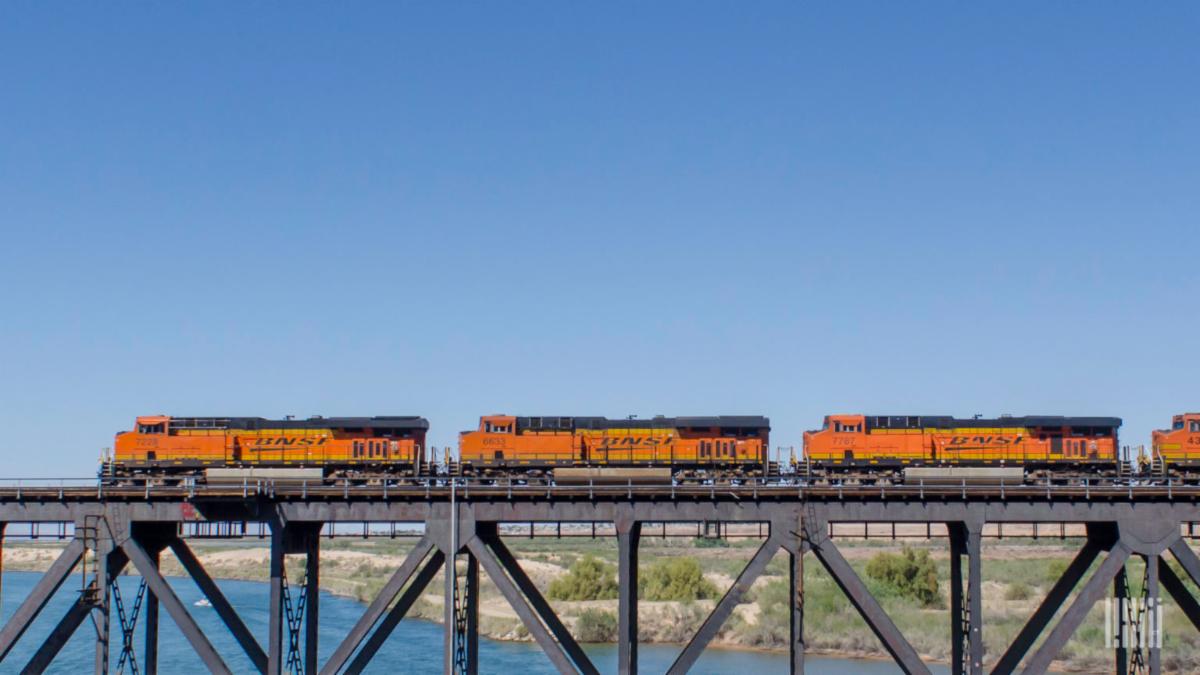
U.S. rail volumes in March rose double digits percentage-wise, although some of the year-over-year gains may reflect uneven comparisons because of last year’s pandemic-induced volume downturn.
U.S. freight railroads originated nearly 2.59 million carload and intermodal units in March, up 14.2% from March 2020, according to the Association of American Railroads.
Of that total, U.S. intermodal traffic jumped 24% to 1.43 million containers and trailers. Meanwhile, U.S. carloads rose 4.1% to nearly 1.16 million.
|
|
Union Pacific Railroad to pull out of Palestine TX |
|
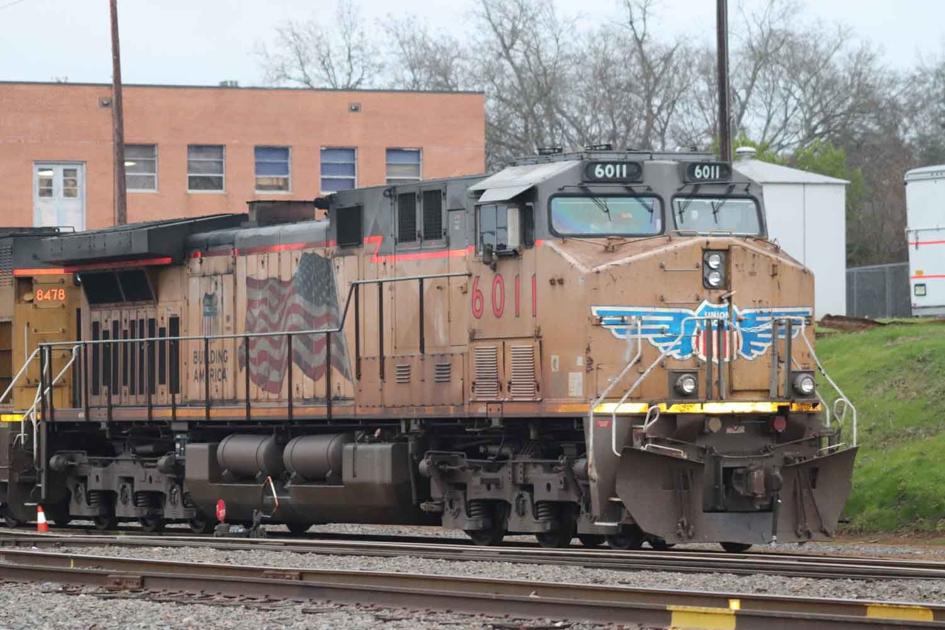
“It’s incredibly disappointing that Union Pacific has announced their intention to shut down the Palestine Car Shop after telling us for years how much they care about our community and their employees,” said Rep. Cody Harris (R-Palestine). “Obviously, they never meant it. I will continue to work hard to bring economic opportunity to take the place of this huge loss to our community.“
According to Mayor Steve Presley, it is possible for the city, county or a group of citizens to join together and file for an injunction in state of federal court with regard to this new action by UP.
The city of Palestine and Anderson County are currently embroiled in a lawsuit with Union Pacific.
In November 2019, Union Pacific filed suit in federal court to scrap its 1954 agreement with the city. The city filed docThe federal courts ordered Union Pacific and the City of Palestine to find a mediator by April 2020 to negotiate a compromise between the two sides. United States Federal Judge for the Eastern District of Texas Jeremy Kernodle denied the city of Palestine’s motion to dismiss Feb. 3.
The county had 30 days from March 25 to file an appeal, with the Fifth Circuit Court of Appeal in New Orleans after a federal judge ruled Feb. 3 that Union Pacific Railroad is no longer bound to its its 1954 agreement with the city of Palestine and Anderson County.
|
|
SMART-TD on CP-KCS:
Waiver OK, Keep Our Protections
|
|
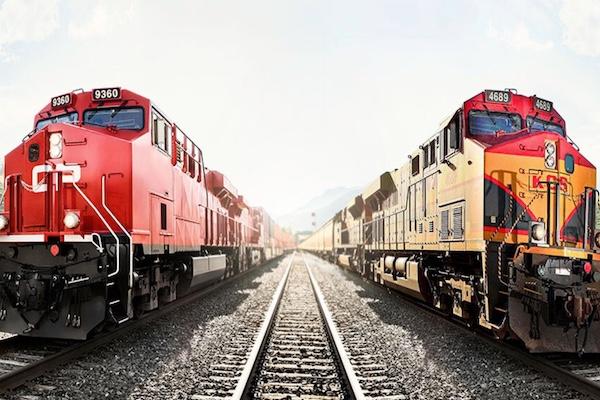
“Historically speaking, this type of transaction that is an ‘end to end merger’ has had very little adverse impact on SMART-TD membership and expands our ability for job security and economic longevity with the newly formed carrier,” Ferguson wrote in the April 14 letter (download below). “It is therefore the position of my office, currently, that we have no opposition to the Board (Surface Transportation Board) moving forward with approval of this transaction. I however recognize that this is a major transaction that will require that all aspects of the New York Dock protective conditions be properly executed via an implementing agreement….”
Washington, D.C.-based attorney David L. Meyer, who represents CP, forwarded Ferguson’s letter to the STB on April 14 to ensure that it was part of the merger application record, but also to refute an April 12 filing with STB by Gordon P. MacDougall, an attorney representing the SMART-TD New York State Legislative Board and its Legislative Director, Samuel J. Nasca. MacDougall’s letter (download below) addressed STB granting KCS a waiver from existing merger rules:
|
|
Freight Trains in the US Are a Disaster Waiting to Happen
|
|
US freight trains just can't stop crashing...
|
|
Editors Note: We see conservatives continue their campaign against high speed rail. |
|
Six Brazos Valley counties join federal lawsuit to stop proposed Texas high speed rail project
Texans Against High Speed Rail, several landowners, and six Brazos Valley counties are suing the U.S. Department of Transportation and the Federal Railroad Administration (FRA) in an attempt to stop a privately owned high-speed rail line from being built.
Texas Central has been working for years to obtain land and permission for their proposed high-speed rail line that would connect Houston and Dallas with a stop in the Brazos Valley. The lawsuit seeks to stop the development of the rail project by voiding an environmental study finished in 2020, and two rules issued by the federal agency.
When asked to comment on the lawsuit, Texas Central declined.
This lawsuit, filed April 14 in U.S. District Court, claims the FRA violated the National Environmental Policy Act (NEPA) and the Administrative Procedure Act (APA) when it issued a Rule of Decision (ROD) approving a Rule of Particular Applicability (RPA) for the proposed high-speed rail project.
|
|
GOP lawmakers seek end to federal funds for California high-speed rail project
A dozen Republican congressmen — led by House Railroads, Pipelines and Hazardous Materials Subcommittee Ranking Member Rick Crawford (R-Ark.) — are asking U.S. Transportation Secretary Pete Buttigieg to justify federal funding for California’s high-speed rail project.
In a letter to the secretary, the lawmakers detail their concerns about any additional federal funds going to the project, which has had significant cost overruns and delays since 2008.
|
|
STB forms working group to enforce on-time passenger-rail standards |
|
The Surface Transportation Board (STB) has formed a working group that will develop plans to enforce new on-time performance requirements for intercity passenger-rail service.
The group of STB staff will respond to the Federal Railroad Administration's new final rule that sets metrics and minimum standards for intercity passenger-rail service. Under the federal Passenger Rail Investment and Improvement Act of 2008, the STB is the agency to investigate and adjudicate issues related to on-time performance of Amtrak's intercity service under the new metrics and standards.
The standard for on-time performance will begin to apply on July 1, with quarterly reporting on that metric from FRA to start in the months following, STB officials said in a press release.
The passenger rail working group is comprised of board staff and will be chaired by Frank O’Connor, deputy director of the STB's Office of Economics.
|
|
Teamsters protest in SoCal gets burst of support from longshoremen
|
|
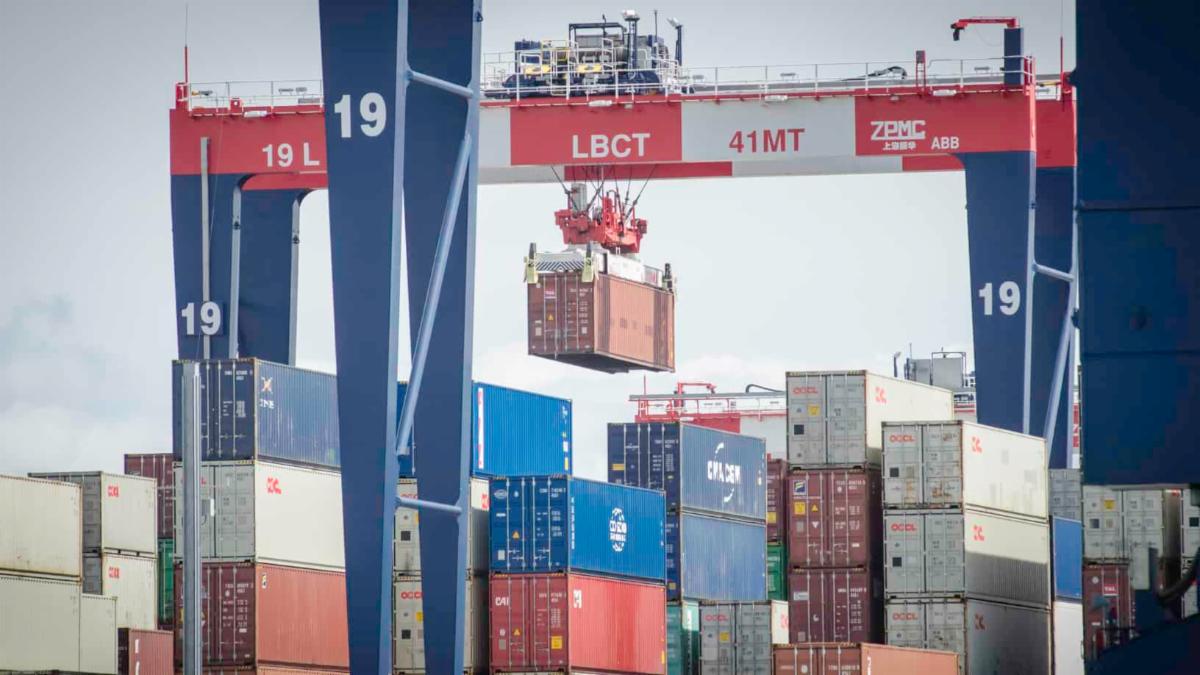
What had been deemed a strike in Southern California by the International Brotherhood of Teamsters — but was undertaken by people who were not employed — does appear to have disrupted some port operations in the Los Angeles/Long Beach port area Wednesday, albeit briefly.
Just how much of a disruption is a point of some contention. What is clear is that a protest by workers fired from divisions of Universal Logistics late last year, soon after some of them had voted to unionize, did get support in the ports of Long Beach and Los Angeles from other workers.
In its statement, the Teamsters said its members and Local 63 of the International Longshoremen’s Union “effectively shut down one of the seven major terminals at the Port of Los Angeles, stopping any incoming or outgoing traffic.”
|
|
First Black woman UP train engineer to release autobiography |
|
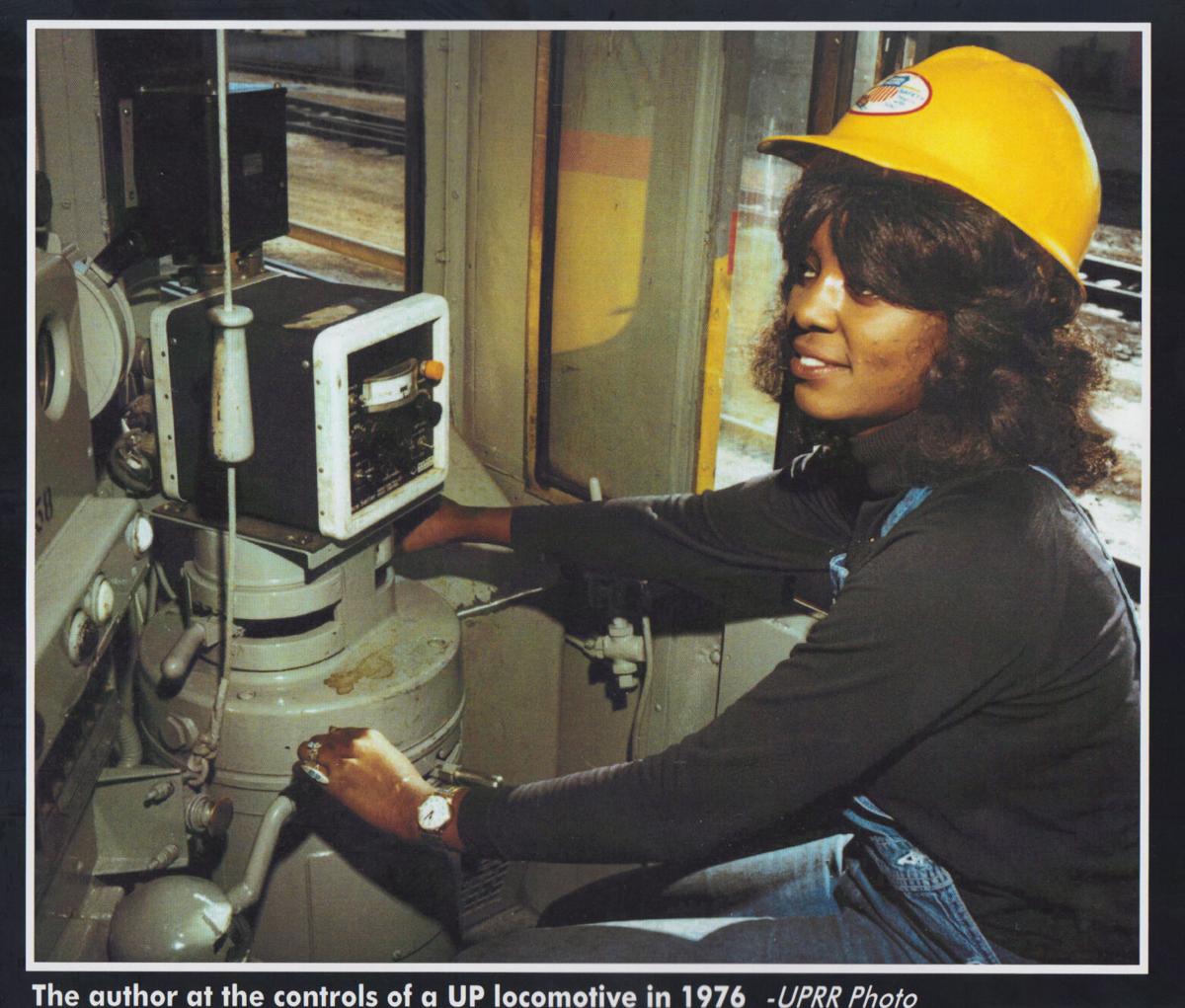
The first Black woman to have been a train engineer for the Union Pacific Railroad is on track to release her new autobiography about her career.
Edwina “Curlie” Justus has written “Union Pacific Engineer,” a just-released book about her 22-year career with the railroad at North Platte.
The book tells about Justus’ efforts to become the first African American woman to work as a train engineer for Union Pacific during the 1970s, when such a career field was still dominated by men.
Justus, now living in Omaha, tells how she persevered despite incidents of sexism and racism that she experienced on the railroad. She also tells how she was welcomed and encouraged by other railroad employees.
|
|
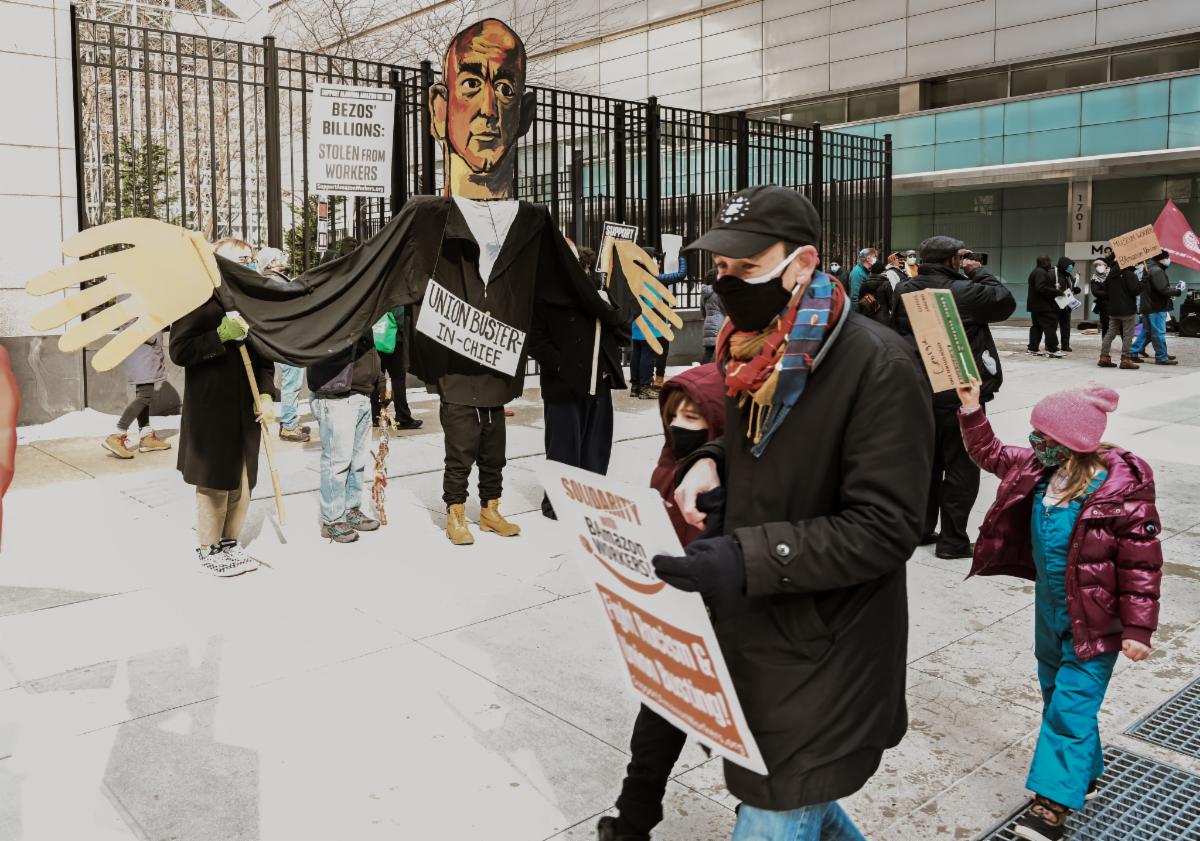
Bezos’ Union Victory Further Strains the Great Coalition |
|
Author Michael Hiltzik reminds us of how bad things got for workers under railroad oligarch George Pullman in the late 1800s in the years leading up to the strike. One witness account describes grown men weeping at the company pay window “because they only got 3 or 4 cents after paying their rent . . . ” to company-owned rental houses.
The railroads had little fear of the June 1894 strike because they had a man on the inside leveraging the might of the federal government. Hiltzik writes, “the outstanding man in the cabinet was Attorney General Richard Olney, who had spent a decade as a director and counsel of the Boston & Maine [railroad line] and almost as long with the Chicago, Burlington, and Quincy. The latter kept Olney on its payroll for $10,000 a year even after he assumed his duties as attorney general, which paid only $8,000.” Olney served his better-paying master well by trumping up a federal predicate for crushing the strikes.
The railroads captured most of the major media outlets and wielded, “all sorts of influences, social, moral and political” making railroads, “the most tremendous and far-reaching engine of social change which has ever blessed or cursed mankind.”
At its zenith, the railroad industry could call upon sitting judges like servants to issue injunctions against unions and uncooperative suppliers. When a railroad executive traveled west to visit states, state legislatures would receive them as royalty and bow and scrape to please the powerful oligarchs. It’s almost impossible to exaggerate the power and influence of the railroad oligarchs of the late 1800s.
As bad as it was then, it’s worse now. Today’s tech oligarchs command far more power and wealth than even the robber barons of the late 1800s.
|
|
Editors Note: The proposed CP-KCS merger continues to dominate rail industry news and we are still seeing more sides weighing in with news and various opinions. |
|
|
|
|
|
|