|
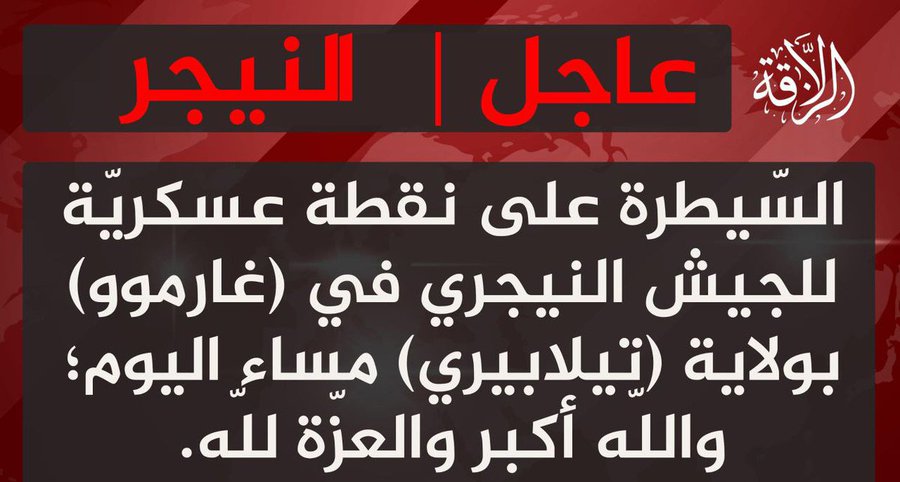
JNIMs Take Control of a Nigerien Army Post in Garbougna, Tillabéri Region, Niger
On 19 November 2025, Jama’at Nusrat al-Islam wa al-Muslimin (JNIM) militants launched a large-scale assault on a Nigerien Army military installation in Garbougna, located in Gothèye Department, Tillabéri Region, Niger. The militants overran the outpost, seized control of the position, and killed at least 10 Nigerien soldiers.
Escalating Activity Along the Dori–Téra Corridor
This strike occurred less than one month after JNIM militants carried out another armed assault on Nigerien forces in the same corridor, suggesting a deliberate campaign to weaken Nigerien military presence along this critical route. Garbougna sits approximately 25 km east of Téra, just off the RN4, a strategic location along the Dori–Téra axis that connects Burkina Faso’s Séno Province to Niger’s Tillabéri Region. This axis has long been a highly contested operational space between JNIM and the Islamic State in the Greater Sahara (ISGS), with both groups vying for influence, recruitment, taxation rights, and control over smuggling corridors.
Significance of JNIM Activity Inside Niger
The significance of this attack goes far beyond a single military outpost. JNIM claims in Niger are relatively rare compared to its operations in Burkina Faso and Mali, and each confirmed strike in the Tillabéri Region carries substantial weight. These claims serve as a public demonstration of JNIM’s ability to penetrate deep into ISGS-contested territory, positioning itself as the dominant insurgent force in an area that has historically been a key stronghold for ISGS.
As TRAC previously warned, additional JNIM attacks along the Dori–Téra corridor were highly likely. This latest operation represents an escalation consistent with JNIM’s strategic agenda:
- to consolidate territorial dominance,
- to undermine ISGS’s legitimacy, and
- to signal to local populations and rival jihadists that JNIM maintains operational superiority across the borderlands.
Likely ISGS Retaliation
By assaulting Garbougna, JNIM is openly challenging ISGS’s influence in a zone where the two factions’ interests overlap. The capture of a Nigerien military post in such a contested area sends a potent message that JNIM can outmanoeuvre both state forces and rival jihadist groups.
Given the longstanding hostility and recurrent clashes between JNIM and ISGS, this operation will almost certainly provoke a retaliatory response. ISGS is unlikely to allow JNIM to strengthen its foothold uncontested; therefore, a spike in counter-attacks, ambushes, or assassinations in the coming days is highly probable as ISGS seeks to reassert its influence along the corridor.
| | | TRAC Incident Report: Islamic State Mozambique (IS-M/Shabaab Cult/Wilayat Muzinbik) Militants Led an Armed Assault on Christians Razing 63 Homes and 2 Churches in Namakuj, Nampula Province, Mozambique | | |
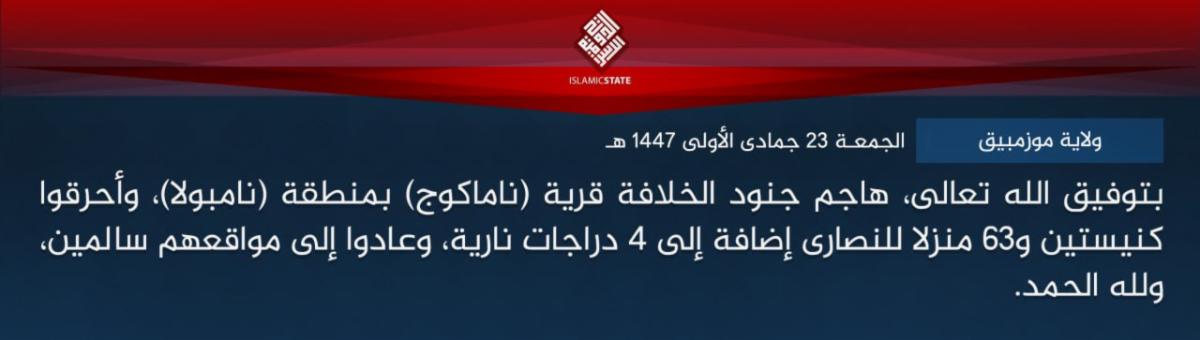
On 14 November 2025, Islamic State Mozambique (IS-M/Shabaab Cult/Wilayat Muzinbik) militants led an armed assault on Christians in Namakuj, Nampula Province, Mozambique. The militants burned two churches and 63 homes in the assault. This attack stands out as one of the most destructive IS-M operations in recent months. The burned churches and 63 homes demonstrate a staggering level of destruction that highlights IS-M’s deliberate strategy of collective punishment and community destabilisation. The scale of arson in this incident is not incidental; it reflects IS-M’s consistent use of fire as a weapon to eliminate civilian infrastructure, erase religious and cultural identity, and render entire villages uninhabitable. For a rural community in Nampula Province, the loss of two churches and so many homes represents not only immediate displacement, but the collapse of social cohesion and long-term economic survival.
This attack also aligns with IS-M’s renewed southward expansion campaign, which began accelerating in late September 2025. Throughout early October, the group launched several major operations across the province, including the armed assault on Christians in Nabiber (7 October), clashes with Mozambican forces in Monari (6 October), and the attack on civilians in Muiruta (4 October). Although IS-M’s momentum stalled briefly after early October, the Namakuj attack, paired with the 12 November operation in Nkwang, strongly suggests a recommencement of expansionist activity. In fact, IS-M claimed four more attacks in November, bringing the total attacks in Nampula province for this month to six, marking one of the highest activity levels in the region since the insurgency’s peak years. These attacks demonstrate that IS-M retains both the logistical capacity and freedom of movement to strike multiple targets across northern Nampula, despite the Mozambican government’s efforts to reinforce these districts.
This renewed wave of violence is highly indicative of IS-M’s continued dominance in Cabo Delgado. As long as the group maintains entrenched positions and operational depth there, it will continue to apply pressure southward. Nampula and Niassa now face increasingly severe threats, as militants have demonstrated not only the intent but the capacity to operate across these provinces with alarming regularity.
Furthermore, the Mozambican government's deployment of military units into Nampula reflects an attempt to contain IS-M’s spread beyond Cabo Delgado. However, recent attacks clearly demonstrate that these efforts may be insufficient against an insurgency that has already established support networks, operational corridors, and familiarity with local terrain. IS-M’s ability to simultaneously target both civilians and state forces within Nampula shows that the group’s expansion is no longer speculative; it is an operational reality.
| | TRAC Incident Report: Unidentified Assailants Launch Two Katyusha Rockets Wounding Several Civilians in Mazzeh 86 Neighborhood, Damascus, Syria | | |
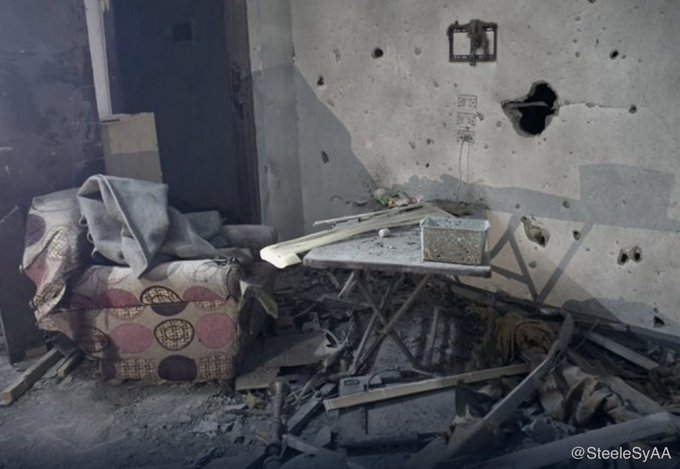
On 14 November 2025, two Katyusha rockets struck a residential building and a hospital in the heavily fortified, predominantly Alawite Mazzeh 86 district of Damascus, injuring several civilians. Authorities later identified the launch site as Kafar Sousah, just 3.5 kilometres away, an unusually short distance given the area’s dense security and proximity to senior regime infrastructure. Rocket attacks inside Damascus are rare, and the use of unguided Soviet-era Katyusha munitions adds complexity to the incident. Intel that the rockets were fired from a makeshift, improvised launcher suggest the perpetrators lacked access to formal military equipment and opted for a rapid “fire-and-leave” strike designed to evade detection.
Katyusha rockets remain widely available across the region and are used primarily by Iran-aligned proxies such as Hezbollah and the Houthis. While they were once employed by various Syrian insurgent groups, including the Islamic State, the last confirmed IS use in Syria occurred in 2019, making IS involvement unlikely given its diminished operational capacity. Their continued presence, however, is confirmed by a mid-October 2025 weapons seizure in which Syrian forces intercepted 103 mm Katyusha rockets en route to Hezbollah. Some were manufactured in 2015, likely originating from older Assad-era military depots, indicating that residual Syrian Arab Army stockpiles remain accessible to non-state or semi-state actors.
This access increases the plausibility of involvement by Alawite splinter factions, particularly groups composed of former SAA personnel such as Liwa Dir’ al-Sahel and Saraya al-Jawad. Both have a history of tension with the central government and may possess both motive and means for a symbolic attack. The rockets landed roughly one kilometre from the main presidential palace, well within the margin of error for Katyusha accuracy, suggesting that key state or presidential installations, not civilians, were the likely intended targets. Striking within Mazzeh 86, a neighbourhood that houses senior leadership residences and intelligence facilities, constitutes a direct challenge to the regime’s claims of control over its most secure terrain.
The timing further elevates the significance of the incident. The attack followed Joulani’s high-profile visit to Washington and HTS’s increasing public framing as a potential Western partner, moves that have angered hardline factions across Syria. It also occurred shortly after clashes between Druze groups and HTS-aligned forces, introducing an additional layer of local grievance and potential motive. Collectively, the weapon choice, launch method, target location, and political moment suggest that this was a symbolic, politically motivated strike intended to undermine the government’s image of stability and highlight the vulnerability of Damascus’s core security infrastructure.
| | TRAC Incident Report: Armed Mapuche Group ‘Weichán Auka Mapu (WAM)’ Set Fire to Forestal Arauco Company Vehicles, in Contulmo, Mapuche Territory, Araucania, Chile | | |
On 18 November 2025, the Weichán Auka Mapu (WAM) carried out an arson attack against the forestry company Forestal Arauco in Contulmo, a sector located within the broader Mapuche ancestral territory in the Araucanía region of Chile. The group burned multiple vehicles, including work machinery and transport vans.
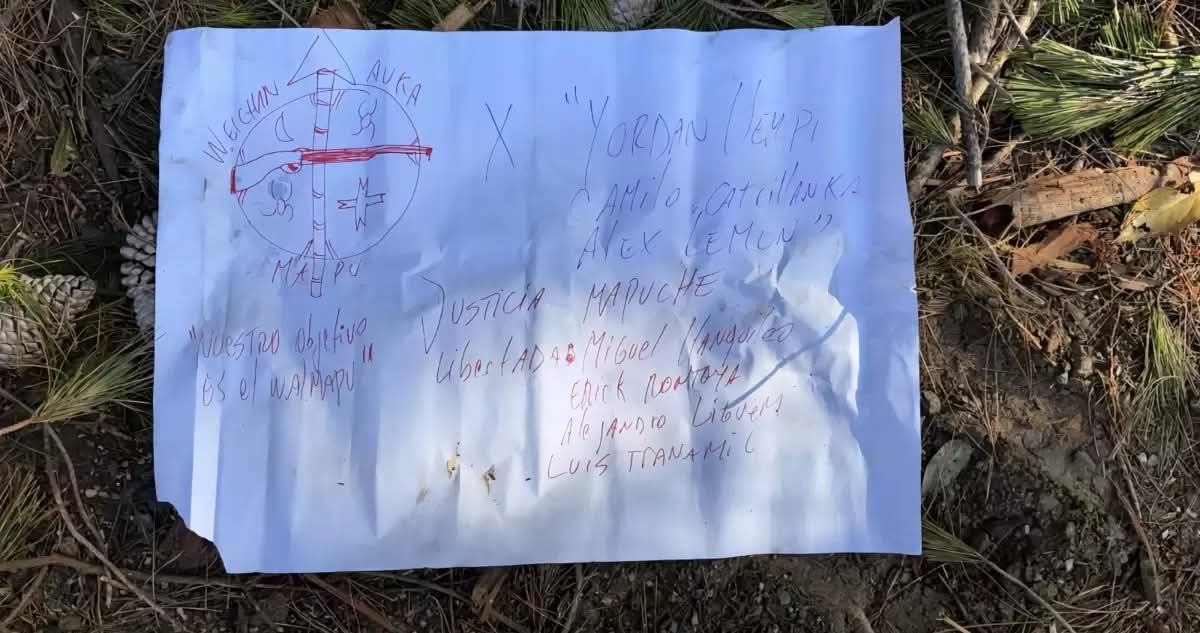
As part of their assault, Weichán Auka Mapu (WAM) left behind a handwritten note containing Mapuche symbols and political demands. It referenced figures central to the Mapuche struggle, such as Camilo Catrillanca and Yordan Llempi. It called for “Justicia Mapuche” and the release of imprisoned Mapuche activists, reinforcing WAM’s framing of the attack as part of an ongoing territorial and political conflict rather than a purely criminal act.
The attack reflects WAM’s established operational pattern: selective sabotage against forestry companies, which the group views as illegitimate occupiers of Mapuche land. The Contulmo sector has seen repeated incidents of machinery arson and attacks on forestry workers, aligning with WAM’s stated objective in the note: “Nuestro objetivo es el Wallmapu” (“Our objective is the ancestral Mapuche homeland”).
Mapuche armed groups and factions active in southern Chile regularly carry out incendiary attacks against infrastructure and machinery used in the forestry industry.
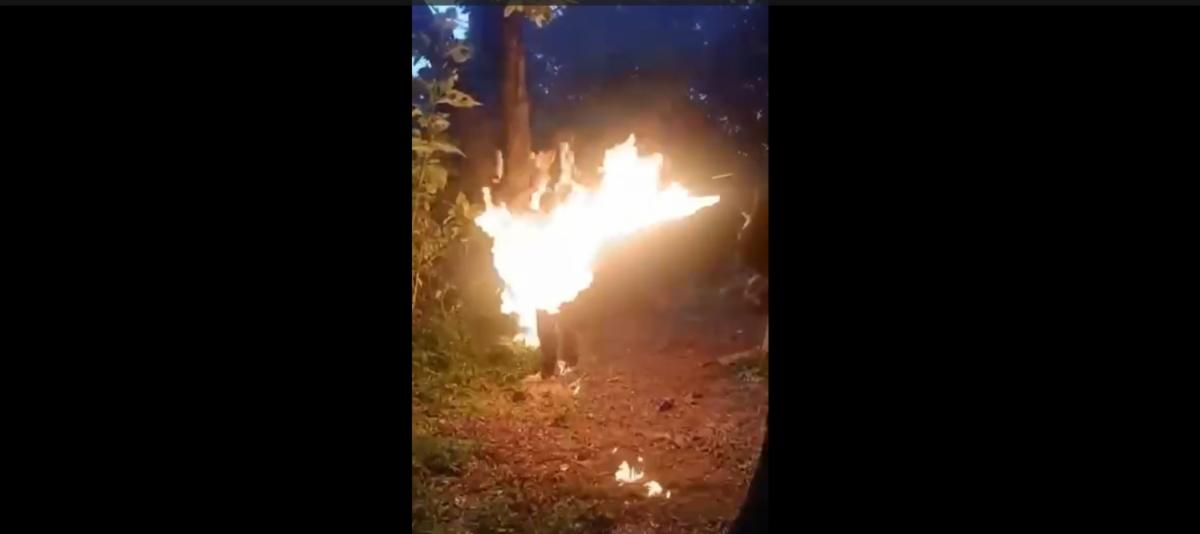
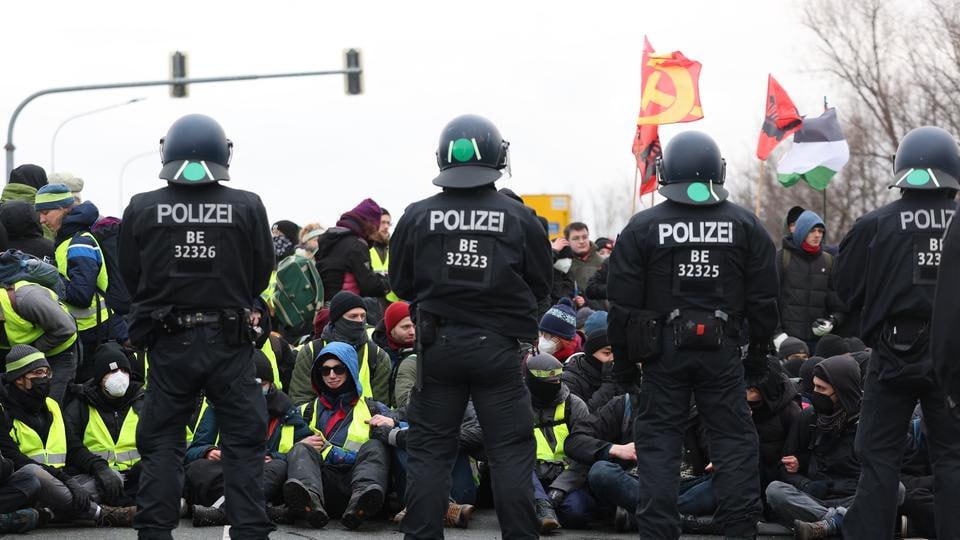
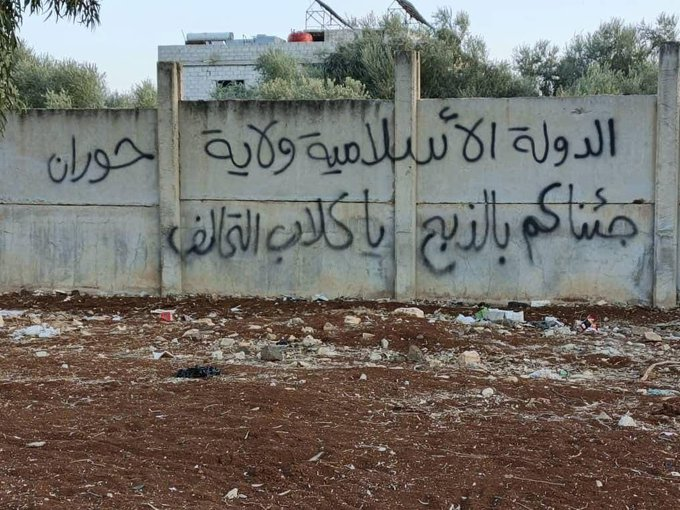
| | (Video) Jalisco New Generation Cartel (CJNG) Sicario use Flamethrower to Torture and Immolate Rival, Sinaloa, Mexico | | (Chatter) Left-Wing Riots Expected After Alternative für Deutschland (AfD) Announcement Launching its New Youth Organisation, in Gießen, Hessen, Germany | | TRAC Incident Report: Citizens Report Pro-Islamic State (IS) Graffiti Targeting Christians and Syrian Regime in Dara’a Governorate, Syria | | | | |