MAY 4, 2026

Facebook  X  Instagram  Email  Web

A Call to Reflect: National Day of Prayer and Our Political Climate


May 7th marks the National Day of Prayer, a time set aside each year for Americans to pause, reflect, and seek guidance from God. In a world that often feels loud, divided, and hurried, this day offers something increasingly rare—intentional stillness and thoughtful reflection.


This year, I am asking you to focus your prayers on one thing: the political climate in our nation.

We are living in a time where conversations—especially political ones—can quickly turn harsh, personal, and divisive. Social media has made it easier than ever to share opinions instantly, but it has also made it easier to forget the weight those words carry. Too often, we speak or post without truly thinking through the impact.


As Rush Limbaugh famously said, “Words mean things.” That simple truth holds more power today than ever before.


Words can build bridges—or they can burn them.


They can encourage thoughtful discussion—or shut it down entirely.


They can bring people together—or deepen division.


Each of us has a role in shaping the tone of our communities and our country. That responsibility doesn’t belong just to elected officials, candidates, or media personalities—it belongs to all of us. Every post, every comment, every conversation contributes to the larger environment we live in.

So on this National Day of Prayer, I encourage you to do two things:


First, pray for our nation—for wisdom, for humility, and for leaders at every level to seek what is right over what is popular.


Second, look inward. Consider how your own words—whether spoken in person or typed online—are contributing to the political climate. Are they thoughtful? Are they respectful? Are they rooted in truth and guided by grace?


This isn’t about silencing opinions or avoiding difficult conversations. Healthy debate is part of what makes our country strong. But how we engage in those debates matters.


We are called to love one another—even when we disagree. That includes our neighbors, our coworkers, and yes, even those on the other side of the political aisle. Whether we are talking about fellow Republicans or Democrats, the standard remains the same.


God’s love is not conditional—and neither should ours be.


If we truly want to see a change in our political climate, it won’t start in Washington, D.C. It will start in our homes, in our communities, and in our own hearts.


This May 7th, let’s not just pray for change—let’s be part of it.

Remembering Marcus Kelley on His Birthday — May the Fourth Be With You


On May 4th, we remember and honor the life of Judge Marcus Kelley—a day made even more meaningful by the phrase he loved so much: “May the Fourth be with you.” A devoted fan of Star Wars, Marcus always found a smile in the coincidence of his birthday, but his legacy reaches far beyond that lighthearted connection.


Judge Kelley served the people of La Paz County with unwavering dedication and a deep sense of public duty. His career reflected a lifetime commitment to service. He brought both intellect and integrity to the bench, earning the respect of colleagues and the community alike.


In his role as Presiding Judge, Marcus demonstrated a profound respect for the rule of law and a sincere appreciation for the people who make the justice system work—especially court staff, whom he valued deeply. His steady leadership strengthened public trust and ensured fairness in the administration of justice.


But beyond the titles and accomplishments, Marcus was a man of heart. Born May 4, 1971, in Memphis, Tennessee, he later graduated from the University of Arizona with a degree in history and earned his law degree from the Cardozo School of Law in 1999. He was a proud Wildcat, a lifelong learner, and someone who truly loved history and thoughtful conversation.


Most of all, Marcus was devoted to his family. For four years, he drove more than two hours each way on Friday nights just to watch his son play football and his daughter cheer—cheering so loudly and proudly that he became known even to opposing teams. That kind of commitment speaks volumes. He was present, joyful, and fully engaged in the lives of those he loved.

Marcus also came to his Christian faith later in life, a journey that reflected his thoughtful and reflective nature.


On this day, we remember not only a distinguished judge, but a husband, father, friend, and man of deep character. We continue to pray for his wife Nickie, and his children William and Sarah. May they find comfort in the love that surrounds them and in the lasting impact Marcus made on so many lives.


Judge Marcus Kelley’s legacy is one of service, integrity, and love—a life well lived and a legacy that will not be forgotten.


May the Fourth be with you, Marcus.

Election Season Is Here: Time to Get Your Signs Ready


It’s almost that time again in Arizona—election season is right around the corner, and with it comes one of the most visible signs (literally) of civic engagement: campaign signs lining our streets and neighborhoods.


Beginning May 11th, voters across the state can officially start placing election signs in support of their preferred candidates ahead of the primary. This date isn’t arbitrary—Arizona law regulates when political signage can go up. State law allows campaign signs to be placed 71 days before an election, giving candidates and supporters a defined window to get their message out while maintaining community standards.


For many, putting up a sign is a simple but meaningful way to participate in the political process. It shows support, sparks conversations, and helps build awareness in local communities—especially for down-ballot races that don’t always get the same level of attention.


If you’re looking to get a sign, there are several easy ways to do so:


  • Directly from candidates – Most campaigns have signs readily available and are happy to provide them to supporters.
  • Through organizations like the West Valley Republican and Independent Coalition, which often distribute signs and promote local engagement.
  • From the Maricopa County Republican Committee, a central hub for Republican activism in the county.
  • At local clubs and Legislative District meetings, where signs are frequently available alongside opportunities to meet candidates and get involved.


As you prepare to place your signs, remember to be mindful of placement rules—signs should not obstruct traffic visibility or be placed in restricted areas. Being respectful of the law and your neighbors ensures that everyone can participate in the process fairly.


Election season is more than just voting—it’s about engagement, visibility, and community involvement. Whether you’re knocking doors, attending meetings, or simply placing a sign in your yard, every action plays a role in shaping the future of our state.


So mark your calendar for May 11th, grab your signs, and be part of the process.

Federal Judge Susan Brnovich Dismisses DOJ Lawsuit Over Arizona Voter Data


In a significant ruling with implications for voter privacy and federal authority, Judge Susan Brnovich—appointed to the federal bench by Donald J. Trump in 2018—has dismissed a lawsuit brought by the U.S. Department of Justice against the State of Arizona.


The lawsuit, initiated under the Trump Administration, sought to compel Arizona to turn over its complete, unredacted statewide voter registration database. This database includes highly sensitive personal information such as voters’ full birthdates, home addresses, Social Security numbers, and driver’s license information.


The Court’s Decision

Judge Brnovich’s ruling was clear: federal law does not authorize such a sweeping demand.

The DOJ had argued that its request was justified under several federal statutes, including the Civil Rights Act of 1960, the National Voter Registration Act, and the Help America Vote Act. However, the Court found that none of these laws require states to provide unredacted voter data to the federal government.


This decision aligns Arizona with a growing list of states where federal courts have rejected similar DOJ efforts. In fact, this marks the sixth federal court ruling to reach the same conclusion, with prior dismissals in states such as Michigan, Oregon, California, Rhode Island, and Massachusetts. What is the definition of insanity?


A Broader National Context

The DOJ’s legal strategy has been expansive. In its effort to enforce federal election oversight, the department has:


  • Requested voter data from nearly every state
  • Filed lawsuits against approximately 30 states and the District of Columbia
  • Yet failed to secure a favorable ruling in any of these cases so far


While at least a dozen states voluntarily shared voter data, the majority—including Arizona—declined, citing both state and federal privacy protections.


Arizona’s Response

Arizona officials, including Secretary of State Adrian Fontes and Attorney General Kris Mayes, supported the state’s decision to withhold the information. Prior to the lawsuit, they had already advised county recorders not to comply with the DOJ’s request, warning that doing so could violate existing laws.


Following the ruling, both officials praised the outcome, stating that Arizona had acted appropriately and that the decision “vindicates” the state’s position. They emphasized their continued commitment to protecting voter privacy and resisting what they characterized as federal overreach.


Protecting Privacy vs. Federal Oversight

At the heart of the ruling is a fundamental tension between two priorities:


  • The federal government’s role in ensuring election integrity and compliance
  • The states’ responsibility to safeguard the personal information of their voters


Judge Brnovich’s ruling reinforces the idea that while oversight is important, it must operate within clearly defined legal boundaries—especially when sensitive personal data is involved.


What Comes Next?

It remains unclear whether the DOJ will appeal the Arizona decision. The department has already appealed similar rulings in other states, suggesting the legal battle over voter data access may not be over.

For now, however, the ruling stands as a decisive affirmation of state authority and voter privacy protections—and a clear message from the courts that federal power in this area has limits.

Glendale Advances Project Baccara as Debate Grows in the West Valley


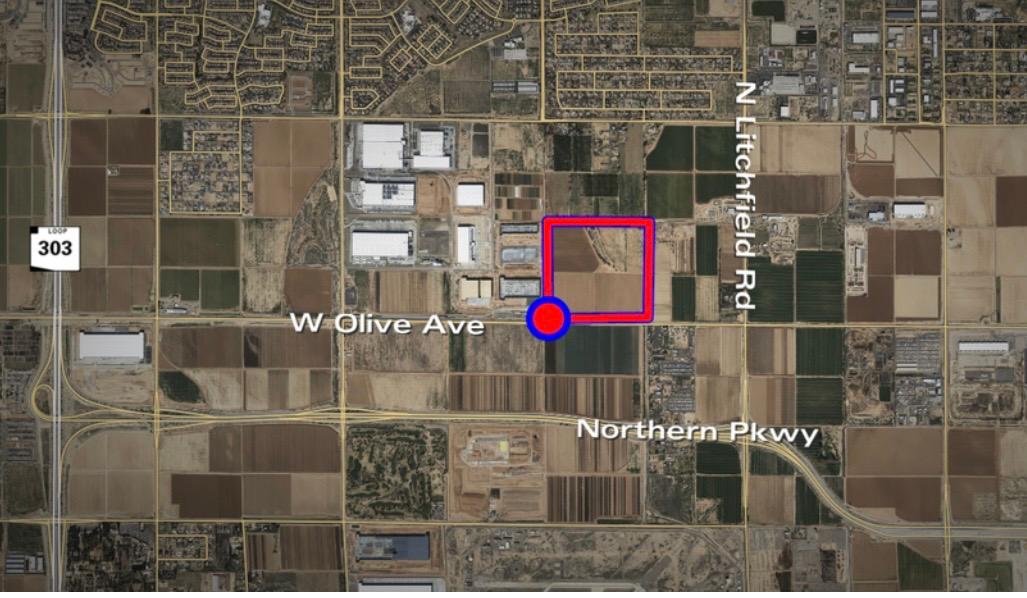
GLENDALE, Ariz. — The Glendale City Council has unanimously approved a pre-annexation development agreement for Project Baccara, a data center and power generation campus that is quickly becoming one of the most talked-about developments in the West Valley.


The project, led by Takanock LLC, represents a staggering $36 billion investment and is planned for a 160-acre site near the northeast corner of Olive and Bullard avenues. While the land currently sits in unincorporated Maricopa County, it is expected to be annexed into Glendale—meaning the city will ultimately receive the tax benefits from the development.


Project Baccara includes approximately 2 million square feet of data center space alongside a 700-megawatt natural gas power plant powered by 18 gas-fired turbines. Developers estimate the project will generate roughly $190 million in tax revenue for Glendale over the next decade, along with hundreds of jobs tied to construction and long-term operations.


The project has already cleared several major regulatory hurdles. The Arizona Corporation Commission approved a Certificate of Environmental Compatibility for the power plant in February, and the Maricopa County Planning and Zoning Commission voted unanimously in April to approve a required military special use permit. That approval reflects compatibility considerations tied to the project’s proximity to Luke Air Force Base, one of the region’s most critical economic and national security assets.


Luke Air Force Base had previously raised concerns about potential conflicts, including visibility for pilots and interference with aircraft operations. However, officials indicated the project could move forward if specific conditions were met. Project supporters, including Glendale leaders, say those requirements have been addressed and emphasize that Luke has signed off on the development under those guidelines.


Even with those approvals, the project has drawn strong reactions from nearby residents, particularly those living in surrounding West Valley communities such as Surprise. Many have voiced concerns about what a 24/7 power generation facility could mean for noise levels, air quality, and overall quality of life.


Some residents argue the constant hum of turbines would differ significantly from the brief, intermittent noise of military jets. Others have raised concerns about emissions and long-term health impacts, including respiratory issues.


At the same time, developers maintain that extensive third-party studies show minimal environmental impact and that the project meets or exceeds regulatory standards. Supporters also note that modern natural gas facilities operate under strict emissions controls and that data centers themselves are not traditional sources of pollution.


Another point of tension is the question of who benefits. While the project sits in the West Valley and near the City of Surprise, annexation into Glendale means that tax revenues will flow to Glendale—not neighboring communities that may still experience the indirect impacts of the development.


Despite the concerns, momentum behind the project continues to build. The Maricopa County Board of Supervisors is expected to consider additional permits and approvals on May 6, marking another key step in the process.


If approved, construction could begin later this year, with the first data center building projected to come online in 2028 and additional phases to follow by 2030.


Project Baccara highlights a broader issue facing rapidly growing areas like the West Valley: how to balance economic development and infrastructure needs with the concerns of nearby residents. As demand for data centers continues to rise alongside population growth and technological expansion, projects like this are likely to become more common—and more closely scrutinized.


It is also important to highlight that Project Baccara will incorporate a closed-loop cooling system, significantly reducing water consumption compared to traditional methods. In addition, the project is partnering with a local industry to utilize reclaimed water, further minimizing its reliance on fresh water resources. On the energy side, the on-site power generation component is designed not only to meet operational needs but also to produce excess electricity for sale on the wholesale market—adding a new power source to the rapidly growing West Valley without increasing costs for existing ratepayers.


For now, Glendale is moving forward, betting that Project Baccara will position the city at the center of Arizona’s digital and economic future, even as debate continues just beyond its borders.

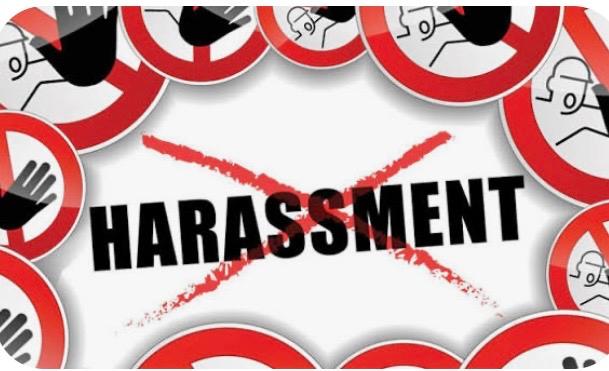
Arizona Supreme Court Clarifies Harassment Law: Words Spoken “Behind Your Back” Can Still Cross the Line


In a significant and unanimous decision, the Arizona Supreme Court has clarified a key question in harassment law: Can someone be guilty of harassment even if they never say anything directly to the victim?


The Court’s answer is yes.


This ruling reshapes how harassment is understood in Arizona, especially in workplaces, co-parenting disputes, and even political environments where reputations can be damaged indirectly.


The Case That Prompted the Ruling

The case involved Briana Hernandez and Luis Loarca, who share a young daughter. Hernandez worked at her child’s school, where Loarca allegedly made repeated negative statements about her to school staff — including a teacher and principal.


Those statements had real consequences.


Hernandez received a formal written warning from her employer after the complaints were made. She argued that Loarca’s actions were not about concern for their child, but an intentional effort to harm her professionally. A trial court agreed and granted her an order of protection.


However, the Arizona Court of Appeals overturned that decision, reasoning that the statements were not made to Hernandez, but to third parties.


What the Arizona Supreme Court Decided

The state’s highest court reversed the appellate ruling and sided with the trial judge.

Writing for the Court, Chief Justice Ann Timmer made a critical clarification:

A communication can be “directed at” a person even if it is delivered to someone else — as long as that person is the intended target.

In other words, harassment is defined not just by who hears the words, but by who the words are meant to harm.


The Court compared the situation to filing a false police report — an act that may not involve speaking to the victim directly but is clearly intended to cause them harm.


Where Free Speech Ends

The ruling also touches on an important constitutional boundary: the limits of free speech.

According to legal experts, including those at Arizona State University Sandra Day O'Connor College of Law, the First Amendment provides broad protections — but not unlimited ones.


  • Opinions (even harsh ones) are generally protected
  • Truthful statements are protected
  • Knowingly false statements intended to cause harm are not


The Court emphasized that harassment requires intent. Not every negative or critical comment qualifies. The behavior must be:


  • Knowingly false (or made with reckless disregard for truth)
  • Intended to cause harm
  • Likely to result in real consequences (employment, reputation, safety, etc.)


Why This Ruling Matters

This decision has broad implications beyond the specific case:


1. Workplace Protection

Employees now have stronger legal standing when someone attempts to damage their career through false claims made to supervisors or colleagues.


2. Co-Parenting & Family Disputes

The ruling reinforces that using third parties (like teachers or administrators) as a weapon in personal conflicts can cross into harassment.


3. Political and Community Spaces

In today’s climate — especially in highly active civic environments like Maricopa County — this ruling may become increasingly relevant.


False narratives, coordinated attacks, and reputation damage campaigns conducted indirectly could now meet the legal threshold for harassment if intent and harm can be proven.


When Does Speech Become Harassment?

This is the question many people are now asking.


The Court did not create a simple checklist, but the ruling suggests a clear framework:

Harassment may exist when:


  • The behavior is repeated or part of a pattern
  • The speaker is intentionally targeting a specific person
  • The statements are false or misleading
  • The goal is to cause harm (job loss, discipline, reputational damage)
  • There are real-world consequences


On the other hand:

  • Disagreements, criticism, and opinions — even strong ones — remain protected
  • Legitimate complaints made in good faith may still be protected, though the Court noted lawmakers may want to clarify this area further


A Word of Caution

The Court also acknowledged that Arizona’s harassment statute is broad and does not clearly exempt legitimate complaints. That means:


  • Good-faith whistleblowing and reporting could become a gray area
  • Lawmakers may revisit the statute to ensure balance between protection and free expression


The Bigger Picture

This ruling underscores a growing reality: harassment doesn’t always happen face-to-face.


In an era of emails, social media, workplace reporting chains, and political organizing, harm is often done indirectly — but no less intentionally.


The Arizona Supreme Court has now made it clear:

If your words are designed to harm someone — even behind their back — you may still be held accountable.

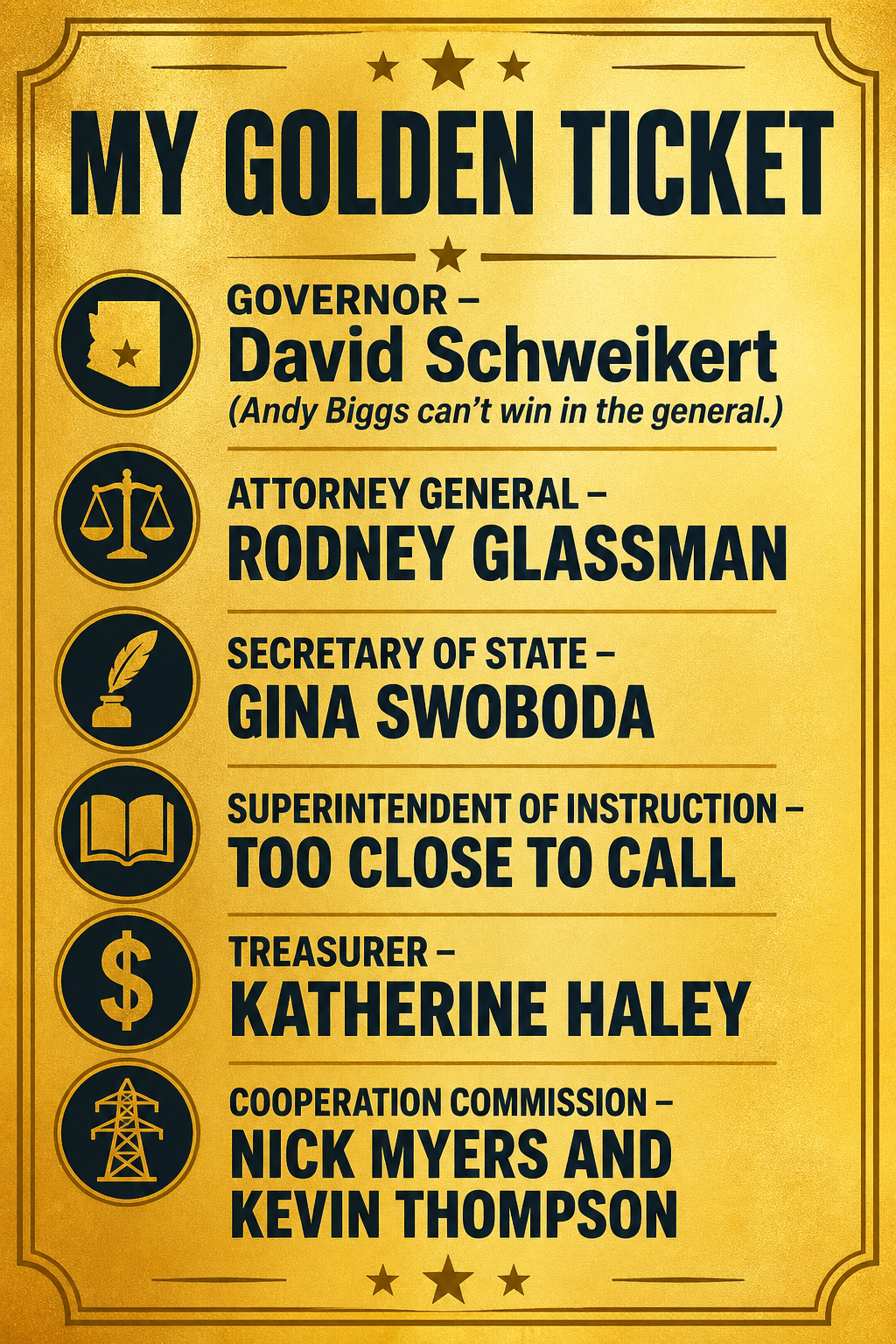
My Primary “Golden Ticket”: Balancing Principle and Electability


It’s that time again—primary season in Arizona—and with it comes the release of what many call a “golden ticket.” For me, this isn’t something I put together lightly. Every name on my list reflects a deliberate balance between principle and electability in the General Election.


Because at the end of the day, we have to be honest about one thing:


Winning the primary means nothing if the candidate cannot win in November.


Arizona’s elections—especially statewide races—are no longer decided solely by Republicans or Democrats. They are decided by Independent voters, who now make up the largest voting bloc in our state. Ignoring that reality is a losing strategy.


That means when evaluating candidates for statewide or competitive races, we must ask a critical question:


Can this candidate earn the support of Independents?


Now, that calculus does change depending on the district.


In heavily Republican areas—like many Legislative Districts (LDs) and some Congressional Districts (CDs)—the general election outcome is often predictable. In those cases, the primary effectively decides the race, and voters may focus more heavily on alignment with their personal values and principles.


But in purple districts like CD1 and CD6, or in statewide races, the path to victory is very different. These are the battlegrounds where elections are won or lost—and where candidates must appeal beyond the base.


I’ll be the first to admit: I have not made endorsements in every race. If I don’t feel I have enough information about the candidates, I won’t pretend otherwise. Voters deserve thoughtful decisions, not guesses.


For the races that matter most in November, I encourage you to consider this:


Would you rather have a Republican who may not align with you 100%—or a Democrat who aligns far less?


There are two schools of thought within the party today.


Some believe Republicans lose because candidates are not conservative enough.


Others believe Republicans lose because candidates are too far to the right to win a general election.


I fall into the latter camp.


I believe we must nominate candidates that Independent voters are willing to support—because they are ultimately the deciding factor.


A recent example often discussed is Kari Lake. She has a strong and passionate base of support, and many Republicans admire her. But in two statewide elections, she was unable to secure enough Independent votes to win. That reality is difficult for some to accept, but it’s one we must learn from.


Some push back by pointing to Donald Trump and his success in Arizona. That’s a fair argument—but context matters. Arizona did not support him in 2020, and by 2024, the political landscape had shifted again. Voter behavior is not static, and Independents, in particular, tend to reject candidates they perceive as being too far to either extreme.


That’s the key takeaway:


Independents generally do not favor extremes—on either side of the aisle.


The candidates on my golden ticket are those I believe can successfully navigate that reality. They may not be perfect. They may not align with every voter on every issue. But they are candidates who, in my view, have the ability to win when it counts - in the General.


Because ultimately, the goal of the primary is not just to choose who we like the most.

The goal is to choose who can win.

PATRIOT HAPPY HOUR WITH FELLOW REPUBLICANS!


Join Us for Another Great Evening!


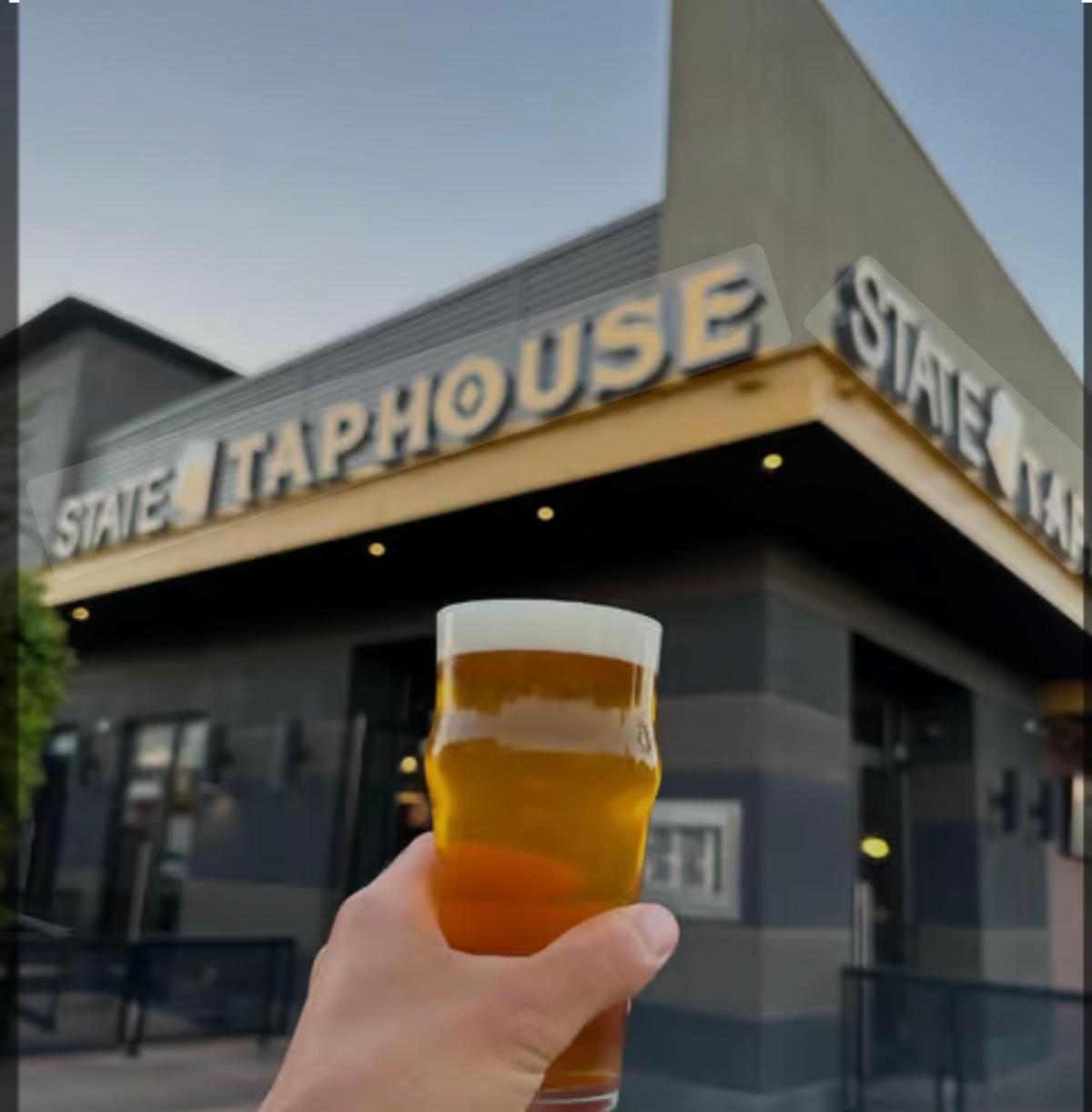
Due to overwhelming demand, we’re bringing back our Patriot Happy Hour at State 48 in Surprise! Last month’s gathering was a fantastic success, with great food, drinks, and, most importantly, meaningful conversations with fellow conservatives. Let’s do it again!


 Where: State 48 Brewery - 13823 West Bell Road, Surprise, AZ 85374

 When: Wednesday, May 27, 2026

 Time: 4:00 PM – 7:00 PM


This is the perfect opportunity to connect with like-minded individuals, get to know fellow PATRIOTS, and strengthen our local Republican community. Whether you're a seasoned PC, new to our LD, or simply want to make new friends everyone is welcome!


Bring a friend and join us for an evening of camaraderie, networking, and fun. Let’s keep the momentum going!


Patriot Happy Hour is always the last Wednesday of the month.

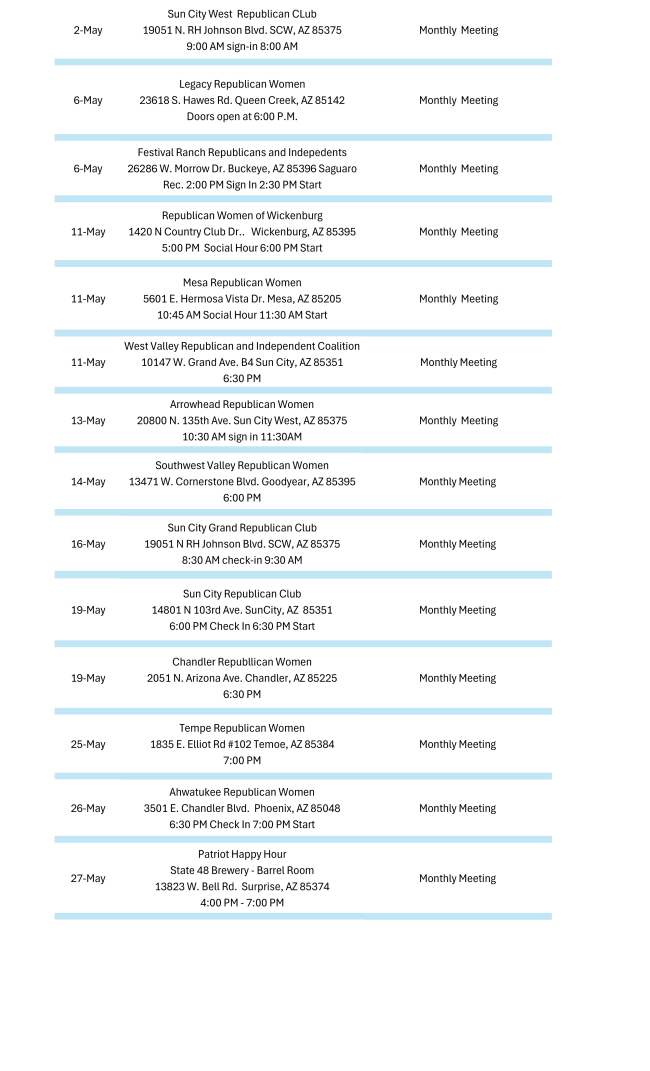
IF YOU WOULD LIKE YOUR CLUB LISTED PLEASE CONTACT ME

Thank you,

Lisa Everett


www.patriotnheels.com


Follow me on:

X - @patriotnheels

Facebook - @patriotnheels

Instagram - @patriotnheels