|
Join NWSOFA-INDIVISIBLE’s
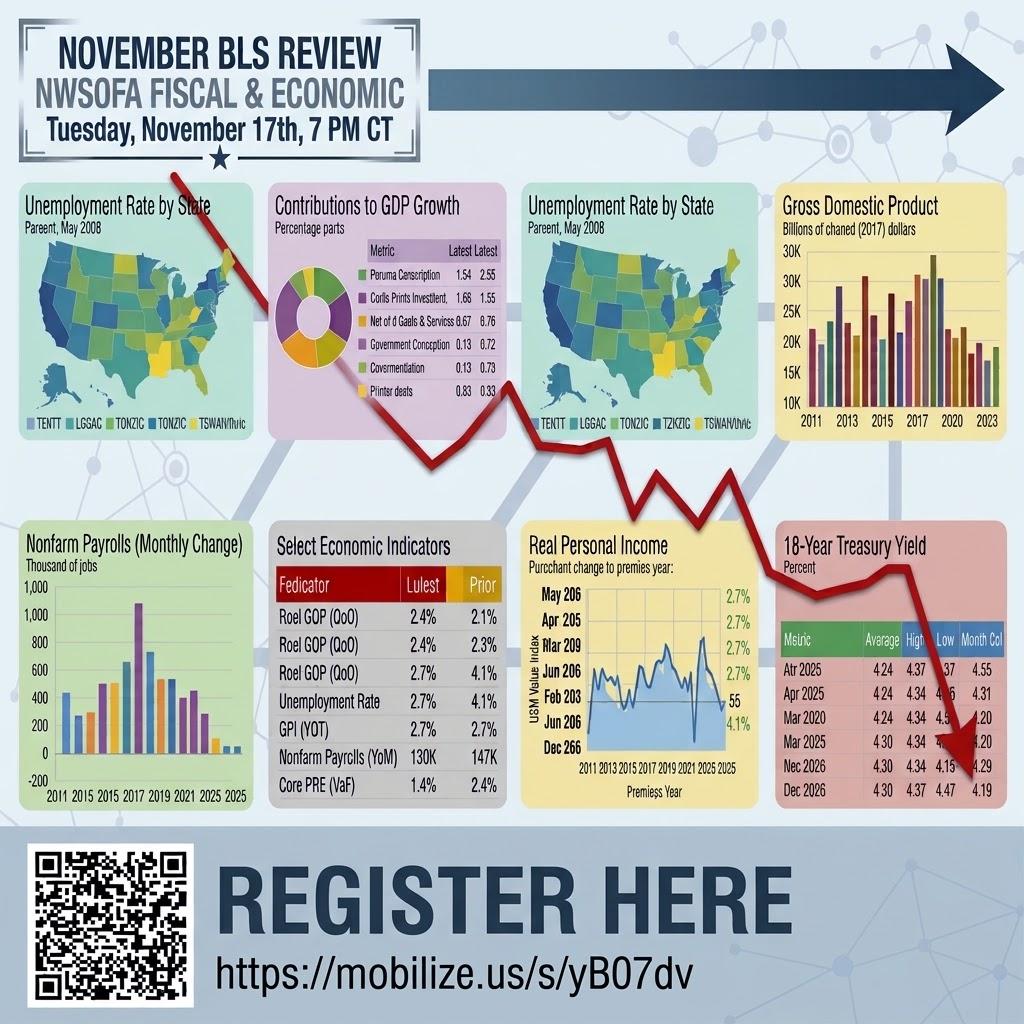
“US Fiscal & Economic October Review”
13 years Longest-Running U.S. Economic Discussion
Tuesday, November 17th @7:00pm Central / 8:00pm Eastern - Zoom
_Join us for a timely discussion of October’s employment report, the latest inflation numbers, and what they mean for working people in Illinois and across the country. Impact on Jobs: Wars, Tariffs, ICE & Deportations, Health Care, Affordability & Inflation_
The Bureau of Labor Statistics’ October employment report, released November 6:
- U.S. nonfarm payrolls increased by 165,000 jobs in October, compared with an average monthly gain of 48,000 over the prior 12 months.[bls]
- The unemployment rate edged down from 4.2% to 4.1%, with approximately 7.1 million people unemployed. BLS characterized both the rate and the number of unemployed people as little changed.[bls]
- Labor-force participation stood at 61.9%, and the employment-to-population ratio was 59.3%—both little changed over the month.[bls]
- Average hourly earnings for private-sector workers rose 14 cents to $38.00—an increase of 0.4% for the month and 3.1% over the past year.[bls]
- August and September job growth was revised upward by a combined 84,000 jobs. August’s gain was revised from 133,000 to 186,000, while September’s gain was revised from 29,000 to 60,000.[bls]
Affordability & Inflation: The Pressure on Household Budgets
The latest Consumer Price Index report, covering October and released November 10, showed overall prices rising 0.4% for the month, following a 0.6% increase in September. October’s price increases included:[bls]
• Food: 0.5%
• Groceries purchased for home consumption: 0.4%
• Food away from home: 0.5%
• Shelter: 0.3%
• Energy: 0.7%
• Medical care: 0.3%[bls]
Core inflation, which excludes food and energy, was 0.3% for the month. Shelter accounted for more than 30% of October’s overall monthly price increase.[bls]
What do these developments mean for working families? What is happening here in Illinois? And what can we do together
|