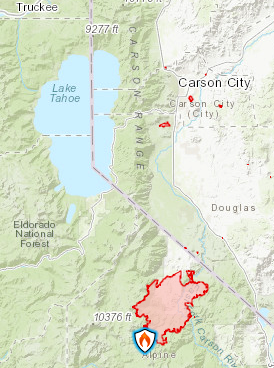
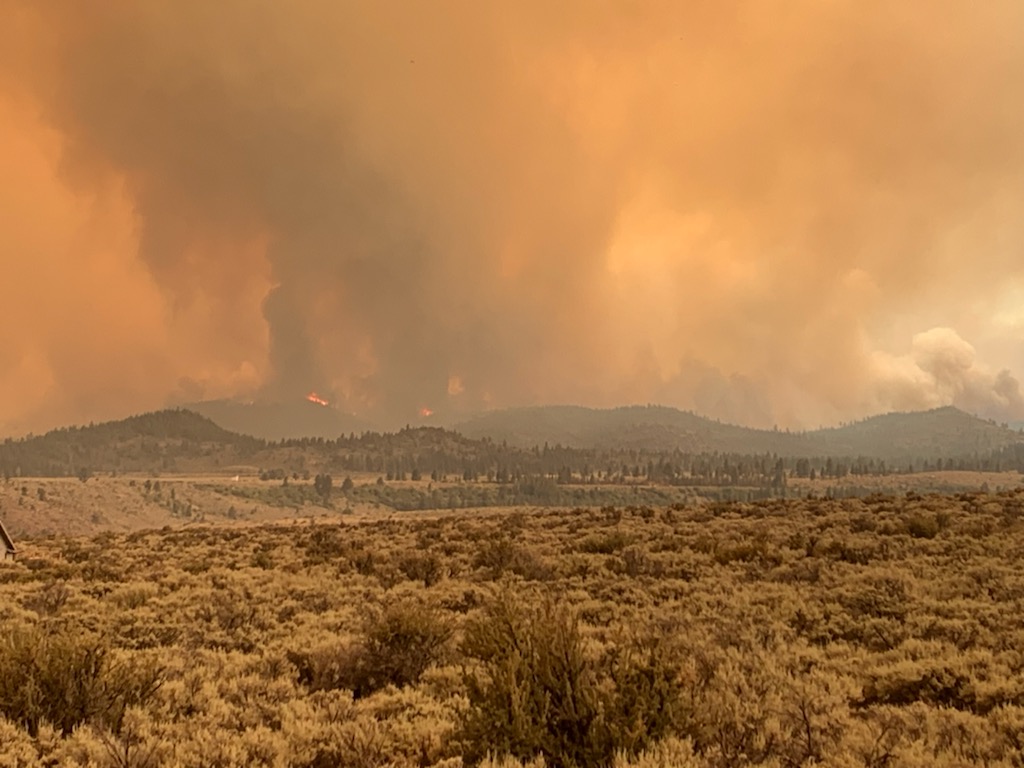
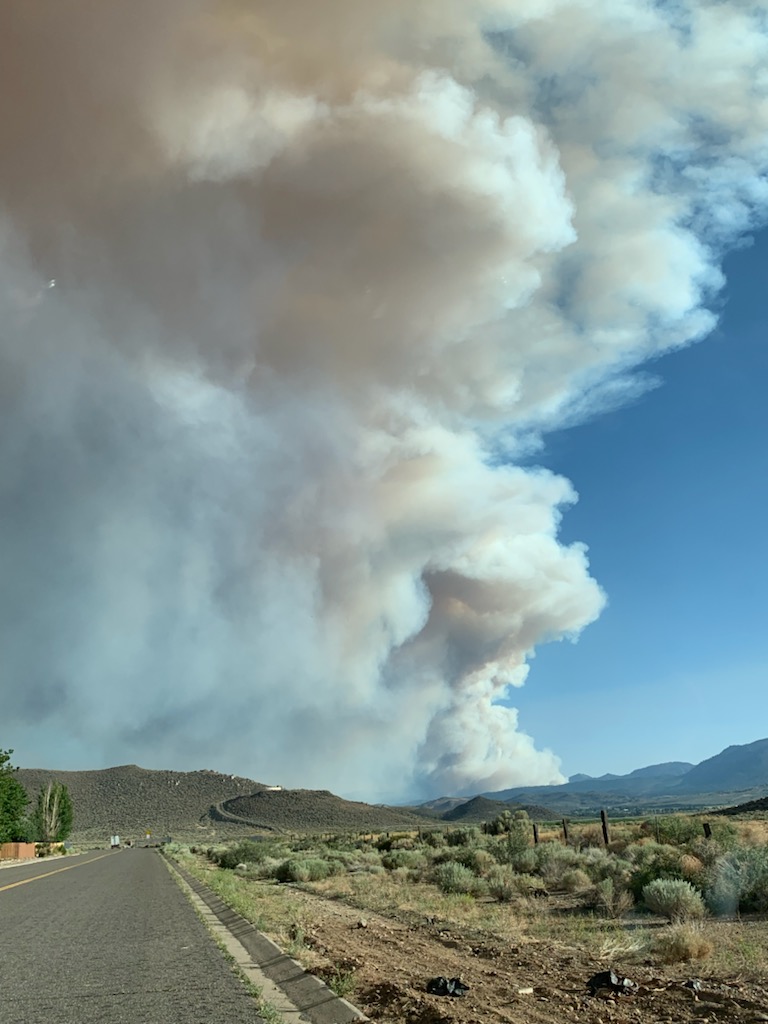
The lightning-sparked Tamarack Fire, south of Lake Tahoe in the Humboldt-Toiyabe National Forest was discovered on July 4. Fueled by extreme winds and low humidity, it rapidly spread downslope forcing the area around Markleeville, on Friday, July 16, to be placed under a mandatory evacuation order. As of July 22, 2021 the fire has displaced 800 people, has burned over 50,000 acres, and is only 4% contained.
At Lake Tahoe, the smoke impacts were not felt until Sunday July 18, when for two hours the Air Quality Index (AQI) exceeded 250, a level deemed very unhealthy. Fortunately, a shift in the wind patterns quickly improved the conditions here.
What effect does wildfire smoke have on Lake Tahoe? That question is at the core of a National Science Foundation grant we are working on to study smoke particles in lakes throughout the western US. As fine particles are the major factor in clarity decline, wildfires have the potential to impact clarity. Past research has shown that smoke lowers sunlight and UV radiation levels which also impacts the food web of the lake.
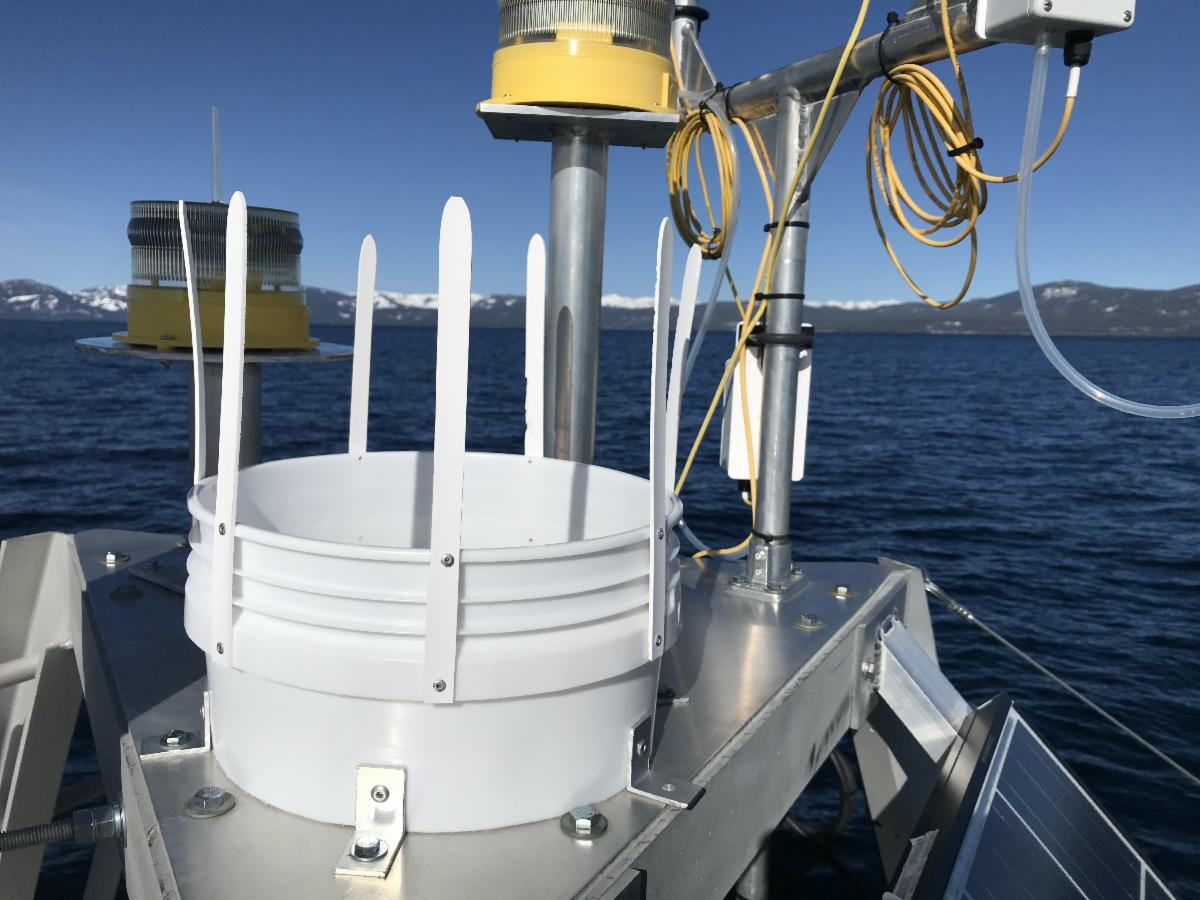
TERC has been monitoring the impact of atmospheric deposition of nutrients onto the lake for almost two decades using deposition samplers on our mid-lake buoys. Two weeks ago, we extended the research by installing a new particle sampler (pictured left) on one of the buoys. Underwater gliders are also equipped to monitor the particles throughout the lake.
Tamarack Fire on July 19, 2021 (left) and July 20, 2021 (right).
Photos courtesy of Liz Bronson, USFS Fire Technician and former TERC AmeriCorps member