|
August is Make a Will Month, making it a good time to talk about something many of us would rather put off: planning for what happens to the things we leave behind.
If you don't have a will, you're not alone. Many people assume that wills are only for people who are wealthy, own a home, have children, or have complicated finances.
The truth is that almost everyone can benefit from having a will, regardless of age or the size of their estate.
A will is simply a legal document that lets you make decisions about what happens to your belongings and assets after you die. It can help answer important questions: Who should receive my property? Who should handle my affairs? Are there particular people, organizations, or causes I want to support?
And your "estate" may be larger or smaller than you think. It can include your home, savings, investments, personal belongings, life insurance benefits, retirement accounts, and other assets. Even if you don't have significant financial wealth, having a plan can make things easier for the people you leave behind.
Planning isn't just about what you leave behind.
Estate planning is also an opportunity to think about what matters to you and the legacy you want to leave.
For some people, that might mean making sure family members or chosen family are cared for. For others, it might mean supporting a longtime friend, a community organization, or a cause that has shaped their lives.
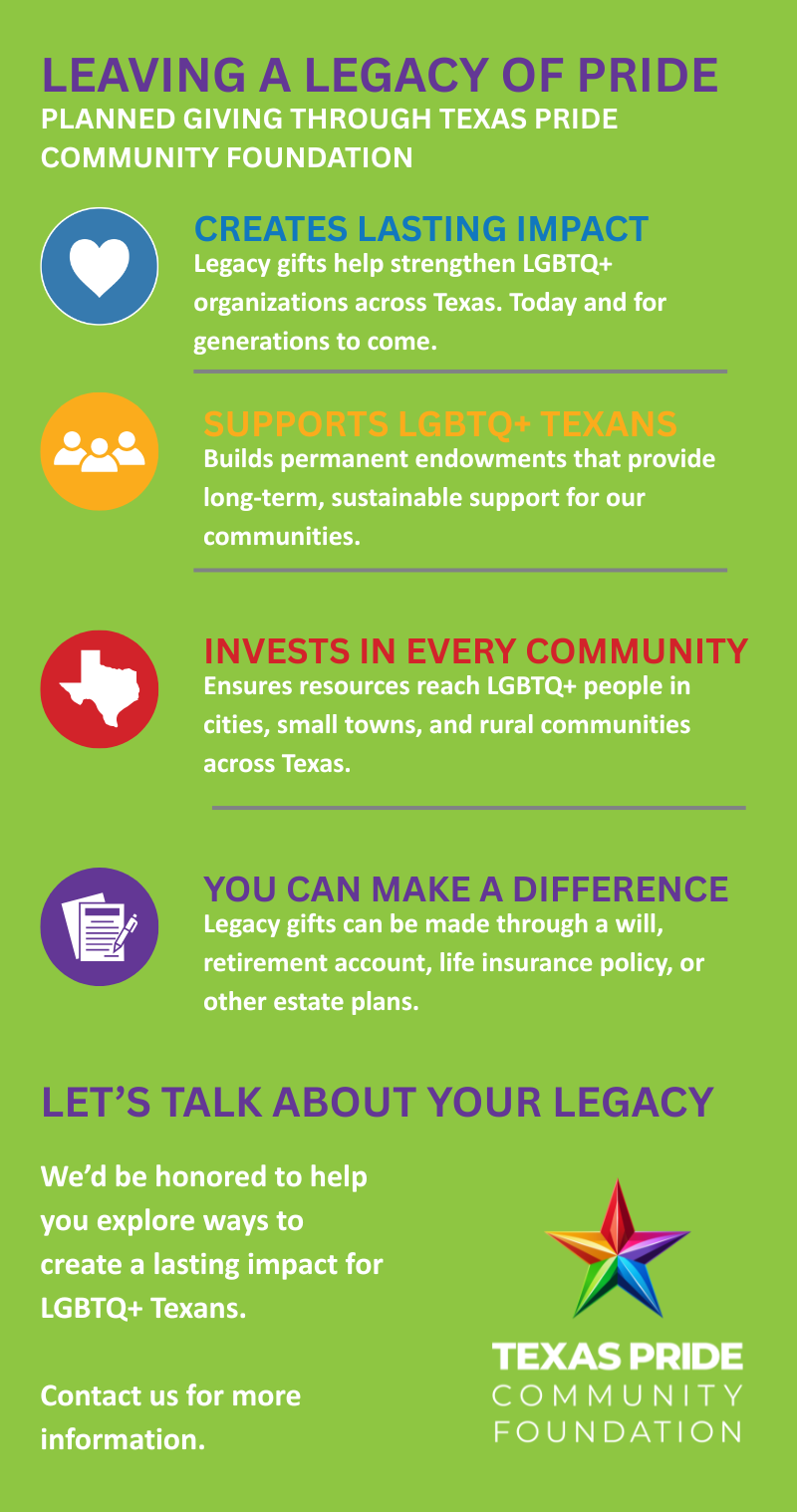
Philanthropic giving can be part of that conversation.
A charitable gift in your estate plan doesn't necessarily require giving away a large amount of money. You might choose to leave a specific dollar amount, a percentage of your estate, or another asset to an organization whose work reflects your values. For many people, it is a way to continue supporting a mission they care about even after they're gone.
|