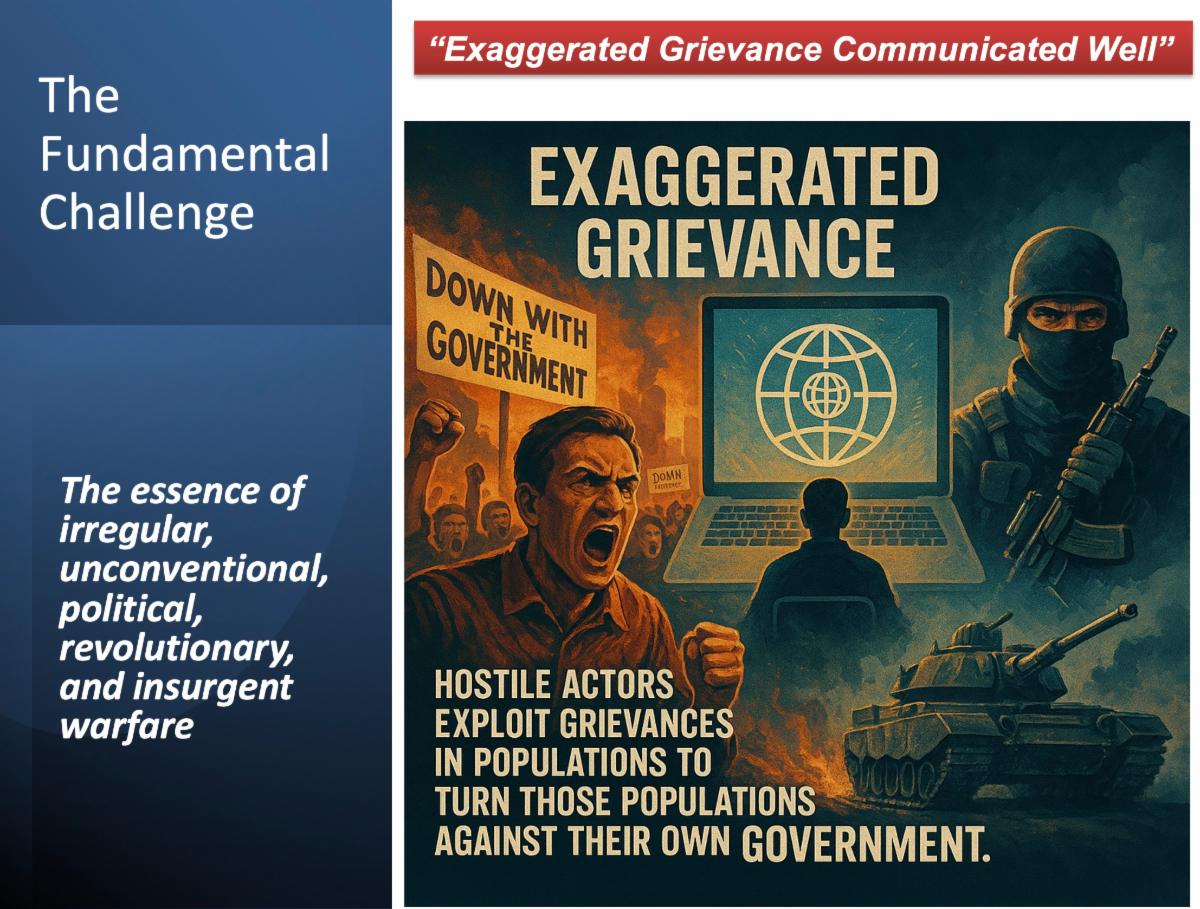
|
Quotes of the Day:
“Popular culture often provides useful pointers about the real world. The old Cold War kept Hollywood busy, yet major studios today are extremely reticent about casting the Chinese Communist Party as a villain. Hollywood’s priority has been to gain access to the lucrative China market, and to that end they stripped movies of anything that might upset Party censors. The Chinese movie industry has no such reticence when it comes to casting the West as villains. The top two grossing movies of recent years were Wolf Warrior 2, a Rambo-style action film, and The Battle at Lake Changjin, a Korean War epic, both of which depict Americans as almost comic-book enemies. While Hollywood pursues profit from China and kowtows to the Party, China’s propaganda machine is going into battle with a chilling sense of purpose–the new Cold War is in full swing in China’s biggest home-grown movies, and in the broader language and imagery of Party propagandists.”
– Ian Williams, The Fire of the Dragon: China's New Cold War
"The measure of success is not whether you have a tough problem to deal with, but whether or not it is the same problem you had last year."
– John Foster Dulles
"A faith that cannot survive collision with the truth is not worth many regrets."
– Arthur C. Clarke
1. Agency Strategic Plan Fiscal Years 2026-2030 U.S. DEPARTMENT of STATE
2. “Principled and pragmatic: Canada’s path” Prime Minister Carney addresses the World Economic Forum Annual Meeting (Transcript)
3. Trump Shares Map of US Including Greenland, Canada, Venezuela
4. C.I.A.’s New Focus on Latin America Reflected in Raid to Seize Maduro
5. FY26 defense bill boosts budget by $8B, largely bypassing last-minute $28B munitions request
6. SOF News: Weekly Drone Update – Jan 21, 2026
7. Russia Cheers the Growing NATO Rift Over Greenland
8. Trump’s Threats to Allies Stir Worry That U.S. Has Lost Its Way
9. Here’s What World Leaders Are Texting Trump
10. Trump Seeks ‘Decisive’ Options for Iran as Assets Move Into Middle East
11. Opinion | Iran’s Line on the Protests and Trump
12. Closing the Arctic Gaps: NATO Allies and Partners Can Protect Their Homelands by Updating Their Defense Force Postures
13. China sends emergency food aid to Cuba as US sanctions worsen shortages
14. EU moves to force Huawei out of networks, opening door to wider China tech bans
15. Could China draw battlefield inspiration from Ukraine’s drone-borne micro bombs?
16. Stars and Stripes top editor talks about Pentagon's takeover of the newspaper
17. Trump, Uncertainty, and China’s Anti-Alliance Strategy
18. Betting on War: Prediction Markets and the Corruption of National Security
19. The Silent Disarmament of Kurds: Why Ending the Armed Struggle without Political Guarantees May Breed Instability and Extremism
20. Why the Pentagon’s Security Cooperation Activities Must Address Disaster Response
21. The Power of Grievance
1. Agency Strategic Plan Fiscal Years 2026-2030 U.S. DEPARTMENT of STATE
The 24 page document can be downloaded here. https://www.state.gov/wp-content/uploads/2026/01/Agency-Strategic-Plan-for-Fiscal-Years-2026-2030.pdf
This was apparently released 4 days ago with no fanfare.
"Donroe Doctrine" is now official.
This is the State Department's supporting diplomatic strategy to the National security Strategy (somewhat equivalent to the NDS).
Agency Strategic Plan
Fiscal Years 2026-2030
U.S. DEPARTMENT of STATE
Goal 1: U.S. National Sovereignty
Objective 1.1: Secure America’s borders and the American people’s right to decide who to admit and on what terms.
Goal 2: The Western Hemisphere and Establishment of the Donroe Doctrine
Objective 2.1: Counter and reverse our competitors’ influence in the Western Hemisphere.
Objective 2.3: Suppress narco-terrorist gangs and cartels.
Goal 3: Peace and Stability in the Indo-Pacific Region
Objective 3.1: Strengthen the Indo-Pacific economic system to support U.S. reindustrialization and reinforce ties with allies.
Objective 3.2: Deter aggression and establish favorable military balance across the region.
Goal 4: Rebuild the Civilizational Alliance with European States
Objective 4.1: Transfer primary responsibility for conventional European defense to allies and expand our joint defense industrial base
Objective 4.3: Defend civilizational values and reassert national sovereignty.
Goal 5: U.S. Economic and Technological Dominance
Goal 6: Targeted Foreign Assistance that Puts American Interests First
Objective 6.1: Leverage assistance as a tool of statecraft.
Objective 6.2: Promote and provide trade, not aid.
2. “Principled and pragmatic: Canada’s path” Prime Minister Carney addresses the World Economic Forum Annual Meeting (Transcript)
Summary/Key takeaways:
1. Carney declares the “rules-based international order” effectively over. What we have now is a rupture: unconstrained great-power rivalry where economic integration itself has become a weapon of coercion, so middle powers can no longer “live within the lie” that the old system protects them.
2. He argues that middle powers are not helpless. Their leverage comes from honesty and from acting together: naming reality, applying standards consistently to friends and rivals, and building new institutions and coalitions that actually work the way they claim to, rather than clinging to a fictitious past order.
3. Canada’s new doctrine is “values-based realism” – being principled about sovereignty, territorial integrity, human rights, and the UN Charter, but pragmatic about working with diverse partners and accepting incremental progress. Ottawa will calibrate the depth of relationships to shared values and interests instead of relying on legacy alliances and narratives.
4. To back principles with power, Canada is rebuilding national strength: tax cuts and removal of internal trade barriers, a fast-tracked trillion-dollar investment program in energy, AI, critical minerals, and trade corridors, and a commitment to double defence spending by 2030 in ways that grow domestic industry and resilience.
5. Abroad, Canada is pursuing “variable geometry” coalitions and diversification: deeper partnership with the EU and NATO, new strategic deals including with China and Qatar, plurilateral trade bridges (TPP–EU), critical-minerals buyers’ clubs, and AI cooperation with democracies. The closing call is for middle powers to “take the sign out of the window,” reduce vulnerabilities to coercion, and combine to create a third path between rival hegemons.
Comment: The world order as we know it is over. I personally feel like everything I have studied and worked for over the last 4-5-6 decades no longer has any use. We have returned to Thucydides - not "fear, honor, and interest" but only the hard power of "the strong do what they will and the weak suffer what they must." We know what happens to the weak. And eventually the strong will become weak as well as teir power collapse. What is unknown is what will happen to the middle powers?
Watch his 17 minute speech here: https://www.youtube.com/watch?v=btqHDhO4h10 Starts in French and then switches to English.
“Principled and pragmatic: Canada’s path” Prime Minister Carney addresses the World Economic Forum Annual Meeting (Transcript)
https://www.pm.gc.ca/en/news/speeches/2026/01/20/principled-and-pragmatic-canadas-path-prime-minister-carney-addresses
January 20, 2026
Davos, Switzerland
Thank you, Larry.
It’s a pleasure – and a duty – to be with you at this turning point for Canada and for the world.
Today, I’ll talk about the rupture in the world order, the end of a nice story, and the beginning of a brutal reality where geopolitics among the great powers is not subject to any constraints.
But I also submit to you that other countries, particularly middle powers like Canada, are not powerless. They have the capacity to build a new order that embodies our values, like respect for human rights, sustainable development, solidarity, sovereignty, and territorial integrity of states.
The power of the less powerful begins with honesty.
Every day we are reminded that we live in an era of great power rivalry. That the rules-based order is fading. That the strong do what they can, and the weak suffer what they must.
This aphorism of Thucydides is presented as inevitable – the natural logic of international relations reasserting itself. And faced with this logic, there is a strong tendency for countries to go along to get along. To accommodate. To avoid trouble. To hope that compliance will buy safety.
It won’t.
So, what are our options?
In 1978, the Czech dissident Václav Havel wrote an essay called The Power of the Powerless. In it, he asked a simple question: how did the communist system sustain itself?
His answer began with a greengrocer. Every morning, this shopkeeper places a sign in his window: “Workers of the world, unite!” He does not believe it. No one believes it. But he places the sign anyway – to avoid trouble, to signal compliance, to get along. And because every shopkeeper on every street does the same, the system persists.
Not through violence alone, but through the participation of ordinary people in rituals they privately know to be false.
Havel called this “living within a lie.” The system’s power comes not from its truth but from everyone’s willingness to perform as if it were true. And its fragility comes from the same source: when even one person stops performing — when the greengrocer removes his sign — the illusion begins to crack.
It is time for companies and countries to take their signs down.
For decades, countries like Canada prospered under what we called the rules-based international order. We joined its institutions, praised its principles, and benefited from its predictability. We could pursue values-based foreign policies under its protection.
We knew the story of the international rules-based order was partially false. That the strongest would exempt themselves when convenient. That trade rules were enforced asymmetrically. And that international law applied with varying rigour depending on the identity of the accused or the victim.
This fiction was useful, and American hegemony, in particular, helped provide public goods: open sea lanes, a stable financial system, collective security, and support for frameworks for resolving disputes.
So, we placed the sign in the window. We participated in the rituals. And largely avoided calling out the gaps between rhetoric and reality.
This bargain no longer works.
Let me be direct: we are in the midst of a rupture, not a transition.
Over the past two decades, a series of crises in finance, health, energy, and geopolitics laid bare the risks of extreme global integration.
More recently, great powers began using economic integration as weapons. Tariffs as leverage. Financial infrastructure as coercion. Supply chains as vulnerabilities to be exploited.
You cannot “live within the lie” of mutual benefit through integration when integration becomes the source of your subordination.
The multilateral institutions on which middle powers relied— the WTO, the UN, the COP – the architecture of collective problem solving – are greatly diminished.
As a result, many countries are drawing the same conclusions. They must develop greater strategic autonomy: in energy, food, critical minerals, in finance, and supply chains.
This impulse is understandable. A country that cannot feed itself, fuel itself, or defend itself has few options. When the rules no longer protect you, you must protect yourself.
But let us be clear-eyed about where this leads. A world of fortresses will be poorer, more fragile, and less sustainable.
And there is another truth: if great powers abandon even the pretence of rules and values for the unhindered pursuit of their power and interests, the gains from “transactionalism” become harder to replicate. Hegemons cannot continually monetize their relationships.
Allies will diversify to hedge against uncertainty. Buy insurance. Increase options. This rebuilds sovereignty – sovereignty that was once grounded in rules, but will be increasingly anchored in the ability to withstand pressure.
As I said, such classic risk management comes at a price, but that cost of strategic autonomy, of sovereignty, can also be shared. Collective investments in resilience are cheaper than everyone building their own fortress. Shared standards reduce fragmentation. Complementarities are positive sum.
The question for middle powers, like Canada, is not whether to adapt to this new reality. We must. The question is whether we adapt by simply building higher walls – or whether we can do something more ambitious.
Canada was amongst the first to hear the wake-up call, leading us to fundamentally shift our strategic posture.
Canadians know that our old, comfortable assumption that our geography and alliance memberships automatically conferred prosperity and security is no longer valid.
Our new approach rests on what Alexander Stubb has termed “values-based realism” – or, to put it another way, we aim to be principled and pragmatic.
Principled in our commitment to fundamental values: sovereignty and territorial integrity, the prohibition of the use of force except when consistent with the UN Charter, respect for human rights.
Pragmatic in recognising that progress is often incremental, that interests diverge, that not every partner shares our values. We are engaging broadly, strategically, with open eyes. We actively take on the world as it is, not wait for a world we wish to be.
Canada is calibrating our relationships so their depth reflects our values. We are prioritising broad engagement to maximise our influence, given the fluidity of the world order, the risks that this poses, and the stakes for what comes next.
We are no longer relying on just the strength of our values, but also on the value of our strength.
We are building that strength at home.
Since my government took office, we have cut taxes on incomes, capital gains and business investment, we have removed all federal barriers to interprovincial trade, and we are fast-tracking a trillion dollars of investment in energy, AI, critical minerals, new trade corridors, and beyond.
We are doubling our defence spending by 2030 and are doing so in ways that builds our domestic industries.
We are rapidly diversifying abroad. We have agreed a comprehensive strategic partnership with the European Union, including joining SAFE, Europe’s defence procurement arrangements.
We have signed twelve other trade and security deals on four continents in the last six months.
In the past few days, we have concluded new strategic partnerships with China and Qatar.
We are negotiating free trade pacts with India, ASEAN, Thailand, Philippines, Mercosur.
To help solve global problems, we are pursuing variable geometry— different coalitions for different issues, based on values and interests.
On Ukraine, we are a core member of the Coalition of the Willing and one of the largest per-capita contributors to its defence and security.
On Arctic sovereignty, we stand firmly with Greenland and Denmark and fully support their unique right to determine Greenland’s future. Our commitment to Article 5 is unwavering.
We are working with our NATO allies (including the Nordic Baltic 8) to further secure the alliance’s northern and western flanks, including through Canada’s unprecedented investments in over-the-horizon radar, submarines, aircraft, and boots on the ground. Canada strongly opposes tariffs over Greenland and calls for focused talks to achieve shared objectives of security and prosperity for the Arctic.
On plurilateral trade, we are championing efforts to build a bridge between the Trans-Pacific Partnership and the European Union, creating a new trading block of 1.5 billion people.
On critical minerals, we are forming buyer’s clubs anchored in the G7 so that the world can diversify away from concentrated supply.
On AI, we are cooperating with like-minded democracies to ensure we will not ultimately be forced to choose between hegemons and hyperscalers.
This is not naive multilateralism. Nor is it relying on diminished institutions. It is building the coalitions that work, issue by issue, with partners who share enough common ground to act together. In some cases, this will be the vast majority of nations.
And it is creating a dense web of connections across trade, investment, culture on which we can draw for future challenges and opportunities.
Middle powers must act together because if you are not at the table, you are on the menu.
Great powers can afford to go it alone. They have the market size, the military capacity, the leverage to dictate terms. Middle powers do not. But when we only negotiate bilaterally with a hegemon, we negotiate from weakness. We accept what is offered. We compete with each other to be the most accommodating.
This is not sovereignty. It is the performance of sovereignty while accepting subordination.
In a world of great power rivalry, the countries in between have a choice: to compete with each other for favour or to combine to create a third path with impact.
We should not allow the rise of hard power to blind us to the fact that the power of legitimacy, integrity, and rules will remain strong — if we choose to wield it together.
Which brings me back to Havel.
What would it mean for middle powers to “live in truth”?
It means naming reality. Stop invoking the “rules-based international order” as though it still functions as advertised. Call the system what it is: a period of intensifying great power rivalry, where the most powerful pursue their interests using economic integration as a weapon of coercion.
It means acting consistently. Apply the same standards to allies and rivals. When middle powers criticise economic intimidation from one direction but stay silent when it comes from another, we are keeping the sign in the window.
It means building what we claim to believe in. Rather than waiting for the old order to be restored, create institutions and agreements that function as described.
And it means reducing the leverage that enables coercion. Building a strong domestic economy should always be every government’s priority. Diversification internationally is not just economic prudence; it is the material foundation for honest foreign policy. Countries earn the right to principled stands by reducing their vulnerability to retaliation.
Canada has what the world wants. We are an energy superpower. We hold vast reserves of critical minerals. We have the most educated population in the world. Our pension funds are amongst the world’s largest and most sophisticated investors. We have capital, talent, and a government with the immense fiscal capacity to act decisively.
And we have the values to which many others aspire.
Canada is a pluralistic society that works. Our public square is loud, diverse, and free. Canadians remain committed to sustainability.
We are a stable, reliable partner—in a world that is anything but—a partner that builds and values relationships for the long term.
Canada has something else: a recognition of what is happening and a determination to act accordingly.
We understand that this rupture calls for more than adaptation. It calls for honesty about the world as it is.
We are taking the sign out of the window.
The old order is not coming back. We should not mourn it. Nostalgia is not a strategy.
But from the fracture, we can build something better, stronger, and more just.
This is the task of the middle powers, who have the most to lose from a world of fortresses and the most to gain from a world of genuine cooperation.
The powerful have their power. But we have something too – the capacity to stop pretending, to name reality, to build our strength at home, and to act together.
That is Canada’s path. We choose it openly and confidently.
And it is a path wide open to any country willing to take it with us.
3. Trump Shares Map of US Including Greenland, Canada, Venezuela
Summary:
Trump’s Truth Social post shows an apparently AI-edited photo of him with European leaders beside a map depicting the United States as already encompassing Greenland, Canada, and Venezuela, dovetailing with his public musings about annexing Canada, “acting president” claims over Venezuela after Maduro’s capture, and a push to “acquire” Greenland for Arctic security. The image, based on an August 2025 summit photo, lands amid tariff threats on European allies unless they accept a “Complete and Total” U.S. purchase of Greenland, heightening a diplomatic rift as EU governments rally behind Denmark and Greenland and weigh retaliatory measures.
Comment: Image at the link. What is the effect we are seeking to achieve with the target audience and who is the target audience?
Trump Shares Map of US Including Greenland, Canada, Venezuela
Published
Jan 20, 2026 at 03:15 AM EST
updated
Jan 20, 2026 at 06:54 AM EST
By Jordan King
US News Reporter
Newsweek is a Trust Project member
https://www.newsweek.com/trump-shares-map-of-us-including-greenland-canada-venezuela-11384438
President Donald Trump has shared an image, seemingly AI-edited, that shows him sitting alongside a map of the U.S. that includes Greenland, Canada and Venezuela as he speaks with European leaders.
The picture, which Trump posted on Truth Social, appears to be an edited version of a photograph taken when leaders—including French President Emmanuel Macron, British Prime Minister Keir Starmer and European Commission President Ursula von der Leyen—went to Washington, D.C., in August 2025.
Newsweek has contacted the White House for comment via email outside normal working hours and the government of Greenland.
President Donald Trump's image showing a U.S. map that includes Greenland, Canada and Venezuela. | AP
Why It Matters
Since returning to office in January 2025, Trump has repeatedly remarked on annexing Canada as the 51st state. Earlier this month, he posted an image on social media that described him as the "Acting President of Venezuela," following the U.S. capture of leader Nicolás Maduro.
Trump's latest post comes amid his long-running claim that the U.S. should acquire Greenland, a self-governing Danish territory, for national security reasons. The president has declined to rule out the use of military force to gain control of the Arctic island and has threatened tariffs on European allies resistant to such a takeover.
As European leaders have vowed solidarity with Denmark and Greenland, the social media post underscores the widening diplomatic rift between Washington and the Continent.
What To Know
The image of the map appears to be an edited version of a photo taken in August, when European leaders visited Washington for Trump's phone call with Russian President Vladimir Putin.
Another AI-generated image shows Trump, Vice President JD Vance and Secretary of State Marco Rubio in Greenland, with Trump planting an American flag in the ground next to a sign that says, "Greenland—U.S. Territory. Est. 2026."
Trump recently told reporters that European allies would not "push back too much" on his plans to acquire Greenland, adding, "We have to have it."
"They can't protect it," Trump continued, citing Russia and China as threats to the Arctic territory.
Trump has threatened a 10 percent tariff on eight European countries beginning February 1, rising to 25 percent on June 1, unless there is a "Complete and Total purchase of Greenland." The move has prompted condemnation from European NATO members and a joint statement of solidarity with Denmark and Greenland.
What People Are Saying
U.S. President Donald Trump wrote on Truth Social on Friday: "We have subsidized Denmark, and all of the Countries of the European Union, and others, for many years by not charging them Tariffs, or any other forms of remuneration. Now, after Centuries, it is time for Denmark to give back — World Peace is at stake! China and Russia want Greenland, and there is not a thing that Denmark can do about it. They currently have two dogsleds as protection, one added recently. Only the United States of America, under PRESIDENT DONALD J. TRUMP, can play in this game, and very successfully, at that! Nobody will touch this sacred piece of Land, especially since the National Security of the United States, and the World at large, is at stake. On top of everything else, Denmark, Norway, Sweden, France, Germany, The United Kingdom, the Netherlands, and Finland have journeyed to Greenland, for purposes unknown."
Greenlandic Prime Minister Jens-Frederik Nielsen said last week: "Greenland does not want to be governed from the United States. Greenland does not want to be part of the United States."
What Happens Next
European Union ambassadors have planned emergency meetings and discussed potential retaliatory measures if U.S. tariffs advance.
In a polarized era, the center is dismissed as bland. At Newsweek, ours is different: The Courageous Center—it's not "both sides," it's sharp, challenging and alive with ideas. We follow facts, not factions. If that sounds like the kind of journalism you want to see thrive, we need you.
When you become a Newsweek Member, you support a mission to keep the center strong and vibrant. Members enjoy: Ad-free browsing, exclusive content and editor conversations. Help keep the center courageous. Join today.
4. C.I.A.’s New Focus on Latin America Reflected in Raid to Seize Maduro
Summary:
A covert CIA team conducted sabotage and real-time intelligence support inside Venezuela to enable the U.S. raid that seized Nicolás Maduro on January 3, reflecting a sharp institutional pivot toward Latin America and more aggressive covert action. Directed by John Ratcliffe under POTUS authorization, the operation followed months of building human networks, tracking Maduro’s movements, and striking suspected drug-trafficking infrastructure. Lacking an embassy in Caracas, CIA operatives worked without normal diplomatic cover, underscoring the risk and the depth of CIA–Pentagon integration. Senior leaders now tout big percentage gains in regional collection and recruited sources as proof this harder line is working.
Comment: So again, who is speaking out of school or is this part of deliberate messaging to achieve an influence effect? As a reminder most special operations require non-SOF support. This operation demonstrated that extensively. It required substantial intelligence preparation of the battlefield by non-SOF personnel and the entire operation during execution employed extensive forces, capabilities, and resources from across the entire joint force.
C.I.A.’s New Focus on Latin America Reflected in Raid to Seize Maduro
NY Times · Tyler Pager · January 20, 2026
A senior U.S. official declined to confirm the specific operations in Venezuela, but said a covert team provided real-time support for the military.
By Julian E. Barnes and Tyler Pager
Julian E. Barnes covers the U.S. intelligence agencies and Tyler Pager covers the White House.
Jan. 20, 2026
https://www.nytimes.com/2026/01/20/us/politics/cia-operation-venezuela.html?smid=nytcore-ios-share
A member of Venezuela’s National Guard at the entrance to the country’s largest military complex in Caracas, the capital, after President Nicolás Maduro’s capture on Jan. 3.
Julian E. Barnes covers the U.S. intelligence agencies and Tyler Pager covers the White House.
Jan. 20, 2026, 5:15 p.m. ET
A covert C.I.A. team conducted sabotage operations in Venezuela to help ensure that a U.S. military strike force could enter the country safely to seize President Nicolás Maduro early this month, according to people briefed on the operation.
The work of the secretive operatives was a sign of close cooperation between the spy agency and the U.S. military, officials said. But it also reflected the spy agency’s new focus on Latin America, as well as a renewed emphasis on intelligence collection overseas and on covert operations.
U.S. officials insist a more aggressive stance by the agency — and focus on Latin America — is bearing results. In a closed-door briefing to Congress earlier this month, John Ratcliffe, the C.I.A. director, said that foreign intelligence collection on Latin America had increased roughly 51 percent during his time in office, according to people familiar with the meeting. He also said the number of human sources had increased substantially, rising by 61 percent.
The actual number of reports and recruited sources remains classified, according to the officials, who, like others interviewed for this article, spoke on the condition of anonymity to discuss sensitive intelligence. The C.I.A. declined to comment.
A senior U.S. official declined to confirm the specific operations in Venezuela but said the team provided support for the mission as it was taking place. The team spent months monitoring Mr. Maduro and recruited people who could relay information on his movements. It also provided intelligence to military commanders about real-time conditions on the ground, both before and during the raid.
As part of the planning for the operation, President Trump authorized the C.I.A. to conduct covert actions inside Venezuela. Ten days before the military seized Mr. Maduro, the C.I.A. carried out a strike on a dock where members of a Venezuelan gang were purportedly loading drugs onto boats.
The operation was the product of months of planning and the C.I.A.’s new focus on Latin America and the Caribbean. Pentagon officials early last year lamented that U.S. intelligence on Venezuela and the Caribbean lagged well behind that of its allies, such as the British.
Mr. Ratcliffe came into office promising a renewed focus on intelligence collection and the recruitment of spies, as well as a desire to make a more aggressive agency that would be willing to undertake covert action.
Placing the secret team inside Venezuela is the clearest example of the more aggressive approach, at least that has so far come to light. Because the United States did not have diplomatic relations with Venezuela, and its embassy was closed, the covert team could not rely on the kind of diplomatic protection that American spies have in most overseas assignments.
John Ratcliffe, the C.I.A. director, came into office promising a renewed focus on intelligence collection and the recruitment of spies.Credit...Haiyun Jiang/The New York Times
C.I.A. involvement in military operations often remains shrouded in mystery for years. But Mr. Trump has been unusually open about the agency’s work in the Venezuela operations. He publicly confirmed a New York Times story last year that he had authorized C.I.A. operations in the country. And he revealed the mysterious operation at the port during a radio interview.
In a news conference after the raid, Gen. Dan Caine, the chairman of the Joint Chiefs of Staff, credited the C.I.A. and other intelligence agencies. “We watched, we waited, we prepared, we remained patient and professional,” General Caine said, adding that intelligence agencies tracked Mr. Maduro’s movements.
Throughout last summer and fall, Mr. Ratcliffe met regularly with Marco Rubio, the secretary of state; Pete Hegseth, the defense secretary; and General Caine to plan the operation.
Julian E. Barnes covers the U.S. intelligence agencies and international security matters for The Times. He has written about security issues for more than two decades.
Tyler Pager is a White House correspondent for The Times, covering President Trump and his administration.
NY Times · Tyler Pager · January 20, 2026
5. FY26 defense bill boosts budget by $8B, largely bypassing last-minute $28B munitions request
Summary:
Congress agreed to an $838.7 billion FY26 defense topline, about $8.4 billion above the Pentagon’s request, but rejected most of more than $50 billion in late “unfunded” asks, including nearly $29 billion for multiyear munitions contracts. Lawmakers instead added only $1.8 billion for selected missiles and demanded extensive reporting on stocks, industrial capacity, and new low-cost weapons. Services saw mixed results: Navy F/A-XX and Air Force E-7 Wedgetail were boosted, while some Army vehicles, agile funding, B-21 procurement, and Space Force R&D took cuts amid concern over opaque programs like Golden Dome and MILNET.
Comment: So we will have great weapons and no ammunition? Yes, that is a sarcastic comment and overstated. But what does this signal to our adversaries? That Congress is unwilling to adapt to the requirements of the changing character of war and will not support the necessary procurement of fundamentals (e.g., ammunition to sustain high end large scale combat operations?
FY26 defense bill boosts budget by $8B, largely bypassing last-minute $28B munitions request - Breaking Defense
breakingdefense.com · Valerie Insinna · January 20, 2026
WASHINGTON — House and Senate appropriators have agreed on an $838.7 billion defense topline for fiscal 2026 in a bipartisan deal that would boost defense funds by $8.4 billion over the Pentagon’s request. But they declined to include tens of billions of dollars for additional requests made by the department in recent months.
Since the Defense Department released its budget request last June, it identified more than $50 billion in what it said were additional funding needs.
That includes $26.5 billion in funding discrepancies between its FY26 request and the reconciliation bill — essentially a laundry list of accounting errors that resulted in shortfalls to key programs like the Virginia-class submarine. It also included an additional $2.3 billion in “emergent requirements” and a whopping $28.8 billion sum for multiyear munitions procurement contracts.
While the Appropriations Committees remain open to working with the Pentagon to solve those shortfalls, “the agreement was unable to fully fund most of these unfunded requirements and priorities,” appropriators wrote in a joint explanatory statement accompanying the bill.
“The agreement welcomes the Department’s focus on strengthening our military, modernizing its capabilities, expanding industrial capacity, and replenishing munitions stockpiles. However, the agreement observes that solving these real challenges will be difficult without sustained funding through a predictable, annual appropriations process,” it states.
The bill effectively dampens the Pentagon’s last-minute push to add more than $28 billion in multiyear funding for 13 critical munitions.
Instead, appropriators boosted funds for those weapons by $1.8 billion and approved eight munitions for multiyear procurement: PAC-3 missiles, Standard Missile 6 (SM-6), Terminal High Altitude Area Defense (THAAD), Advanced Medium Range Air to Air Missiles (AMRAAM); Tomahawk cruise missiles; Long Range Anti-Ship Missile (LRASM), Joint Air-to-Surface Standoff Missile Extended Range (JASSM-ER) and Standard Missile 3 Block IB (SM-3 IB).
The previous, broader request had been criticized by key lawmakers, including Sens. Mitch McConnell and Chris Coons, the top Republican and Democrat on the Senate Appropriations defense subcommittee. The justification document puts some complaints in writing, saying that the Pentagon “has not demonstrated with necessary documentation” that the munitions meet the requirements for multiyear procurement authority as spelt out in law.
“The proposal was presented absent an official budget request, and without adequate funding offsets or additional topline. Concurrently, the House and Senate Defense Appropriations Subcommittees had to address substantial reconciliation funding incongruencies and other Department priorities with limited discretionary resources,” appropriators stated. “This resource limitation constrained Congress’ ability to provide the necessary funding to fully support the MYP [multi-year procurement] initiatives as presented.”
During a briefing later this afternoon with reporters, a senior Senate GOP staffer said that appropriators believe the bill “makes a good down payment” on future multiyear contracts.
“But the reality is plain as day, as we have been saying to the administration for months, there is no money in the banana stand,” the staffer added, referencing a gag from Arrested Development in which $250,000 in cash is stashed inside the walls of a frozen banana stand. “There are additional resources that need to be applied to these missions, but we had insufficient top line to cover these very, very needed costs.”
In addition to the relatively small boost in funding for munitions, lawmakers attempted to make headway on a key supply chain challenge for weapons: solid rocket motors. The omnibus bill provides $500 million for solid rocket motor makers to modernize or expand their facilities, with $150 million of that sum going specifically to qualify second sources of supply.
“The Secretary of Defense is directed to prioritize actions that enhance competition within the solid rocket motor industrial base, including the introduction of new entrants, expansion of qualified suppliers, reduction of barriers to entry, and mitigation of single-point-of-failure risks,” the justification document states.
Appropriators have demanded several reports on munitions: one that would document all expended munitions, another that would compare requested munitions quantities with the maximum amount that could be manufactured by the industrial base, and a third on potential sources of new, low-cost munitions.
Lawmakers also direct the department to begin submitting semi-annual reports on the status of all multiyear munitions contracts until all of the weapons covered under the awards have been delivered.
Poking The Pentagon Over Golden Dome
For Golden Dome — another key defense priority of the Trump administration — lawmakers complained that the Pentagon has failed to provide budgetary details and justification for the $23 billion allotted to the program as part of last year’s reconciliation bill.
“Due to insufficient budgetary information, the House and Senate Defense Appropriations Subcommittees were unable to effectively assess resources available to specific program elements and to conduct oversight of planned programs and projects for fiscal year 2026 Golden Dome efforts in consideration of the final agreement,” appropriators write in the justification details.
As a result, the bill directs the Pentagon to submit a comprehensive spending plan for Golden Dome within 60 days after the enactment of the legislation, with detailed information on planned spending obligations from FY25 to FY27. The department must also compile a separate budget justification book for Golden Dome starting in FY28.
The budget agreement also adds $400 million for a “European capacity building” program, which House Democrats said in a summary of the bill could be applied to Ukraine.
“Our expectation is that this will be used consistent with the authorities provided by the NDAA [National Defense Authorization Act],” said the senior Senate GOP staffer said during a roundtable with reporters. Elsewhere during that roundtable, the staffer noted that the NDAA provided $400 million for the Ukraine Security Assistance Initiative.
Beyond that, here’s a breakdown on how each of the services fared in the FY26 defense spending bill:
Army’s Agile Funding Falters
After the Army spent several months pleading the case for agile funding, appropriators ultimately turned down the service’s request, stating that there are already “sufficient authorities to restructure its internal programming and budgeting processes” within the Defense Department. Lawmakers added that enacting such agile funding practices is “unlikely to improve program execution.”
The decision comes after the Army requested earlier this year that its budget lines for electronic warfare, drones and counter drone capabilities all be consolidated into one line, with the culmination of these lines equaling about 1 percent of the service’s budget, according to Army Secretary Dan Driscoll.
As it is now, and will remain per the appropriators’ decision, the Army, for example, cannot take money from one drone program line item and redirect it for a separate drone program. Driscoll previously complained that makes it impossible to adjust priorities based on need.
We are in, like, a holy war over whether we’re going to have the authority for 1 percent of our budget to have the flexibility to buy different makes and models,” Driscoll told reporters during a roundtable in September.
The bill also slashes funding for the service’s Armored Multi Purpose-Vehicle (AMPV) from a requested $554 million down to $415 million, with appropriators justifying the decrease due to “support ahead of need” and “funding aligned with the ATI [Army Transformation Initiative]”.
The service also requested over $135 million for upgrades to its Stryker vehicle, but the bill allocates just $28 million, with appropriators justifying the decrease due to a handful of the vehicle’s systems being “early to need.” The bill also decreased funding for the ground mobility vehicles from $308 million to $246 million because the Infantry Squad Vehicle’s funding was similarly “ahead of need.”
Further, in a surprising switch up, the bill gives $345 million for the Joint Light Tactical Vehicle (JLTV) program, though the Army only requested a little over $45 million for the vehicles after the service effectively cancelled the program in line with the ATI.
In terms of Army missile procurement, the bill provides an additional $500 million for PAC-3 funds and over $100 million for the Precision Strike Missile (PRSM) program.
Regarding Army aviation, appropriators provided $240 million for MQ-1C Gray Eagle 25M aircraft for the Army National Guard, which the service did not request any funds for previously this year, and provided an additional $360 million from $1.6 million for the service’s remanufacturing AH-64 Apache helicopter program.
In other cuts, appropriators decreased funding for the Army’s tactical network communications from $866 million to $665 million saying the request was “early to need.” Appropriators also slashed funds for the service’s communications and electronics line item from over $110 million to nearly $47 million, citing a “classified adjustment.”
Navy’s F/A-XX Gets Nearly $900 Million
The Navy’s sixth-generation F/A-XX fighter got a lifeline in the FY26 spending bill, with appropriators adding $897 million above the president’s request to continue development of the aircraft.
Appropriators appear to be forcing the department’s hand on awarding an F/A-XX contract despite questions within the Pentagon about whether to proceed with the program. The bill states that funding granted in FY26 should be used “for the purposes of awarding the EMD contract limited to one performer in accordance with the acquisition strategy to achieve an accelerated Initial Operational Capability (IOC).”
The bill also directs the Navy to submit a report with a revised schedule for F/A-XX and information on “any programmatic, budgetary, or policy barriers that have delayed execution” of the program, noting that the department “expended nearly all fiscal year 2025 funding on contract extensions with minimal demonstrated value to the program.”
Beyond the huge plus-up for F/A-XX, the bill includes $27.2 billion for 17 ships, including include one Columbia-class ballistic missile submarine, two Virginia-class fast attack submarines, three Medium Landing Ships, and one TAGOS SURTASS ship for anti-submarine warfare.
It also adds $242 million for long lead items for FF(X) frigate program, $800 million to procure three additional Medium Landing Ships, and $320 million for two additional ship to shore connectors.
As for aircraft, the bill includes $1.9 billion for up to 14 CH-53K heavy transport helicopters for the Marine Corps, $1.1 billion for three E-2D Advanced Hawkeye aircraft for the Navy, and $387.7 million for three MQ-25 tanker drones. It also added about $500 million for four KC-130Js for the Navy Reserve.
The agreement also includes $1.5 billion for the maritime industrial base “to invest in critical areas including supplier capacity and capability, strategic outsourcing, workforce training, and technology and infrastructure,” a summary of the bill states.
Air Force Gets $1.1 Billion For Wedgetails, Part Of Procurement Boost
The Air Force also saw big shifts in its funding accounts, as appropriators moved to protect key programs, infuse cash into top priorities and trim funds where they saw fit. Perhaps the most notable change concerns the E-7 Wedgetail: despite the Pentagon’s attempts to kill the radar plane, appropriators would provide $1.1 billion to continue rapid prototyping and transition the effort into engineering and manufacturing development.
Procurement also saw a big boost, with appropriators landing at a top line of roughly $20 billion alongside billions of dollars from the One Big Beautiful Bill. To buy more new tails, appropriators would provide $976 million for six C-130Js for the Air National Guard, $474.4 million for two EA-37B Compass Call electronic warfare jets and $250 million for a C-40C VIP airlifter. Appropriators further added $115 million for one additional F-15EX fighter jet and $165 million for a polar airlifter LC-130J.
Curiously, $527 million was added for a classified adjustment. Procurement of the B-21 Raider was cut by $620 million to roughly $2 billion, but saw a $409 million boost in development funds.
The tri-variant F-35 also saw a plus-up, but the money doesn’t appear to increase the number of jets the Pentagon is seeking. Instead, appropriators would disburse an extra $401.6 million for “revised economic assumptions” for the Air Force’s share of the program — possibly suggesting a price jump for the aircraft. In an effort to shore up the F-35’s sustainment amid dismal availability rates, appropriators would also add $440 million to boost spare parts across Air Force, Navy and Marine Corps jets.
The service’s request for missile procurement remained largely intact with a trimmed topline of nearly $4 billion, the largest change being a classified $190 million reduction.
The service’s R&D account, meanwhile, took a roughly $1.4 billion hit for a final topline of $50.6 billion. The bulk of that change appears to come from a line item for classified programs, where appropriators cut $4.2 billion from a $22.3 billion request, citing only a “classified adjustment.” Meanwhile the in-development next-gen F-47 fighter jet got an extra $500 million due to “reconciliation funding incongruence.”
Space Force Budget Shuffle
The FY26 appropriations bill adds $642 million to the Space Force’s procurement budget, bringing the total to slightly over $4 billion. Lawmakers also chopped $569 million from the service’s $15.5 billion research, development, test and evaluation (RDT&E) budget, for a total of $14.9 billion.
In particular, appropriators shifted $156 million from the service’s RDT&E budget for Long Range Kill Chains aimed at tracking targets on the ground from space to the procurement of “auxiliary payloads” related to ground moving target indicator (GMTI) sensors being deployed under a joint effort with the National Reconnaissance Office (NRO).
The move was part of a larger and complicated shuffle of RDT&E funding requested by the Space Force for Long Range Kill Chains, GMTI, the classified MILNET space communications program and the Space Development Agency’s planned Transport Layer of data relay satellites.
Appropriators zeroed out the $1.9 billion RDT&E request for Long Range Kill Chains, including a cut of $82 million due to a lack of adequate justification as well as the aforementioned movement of funds. The GMTI budget was cut by $344 million to bring the total down to slightly more than $719 million from the request of $1.06 million — with $189,500 going to two new procurement lines for these sensors.
The service’s $277 million request for the secretive MILNET program, which is also being pursued under a joint effort with the NRO, was zeroed out. However, $41 million was transferred to the budget line that funds projects transitioning from prototypes to programs of record.
Finally, the appropriations bill adds $50 million to the SDA’s budget in order to “maintain warfighter centric capabilities” within the PWSA architecture.
Part of the rationale for the budget shuffling appears to be growing concern among lawmakers about recent moves by the Space Force to rely on collaboration with the NRO, via its classified program to put intelligence, surveillance and reconnaissance satellites in low Earth orbit based on what is reported to be a sole-source contract with SpaceX for use of its Starshield constellation, to obtain key capabilities. This issue has come to a head in the ongoing Pentagon debate about whether to kill SDA’s planned set of new Tranche 3 Transport Layer layer satellites in favor of using MILNET.
“The National Reconnaissance Office within the Geospatial Intelligence portfolio utilize non-competitive, sole-source procurements on contracts that are non-severable and hamper the oversight of appropriated funds by the congressional defense committees,” the bill says in explanatory language.
Lawmakers note that “in contrast,” SDA is using a competitive acquisition model and that the Transport Layer has been configured specifically to meet warfighter needs rather than a more generalized requirement for high speed, low latency communications.
In addition, commercial operators of intelligence, surveillance and reconnaissance satellites scored a big win in the appropriations package — with the bill slating almost $169 million for the Space Force to buy products and services from the private sector, up $132 million from the service’s almost $37 million request. Specifically, the bill includes $30 million to increase available services to combatant commands via the Tactical Surveillance, Reconnaissance, and Tracking Services (TacSRT) pilot program.
The pot also includes $50 million for a new program of record to fund “sustained” agreements with providers of electro-optical imagery, analytical products and data – a program that lawmakers instruct the Secretary of the Air Force to continue to fund in the 5-year defense budget starting in FY27.”
Updated on 1/20/26 at 3:53 pm ET with comments from a senior GOP staffer and to clarify funding for Ukraine.
breakingdefense.com · Valerie Insinna · January 20, 2026
6. SOF News: Weekly Drone Update – Jan 21, 2026
Weekly Drone Update – Jan 21, 2026
January 20, 2026 SOF News Drones 0
https://sof.news/drones/20260121/
News updates on unmanned aerial vehicles (UAVs) including latest drone technology and use in conflicts around the world. Curated articles on the topics below are provided:
- SFA in the Drone Age
- AI-Enabled Drone Swarms
- Red Army Doctrine and Drones
- Drones and Mercenaries
- High Stakes in the High North
- Sweden’s ‘Homegrown’ Drones
- Yemen and Drones
- Taiwan and Drones
- India and Drones
U.S. Military and Drones
SFA in the Drone Age. Security force assistance teams on advising and training missions in Africa must now contend with the prevalence of drones used by jihadist and terrorist organizations. This forces the SFA teams to change up their operating procedures. Read more in “Security Force Assistance in Africa’s Drone Age”, Modern War Institute, December 31, 2025.
AI-Enabled Drone Swarms. The Defense Innovation Unit (DIU) in Silicon Valley is looking for companies to prototype a user-friendly “orchestrator” to control software for swarms of air, ground, and water vehicles. The intent is for a single service member to give broad voice commands to a whole group of AI-controlled drones. “DIU offers $100M in prizes for voice-controlled AI-enabled drone swarm ‘orchestrator'”, by Sydney Freedberg, Breaking Defense, January 15, 2026.
Drones and the Ukraine – Russia Conflict
Red Army Doctrine and Drones. Samson Aboulkheir explains how Soviet military doctrine of the past has transformed how Russia now fights and the role of drones in the Ukraine-Russia conflict. His article explores the concepts of nonlinear warfare and contactless warfare and how drones contribute to these concepts. “Drone Warfare in Ukraine: A Window into the Red Army’s Doctrinal Concepts”, Small Wars Journal, January 15, 2026.
Drones and Mercenaries. Once the Ukraine-Russia ends there will be an abundance of drone operating professionals with intelligence, targeting, AI, and other skills available for hire. Thousands of battle-tested fighters may be marketing their skills from both sides of the conflict. Tomorrow’s mercenaries will be operating at the intersection of technology and armed conflict. “Mercenarism Reborn: Drone Operators, Coders, and the Post-Ukraine Market for Force”, Modern War Institute, January 15, 2026.
Drones Around the World
European ‘Drone Wall’. Since the Ukraine war and recent incursions by Russian drones into eastern Europe the Europeans have stepped up their defenses against possible drone attacks. Efforts to build a European ‘drone wall’ that will establish a multi-layered air defense system are being discussed – . “A European ‘Drone Wall’: A Tall Order?”, by James M. Page, January 16, 2026. (subscription)
High Stakes in the High North. Uncrewed systems are helping allies confront the rapidly changing security dynamics in the Arctic. Drones, UxVs, and UxS will offer cost-effective ways to enhance domain awareness, deterrence, and resilience. “High Stakes in the High North: Harnessing Uncrewed Capabilities for Arctic Defense and Security”, Center for European Policy Analysis (CEPA), December 16, 2025. (PDF, 80 pgs)
Sweden’s ‘Homegrown’ Drones. Hundreds of millions of dollars ($450 million) is being spent to build a drone force for this Nordic country. The funds will buy suicide, ISR, airborne, and maritime drones. “Why Sweden is Building Out a Homegrown Drone Force”, The National Interest, January 14, 2026.
India and Drones. Maryam Raashed describes how India is integrating drones into its military architecture. Since the recent conflict with Pakistan this effort has received renewed focus. This effort includes training, development, and doctrine updates. “How is India Integrating Drones in its War-Fighting?”, Small Wars Journal, January 13, 2026.
Yemen and Drones. The Houthi group has been conducting drone strikes using technologically sophisticated and logistically complex multi-drone attacks as a central piece of their military and propaganda strategies. Read more in “The Houthi Model – Non-State Actors and Multi-Drone Capabilities“, by Cole Black, Small Wars Journal, December 30, 2025.
Taiwan’s Drone Program. Erin Hale writes on the manufacturing program for drones in Taiwan and says it is not ambitious enough. Political and logistical hurdles are hampering Taiwan’s ability to produce drones at a level needed to defend the island against China aggression. “Taiwan’s drone program is far too small”, Australian Strategic Policy Institute (ASPI), January 20, 2026.
**********
Image. U.S. Army Soldiers assigned to 3rd Squadron, 2nd Cavalry Regiment, operate an unmanned aircraft system at Drawsko Combat Training Center, Poland, Jan. 13, 2026. The demonstration highlighted the importance of mechanized forces in reinforcing NATO’s defensive posture in Poland. U.S. and NATO forces in Europe conduct ongoing joint training exercises to strengthen interoperability and ensure collective defense readiness. (U.S. Army photo by Sgt. Dakota Bradford)
About SOF News
1205 Articles
SOF News provides news, analysis, commentary, and information about special operations forces (SOF) from around the world.
7. Russia Cheers the Growing NATO Rift Over Greenland
Summary:
Russia is amplifying the NATO split over Greenland as a strategic opportunity. Kremlin spokesman Dmitry Peskov flatters POTUS, saying annexing Greenland would secure his place in world history, while Sergei Lavrov likens U.S. designs on Greenland to Russia’s 2014 seizure of Crimea. Moscow cheers a rift that weakens alliance cohesion and the norms of international law, even as a larger U.S. Arctic footprint could eventually complicate Russian ambitions. Russian analysts openly speculate about NATO’s collapse and a new European order on Moscow’s terms, while European leaders scramble to contain the crisis and preserve alliance unity.
Comment: How far can Moscow exploit this Greenland crisis without triggering a stronger, more unified NATO backlash? Or should Putin adopt Bonaparte and simply "never interrupt your enemy when he is making a mistake?"
Russia Cheers the Growing NATO Rift Over Greenland
WSJ
Putin has long sought to undermine the Western alliance that he sees as a threat
By Thomas Grove
Follow
Jan. 20, 2026 11:00 pm ET
https://www.wsj.com/world/russia/russia-cheers-the-growing-nato-rift-over-greenland-51821b55
Trump has said the U.S. needs Greenland for national security. Oscar Scott Carl for WSJ
Russian President Vladimir Putin has sought to undermine NATO for nearly two decades. Now, as President Trump pushes to control Greenland, Moscow is cheering from the sidelines.
Kremlin spokesman Dmitry Peskov appealed to Trump’s ego this week as the president pressed his pursuit of the Arctic island. “By resolving the issue of Greenland’s annexation, Trump will undoubtedly go down in the history books. And not only in the history of the United States, but in world history,” he said.
Trump has said the U.S. must acquire Greenland, a semiautonomous territory of Denmark, for national security. He has threatened to impose 10% tariffs on eight European nations that sent small groups of troops to the Arctic island in recent days. The spat is turning into a perilous moment for the North Atlantic Treaty Organization, which has served as the security foundation of the U.S.-led global order since World War II.
Russian Foreign Minister Sergei Lavrov said on Tuesday that the alliance was in “deep crisis,” adding that he hadn’t previously imagined a scenario in which one member of the alliance would attack another.
Lavrov said Russia was merely monitoring the situation. He dismissed Trump’s assertion that Russia would seize the island if the U.S. didn’t, saying Moscow had no such plans.
But he also appeared to give Moscow’s blessing to Trump’s desire to take the island, comparing Greenland to Russia’s first land grab on Ukrainian territory—the 2014 annexation of Crimea, Kyiv’s peninsula on the Black Sea. “Crimea is no less important for the Russian Federation than Greenland is for the United States,” he said.
The remarks spoke directly to the fears of some European leaders that Trump’s move to take Greenland would degrade the norms of international law and potentially embolden Putin further in Ukraine and Eastern Europe, where smaller countries rely almost entirely on the collective might of the alliance.
“It’s a five alarm emergency that’s dividing North America from Europe,” said John Foreman, a former U.K. defense attaché in Moscow and Kyiv. “Russia must be sitting back thinking Christmas just keeps coming.”
WSJ’s Max Colchester explains what’s at stake amid escalating tension between the U.S. and Europe. Photo: Romina Amato/Reuters
He said Russia’s glee over NATO’s troubles was likely tempered by the possibility that Trump does gain control of Greenland, expanding the U.S. footprint in the Arctic. Moscow has invested heavily in reopening Soviet-era military bases in the region and building the largest fleet of icebreakers in the world, hoping to outmaneuver alliance countries in the Far North.
But in the near term, the fight over Greenland is sowing instability in an alliance that Moscow has long seen as a threat. Putin’s invasion of Ukraine was aimed in part at preventing Kyiv from joining NATO. Since then, European leaders have accused Moscow of carrying out a shadow war on the continent, including drone incursions and cutting of undersea cables, aimed at destabilizing Western societies.
NATO’s eastward creep has long been one of Putin’s chief grievances against the West. The Soviet Union’s Cold War-era answer to NATO, the Warsaw Pact, fell apart as a series of democratic revolutions and the fall of the Soviet Union opened the way for nations once aligned with Moscow to join the Atlantic bloc. Some of those countries, such as Estonia, Lithuania and Poland, are now some of the alliance’s staunchest members.
Putin called out NATO’s growing membership in a 2007 speech at the Munich Security Conference that is seen as marking the beginning of a new era of tension between Moscow and the West. “Against whom is this expansion intended? And what happened to the assurances our Western partners made after the dissolution of the Warsaw Pact?” he asked.
Sergei Markov, a Russian political analyst who has worked for the Kremlin, said that the growing rift between Washington and Brussels could be the opening shot of a total realignment in Western security policy to the benefit of Russia.
In a post on Telegram, a social media app popular in Russia, he speculated that tensions could boil over with the two sides exchanging fire and dissolving NATO. Ukraine, without its European backers, would fall into the hands of Russia, creating peace on Moscow’s terms.
“Russia will restore very good relations with Ukraine, good relations with half of the countries of Europe and normal relations with the United States,” he said. “Greenland is the ideal solution.”
Moscow has long protested NATO’s move eastward. Sergei Bulkin/Zuma Press
Russia’s President Vladimir Putin at the Kremlin Tuesday. Vyacheslav Prokofyev/Associated Press
But many Western leaders see such a scenario as far fetched. They are working to convince Trump his pursuit of Greenland is unnecessary, head off a trade war and hold the alliance together.
NATO Secretary-General Mark Rutte, who has tried to cultivate a constructive relationship with the president, spoke with Trump by phone early Tuesday. Trump has agreed to hold meetings about Greenland at the World Economic Forum in Davos.
“I am committed to finding a way forward on Greenland,” Rutte told Trump, in a message the president posted on social media.
SHARE YOUR THOUGHTS
What does the U.S.-Europe standoff over Greenland mean for Russia? Join the conversation below.
Russian presidential envoy Kirill Dmitriev is also expected to be in Davos. Dmitriev worked with U.S. special envoys Steve Witkoff and Jared Kushner to draft a peace plan for Ukraine that was panned by Kyiv and European leaders for catering to Moscow’s wishes.
Earlier this week, Dmitriev celebrated the NATO tensions over Greenland in a post on X. “Collapse of the transatlantic union. Finally—something actually worth discussing in Davos,” he said.
Write to Thomas Grove at thomas.grove@wsj.com
Copyright ©2026 Dow Jones & Company, Inc. All Rights Reserved. 87990cbe856818d5eddac44c7b1cdeb8
Appeared in the January 21, 2026, print edition as 'Russia Cheers as NATO Rift Grows'.
WSJ
8. Trump’s Threats to Allies Stir Worry That U.S. Has Lost Its Way
Summary:
Trump arrives in Davos threatening tariffs and even military force to seize Greenland from Denmark, while proposing a personally led “Board of Peace” to supplant the UN. European leaders, including traditional and far-right allies, see U.S. behavior as irrational and dangerous, and are preparing a united response: suspended trade deals, potential tariffs on €93 billion in U.S. goods, and sanctions on American tech. Fears grow that POTUS might actually use force, which leaders warn could shatter NATO and hand Moscow a strategic victory. Calls to “stand firm” now compete with voices urging caution and damage control.
Comment: How far can European leaders escalate economic retaliation without triggering a full-blown transatlantic trade and security rupture? If POTUS uses force against Greenland, what realistic mechanisms exist within NATO to constrain or censure a leading member attacking an ally? I cannot believe we are thinking about these questions.
Trump’s Threats to Allies Stir Worry That U.S. Has Lost Its Way
WSJ
New tariffs, insults and threats of invasion trigger a backlash ahead of the president’s visit to Davos
By Yaroslav Trofimov
Follow
Jan. 20, 2026 9:00 pm ET
https://www.wsj.com/world/europe/trumps-threats-to-allies-stir-worry-that-u-s-has-lost-its-way-6bc05fcb
President Trump boards Air Force One on Tuesday for a trip to the World Economic Forum in Davos. Evan Vucci/AP
DAVOS, Switzerland—President Trump is showing up for an annual gathering of the global elite here in the Swiss Alps, swinging a wrecking ball at the international order.
Trump insists he will take possession of Greenland from North Atlantic Treaty Organization ally Denmark—by force if he has to. Ahead of his trip, he posted an image portraying him lecturing European leaders in front of a map in which Greenland, Canada and Venezuela are emblazoned with the Stars and Stripes.
On Thursday, he plans to unveil what he is calling a Board of Peace that aims to supplant the United Nations—and be led by him, in perpetuity.
The reactions from many U.S. allies and partners, some of them aired in public, many of them still only expressed in private, are stark: Trump’s America seems to have lost its mind. The unfolding break is profound, and, to many outside the U.S., Washington’s behavior defies any rational explanation.
The tone in Europe has hardened in recent days, after Trump announced punitive tariffs against European nations that sent troops for exercises in Greenland. Even far-right and nationalist parties courted by the Trump administration as an alternative to centrist politicians on the continent have voiced outrage and called for retaliation.
Carl Bildt, the former prime minister of Sweden who now co-chairs the European Council on Foreign Relations, Tuesday described Trump’s social-media post with the map as “a Nero warning”—a reference to the infamous Roman emperor blamed at the time for burning down the city.
Trump’s message to the Norwegian prime minister that “I no longer feel an obligation to think purely of Peace” because he had not been given the Nobel Peace Prize shows a serious problem with the U.S. president’s judgment, said Bernard Guetta, a French member of the European Parliament.
Nuuk, Greenland Sean Gallup/Getty Images
Ettore Sequi, a former secretary-general of the Italian foreign ministry, said Trump has made clear his desire to blow up the international system and summed up the situation by saying: “The strategic choice for Europe is whether it is able to talk to Trump while keeping a gun on the negotiating table.”
Sen. Lindsey Graham (R., S.C.), a Trump ally also attending Davos, said in an interview that “a lot of people think” Trump “is destroying the old order. Good. It didn’t work.” He said he had little patience for European hand-wringing and was confident that the issue of Greenland would be resolved to everyone’s benefit.
“We are not going to transfer title under a force-of-arms threat, but the idea of finding a way to bolster Greenland’s capabilities and to have more control by us is coming together,” he said. “Enough with the Greenland drama. It’s all going to work out.”
European leaders have promised a united response to Trump’s threat to impose new tariffs on several European countries if he doesn’t get Greenland. The European Parliament has put on hold a trade deal with the U.S. that was negotiated last summer. That means that unless the standoff is resolved, tariffs on some 93 billion euros in American goods will come into effect next month, with more painful moves, such as sanctions on U.S. tech companies, also under consideration.
“Our response will be unflinching, united and proportional,” European Commission President Ursula von der Leyen said in Davos, warning about a “dangerous downward spiral” in the trans-Atlantic relationship.
French President Emmanuel Macron and several other European leaders turned down Trump’s invitation to join the Board of Peace, a world body that according to the draft charter would be presided over by him for life, and that would in essence replace the current U.N. According to the charter, decisions by member-states would be binding only if Trump approved them, and he would have sole authority on picking a successor.
Nations that have accepted the invitation include Belarus and Middle Eastern monarchies. Trump, who plans to establish the board in Davos on Thursday, reacted to Macron’s refusal by saying he will impose a 200% tariff on French wines and Champagnes.
There is, so far, a divergence between nations like France that push for maximum response and argue that Trump only recognizes force, countries such as Italy and the U.K. that think that the crisis can still be resolved through negotiations, and others like Germany that are somewhere in the middle.
California Gov. Gavin Newsom, a possible Democratic presidential contender in 2028, in Davos excoriated European officials who try to placate Trump. “This guy is not mad, he’s very intentional, but he’s unmoored and he’s unhinged,” Newsom said. “It’s time to stand tall and firm, have a backbone…I can’t take this complicity, people rolling over. I should have brought a bunch of kneepads for all the world leaders.”
Based on conversations in Davos, however, the desire to accommodate Trump appears to be on the wane, especially as European security officials grow convinced that he may actually use force to conquer Greenland, a semiautonomous part of the Kingdom of Denmark.
A Danish Navy vessel patrolling off the coast of Greenland Tuesday. Sean Gallup/Getty Images
While the deployment of Danish, French and other European troops to Greenland this month was officially billed as exercises to protect the Arctic island from Russia and China, the main intent was to create deterrence by raising the political, and military, costs for any U.S. invasion, a European official said.
Canada, too, is also growing increasingly alarmed by Trump’s designs. “There is a nonzero probability that Canada’s sovereignty could be violated, and if Greenland’s sovereignty is violated, then we could be next,” said a Canadian lawmaker.
The outcome of any U.S. military action in Greenland would be catastrophic, warned Lithuania’s president, Gitanas Nausėda. “It would be the end of NATO,” he said, “and it would probably be the best news for Russia, unfortunately. Europe has to be strong. Europe has to be united.”
It isn’t just Europe’s centrist and liberal leaders that make such warnings these days. Jordan Bardella, the leader of France’s far-right National Rally party, told the European Parliament on Tuesday: “Facing Trump’s blackmail, we either react with all the necessary firmness, or we disappear behind the logic of empire.”
SHARE YOUR THOUGHTS
How do you think European leaders will respond to Trump’s global ambitions? Join the conversation below.
In the U.K., key Brexit architect and longtime Trump supporter Nigel Farage, leader of the Reform Party that is currently leading the polls, described Trump’s threat of using economic, let alone physical, force against allies as “a very hostile act” and as “the biggest fracture in our relationship, between our two countries” since the Suez Canal crisis in 1956.
House Speaker Mike Johnson (R., La), who was on the same TV show as Farage, responded by calling for calm. “We are going to get beyond this little rift,” he said. Treasury Secretary Scott Bessent, who is attending Davos, has been proffering similarly reassuring messages ahead of Trump’s arrival. “Sit back. Take a deep breath. Do not retaliate,” he said.
France’s Macron took only part of this advice to heart. “We need to be extremely calm,” he said as he left Davos before Trump’s arrival, adding: “We must defend our interests when they are not respected, and we must be by the side of our Danish friends when they are being pushed around.”
Write to Yaroslav Trofimov at yaroslav.trofimov@wsj.com
Copyright ©2026 Dow Jones & Company, Inc. All Rights Reserved. 87990cbe856818d5eddac44c7b1cdeb8
Appeared in the January 21, 2026, print edition as 'Trump’s Threats to Allies Stir Worry U.S. Has Lost Its Way'.
WSJ
9. Here’s What World Leaders Are Texting Trump
Comment: Read the selected texts at the link. What strikes me about this is that this is communication among world leaders via text message. Is this how we conduct international relations in the modern era? How does the rest of the diplomatic national security apparatus function when world leaders are conducting direct diplomacy to which the rest of the diplomatic and national security apparatus may or may not be privy to?
Here’s What World Leaders Are Texting Trump
The president shared some of the messages on social media ahead of his address at Davos, Switzerland
By Joseph De Avila
Follow
and Merrill Sherman
Follow
Jan. 20, 2026 6:27 pm ET
https://www.wsj.com/world/heres-what-world-leaders-are-texting-trump-0dcc14c5
President Trump in the Mar-a-Lago ballroom last week. Andrew Caballero-Reynolds/AFP/Getty Images
President Trump has been publicly posting messages sent to him from world leaders in the run-up to his address Wednesday at the World Economic Forum in Davos, Switzerland.
Trump has shared messages from Mark Rutte, secretary general of the North Atlantic Treaty Organization, praising him for his work on Syria, Gaza and Ukraine. He also disclosed a message sent to him by French President Emmanuel Macron seeking to set up a meeting with the U.S. and other Group of Seven members.
The president also recently sent a text to Norway Prime Minister Jonas Gahr Støre questioning why Denmark had the right to ownership of Greenland.
Here are the messages from over the weekend:
Mark Rutte
Secretary General of NATO
Posted by Trump on Truth Social on Jan 20
From Rutte to Trump
Mr. President, dear Donald - what you accomplished in Syria today is incredible. I will use my media engagements in Davos to highlight your work there, in Gaza, and in Ukraine.
I am committed to finding a way forward on Greenland. Can’t wait to see you.
Yours, Mark
Emmanuel Macron
President of France
Posted by Trump on Truth Social on Jan 20
From Macron to Trump
From président Macron to President Trump
My friend,
We are totally in line on Syria
We can do great things on Iran
I do not understand what you are doing on Greenland
Let us try to build great things :
i can set up a g7
meeting after Davos in Paris on thursday afternoon. I can invite the ukrainians, the danish, the syrians and the russians in the margins
2) let us have a dinner together in Paris together on thursday before you go back to the us
Emmanuel
Jonas Gahr Støre
Prime Minister of Norway
From Trump to Støre:
Dear Jonas: Considering your Country decided not to give me the Nobel Peace Prize for having stopped 8 Wars PLUS, I no longer feel an obligation to think purely of Peace, although it will always be predominant, but can now think about what is good and proper for the United States of America. Denmark cannot protect that land from Russia or China, and why do they have a “right of ownership” anyway? There are no written documents, it’s only that a boat landed there hundreds of years ago, but we had boats landing there, also. I have done more for NATO than any other person since its founding, and now, NATO should do something for the United States. The World is not secure unless we have Complete and Total Control of Greenland.
Thank you!
President DJT
This explanatory article may be periodically updated.
Write to Joseph De Avila at joseph.deavila@wsj.com
Copyright ©2026 Dow Jones & Company, Inc. All Rights Reserved. 87990cbe856818d5eddac44c7b1cdeb8
10. Trump Seeks ‘Decisive’ Options for Iran as Assets Move Into Middle East
Summary:
POTUS is pressing for “decisive” military options against Iran while ordering an aircraft carrier, F-15Es, air defenses, and other assets into the region to expand strike capacity. Washington is weighing targets from IRGC facilities up to operations that could try to topple the regime, amid estimates that thousands of protesters have been killed and internal doubts that airpower alone can dislodge Tehran. Some aides push non-kinetic tools and sanctions, citing economic collapse as the protest trigger, while others warn that decapitation without a follow-on plan could unleash chaos across Iran and the region.
Comment: Again I have to ask, what is the acceptable durable political arrangement in Iran and the region are we considering using our military to achieve? Surely decisive military operations must support attaining the political objective.
Trump Seeks ‘Decisive’ Options for Iran as Assets Move Into Middle East
WSJ
U.S. jet fighters have arrived in the region, and an aircraft carrier is on its way
By Alexander Ward
Follow
, Michael R. Gordon
Follow
and Shelby Holliday
Follow
Jan. 20, 2026 6:38 pm ET
https://www.wsj.com/world/middle-east/trump-iran-military-options-b49429c4
President Trump has yet to order strikes on Iran. Kevin Dietsch/Getty Images
WASHINGTON—After pulling back from strikes on Iran last week, President Trump is still pressing aides for what he terms “decisive” military options, U.S. officials said, as Iran appears to have tightened its control of the country and targets protesters through a crackdown that has killed thousands.
The discussions are happening while the U.S. sends an aircraft carrier and jet fighters to the Middle East. Those deployments may be the start of a broader buildup that would give Trump the firepower to strike Iran should he choose to use them.
Trump has repeatedly used the word “decisive” when describing what effect he would like any U.S. action to have on Iran, according to officials.
That phrasing has spurred aides at the Pentagon and White House to refine a suite of options for the president, including some that would seek to push the regime out of power. Officials also are devising more modest options, which could include targeting Islamic Revolutionary Guard Corps facilities.
Trump has yet to order strikes on Iran, and what he ultimately will decide remains unclear, officials say. But the continued discussions show Trump hasn’t ruled out punishing Tehran for killing protesters in the midst of Iran’s spiraling economy.
Death-toll estimates vary, but U.S. officials say the number is likely far higher than the low-end totals of 2,000 to 3,000 deaths. Mike Waltz, the U.S. ambassador to the United Nations, on Saturday cited the global institution’s assessment that Iranian authorities have killed up to 18,000 people.
Asked Tuesday about whether the U.S. may yet strike Iran, Trump noted that the regime heeded Washington’s warnings and canceled plans to hang 837 people last week. “We’re just going to have to see what happens with Iran,” he said.
The larger question for the administration, former officials and experts say, is whether a foreign regime can be dislodged through U.S. air power alone. The White House must also grapple with whether the administration is prepared to carry out a sustained military campaign that might last weeks or months should protesters in Iran again take to the streets and appeal to Trump for protection.
“There are things military options can and can’t do during a human-rights crackdown. You can deter some regime behavior on the margins,” said David Deptula, a retired Air Force lieutenant general who played a key role in the 1991 Desert Storm air campaign against Iraq. “If you are really signing up to change the regime, that’s going to require significant air and ground operations.”
As the administration discusses next steps, the U.S. military has rushed more assets to the Middle East.
U.S. F-15E jet fighters landed Sunday in Jordan, according to U.S. officials and flight-tracking data. The aircraft carrier USS Abraham Lincoln and its strike group, which includes destroyers, F-35s and other jet fighters and electronic-jamming aircraft, were spotted by maritime-traffic trackers sailing west from the South China Sea toward the Persian Gulf.
Additional air defenses will be brought to the region, U.S. officials said, including more Patriot and Thaad antimissile systems, which would be essential for fending off any Iranian counter blows.
Aircraft carrier USS Abraham Lincoln and its strike group, including destroyers, F-35s and other jet fighters, were spotted sailing toward the Persian Gulf. fazry ismail/Agence France-Presse/Getty Images
The arrival of more military hardware in the Middle East will present the U.S. with more strike options, officials said. National security adviser and Secretary of State Marco Rubio on Monday spoke about Iran with Foreign Minister Prince Faisal bin Farhan Al Saud of Saudi Arabia, whose support would be required in an air campaign against Iran.
As the Iranian protests unfolded last week, Trump received multiple briefings on the complexities of a military campaign, including how U.S. airstrikes wouldn’t guarantee the government’s collapse.
Some officials have since raised questions internally about the political objective of strikes on Iran at this point. Trump is aware that any military action would come well after he promised protesters “help is on its way” and is unlikely to be as swift as the operation that ousted former Venezuelan leader Nicolás Maduro.
The White House has yet to publicly articulate its plan for how Iran might be governed should the U.S. succeed in toppling the regime.
“A decapitation strategy may create the pretense of a window of opportunity, but there’s no opposing force on the ground or over the horizon to overtake the regime let alone stabilize the country,” said Ramzy Mardini, a geopolitical risk analyst in the Middle East who is a researcher at Stanford University. “Who polices the streets? Who secures the weapons and military installations and nuclear sites? Who patrols the border with Iraq and Afghanistan? The protesters?”
Some aides have raised using nonmilitary means of reprimanding Iran, such as helping protesters coordinate action online or announcing new sanctions on the regime.
U.S. financial pressure “has worked because in December, their economy collapsed,” Treasury Secretary Scott Bessent said Tuesday at the World Economic Forum in Switzerland. “This is why the people took to the street. This is economic statecraft, no shots fired, and things are moving in a very positive way here.”
In his inaugural address one year ago, Trump promised that his administration would measure its success partly by “the wars we never get into.” In December, Defense Secretary Pete Hegseth told an audience at the Reagan National Defense Forum that the U.S. was done being “distracted by democracy building, interventionism, undefined wars, regime change.”
But the president has sent conflicting signals on the subject of changing Iran’s leadership.
In a Reuters interview last week, Trump expressed skepticism that Iranians would rally around a post-regime figure such as Reza Pahlavi, the exiled son of Iran’s shah overthrown in the 1979 revolution. Yet in a later interview, he said that he wanted Iran’s rulers gone.
“It’s time to look for new leadership in Iran,” he told Politico on Saturday, responding to social-media posts from Iranian supreme leader Ayatollah Ali Khamenei blaming Trump for the protests. “The man is a sick man who should run his country properly and stop killing people,” Trump said.
Tehran has promised to target Americans if the U.S. bombs Iran, especially if it takes aim at Iran’s leadership. “Any aggression against the Supreme Leader of our country is tantamount to all-out war against the Iranian nation,” Iranian President Masoud Pezeshkian said Sunday.
F-15Es have long rotated through Jordan and sending additional jets would buttress U.S. air capabilities in several ways. The two-seater plane, which is operated by a pilot and weapon system officer, can attack ground targets and other aircraft.
F-15Es played an important role in defending Israel from a large-scale Iranian drone attack in 2024. The F-15Es fired air-to-air missiles to intercept the drones and at one point several aircrews even sought unsuccessfully to bomb drones in flight. Since then, the U.S. has equipped F-15Es, which aren’t stealthy, with air-to-air rockets that are specially designed to knock out drones.
A major air campaign inside Iran, however, would likely involve stealthy aircraft such as F-35 fighters and B-2 bombers, as well as cruise missile-firing submarines—weapon systems that featured in the U.S. June strike against Iran’s nuclear sites. So far, no U.S. Air Force F-35s have been observed heading to the Middle East.
As the administration weighed a potential strike on Iran last week, the U.S. didn’t have enough military assets or air defenses in the Middle East to launch a sustained bombing operation or defend American troops and allies from an Iranian retaliation, U.S. and allied officials told Trump.
Israel specifically expressed concerns to Washington about its own defenses should Iran target the country after it burned through its stockpile of interceptors during last year’s 12-day war with Iran, officials said.
After that conflict, the U.S. moved a carrier strike group and some air defenses out of the broader region as Trump set his sights on Venezuela and the Western Hemisphere. But during the fight last June, Trump wrote in a social-media post that the U.S. had intelligence where Iran’s Khamenei was hiding, but “was not going to take him out (kill!), at least not for now.”
Write to Alexander Ward at alex.ward@wsj.com, Michael R. Gordon at michael.gordon@wsj.com and Shelby Holliday at shelby.holliday@wsj.com
Copyright ©2026 Dow Jones & Company, Inc. All Rights Reserved. 87990cbe856818d5eddac44c7b1cdeb8
WSJ
11. Opinion | Iran’s Line on the Protests and Trump
Summary:
The editorial board says Foreign Minister Seyed Abbas Araghchi’s op-ed reveals the regime’s true character, not its softer diplomatic face. His claim that Israel and its “proxies” caused the protests collapses against the reality of nationwide unrest, internet blackouts, and security forces shooting Iranians in the streets. His warning that Iran will “fire back with everything we have” if POTUS aids protesters is read as a direct threat to Americans. The board argues his call for negotiations is a familiar ploy to win sanctions relief and time to rebuild nuclear and missile capabilities.
Comment: How should Washington balance exposing this propaganda with avoiding escalation on Tehran’s terms?
RUEA - recognize the regime's strategy, understand the strategy, expose the strategy, and attack the regime's strategy with a superior political warfare strategy (that can be backed up by military force as appropriate).
Opinion | Iran’s Line on the Protests and Trump
WSJ · Iran’s Line on the Protests and Trump
Its foreign minister betrays the real nature of the Tehran regime.
By The Editorial Board
Follow
Jan. 20, 2026 5:37 pm ET
https://www.wsj.com/opinion/iran-protests-seyed-abbas-araghchi-donald-trump-nuclear-weapon-77b88636
Iranian Foreign Minister Seyed Abbas Araghchi Shadati/Zuma Press
No doubt some readers will disagree with our decision to run the essay by Iran’s foreign minister nearby. Why give a forum to obvious falsehoods? We think our readers are smart and informed enough to make up their own minds about his claims, which also shed some newsworthy light on the Iranian regime’s nature and intentions.
Keep in mind that, as foreign minister, Seyed Abbas Araghchi is the soft face of the regime. He’s supposed to be the diplomat we can talk to. Yet his message today to the world betrays Iran’s harsh reality. A couple of points are worth underscoring.
All Things with Kim Strassel
How Should the U.S. Respond to Iran's Brutal Crackdown?
Iran's regime continues its brutal treatment of protestors determined to overthrow the authoritarian government. President Trump is promising that help is on the way, but what should he do, and what should he avoid? On this episode of All Things, Kim Strassel speaks with Foundation for Defense of Democracies CEO Mark Dubowitz about the magnitude of this moment, the traps Trump should avoid, the most effective use of U.S. power, the merits of military strikes, and what a democratic Iran could look like as an American ally and center of change in the region.Read Transcript
First is his claim that, if not for “Israel and its proxies,” there would have been no protests. If the Iranian people are so content, how could Israel supposedly have such sway to mobilize protests for days across most of the country? And why did the regime shut down the internet and outside communication when its enforcers were shooting people in the streets? Why not let its people relate the truth to the outside world? The answer is that the world might learn what really happened when the regime unleashed its violence.
A second notable point is Mr. Araghchi’s not-so-implicit threat of war if President Trump orders help for the protesters. “Unlike the restraint Iran showed in June 2025, our powerful armed forces have no qualms about firing back with everything we have if we come under renewed attack,” he writes.
This is a threat against Americans, an attempt to intimidate the Trump Administration. We wonder how President Trump sees this threat, especially since the regime so clearly crossed his “red line” against shooting protesters.
Also notice the foreign minister’s plea for negotiations. This is the regime’s familiar strategy of using diplomacy to play for time as it rebuilds its nuclear and missile programs. What Iran really wants is all sanctions lifted. If the regime wanted peace, it could have negotiated a deal after the destruction of its nuclear sites in June. Instead it has refused to compromise even on uranium enrichment, which has no purpose other than to build a bomb.
Iran’s message to Mr. Trump is clear all right: Let us alone to rule our people with an iron fist, and to resume building a nuclear weapon, or else.
An Editor at Large: ‘It’s a bit like Gaza,’ says a BBC journalist, in what is an unintentionally revealing remark. Photo: Majid Saeedi/Getty Images/Dinendra Haria/Zuma Press
Copyright ©2026 Dow Jones & Company, Inc. All Rights Reserved. 87990cbe856818d5eddac44c7b1cdeb8
Appeared in the January 21, 2026, print edition as 'Iran’s Line on the Protests and Trump'.
WSJ · Iran’s Line on the Protests and Trump
12. Closing the Arctic Gaps: NATO Allies and Partners Can Protect Their Homelands by Updating Their Defense Force Postures
Summary:
Russia, enabled by China, is turning the Arctic into a strategic corridor from the Barents to the Bering, merging Arctic and Baltic operations and linking the North Pacific to Europe. This creates a direct homeland-security problem for all Arctic NATO allies, plus Japan and South Korea. The report argues the United States must lead a coordinated Allied posture that closes ISR gaps, hardens critical infrastructure, and expands polar-capable forces, especially submarines and uncrewed systems. It urges integrated Arctic–Baltic and Arctic–North Pacific naval concepts, expanded early warning in eastern Greenland, more icebreaker patrols, and a larger role for South Korea’s polar shipbuilding capacity.
Comment: The complete 84 page document can be downloaded here: https://s3.us-east-1.amazonaws.com/media.hudson.org/Closing+the+Arctic+Gaps+-+NATO+Allies+and+Partners+Can+Protect+Their+Homelands+by+Updating+Their+Defense+Force+Postures+-+Liselotte+Odgaard.pdf
This is the report we need to read and study to understand the arctic threats and opportunities and what we need to do.
Why do we seem to have the apparent over focus and almost sole focus on Greenland when we have problems in the northwest in Alaska? We need to secure both sides of the Arctic I would think. This report assumes (hopefully correctly) a continued strong and united/coherent NATO. How would integrating Arctic, Baltic, and North Pacific operations reshape NATO’s current command and control arrangements?
Closing the Arctic Gaps: NATO Allies and Partners Can Protect Their Homelands by Updating Their Defense Force Postures
hudson.org · Paul Sracic
https://www.hudson.org/national-security-defense/closing-arctic-gaps-nato-allies-partners-can-protect-their-homelands-liselotte-odgaard
View PDF with full maps and figures
Executive Summary
Despite the war in Ukraine, Russia has not scaled down its commitment to develop its Arctic region from the Barents Sea to the Bering Strait. As analyzed in earlier publications, the Northern Sea Route connects Russia to China, encouraging the two countries to cooperate on developing the energy and shipping potential of Russia’s Arctic coastline. The route also allows them to expand military-strategic collaboration to benefit their economies while posing a hard power threat to the United States and its allies.
In the Barents Sea near the North Atlantic Treaty Organization (NATO) area of operation, China plays a dual-use role in facilitating Russia’s ability to pose a hard-power threat to the US and its allies in northern Europe. Beijing has avoided opening another flank toward the US alliance system in a region China does not prioritize, but Moscow has designed its force posture to protect its nuclear threat against the US and its regional allies. This priority includes coordinating naval operations in the Barents and Norwegian Seas and the Greenland–Iceland–United Kingdom (GIUK) Gap with its Baltic Sea operations, resulting in the strategic merging of the Arctic and Baltic Sea regions. Russia and China are strengthening their military cooperation across the Bering Sea region and the North Pacific, which merges the two regions strategically. As a result, Japan and South Korea have greater interests in the Arctic.
This report argues that Russia’s China-enabled threat presents a homeland security concern to all of the US’s NATO allies in the Arctic and to its Japanese and South Korean allies in the North Pacific. However, the United States is the only Arctic nation whose interests span the entire Arctic region. This vast, sparsely populated area features extreme weather conditions. The US and its allies have few polar-capable capabilities and need to develop them as military-strategic threats grow in complexity. The US is in a strategic position to coordinate joint operational planning and acquisition plans to ensure that deterrence is effective across the Arctic and that its allies could defend themselves in full-scale warfare.
America’s missile defenses, uncrewed systems, and submarine forces are central to deterring aggression in the Arctic and defending it if deterrence fails. However, the US military faces numerous demands across the world, so it will have to operate in conjunction with allies during all phases of Arctic warfare and in multiple theaters. In particular, US submarine forces will be in high demand, so allies will need to contribute similar capacities in the Arctic rather than rely on the United States.
Meanwhile, Russia poses the following threats in the Arctic:
- A credible nuclear threat against the US homeland and allies, taking advantage of low visibility and insufficient surveillance of Arctic airspace and waters
- Expansion of successful submarine operation areas in the Barents and Norwegian Seas and the GIUK Gap
- Stronger patrolling and defense of areas with contested claims in the Arctic Ocean
- Coordinated naval operations for the Arctic and Baltic Sea regions
- Development of joint hybrid and military operational concepts with China for the Arctic and the North Pacific regions
Therefore, a concept of operations needs to accomplish several tasks:
- Deter Russia and China’s gradual expansion of their military-strategic operations
- Provide domain awareness across the Arctic region
- Increase the resilience of critical allied civilian and military infrastructure and capabilities
- Create an interoperability across northern Europe and the North Pacific that integrates the Baltic and Barents Sea regions and the North Pacific and Bering Sea regions
- Maintain freedom of navigation through commercial and coast guard operations where this principle is challenged
The report concludes with these recommendations:
- The allies need to mitigate the nuclear threat with additional early warning, tracking, and interception capabilities in eastern Greenland; a more robust satellite intelligence, surveillance, and reconnaissance (ISR) and targeting infrastructure; and more redundancy in allied space capabilities across the North Atlantic. Such efforts would strengthen multi-domain awareness and increase infrastructure resilience, and Denmark, Norway, Japan, and South Korea would be useful partners for these programs.
- Allied forces should develop uncrewed systems to penetrate Russia’s bastion defenses and prevent its submarines from exiting. These systems should be stationed close to the Barents Sea and the Sea of Okhotsk to raise Moscow’s cost of trying to expand its submarines’ area of operation. In the short term, exercises near Russian submarine bases and in its exclusive economic zone would deter Russia and put it on the defensive. Norway, the UK, and Japan can build these antisubmarine forces.
- The allies should field a denser and more reliable network of monitoring capabilities—such as ice-hardened patrol and antisubmarine vessels, underwater sensor networks, and uncrewed underwater vehicles—to close ISR gaps across the Arctic and adjacent regions and to strengthen maritime domain awareness and infrastructure resilience. Canada, Denmark, Japan, and South Korea would be key in this effort.
- The US, Canada, and Denmark should use commercial and military assets to conduct icebreaker patrols in the Arctic Ocean and along Canada’s Northwest Passage. These operations would mitigate Russian patrolling of areas with competing claims, demonstrate the allies’ presence in remote areas, and enhance maritime domain awareness. Patrolling would also defend freedom of navigation rights in disputed waters.
- The US and its allies should integrate Arctic, Baltic, and North Pacific naval warfare operations into two joint coordinated force postures to strengthen interoperability and deterrence. This effort would counter Russian and Russian-Chinese operational plans by coupling the Arctic with the two theaters. Finland, Sweden, and Denmark would be key in the Baltic, and Canada, South Korea, and Japan would help in the North Pacific.
- South Korea’s polar-capable port and shipbuilding infrastructure can establish a dual-use presence from the North Pacific and along the Northern Sea Route. This would improve maritime domain awareness and defend freedom of navigation rights in an area where Russia and China are increasing their hybrid and military activities.
David Byrd, Bryan Clark, Shane Dennin, Zane Rivers, and Timothy A. Walton contributed to this report.
13. China sends emergency food aid to Cuba as US sanctions worsen shortages
Summary:
China has shipped emergency rice to Cuba as US sanctions, tanker seizures, and the halt of most Venezuelan oil deliveries deepen the island’s energy and food crisis. Cuba needs about 100,000 barrels of oil a day; with Venezuelan flows cut and Mexico under U.S. pressure, blackouts and shortages of food, fuel, and water are worsening. Beijing frames its aid as part of a “shared future” and is expanding energy and agricultural cooperation, positioning itself as Havana’s key lifeline while POTUS demands political concessions in exchange for oil.
Comment: More stones placed on the Go/Wei CHi/Baduk board. How does China’s visible support to Cuba reshape U.S. leverage and influence?
China sends emergency food aid to Cuba as US sanctions worsen shortages
South China Morning Post
Cao Jiaxuanin Beijing
Published: 11:00pm, 20 Jan 2026Updated: 6:19pm, 21 Jan 2026
First batch of rice arrives in Cuba under new Chinese programme while the island reels from abrupt halt in Venezuelan oil shipments
https://www.scmp.com/news/china/diplomacy/article/3340604/china-sends-emergency-food-aid-cuba-us-sanctions-worsen-shortages
08:25
How Maduro’s abduction is set to change Latin America
How Maduro’s abduction is set to change Latin America
Venezuela was Cuba’s largest oil supplier last year, providing around 26,500 barrels per day – about a third of the 100,000 barrels Cuba needs daily to keep its grid and transport system running.
Mexico ranked second, supplying around 5,000 barrels a day.
US officials said on Thursday that American forces had seized the tanker Veronica in the Caribbean, alleging that it was transporting sanctioned Venezuelan oil.
The incident marked the sixth tanker seizure by the US military in two months, underscoring Washington’s stepped-up enforcement of sanctions targeting Venezuela’s oil exports.
On January 12, US President Donald Trump urged Cuba to “make a deal” or face consequences, widely interpreted as demanding political concessions in exchange for continued Venezuelan oil flows.
Cuba’s foreign minister responded that Havana reserved the right to import fuel “without interference”, while Cuban President Miguel Diaz-Canel said that “no one dictates what we do”.
The tightening energy squeeze has compounded hardships for Cuba’s population of around 9 million who have endured years of rolling blackouts and chronic shortages of food, medicine and fuel.
The New York Times reported that Cuba required around 100,000 barrels of oil per day to keep its electricity grid operating and to run buses, trains and factories.
A state-run television and radio station in central Cuba announced it had been forced off air for several days after running out of diesel to power its generators. Without electricity, many residents have also been left without access to water.
The Ocean Mariner tanker, currently sailing under the flag of Liberia, arrives at the port of Havana on January 9. The navigation of oil tankers from Venezuela to Cuba came to an abrupt halt in early December 2025. Since then, digital maritime trackers have recorded only a few arrivals to the island by the Ocean Mariner, loaded with Mexican oil. Photo: AFP
At the handover ceremony for the Chinese rice shipment, Oscar Perez-Oliva Fraga, Cuban vice-prime minister and foreign trade and investment minister, expressed gratitude to Beijing, saying the support came at a critical time and reflected the practical implementation of the China-Cuba “community with a shared future”.
He added that beyond food aid, the two sides were expanding cooperation in areas including energy, with projects progressing “rapidly and effectively”.
China’s ambassador to Cuba, Hua Xin, said the aid represented the “special friendship” between the two countries and showed their determination to stand together through difficult times.
“With the joint efforts of both sides, no blockade can extinguish the light of hope, and no hardship can stop the path forward,” Hua said.
In 2024, China gave Cuba 20,000 tonnes of emergency rice aid, delivered in batches between April and July during a seasonal gap in the island’s food supply.
There were no reports of new Chinese emergency food aid last year, though in April the two governments signed a three-year agricultural technology cooperation programme in Havana.
At the time, Hua said Chinese experts would work across multiple areas of Cuban agricultural production to help improve food security and living standards.
Military personnel and civilians carry a large Cuban flag during a march outside the US Embassy in Havana on Friday to protest against the capture of Venezuelan leader Nicolas Maduro and his wife, Cilia Flores, and the killing of Cuban soldiers during the attack. Photo: Reuters
Cuban Agriculture Minister Ydael Jesus Perez Brito said in October 2024 that the country had the capacity to plant about 200,000 hectares (494,200 acres) of rice, but only 60,000 hectares had been sown that year, producing less than 200,000 tonnes. Average yields were around 3 tonnes per hectare – up from 2.5 tonnes previously but well below the US average of 5.8 tonnes and China’s 6.8 tonnes.
Cuba, the western hemisphere’s only communist state, has been subject to a US economic blockade since the early 1960s.
Its economy never fully recovered from the collapse of Soviet support in the early 1990s and it has since struggled with shortages, blackouts and a sharp decline in tourism following the Covid-19 pandemic – problems exacerbated by renewed US sanctions after Trump’s return to office.
In recent years, Cuba’s foreign exchange earnings have fallen by about 30 per cent, worsening shortages in an economy heavily dependent on imports.
Mexico, Cuba’s second-biggest oil supplier, has also come under pressure from Washington, raising concerns that Havana’s alternative sources may be further squeezed.
South China Morning Post
14. EU moves to force Huawei out of networks, opening door to wider China tech bans
Summary:
The European Commission has proposed a new cybersecurity act that would force EU states to strip Huawei and ZTE from mobile networks within three years, turning earlier voluntary 5G “toolbox” guidance into a legal mandate. A new threat-listing regime could also bar firms from designated countries from sensitive sectors such as connected vehicles, utilities, cloud, medical devices, space and semiconductors, with criteria clearly pointing at China. Non-compliant capitals could face infringement proceedings, while no EU funds are guaranteed for costly rip-and-replace. Huawei denounces the move as discriminatory and contrary to WTO rules.
Comment: We have not had Huawei in the news for some time. Is Europe now ready to decouple? How might this shift accelerate a broader EU technological decoupling from China?
EU moves to force Huawei out of networks, opening door to wider China tech bans
South China Morning Post
Finbarr Berminghamin Brussels
Published: 11:54pm, 20 Jan 2026Updated: 6:07pm, 21 Jan 2026
European Commission plan would make vendor removals mandatory within three years and allow broader curbs if China is deemed a cyber risk
https://www.scmp.com/news/china/article/3340610/eu-moves-force-huawei-out-networks-opening-door-wider-chinese-tech-bans
The European Commission wants to force EU member states to remove Chinese companies Huawei Technologies and ZTE from its mobile networks, as part of a sweeping new cybersecurity act unveiled on Tuesday.
While the bloc’s executive arm has recommended that capitals weed equipment from those providers from their 5G networks since 2020, citing cybersecurity risks, only 13 of 27 have so far acted on it, commission sources said. This marks the first time Brussels has attempted to make their removal mandatory.
The new proposal would force capitals to comply within three years of adoption, although the legislation itself would first have to be approved by the countries themselves.
If approved, it could be the tip of the iceberg for Huawei, ZTE and other Chinese operators, should China be designated as a cybersecurity threat under criteria the commission published on Tuesday.
If a country is listed as a threat, its companies would then be considered off-bounds in sensitive sectors including connected vehicles, electricity and water supply and storage, cloud computing, medical devices, space services and semiconductors, the proposal shows.
Given Beijing’s focus on the promotion of “new productive forces”, many of which fall within those sectors, further frictions in the EU-China relationship could be expected.
Criteria for listing include whether the country has been linked to cyberattacks, hacking or organised cyber campaigns; whether EU institutions or EU-wide security assessments have raised concerns about risks linked to that country; and whether its laws force companies to secretly report software or hardware weaknesses to the state before those weaknesses are made public or fixed, especially if they may be exploited.
Countries where there is no independent judiciary to challenge government actions or effective democratic oversight could also be punished, the draft legislation says. A country need only meet one of the criteria to be considered.
Huawei and ZTE are not named in the proposed regulation, just as they were not publicly named in the original 2020 5G toolbox that recommended their removal. In 2023, however, frustrated by slow progress, the commission went public with its concerns about the vendors.
“We cannot predefine who would be there, but obviously the market has not changed since the proposed toolbox,” a senior EU official said on Tuesday.
A second confirmed that the “commission has a clear line of travel and the 5G toolbox is still here, we have not unnamed these two entities”.
For the other sensitive sectors named, the process would start afresh. Nothing is presupposed, said the sources, although given the history of EU complaints about Beijing’s cyber activity, it is expected that many in Europe will push for its inclusion.
03:34
Nvidia CEO Jensen Huang praises China’s AI progress following chip sales approval
Nvidia CEO Jensen Huang praises China’s AI progress following chip sales approval
Asked whether the United States fell into the threat category given its recent heel turn under President Donald Trump, one of the officials said: “We have got candidates [for the list] – the citizens in the US are our friends, we have no desire to escalate with our friends.”
If excluded, companies would have a right to appeal. Member states who do not abide by the adopted law – for example, if a capital did not remove Huawei from its 5G network – would face infringement procedures that could end up in court.
SCMP Plus is a new premium news platform that gives you an
all-inclusive edge to stay ahead on China news.
To access our exclusive content you’ll need to subscribe.
Already a subscriber?
LOG IN
But officials said that the act did not mandate compensation packages for countries who would be forced to replace Huawei or ZTE in their networks with providers considered to be more secure.
Last year, Bloomberg reported that Germany is considering using public funds to pay Deutsche Telekom AG and other telecoms operators to replace Huawei kit.
The cybersecurity push comes amid an uptick in malicious attacks on the EU. There were 77 state-sponsored cyberattacks in 2025, the commission said, with an increase of 22 per cent in cyberattacks in the second quarter of 2025 compared with a year earlier. These attacks cost the bloc almost a third of a trillion euros (around US$391 billion), the commission said.
Henna Virkkunen, the EU’s tech chief, said the threats represented a “strategic risk to our democracy, economy and way of life”.
“With the new cybersecurity package, we will have the means in place to better protect our critical ICT supply chains but also to combat cyberattacks decisively,” she added on Tuesday.
Huawei said it would continue to provide secure and trusted products and services “as a legally operating company in Europe”.
“A legislative proposal to limit or exclude non-EU suppliers based on country of origin, rather than factual evidence and technical standards, violates the EU’s basic legal principles of fairness, non-discrimination and proportionality, as well as its WTO obligations,” it said in a statement.
“We will closely monitor the subsequent development of the legislative process and reserve all rights to safeguard our legitimate interests.”
South China Morning Post
15. Could China draw battlefield inspiration from Ukraine’s drone-borne micro bombs?
Summary:
Chinese defense giant Norinco’s chief scientist, Cai Yi, says Ukraine’s use of drones dropping improvised small and micro bombs offers a template for future warfare. Ukrainian forces have turned grenades, RPG rounds, and even Molotov cocktails into precision top-attack munitions that can defeat tank armor, using cheap add-ons like badminton shuttlecocks and duct tape. Cai urges China to develop modular 10–100 kg “small” and sub-10 kg “micro” bombs, plus simple guidance and conversion kits, so frontline units can rapidly turn existing ammunition into drone-delivered weapons.
Comment: Short answer: Yes. So, if so, how would widespread PLA adoption of modular micro-munitions change allied armored doctrine?
Could China draw battlefield inspiration from Ukraine’s drone-borne micro bombs?
South China Morning Post
Alcott Weiin Beijing
Published: 6:01pm, 21 Jan 2026Updated: 6:45pm, 21 Jan 2026
Leading defence scientist shares details of the creative ways Ukrainian forces are modifying hand grenades and other devices
https://www.scmp.com/news/china/military/article/3340685/could-china-draw-battlefield-inspiration-ukraines-drone-borne-micro-bombs
China could learn from Ukraine about using drones to launch modified small and micro aerial bombs, a leading Chinese weapons expert said.
Cai Yi, chief scientist of China North Industries Group Corporation (Norinco), said in an interview earlier this month that aerial bomb strikes by Ukrainian drones provided “a valuable example for observing drone warfare”.
China could draw inspiration from Ukraine’s experience in developing small drone-borne bombs, Cai added in the interview, which appeared in Modern Weapons, the military magazine managed by the state-owned defence industry giant.
Norinco, a major supplier to the People’s Liberation Army, is China’s largest producer of land-based weapons and ranked 11th among global defence firms by revenue in the Stockholm International Peace Research Institute’s most recent listings in 2024.
Cai said the drones operating in the Ukraine war mainly fell into two categories: either suicide devices or those intended to carry out reconnaissance and strike operations.
02:22
DIY weapons boost Ukraine’s military arsenal
DIY weapons boost Ukraine’s military arsenal
The Ukrainian army equips its reconnaissance and strike drones with a variety of small-calibre aerial bombs, including Nato-standard munitions along with simple, practical modifications that have proved effective in combat.
Cai said crewed aircraft could carry munitions to strike long-range, large and clustered targets, but small drones were unable to manage the size and weight of those munitions. Therefore, developing small and micro-sized bombs would become an important direction for expanding the combat capabilities of drones.
“Currently, there is no unified standard for classifying bombs carried by small drones. I call bombs weighing 10-100kg (22-220lbs) ‘small’ and bombs weighing less than 10kg ‘micro’,” Cai said.
He pointed to simplified micro bombs developed by Ukrainian drone forces from existing hand grenades. These included the RKG-1600, based on the RKG-3 anti-tank device, and another made from an RGD-5 that uses a badminton shuttlecock as a fixed tail fin.
Both of these types of miniature aerial bombs have been documented on video as being successfully launched by drones to attack the roofs of Russian tanks.
Cai said one of Ukraine’s approaches involved modifying improvised aerial bombs to adapt to local conditions, using readily available ammunition and materials including everyday items like water bottles, badminton shuttlecocks and duct tape.
The Ukrainian military had even used drones to deliver Molotov cocktails made of beer bottles filled with petrol or other fuels. “If these improvised incendiary bombs can be dropped on a tank, they have a high probability of igniting the fuel and burning the tank.”
Cai added that Ukraine’s forces had also modified PG-7V armour-piercing rockets into miniature aerial bombs, which he believed could penetrate the top armour of any tank.
“[These modifications] also facilitate human-machine integration, making it easier for the modified improvised aerial bombs to be matched with drones and for drone operators to understand the descent patterns of the improvised aerial bombs.”
Cai said he believed that China could draw inspiration from Ukraine’s experience in developing small drone-borne bombs. “[We can] design a series of modular small and micro-sized aerial bombs that can be matched with drones for targets intended for close-range bombing.”
He added that China could also “develop aerial bomb modification kits and even simple guidance kits, so that soldiers can easily convert ammunition into simple aerial bombs on the battlefield”.
Last August, Mykhailo Fedorov, then Ukraine’s minister of digital transformation, claimed that more than 80 per cent of Russian military losses on the battlefield were caused by drone attacks.
South China Morning Post
16. Stars and Stripes top editor talks about Pentagon's takeover of the newspaper
Summary:
The Pentagon plans to take editorial control of Stars and Stripes, despite Congress’s mandate for its independence, saying the paper should stop covering so-called “woke distractions.” Editor in chief Erik Slavin says he learned of the move on social media and has had no substantive contact with the administration. He argues that service members deserve a truly independent press that reflects their lived experience, exposes problems, and prompts reform, citing past investigative work on safety failures and housing issues. Staff are worried but continuing normal reporting while awaiting clarity and watching for support from Congress.
Comment: We should ask how has S&S ever damaged national security? How does the Pentagon taking over editorial control improve national security? Why are we wasting time on these actions?
Stars and Stripes top editor talks about Pentagon's takeover of the newspaper
NPR · Michel Martin · January 20, 2026
January 20, 20264:50 AM ET
Heard on Morning Edition
https://www.npr.org/2026/01/20/nx-s1-5682045/stars-and-stripes-top-editor-talks-about-pentagons-takeover-of-the-newspaper
NPR's Michel Martin asks Stars and Stripes editor-in-chief Erik Slavin about the Pentagon's takeover of the newspaper that has covered U.S. armed forces since the Civil War.
Sponsor Message
MICHEL MARTIN, HOST:
The Pentagon says it will take editorial control of Stars and Stripes, a newspaper that has covered the U.S. military since the Civil War. A congressional mandate protects the paper's editorial independence, but the Trump administration says Stars and Stripes will no longer cover, quote, "woke distractions." For more on this, we have the editor in chief of Stars and Stripes on the line. That's Erik Slavin. Good morning. Thanks so much for joining us.
ERIK SLAVIN: Good morning. Thank you for having me.
MARTIN: So I understand that you heard about this on social media like everybody else, so you might not know. But when the administration says Stars and Stripes will no longer cover woke distractions, what are they talking about?
SLAVIN: We would like to know. As you said, we found out about this on social media and from a subsequent story in the Daily Wire. And we haven't had the chance to sit down with the administration regarding their concerns, but we certainly would welcome that.
MARTIN: And so nobody's reached out to you, and you've tried - I assume you've tried to reach them and nobody's responded.
SLAVIN: Yes. We've had our reporters reach out in our reporting of the story, as we would any other story, and we were referred to the social media statement.
MARTIN: What does the public lose? What does the military lose and what does the public lose if Stars and Stripes is no longer an independent news organization? I have to tell you, I read Stars and Stripes.
SLAVIN: Well, you know, it's our feeling that the people who swear to defend the Constitution should have the right to its benefits, and that includes a free and independent press. An independent press can do things that public relations - while there's certainly an important role for that - cannot. It boosts morale, even when that news isn't necessarily wonderful. And we do write stories when people have done great and heroic things, but we also pursue stories when things are not going according to plan. And when you have news that matches service members' lived experience, you validate what they're seeing, and sometimes that can lead to changes that are beneficial for them.
MARTIN: And give an example of some of the important reporting that the publication has done.
SLAVIN: Well, I can think of one story where there was a very short story posted by the military - a release about the death of a sailor who fell overboard in the Baltic Sea a few years ago. Our reporter spent about two years staying on that story. And we found out, for example - and Dee Spearman was his name - that he had fainted four separate times, including twice at the helm of the ship. And he was left alone to work at the top deck, and the safety issues were there that weren't necessarily keeping him where he should have been. And he fell overboard and he died. After letting people know about that, that was something that got to Congress and we would hope would lead to some change.
MARTIN: So what are you going to do?
SLAVIN: Well, we are going to await some further word from the Pentagon, try to have a constructive conversation. And in the meantime, we're going to continue to provide fair and accurate and balanced news to the military community 'cause that's really all we know how to do.
MARTIN: Are editors and reporters considering resigning?
SLAVIN: No one has approached me saying that they want to resign at this point. Of course, they're concerned. I can't blame them for that. But at this point, we're sticking together, and we're waiting to see what comes next.
MARTIN: I mean, people who perhaps don't follow this as closely as others do - I mean, I can think of important reporting around issues around harassment - sexual harassment and other forms of harassment, around hazing, for example, problems with military housing, COVID patient deaths inside the VA. So if - what do you do if you come across such a story now and the Pentagon throws up roadblocks to publication? What are you going to do?
SLAVIN: We are going to continue to pursue these stories because we think they're important. You know, as you said, you know, we did a story recently about housing in Poland and the expense that costs for service members. We're going to keep doing those kinds of stories because nobody else will.
MARTIN: And briefly, have you heard from anybody in Congress? I mentioned that there is a mandate for editorial independence. Have you heard from anybody in Congress about this?
SLAVIN: Yes. We did see a letter signed by about eight or nine senators, and we'll see who else joins. In 2020, when there was a threat to us, there was a bipartisan effort. And ultimately, the president agreed that Stars and Stripes should continue to exist in its form. So we'll see.
MARTIN: That's Erik Slavin, editor in chief of Stars and Stripes. Mr. Slavin, thanks.
SLAVIN: Thank you.
(SOUNDBITE OF MUSIC)
NPR · Michel Martin · January 20, 2026
17. Trump, Uncertainty, and China’s Anti-Alliance Strategy
Summary:
The article argues that POTUS' transactional, volatile approach to allies creates uncertainty that Beijing is turning into a wedge. China exploits doubts about U.S. reliability by amplifying Trump’s own words and Western debates, casting Washington as conditional and self-interested while presenting itself as stable and “open for business.” The goal is not alliance collapse but drift: softer European de-risking, intra-European splits on China, and abandonment fears and political warfare in Taiwan. The authors urge Europe and Taiwan to reclaim agency, ground China policy in Beijing’s actual behavior, and maintain internal coherence rather than letting Trump-driven uncertainty dictate strategy.
Comment: If China’s wedge strategy thrives on uncertainty rather than persuasion, how should Europe and Taiwan structure their own narratives to deny Beijing that permissive environment? If POTUS' volatility accelerates allied hesitation on China, what mechanisms exist for allies to coordinate China policy among themselves rather than waiting on Washington’s signals? Can they and should they "go it alone?"
Trump, Uncertainty, and China’s Anti-Alliance Strategy
warontherocks.com · January 21, 2026
Olivia Cheung, Luis Simón, and Giulia Tercovich
January 21, 2026
https://warontherocks.com/2026/01/trump-uncertainty-and-chinas-anti-alliance-strategy/
President Donald Trump’s return to the White House has revived a familiar anxiety across Europe and Taiwan: How reliable is the United States when its partners’ core interests are at stake? Trump’s governing style is marked by transactional diplomacy, hostility toward multilateral institutions, tariff-driven economic statecraft, and a willingness to publicly berate allies. Taken individually, none of these features is unprecedented. Together, they create a narrative environment that China is learning how to exploit.
Beijing’s opportunity does not lie simply in Trump’s abrasive style or his penchant for provoking allies. It lies in the uncertainty this behavior generates about American intentions, priorities, and staying power. Across allied capitals, Trump’s conduct has reopened questions that many had hoped were settled: whether U.S. commitments are conditional, whether alliances are valued intrinsically or instrumentally, and whether Washington still views long-term strategic competition with China as a shared project rather than a negotiable choice. Recent U.S. actions — including Trump’s intervention in Venezuela and his renewed interest in Greenland — have only sharpened allied concerns about American volatility and strategic unpredictability.
China has moved to take advantage of this moment not primarily through dramatic policy concessions or overt diplomatic pressure, but through narrative weaponization. By using Trump’s own words, policies, and governing style as evidence in plain sight, Beijing reinforces allied doubts about Washington while presenting itself — by contrast — as predictable, pragmatic, and open for business. This strategy does not require China to invent new stories. It works precisely because many of the narratives that benefit Beijing originate within U.S. and Western debates themselves. The RAND Corporation’s decision to withdraw a recent report that advocated for “Stabilizing the U.S.-China Rivalry” and ongoing speculation about European or Canadian overtures toward China amid Trump-related uncertainty are cases in point. Trump’s willingness to link tariff relief to political alignment — including pressuring partners to harden their stance toward China in exchange for economic concessions — has further reinforced perceptions of conditionality and transactionalism in U.S. alliance commitments.
Beijing does not merely stand by to benefit passively from this permissive narrative environment. Chinese diplomats, state-endorsed think tanks, and official media outlets have actively curated and repackaged Trump-era signals to resonate with specific foreign audiences. Rather than inventing new claims, they selectively amplify Trump’s own statements on trade, alliances, and dealmaking — as well as Western debates questioning the durability of U.S. commitments — to suggest that alignment with Washington carries growing economic and political costs. This vindicates what Beijing has been saying all along: Partnership with China is the only correct strategic choice. This approach allows China to operationalize narratives that originate elsewhere to claim solidarity with all countries — including U.S. allies — subjected to coercive U.S. policies while maintaining plausible deniability about direct interference.
One particularly potent strand of this environment is the perception that Trump is profit-driven and deal-prone, and that U.S.-China competition may therefore be negotiable rather than structural. But this “deal narrative” does not stand alone. It interacts with broader perceptions of volatility, punitive treatment of allies, values erosion, and selective U.S. disengagement — especially in Europe’s case, where concerns about Ukraine and Russia loom large. The cumulative effect is not alliance collapse, but drift, hesitation, and internal division — exactly the strategic space China seeks to expand.
BECOME A MEMBER
Narrative Weaponization as Wedge Strategy
China’s goal is not to flip Europe or Taiwan into pro-China alignment. Its nearer-term objective is subtler: to weaken the alignment between its rivals’ allies and Washington by decoupling China policy from alliance commitments. In practice, this means reconciling the idea that partners can cooperate with the United States on selected security issues — defense spending, intelligence sharing, or Ukraine — with keeping China insulated from securitization and preserving it as a privileged economic and political partner.
Narrative weaponization is central to this effort. Rather than relying on overt propaganda, Beijing embeds itself in existing debates and anxieties: amplifying some themes, curating others, and often allowing favorable narratives to circulate without visibly authoring them. This restraint enhances credibility. Messages that appear to come from allied media, think tanks, or political debates are harder to dismiss as Chinese propaganda or influence operations.
Across Europe and Taiwan, three mutually reinforcing perceptions recur. First, Trump appears volatile and punitive toward allies, treating partnerships as transactional arrangements subject to renegotiation. Second, Trump is widely portrayed as prioritizing economic gain and short-term deals over strategic consistency. Third, if Washington itself seems willing to recalibrate or compartmentalize competition with China, then allies are encouraged to question whether it is wise to “over-securitize” their own relationship with Beijing.
China does not need to push these arguments aggressively. Their plausibility derives from observable U.S. behavior and from Western debates that are often critical of Trump’s approach. Beijing’s role is frequently limited to echoing allied frustrations, drawing out implications in private or semiofficial settings, and positioning itself as the beneficiary of restraint rather than the author of discord.
The Deal Narrative as an Amplifier, not a Foundation
Within this broader narrative ecosystem, the idea that Trump may seek a profit-driven understanding with China has gained particular traction. Commentators in the United States, Europe, and Taiwan have speculated that Trump could prefer a looser accommodation with Beijing — one that delivers economic gains and avoids military confrontation — over sustained strategic competition. Such arguments are typically framed as critiques of Trump rather than endorsements of Chinese policy.
China did not create this narrative, nor does it actually necessarily believe it. Chinese officials and analysts have in fact expressed skepticism about Trump’s reliability as a negotiating partner. Moreover, Beijing has not signaled a willingness to make the kinds of concessions that a genuine grand bargain would require. Yet the narrative creates a wedge opportunity. By highlighting Trump’s unconventional diplomacy, China allows doubts about U.S. intentions to persist.
This effect is reinforced when selective strands of U.S. strategic discourse — calls for stabilization, restraint, and direct U.S.-China channels of communication to better manage crises and avoid accidents — are reframed as evidence that competition itself may be waning. In Washington, such arguments usually aim to better manage rivalry and avoid unnecessary escalation. In Beijing’s retelling, they suggest that the United States may be prepared to compartmentalize or soften competition, strengthening allied incentives to hedge.
The result is not that allies suddenly believe a U.S.–China bargain is imminent, but that uncertainty becomes normalized. And uncertainty, rather than persuasion, is China’s most effective wedge.
Europe: Seduction, Strategic Uncertainty, and Economic Security
In Europe, China’s wedge strategy is primarily seduction-oriented and elite-facing. Beijing presents itself as a stable, pragmatic partner at a time when Trump’s United States appears hostile to the European Union, skeptical of multilateralism, and willing to use economic coercion against friends as well as rivals.
Chinese messaging resonates with ongoing European debates about strategic autonomy, competitiveness, and the future of globalization. It emphasizes economic opportunity, warns against self-inflicted damage through confrontation, and tacitly reinforces the idea that Europe should avoid binding itself too tightly to a U.S.-China policy that may itself be unstable or transactional.
At first glance, this narrative may appear overstated. Unlike during Trump’s first term, there has been no renewed threat to withdraw the United States from NATO, and pressure on European allies has focused more narrowly on burden sharing than on alliance exit. But China’s wedge strategy does not hinge on formal alliance rupture. It feeds instead on uncertainty about how U.S. commitments translate across issues — particularly when alliance solidarity on NATO coexists with transactionalism on trade, ambiguity on Ukraine, and a willingness to challenge allied sovereignty, as seen over Greenland. From Beijing’s perspective, this kind of compartmentalized reassurance still generates exploitable doubt about the reliability and scope of U.S. leadership.
An important effect of this is the revival of intra-Western competition over economic and trade ties to China. If European firms and policymakers fear that Washington may recalibrate its China policy or secure favorable economic arrangements, pressure mounts to act first: soften de-risking measures, pursue selective deals, and resist a security-centered framing of E.U.–China relations. This dynamic has precedent. During Trump’s first term, the prospect of a U.S.–China trade deal helped mobilize support for the E.U.–China Comprehensive Agreement on Investment, fueled by the logic that “if Washington can deal, so should Europe.”
Today, that reflex is resurfacing even as European awareness of China-related risks has deepened. Europe’s economic security agenda depends on a shared political understanding that parts of the economic relationship with China must be assessed through a security lens. Narratives that cast U.S. commitment as uncertain or conditional make this framing harder to sustain, empowering constituencies that argue for a return to “business as usual.” These moves are not isolated or symbolic. They are designed to reinforce intra-European disagreement over whether or how China should be treated primarily as a strategic risk or as an indispensable economic partner, complicating efforts to sustain a shared security-centered approach to E.U.–China relations.
Europe’s vulnerability is compounded by lingering instincts that cooperation can overcome competition and that rules and institutions can manage rivalry. Trump’s attacks on the European Union and on multilateralism paradoxically deepen this vulnerability, making Beijing’s self-presentation as a defender of openness and stability resonate more strongly — even when China’s own practices remain coercive. In Europe, this has taken the form of sustained elite-level signaling rather than mass propaganda. Senior Chinese diplomats and official interlocutors have repeatedly expressed sympathy for European frustrations with Washington, contrasting U.S. tariffs, conditionality, and political pressure with China’s purported steadiness as an economic partner. In parallel, Beijing has significantly ratcheted up its coercive economic tools — seen in the two rounds of rare earth export controls, announced in April 2025 and October 2025 — while simultaneously using selective gestures — such as the suspension of the second round of rare earth export controls until November 2026, the calibrated suspension of sanctions on European lawmakers, and renewed diplomatic outreach to key member states — to reinforce the message that improved political ties with China would deliver tangible benefits. In this context, Trump’s rhetoric on Greenland has been read in Europe not as an isolated provocation, but as further evidence of a willingness to treat allied sovereignty instrumentally.
Concerns about Ukraine and Russia further intensify this dynamic. Perceptions that Trump may be willing to compromise European security interests to stabilize relations with Moscow reinforce doubts about whether the United States will consistently “have Europe’s back.” For Beijing, this broader trust deficit is valuable wedge ammunition: If Washington is seen as transactional not only on trade with China but also on Europe’s most pressing security crisis, the case for strategic restraint toward China weakens further.
Taiwan: Coercive Narratives and Abandonment Fears
In Taiwan, China’s wedge strategy is more coercive and society-facing. The target is public confidence that the United States will defend Taiwan and that the Democratic Progressive Party’s alignment strategy is sustainable. Even when U.S. deterrence messaging is strong on paper, Taiwanese public debate is shaped by anxiety gaps between official reassurance and perceived U.S. volatility and transactionalism.
In Taiwan, Chinese activity has been more direct and coercive, as seen from the launch in December 2025 of its most extensive war games around Taiwan (Justice Mission 2025) to date. China has also reinvigorated its concerted campaign to pressure foreign governments to accept Beijing’s claim that China’s sovereignty over Taiwan is ironclad — reasserting its interpretation of history, international law, and the historic bilateral agreements in place between China and other countries (including the United States and its allies) in different diplomatic contexts. Party-state media, official Taiwan-facing institutions, and affiliated commentators have actively amplified Trump’s most transactional statements, pairing them with selective references to U.S. strategic debates or policies, to suggest that the U.S. approach toward Taiwan is fundamentally mercantilist. According to Taiwanese officials and experts, messages suggesting that the United States would subordinate Taiwan’s interests in broader U.S.–China accommodation is routinely reinforced in private exchanges, where Chinese interlocutors explicitly frame U.S. unreliability as a reason to question the sustainability of close alignment with Washington.
Here, evidence of more direct Chinese amplification is stronger. Taiwanese officials and experts report Chinese interlocutors explicitly invoking Trump’s dealmaking instincts and suggesting that Taiwan could become negotiable in a broader U.S.–China accommodation. These messages are paired with domestic political warfare aimed at portraying the governing Democratic Progressive Party as reckless, self-interested, and willing to sacrifice economic well-being for ideological alignment with an unreliable United States.
To be sure, Taiwan’s strategic community is more alert to Chinese narrative manipulation than Europe’s. However, vulnerabilities persist in polarized media ecosystems where abandonment stories spread easily. These narratives are then folded into broader political-warfare efforts aimed at portraying Taiwan’s leadership as reckless and economically irresponsible — willing to jeopardize prosperity in exchange for political alignment with an exploitative external patron. These claims add fuel to the heated debates in Taiwan surrounding the special defense budget introduced by the government, which was blocked by the Taiwan legislature for the sixth time in early January. The objective is not capitulation, but to cause political fatigue and division in Taiwan — eroding domestic consensus and weakening deterrence by undermining confidence in external support.
Drift, Not Rupture
China’s strategy does not aim at dramatic alliance rupture. More attainable — and more valuable —outcomes include hesitation, fragmentation, and drift. In Europe, this means softer and more uneven de-risking, renewed temptations to cut selective deals, and deeper intra-European divisions. In Taiwan, it means intensified political contestation and greater susceptibility to abandonment narratives. In both cases, Trump’s behavior functions as an accelerant. By undermining confidence in U.S. reliability, it expands the space in which China can resist securitization and weaken allied alignment — often without taking visible action.
Reclaiming Agency
Europe and Taiwan should resist the temptation to react defensively to every narrative twist. Over-securitizing the narrative itself risks amplifying anxiety and validating Beijing’s wedge strategy.
For Europe, the more effective response is to reassert agency. This means grounding China policy in a clear-eyed assessment of China’s track record, including its coercive practices and structural economic challenges. While China’s dominance on rare earths gives it unique leverage over Europe, its sluggish growth and need for external markets suggest that Europe can have leverage over China. Europe should define the master frame of E.U.–China relations proactively and commit to an approach that can manage China-related opportunities and concerns in a sustainable way, rather than internalizing narratives shaped by Western anxiety or Chinese opportunism. At the same time, Europe must coordinate internally to avoid a race to Beijing that would weaken collective leverage and undermine economic security. Strategic autonomy requires first and foremost coherence at home.
For Taiwan, narrowing the anxiety gap remains essential. Transparent communication about the U.S. relationship, combined with a positive national narrative that transcends perpetual crisis, can reduce the potency of abandonment stories and strengthen resilience.
All in all, China does not need to manufacture narratives about Trump to benefit from them. By exploiting the uncertainty generated by America’s treatment of its allies — sometimes amplifying, sometimes merely observing — Beijing can weaken alignment with Washington at minimal cost. The challenge for Europe and Taiwan is not to eliminate uncertainty, but to ensure it does not dictate strategy.
BECOME A MEMBER
Olivia Cheung is a China fellow at the Centre for Security Diplomacy and Strategy at Vrije Universiteit Brussel and a lecturer at King’s College London.
Luis Simón is the director of the Centre for Security Diplomacy and Strategy at Vrije Universiteit Brussel and the director of the Brussels office of the Elcano Royal Institute.
Giulia Tercovich is the deputy director of the Centre for Security Diplomacy and Strategy at Vrije Universiteit Brussel.
Image: The White House via Wikimedia Commons
warontherocks.com · Grace Parcover · January 21, 2026
18. Betting on War: Prediction Markets and the Corruption of National Security
Summary:
Prediction markets now allow bets on war and covert operations, creating perverse incentives and corruption risks. Platforms like Kalshi and Polymarket reward those with nonpublic information, enabling insiders or foreign actors to profit from regime change, raids, or battlefield outcomes while hiding behind pseudonymous crypto wallets. This blurs the line between analysis and monetizing classified intelligence, and could distort decisions by commanders, diplomats, and analysts. The author urges new laws, disclosure rules, and categorical bans on war-linked contracts, arguing that some events involving state violence must remain outside the logic of markets.
Comment: I had no idea about this. This is completely news to me. But I guess that's because I am not a betting man. Lots of implications here. How should the United States draw the legal line between legitimate information aggregation and illicit war profiteering via prediction markets? What counterintelligence and alliance risks arise if adversaries use these markets to identify or manipulate insiders in U.S. and allied national security systems? Would someone "throw" a military operation to win money as some do in sporting events? Will there be "point shaving" in military operations? (e.g., lower body count than predicted?) (only a little sarcasm here).
Betting on War: Prediction Markets and the Corruption of National Security
warontherocks.com · January 21, 2026
Alex Goldenberg
January 21, 2026
https://warontherocks.com/2026/01/betting-on-war-prediction-markets-and-the-corruption-of-national-security/
Prediction markets have proven remarkably effective at aggregating dispersed information across many domains. From technology product launches to election forecasting, they often outperform expert predictions. But when applied to military operations, these same mechanisms create categorically different risks. Now Ukrainian volunteers, Russian military bloggers, and American security clearance holders alike can convert insider knowledge of military operations into profit through pseudonymous crypto wallets.
At 2 a.m. local time on Jan. 3, 2026, explosions echoed across Caracas. Low-flying aircraft struck military installations. Venezuelan President Nicolás Maduro and his wife were captured by U.S. forces. Hours earlier, a newly created Polymarket account had invested over $30,000 betting on Maduro’s exit. By morning, that position had netted roughly $400,000 in profit, a 1,200 percent return in less than 24 hours on a military operation.
While prediction markets theoretically prohibit insider trading, their design creates powerful incentives to monetize nonpublic information, and the platforms lack effective enforcement mechanisms to prevent it. In practice, insider trading on prediction markets is structurally incentivized. This ecosystem is no longer marginal. It now includes federally regulated exchanges such as Kalshi, crypto-native platforms like Polymarket operating offshore, and newer entrants backed by major financial and betting firms that are rapidly expanding the range of real-world events that can be traded.
BECOME A MEMBER
This isn’t hypothetical anymore. In October, Venezuelan opposition leader María Corina Machado won the Nobel Peace Prize. Hours before the announcement, a brand-new Polymarket account placed initial bets of $68,000. The trader netted over $50,000 in profit and Norwegian authorities opened an investigation. In November, someone manipulated the frontline map that Polymarket uses to settle Ukraine territorial bets, fabricating a Russian advance timed precisely to trigger payouts, then erasing the evidence after settlement.
And now Venezuela. As U.S. special operations forces executed what President Donald Trump called an “incredibly dangerous attack,” someone was already positioned to profit from Maduro’s capture, betting on binary outcomes of an event they may have known was imminent.
At a conference last fall, Kalshi co-founder Tarek Mansour said: “The long-term vision is to financialize everything and create a tradable asset out of any difference in opinion.” Everything from dinner table disagreements to contested elections to whether a head of state gets arrested by Christmas can be raw material for a market.
Over the past five years, a certain kind of financial gamification has seeped into American life. It accelerated during the pandemic, when millions of Americans were stuck at home and bored between Zoom calls. They discovered they could day trade on their phones. What followed was a cascade of increasingly absurd speculation: the GameStop short squeeze, Dogecoin, $3 million images of cartoon monkeys. It felt like a joke, mostly. A victimless carnival.
But the logic never stayed contained. The same infrastructure, the same dopamine loops, the same rhetoric about “democratizing access” kept expanding. Sports betting apps proliferated, followed by prediction markets on elections, Fed rate decisions, celebrity breakups, and wildfire spread — and now, regime change.
Kalshi and Polymarket didn’t create this appetite. They’re supplying it. Kalshi was just valued at $11 billion. Polymarket secured backing from the parent company of the New York Stock Exchange. The market has spoken. We are the market.
Here’s what we’re buying.
Polymarket now hosts dozens of Venezuela contracts. Will the United States invade by March 31? Will another oil tanker be seized? How many drug boat strikes will be carried out by January 31? Within days of the Maduro operation, the platform added new contracts: Will the United States strike Colombia by year’s end? Cuba? Somalia by January 31? As the Wall Street Journal reported, traders are now betting on whether Iran’s Supreme Leader Ali Khamenei will be removed from power by June, with odds jumping from below 20 percent to 36 percent after the Venezuela operation. The market for Trump acquiring Greenland is low — but rising.
As the Wall Street Journal has noted, critics warn that prediction-market contracts tied to war can create harmful incentives, especially if insiders charged with carrying out military actions are tempted with side bets. Tens of millions of dollars are wagered on events that could kill thousands.
In Ukraine, a volunteer-built website called DeepStateMap — which villages are occupied, where the front is holding, where it looks fragile. Ukrainians check it the way Americans check the weather. For civilians in the east, it’s a survival tool.
Last year, a developer synced that map directly to Polymarket’s war-betting interface: hover over a village, see the odds. The place where someone’s parents live becomes the place where someone else has “Yes” priced to three decimal places.
The platforms say they’re aggregating information, surfacing truth better than polls or pundits. Perhaps. But when CFTC Chairman Rostin Behnam warned in 2023 that political event contracts would require the agency to monitor “countless participants in the political machinations” to prevent manipulation, he was highlighting a regulatory nightmare. Among the most troubling risks: what economists call an agency problem — a fundamental misalignment of incentives between those executing actions and those they serve.
A military commander should answer to civilian leadership and the mission objective. Now he also has a financial interest in whether his unit holds or retreats. A diplomat negotiating a ceasefire serves her country’s strategic interests, but if she’s placed bets on the talks failing, her incentives diverge from her duty. An intelligence analyst advising on military timing can front-run his own assessment.
To be clear, there is no public evidence that U.S. officials have placed such bets. That is precisely the problem: the system is designed so that we would likely never know.
Prediction markets tied to military and diplomatic outcomes generate three distinct risks. First, they incentivize monetizing nonpublic information. Second, they enable direct manipulation of outcomes. Third, they corrupt decision-making incentives among those with authority over events themselves. War uniquely activates all three.
When markets enable profiting from war, they create incentives to prolong it. When they enable profiting from diplomatic failure, they create incentives against peace. When classified information becomes tradeable alpha, the entire decision-making apparatus of national security becomes vulnerable to corruption.
Congress is beginning to notice. Rep. Ritchie Torres introduced the Public Integrity in Financial Prediction Markets Act of 2026, which would prohibit federal officials and appointees from trading prediction market contracts tied to government policy when they have nonpublic information. The restriction mirrors existing insider trading standards in traditional financial markets but extends them to prediction markets.
Yet critical questions remain unresolved. Should prohibitions apply only to those with direct access to classified planning, or extend across the interagency apparatus, including contractors and foreign liaison officers? Should certain event categories, such as kill-or-capture operations, covert action, and active military strikes, be prohibited entirely as bettable events, regardless of who is trading?
Enforcement presents a formidable challenge. Most platforms operate through offshore entities or decentralized blockchain protocols where traders use pseudonymous wallets. Effective regulation would require mandatory know-your-customer verification tied to government employment status, expanded blockchain forensics capabilities within the Treasury Department or the Commodity Futures Trading Commission, or categorical prohibition on hosting these contract types on U.S.-accessible platforms — the regulatory equivalent of export controls for financial products.
Consider the precedent: U.S. persons must disclose foreign bank accounts exceeding $10,000 under Report of Foreign Bank and Financial Accounts requirements. Extending similar disclosure obligations to crypto wallet addresses for federal employees with security clearances — integrated into existing Office of Government Ethics filings — could create an auditable trail where counterintelligence risk is most acute.
The regulatory tools already exist. In 2022, the Commodity Futures Trading Commission fined Polymarket $1.4 million for operating an unregistered derivatives exchange. Polymarket subsequently restructured, acquired a licensed exchange, and received Commission approval to resume limited U.S. operations in late 2025 through a registered intermediary. This demonstrates that compliance frameworks can be enforced. The question is whether regulators will apply them to markets tied to classified military operations.
The counterargument is that such trading would already be illegal under existing insider trading laws. Perhaps. But Polymarket operates offshore, offers pseudonymity, and exists in a regulatory gray zone. Kalshi is domestically regulated, but with definitions of material nonpublic information so loose for event contracts that enforcement is functionally infeasible.
More fundamentally, prediction markets function by rewarding those with superior information. In many domains, that means better analysis. In domains governed by secrecy, it means access to nonpublic knowledge. Mansour gestures toward this logic explicitly. When those informational advantages include security clearances, the system becomes a mechanism for converting classified intelligence into private profit.
Moscow and Beijing are certainly watching. Why spend resources recruiting assets when your adversary’s own national security apparatus is incentivized to leak through anonymous betting markets? Why run a complex disinformation campaign when you can simply place large bets to move markets and observe who profits, thereby identifying who has access?
The current configuration of prediction markets allows war to become a portfolio diversification strategy, where the same people briefing the President on military options can profit from their own recommendations, and the timing of a special operations raid can generate returns that dwarf a year’s government salary.
This is what the commoditization of everything actually means. Not just that we can bet on anything, but that we’ve come to see everything as a bet — elections, regime changes, military operations. Differences of opinion that once required argument, negotiation, and sacrifice are reduced to contracts and counterparties.
We have spent years training ourselves to treat everything as a trade. The habit seemed harmless when the stakes were meme coins and cartoon monkeys. But habits of mind migrate. The same frictionless interfaces, the same language of “positions” and “odds,” and the same dissociation from consequence are now applied to whether Caracas burns or whether Maduro sees a New York courtroom.
The long-term vision, Mansour says, is to financialize everything. He’s not wrong to pursue it. He’s reading the culture correctly.
But policy doesn’t have to follow culture. Several EU countries have declared prediction markets illegal under gambling law. The Commodity Futures Trading Commission has enforcement authority it hasn’t fully exercised. Congress can prohibit entire categories of contracts. Treasury can mandate disclosure regimes that make anonymous trading untenable for cleared personnel.
The question isn’t whether prediction markets on military operations are inevitable. The question is whether we have the institutional will to recognize that some events — those involving violence, classified planning, and state power — should remain outside the logic of the market.
War should not be a wager. National security decisions should not be profit opportunities. The technology exists to make them so. The regulation exists to prevent it.
What’s missing is the decision to act.
BECOME A MEMBER
Alex Goldenberg is a fellow at Rutgers University Miller Center on Community Protection and Resilience and an affiliate with the New York University Institute for the Study of Emerging Threats.
Image: Gemini
warontherocks.com · Grace Parcover · January 21, 2026
19. The Silent Disarmament of Kurds: Why Ending the Armed Struggle without Political Guarantees May Breed Instability and Extremism
Summary:
The article argues that Kurdish armed groups across Turkey, Syria, Iran, and Iraq are being “silently” disarmed by central governments without parallel political guarantees, risking a dangerous security vacuum. Ankara’s negotiations with the PKK, Damascus’s efforts to dismantle the SDF and DAANES, Tehran’s coercive disarming of Iranian Kurdish groups, and Baghdad’s likely bid to control a unified Peshmerga all aim to end Kurdish armed capacity while sidestepping Kurdish national rights. The author warns that forced disarmament without constitutional protections, security guarantees, and a fair political arena will weaken moderates and invite ultra-nationalist and extremist actors to fill the gap.
The Silent Disarmament of Kurds: Why Ending the Armed Struggle without Political Guarantees May Breed Instability and Extremism
by Pasar Sherko Abdullah
|
01.21.2026 at 06:00am
https://smallwarsjournal.com/2026/01/21/kurds/
A fighter with the Kurdistan Workers’ Party (PKK) places his weapon into a pit during a ceremony in Sulaymaniyah, in Iraq’s autonomous Kurdistan Region, on 11 July 2025 (AFP).
Among the many loud processes taking place in the Middle East, the disarmament of the Kurds is the most tacit. Though the Kurds have yet to achieve their national aspirations, the Syrian government seeks to disarm them, primarily to end their century-plus old armed struggle for freedom. Stripping Kurds of their armed forces before guaranteeing their civil rights is dangerous as it will create a power vacuum that armed ultra-nationalist or religious extremist groups will likely fill.
A Century of Struggle and the Shift in Power
Collectively, these processes aim to solidify the reach of central governments in the name of security and stability, often at the expense of local authorities and non-state actors accused of being state proxies.
In recent history, the Kurdish armed struggle for independence began in the aftermath of World War I and the resulting deterioration of Ottoman power. British approval self-rule for Kurds in Iraqi Kurdistan inspired a belief that freedom was possible. Since then, Kurds in Turkey, Iran, Iraq, and Syria have been engaged in a combination of political and armed struggle to achieve independence (ora degree of autonomy at least. However, the unspoken disarmament of the Kurds will drastically undermine Kurdish nationalism and its bargaining position.
Currently, the Middle East is witnessing various events such as the plan to disarm Lebanese Hezbollah, dissolve the Kurdistan Workers Party, and disintegrate the Syrian Democratic Forces (SDF). Some of these events are intended to alter the power balance, others to protect the status quo. Collectively, these processes aim to solidify the reach of central governments in the name of security and stability, often at the expense of local authorities and non-state actors accused of being state proxies. Additionally, while disarmament publicly targets Iran-aligned groups such as Lebanese Hezbollah and the Iraqi Popular Mobilization Forces (Hashd al-Sha’bi), they are not the only groups under pressure.
Through their actions, it appears the governments of Turkey, Syria, Iran, and Iraq all agree on a silent disarmament of the Kurds to end the century-old issue of Kurdish sovereignty within their borders. This intention was likely amplified by the 12-Day War and the fear of a new regional order more generous to the Kurds than the Sykes-Picot Agreement of 1916.
Regional Theaters of Disarmament
The pressure manifests differently across the four states with significant Kurdish populations:
-
Turkey. Since late 2024, the Turkish government often publicizes negotiations with Kurdistan Workers Party (PKK) Leader Abdullah Ocalan that aim to dissolve the PKK and end its activities. Despite being described as a slow process, there has been significant progress, namely a weapons-burning ceremony in Iraqi Kurdistan in July 2025. While the PKK leadership frames this as a shift from armed to political struggle, critics doubt Ankara’s intentions and demand clear constitutional amendments before the PKK lays down its weapons.
-
Syria. After a decade of fighting the Islamic State, the new Syrian government is attempting to disintegrate the Syrian Democratic Forces (SDF) and undermine the Democratic Autonomous Administration of North and East Syria (DAANES). Because the Turkish government views Kurdish autonomy as a threat to its national security, the Syrian Transitional Government’s insistence on dismantling the SDF mirrors Turkish demands.
-
Iran. The Iranian government is similarly in the process of disarming Iranian Kurdish opposition groups through military operations and diplomacy with Baghdad and Erbil. Unlike the Turkish model, Tehran does not publicly negotiate with the armed opposition; it aims to end these groups rather than reintegrate them. Furthermore, neither Turkey nor Iran formally recognizes the Kurdish cause or their opposition groups as true representatives of the Kurdish people.
The Fragility of the Iraqi Model
While the Turkish and Syrian constitutions do not formally recognize Kurdish citizens – and Iran recognizes them without granting political rights – Kurds in Iraq enjoy greater constitutional status. Nearly half of Iraqi Kurdistan is a federalized region run by the Kurdistan Regional Government (KRG). However, the Peshmerga forces—which report to the Kurdistan Democratic Party (KDP), the Patriotic Union of Kurdistan (PUK, and the KRG Ministry of Peshmerga—are now facing a complicated US-assisted unification process. As soon as these forces are unified, the Iraqi government will likely attempt to impose direct command over them. This intent surfaced as recently as December 20, 2025 when Kataeb Hezbollah stated they would not lay down arms as long as the Peshmerga remains a “threat” to Iraq.
Conclusion: The Risk of a Vacuum
The Kurds – who have waged a century-long struggle for self-determination and fought both dictators and terrorists – are now being silently disarmed. This push coincides with attempts to disarm various regional resistance groups.
The Kurds’ taking up arms have always been for self-protection against an external threat. Unless their fears are resolved, a forced disarmament of the Kurds would create an existential crisis and threaten their hard-fought achievements. It is highly likely that by strong rejections and confrontations would follow. This would create instability, weaken the moderate groups, and result in a security vacuum that the underground groups, the ultra-nationalists, and religious extremists such as the Takfiris exploit.
A better way is encouraging rather than forcing the disarmament – encouraging through providing constitutional rights, guaranteeing protection, and enabling a fair political environment where political activities are at least equally effective as military means to achieve legitimate goals, and would render the need for arms, even for self-protection, obsolete.
Check out all the great content Small Wars Journal has to offer!
Tags: disarmament, HTS strategy Syria, kurdish people, Kurdistan
About The Author
20. Why the Pentagon’s Security Cooperation Activities Must Address Disaster Response
Summary:
The article argues that disaster response must become a core mission of U.S. security cooperation, not an afterthought. Hurricanes, earthquakes, fires, and climate-driven shocks are forcing partner militaries to act as first responders, draining flight hours, maintenance, and training needed for deterrence. China is exploiting this gap with fast, visible disaster aid. The authors urge changes to Section 333 authorities so the Pentagon can build partners’ dual-use capabilities, early warning, logistics, and institutional resilience. Investing in disaster preparedness preserves readiness, strengthens alliances in the Western Hemisphere and Asia-Indo-Pacific, and turns humanitarian support into a strategic force multiplier rather than a distraction.
Comment: I did not see this mission mentioned in the NSS. Nor is it specifically mentioned in the State's Agency Strategic Plan. Will it be mentioned in the forthcoming NDS?
Why the Pentagon’s Security Cooperation Activities Must Address Disaster Response
by Corey Broschak, by Alexander Noyes
|
01.21.2026 at 06:00am
https://smallwarsjournal.com/2026/01/21/why-the-pentagons-security-cooperation-activities-must-address-disaster-response/
U.S. service members stack boxes of aid and water during an aid relief mission on Oct. 14, 2016 in Anse d'Hainault, Haiti. (U.S. Air Force photo by Staff Sgt. Paul Labbe)
As Hurricane Melissa’s 185 mile-per-hour winds struck the Caribbean in October 2025, a critical yet underappreciated dynamic of modern United States (U.S.) security cooperation was on full display. Jamaica – a country whose Defense Force (JDF) had never experienced a direct hit from a Category 5 hurricane – was thrust into the role of first responder. The question was not whether the JDF would respond; they had no other choice. It was if they had the capacity to do so effectively without shelving their core national security mission for years to come.
U.S. allies and partners the world over are increasingly forced to respond to a diverse array of severe disasters that directly and systemically undermine military readiness and U.S. strategic interests. Particularly as attention turns to the increasingly disaster-prone Western Hemisphere, the vital consideration facing both the Pentagon and Congress is whether partners abroad respond in ways that preserve or degrade the readiness the United States depends on for deterrence and collective defense, and what the United States might do to better support them.
Disaster Response as a Strategic Imperative
U.S. security cooperation remains largely focused on conventional hardware and training. Yet cascading natural disasters abroad are increasingly consuming the resources meant for readiness and deterrence. Meanwhile, China increasingly uses disaster relief as a diplomatic tool to expand its influence.
Most partner national security forces are not resourced, staffed, or trained for large-scale disaster missions. They rarely have national guard or Federal Emergency Management Agency (FEMA)-like entities fit for purpose to respond – only the national military. The result is that their defense readiness erodes as global threats increase; adversaries exploit these gaps.
In the Indo-Pacific – perhaps the most disaster-prone region in the world and the most strategically relevant to the United States – the tradeoffs between disaster response and national security are especially acute. For example, the Armed Forces of the Philippines, a key U.S. ally in the region, have repeatedly deployed thousands of personnel for typhoon response over the past two years. These deployments have consumed substantial helicopter flight hours, maintenance capacity, and training cycles that would otherwise sustain conventional readiness.
In Ukraine, unprecedented wildfires further complicate an already dire wartime environment. These missions – which are often critically under-resourced – pull personnel, equipment, and resources away from the frontlines.
With a few important exceptions, U.S. security cooperation remains largely focused on conventional hardware and training. Yet cascading natural disasters abroad are increasingly consuming the resources meant for readiness and deterrence. Meanwhile, China increasingly uses disaster relief as a diplomatic tool to expand its influence.
In Myanmar, following a devastating 7.7-magnitude earthquake in March 2025, the deployed over 400 personnel and committed $14 million in aid within 18 hours while the United States struggled to mobilize a response team due to a then-ongoing restructuring of the United States Agency for International Development, or USAID. China’s approach in Myanmar and elsewhere was fast, visible, and politically opportunistic, but it lacked safeguards and sustainability. However, this does not dilute its strategic effectiveness in the short term, especially when the United States rarely musters a response at all.
The Case of Jamaica
In 2024, Hurricane Beryl in Jamaica offered both a lesson and a warning. Beryl killed four people and damaged power stations, telecommunications, and every-day citizens’ homes across the island. The JDF deployed rapidly – by necessity – but lacked sufficient transportation, logistics, and communications capabilities to do so effectively. The United States ultimately provided $2.5 million in assistance to Jamaica, $4.5 million to the broader Caribbean region, and a five-day naval deployment. In the year-plus since Beryl, not much has changed. U.S. security cooperation continues to prioritize traditional defense equipment and training over disaster response capabilities in the Caribbean.
If prior security cooperation had strengthened early-warning systems, aircraft lift capacity, medical units, or fuel distribution networks, Jamaica might have executed a more self-reliant disaster response while still maintaining readiness for defense missions.
A few million dollars to a small island partner may sound small or insignificant. But, limited, strategic, dual-use investments can change outcomes dramatically. If prior security cooperation had strengthened early-warning systems, aircraft lift capacity, medical units, or fuel distribution networks, Jamaica might have executed a more self-reliant disaster response while still maintaining readiness for defense missions. Instead, every hour the JDF spends on disaster response without proper preparation is an hour of degraded deterrence in the United States’ backyard – exactly when U.S. strategic interests need partners at full readiness.
Competing on the United States’ Strengths
Critics may argue that disaster response missions represent “mission creep” – that the Pentagon should focus on warfighting, not disaster management. But that critique misses the stark reality that the United States’ partners are already using their militaries for disaster response, whether we help them prepare or not.
Our advantage lies not in winning the opening hours of a crisis, but in building systems that prevent crises from becoming catastrophes and ensure partners can respond independently without sacrificing combat readiness.
Helping partners prepare for disaster response is a preservation of military readiness. When partner militaries can respond effectively to disasters without crippling training cycles, flight hours, and maintenance capacity meant for defense missions, everyone wins. When they cannot, we all lose – and strategic competitors exploit the gap.
Russia and China understand the strategic value of disaster assistance and the access it can provide in-region. But the United States has something far more powerful than rapid, performative deployments: world-leading expertise in early warning, predictive modeling, remote sensing, emergency command-and-control, inter-agency disaster management, and dual-use technology.
Where China offers speed and visibility – the immediate delivery of relief supplies and dramatic imagery of Chinese equipment on the ground – the United States can offer sustainability and real capacity. Our advantage lies not in winning the opening hours of a crisis, but in building systems that prevent crises from becoming catastrophes and ensure partners can respond independently without sacrificing combat readiness. Self-reliance and resilience of that kind strengthens alliances significantly more than dependence on external relief. And best of all, it is cost-effective and helps to build strong and enduring relationships.
The United States does not need to imitate China’s approach. Instead, it should craft its own that plays to its strengths.
Capabilities ranging from drones and helicopters to amphibious or waterborne vessels, deployable medical teams, logistics nodes, and hardened communications can serve both defense and disaster missions.
First, the United States should amend the Pentagon’s main train and equip program – which is governed by 10 U.S. Code § 333 (Section 333), and is a core component of security cooperation – to explicitly enable disaster preparedness and resilience support of partner national security forces, not only post-disaster relief as outlined in other statutory authorities and programs (e.g. Overseas Humanitarian, Disaster, and Civic Aid). Current activities authorized by Section 333 make partner national security force disaster engagement virtually impossible; any further action requires making changes to the National Defense Authorization Act (NDAA). And indeed, the case for Congress is clear: exercises, planning, logistics hardening, and command-and-control integration are preparedness activities which directly enhance readiness, including the ability to maintain deterrence capacity even during disaster response operations.
Second, the United States should prioritize dual-use capabilities. While changes to the Pentagon’s authorities would enable a broader suite of support, it is possible to ramp up relevant capabilities within the confines of existing authorities. Capabilities ranging from drones and helicopters to amphibious or waterborne vessels, deployable medical teams, logistics nodes, and hardened communications can serve both defense and disaster missions. These dual-use assets and associated trainings are also cost-effective and sustainable, particularly relative to high-end, high-maintenance platforms. Dual-use investments can allow partner forces to respond to disasters while maintaining capabilities the United States needs and values for collective defense missions.
Third, the United States should leverage its superiority in data, technology, and tools. Early warning systems, weather and hazard modeling, remote sensing platforms, and disaster-planning frameworks not only save lives but also deepen operational interdependence and improve warfighting performance. These capabilities help partners anticipate and prepare for disasters, reducing disruption when crises actually occur. Similar to more tangible and deployable capabilities, United States technology and datasets are comparably cheap, easy to share, and can have an outsized impact on partner readiness.
Finally, the United States should expand Institutional Capacity Building (ICB) for disaster resilience. Existing ICB frameworks already support partner nations in developing defense governance, resource management, and operational planning capabilities. Disaster preparedness should be a core component. The Defense Security Cooperation University leads advisory and education programs that aim to strengthen institutional capacity at both ministerial and operational levels. That same approach could address how partner national security forces prepare for and respond to natural disasters without degrading combat readiness.
The Path Forward
The FY 2026 NDAA, which includes language supporting enhanced disaster response collaboration with India (Sec. 1255) and the Philippines (Sec. 1269), along with additional National Guard support domestically – which is often utilized by, with, and through the Pentagon’s Defense Support of Civil Authorities (DSCA) activities – showcases an emerging understanding of the intersection between extreme weather events and defense readiness. Certainly, the National Guard Bureau’s State Partnership Program is an excellent if underutilized example of comprehensive and varied partner engagement, and natural disasters will continue to strain U.S. allies and partners. The United States can and should further explore new ways to help them meet these challenges in a manner that does not sacrifice deterrence and regional stability.
This imperative becomes more urgent as recent cuts to U.S. disaster assistance and humanitarian aid have minimized the United States’ capacity to respond after crises occur. Congress approved approximately $1.1 billion in cuts to humanitarian assistance (including emergency disaster aid) as part of broader reductions to foreign assistance programs. While State Department-led humanitarian operations remain important, the Pentagon’s security cooperation programs represent a complementary and increasingly critical tool for disaster preparedness.
Prepared partners are successful partners. Integrating disaster resilience into U.S. security cooperation is not charity – it is a strategic force multiplier.
Tags: dual use technology, Humanitarian Assistance/Disaster Assistance, Security Cooperation, Strategic Competition
About The Authors
- Corey Broschak
-
Corey Broschak formerly served as Acting Deputy Director for Global Resilience in OSD Policy, leading the Pentagon’s only pilot program authorized to engage partner national security forces on defense-related environmental and operational energy issues. Alexander Noyes is a Fellow at the Brookings Institution, formerly served as a Senior Advisor for security cooperation in OSD Policy, and is the coauthor of War at Arm’s Length: How America Can Build Effective Partners Through Military Assistance, forthcoming with Yale University Press.
- View all posts
- Alexander Noyes
- Alexander Noyes is a fellow in the Strobe Talbott Center for Security, Strategy, and Technology at the Brookings Institution.
21. The Power of Grievance
Summary:
The article argues that cycles of democratic triumph and authoritarian resurgence, from interwar Europe to the post–Cold War era, are driven by humiliation and status anxiety among those left behind by global capitalism and geopolitical defeat. Fascist and contemporary strongmen alike weaponize grievances against external victors and internal “enemies,” then ally with traditional elites who think they can control them. Historical examples such as West Germany’s postwar social market economy and the Marshall Plan suggest that reducing inequality and restoring dignity can blunt extremist appeal; without a modern anti humiliation agenda, democracies risk repeating the slide toward authoritarian catastrophe again.
Excerpt:
Stopping the rise of authoritarianism today will require the United States and its allies around the world to mitigate the causes of humiliation and status anxiety. Thankfully, history also provides successful examples of government efforts to prevent the return of a politics of humiliation. After Germany’s defeat in World War II, West Germany’s economic and social policies fostered growth, social welfare, and relative income equality, staving off the possibility of the return of a far-right movement of disgruntled veterans and former Nazis. Chancellor Konrad Adenauer’s administration offered a material basis for dignity, but also an implicit bargain to former Nazis: limiting prosecutions in return for political compliance. The Truman administration, meanwhile, launched the Marshall Plan to rebuild the physical and economic infrastructure of war-torn Europe and oversaw the reconstruction of Japan, complementing the domestic polices of Adenauer and other Western European leaders.
Today, no less of a transformation is necessary. In the United States, a domestic Marshall Plan to address economic inequality and the defects of the health-care system could shrink the pool of voters vulnerable to the appeal of a demagogue. If and when former supporters and political allies of Trump revert to support for constitutional democracy, they should be afforded the same implicit bargain that Adenauer offered in Germany. Policies that foster income equality and improve opportunity would materially improve the lives of the left behind, but, just as powerfully, would convey a deeper message: that the country’s leaders value all its citizens. Without them, the world will remain locked in an endless cycle between democracy and authoritarianism. An anti-humiliation agenda may be the only way out.
Comment: It goes like this: "Exaggerated grievance, communicated well." This seems to be at the heart of all extremist political movements. But in Davos are the Middle Powers putting Russia, China, and the US in the same category?
Logically, these are some questions that come to mnd from the article. but I am not not sure they are relevant given the current political environment in the US. An "anti-humiliation agenda" sounds good in theory. But what would a credible “anti humiliation agenda” look like in concrete domestic policy terms for the United States and Europe today, again especially given the domestic political environment in the US and Europe? Political leaders depend on these grievances to gain and maintain power. Would they lose power if these grievances were reduced?
The Power of Grievance
Foreign Affairs · More by Benjamin Carter Hett · January 21, 2026
What History Reveals About Authoritarianism’s Animating Force
January 21, 2026
https://www.foreignaffairs.com/united-states/power-grievance
German Chancellor Adolf Hitler and Italian Prime Minister Benito Mussolini in Munich, September 1937 ullstein bild / Getty Images
BENJAMIN CARTER HETT is Professor of History at Hunter College and the CUNY Graduate Center. He is the author of The Nazi Menace: Hitler, Churchill, Roosevelt, Stalin, and the Road to War.
Print Subscribe to unlock this feature or Sign in.
Save Sign in and save to read later
A massive victory in a global struggle between democracy and authoritarianism leads to a wave of new democracies, especially in central and eastern Europe. The United States’ brand of aggressive and innovative capitalism reigns, setting the terms of the world economy. But triumph soon gives way to dissatisfaction, and with it, the first signs of collapse. Authoritarian governments reemerge in the new democracies, plunging both democracy and capitalism into potentially terminal crisis.
This sequence could just as easily describe the two decades between World War I and World War II as it could recent history since the end of the Cold War. In the former, the dominance of the Western capitalist model, coupled with Wilsonian universalizing democratic political claims, provoked a desperate backlash from authoritarian movements in Germany, Italy, and elsewhere. In the latter, the triumph of the Western bloc and demise of the primary challenger to liberal democracy and capitalism have again produced a resistance from authoritarian and authoritarian-leaning leaders who claim to stand for those whose interests are disregarded under the dominant order, in places such as Hungary, Russia, and even the United States.
The cycle of democratization and rising authoritarianism in the early twentieth century holds lessons—and a warning—for policymakers in the early twenty-first. Then as now, the rise of right-wing authoritarianism is due in no small part to a pervasive sense of humiliation felt by those left behind by the emerging political and economic order. In the interwar period, the defeat of the Central Powers in World War I, the settlement of the war, and the triumph of globalizing Western capitalism stimulated bitter resentments that crystallized into fascist movements across Europe. At the end of the Cold War, painful economic transitions in Russia and other former Soviet states, as well as unemployment from technological change and job outsourcing across the Western world, fed anger directed at domestic elites and foreign migrants, which authoritarian leaders have exploited.
The failure of Western leaders to recognize and address these sources of humiliation a century ago led to global cataclysm. Without a plan to address the grievances festering today, the world could be headed down a similar path.
COALITION OF THE LOSING
As the historian Robert Paxton has written, the success of fascist movements in interwar Europe was highly correlated with a country’s defeat in World War I. Hungary lost the largest share of prewar territory of any of the defeated Central Powers, and in 1919 it became the first to develop a right-wing authoritarian regime. Austria followed suit in the late 1920s. Although Italy ultimately joined the victorious Allied powers during the war, Benito Mussolini’s regime, the first to call itself fascist, capitalized on Italians’ feeling that the denial of former Austrian territory promised by the United Kingdom and France in 1915 in return for Italy’s entry into the war on the Allied side constituted a “mutilated victory.”
Across Europe, perceived humiliation at the hands of the victorious peacemakers and their business leaders fueled a highly nationalist, revanchist politics, aimed partly at crushing internal “enemies” supposedly in league with the foreign oppressors so that revived authoritarian states could more effectively fight external enemies in the next war. As the Nazi movement rose to power, Eventual German Chancellor Adolf Hitler, for example, alternated between railing against the “November criminals”—the democratic politicians who he claimed had betrayed Germany to the Allies—and criticizing the manifestations of globalization, including the outsourcing of jobs to China by German companies.
The new breed of authoritarian nationalist politicians often borrowed the political and economic rhetoric of the left. Mussolini, a renegade socialist, referred to postwar Italy as the proletarian nation among the capitalist victors. Hitler began his political career as an activist on the far left rather than the far right: a 1919 photograph appears to show him, wearing a red armband, marching in the funeral procession for murdered Bavarian socialist premier Kurt Eisner. Fascist tracts were often indistinguishable from those of the left, especially in their strident denunciations of the “bourgeoisie.” The lines between the movements were muddled, too. Brownshirt Horst Wessel became a martyr for Nazis when he was murdered by a Communist Party member, in 1930, but before that he wrote that Nazis he met in Vienna did not understand his “radical socialist” politics and considered him a “half-Communist.” Berlin storm troop commander Karl Ernst showed considerable respect for communists: “Their idea is good,” he said once, but “ours is better.”
Scholars gave an intellectual patina to the sentiments invoked by street activists such as Wessel and Ernst. German legal theorist Carl Schmitt, in his book of essays Positions and Concepts in the Struggle against Weimar-Geneva-Versailles, linked the democracy of the Weimar Republic to the League of Nations, based in Geneva, and the Treaty of Versailles, which most Germans perceived as an unjust imposition by the Western democracies. Schmitt thought that the liberal world order, which he believed to be dominated by Jews, should be replaced by a collection of Grossräume, or “great spaces,” dominated by a major power. He considered the United States’ Monroe Doctrine to be a model for a future German-dominated Grossräume.
Across Europe, humiliation fueled a highly nationalist, revanchist politics.
Authoritarian political aspirants ran with these military-economic critiques. In 1932, Nazi propagandist Joseph Goebbels advocated “building a wall” of tariff barriers around Germany. Reichstag deputy Gregor Strasser, the only Nazi politician to enjoy significant respect from members of other German parties, spoke of an “anticapitalist yearning” shared by 95 percent of the German people, and called for a “break with the demons of gold, the world economy, [and] materialism.”
Their arguments proved effective at the ballot box. The Nazis first achieved significant electoral breakthroughs in state elections in the late 1920s, in rural northern and eastern Germany, largely Protestant regions that bore the brunt of the war and of the economic changes that followed. Young men from rural areas were more likely to have served in the army and more likely to have been killed than their urban counterparts. Lower tariffs, coupled with fierce competition from new large-scale grain farms in Argentina, Canada, and the United States, had contributed to a crisis in rural areas: farms went bankrupt and many owners and workers on those farms lost their livelihoods. The Nazis were the first party to position themselves successfully as staunchly nationalist defenders of the rural middle class, which felt victimized by the new economic and political order and resentful of comparatively diverse, left-leaning Berlin. The Bavarian writer Ludwig Thoma insisted that “Berlin is not Germany,” because it was “corrupted and polluted with Galician filth,” an antisemitic dog whistle. The journalist Wilhelm Stapel complained that “all too many Slavs and all too many altogether uninhibited East European Jews have been mixed into the population of Berlin,” but what really angered him was the “insolent self-righteousness and endless cackle of irony” of these non-German Berliners and the arrogance of urban intellectuals he accused of plotting to “Berlinerize” the countryside.
German defeat in World War I had led not just to economic humiliation; the disaffected middle classes felt the end of the German empire as a religious humiliation, as well. Many German Protestants felt that the old regime had been their regime: it was an expressly Protestant state for which many worked, and those who did derived a great deal of status from service to the King and Kaiser, however remote that service might be. The new, post–World War I democracy, by contrast, was shaped largely by Catholic and working-class socialist parties, creating a system in which the Protestant middle classes felt homeless.
The Nazis’ assertion of national pride against a perceived oppressive, arrogant world and of class, ethnic, and religious pride against perceived internal enemies was powerful. But in Germany and elsewhere, popular appeal alone did not put far-right parties or movements into power. Populist authoritarians needed to accommodate themselves to traditional elites first. Mussolini won early support from the large landowners of the Po Valley, and came to power at the invitation of King Victor Emmanuel III; Hitler allied himself with the army and big business to win the favor of Reich President Paul von Hindenburg. Radical leaders and their movements offered these establishment figures a way out of political crises. Italian liberal politicians sought to break through the deadlock caused by the mutual intransigence of Catholic and socialist parties. German businessmen were frustrated by the democratic state’s regulatory web, and military men were angered by the refusal to fund rearmament.
In alliance with the conservative establishment, German and Italian fascists quickly lost their more populist, anticapitalist edge. But elites also overestimated their ability to control the leaders with whom they had cynically made common cause. In Germany, the military commanders and business leaders who smoothed Hitler’s path to the chancellery failed to grasp his ruthlessness, radicalism, and ability to secure a political hold on the German people. What they thought was a clever deal to secure their own interests led to the near-total destruction of Europe.
THE HUMILIATED INTERNATIONAL
A century later, status anxiety remains a potent accelerant fueling populist authoritarianism across the world. Russian President Vladimir Putin’s aggression against Georgia in 2008, ongoing war in Ukraine, and many efforts to subvert Western democracies are rooted in the sense of humiliation at the collapse of the Soviet Union, which he famously called the “greatest geopolitical tragedy” of the twentieth century, and at the perceived encroachment of the West on formerly Russian lands. But the Cold War was not just a loss for Moscow. It was also, at best, a hollow victory for the many people in Western countries who saw no part of the spoils. After decades of postwar economic growth, all Western countries have experienced the same phenomenon: little to no real growth in incomes and living standards for the great majority of the population. Add to that to the spectacular growth in elite income and substantial immigration, and the result is fertile ground for demagogic politics stressing, in a word, humiliation.
Among democratic allies of the United States, that sense of humiliation has animated the rise of far-right parties, particularly in economically depressed regions. In Germany, for example, electoral support for the far-right, pro-Russian, anti-immigrant Alternative for Germany (AfD) party has increased significantly since 2015, making it Germany’s most popular party in 2025. The party’s support is particularly concentrated in the former East Germany. Like Russia, East Germany “lost” the Cold War, and many eastern Germans consider the subsequent reunification a hostile takeover in which they have been serially insulted by the Wessis. Indeed, strong AfD support in recent elections maps almost perfectly onto the former East.
In the United Kingdom, the Brexit referendum provided another display of the powerful politics of humiliation. “Leave” voters were disproportionately concentrated in the former industrial north of the country, which for a century has lagged behind the growth of the more prosperous south. The “Leave” campaign, led in part by U.K. Independence Party leader Nigel Farage, stressed ethnic English nationalism, nativism and hostility to migrants, and distrust of elites. Farage’s new party, Reform UK, has adopted these positions to great effect: Reform has led the polls in the past year.
The United States itself, the architect of the current economic order, has been transformed by the politics of humiliation. In his decade in U.S. politics, President Donald Trump has campaigned successfully on such slogans as “I am your retribution” and “Make America great again.” His second term, with its prosecutions, military deployments, and saber rattling, has so far been one great act of vengeance on those he feels have humiliated him and, by extension, his core supporters. Not even the undisputed victor of the Cold War and the main beneficiary of the world system that triumphed in its wake is immune to the powerful forces of grievance.
CARE ECONOMY
Years ago, the diplomatic historian Ernest May cautioned against the simplistic use of historical analogy. Policymakers, he said, “ordinarily use history badly,” applying “the first [analogy] that comes to mind,” without pausing to “analyze the case, test its fitness, or ask in what ways in might be misleading.” But if learning from historical examples is inevitably difficult, it is also urgently necessary. May also wrote that history is “an enormously rich resource for those who govern,” offering the prospect of better and more flexible thinking, especially when under pressure. Facing challenges from adversaries including Russia and China, the potential fracturing of NATO, and a democratic crisis at home, the United States is in dire need of flexible thinking.
Stopping the rise of authoritarianism today will require the United States and its allies around the world to mitigate the causes of humiliation and status anxiety. Thankfully, history also provides successful examples of government efforts to prevent the return of a politics of humiliation. After Germany’s defeat in World War II, West Germany’s economic and social policies fostered growth, social welfare, and relative income equality, staving off the possibility of the return of a far-right movement of disgruntled veterans and former Nazis. Chancellor Konrad Adenauer’s administration offered a material basis for dignity, but also an implicit bargain to former Nazis: limiting prosecutions in return for political compliance. The Truman administration, meanwhile, launched the Marshall Plan to rebuild the physical and economic infrastructure of war-torn Europe and oversaw the reconstruction of Japan, complementing the domestic polices of Adenauer and other Western European leaders.
Today, no less of a transformation is necessary. In the United States, a domestic Marshall Plan to address economic inequality and the defects of the health-care system could shrink the pool of voters vulnerable to the appeal of a demagogue. If and when former supporters and political allies of Trump revert to support for constitutional democracy, they should be afforded the same implicit bargain that Adenauer offered in Germany. Policies that foster income equality and improve opportunity would materially improve the lives of the left behind, but, just as powerfully, would convey a deeper message: that the country’s leaders value all its citizens. Without them, the world will remain locked in an endless cycle between democracy and authoritarianism. An anti-humiliation agenda may be the only way out.
Foreign Affairs · More by Benjamin Carter Hett · January 21, 2026
De Oppresso Liber,
David Maxwell
Vice President, Center for Asia Pacific Strategy
https://apstrategy.org/
Executive Director, Korea Regional Review
https://www.upi.com/Korea-Regional-Review/
Editor-at-large, Small Wars Journal
https://smallwarsjournal.com/
Twitter: @davidmaxwell161
Phone: 202-573-8647
email: david.maxwell161@gmail.com
|