Frequently Asked Questions about Respiratory Protection
|
|
Filtering out Confusion:
Frequently Asked Questions about Respiratory Protection
|
Respirator Reuse and Extended Use
|
Nationwide, approximately 1.3 million workplaces provide at least a portion of their employees with respiratory protection. One of the most common types of respiratory protection is the filtering facepiece respirator (FFR), which is designed to be discarded when it becomes unsuitable for further use due to considerations of hygiene, excessive resistance, or physical damage. However, due to the considerations of cost, convenience, and supply, respiratory protection program managers have great interest in the practices of reuse and extended use of National Institute for Occupational Safety and Health (NIOSH)-approved FFRs that are not damaged or soiled. The following are a few of the most frequently asked questions about respirator reuse.
|
|
Can Filtering Facepiece Respirators Safely be Reused?
|
Yes, in certain situations.
Reuse refers to the practice of using the same respirator multiple times during a work shift. The respirator is stored between uses and put on (donned) again prior to the next potential exposure.
In most workplace situations, an FFR can be reused as part of an employer’s respiratory protection program. Safe FFR reuse is affected by a number of variables that impact respirator function and contamination over time.1, 2 Unless the respirator manufacturer identifies a specified duration of use, for example “single use only”, or the employer’s respiratory protection program excludes reuse, users can wear an FFR until it is damaged, soiled, or causing noticeably increased breathing resistance.
FFRs should only be
reused by the same wearer and should be
stored in the following ways:
- According to manufacturer’s recommendations;
- In a way that protects them from damage, dust, contamination, sunlight, extreme temperatures, excessive moisture, damaging chemicals, and;
- In a way that prevents deformation of the facepiece, straps, and exhalation valve, if present.
Regardless of the setting, the number of times an FFR is reused should be limited. There is no way of determining the maximum possible number of safe respirator reuses as a generic number to be applied in all cases.
When Should Employees not Reuse their Filtering Facepiece Respirators?
While limited FFR reuse is practiced safely in many workplaces, extra caution should be taken in workplaces where there are additional risks posed by handling a potentially contaminated respirator.
For example, FFRs should not be reused in biosafety and animal biosafety levels 2 and 3 laboratories. Pathogens can remain on the respirator surface for extended periods of time and can potentially be transferred by touch to the wearer’s hands and thus risk causing infection through subsequent touching of the mucous membranes of the face (i.e., self-inoculation). Similar to other personal protective equipment (PPE) used in these environments, such as gloves, FFRs should be discarded after each use and disposed of with other contaminated laboratory waste. There are also additional considerations when implementing FFR reuse in a healthcare setting. To learn more, see the
Recommended Guidance for Extended Use and Limited Reuse of N95 Filtering Facepiece Respirators in Healthcare Settings as well as the
Hospital Respiratory Protection Program Toolkit.
|
|
How Long can Employees Wear the Same Filtering Facepiece Respirator?
|
Extended use refers to the practice of wearing the same respirator for repeated exposures, without removing (doffing) the respirator. Continuous or extended FFR use of several hours or more is common in many industries. In general, an employee can safely wear the same FFR until it is damaged, soiled, or causing noticeably increased breathing resistance.
The maximum length of continuous use in non-dusty workplaces is typically dictated by hygienic concerns (e.g., the respirator was discarded because it became contaminated), or practical considerations that call for automatic removal and break in wearing the respirator (e.g., need to use the restroom, meal breaks, etc.), rather than a pre-determined number of hours.
However, for dusty workplaces that could result in high filter loading (e.g., 200 mg of material captured by the filter), service time for N-series filters (such as the commonly-used N95) should be limited to 8 hours of use (continuous or intermittent). Extensions should only be granted by performing an evaluation in specific workplace settings that: (a) demonstrates extended use will not degrade the filter efficiency below the efficiency level specified in
42 CFR Part 84, or (b) demonstrates the total mass loading of the filter(s) is less than 200 mg.
The key consideration for safe extended use is that the respirator
must maintain its fit and function.
|
|
COVID-19 Frequently Asked Questions - Respirators
|
- Should I wear a respirator in public?
- CDC does not recommend the routine use of respirators outside of workplace settings (in the community). Most often, spread of respiratory viruses from person-to-person happens among close contacts (within 6 feet). CDC recommends everyday preventive actions to prevent the spread of respiratory viruses, such as avoiding people who are sick, avoiding touching your eyes or nose, and covering your cough or sneeze with a tissue. People who are sick should stay home and not go into crowded public places or visit people in hospitals. Workers who are sick should follow CDC guidelines and stay home when they are sick.
- What is a respirator?
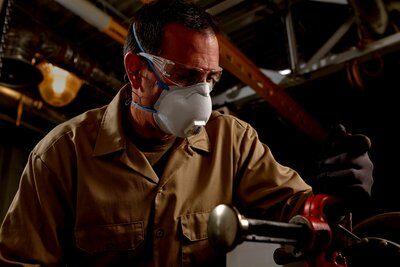
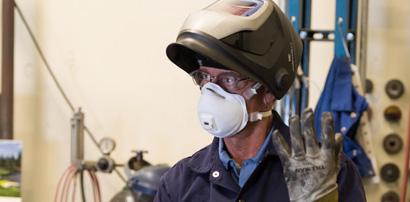
- A respirator is a personal protective device that is worn on the face or head and covers at least the nose and mouth. A respirator is used to reduce the wearer’s risk of inhaling hazardous airborne particles (including infectious agents), gases or vapors. Respirators, including those intended for use in healthcare settings, are certified by the CDC/NIOSH.
- What is an N95 filtering facepiece respirator (FFR)?
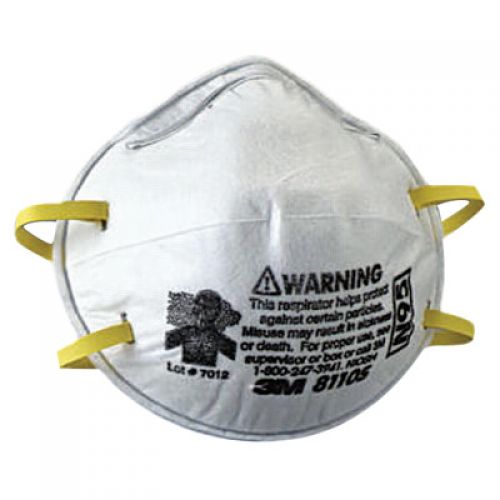
- An N95 FFR is a type of respirator which removes particles from the air that are breathed through it. These respirators filter out at least 95% of very small (0.3 micron) particles. N95 FFRs are capable of filtering out all types of particles, including bacteria and viruses.
- What makes N95 respirators different from facemasks (sometimes called a surgical mask)?
- Infographic: Understanding the difference between surgical masks and N95 respirators
- N95 respirators reduce the wearer’s exposure to airborne particles, from small particle aerosols to large droplets. N95 respirators are tight-fitting respirators that filter out at least 95% of particles in the air, including large and small particles.
- Not everyone is able to wear a respirator due to medical conditions that may be made worse when breathing through a respirator. Before using a respirator or getting fit-tested, workers must have a medical evaluation to make sure that they are able to wear a respirator safely.
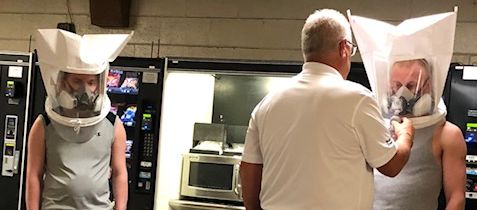
- Achieving an adequate seal to the face is essential. United States regulations require that workers undergo an annual fit test and conduct a user seal check each time the respirator is used. Workers must pass a fit test to confirm a proper seal before using a respirator in the workplace.
- When properly fitted and worn, minimal leakage occurs around edges of the respirator when the user inhales. This means almost all of the air is directed through the filter media.
- Unlike NIOSH-approved N95s, facemasks are loose-fitting and provide only barrier protection against droplets, including large respiratory particles. No fit testing or seal check is necessary with facemasks. Most facemasks do not effectively filter small particles from the air and do not prevent leakage around the edge of the mask when the user inhales.
- The role of facemasks is for patient source control, to prevent contamination of the surrounding area when a person coughs or sneezes. Patients with confirmed or suspected COVID-19 should wear a facemask until they are isolated in a hospital or at home. The patient does not need to wear a facemask while isolated.
- What is a Surgical N95 respirator and who needs to wear it?
- A surgical N95 (also referred as a medical respirator) is recommended only for use by healthcare personnel (HCP) who need protection from both airborne and fluid hazards (e.g., splashes, sprays). These respirators are not used or needed outside of healthcare settings. In times of shortage, only HCP who are working in a sterile field or who may be exposed to high velocity splashes, sprays, or splatters of blood or body fluids should wear these respirators, such as in operative or procedural settings. Most HCP caring for confirmed or suspected COVID-19 patients should not need to use surgical N95 respirators and can use standard N95 respirators.
- If a surgical N95 is not available for use in operative or procedural settings, then an unvalved N95 respirator may be used with a faceshield to help block high velocity streams of blood and body fluids.
- My employees complain that Surgical N95 respirators are hot and uncomfortable – what can I do?
- The requirements for surgical N95 respirators that make them resistant to high velocity streams of body fluids and help protect the sterile field can result in a design that has a higher breathing resistance (makes it more difficult to breath) than a typical N95 respirator. Also, surgical N95 respirators are designed without exhalation valves which are sometimes perceived as warmer inside the mask than typical N95 respirators. If you are receiving complaints, you may consider having employees who are not doing surgery, not working in a sterile field, or not potentially exposed to high velocity streams of body fluids wear a standard N95 with an exhalation valve.
- My N95 respirator has an exhalation valve, is that okay?
- An N95 respirator with an exhalation valve does provide the same level of protection to the wearer as one that does not have a valve. The presence of an exhalation valve reduces exhalation resistance, which makes it easier to breathe (exhale). Some users feel that a respirator with an exhalation valve keeps the face cooler and reduces moisture build up inside the facepiece. However, respirators with exhalation valves should not be used in situations where a sterile field must be maintained (e.g., during an invasive procedure in an operating or procedure room) because the exhalation valve allows unfiltered exhaled air to escape into the sterile field.
- How can I tell if a respirator is NIOSH-approved?
- The NIOSH approval number and approval label are key to identifying NIOSH-approved respirators. The NIOSH approval label can be found on or within the packaging of the respirator or sometimes on the respirator itself. The required labeling of NIOSH-Approved N95 filtering facepiece respirators includes the NIOSH name, the approval number, filter designations, lot number, and model number to be printed on the respirator. You can verify that your respirator approvals are valid by checking the NIOSH Certified Equipment List (CEL).
- More Information (CDC.GOV)
|
|
References
1. Fisher EM, Noti JD, Lindsley WG, Blachere FM, Shaffer RE [2014]. Validation and application of models to predict facemask influenza contamination in healthcare settings. Risk Analysis
34(8):1423-1434.
2. Fisher EM, Shaffer RE [2014]. Considerations for recommending extended use and limited reuse of filtering facepiece respirators in healthcare settings. J Occup Environ Hyg.
11(8):D115-D128.
3. Brady TM, Strauach AL, Almaguer CM, Niezgoda G, Shaffer RE, Yorio PL, Fisher EM, [2017]. Transfer of bacteriophage MS2 and fluorescein from N95 filtering facepiece respirators to hands: measuring fomite potential. J Occup and Eviron Hyg. 14(11):898-906.
4. NIOSH [1996]. Guide to the selection and use of particulate respirators. Cincinnati, OH: U.S. Department of Health and Human Services, Public Health Service, Centers for Disease Control and Prevention, National Institute for Occupational Safety and Health, DHHS (NIOSH) Publication No. 96-101, https://www.cdc.gov/niosh/docs/96-101/default.html
|
|
Questions about
Industrial Personal Protective Equipment (PPE)? Contact Engman-Taylor.
We can provide assistance in selecting the appropriate PPE, when is it recommended, proper fit testing, and more.
|
|
|
|
|
|
|
|