November 8, 2019
The Out-of-Pocket Health News Digest
|
|
Below you will find briefs about recent health policy news stories. Our hope is for students to have an information outlet at their fingertips to keep up-to-date with the most pressing news stories in health policy.
This compilation is produced by the HPSA Education Committee: Sharoni Bandyopadhyay, Matthew Dunn, Payton Watt and Courtney Zott.
|
|
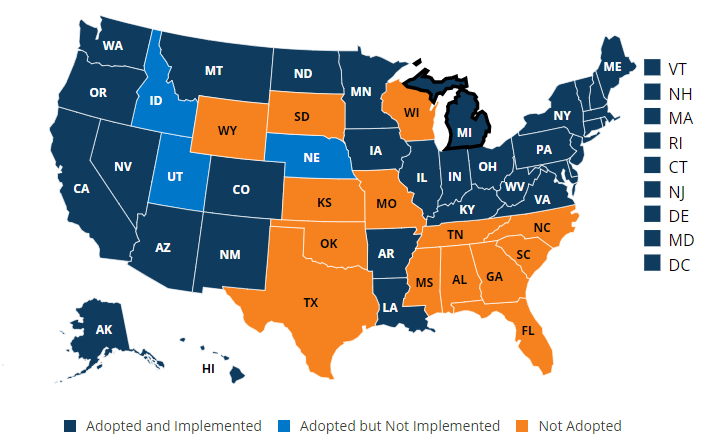
Medicaid Expansion Continues to Improve Outcomes, Reduce Costs
|
|
HMP Spotlight:
New Study Finds that CMS Effort to Reduce Hospital-Acquired Injuries and Infections Adds Little Value
|
|
New research from Dr. Andrew Ryan in UM’s Health Management and Policy Department raises questions about the efficacy of a federal effort to reduce hospital-acquired injury and infection rates.
The study
, published Monday in Health Affairs, found that the Hospital-Acquired Condition Reduction Program did not lead to improvements in Michigan beyond what was expected based on the state’s existing trends. The Hospital-Acquired Condition Reduction Program launched with the passage of the Affordable Care Act and penalizes hospitals financially for performing in the bottom 25% of their peers on conditions such as pressure injuries, central line-associated blood stream infections, surgical-site infections and catheter-associated urinary tract infections. This study is the first to independently evaluate its efficacy.
Dr. Ryan
told Modern Healthcare
that the penalty—a 1% reduction in Medicare payment—could be inadequate to motivate significant change in hospital performance. Additionally, hospitals argue that it does not account for progress. Hospitals within the bottom quartile are penalized the same each year regardless if their performance represents an improvement.
Interestingly, the study also found that hospitals may be under-reporting patient injuries and infections to avoid penalties. The researchers used data from the Michigan Surgical Quality Collaborative rather than Medicare claims data and discovered much higher rates than are found in the program.
|
|
Wildfires Continue to Devastate California, Raising Questions on Effective Policy Interventions to Reduce Impact
|
|
After a relatively calm start to the 2019 wildfire season,
large fires have broken out
over the past few weeks in Southern California. As of October 29th, there were
17 major fires actively burning
across California. Consequently, approximately 130 million trees were lost, millions of people lost power or were forced to evacuate their homes, and dozens of schools were closed. Although the state was better prepared this year to combat the fires, there is still a large threat to public health.
A large portion of the danger is due to the smoke released by wildfires. Particulate matter is the main pollutant, which is associated with the development of
heart disease, lung disease, and cancer
. Children, the elderly, and people with certain pre-existing health conditions are considered to be most at-risk. Also,
smoke can become trapped
by land features or weather, extending the health risks for weeks after the wildfire occurs. A major problem is that some people are unable to evacuate unsafe areas. For instance,
low-income California farm workers
often have to choose between working in toxic conditions or losing their pay. Government relief programs are available, but many of the workers are undocumented and fear that applying to these programs would jeopardize their safety.
There is no silver-bullet solution to these challenges, but there are policy proposals that may help. Intensive
climate interventions
to reduce emissions, such as strict cap and trade policies, can reduce the frequency of major wildfires over time.
Building affordable housing
units in California cities would also protect forests, which are strained when working-class people are locked out of developed areas and pushed toward the wilderness. Finally, it is important that utility companies update their infrastructure and grid-lines to the highest standard of fire resistance.
|
|
- LBGTQ+ Health: [Trigger Warning] Studies on mental health disparities in the transgender community, particularly regarding the high prevalence of suicide among trans adolescents, rarely record the gender identity of study participants, creating difficulties in identifying the best interventions to improve health outcomes in a marginalized, vulnerable population. (STAT)
- Technology: Researchers have revealed that Optum Health’s algorithm, which is used to inform healthcare decision-making for millions, shows racial bias and undermines the healthcare needs of Black patients, raising concern around how algorithms can further exacerbate healthcare disparities. (Washington Post)
- Global Health: People are ordered to stay inside indefinitely due to extraordinary, even lethal, pollution levels in Delhi, India; air pollution is the number one cause of premature deaths in the world, causing concern for the future of public health in India and other nations. (The Atlantic)
- Law: New York judge rules Trump’s “conscience protection” rule unconstitutional; the HHS rule allowed for medical professionals to refuse to perform services that they do not morally agree with, specifically reproductive services, vaccine administration, gender dysphoria treatment, etc. (Modern Healthcare)
- Immigration: A federal judge ruled that the U.S. must provide mental health services to migrant children who have experienced trauma due to family separation in the border camps, establishing a new and rare precedent for holding the government accountable for the psychological harm inflicted by its policies (NYT)
|
|
|
|
|
|
|