In this issue:
-
Panel discussion about new book, Rouge River Revived
- Upcoming programs
- 3rd Annual Pollinator Photo Contest Results & video
- Pumpkin seed contest winners
- Meet Mike Solomon!
- Tales From the Trails
|
|
Rouge River Revived
Panel Discussion
The Rouge River caught on fire in 1969 Today it stands as one of the most successful examples of urban river revival in the country!
Learn how people are bringing their river back to life with some of the authors.
Panel Discussion on Zoom Thursday, 17 November 2022 from 7 – 8:30 pm
|
|
|
- Orin Gelderloos – Professor Emeritus of Biology and Environmental Studies, University of Michigan - Dearborn
- John Hartig - Visiting Scholar, University of Windsor’s Great Lakes Institute for Environmental Research
- Sally Petrella – Monitoring Manager, Friends of the Rouge
- Cyndi Ross – Restoration Manager, Friends of the Rouge
Questions? ckwalter@umich.edu umdearborn.edu/eic
|
|
Whooooo's There....?
Friday, November 11
7:00-9:00 PM, participants 9 years and up
The Environmental Study Area is home to several owl species, big and small, as well as migrating owls. Fall and early winter is courtship time for local owl species and the way to find a mate and secure a territory is to vocally announce your presence. We'll take a page from the owls' book and send out a neighborly "hello" into the night. We'll see who gives a hoot and responds to our calls. Meet at the EIC.
National "Take a Hike" Day
Thursday, November 17, 10-12 and/or 2-4
In partnership with the Friends of the Detroit River, the International Wildlife Refuge, and the UM-Dearborn EIC, join naturalist Dorothy McLeer for two hikes celebrating National Take a Hike Day. Hikes will begin at the John D. Dingell Visitor Center at the Refuge's Humbug Marsh unit, located at 5437 West Jefferson Ave, Trenton, MI, 48183.
|
|
Walk the Winter Woods
Saturday, December 10
10:00-11:30 AM
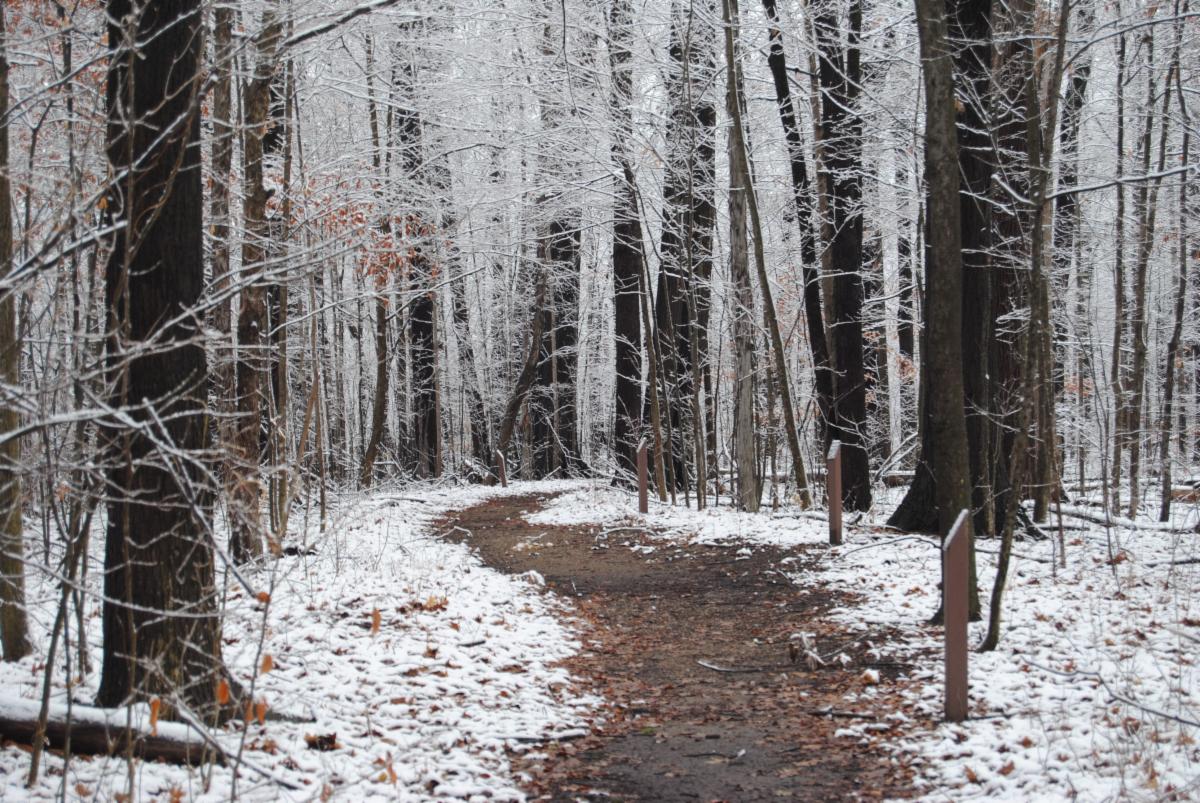
Winter provides a different palette in the seasonal calendar. Many of the animals are more active in chilly temperatures foraging for food to keep them well fed in lean times. We can see the shape of the trees and their branching patterns, as well as where all the squirrels are spending the cold nights in their leafy nests. Meet at the EIC.
|
|
2022 Pollinator Photo Contest Results! |
|
Celebrating Pollinators
For the third consecutive year, the EIC sponsored a Pollinator Photo Contest to highlight the amazing diversity of the Earth’s pollinators. The 2022 edition of the contest experienced a record number of entries with a total of 236 photos submitted from across the United States--nearly double what we received last year!
|
|
|
After careful consideration by EIC staff, this year’s three award winning photos are:
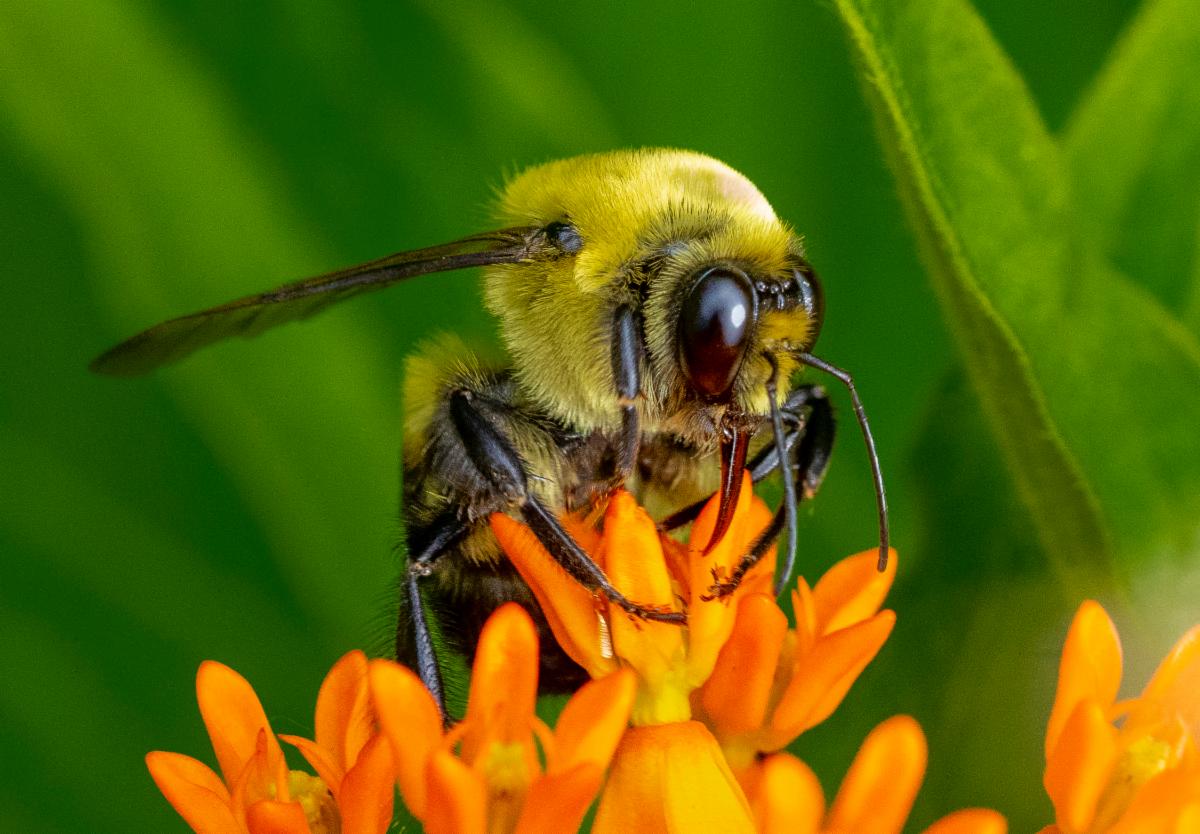
· Pollinators Up Close – Bumble Bee Close-Up by Craig Bamm (above)
· Pollinator-Flower Interactions – The Honey Pot by Linda Gilson
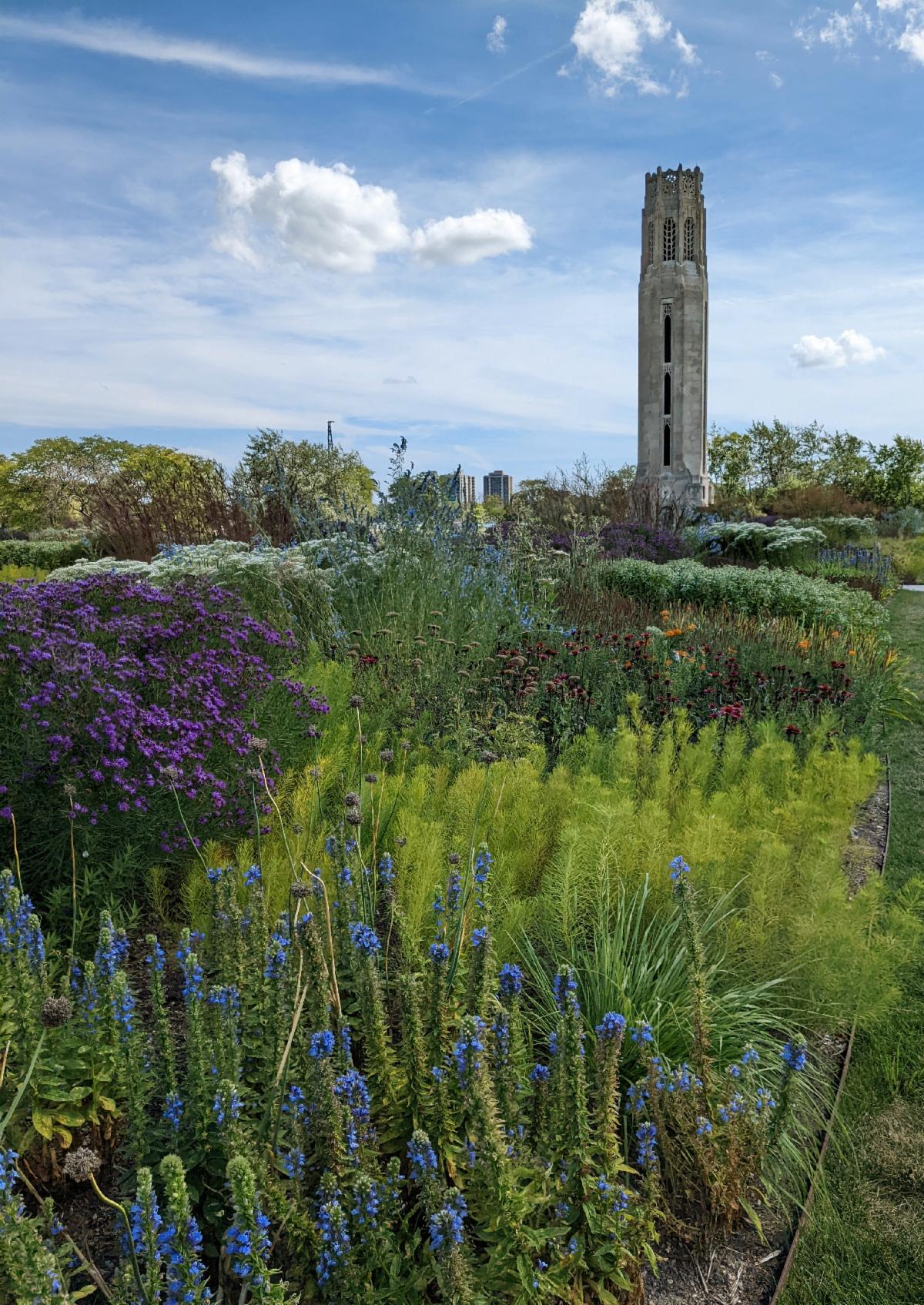
· Pollinator Landscapes – Oudolf Garden in September by Ashley Gottfried-Quam
Each winning photographer receives a bottle of honey produced in the campus beehives. Congratulations!
UM-Dearborn has been certified as a Bee Campus USA affiliate since 2019 in recognition of its pollinator education and conservation efforts.
Former EIC Director, Dr. David Susko, has prepared a highlight video of some of the best photos for you to enjoy. !"
|
|
Oudolf Garden in September
Ashley Gottfried-Quam
|
|
The Honey Pot
Linda Gilson
|
|
Who are These Seedy Characters? |
|
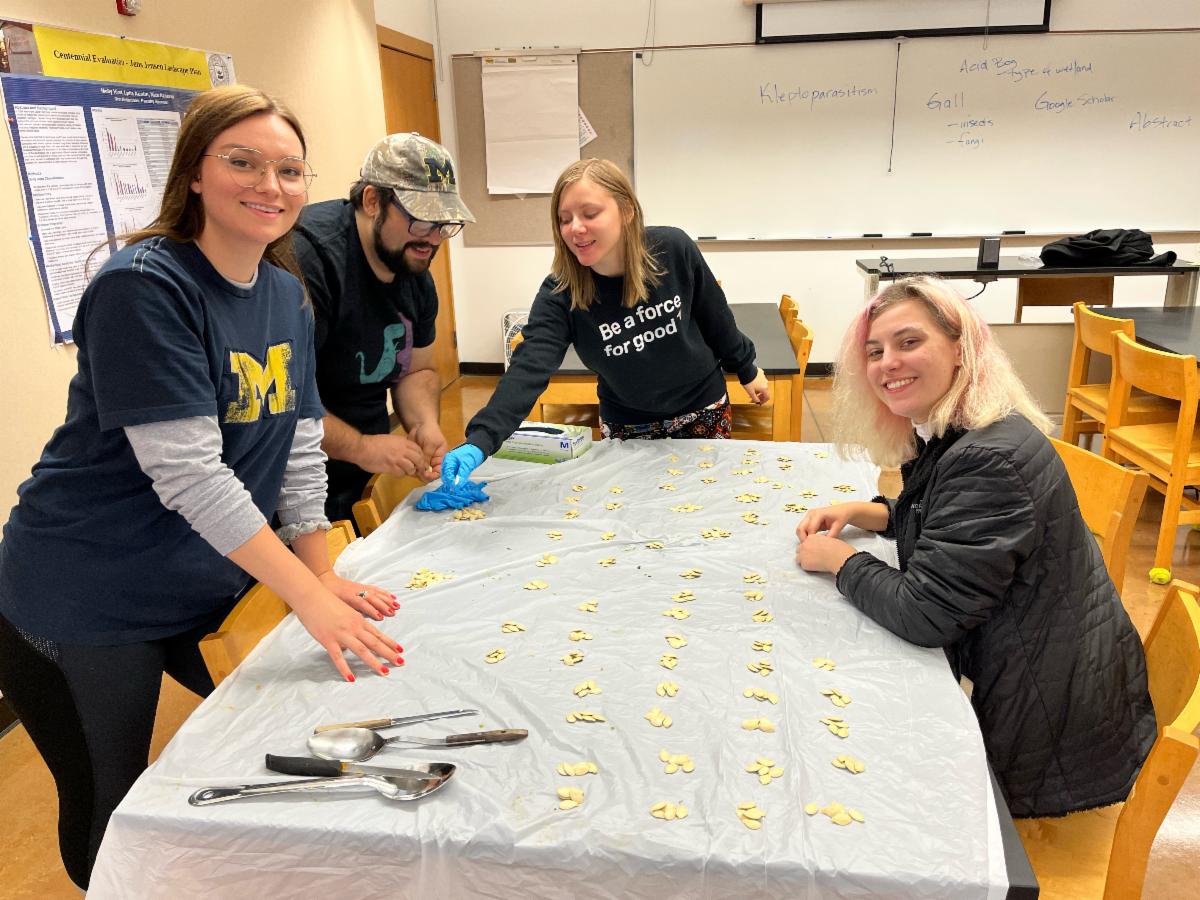
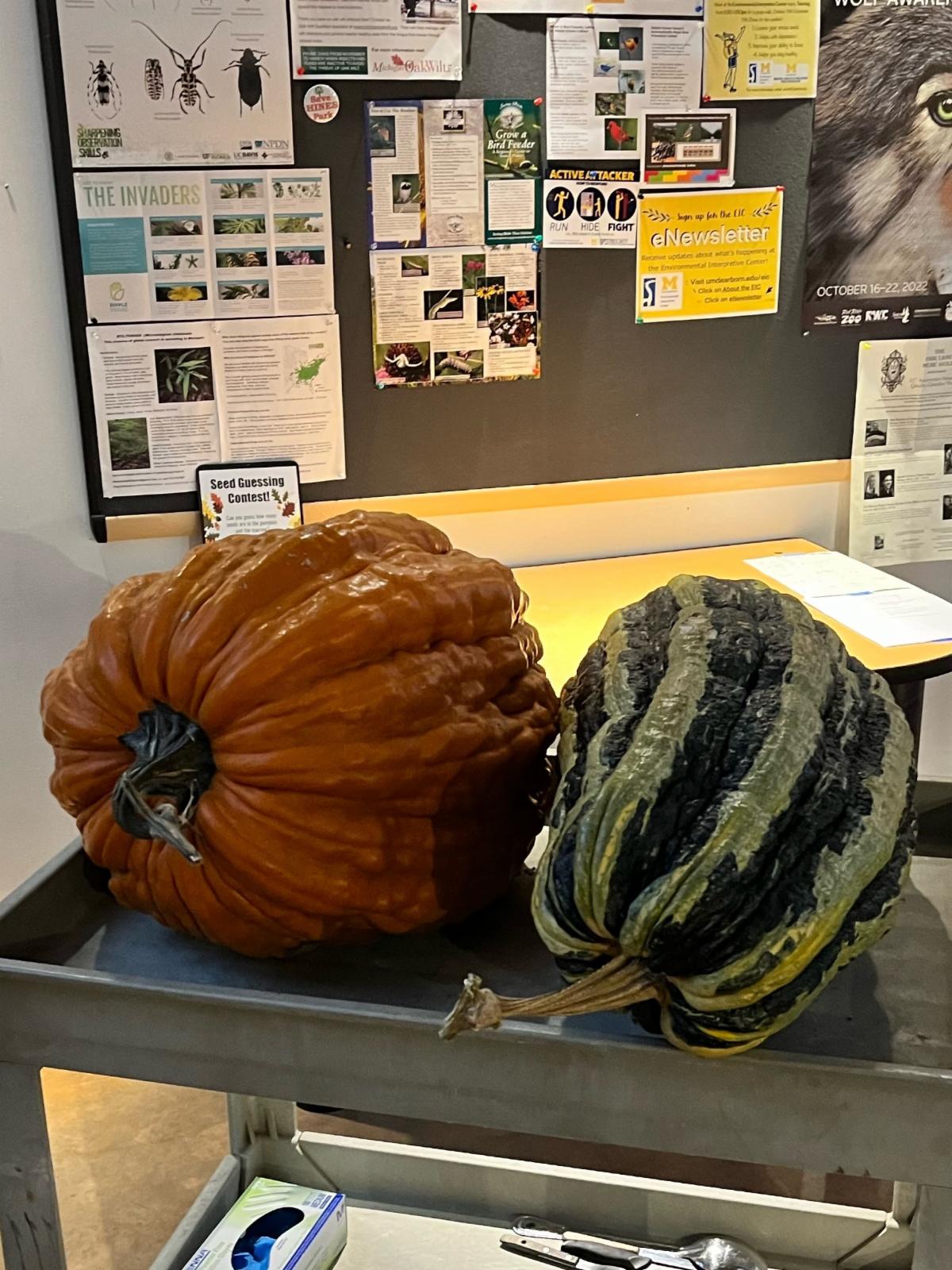
Student staff members Allie Jones, Mike Solomon, Alexis Kott, and Valerie Osowski meticulously counted seeds from the giant pumpkin and enormous marrow squash to determine whose guesses were closest to the number of seeds in each. The winners receive seeds from these giants to try their hand at growing them, carrying on their genetic line.
Congratulations to these winners:
FIELD PUMPKIN: actual seed count: 382
Closest three guesses: Becky Berro, Ermina Chohan, Jordan Pitcher
MARROW: actual seed count: 379
Closest three guesses: Kate Garland, Summer Kennedy, Clarisa Summers
Thanks to Dr. Jeff Boutain for the photos and for creating this unique learning opportunity!
|
|
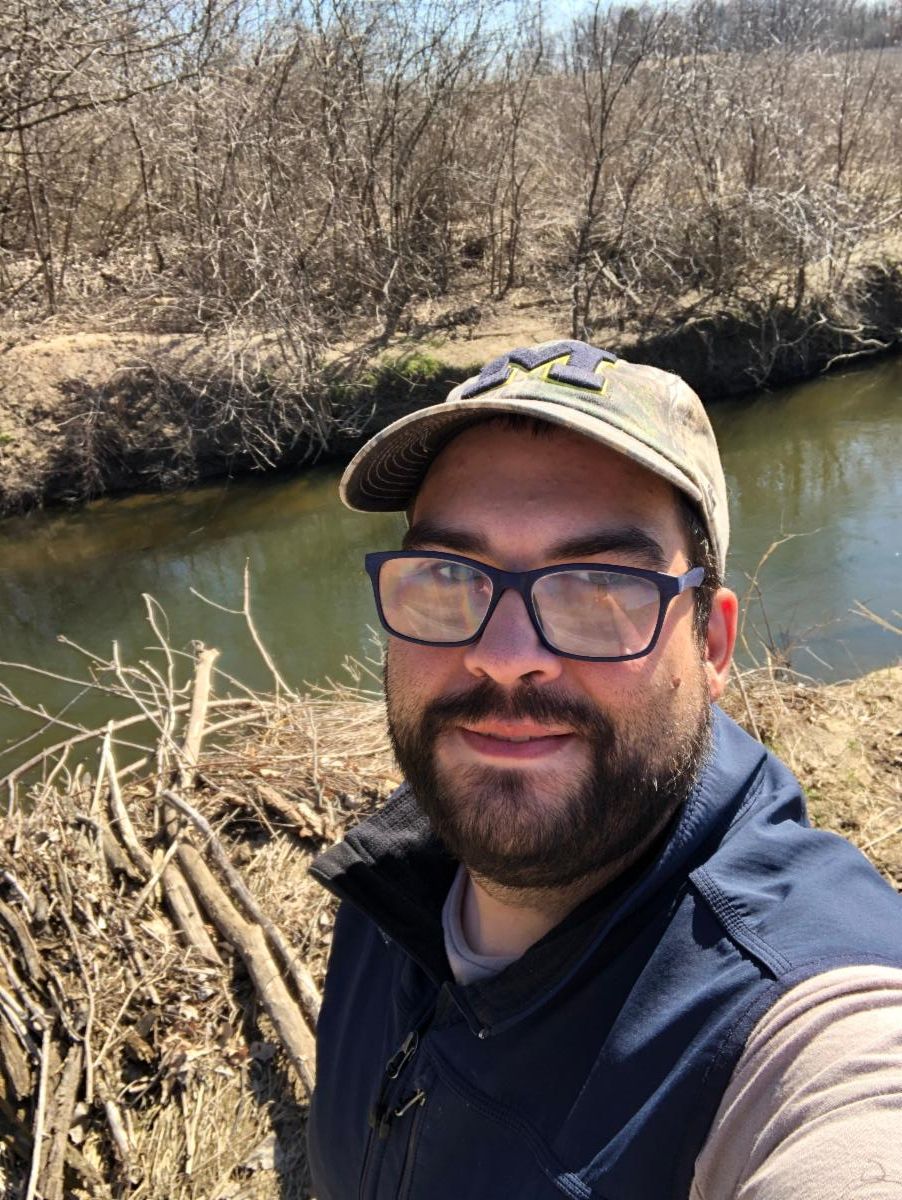
Mike Solomon is an EIC Parkhurst Natural Areas Fellow. Mike is a senior majoring in Environmental Studies in the Naturalist concentration. Mike’s duties include leading programs for school groups, assisting with stewardship activities in the Natural area, and activities that involve collecting and processing honey from the EIC bee yard.
Before coming to the EIC, Mike worked as the Community Connections Intern for Detroit River International Wildlife Refuge, where he created a series of videos of educational programs during 2020, as well as helping with various groundskeeping duties and outreach opportunities.
Mike will always have a “soft spot” for geology, though. He has been fortunate to travel the world in the relentless pursuit of education, visiting and studying the geology of destinations such as Iceland, Cyprus, and Montserrat; and these experiences, as well as his passion for connecting people with the wonders of nature, have proven invaluable in setting him on the course toward Environmental Education and Interpretation.
“On these trips abroad with groups of fellow students, as well as in my experiences leading programs at the EIC, I’ve discovered that while I have always enjoyed learning about the resources I visit; I find my moments of peak fulfillment to be when I am helping to teach or inspire others. Learning new facts and information is nice, but nothing compares to seeing the spark in a student’s eye when a new experience finally ‘clicks’ for them. It is addictive!”
|
|
Lend a hand on Stewardship Saturdays that take place from 1:00 pm to 4:00 pm on the third Saturday of the month. Pick one or more days to come out and help.
This year-round, ongoing effort will help address the many threats posed by various invasive plants to habitat health and quality. Each month will bring opportunities for removal of various invasive plants according to current best management practices, etc.
Children must be at least 10 years of age to participate. For more information or to register for Stewardship Saturdays, please contact Rick Simek, the EIC Natural Areas Manager, at rsimek@umich.edu or call 313-583-6371.
|
|
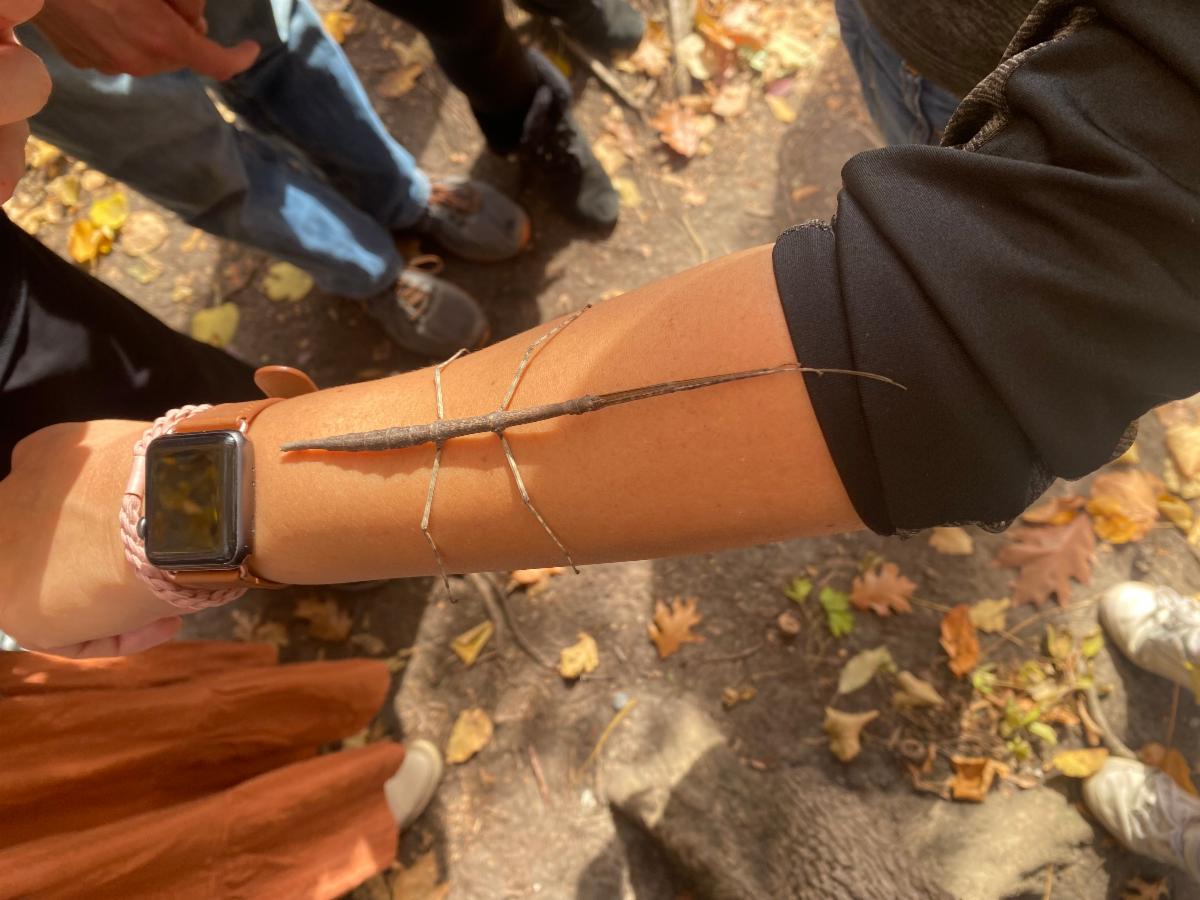
There are walking sticks, and then there are walkingsticks. The former, of course, is something that hikers sometimes carry along with them in the forest. The latter are also found in the forest, but they are alive, and unless you look for them, you are unlikely to see one. |
|
If you find yourself walking the trails of the Environmental Study Area (ESA) this month, you might just have a chance to encounter one. The trick is to know what to look for. (Photo by Valerie Osowski)
Walkingsticks, sometimes called Stick Bugs, are one of the most aptly named group of insects. Think of a small, slender stick with legs for walking. With that as your search image, you are ready to begin your ESA Stick Bug search.
|
|
|
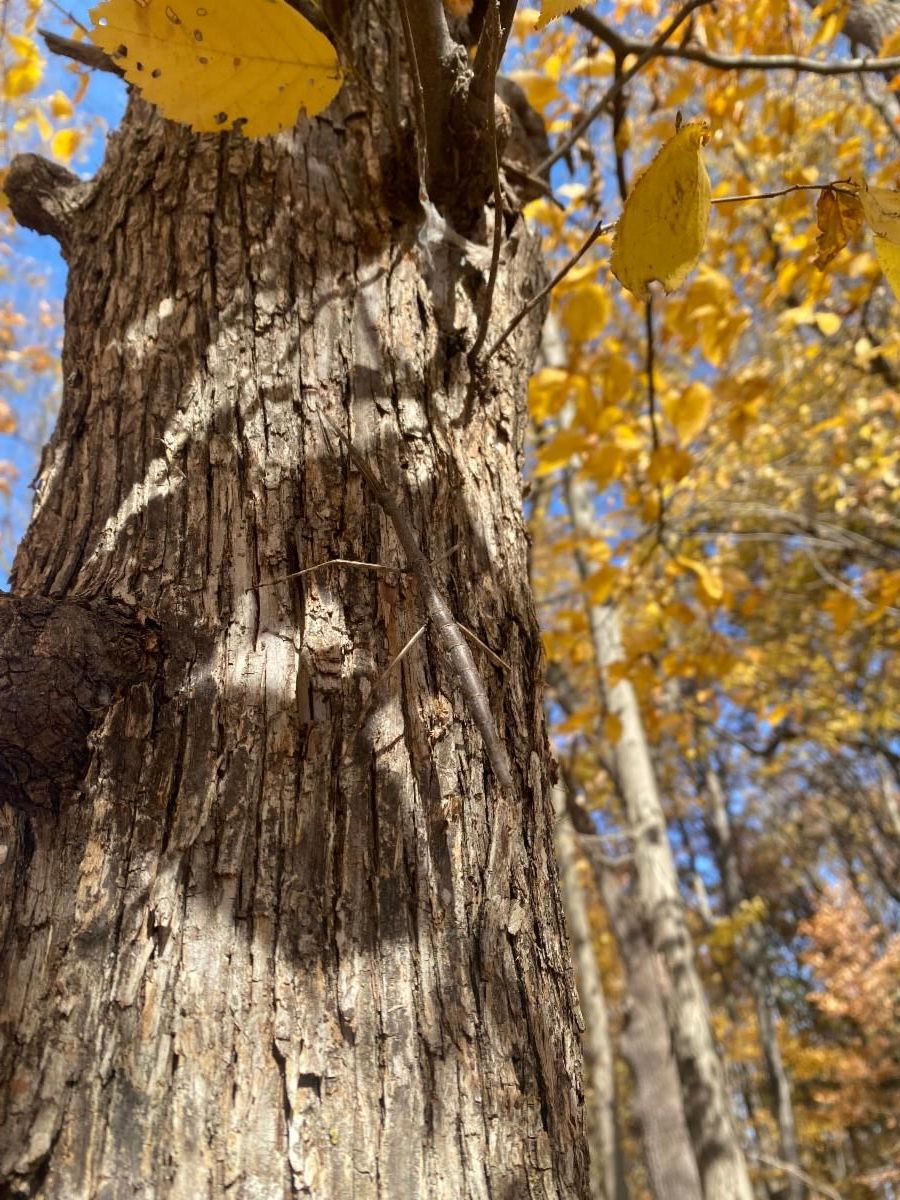
The next step is not so simple. Walkingsticks like to rest very still on tree trunks and branches--camouflage par excellence. One way to spot walkingsticks is to look closely at tree trunks along the edge of the ESA trails. Certain patterns of tree bark make them very difficult to see. However, with some persistence, you might find yourself nose-to-walkingstick.
That happened recently with a Northern Walkingstick that stationed itself on the trunk of a Hop Hornbeam tree for several consecutive days--can you find it in Valerie Osowski's photo? Word got out about the sighting and several different groups, ranging from grade school children out for EIC educational programs to UM-D Environmental Studies students, were able to enjoy observing a forest creature that most had never before encountered.
-Rick Simek
|
|
Venturing outdoors and encountering nature is good for your health. Our trails are accessible daily from sunrise to sunset, so please visit our Environmental Study Area. Check out our Remote Learning Activities & Resources page for ideas to create a “Neighborhood Nature Journal” and “Family Nature Walk” activities!
|
|
|
|
|
|
|
|