From the North Carolina Synod Council
The North Carolina Synod office is located on the original and ancestral homelands of the Keyauwee people, and we give thanks for their presence here since time immemorial. We also wish to recognize and honor all our indigenous siblings who have called and continue to call this land their home.
We are following the list of topics suggested by native leaders in the ELCA to continue our learning together. In February, we are learning about Captain Pratt. We pray that you would open yourself to learning, to being transformed, and to being in deep solidarity with our indigenous siblings.
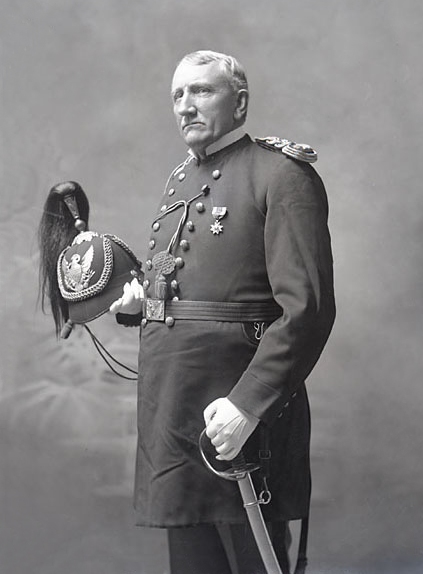
February Topic: Captain Pratt
Captain Richard H. Pratt, Brigadier General - The Basics

  • Captain Pratt served in the civil war for the Union (the United States). He was the second lieutenant of the 10th US Calvary which was the African American unit of (mostly) freed men, called the Buffalo soldiers by Native Americans because of the texture of their hair.
  • Pratt's “civilization program” started with Indian prisoners of war who were shipped to Fort Marion in Florida after the end of the American Indian war. He was charged to over see the Internment camps of Indian POWs.
  • Using his experience civilizing the Indian POWs, Pratt started the Carlisle School in 1879, organized along rigid military lines and inspired by Puritan teachings and practices. The days were divided into half days of school and half days of manual labor.
  • He is associated with the first recorded use of the word "racism," which he used in 1902 criticizing segregation. He believed he was fighting a noble cause by using assimilation of races to destroy racism. Pratt advocated complete americanization of Native Americans so they could be part of what he called “the best class”. 
  • Pratt believed Native Americans had to renounce their tribal life and become Christians. He pushed for total annihilation of all Indian culture including giving up native language to speak English only in the boarding schools.
  • He was forced to retire in 1904 after denouncing the Indian bureau and reservation system as a hindrance to assimilation.

Next month, we will explore Pratt's keynote speech where he laid out his key principle for boarding school, "Kill the Indian. Save the Man."

The Oxford English Dictionary's first recorded utterance of the word racism was by a man named Richard Henry Pratt in 1902. Pratt was railing against the evils of racial segregation.

"Segregating any class or race of people apart from the rest of the people kills the progress of the segregated people or makes their growth very slow. Association of races and classes is necessary to destroy racism and classism."

Although Pratt might have been the first person to inveigh against racism and its deleterious effects by name, he is much better-remembered for a very different coinage: Kill the Indian...save the man.
Theological Reflections on the work of Captain Pratt
As you learn about Captain Pratt, we invite you to struggle with these theological questions. These would work well for individual reflections, conversation in faith formation classes, and with your faith leadership.

Questions for Reflection:

  • Captain Pratt believed he was helping the Indian people assimilating them into dominant culture. What was lost with this work of assimilation? Was anything gained?
  • The assumption of a "best class" - for Pratt that was a "white class" - is white supremacy. What other ways do we see this helping for the sake of the "best class" still at work today?
  • At it's core, assimilation asks a beloved of God to renounce and destroy their God given identity. How does assimilation harm individuals in the system - both the oppressed and oppressor? How do we still ask people to "assimilate" today?
  • How can you see in the life of Pratt contradictions of helping and harming? He may have had "good intentions" but the trauma and harm is reprehensible. How do we talk about "good intentions" in justice work? In what ways is our helping hurting?



Invitation to Action - Practice Interrupting Racist Speech
Practice Interrupting Racist Speech
At the 2019 Churchwide Assembly, the ELCA adopted a resolution that condemns white supremacy and racist rhetoric. Read this resolution and examine your own language. We invite you to practice phrases that would help interrupt racist language you hear.
Engage the Native Narrative Change resources and explore specific ways you can combat racist narratives about our indigenous siblings.
Learn more about Native narrative change and how all of us can play a role in advancing the movement.
Language Matters: How to Talk About Native Nations
  • A Guide—Available as an online document and a downloadable resource.
  • Explainer Video—Covers the basics related to talking about Native people and nations in an appropriate and respectful way.
Additional Resources
Questions?
If you have questions about any of these resources, contact staff liaison for our Learning Team, Pastor Danielle DeNise.
Click here to join the synod's monthly Indigenous Learning e-News.
Special e-News | NC Synod, ELCA | 704-633-4861 | nclutheran.org