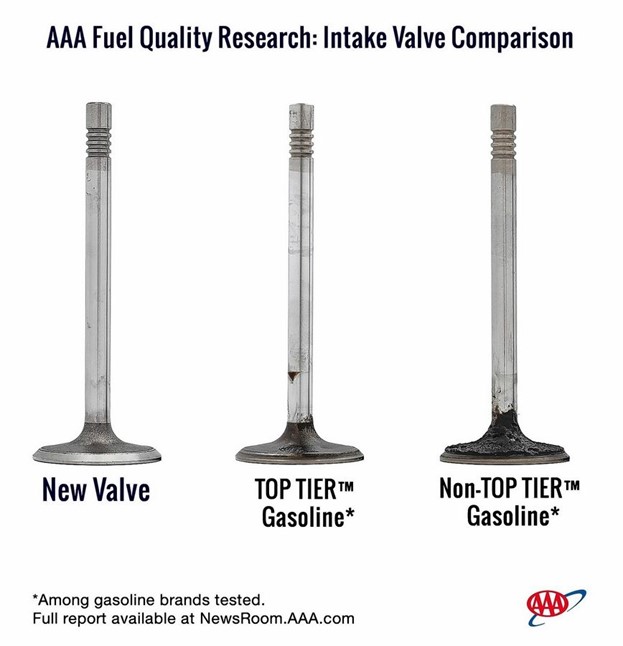
The takeaway for those short on time is that using non-Top Tier fuels caused up to 19 times more engine deposits that negatively affect the performance of your vehicle. If you own a modern water-cooled Porsche Boxster, Cayman, 911, or newer Porsche vehicle, the use of E10 fuels (10% ethanol enriched) are approved by Porsche, however you should always use Top Tier fuels. Be sure to stay clear of E15 and E85 fuels for which your Porsche was never designed to run. For the most up to date list of Top Tier brands, click on through to
https://www.toptiergas.com/licensed-brands/.
For those of us lucky enough to have access to ethanol free premium grade fuels such as REC90, we recommend this be used exclusively in their Porsche vehicles made before 2000 (Boxster and 996 excluded). A database of gas stations that offer ethanol free fuels can be found at
https://www.pure-gas.org/ or their
iOS and
Android apps are available for your smart phone. If you can get ethanol free, we wholly recommend using these fuels even if the octane rating of 90 (R+M/2 method) is less than the manufacturer recommended 91 octane.
However many of us do not have access to ethanol free fuels or Top Tier fuels. In that case, that leaves us with having to run fuel additives. Unlike oil additives that we mostly recommend against using, fuel additives are a must for older Porsche engines. Older fuel systems can be damaged by ethanol fuels, so using an additive that provides corrosion protection for fuel system components should be used every fill up. On older fuel systems,
Driven Carb Defender is the ideal choice, providing protection from corrosion and also stabilizing the fuel for storage longer than one month.
Even new Porsches designed for ethanol enriched fuels can benefit from regular use of fuel system additives to keep your engine clean. At bare minimum, you should use a fuel system cleaner containing PEA (polyetheramine) every 3,000 to 5,000 miles or 6 months, even if you use Top Tier fuels. If not using a Top Tier fuel, you may find benefit in running an additive much more frequently, even with every fill up. Driven’s
Injector Defender or
Injector Defender+Booster are excellent choices for engines with port or direct fuel injection.
To simplify this for you, any engine that calls for Mobil 1 A40 oil can use
Driven DT40. Likewise, an engine that calls for Mobil 1 C40 oil can run
Driven DI40. Any direct injected engine can benefit from a C40 oil or use
Driven DI40, but is required if your engine is direct injected AND has forced induction (turbo or supercharger) or if the vehicle is fitted with a gasoline particulate filter (GPF).
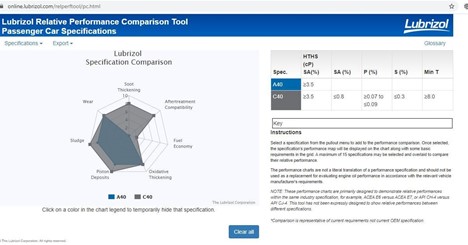
One of the biggest differences between an A40 and C40 oil is the amount of detergents used, specifically calcium detergents. The levels of Ca detergents in an A40 oil can cause
LSPI (low speed pre-ignition) in a direct injected engine with forced induction. Although Mobil says the C40 oils is not backwards compatible with an A40 oil, in our experience the C40 oils seem to outperform A40 oils, matching available data from Lubrizol comparing the two standards: