Connecting

Nov. 10, 2026


Click here for the sound of the Teletype

Top AP News

Top AP Photos

AP Merchandise

AP Emergency Relief Fund

AP Newsletters

AP Donations

AP News Tips

Colleagues,


Good Tuesday morning on this Nov. 10, 2026,


We lead with the recent announcement of the winners of the 2026 Oliver S. Gramling Awards, which honor Associated Press journalists and staff from across the globe whose contributions and achievements over the past year significantly supported its mission.


They are the AP’s highest internal honors. Congratulations to all who were recognized.


Created in 1994 to recognize AP staffers for professional excellence, the Gramling Awards are decided each year by a panel of judges from across the global news organization. The $10,000 awards come from a fund established by the estate of the late AP broadcast executive Oliver S. Gramling.


Announcement of the awards was made Oct. 28 and the news release initially missed by Connecting, but better late than never – with a thank you to colleague Lou Boccardi for backstopping.


CONNECTING VETERANS, a reminder that to help celebrate Veterans Day tomorrow, Connecting invites you to share:


Your branch of service

Your years of service

How your life was impacted by your service (100 words or fewer, please.)


A dozen of you responded with your information on Monday. We will publish a listing in Wednesday’s issue.


SHOUTOUT TO AP ELECTION TEAM – Spotted on LinkedIn, this post-election post from Jerry Hawk, CEO of Datavail and former VP R&D for AP from 2002-2006: “A special shout-out to my former colleagues, and the new crew, at the Associated Press who are working the elections this week. I’m still amazed by the dedication of the AP team and their incredible ability to call races accurately. I’m not sure I ever saw a mistake. From the outside, it probably seems like not much is going on beyond reporting the stats. I can assure you, having seen it from the inside, that it is a herculean effort for the good of us all. Thank you for your hard work and dedication, from a former employee and loyal fan.”


Here’s to a great day – be safe, stay healthy, live it to your fullest.


Paul


AP announces winners of 2026 Oliver S. Gramling Awards 

2026 Oliver S. Gramling Award winners pose at AP’s headquarters in New York, Oct. 28, 2026. (AP Photo/Yuki Iwamura)


By AP Corporate Communications


Associated Press journalists and staff from across the globe whose contributions and achievements over the past year significantly supported its mission are among the winners of the 2026 Oliver S. Gramling Awards, the organization’s highest internal honors.


Created in 1994 to recognize AP staffers for professional excellence, the Gramling Awards are decided each year by a panel of judges from across the global news organization. The $10,000 awards come from a fund established by the estate of the late AP broadcast executive Oliver S. Gramling.


The judges this year evaluated submissions in three categories: achievement, spirit and journalism.


“This year’s Gramling Award winners represent the very best of AP, with colleagues from across the globe and every corner of our organization recognized for their extraordinary contributions,” said AP President and CEO Daisy Veerasingham. “From groundbreaking journalism and visual storytelling to driving innovation and providing indispensable support behind the scenes, these honorees exemplify the dedication, ingenuity and collaboration that make AP’s mission possible.”


$10,000 Oliver S. Gramling Achievement Award


Rafaela Freitas, live video news editor, London

Rafaela Freitas is honored for her innovative leadership and operational expertise in transforming AP’s live video operation and positioning it for the future.


Svetlana Setunskaya, regional sales director, Berlin

Svetlana Setunskaya’s persistence, creativity and determination helped the organization overcome complex challenges and secure vital revenue that strengthened AP’s business.


Technology Special Events Team

The Technology Special Events Team is recognized for their exceptional technical expertise, innovation and behind-the-scenes support that enables AP to deliver fast, reliable coverage of the world’s biggest events. The team is represented by: Stephen Collingwood, technology operations manager; James Lipari, enterprise collaboration global events team lead; Stephen KH Moyes, EMEA/Asia technology support and global events director; and Nikos Seimenakis, enterprise collaboration and global events lead, photo technology manager.


$10,000 Oliver S. Gramling Spirit Award


David J. Phillip, photographer, Houston

David J. Phillip has helped advance AP’s photojournalism through his technical innovation, including his pioneering work in photo robotics, and his dedication to helping colleagues around the world capture extraordinary images.


Mary Miller, administrative assistant, Atlanta

Mary Miller is recognized for her unwavering dedication, selflessness and support to her colleagues that keeps AP’s operations running smoothly, enabling its journalists to focus on delivering quality journalism.


$10,000 Oliver S. Gramling Journalism Award


Samy Magdy, reporter, Cairo

Samy Magdy has been indispensable to AP’s Middle East coverage, providing deeply sourced, often exclusive reporting that kept AP ahead of competitors during the Iran war and Gaza conflict.


Venezuela All-Formats Reporting Team

AP’s Venezuela All-Formats Reporting Team is recognized for their fast, authoritative and firsthand reporting on major developments in Venezuela that have enabled AP to deliver comprehensive coverage across text, photo and video formats. The team is represented by Juan Arraez, video journalist; Regina Garcia Cano, newsperson; Ariana Cubillos Charry, photographer; Matias Delacroix, photographer; and Jorge Rueda, newsperson.


Additionally, the organization’s Middle East staff were awarded a Presidential Citation for Courage in Journalism for their vital efforts in covering the rapidly expanding regional war.


Click here for link to news release.


Netflix’s ‘The Diplomat' evokes memories of his AP London days

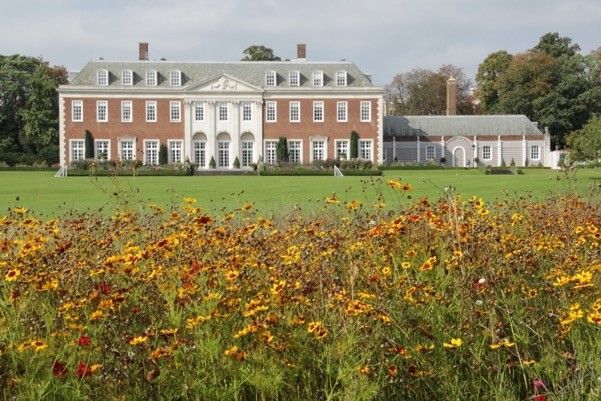
Winfield House, the residence of U.S. ambassadors since 1955.

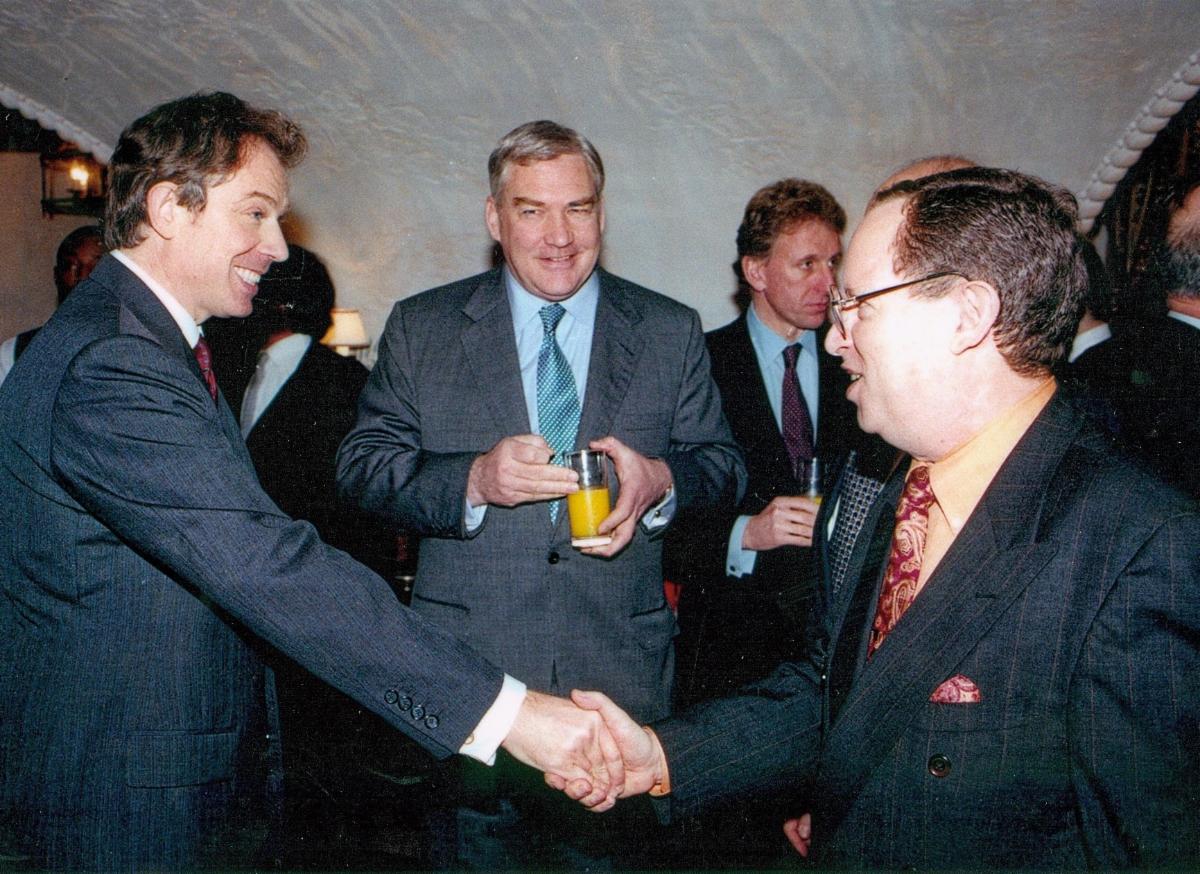
Myron Belkind (right) with Prime Minister Tony Blair


Myron Belkind - Ye Olde Connecting editor had an idea: How about a piece for Connecting offering your observations of "The Diplomat," the popular series on Netflix now in its fourth season set mostly in London and focusing on politics and diplomacy?


(The series follows Kate Wyler, a sharp and career-focused United States diplomat who is suddenly thrust into a high-profile role she never expected or particularly wanted: U.S. Ambassador to the United Kingdom. Amid international crises, state-level conspiracies, and shifting geopolitical power plays, she must also navigate the volatile, crumbling dynamics of her marriage to fellow political star Hal Wyler.)


Indeed, the series brought back vivid memories of being assigned to London from 1977 to 2001, especially the scenes portraying Winfield House, the residence of U.S. ambassadors since 1955.


When the AP board of directors came to London in 1995 to view the operations of the new APTV, I approached then U.S. Ambassador William J. Crowe to see if he would brief the visiting directors. He agreed to do so -- at Winfield House -- and provided an excellent briefing coupled with a tour of his residence overlooking Regent's Park.


When the AP celebrated its 150th anniversary at venues in the United States and internationally, I extended an invitation on behalf of AP President/CEO Lou Boccardi to then Prime Minister Tony Blair to speak at a luncheon for editors and other media leaders to mark the anniversary. He agreed to do so at Gray's Inn, one of the four historical Inns of the Court that barristers join.


Then there was an earlier board visit to London, in 1986, when Princess Anne was the guest speaker at a dinner at Middle Temple Hall, another of the historical Inns of the Court.


And in 1981, when The Associated Press Limited, the AP's British subsidiary, marked its 50th anniversary, former prime minister Harold Wilson was the guest speaker at a hotel a short distance from Fleet Street, which was then home to London's national newspapers.


One of the main story lines in "The Diplomat" was the downfall of a British prime minister due to political intrigue.


In 1990, there was the ouster of Prime Minister Margaret Thatcher following her failure to get re-elected on the first ballot in the annual leadership election of her Conservative party's members of parliament. She resigned before the second ballot, leading to John Major succeeding her.


It was a real-life script of political intrigue rivaling the plots in "The Diplomat!"


On to Season 5 following Netflix's renewal of the series late last month!


Election night memories

Bill Sikes - One of my election night memories . . . .


After months photographing campaign stops across western New York by three-term incumbent Democratic Gov. Mario Cuomo and Republican challenger George Pataki, I was assigned to Pataki’s 1994 election night rally in the City. Cuomo held a double-digit lead into the final two weeks of the campaign. But influential Sen. Al D'Amato endorsed Pataki, and he began to close the gap down the home stretch.


Upon arrival, I was handed a groundbreaking NC2000 digital camera, jointly developed by AP and Kodak and released earlier in the year. It was to be one of AP’s first attempts to deliver digital photos from election night significantly faster than film images. I spent the day making photos on the Manhattan streets to get acclimated to the quirky new tool, and quickly learned it had a slim margin for exposure error.


I arrived early and set up two tripods at my assigned shooting position in the Hilton ballroom balcony. One held the NC2000 with a 400mm lens, and the other held a Nikon F4 film camera with a 500mm lens. To make sure the finicky NC2000’s exposure was spot-on, I made a series of test images. Disks were shuttled to AP’s headquarters five minutes away, and after several cycles of tests the correct exposure was nailed down.


Hours passed until AP called the election for Pataki. Late in the night he emerged at stage right celebrating with D’Amato. I made four or five frames with the NC2000 before he reached the well-lit podium where correct exposures were guaranteed. Then the camera stopped working! I had no idea why it stopped and I was certain the frames were underexposed. My blood pressure soared. Switching to the film camera, I made a few more frames for a quick minute then gave the disk and roll of film to the courier. As I covered the rest of the rally, I became convinced my short AP career would soon come to an end.


I had missed one important detail: the camera’s rechargeable battery needed more frequent charging – which I should have done during the hours of waiting. 


When the rally ended, I stowed the gear in my room at the Warwick hotel across the street and sulked toward 50 Rock, figuring I had totally failed the groundbreaking digital test. Upon reaching the newsroom, I was shocked to see Photo Director Vin Alabiso applauding along with others. And when I saw the digital image on the computer screen, I was even more shocked at the resulting photo. It somehow came out just as was planned. I was extremely relieved, and thankfully remained employed.


Unfortunately, AP had no method to archive digital images in that era. But I still have my copy of Newsweek as an occasional reminder that I was in the room where it happened.


A gathering to reminisce about pioneering days of Himalayan climbing 50 years ago

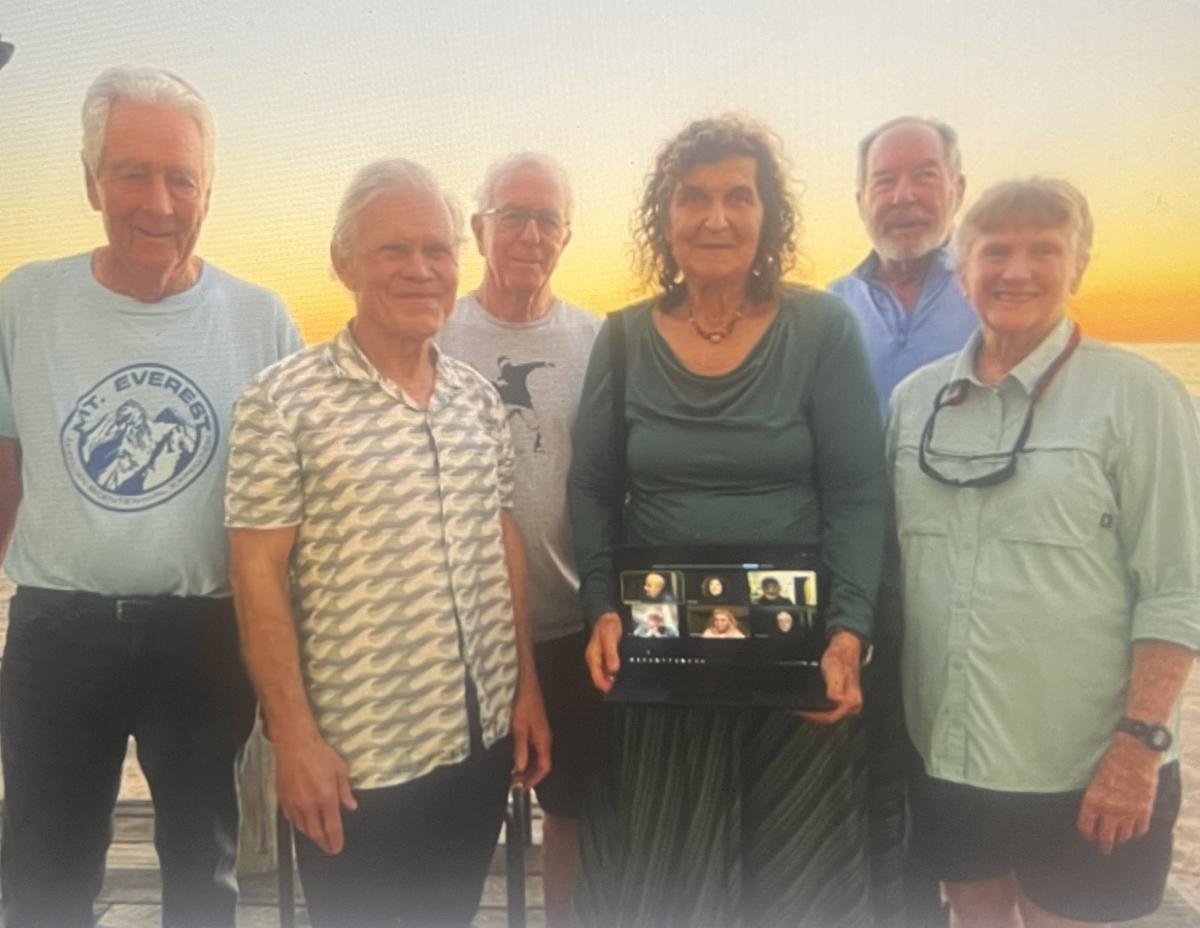
Dan Emmett, Rick Ridgeway, Peter Smokler, Arlene Blum, Ed Goren and Barbara Roach. Arlene is holding her computer with a screenshot of some of the ZOOM participants.


Jurate Kazickas - This past weekend, four members of the successful 1976 American Bicentennial Everest Expedition gathered in a small beach town in California to reminisce about those pioneering days of Himalayan climbing 50 years ago.  


On October 8, 1976, Bob Cormack and Chris Chandler, became the 6th and 7th Americans to conquer that iconic peak.


I was the Associated Press reporter covering the expedition. Like some of the 11 members of the team , I too had had a lifelong fascination with Everest. When I heard that two women climbers – Arlene Blum and Barbara Roach - had hopes to become the first American women to summit the mountain, (Japanese climber Junko Tabei was the first woman on top in 1975), I lobbied for the assignment. The plan was for my typewritten dispatches to be hand carried by Sherpas to the AP office in Kathmandu, a distance of 170 the fleet-footed mountain men covered in seven days.


I was not able to attend the 50-year reunion, but I caught up with a few climbers in phone interviews last week and a ZOOM call Saturday night.      


The ABEE adventure started when three Harvard lawyers, weekend climbing buddies, suddenly ended up with a Mt. Everest permit in March 1976 when a French team dropped out.


Himalayan expeditions can take years to plan and organize. ABEE had less than five months to raise funds, hire 30 sherpas and 200 porters and dozens of yaks to transport nearly 10 tons of supplies, including 200 tanks of oxygen to base camp. But, most importantly, expedition leaders had to assemble the strongest team of climbers for success. They ended up with a diverse crew - two doctors, a dancer, a biology professor, a carpenter, a pilot – with a wide range of climbing experience.


Arlene Blum organized the first reunion in 2006 and has been the prime mover for an ABEE gathering every five years.


“I think it is remarkable that this group of people, hardly the most experienced climbers in the world, was able to get together and do something so hard,” said Blum. 


Over her many climbing years, Blum said she has been told that women are not strong enough or emotionally stable to climb the highest mountains, even after her successful all-women’s expedition to North America’s highest peak, Denali in 1970.


When she wasn’t picked for the first summit team, “I was not happy because I was healthy and felt strong,” said Blum.  “I don’t think I was ever considered a serious summit climber. ”


“But I learned a lot on Everest. It gave me the skills and confidence.” Two years later,  Blum organized the first all-women climbing team to Annapurna. 


(American Stacy Allison finally conquered Everest in 1988.) 


Barbara Roach, a professional dancer, had climbed many peaks together with her husband, Gerry, and had achieved some first ascents. However, she was reluctant to go to Everest - “Summitting Everest had always been Gerry’s dream, not mine,” she said. But then she signed up and agreed to take on the Herculean task of organizing the food for 45 people for three months.  


“Success for me was if Gerry made it. The icing on the cake would have been if we had reached the top together. “ But in the end, both were sidelined because of  medical problems. Gerry, however, did successfully climb Everest in 1983.  


The three-month ABEE journey to the summit began in August when team members slogged from Kathmandu through leach-filled rivers, up and down hills and valleys for more than three weeks in monsoon deluges to reach base camp at 17,500 feet.


When they arrived, theirs was the only expedition on the Nepal side of the mountain for the nearly ten weeks it took the two climbers to finally stand on top of the world.


That was Everest then. This is Everest now.


In 2023, more than 40 teams from different countries were massed together in 500 tents at  base camp, according to the Himalaya Data base and other sources.  Cormack and Chandler were the 56th and 57th men to summit Everest. Today, approximately 7,000 can boast of that achievement. As of 2025, 344 people have died.


The 2019 photo of dozens of climbers massed in a long line – an Everest traffic jam - to take that selfie at the top of the world -crocketed around the world.  Suddenly, Everest was Times Square.


No longer does one need to be an experienced mountaineer. Weekend backpackers can book an outfitter guaranteeing a successful climb for up to $100,000 and more. They can avoid the leaches and blisters and chopper into base camp, just an hour’s flight from Kathmandu. The 50 plus pound packs with food, and ropes that weighed down ABEE climbers back then are now routinely carried by personal Sherpas.   Fixed ropes facilitate the 20 plus mile trudge up the classic South Col route. And Everest hopefuls can acclimatize for high altitudes at home with machines and gases.


Everest, once the impossible dream, can now be bought for big bucks and is as easily attained as a snowy peak in New Hampshire.


And these days Everest is hot. Two films about the mountain are currently playing to critical acclaim in theaters nationwide.


Three ABEE members have died: Chris Chandler, on a climbing trip in Nepal in 1985, team member Frank Morgan (2025) and Phil Trimble, leader of the expedition. He went on to become the Ambassador to Nepal from 1980-1981 in and died in 2024.    


The 50th reunion which took place at the Carpinteria beach home of Dan Emmett, the surviving Harvard lawyer, also included Ed Goren, who produced the CBS Everest documentary that aired in 1977, Mike Hoover, the cameraman, and crew member Peter Smokler.


I spent 44 days at base camp, interviewing climbers when they descended for rest and supplies. They had to navigate the treacherous Khumbu ice fall with loaded packs to set up six high camps in preparation for the push to the summit. Tensions erupted between the climbers and the film crew.  Finally, there were the anxious hours when the team was not sure if Cormack and Chandler had successfully summited and had survived the night at Camp Six. When it was confirmed, the news was conveyed by radio to Kathmandu.


At the top, Cormack fumbled with his camera for a few pictures. “The winds were 100 miles per hour. It was 30 below zero, I just wanted to get out of there.”  


As for Everest today, ABEE climbers, now in their 70s and 80s, seem to have resigned themselves to the commercialization of the mountain.


Cormack feels it may be safer now with the fixed ropes as long as the climber is physically fit.


Blum worries about medical emergencies that novice climbers are not prepared to handle.  


Rick Ridgeway, who at age 26 was the youngest member and wrote a book about the expedition, said that In the beginning, he was highly critical of the current industry of guided climbs and those “who just want bragging rights at cocktail parties. “ 


Then one day he met a man who said he did Everest.


“I was ready to dismiss him, but when I asked – so what did you learn – he spoke about feeling so small , that nature was so pristine. He had a whole different view of the planet. He was humbled and learned so much about himself standing on top of the world.”


Maybe the best answer to "why climb Everest" is what ill-fated climber George Mallory said in 1932 -"Because it's there." And it’s still there. 

Connecting wishes Happy Birthday

Eva Parziale


Lisa Rathke

Stories of interest


UFC’s Dana White appears with Trump at a White House briefing — but won’t be his press secretary


By Will Weissert and Seung Min Kim

The Associated Press


After bringing UFC to the White House lawn this summer, President Donald Trump has now brought it to the briefing room, too.


Trump made a surprise appearance before reporters Monday with UFC chief Dana White and briefly stood aside as his longtime friend took questions — milking a joke that began over the weekend, when Trump said he had offered White the job of White House press secretary.


“I’ve always wanted to do this,” White said, before bellowing, “Who has the first question?” He then clarified, “I have zero political aspirations.”


The joke — and the briefing — were the latest in a series of unexpected choices by the president since Republicans’ sweeping losses during last week’s midterm elections. Trump’s briefing room stop was so hastily organized that officials didn’t have time to affix the presidential seal to the lectern from which he spoke.


Trump said he had been having a “very bad press day” and thought suggesting White as the 38th White House press secretary in the nation’s history might be good for a laugh.


Read more here. Shared by Doug Pizac, Mark Mittelstadt.


-0-


Russia’s top independent newspaper closes after three decades, citing official pressure


By The Associated Press


MOSCOW (AP) — Novaya Gazeta, Russia’s most celebrated independent newspaper, closed its Moscow offices Monday, citing relentless pressure from government officials.


It was the last major independent media outlet critical of the Kremlin that remained active in Russia. Others closed or moved their operations abroad after President Vladimir Putin sent troops into Ukraine in February 2022.


In a statement published Oct. 30, the newspaper said the Russian authorities and the security services had “forced our editorial team to cease operations.”


“Human rights and freedoms have been abolished in this country, and defending them is now treated as a crime,” the newspaper said. “Elections and elected governing bodies have been effectively dismantled, civil society institutions have been wiped out, freedom of conscience and human dignity have been trampled underfoot.” 


Launched in 1993, Novaya Gazeta quickly became known for its fierce reporting and dedication to uncovering Russian human rights abuses and corruption. Six of its journalists have been killed, including Anna Politkovskaya, who reported on atrocities during the second Chechen War at the start of Putin’s first term as president. She was fatally shot in her apartment building in 2006.


On the newspaper’s final day in its office Monday, journalists slowly removed the portraits of their slain colleagues from the newsroom where reporters and editors planned their work.


Read more here. Shared by Doug Pizac.


-0-


Karen Attiah says she won’t rejoin The Washington Post, which fired her over Charlie Kirk comments


By The Associated Press


Opinion writer Karen Attiah has decided not to return to her job at The Washington Post, despite winning reinstatement after her firing over social media posts about the 2025 killing of conservative activist Charlie Kirk.


Attiah wrote Sunday on her Substack, “The Golden Hour by Karen Attiah,” that she reached a settlement with the Post and plans to move forward with her life and career.


“While I remain proud of the victory, I came to the painful realization that returning to The Washington Post meant coming back without the guaranteed freedom and institutional support to do what I loved: use my voice, seek truth, and serve readers,” Attiah wrote.


Attiah didn’t immediately respond to a request for comment. A Washington Post spokesperson declined to comment Monday on Attiah’s decision.


At the time of her firing, Attiah was the only Black full-time member


Read more here. Shared by Doug Pizac.


-0-


In a West Virginia county of 6,540, accountability journalism gets personal


By Kelly McBride

Poynter


Dan Parks is the founder and editor of Country Roads, a Substack publication that serves Tucker County, West Virginia. A couple of weeks before the midterm elections, he was facing an ethical dilemma.


A public records request for the details of a legal settlement had finally been fulfilled. The documents showed that the county had reached a $275,000 settlement in May with a former employee who had sued the county after being fired. Her lawsuit alleged sexual harassment by the president of the county commission and other county employees.


This seemed like a classic October surprise, a late-breaking, negative news story that can sway voters to change their votes. Earlier in his career, when Parks was working at Bloomberg and Congressional Quarterly, he’d learned to be cautious about such stories, which can be planted by a trailing opponent as a last-ditch effort to change the outcome.


The commissioner was running for re-election. The election was three weeks away.


Read more here. Shared by Doug Pizac.


-0-


Poynter releases new conflict of interest guidelines for journalism funders


By Lisa Geiger

Poynter


The Poynter Institute has released a new toolkit to help foundations and other journalism funders navigate conflicts of interest that traditional policies may not address.


Philanthropic support for journalism can create complex relationships. Foundation board members, staff and donors can often have deep ties to organizations that the newsrooms they support report on. These relationships are not inherently problematic, but without clear policies, they can put reputations, editorial independence and public trust at risk.


The free resource, “Navigating Conflicts of Interest for Journalism Funders: A Policy Toolkit,” offers practical guidance, a customizable policy and real-world scenarios to help funders protect the credibility of both their organizations and the newsrooms they support.


Read more here. Shared by Doug Pizac.


-0- 


Dianna Russini Set to Return to Media: What We Know


By Ryan Glasspiegel, Mark Maske and Michael McCarthy

Front Office Sports


Dianna Russini is poised to make a sports-media comeback soon, Front Office Sports has confirmed, several months after resigning from The Athletic in the aftermath of Page Six publishing photos showing her with Patriots head coach Mike Vrabel at an adults-only Arizona resort in April.


After ProFootballTalk first reported Russini has told people around the NFL that she is expecting to return to the industry next week, several options have emerged for what comes next. Russini is expected to launch new content sponsored by gambling operators, sources said, adding there have been talks with Jake Paul’s Betr platform, as well as offshore sportsbook BetUS.


Read more here. Shared by Doug Pizac.


-0-


Anti-Waymo campaign relied on op-eds written with AI


By Max Tani

Semafor


Opponents of AI-powered cars have been using artificial intelligence to get their message out in the news media.


They’ve been waging a kitchen sink campaign, placing op-eds in local news outlets arguing the autonomous taxi company Waymo could cost jobs, endanger riders, deprive the government of information, and block fire trucks. The AI detection service Pangram found that many of the pieces were written with a significant amount of AI input, but none contain labels disclosing AI use.


Several op-eds were drafted by a PR firm, said Ira Goldstein, the former head of New York’s Black Car Fund and the author of an op-ed in the New York Daily News.


“A first draft of this OpEd was prepared by our PR firm at the time, which is standard procedure when working with a PR firm. I reviewed the OpEd, and made some edits. The PR firm then handled placement in the Daily News,” Goldstein told Semafor in a statement.


Read more here. Shared by Doug Pizac.


-0-


Rural journalism fights for survival as newsrooms in small communities confront big economic challenges


By Taayoo Murray

Editor and Publisher


When the Clarendon and Hedley city councils meet on the same evening in the Texas Panhandle, Roger Estlack cannot be in two places at once.


“For hard news like enterprise and accountability reporting, I’m the only full-time reporter we have,” said Estlack, publisher of The Clarendon Enterprise. “So, I have to pick where I’m going and follow up after the fact for the meeting I can’t personally attend. It’s not ideal, but we’ve been making it work for a long time.”


A 2025 study by Rebuild Local News and Muck Rack found that more than one-third of U.S. counties lacked the equivalent of even one full-time local journalist, illustrating how thinly reporting resources are stretched nationwide.


The Enterprise has chronicled life in Clarendon, Texas, since 1878. Today, Estlack runs the weekly newspaper with a familiar team: his daughter Elaina and his wife and co-owner, Ashlee. In a town of approximately 1,800 residents, keeping the newspaper alive requires more than finding new ways to sell advertising. Estlack has developed special publications, community guides and advertising packages across print and digital platforms. He and Ashlee have even expanded into neighboring counties by acquiring another rural newspaper.


But when asked what the Enterprise really needs to remain financially sustainable, Estlack's answer reaches beyond the newsroom. “What we really need to be financially sustainable is a growing town with new businesses and new readers,” he said. “We’re seeing some of that, but we need more and that requires boosting rural development in general.”


Read more here. Shared by Doug Pizac.


-0- 


Student journalists are reporting more local news for real audiences. Their professors are exhausted.


By Joshua Benton

Nieman Lab


If there’s one big takeaway from the past two decades of local news struggle — the often perilous, occasionally brilliant transition from dominant newspapers to online media — perhaps it’s this: Passion alone isn’t enough.


A newspaper newsroom filled with committed editors and brilliant reporters still stares into the same headwinds as its more middling peers. The devotion of those leading a nonprofit outlet can mean little if revenue can’t keep the doors open. And even when the money is less important — when journalism is somewhat protected from the demands of the market — passion is still a finite resource, and it’s not always renewable.


That truism came to mind when I was reading a recent article by Sima Bhowmik of the University of Vermont and Andrea Lorenz of Kent State. It looks at one specific corner of the contemporary news ecosystem: journalism schools that use their students to fill voids in local coverage.


Read more here. Shared by Doug Pizac.


The Final Word


20 years later, Peanuts fans just rediscovered its most profound quote about death

Story by Robert Wood

MSN


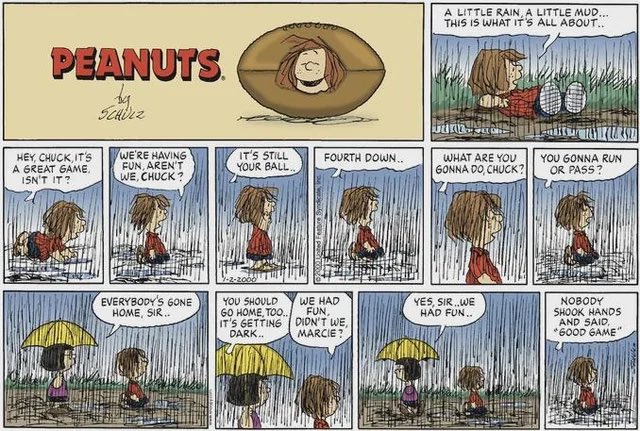
Charles Schulz's Peanuts is known for its pessimistic sense of humor, but a recently resurfaced strip from near the end of Charles Schulz's comic franchise has fans digging deep into its creator's mindset.


Schulz officially launched Peanuts in October 1950, rebooting a prior project titled Li'l Folks (a name he wanted to keep using, but was dissuaded from carrying forward.) The strip ran until February 13, 2000, with the final strip published just hours after its creator's death from complications of colon cancer.


Recently, fans on social media have been discussing one of Schulz's last Peanuts strips, and the profound commentary it seems to offer on death and mortality.


Read more here. Shared by Mark Mittelstadt.

Today in History - Nov. 10, 2026

By The Associated Press

Today is Tuesday, Nov. 10, the 314th day of 2026. There are 51 days left in the year.


Today in history:


On Nov. 10, 1898, a mob of up to 2,000 white supremacists killed dozens of African Americans in Wilmington, North Carolina, burned Black-owned businesses and forced the mayor, police chief and aldermen to resign at gunpoint before installing their own mayor and city council in what became known as the “Wilmington Coup.”


Also on this date:


In 1775, the Continental Congress established the Continental Marines, later known as the U.S. Marine Corps.


In 1954, the U.S. Marine Corps Memorial, depicting the raising of the American flag on Iwo Jima in 1945, was dedicated by President Dwight D. Eisenhower in Arlington, Virginia.


In 1969, the children’s educational program “Sesame Street” made its debut on National Educational Television (now PBS).


In 1975, the Great Lakes freighter SS Edmund Fitzgerald sank in a severe storm in Lake Superior, claiming the lives of all 29 crewmembers.


In 1982, Soviet leader Leonid Brezhnev, who had succeeded Nikita Khrushchev in 1964, died in Moscow at age 75; his death ushered in several years of leadership change before Mikhail Gorbachev came to power in 1985.


In 2019, Bolivia's first indigenous president, Evo Morales, resigned after weeks of public protests in response to alleged fraud in a general election that year.


In 2021, Kyle Rittenhouse took the stand in his murder trial, testifying he was acting in self-defense when he shot and killed two men and wounded a third during a 2020 protest in Kenosha, Wisconsin, against police brutality. (He would be acquitted of all charges.)


In 2024, a shooting during homecoming weekend at Tuskegee University in Alabama left one person dead and 16 others wounded, a dozen of them by gunfire.


Today’s Birthdays: Grammy Award-winning singer and composer Bobby Rush is 93. Lyricist Tim Rice is 82. Film director Roland Emmerich is 71. Author Neil Gaiman (GAY’-mihn) is 66. Actor Hugh Bonneville is 63. Actor-comedian Tommy Davidson is 63. Long jump world record holder Mike Powell is 63. Actor-comedian Tracy Morgan is 58. Actor Ellen Pompeo is 57. Actor Walton Goggins is 55. Football Hall of Famer Isaac Bruce is 54. DJ and music artist Diplo is 48. Rapper-actor Eve is 48. Country singer Miranda Lambert is 43. Actor Taron Egerton is 37. Golfer Jon Rahm is 32. Actor Kiernan Shipka is 27. Olympic gold medal pole vaulter Armand Duplantis is 27. Actor Mackenzie Foy is 26.

Got a photo or story to share?

Connecting is a daily newsletter published Monday through Friday that reaches more than 2,000 retired and former Associated Press employees, present-day employees, and news industry and journalism school colleagues. It began in 2013. Its author, Paul Stevens, retired from the AP in 2009 after a 36-year career as a newsman in Albany and St. Louis, correspondent in Wichita, chief of bureau in Albuquerque, Indianapolis and Kansas City, and Central Region vice president based in Kansas City.


Got a story to share? A favorite memory of your AP days? Don't keep them to yourself. Share with your colleagues by sending to Ye Olde Connecting Editor. And don't forget to include photos!


Here are some suggestions:


- Connecting "selfies" - a word and photo self-profile of you and your career, and what you are doing today. Both for new members and those who have been with us a while.


- Second chapters - You finished a great career. Now tell us about your second (and third and fourth?) chapters of life.


- Spousal support - How your spouse helped in supporting your work during your AP career. 


- My most unusual story - tell us about an unusual, off the wall story that you covered.


- "A silly mistake that you make"- a chance to 'fess up with a memorable mistake in your journalistic career.


- Multigenerational AP families - profiles of families whose service spanned two or more generations.


- Volunteering - benefit your colleagues by sharing volunteer stories - with ideas on such work they can do themselves.


- First job - How did you get your first job in journalism?


- Most unusual place a story assignment took you.


Paul Stevens

Editor, Connecting newsletter

paulstevens46@gmail.com