|
| |
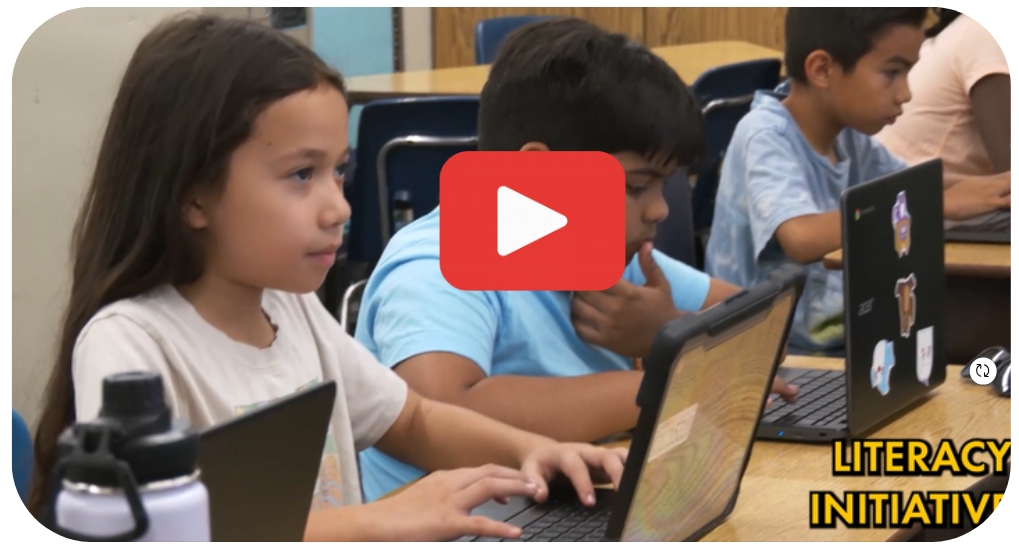
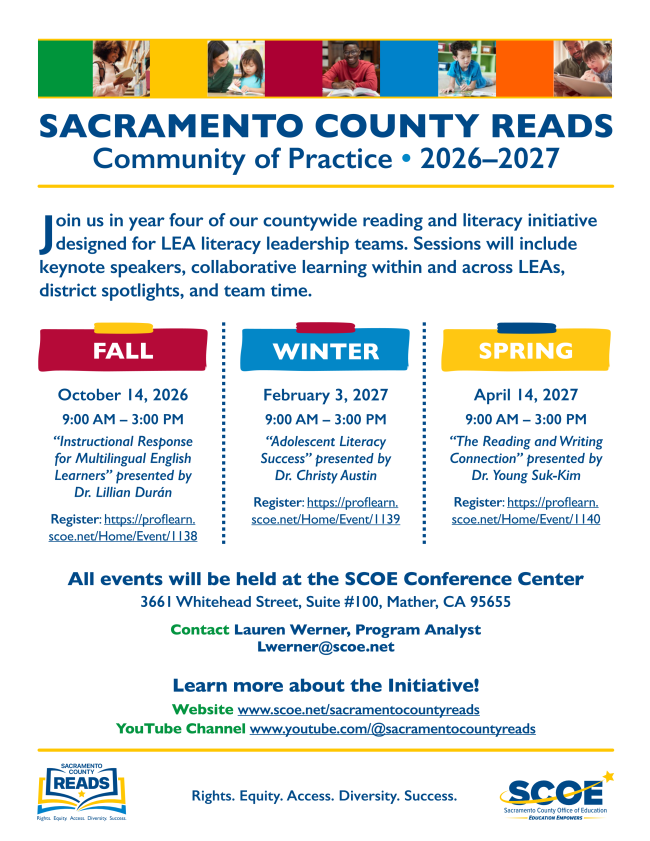
The Sacramento County READS initiative is a transformative approach to literacy and reading success. The mission is to foster a collaborative environment of teaching and learning, underpinned by the science of reading, to ensure every learner in our community thrives. Through partnerships, innovative programs, and supportive services, Sacramento County READS is dedicated to making literacy accessible and achievable for all.
Explore our website at SCOE | Sacramento County READS Literacy Initiative
and a collection of videos on our YouTube Channel at Sacramento County READS - YouTube
| |
|
A Note From . . .
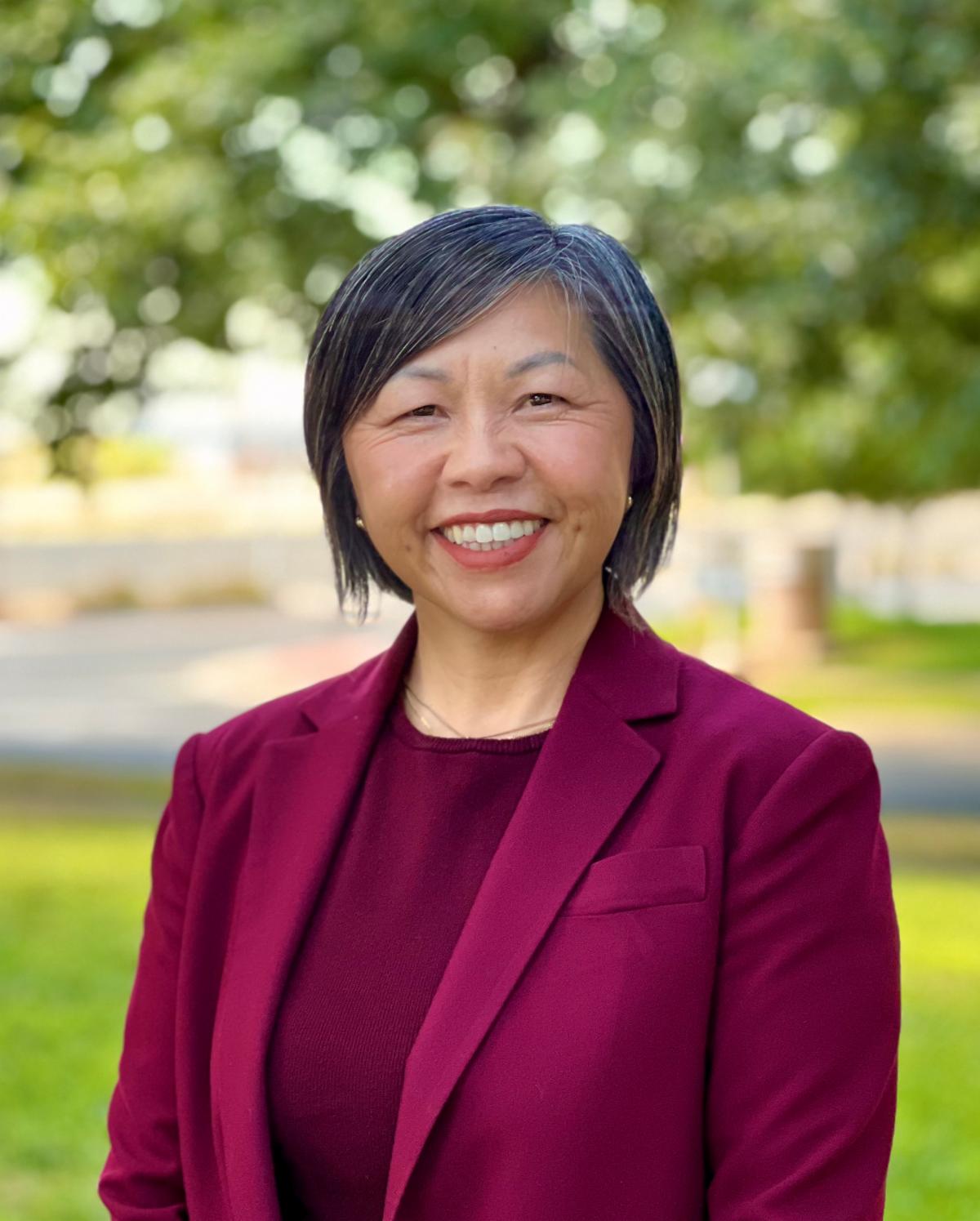
Kou Vang
Director, ELA, K-12
Instructional Quality Commission, ELA/ELD Subject Matter Committee Vice Chair
| | |
As we begin the 2026–27 school year, I’m proud to share an update on one of the most significant efforts underway in California education: the 2026 ELA/ELD Instructional Materials Follow-Up Adoption for grades TK–8.
This adoption is much more than a refresh of instructional materials. It represents thoughtful collaboration among the California Department of Education’s Curriculum Frameworks and Instructional Resources Department (CFIRD) staff, the Instructional Quality Commission (IQC), educators, and education partners across the state. Together, we are working toward a shared goal of ensuring that students have access to high-quality, research-based, and inclusive ELA/ELD instruction.
What makes this adoption especially meaningful is its grounding in the California ELA/ELD Framework, ELA Content Standards, English Learner Roadmap policy, Literacy Roadmap, and Criteria Guidance Document reflecting the science of reading, and research-based practices. As the ELA/ELD Subject Matter Committee Vice Chair, I’ve had the privilege of seeing this work up close and have been inspired by the care and expertise that CFIRD staff, Commissioners, and educator reviewers have brought to the process. Through publisher guidance, educator review panels, thoughtful deliberations, and public input, we have worked to ensure that the instructional programs support knowledge building, language development, comprehension, and meaningful engagement with texts while being accessible and responsive to California’s diverse learners.
As adopted materials become available at the end of this year, our Sacramento County READS team will continue to support educators and districts with professional learning, resources, and opportunities to learn together as we move from adoption to implementation.
| |
Teaching & Learning
Educator Resources
| |
AB 121 Literacy Professional Development Programs Update
Under California Education Code Section 33319.6, state education leaders are set to release an approved list of evidence-based training programs by September 30, 2026, to support TK through 5th-grade reading instruction.
These courses focus on core foundational skills—like phonics, word recognition, and language development—while offering tailored strategies for English learners and students with dyslexia. To make this professional development accessible for schools, state funding will cover the training so teachers can participate on paid time during their regular work hours.
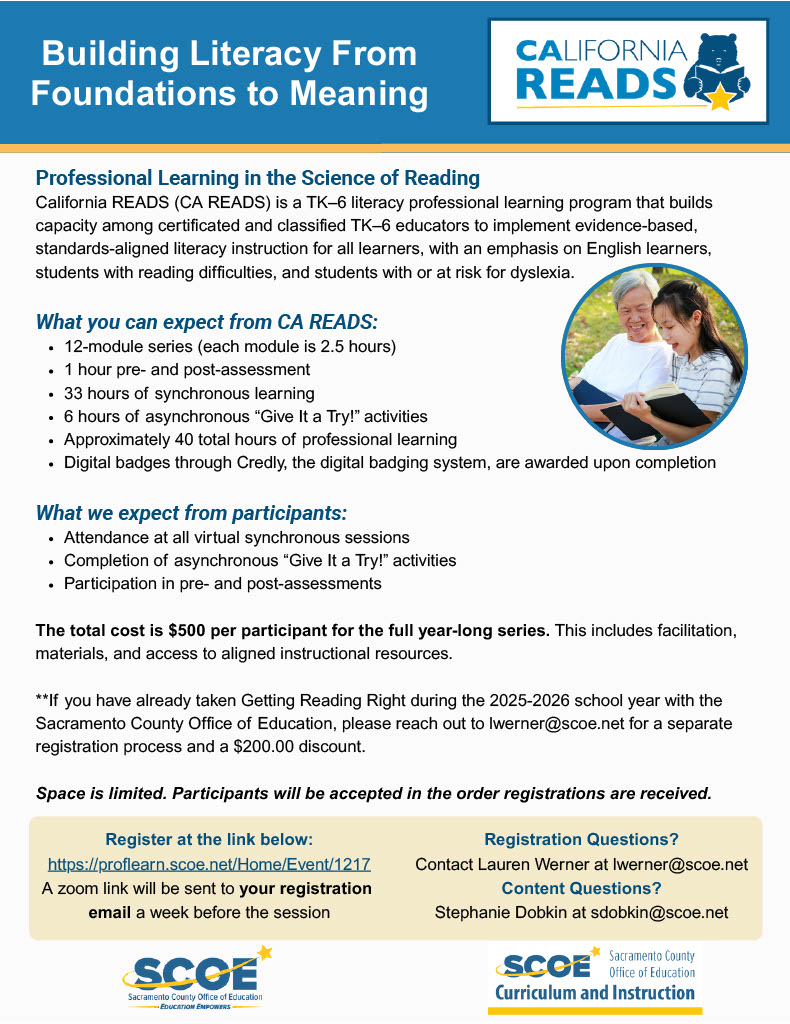
The state has released its Proposed Literacy PD Programs List with time for appeals and public comment over the summer. Sacramento County READS is thrilled to celebrate that our program California READS is on the proposed list! We are anxiously awaiting the announcement of the final approved list. In the meantime, we are offering a pilot season of California READS. Our first session is September 2, 2026.
Click on the flyer below for more details and registration information.
| | |
Reading Difficulties Risk Screener
Support and Resources for Universal Screening Implementation
| | |
RDRS California Education Code Update
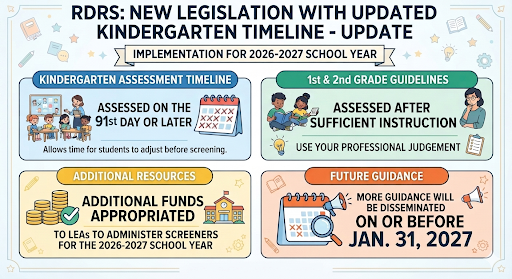
This important legislative update for the California Reading Difficulties Risk Screener (RDRS) is effective July 1, 2026, which means these changes must be implemented for the current 2026-2027 school year.
-
NEW - Kindergarten Screening Timeline: Kindergartners will now be assessed on or after their 91st day of instruction.
-
NEW - Funding Support: Additional funds have been officially appropriated to Local Educational Agencies (LEAs) to help cover the administration of these screeners throughout the school year.
-
CONTINUING - 1st & 2nd Grade Assessment: Screening should occur after students have received sufficient instruction. Educators are encouraged to use their professional judgment to determine the optimal timing.
There will be additional state guidance released on or before January 31, 2027.
|
|
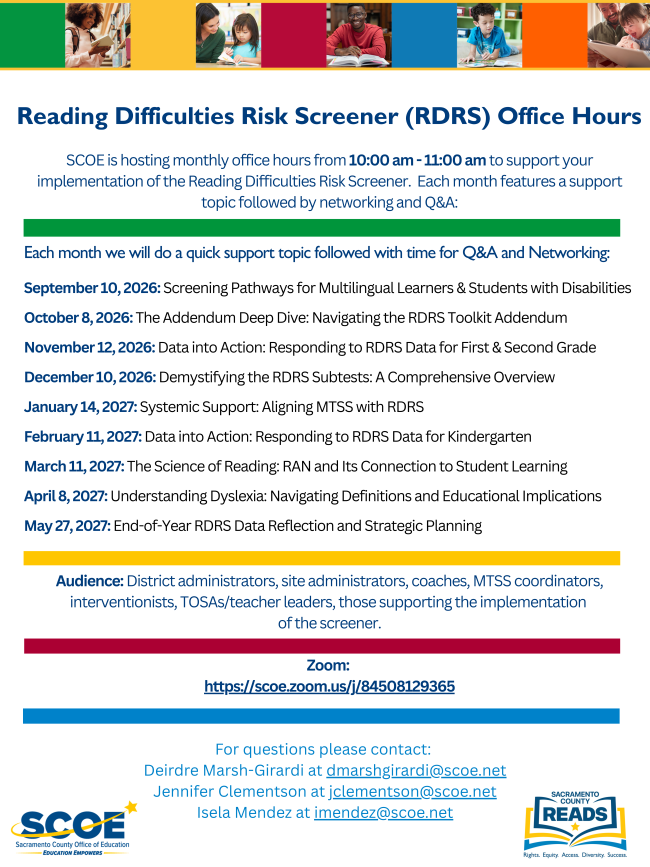
SCOE’s RDRS Office Hours
Join us for monthly office hours to support the implementation of the RDRS and next steps. In each session we start with information on our monthly topics, then have cross-site collaboration, followed by whole group Q&A. No need to register; just pop in!
Office hours flyer
|
| |
Literacy Leadership
Spotlight on Leading for Literacy Success
| | |
As leaders, starting the year with a solid assessment plan is one of the key components of planning for the upcoming school year. Educational Specialist, Daniel Silberstein, from the California Department of Education’s Diagnostic Center, Northern California shares key insights into setting the year up for success.
When should site administrators schedule the fall screening window, and are there required waiting periods before we can begin?
For the 2026–27 school year, the fall screening timeline depends on the student's grade level due to specific instructional recommendations and updated requirements from the California Department of Education.
For Kindergarten, site administrators must adhere to a new legislative requirement under California Education Code SEC. 114. Section 53008 (e)(2), which mandates that a screening instrument shall not be administered to a kindergarten pupil before the 91st school day of the school year. Additionally, it is recommended that kindergarten children receive at least 8 weeks of instruction before screening begins.
For students in grades 1 and 2, the recommendation is to schedule the screening window after they have received at least 4 to 6 weeks of instruction.
Regardless of grade level, screenings should be scheduled for times of the day when children will perform their best. Often earlier in the morning rather than right before or after lunch. It is also important to plan your calendar with family communication in mind, ensuring there is enough time to notify families before screening begins and to share screening data and educational strategies for 1st and 2nd grade during the first marking period.
| | |
Family Engagement
Activities & Resources
| | |
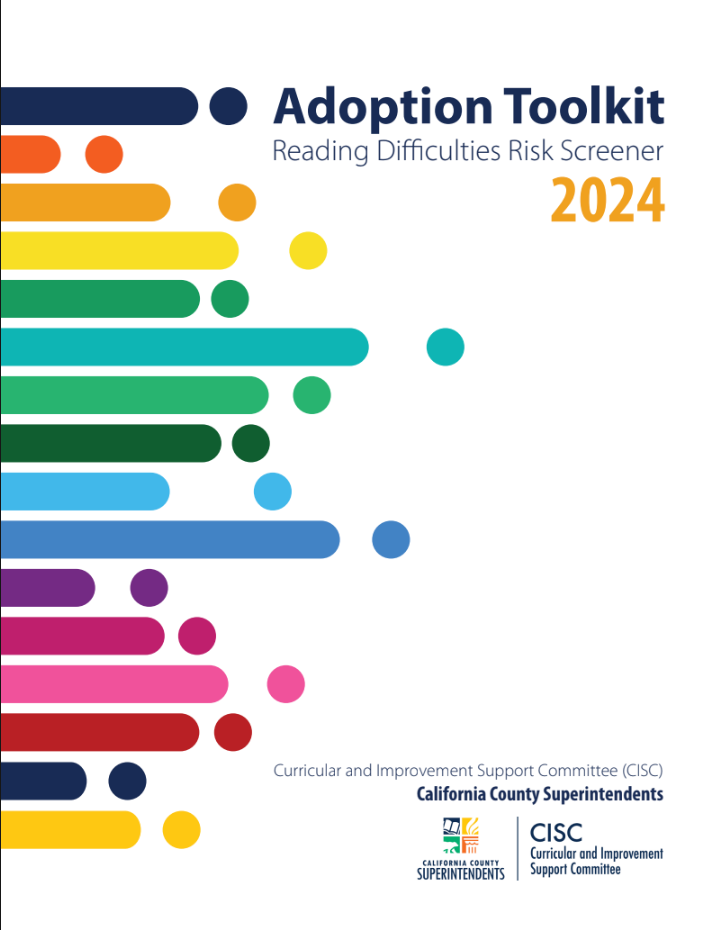
RDRS Adoption Toolkit with Addendum
The RDRS Adoption Toolkit was created to help California districts to evaluate, select, and implement the RDRS. The addendum was added in December 2025 and offers districts practical, step-by-step guidance for administering the screener, managing student data, connecting data to instruction, and communicating with families.
| | |
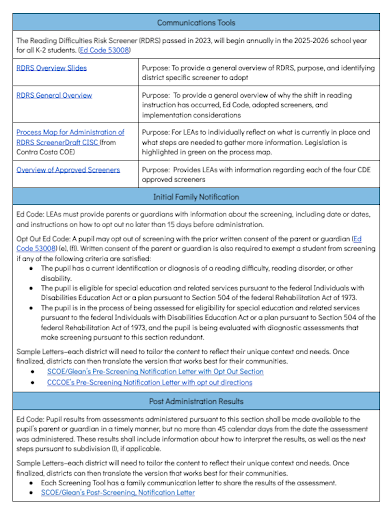
RDRS Toolkit Addendum: Communication Tools Document
The Reading Difficulties Risk Screener (RDRS) Communications Tools document gives local educational agencies clear overviews, administration maps, and CDE-approved screener details to make K–2 implementation smooth. It provides school teams with guidelines for initial family notifications—covering opt-out requirements and timelines—so families stay informed before screening starts. Ultimately, these resources encourage open communication and help build strong partnerships with families to support early reading success.
|
|
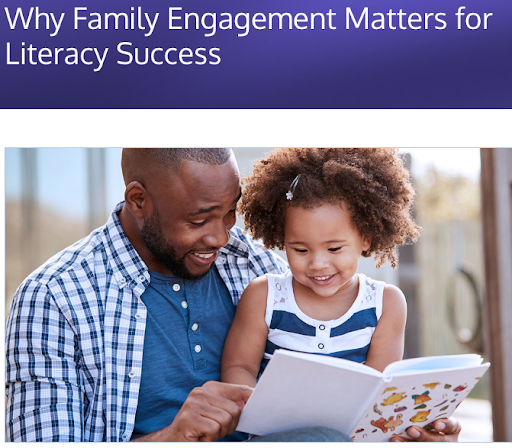
Building Partnership With A Literacy Mind
Strong readers and writers will start learning at home through fun, daily routines like talking, singing, and sharing books together. Schools can build on this wonderful foundation by partnering with families and weaving these home habits right into classroom lessons. Instead of adding extra tasks for busy parents, schools can simply use existing events, like parent-teacher conferences or curriculum nights, to share easy, meaningful reading tips. By teaming up, teachers and families can work together to help every student succeed!
WestEd’s Family Engagement Essentials give teachers the confidence and skills to engage families in ways that are consistent across classrooms and inclusive of all communities.
| | |
Community Partners
Connecting & Engaging
| | |
As part of the Sacramento County READS initiative, we will be hosting three virtual Coffee and Community collaboration sessions focused on connecting with Sacramento area community partners. Please join us online with your morning cup of coffee to chat about how we can support one another in improving literacy outcomes for all!
Virtual Sessions
Time: 9:00am - 10:00am
Dates: October 13, February 2, April 27
Zoom Link: https://scoe.zoom.us/j/89143007994
| | Professional Learning Opportunities | | |
Click the button below to explore the wide range of literacy-related professional learning opportunities offered through the Sacramento County Office of Education and the Sacramento County READS Initiative. Professional learning opportunities are available for Multilingual Education, Early Learning, Expanded Learning, English Language Arts, and more!
| | | | |