Issue 2 | January 8, 2025

DEAR WESTERN NORTH CAROLINA,


As winter deepens and temperatures plummet, the urgency of securing safe and warm housing for all our residents becomes ever more critical. The devastation wrought by Hurricane Helene has left many without shelter, and I share in the frustration that recovery efforts can never move swiftly enough to meet the immediate needs of a devastated community. Yet, amidst these challenges, we have witnessed remarkable accomplishments born from bipartisan collaboration. Our congressional delegation, alongside local and state leaders, united to advocate for and secure essential appropriations from Congress, demonstrating the power of working together toward a common goal. Yesterday, HUD announced that over $1.6 billion is headed to North Carolina with $225 million directly to Asheville. The federal government has committed to removing as much red tape as possible to get funding to us quickly to begin rebuilding and restoring our infrastructure.


As we usher in the new year, our hearts are heavy with the news of the terrorist attack on the city of New Orleans and the wildfires raging in Los Angeles. These events, alongside our own recovery from Hurricane Helene, highlight the need to remain vigilant against threats to our way of life, whether from natural disasters or human actions. Resilience must become more than a buzzword; it must be a call to action. For Western North Carolina, resilience means preparing for change, protecting our communities, and building systems that not only withstand adversity but empower us to thrive in the face of it.


Resilience demands that we adopt a forward-thinking and innovative approach to rebuilding. It is not enough to restore what once was; we must integrate best practices and lessons learned to fortify our infrastructure, housing, and communities against future adversities. This means investing in sustainable building practices, enhancing our emergency response systems, and fostering a culture of preparedness and adaptability. By doing so, we can ensure that Western North Carolina not only recovers but thrives, moving steadfastly in the right direction toward a more secure and resilient future.


With determination and hope,

Esther Manheimer

IMPORTANT DEADLINES

Disaster Unemployment Assistance Deadline Extended


IMPORTANT Disaster Unemployment Assistance Extended to February 6, 2025.


The deadline to apply for Disaster Unemployment Assistance (DUA) has been extended to February 6, 2025, for people in 39 North Carolina counties and the Eastern Band of Cherokee Indians of North Carolina.


• DUA Hotline English 919-629-3857 and Spanish 919-276-5698

• Mon.-Fri. 8AM -7PM, Sat. 8AM-5PM.; Sunday Noon – 4PM 

Deadline to Apply for FEMA Assistance is now February 6


North Carolina Tropical Storm Helene survivors now have until February 6, 2025, to apply for assistance with FEMA. Homeowners and renters in 39 counties and the Eastern Band of Cherokee Indians with uninsured losses from Tropical Storm Helene are eligible to apply for FEMA assistance.


There are several ways to apply: 


1.   Visit a Disaster Recovery Center (DRC) To find the center location nearest you go to fema.gov/drc. 


2.   Go online to disasterassistance.gov


3.   Download the FEMA App for mobile devices


4.   Call the FEMA helpline at 800-621-3362 between 7 a.m. and midnight. Help is available in most languages. If you use a relay service, such as video relay (VRS), captioned telephone or other service, give FEMA your number for that service. 


For a list of Disaster Recovery Centers or to search for the nearest DRC to you, click here.

SBA Deadline Extended to February 6


Small businesses, private nonprofit (PNP) organizations, homeowners and renters in North Carolina have until Feb. 6 to apply for federal disaster loans to offset losses from physical damage caused by Tropical Storm Helene. 


The SBA also offers Economic Injury Disaster Loans (EIDLs) to help meet working capital needs, such as ongoing operating expenses for small businesses and PNPs. EIDL assistance is available regardless of whether the organization suffered any physical property damage.


Click here for more information on SBA loans.

REGIONAL

HUD Allocates Historic $225 Million in Disaster Recovery Funding Directly to Asheville


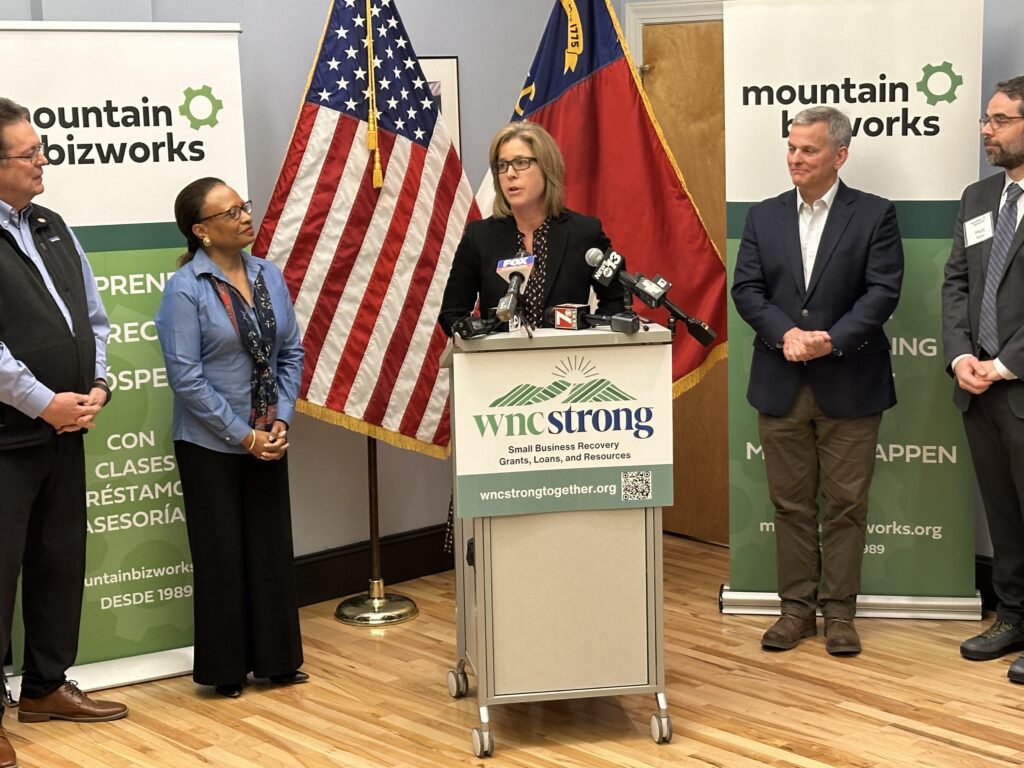
Yesterday, the U.S. Department of Housing and Urban Development (HUD) announced an unprecedented allocation of over $1.6 billion in Community Development Block Grant-Disaster Recovery (CDBG-DR) funding to aid North Carolina in recovering from the devastating impacts of Hurricane Helene. Of this, $225 million will be directly allocated to the City of Asheville, with the remaining $1.4 billion supporting statewide recovery initiatives. HUD Acting Secretary Adrienne Todman, Governor Josh Stein, and Mayor Esther Manheimer, co-chair of the Rebuilding Western North Carolina Advisory Committee along with Senator Kevin Corbin, gathered with local officials and community leaders to share this monumental news.


Mayor Manheimer emphasized the critical importance of this funding for Asheville’s recovery. “This direct allocation to Asheville demonstrates the federal government’s understanding of our city’s unique recovery challenges and the urgency of rebuilding. These funds will give us the opportunity to repair and enhance infrastructure, address housing, and support business recovery. Restoring our city's infrastructure is a top priority and rebuilding stronger will ensure our long-term resilience. I am committed to using these funds strategically and equitably to create a stronger, more sustainable future for Asheville and Western North Carolina.”


The announcement was made during a visit to Mountain BizWorks, where federal, state, and local leaders met with small business owners and community organizations to discuss recovery efforts. Acting Secretary Todman emphasized HUD’s commitment to long-term resilience and equitable recovery across all impacted communities. "Americans have witnessed way too many disasters, and each one is becoming stronger than the next. As we build, we have to build back smart, we have to build back boldly," said Todman. "So we are not just responding to what happened, but we are also preparing for the future."


Governor Josh Stein highlighted the critical timing in securing this flexible funding as temperatures plummet and the need for secure housing becomes paramount, stating, "More than 12,000 North Carolinians are still displaced from their homes today. Even as we get through the immediate challenge of keeping people safely housed, we must consider not only their lives but their livelihoods." Stein added, "I look forward to prioritizing with the leaders of WNC as we determine where and how these funds can have the maximum impact on people's lives and livelihoods."


The CDBG-DR funding comes in addition to the FEMA recovery funds that are providing 100% to 90% reimbursements to the city for activities like debris removal and repairs to utilities, parks, and roads. The $225 million in HUD funding will be instrumental in addressing critical recovery needs, including housing repair, infrastructure restoration, and economic revitalization. Details on program implementation and community engagement opportunities will be announced in the coming weeks.


"We will continue advocating for additional support from our state and federal partners to help our region rebuild stronger," said Manheimer. "This funding is an important first step, and we are deeply grateful for Acting Secretary Todman's support as well as Governor Stein’s laser focus on prioritizing the recovery of WNC in his new administration." 


About the CDBG-DR Program

HUD’s CDBG-DR program provides flexible funding to help communities recover from disasters and build resilience against future impacts. This allocation represents one of the largest disaster recovery investments ever made in North Carolina.


For more information about the recovery efforts or to stay updated on available resources, visit https://publicinput.com/ashevillerecovers.

New NC Gov. Josh Stein signs five executive orders on Helene. Here's what they do.

After he was sworn in as governor, Stein signed five executive orders to address Helene, signaling his prioritization of recovery efforts.

Read More

North Carolina Disaster Case Management Program Now Available


The North Carolina Disaster Case Management Program (NC-DCM) is now available to guide individuals and households in Buncombe County through the Tropical Storm Helene recovery process.


After you complete an initial needs assessment, a case manager will work with you to make a personalized recovery plan and connect you with available resources.


To get started, call 844-746-2326 or fill out the NC-DCM intake survey at www.ncdps.gov/helene/dcm. 

Help with Rent, Mortgage Payments, Utilities, and Housing


Eblen Charities: 23 Hamilton St 28801 or eblencharities.org is accepting requests for rent, mortgage, utility, eyeglasses, medication and gasoline assistance.


Additionally, the City is working with Grace Covenant Presbyterian Church to support their efforts in providing rental assistance to community members. The City has provided funds to make available for rental assistance for low income families in Asheville. Residents can apply for assistance by visiting Grace Covenant Presbyterian Church located at 789 Merrimon Avenue between 12 p.m. – 4 p.m. Monday – Sunday.


The Low-Income Energy Assistance Program (LIEAP) a one-time vendor payment to help eligible households pay their heating bills is now open to all households that meet criteria including income eligibility. To apply please visit epass.nc.gov. 


NC STR Alliance's Emergency Accommodations Program connects people who need shelter with available short-term rentals. The program is open to people who need housing AND to providers who have available rentals. 


Both hosts who wish to offer up their homes for emergency accommodations, and families and individuals in need of shelter, can sign up at the same landing page: https://str-trust.com/nc-str-alliance-hurricane-helene-relief-for-displaced-residents/.


This program and the use of short-term rentals can help fill the much-needed gap for housing right now. 

Hazard Mitigation Grant Program


State representatives are now available at the FEMA Disaster Recovery Center in Asheville Mall to help residents apply for the Hazard Mitigation Grant Program. This voluntary program provides funding for projects like home elevation, reconstruction, and acquisition to reduce risks from natural hazards. 

  • Dates: Jan. 6-10 and Jan. 13-17. 
  • Hours: Mondays, 1–6 p.m.; Tuesday–Friday, 8 a.m.–6 p.m. 

LOCAL

Visit the City's Recovery Dashboard for the latest data on recovery

How Asheville Can Stay Informed


Get Updates 

  • Sign Up for Email Updates: Click here or use the form at the top-right of this page to receive weekly updates on all topics related to the recovery effort. If you're only interested in specific topics, use the signup forms on individual pages for periodic updates on those issues.


  • Follow Social Media: Stay informed through the City of Asheville’s official social media channels for real-time updates, announcements, and event information.


Join the Conversation

  • Public Engagement Tools: Use our public engagement tools on this site (including the question boxes below) to share your concerns or provide feedback.


  • Call the Recovery Hotline: Call our Recovery Hotline at 855-925-2801 and use the code 7538 to leave a message.


  • Attend Public Meetings: Any upcoming meetings and forums related to the recovery effort will be posted in this hub as well as our Meetings Calendar. 


Access Resources


  • Data Dashboard: Visit our recovery dashboard to view data visualizations and performance metrics that track Asheville’s recovery efforts in real-time.


"In the middle of every difficulty lies opportunity."


― Albert Einstein

 
Subscribe to this Newsletter
 

Follow me on social media @MayorEstherManheimer

Facebook  Instagram
X Share This Email
LinkedIn Share This Email