A Note from the Executive Director
|
As 2019 comes to a close, we celebrate the remarkable progress made since Attendance Works launched as a national initiative in 2010. Chronic absence moved from a little known concept to a nationally recognized metric, and all states are now required to report how many students miss 10 percent of school. Thirty-three states share data on chronic absence.
September is now recognized throughout the country as Attendance Awareness Month and increasingly understood as a launching point for a yearlong campaign. Over 350,000 visitors used our website this year to access proven strategies and tools, and we have over 21,200 subscribers to our newsletters.
Several states illustrate pioneering examples showing chronic absence is a solvable problem within our reach. For example, in Connecticut, the state-wide chronic absence rate fell from 10.7 percent to 10.4 percent. In Oregon, 70 percent of school districts receiving support showed decreases or stability in chronic absenteeism rates for the first time.
We collaborated with AIR on our 2019
report that describes how you can use chronic absence data to identify where to concentrate time and resources to improve attendance and achievement by creating positive conditions for learning. Today’s challenging conditions – increasing poverty, unstable housing, wildfires or decreased access to health care – make it even more essential for schools and community partners to use data to guide actions that ensure children get to school so they can learn.
If you haven’t had a chance to donate,
click here. Your support is more critical than ever to help us continue to provide free, downloadable resources.
Best wishes for a happy holiday!
Hedy N. Chang
Founder and Executive Director
|
|
There’s not much we can do about the weather, but there are two steps that can help avoid absences this winter: make back-up plans for foul weather and keep kids healthy. Find resources in our
winter weather toolkit.
|
Families often don’t understand when their children are too sick for school, and when they can safely send them in. This handout provides some clarity.
Download it from our website.
|
|
Attendance Awareness Campaign 2019
|
|
|
Participation in the Attendance Awareness Campaign survey increased this year! The results show:
- 45% of participants surveyed represent K-12 education
- 81% work at the local level
- 66% crunched data
- 45% displayed attendance exhibits
- 43% incorporated key messages into communications with students and families
- 34% helped to engage schools and community partners
- 92% agree that participation helped them understand that addressing chronic absence is a year-round effort
Survey participants also told us what they wanted to learn more about in 2020:
- 85% engaging families as partners
- 65% improving messaging
- 48% school climate
|
|
|
|
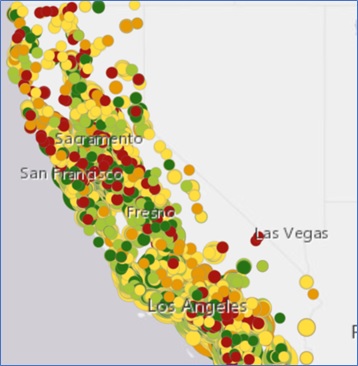
Attendance Works and the Center for Regional Change and the School of Education at UC Davis demonstrate how to make newly available data from a state department of education transparent and easy to use. We created
Chronic absence in California 2016-2018, an interactive data map that allows viewers to compare the most recent numbers with data from the previous two years and with other schools.
Find the map.
Superintendents: Build capacity to take a comprehensive, prevention-oriented approach to reducing chronic absence that fits into what your schools are already doing. Consult the
Attendance Playbook: Smart Solutions for Reducing Chronic Absenteeism to find evidence-based strategies. Encourage principals to take a leadership role in ensuring their staff are equipped to take action. Share with them the School Year Attendance Activities Planning Tool, a calendar with suggested activities for each month of the school year. Download the
Attendance Activities School Year Plan.
Principals: Chronic absence data can help schools identify and connect kids who are missing too many days to positive supports that address challenging barriers. Learn more about using data in our
Leading Attendance toolkit.
Teachers: Making a difference in a child's attendance doesn’t necessarily require extra work. It involves strategically infusing attendance and the power of positive relationships into everyday interactions. Discover strategies and resources in the
Teaching Attendance 2.0 toolkit.
The number one reason families cite for student absences is health. We collaborated with
Children’s Health Fund on a video explaining how families can help keep their kids healthy and in school.
Download and share with the families in your community!
|
|
|
|
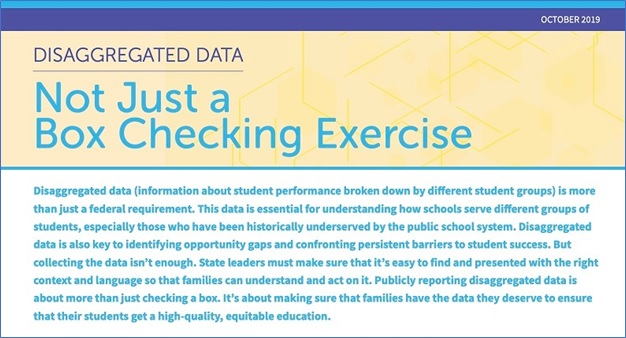
The Data Quality Campaign, Learning Heroes, and National PTA have developed a brief which provides best practices for creating state report cards that are transparent and easy to use for families and communities.
Disaggregated Data: Not Just a Box Checking Exercise, underscores that disaggregated data is key to identifying opportunity gaps and confronting persistent barriers to student success. The goal of the guidance? To ensure families have the data they need to make sure their kids “get a high-quality, equitable education.”
Download the brief.
|
|
|
|
How can schools help families address student absences? Read what one former teacher, principal and now Connecticut state commissioner Miguel A. Cardona says about it in our blog. (Hint: it begins with all-hands-on-deck!).
Read the blog.
In Virginia, Gov. Ralph Northam announced his plan to boost early childhood education funding for three- and four-year-old children from low-income communities. The
$95 million plan would increase access to education, establish uniform accountability standards, and ensure educators have the training and support they need, especially in childcare settings. A coalition is also urging state legislators to lift a funding cap for counselors, psychologists, and other support workers put in place in response to the 2008 recession. Such policies ensure the availability of resources known to help improve attendance.
|
|
|
|
Improving Children’s Health By Attending to Attendance, hosted by the American Academy of Pediatrics (AAP) Council on School Health, includes panelists discussing the role of pediatricians in improving children’s health by helping to reduce chronic absence, and reviewing key concepts from the February 2019 AAP policy statement, “The Link Between School Attendance and Good Health."
Read our blog post and find the recording here.
Better Attendance Starts With Engagement: Simple, Effective Interventions for Tackling Absenteeism, a November 20, 2019 webinar from Remind and Attendance Works, discusses the important link between family engagement and attendance, a whole-school approach to reducing chronic absenteeism and moving your attendance interventions with engagement strategies.
Listen now!
Missed an AAC 2019 webinar? Find the webinar recording, presentation slides, and a discussion guide for each
on our website.
|
|
|
|
Calling Californians! Are you working to reduce chronic absence in your school, district or community? Join us, Fresno County Superintendent of Schools, and REL West for an in-person, free of charge event in Fresno, California, on January 23, 2020.
Register today!
|
|
|
|
Need assistance starting a program to address chronic absence or want to dig deeper to provide interventions to students who are missing too many days? Attendance Works offers fee-based consulting services tailored to individual state agencies, school districts and schools, in addition to free resources and strategies.
Find out more.
|
|
|
|
This December, Give the Gift of Attendance Works Resources!
|
|
|
Chronic Absence is a solvable problem, but it is hard to address without having tools that allow people to take action. Your $60 donation (just $5 per month) pays for one person to access our free resources throughout the year. Increase your donation to $120, $180 or $600 and buy the gift of our resources for multiple individuals!
You can donate any amount here.
|
|
|
|
Attendance Works would like to express its deep appreciation to the foundations that fund our work in communities across the country: Annenberg Foundation, Annie E. Casey Foundation, Arkansas Community Foundation, Bill & Melinda Gates Foundation, The California Endowment, Campaign for Grade-Level Reading, Evelyn and Walter Haas, Jr. Fund, Heising-Simons Foundation, Hellman Foundation, Jonathan Logan Family Foundation, Kaiser Permanente Northwest, Open Society Institute – Baltimore, Rogers Family Foundation, San Francisco Foundation, Skillman Foundation, Stuart Foundation, United Way for Southeastern Michigan, United Way of Greater Kansas City, Winthrop Rockefeller Foundation.
|
|
|
|
|
|
|