|
Amber N. Gilbert, Technical Sales Representative
In pharmaceutical compounding, the quality of starting materials directly affects the quality, consistency, and safety of compounded preparations. One of the most important tools for evaluating an ingredient is the Certificate of Analysis (COA). However, a COA is only as reliable as the testing, documentation, and quality oversight behind it, so pharmacies need to know how to evaluate one and when to verify it independently.
Understanding the Certificate of Analysis (COA)
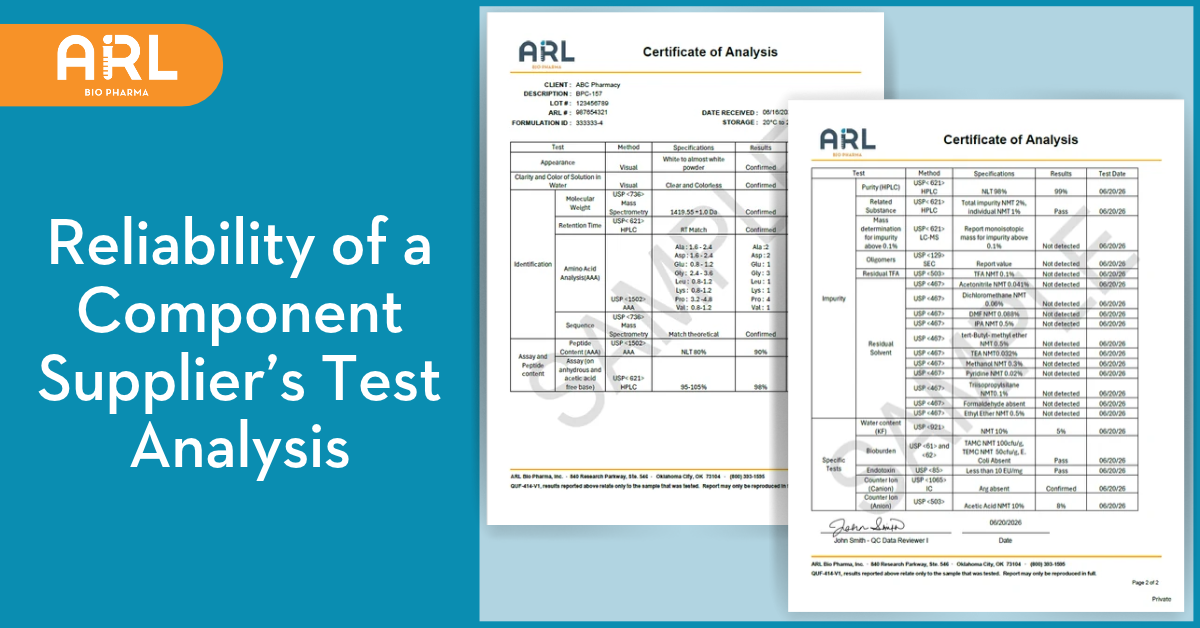
A Certificate of Analysis (COA) is an important quality document that summarizes testing, specifications, results, approvals, and supply chain traceability information. It helps compounding pharmacies confirm that incoming materials meet established specifications before use.
COAs serve a critical function in supply chain management by providing essential details about the identity, purity, and potency of raw materials, intermediates, and finished products.
Pharmacies should have quality systems and controls in place to evaluate each COA, because relying on one without adequate independent verification creates significant regulatory, data integrity, and product quality risks. A good review does more than check that each result falls within its limits as it also asks whether the document itself is complete, consistent, and credible.
Key Factors Determining COA Reliability
A supplier’s COA is reliable only when it is complete, traceable, compliant with pharmacopeial standards, and verified by the receiving pharmacy through systematic supplier qualification and independent checks. Regulatory standards require that Active Pharmaceutical Ingredient (API) COAs demonstrate compliance with compendial specifications.
ICH Q7, Section 11.4 outlines the minimum information that must appear on a COA for pharmaceutical excipients or APIs:
- Product Identification (name, grade, batch/lot number, date of release/expiration/retest)
- Testing Information (test performed, specifications/acceptance criteria, numerical results)
- Manufacturer and laboratory details (name, address, and phone number)
- Quality Unit Approval (dated and signed by authorized personnel)
Practical Implications for Supplier Qualification
Reliability also depends on the supplier and manufacturer qualification process as part of a robust quality management system. When assessing whether they can rely on a supplier’s COA, pharmacies should confirm that the document contains enough information to:
- Trace the material back to the original manufacturer
- Verify the batch identity
- Review actual numerical test results rather than only “Pass” statements
- Confirm Quality Unit approval
- Verify expiry or retest dating
- Establish chain of custody when brokers, distributors, or repackers are involved
USP 1083 emphasizes supplier qualification and ongoing monitoring to ensure COAs reflect true product quality. A compounding pharmacy must evaluate the supplier’s regulatory compliance, quality management systems, history of deviations or shortages, and risk to product quality.
COA Red Flags
Complete records become essential during FDA and state board of pharmacy inspections and GMP audits because they support the compounder’s obligation to establish the reliability of supplier analyses rather than merely accepting a COA at face value. The following are potential reliability red flags and may signal a quality concern, especially when the material comes from a new or unfamiliar supplier:
- Missing manufacturer information
- Missing batch numbers
- Incomplete testing
- Unclear analytical methods
- Lack of numerical results
- Unsigned certificates
- COAs issued by distributors without reference to the original manufacturer
Regulatory Expectations
FDA has cited companies for over-reliance on supplier COAs, resulting in 483 observations and warning letters. Common findings include failing to perform incoming identity testing, relying solely on supplier COAs, failing to validate supplier analytical data, and inadequate oversight of contract laboratories and suppliers in compliance with 21 CFR 211.84. USP 1163 requires pharmacies to verify COAs before use by comparing results with USP monograph specifications, confirming the manufacturer’s credentials, cross-verifying with independent testing, quarantining materials until verification is complete, and documenting the review.
To demonstrate COA reliability, pharmacies should maintain a documented supplier qualification program. It should include supplier approval, comparison of supplier results with independent testing, a defined requalification frequency, review of supplier analytical methods, investigation of significant discrepancies, and ongoing performance monitoring, with records available for FDA and state board of pharmacy inspections.
Why COAs Alone Aren’t Enough
A supplier-provided COA should not be accepted at face value without risk-based verification.
USP 797 states compounding personnel must verify the identity and quality of each component against its COA, and against the applicable USP-NF monograph where one exists, before the substance goes into preparation. Recommended controls include:
- Comparing COA specifications and results against applicable USP monographs.
- Performing identity testing on each lot received.
- Conducting additional analytical testing, either internally or through a qualified contract laboratory, based on risk assessment.
- Using validated or verified analytical methods in accordance with USP 1225 and USP 1226.
- Maintaining comprehensive documentation, including:
- Raw analytical data
- Instrument calibration records
- Method verification records
- Technical reviews and approvals
For sterile compounds or higher-risk products, testing may include sterility, endotoxin, microbial limits, assay, impurities, or potency confirmation, depending on the API and intended use.
A COA is only as reliable as the supplier’s quality system and the completeness of its data. In compounding, never accept a COA at face value. Verify it against pharmacopeial standards, confirm the manufacturer’s qualifications, and maintain independent oversight to protect patient safety and compliance.
How ARL Can Help
ARL Bio Pharma supports certification of analysis verification through comprehensive testing, documentation review, and quality‑focused expertise. To learn more about how ARL can support your certificate of analysis verification, supplier qualification, and material testing needs, contact info@arlok.com or call (800) 393‑1595.
Resources
- ICH Harmonised Tripartite Guideline Good Manufacturing Practice Guide for Active Pharmaceutical Ingredients Q7
- United States Pharmacopeia 1083 Supplier Qualification
- 21 CFR 211.84 Testing and Approval or Rejection of Components, Drug Product Containers, and Closures
- United States Pharmacopeia 1163 Quality Assurance in Pharmaceutical Compounding
- United States Pharmacopeia 797 Pharmaceutical Compounding – Sterile Preparations
- United States Pharmacopeia 1225 Validation of Compendial Procedures
- United States Pharmacopeia 1226 Verification of Compendial Procedures
|