September 2024


Physics of Life Updates

As we shared in our newsletter at the beginning of 2024, the conclusion of UKRI and Rosetrees Trust funding in February 2024 marked a shift for our Physics of Life and Medicine network, which traditionally supported a wide range of activities including workshops, bursaries, sandpits, sponsorships, and ECR Winter/Summer schools.


In the past few months, we have been tirelessly pursuing new funding avenues to establish a PoLNET4 which will aim to continue bolstering our community's growth and engagement by supporting these traditional activities. We will keep you updated with progress!


In the meantime, one off funding from UKRI (BBSRC, EPSRC, and MRC) and Wellcome was awarded to the network to specifically deliver the Physics of Life PDRA call and develop the Physics of Life Roadmap until March 2025.


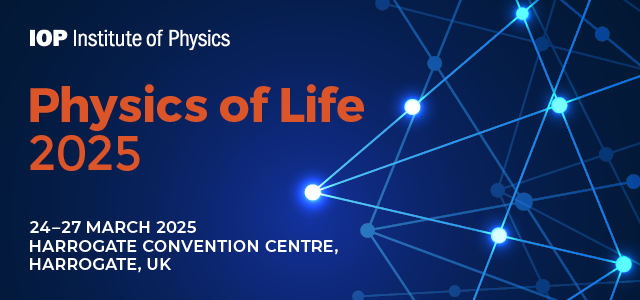
Additionally, we are collaborating with the Institute of Physics, the Biophysical Society, and the Physics of Living Matter groups to bring back the highly anticipated 'Physics of Life 2025' event in Harrogate, scheduled for March 24-27, 2025.


We are committed to keeping you updated on all these exciting developments, ensuring you remain informed and engaged with our ongoing initiatives. Please read on for all updates on our latest activities below.

Physics of Life PDRA Call

In 2023, we delivered a call aimed at Post-doctoral Research Associates (or those on an equivalent position) working in the area of Physics of Life was funded by UKRI's Physics of Life Strategic Priority Fund and Wellcome.


Applicants were able to run feasibility experiments, develop theory, learn about another discipline and/or develop a new collaboration, to help recipients play a more leading role in shaping research and progress careers. As part of this process, access mentoring was offered to all those who submitted an application or considered doing so via an Expression of Interest form. The call received a large number of applications and after a process of review and panel selection, we were delighted to award 18 of the applicants with up to £25,000 (80% full economic cost) of funding. Awarded recipients are as follows:


Dr Yair Augusto Gutierrez Fosado, University of Edinburgh

Learning protein function from sequence


Dr Veronica Biga, The University of Manchester

Oscillatory transitions during neural development


Dr Rebecca Chandler-Bostock, University of Leeds

The regulatory roles of the Human Rhinovirus Genome During Early Stages of Infection


Dr Oleg Dobrokhotov, KCL

Label-Free Analysis of Tension-Dependent Interactions in the Ensembles of Biomolecules


Dr Elliot Chan, University of Bristol

Multiscale simulation with Machine-Learned potentials for better G-quadruplex ligand design


Dr Jan Cammann, Loughborough University

Coupling metabolic responses and phytoplankton motility in turbulent environments


Dr Ashley Hancock, University of Leeds

Temperature locking in-membrane electrophoresis to study protein-protein interactions


Dr Zahra Khomarbaghi, University of Manchester

Unravelling the effect of elevated wobble interactions in bacterial translation efficiency


Dr Diana Khoromskaia, University College London

A multi-scale model for patterning in curved tissues with application to neural tube development


Dr Shalini Menon, University of Nottingham

Using Quantum Sensing to Unravel Redox Mechanisms of Alzheimer’s Disease


Dr Susannah McLaren, University of Cambridge

The role of mechanical forces in symbiosis


Dr Thomas McLean, John Innes Centre

How do intrinsically disordered regions control the sliding of DNA clamps along DNA?


Dr Isabelle Racicot, University of Cambridge

Understanding the biological origins of early cancer imaging biomarkers in the oesophagus


Dr Annie Sahota, Imperial College London

Understanding the role of RNA regulation in learning, memory and disease


Dr Petr Sherin, Imperial College London

Visualisation of glaucoma-induced changes in Schlemm’s canal cells


Dr William Skinner, University of Exeter

Transforming photothermal therapy of solid tumours with an ‘all-in-one’ optical nanoheater and biosensor


Dr Aisha Syeda, University of York

A twist in the tale: Exploring DNA Topology changes with Multiple Molecular Machines using

Optical Tweezers


Dr Laura Wiggins, University of Sheffield

Doubling discovery: the powerful fusion of atomic force microscopy and molecular dynamics simulations through deep learning


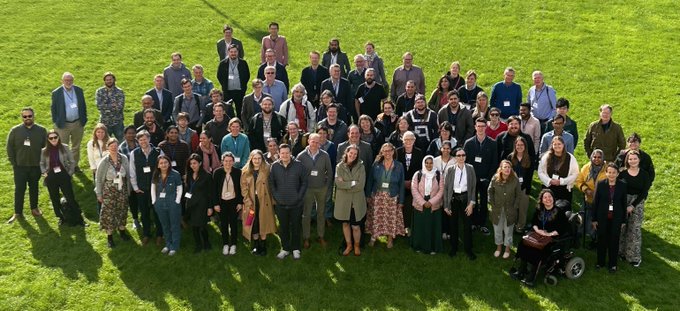
We're excited to share that more updates on our incredible recipients and their innovative projects are just around the corner! On October 10th, we will meet all our recipients at an event kindly being hosted by the Wellcome Trust in London. This event will provide a fantastic opportunity for our recipients to connect, share ideas, and network with funders and seasoned researchers. We can't wait to see all the brilliant minds come together and spark new ideas.

Physics of Life Roadmap Update


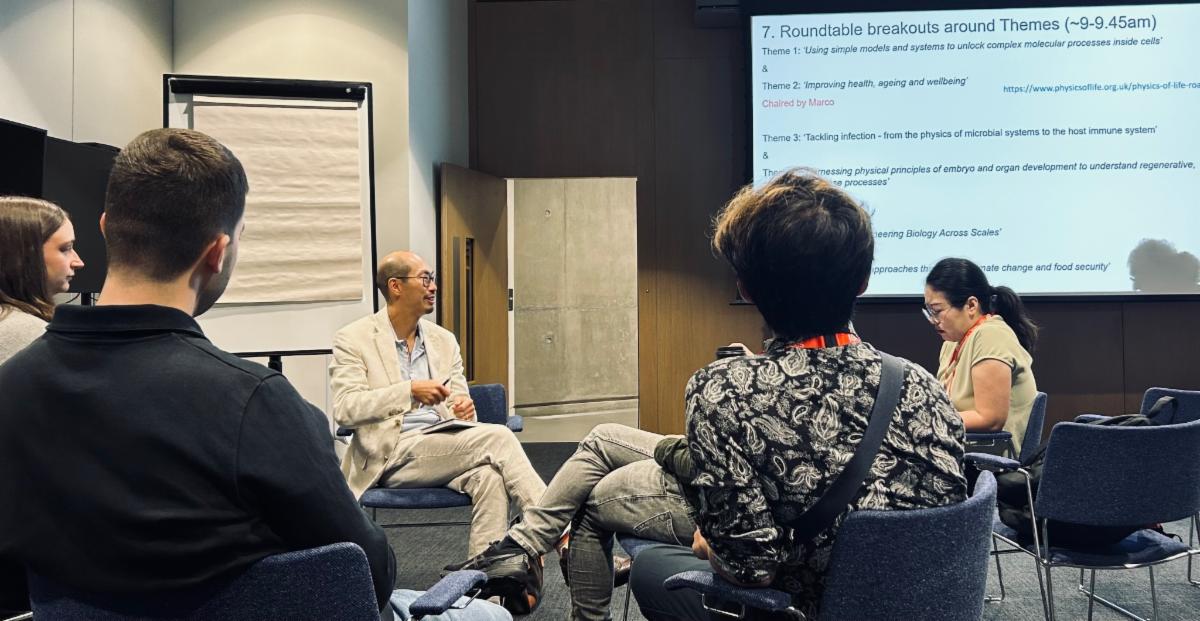
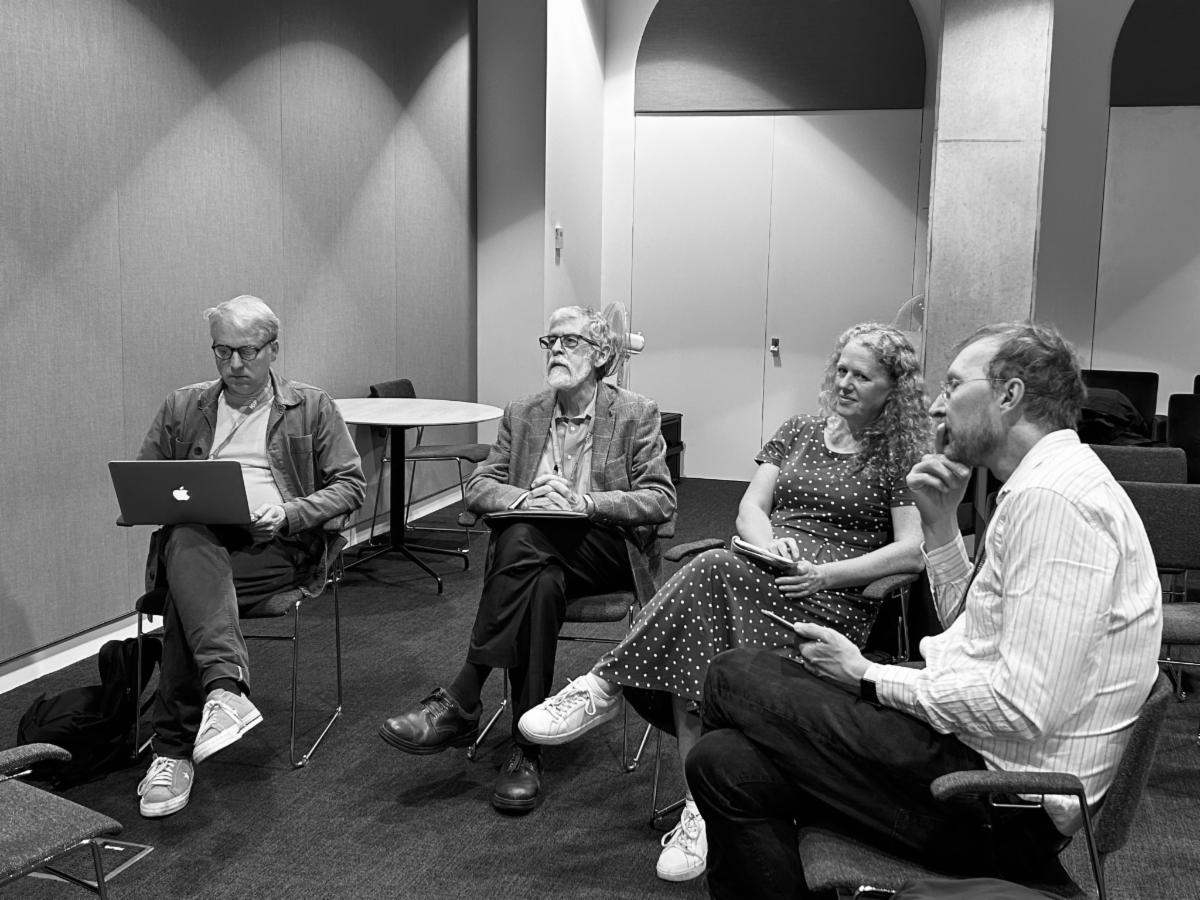
Physics of Life were delighted to participate in two recent events: 'AI for Biological Physics' held at the Institute of Physics in London and the 'BBS Biennial Meeting 2024' in Swansea. At these meetings, representatives from Physics of Life conducted roadmap sessions that focused on the development and refinement of the Physics of Life roadmap. These sessions provided an invaluable platform for community engagement, allowing attendees to actively contribute their perspectives and insights through roundtable discussions centred around our draft text. This collaborative approach aims to foster a more inclusive dialogue and to enhance the overall quality of our final roadmap.


Roadmap sessions will also be delivered at the following two upcoming events:

If you can't make these events or have not been able to make previous roadmap sessions, we'd still love to hear your views on the roadmap. The roadmap identified draft themes can be found here:

Draft Roadmap Themes for Community Review.docx - Google Docs


For all information about why we're writing this roadmap, who it's for, when it will be delivered and how to get involved please head here: Physics of Life Roadmap - Physics of Life


Contact us!

Please email any of our working group members/theme leads or mark.leake@york.ac.uk if you have any specific comments.

Physics of Life 2025 - open for abstracts!

We would like to invite you to contribute towards the UK’s large-scale Physics of Life conference, following the success of Physics of Life 2023. This conference will bring together the widely diverse biological physics community. Organised jointly by us (PoLNet3), the Institute of Physics, the British Biophysical Society and Physics of Living Matter, this in-person meeting will project the excitement of science at the interface between physics and biology.


In addition to keynote lectures, the conference will feature parallel sessions with contributed talks, dynamic poster sessions on a full breadth of topics, and a trade exhibition.


If you are interested in presenting a talk or poster, please submit an abstract through the website. Abstracts should be 250 words in length including references and one image. The abstract deadline is 6 December 2024.


Abstract submission (eventsair.com)


Key Dates:


Abstract submission deadline: 6 December 2024

Notification of abstract acceptance: 17 January 2025

Early registration deadline: 21 February 2025

Registration deadline: 14 March 2025


This conference is an unprecedented opportunity to showcase the biophysics community, and how together we can drive rapid progress in some of the most important problems of contemporary science. For more information on Physics of Life, visit the website at https://iop.eventsair.com/pol2025/ or email conferences@iop.org.

Other activities of interest

Ongoing Events


Upcoming Events


2024

2025

Jobs and Opportunities

Opportunities available for postdoctoral fellows in biological physics at Princeton University, See website for details. Application deadline: 15 October 2024.


Physics of Life Excellence Postdoctoral Fellows Program, TU Dresden


ERC-funded postdoc and PhD positions in mathematical biology, biophysics, and theory-led developmental biology

The Hiscock lab is hiring! Funded by an ERC Starting Grant, we are looking to recruit people with a strong quantitative background to work on some of the most fundamental problems in developmental biology. We welcome applications from theoretical/computational biologists, but also from applied mathematicians, (bio)physicists, and computer programmers. We develop dynamical models (mainly PDEs) to understand the remarkable ways in which biological systems, especially embryos, self-organize into complex structures. We combine analytical theory with large-scale simulations – developing new theory and computational methods where required – and also collaborate closely with experimentalists from around the world. Positions are available at both PhD and postdoctoral levels with significant flexibility on start date; we will also provide in-depth mentorship for applications to independent fellowships. We are a curious, friendly and collaborative team based in the beautiful and affordable Northeast of Scotland, come join us! If you are interested to know more, please get in touch with Tom directly: thomas.hiscock@abdn.ac.uk. 


Cluster hire in Theory, Computation, and Data Science for Understanding Living Systems, Departments of Biology, Chemistry, and Physics, Washington University in St. Louis

Washington University in St. Louis invites applications for tenure-track faculty positions at the rank of assistant or associate professor for a cluster hire in the area of theory, computation, and data science in the departments of Biology, Chemistry, and Physics.

This cluster aims to create a hub of researchers using theoretical, computational, artificial intelligence, statistics, and data-science methods to advance life sciences from molecular to ecological scales.


Pre-announcement: Novel human in vitro models of complex disease – UKRI

Apply for funding to lead a cluster in a coordinated network for Novel human in vitro models of complex disease.


MRC, in partnership with BBSRC, EPSRC and NC3Rs, are seeking to fund a coordinated network of interdisciplinary clusters to drive the development, validation and adaptation of advanced, complex and highly specific human in vitro disease models for ready adoption by end users in academia and/or industry. The novel human in vitro models are expected to increase our mechanistic understanding of disease, including disease progression over time, from healthy state to disease emergence to tissue/organ failure, and/or enable clinical translation, including drug development and testing.


We anticipate funding three clusters for four years from a total fund of £10 million.


A webinar by MRC/NC3Rs with further information on the funding opportunity will be held on 16 October 2024, 14:00-15:00, registration link: https://nc3rs.org.uk/events/funding-opportunity-novel-human-vitro-models-complex-disease


The full announcement, including Expression of Interest stage will go live on 5 November 2024.


For questions, please contact humandiseasemodels@mrc.ukri.org and include ‘Human Disease Models’ in the subject line.


Visit Physics of Life Website
Twitter