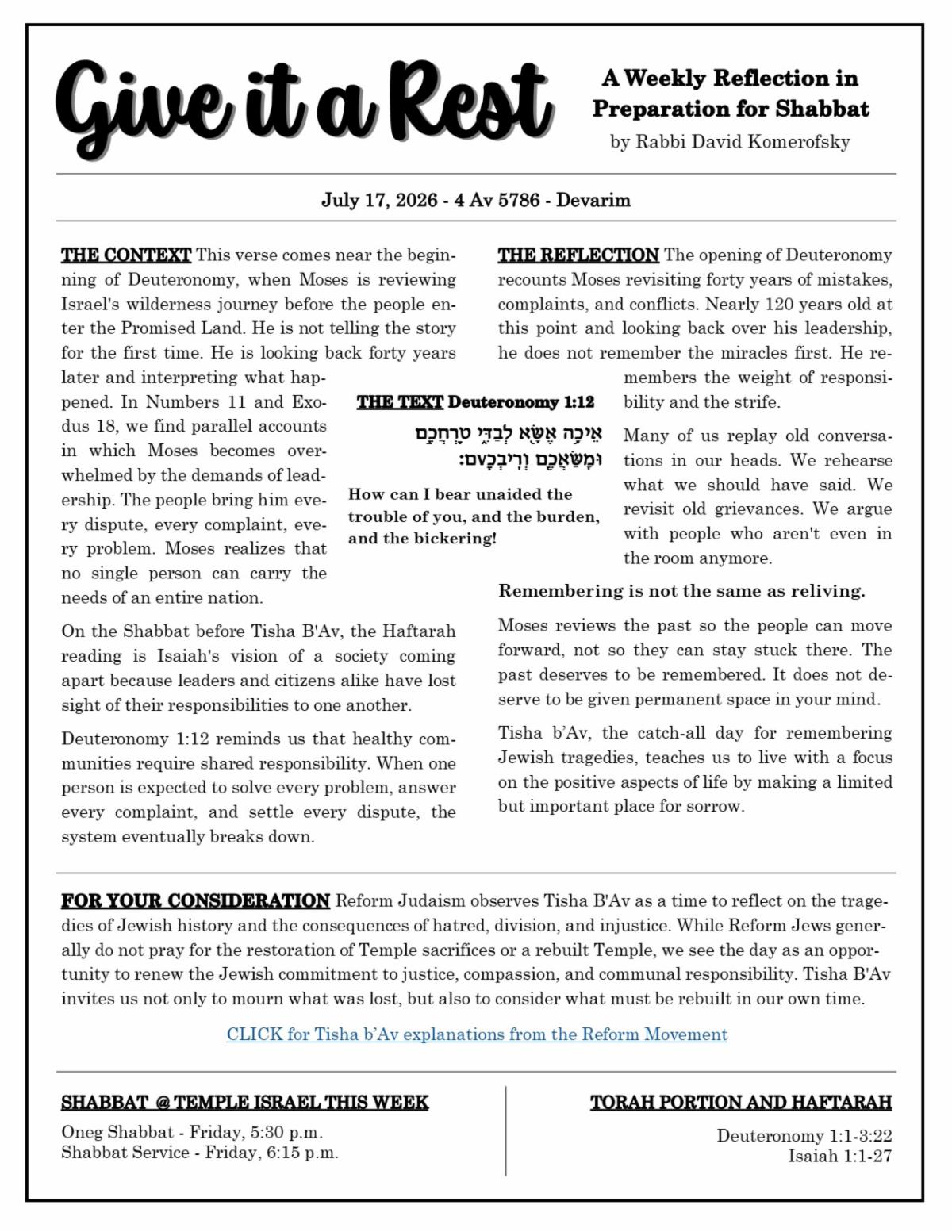
THE CONTEXT This verse comes near the beginning of Deuteronomy, when Moses is reviewing Israel's wilderness journey before the people enter the Promised Land. He is not telling the story for the first time. He is looking back forty years later and interpreting what happened. In Numbers 11 and Exodus 18, we find parallel accounts in which Moses becomes overwhelmed by the demands of leadership. The people bring him every dispute, every complaint, every problem. Moses realizes that no single person can carry the needs of an entire nation.  On the Shabbat before Tisha B'Av, the Haftarah reading is Isaiah's vision of a society coming apart because leaders and citizens alike have lost sight of their responsibilities to one another. Deuteronomy 1:12 reminds us that healthy communities require shared responsibility. When one person is expected to solve every problem, answer every complaint, and settle every dispute, the system eventually breaks down.  THE REFLECTION The opening of Deuteronomy recounts Moses revisiting forty years of mistakes, complaints, and conflicts. Nearly 120 years old at this point and looking back over his leadership, he does not remember the miracles first. He remembers the weight of responsibility and the strife. Many of us replay old conversations in our heads. We rehearse what we should have said. We revisit old grievances. We argue with people who aren't even in the room anymore. Remembering is not the same as reliving. Moses reviews the past so the people can move forward, not so they can stay stuck there. The past deserves to be remembered. It does not deserve to be given permanent space in your mind. Tisha b’Av, the catch-all day for remembering Jewish tragedies, teaches us to live with a focus on the positive aspects of life by making a limited but important place for sorrow.