| |
|
A Long Night at City Hall: Surprise Residents Speak Out on ICE Detention Center
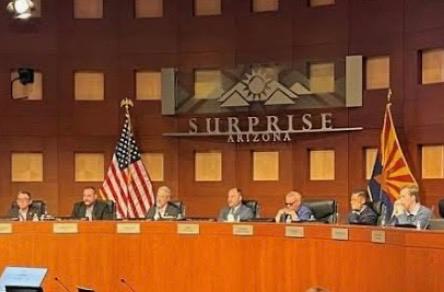
On Tuesday, February 3rd, the Surprise City Council meeting stretched on for five and a half hours—an extraordinary length for an extraordinary moment in our city’s history.
The week prior, news broke that HSI had purchased a large warehouse in Surprise for use as an ICE detention facility. The day before the meeting, I—along with Brent Peak from Indivisible—met with Surprise Police Department leadership to discuss how the evening could be both welcoming for all who wished to speak and safe for everyone in attendance.
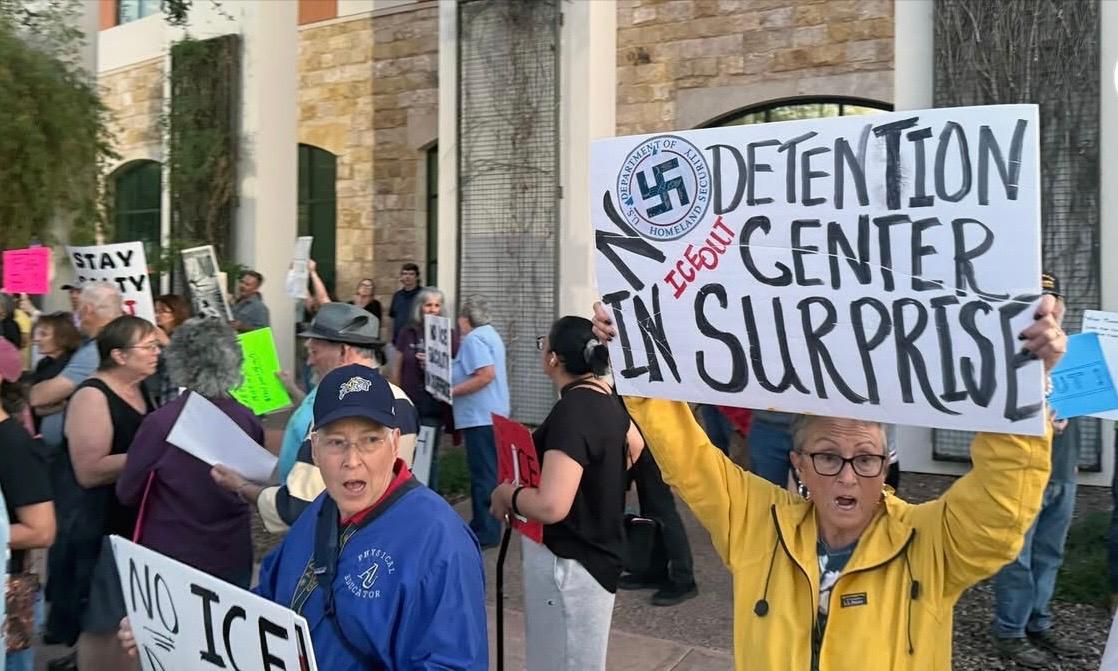
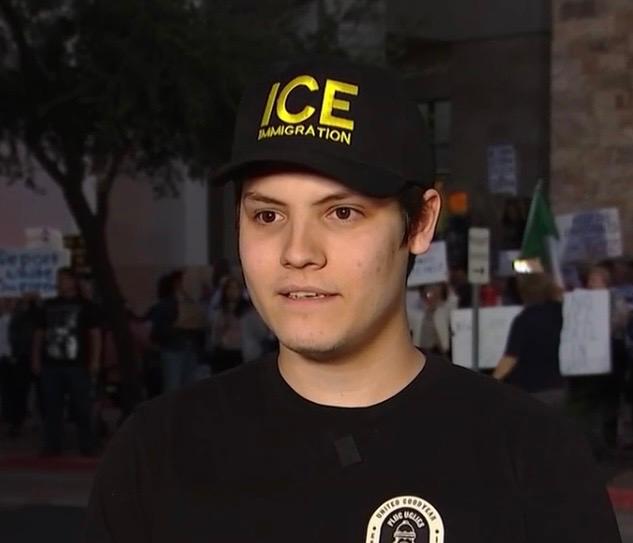
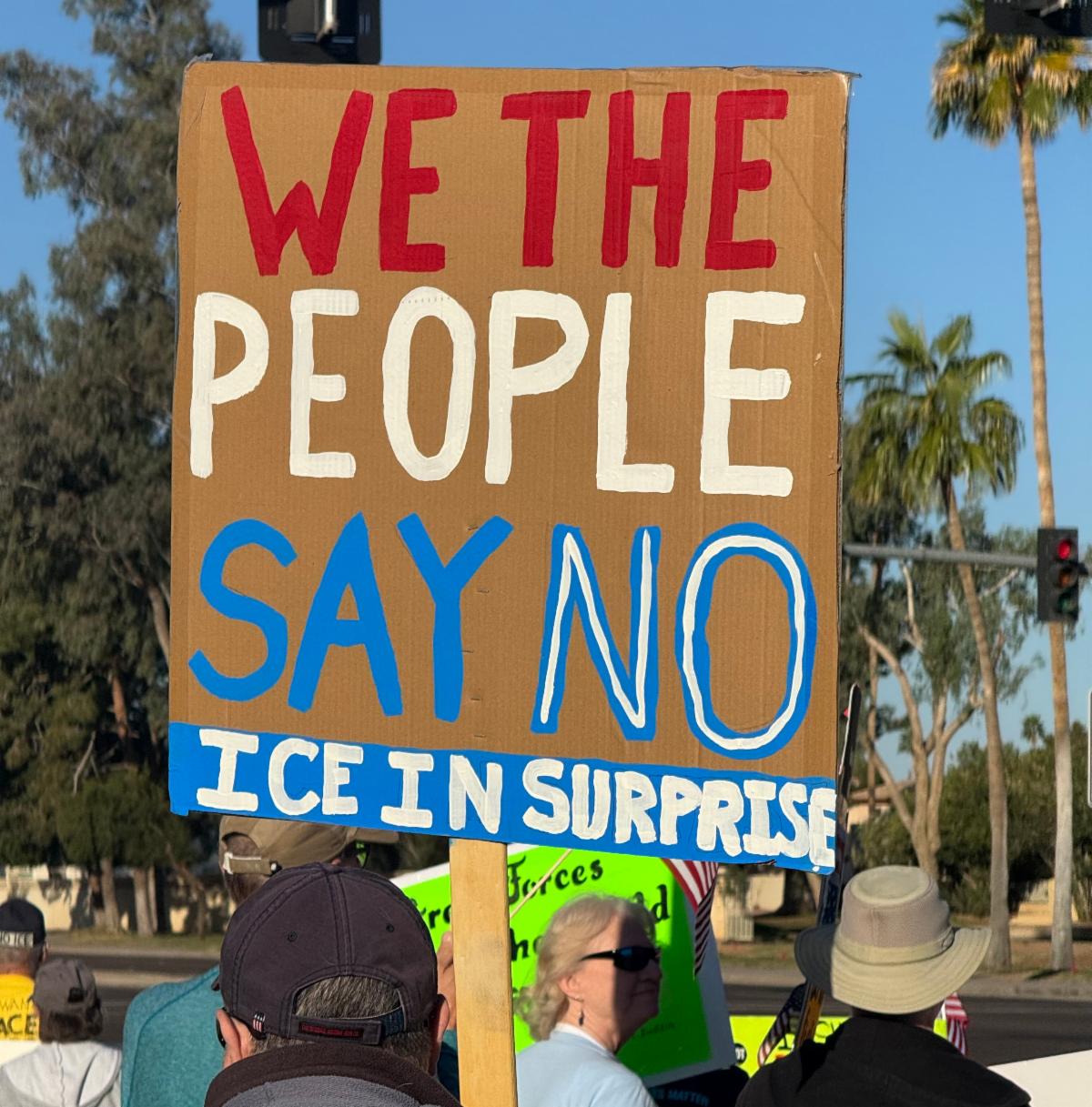
By the time the meeting began, the council chambers were overflowing. The City had prepared overflow space, and outside there were approximately 800 protesters. Many carried signs or wore apparel with a clear message: “No ICE in Surprise.” Out of more than 120 public speakers, only two spoke in support of the ICE facility.
| |
Mayor Kevin Sartor opened public comment by clearly explaining the limits of the City’s authority over federal actions and carefully reviewed expectations for decorum. I’ve attended countless Surprise City Council meetings, but this one felt different from the moment I walked up to the building. Concrete barricades—never present before—lined the area, and there was a large police presence. It was unsettling, yet oddly comforting.
The meeting itself was deeply emotional. Many residents shared personal stories of how their families immigrated to this country in search of a better life, and how they and their children now live in fear of ICE. Speaker after speaker fought back tears. In one particularly moving moment, Mayor Sartor stepped down from the dais to bring tissues to a resident who could barely make it through her prepared remarks. It was a quiet act of kindness that spoke volumes.
Nearly all speakers—except for about a half dozen—were respectful as they pleaded with the Mayor and Council for help. The recurring themes throughout the night were dignity, fear, and safety. Many thanked the Mayor and Council for actively listening and for providing a platform for every voice to be heard.
Several residents expressed concern that Surprise could “turn into Minneapolis,” fearing unrest and unwanted national attention. Others worried this facility would fundamentally change the character of our quiet, family-oriented city.
In a moment of unexpected levity, two residents patiently waited their turn to speak on an entirely different topic—Flock safety cameras. Their calm, practical comments offered a brief but welcome emotional reset amid the intensity of the evening.
Notably, the protest signs were respectful—there was no foul language in council chambers or obscene imagery. The Mayor only had to gavel once to restore order, and overall decorum was admirably maintained. I was genuinely proud of how our community conducted itself.
What stood out most was that this was not simply a venting session. Residents came prepared with facts, ideas, and potential paths forward. Over and over, speakers emphasized unity and a desire to work with the City to find solutions.
One resident cited Title V of the McKinney-Vento Homeless Assistance Act of 1987 (42 U.S.C. § 11411), which allows unused or underutilized federal property to be transferred for use as shelters or housing for people experiencing homelessness. The argument was made that a detention center—with adequate plumbing and beds —could instead be repurposed to serve the homeless population. Do we want that so close to schools.
Zoning laws were also discussed extensively. As Mayor Sartor has explained, the Supremacy Clause allows the federal government to bypass local zoning regulations. Katie Hobbs’ office weighed in as well, confirming that the federal government is not required to comply with local zoning and stating that her office had no prior knowledge of the sale.
The meeting began at 6:00 p.m. and finally adjourned at 11:20 p.m. It was a long, exhausting night for everyone involved.
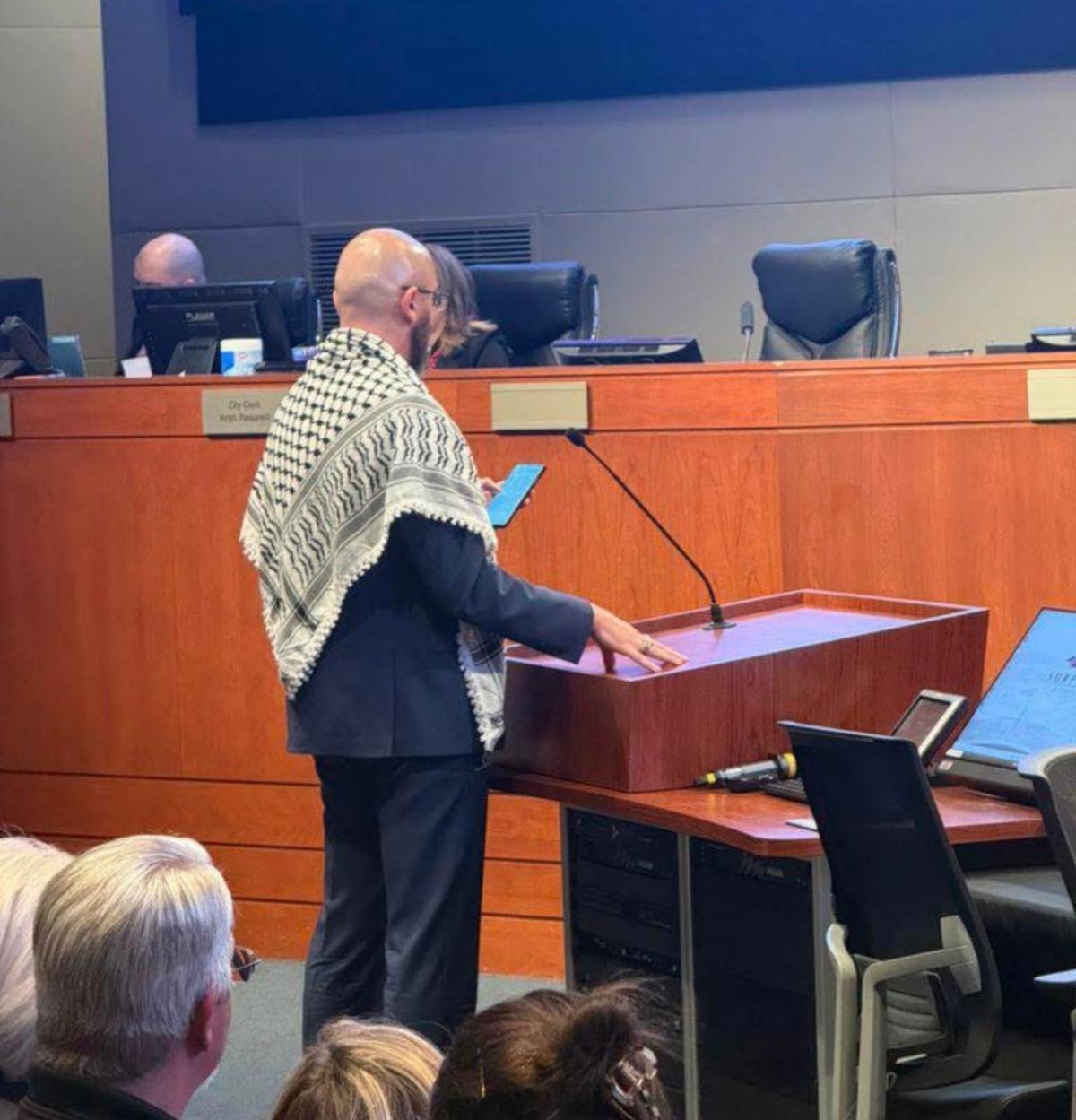
There were a handful of disruptive moments. One individual—who stated he was not from Surprise—spoke aggressively, wore a keffiyeh, and ended his remarks with profanity. He was the only speaker to do so.He also suggested arson could resolve this situation. A few others used their time to attack President Trump rather than address the issue before the Council.
| |
But those moments were the exception—not the rule.
What defined the night was a community showing up, speaking with passion, treating one another with respect, and insisting that Surprise remain a city that values safety, compassion, and thoughtful growth. Whatever happens next, February 3rd was a reminder that civic engagement still matters - and that when people are given the opportunity to be heard most speak from the heart and remain civil giving their voices the weight they deserve.
| | | | |
|
Congressman Paul Gosar asks the Questions wants Answers for.
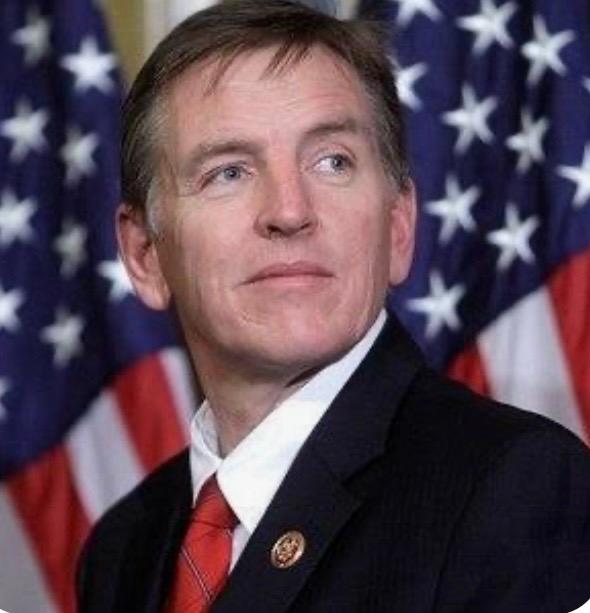
In the aftermath of the February 3 City Council meeting, Paul Gosar formally pressed the federal government for answers. On February 4, Gosar sent a letter to the Department of Homeland Security and Secretary Kristi Noem outlining 15 detailed questions regarding ICE’s planned detention facility in Surprise. While reaffirming his strong support for ICE and the enforcement of immigration laws, Gosar stressed that the concerns raised by residents are not anti–law enforcement, but rather “common-sense expectations of transparency, planning, and accountability.”
Among the questions posed by Gosar were:
- Who was consulted prior to selecting the Surprise site,
- What safety measures will be implemented to protect nearby neighborhoods, schools, and first responders,
- How the facility will be operated, including its size, scope, and anticipated duration,
- What funding sources are being used to develop and operate the facility,
- How infrastructure impacts—including traffic, emergency services, and environmental considerations—will be addressed, and
- How DHS intends to communicate with local, state, and federal officials moving forward.
Gosar emphasized that DHS has an obligation to work cooperatively with state and local governments when federal actions directly affect a community’s daily operations. “Even when detention capacity is necessary,” he wrote, “it must be implemented responsibly, with appropriate review and open communication.” He requested a formal response within 10 business days.
| | | | |
|
Shout Out to our Great City Council
I cannot say enough about how proud I am of our Mayor and City Council for the way they handled the February 3rd Council meeting. Even though this issue was not on the agenda—and despite the fact that the City has no zoning authority over it—they took the time to listen attentively to every resident who stepped up to speak. That kind of patience, respect, and willingness to hear the community, even when there are limitations on what can be done, is exactly how good government should work. It is moments like this that remind me why I am proud to call Surprise home.
| | | | |
|
Arizona Corporation Commission Approves Project Baccara After Extensive Review
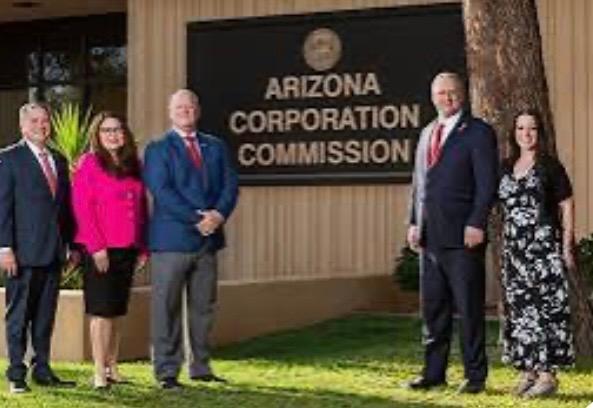
On February 4th, the Arizona Corporation Commission held a public hearing to determine whether Project Baccara meets the regulatory standards required of public utilities. The Commission relied heavily on the findings and prior vote of the Line Siting Committee, using that earlier hearing as a guide in its deliberations.
The purpose of this hearing was narrow but important: to evaluate whether Project Baccara complies with public-utility guidelines related to electric interconnection, the on-site natural gas generation station, and water usage.
One of the most significant issues—water—was addressed directly. Project Baccara plans to use reclaimed water sourced from a local brewery, a decision that dramatically reduces any impact on the regional water table. This approach responds to one of the most common and legitimate concerns raised about data centers in Arizona.
Energy reliability was another key topic. Baccara is scheduled to have discussions with Arizona Public Service to draft a purchase agreement that would allow APS to buy excess power generated by the project’s 17 natural gas turbines. Even on the hottest day of the year, Project Baccara anticipates needing power from no more than 15 turbines at any given time, ensuring built-in redundancy and grid support. The first turbine is expected to come online in early 2028.
Public comment included three speakers in favor of the project and ten opposed. Speaking in support was Cepand Alizadeh, Esq., representing the Arizona Technology Council, who emphasized the importance of advanced infrastructure and innovation for Arizona’s economic future. The Sierra Club spoke in opposition, along with several residents from across the Valley, many of whom live near the proposed site.
One opposing speaker became unruly, challenging the Commission’s long-standing three-minute public comment rule—applied equally to all speakers—and interrupted testimony while others were speaking. Immediately prior to the vote, he shouted, “The fix is in.”
Unfortunately, moments like this underscore a broader misunderstanding. While residents absolutely have the right to raise concerns, the appropriate venue for many land-use and zoning-related objections will be later this year before the Board of Supervisors—not during an ACC hearing focused on utility compliance.
After hearing all testimony and reviewing the record, the Arizona Corporation Commission voted unanimously to approve Project Baccara.
Data centers are not optional luxuries—they are critical infrastructure. Every time we use Google, GPS, ChatGPT, visit a doctor, or fill a prescription, we are relying on systems powered by data centers. The question is not whether they will exist, but whether they will be built responsibly.
Project Baccara directly addressed my own serious concerns by committing to reclaimed water use and on-site power generation that does not increase costs for ratepayers. These innovations represent thoughtful, forward-looking development.
For our community, Project Baccara stands as a rare win-win: supporting economic growth and technological advancement while respecting Arizona’s most precious resources.
| | | | |
URGENT UPDATED INFORMATION
Location Change for Upcoming Judiciary Hearing on Maricopa County Sheriff’s Office
There has been an important update regarding the upcoming Judiciary Hearing on the Maricopa County Sheriff’s Office, which will be led by Andy Biggs.
The hearing was originally scheduled to take place at the Sandra Day O’Connor Building. That location has changed. The hearing has now been moved to the Arizona Senate Building.
At this time, the hearing is scheduled for Room 109, though that room assignment may change.
Current Meeting Details
- Date: Friday, February 13th
- Time: 9:00 a.m.
- Location: Arizona Senate Building
- Address: 1700 W. Washington St., Phoenix, AZ 85007
- Room: 109 (subject to change)
If you would like to be notified of any additional changes—especially a room change—please email me at lisa@patriotnheels.com. I will send out an update as soon as I receive new information.
If you email me and you do not receive an email update, that means the room assignment has not changed.
Additionally, information officers stationed inside the Senate Building will be able to confirm the correct room number on the day of the hearing.
| | | | |
Why Do Republicans Want to Make It Harder for Arizonans to Vote?
Arizona should be focused on encouraging legal voters to participate—efficiently, securely, and without unnecessary obstacles. Yet once again, some lawmakers are pushing policies that move us in the opposite direction.
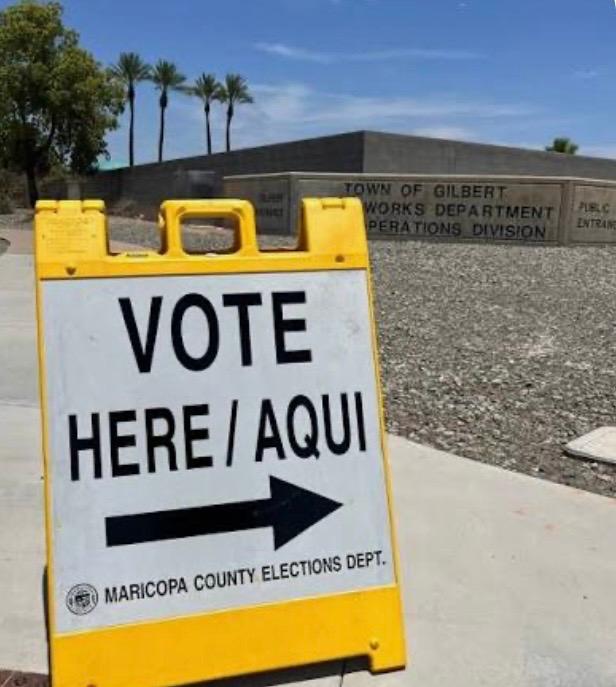
Ballots on demand and vote centers allow voters to cast a ballot near their office, on the way home, or wherever it makes sense in their day. That flexibility saves time for voters and money for counties. It also reflects today’s reality: it is increasingly difficult to find churches, schools, and community buildings willing—or able—to serve as precinct polling places.
Under the vote-center model, counties need fewer locations and fewer poll workers, while still serving more voters. That’s not theory—it’s practice.
Last year, Katie Hobbs vetoed a bill by Rachel Keshel that would have eliminated vote centers and forced counties back to strict precinct voting. This year, Rep. Keshel is attempting to bypass that veto by referring the issue directly to voters through House Concurrent Resolution 2016.
The proposal would require voters to cast ballots only at their assigned precincts and mandate precinct sizes of no more than 2,500 voters. Supporters frame this as a return to “community voting,” but nostalgia doesn’t solve modern logistical problems.
Counties—red, blue, and purple—have been clear. According to the Arizona Association of Counties, removing local control over election models creates real challenges, especially in rural areas with vast geography and limited staffing. More precincts mean more buildings, more equipment, and more volunteers—resources many counties simply do not have.
And this isn’t a partisan experiment. Yavapai County—a solidly Republican county—has successfully used vote centers since 2011. The model works because it meets voters where they are, without sacrificing election integrity.
Vote centers also recognize how Arizonans actually vote. Many people drop off early ballots at vote centers or secure drop boxes in the days leading up to Election Day. Eliminating vote centers doesn’t improve security—it limits access.
We can hold two ideas at once:
- We should not have a drawn-out “voting month.”
- But we also should not swing so far in the other direction that we make voting harder for working families, seniors, and rural residents.
If the goal is truly to encourage legal voters to vote, then flexibility, local control, and proven systems matter. Vote centers do exactly that. Limiting accessibility does not.
HCR 2016 has already cleared committee on a party-line vote. If it passes the Legislature, Arizonans will see it on the November ballot. When they do, voters should ask a simple question: Does this make voting easier and more efficient—or does it put unnecessary barriers back in place?
Arizona’s election system should be about participation, not inconvenience.
| | | | |
|
A Name Change With Serious Consequences for Arizona Voters
Late last year, the No Labels Party quietly changed its name to the Independent Party. Former Phoenix Mayor Paul Johnson now serves as its chairman. Many voters will remember Johnson as a leading force behind putting ranked-choice voting on the ballot last year—an effort Arizona voters soundly rejected. Thanks to everyone who helped stop it.
Unfortunately, Johnson is at it again.
By rebranding No Labels as the Independent Party, many unsuspecting voters are being misled into signing up, believing they are registering as independent or PND (Party Not Designated). That is not the case. These voters are now being enrolled in an actual political party—one with its own ballot and its own agenda. Both Democrats and Republicans agree this name change is misleading and unacceptable.
Previously, independent voters in Arizona could request either a Republican or Democratic ballot in the primary. Under this change, voters registered with the Independent Party will only receive the Independent Party ballot.
And who will be on that ballot? Johnson has already pushed forward a candidate: Hugh Lytle.
Lytle describes himself this way in The Arizona Republic:
“I’m a disrupter… an innovator… someone who has never been satisfied with the status quo.”
Here’s the problem: in Arizona, there are more PND/Independent voters than registered Republicans or Democrats. In Maricopa County, Republicans only narrowly outnumber Independents. If these voters are funneled into the Independent Party—whether knowingly or not—they lose the ability to choose a Republican or Democratic ballot. Their only primary option becomes the Independent Party candidate: Hugh Lytle.
So far, Adrian Fontes has shown no indication he is listening to voters raising serious concerns about this deceptive name change.
This matters. A lot.
If you believe voters should not be misled and should retain their right to choose their primary ballot, now is the time to speak up. Please make your voice heard by emailing the Secretary of State and demanding this issue be addressed. Arizona voters deserve transparency—not tricks.
| | | | |
A Firsthand Look Inside the Renovated Maricopa County Sheriff’s Office in Surprise
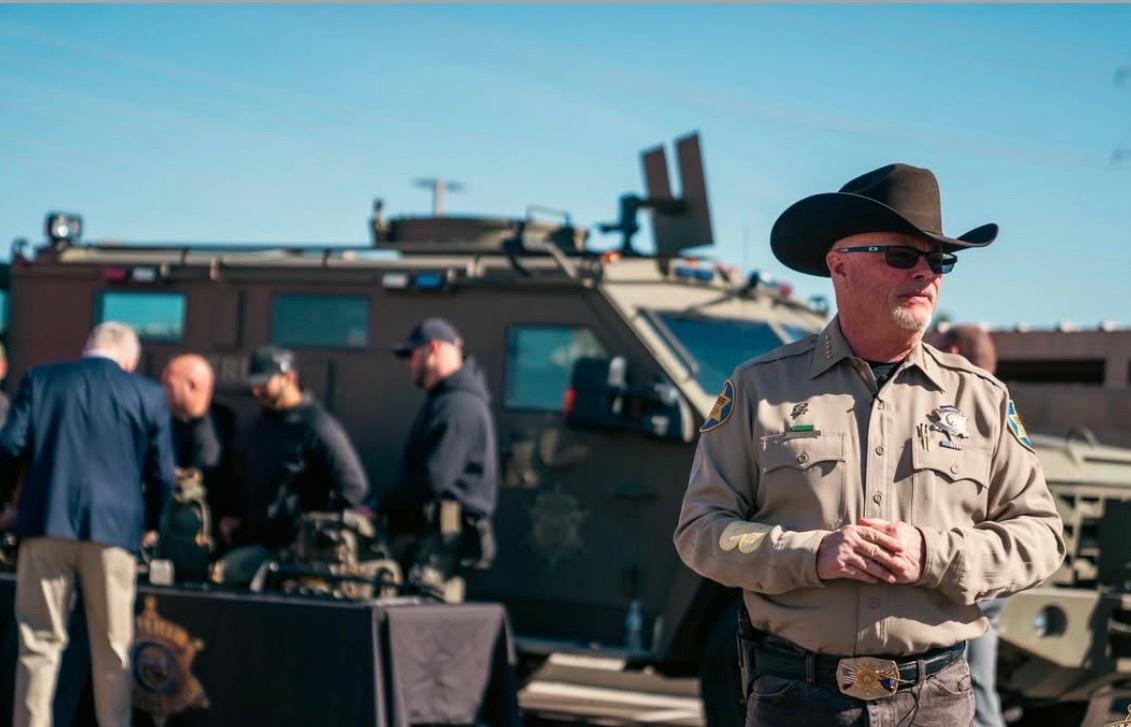
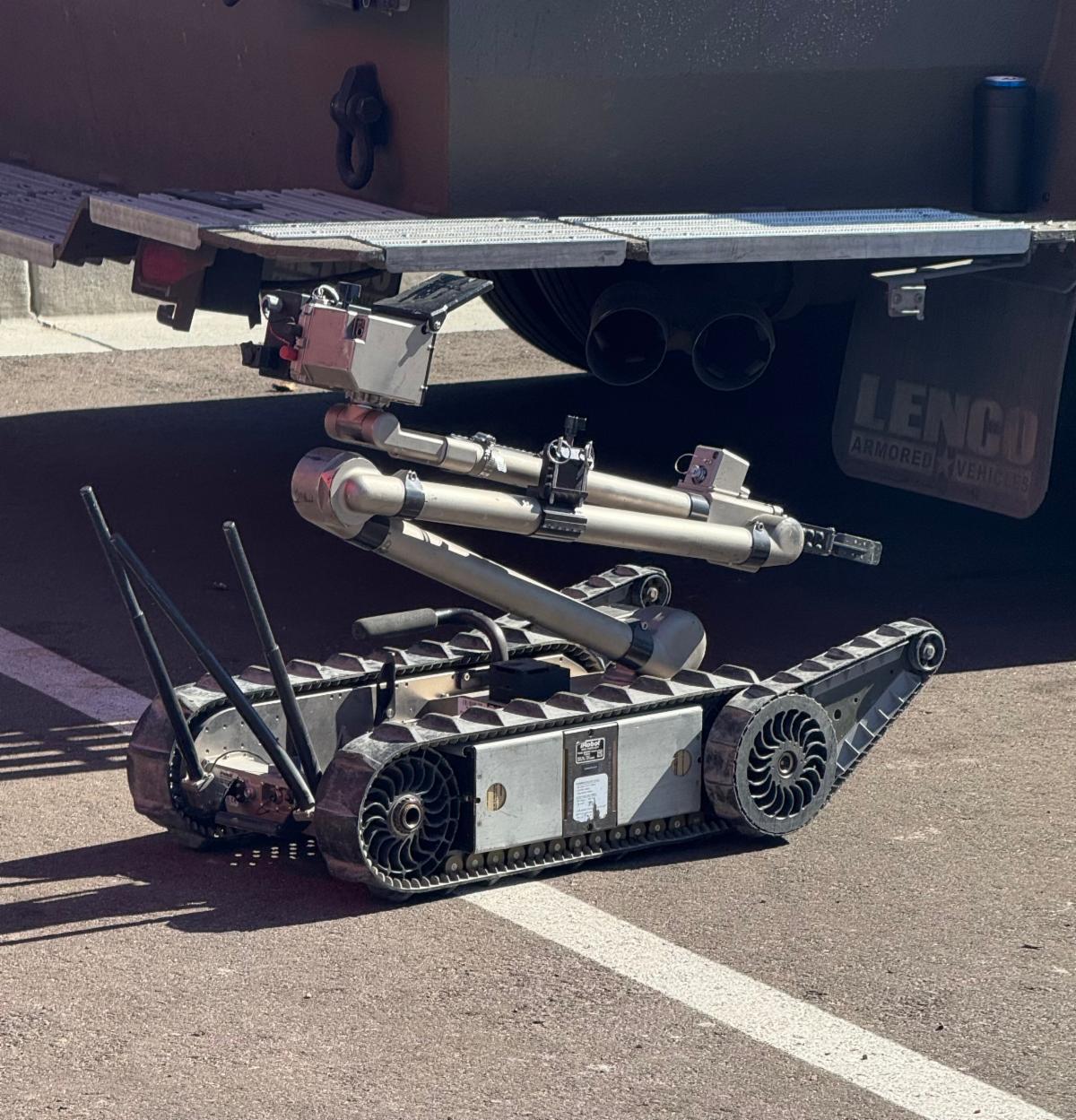
I recently toured the Open House at the Maricopa County Sheriff's Office facility in Surprise, and this long-overdue renovation did not disappoint. The updated building is truly state-of-the-art and reflects a thoughtful investment in public safety for the West Valley.
One of the most impressive features is the intentional design of the holding areas. The facility includes separate holding spaces for juveniles, as well as distinct areas for juvenile offenders being held for minor offenses—an important distinction that prioritizes safety, accountability, and appropriate handling for young people in the system.
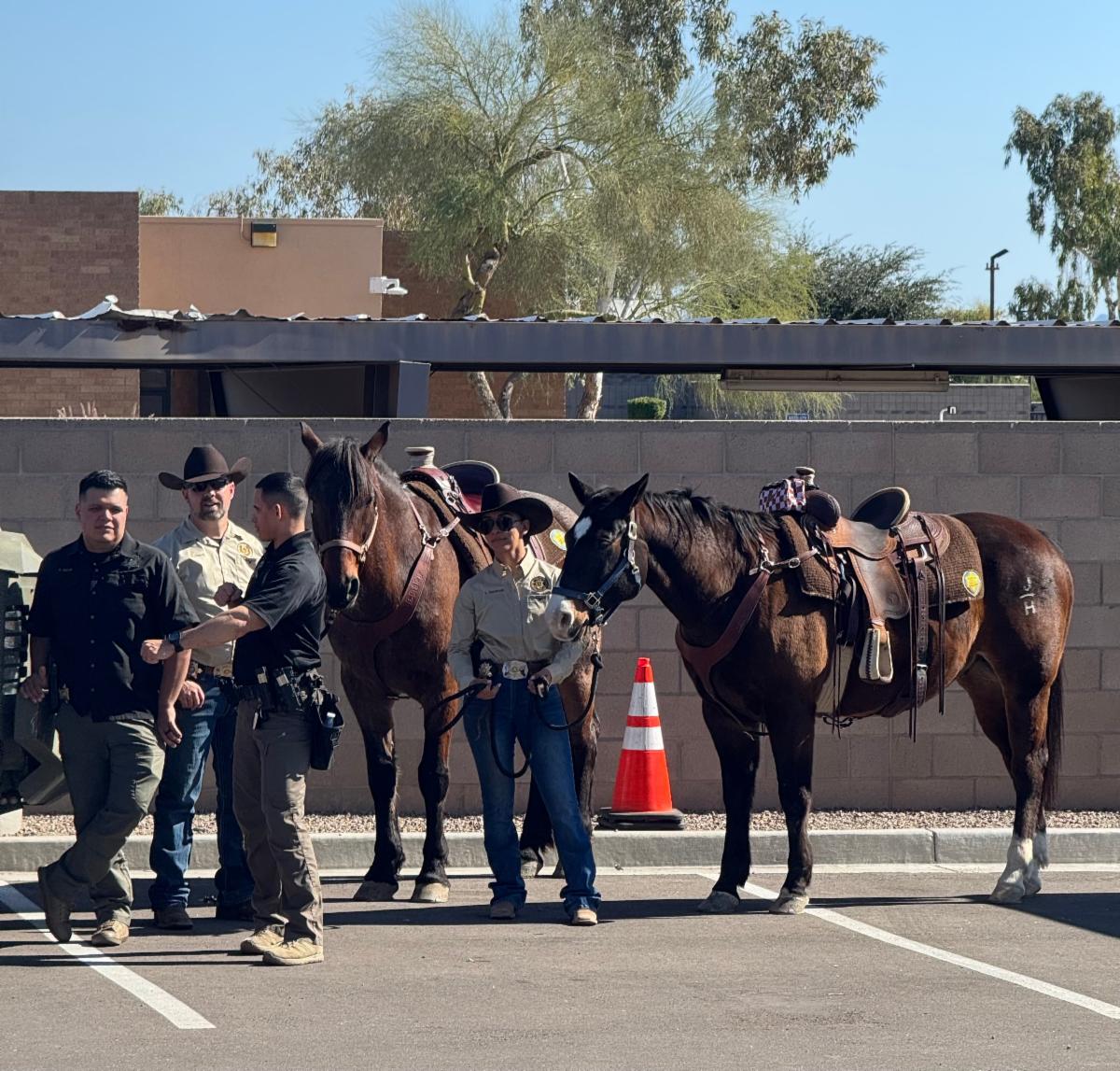
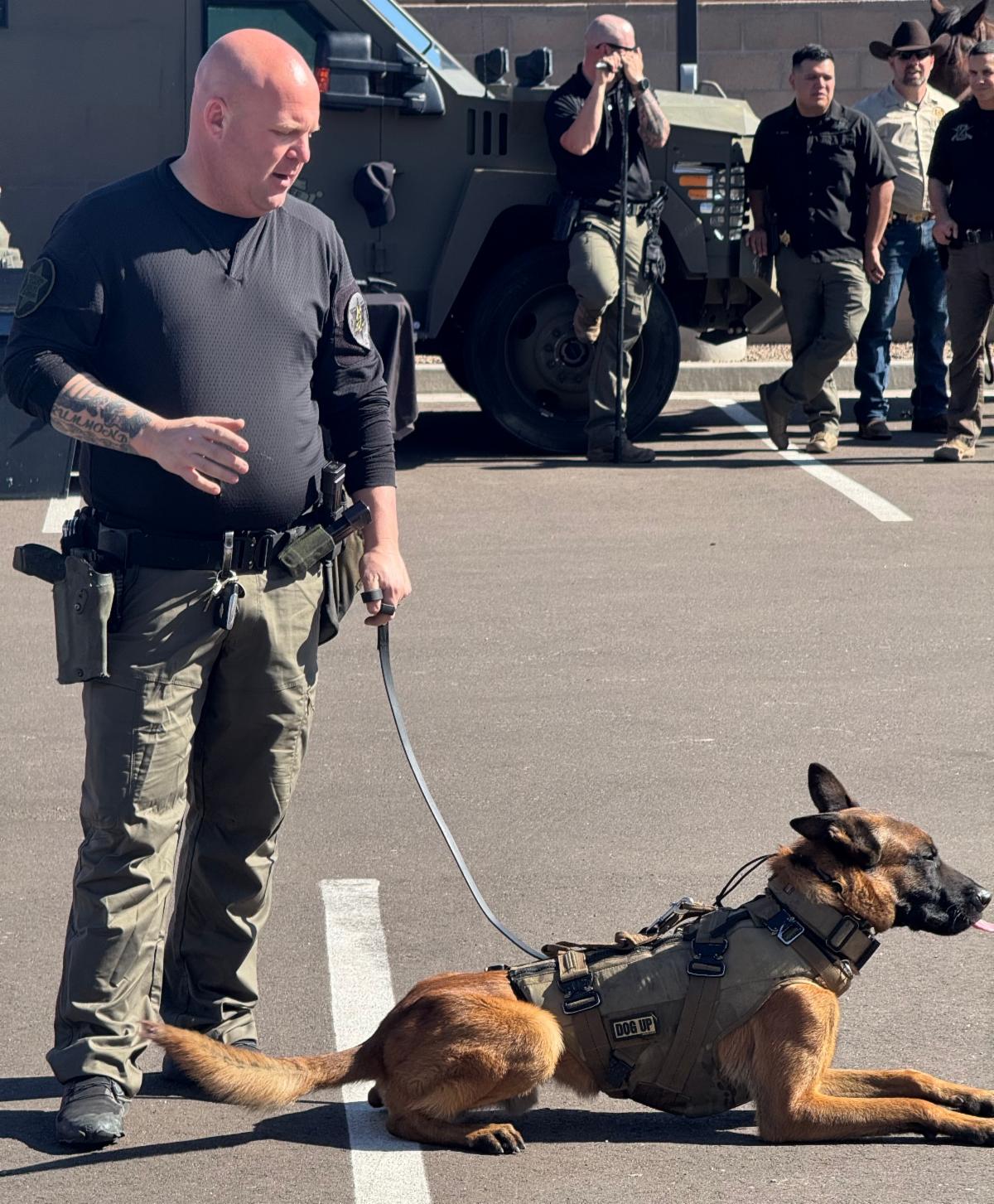
| The Sheriff’s Office animals were another highlight of the tour. Because they were not officially working at the time, I had the rare opportunity to interact with the mounted unit horses. They were absolutely majestic—powerful, calm, and beautiful animals that clearly play an important role in law enforcement presence and community engagement. Watching the K-9 units train was equally impressive. Seeing these dogs practice controlled, disciplined responses reinforced just how skilled and professional these teams are when it comes to apprehending criminals and protecting officers and the public. | |
During the tour, Jerry Sheridan shared that the Avondale renovation has also been completed, with the next major project slated for Mesa. The Surprise office serves a large portion of the West Valley, making this upgrade especially impactful for residents across our growing communities.
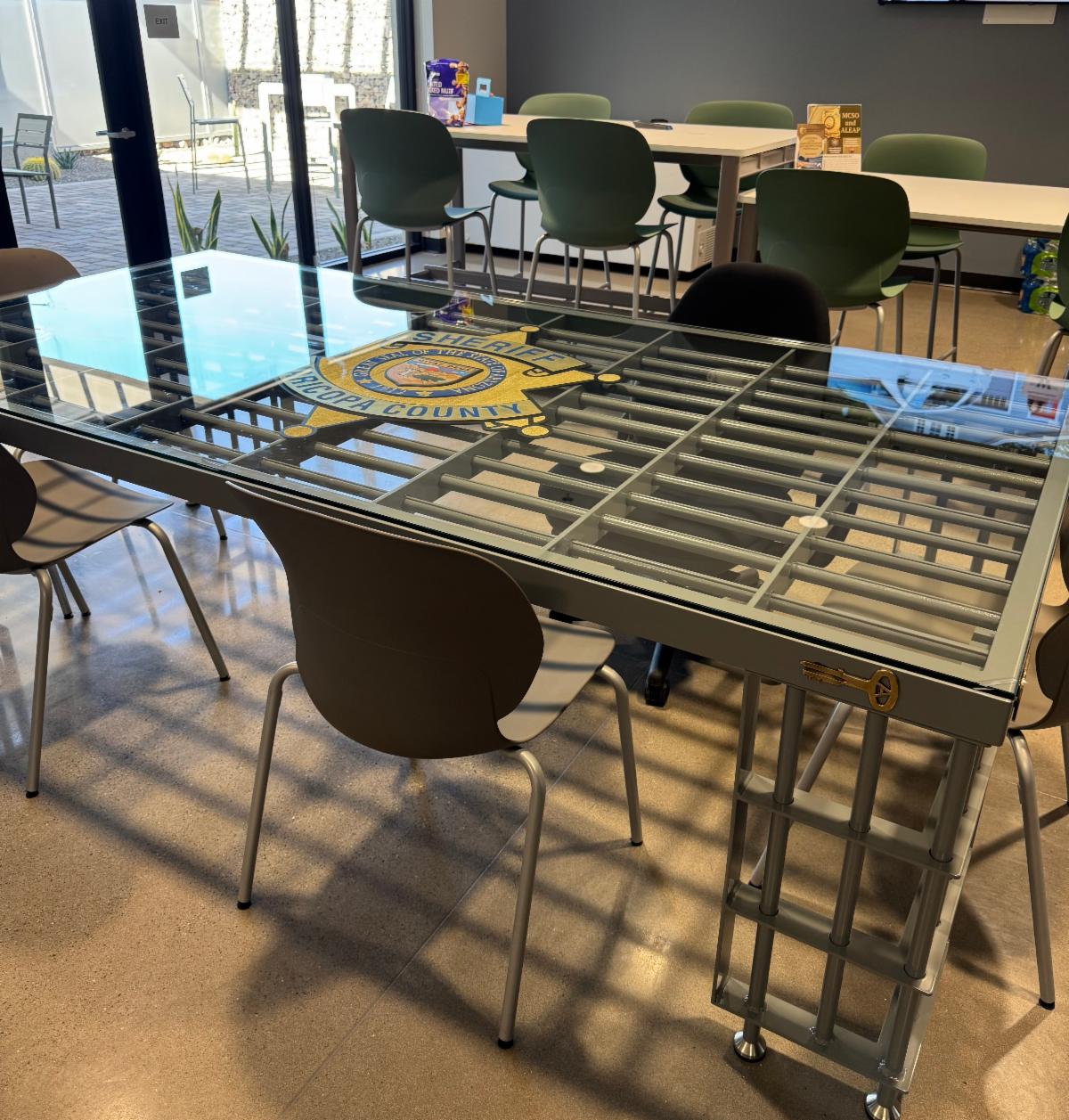
What stood out most to me was the care taken to preserve the building’s history. The department kept as much of the original structure as possible—down to intricate window handles—and even repurposed old jail cell doors into functional tables. It’s a perfect blend of history, practicality, and modern design.
| | This renovation is more than a facelift; it’s a commitment to professionalism, safety, and respect for both the community and the men and women who serve it. The West Valley is better for it. I would like to thank the Board of Suppervisors for including this renovation in the budget. | | | | |
|
Observing the Protest: A Firsthand Look at Civic Engagement in Surprise
On February 7th, I attended the protest at Bell Road and Civic Center in Surprise as an observer. I wanted to see firsthand what the protesters were thinking, how the event was organized, and how people conducted themselves in a highly emotional and politically charged environment.
The protest began at 9:00 a.m. Prior to its start, I met with Brent Peak, Co-Chair of Northwest Valley Indivisible, along with several members of the Surprise Police Department. Our shared goal was straightforward: keep the protest civil while fully protecting everyone’s First Amendment rights. To avoid any confusion about my role, I wore a red shirt clearly labeled “Observer,” signaling that I was not participating in the protest itself.
One thing Democrats often do better than Republicans is organize. These protests have taken place nearly every Saturday morning at this location, dating back to the death of Renee Good in Minneapolis. This intersection has also been the site of the “No Kings” protests. With the exception of that event—which drew roughly 2,000 people—attendance typically ranges from 800 to 1,200 protesters.
More than one person told me, “No, I’m not paid. I come because I want people to know I disagree with what’s happening.” I also learned that safety is a top priority for the protest organizer. He consistently coordinates with police and reminds attendees that the objective is a peaceful, family-friendly protest. I was told that everyone leaves at the same time because it can become unsafe for just a few people to remain behind once the crowd disperses.
| |
Some people have accused me of being a “bleeding heart” or said I must be “turning into a Democrat” simply because I took the time to listen. I find that amusing. I long for the days when people listened to one another, searched for common ground, or at least agreed to disagree without demonizing each other. There is more to life than politics.
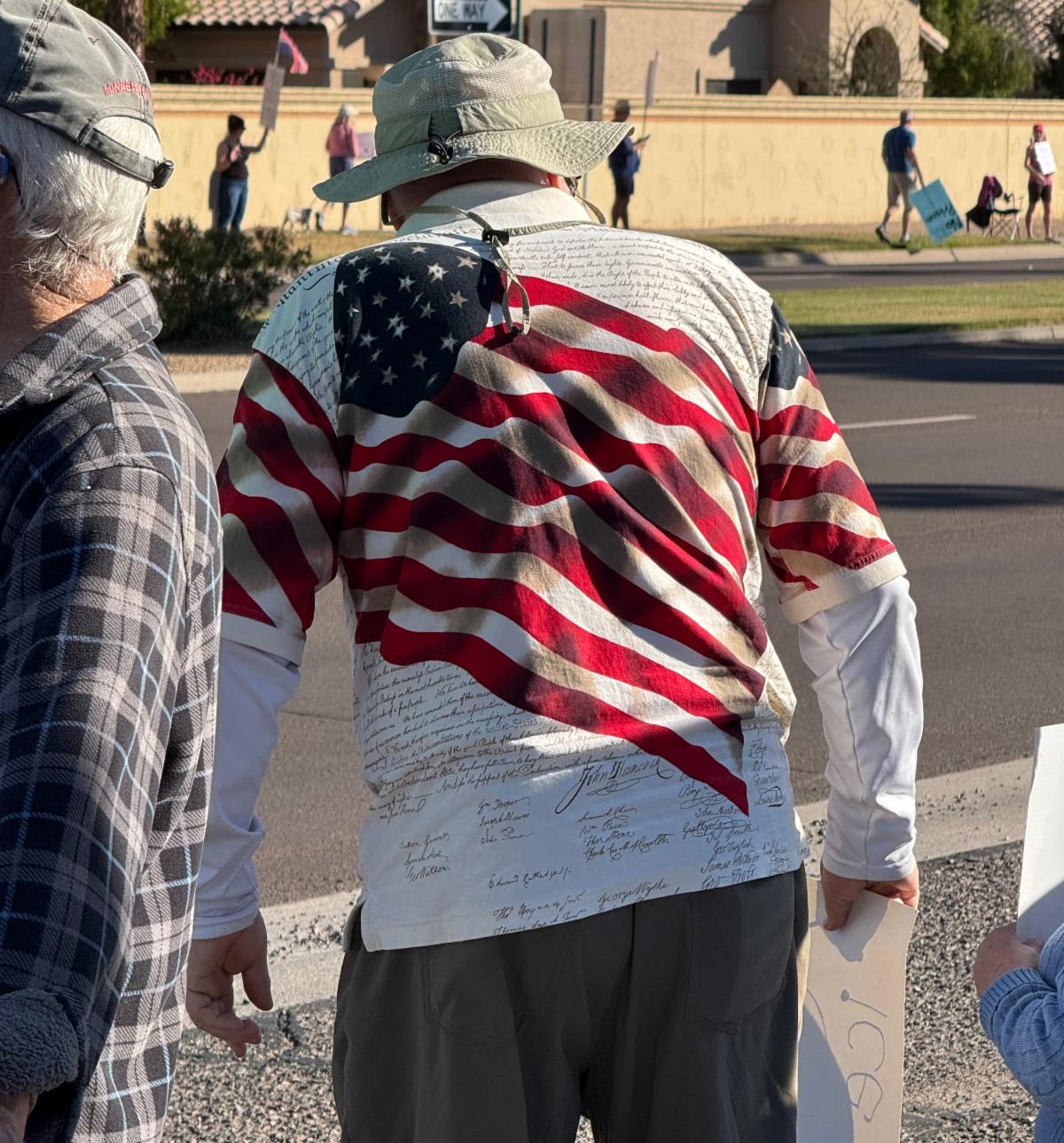
Early in the protest, I noticed an older gentleman wearing a shirt emblazoned with a large American flag and the words of the Constitution. I introduced myself and asked—somewhat sheepishly—if he was a Democrat. He smiled and said yes. I admitted I usually assume someone wearing that shirt is a Republican. He chuckled and replied, “You guys don’t own the flag or the Constitution. We hold them dear too.” That exchange stuck with me.
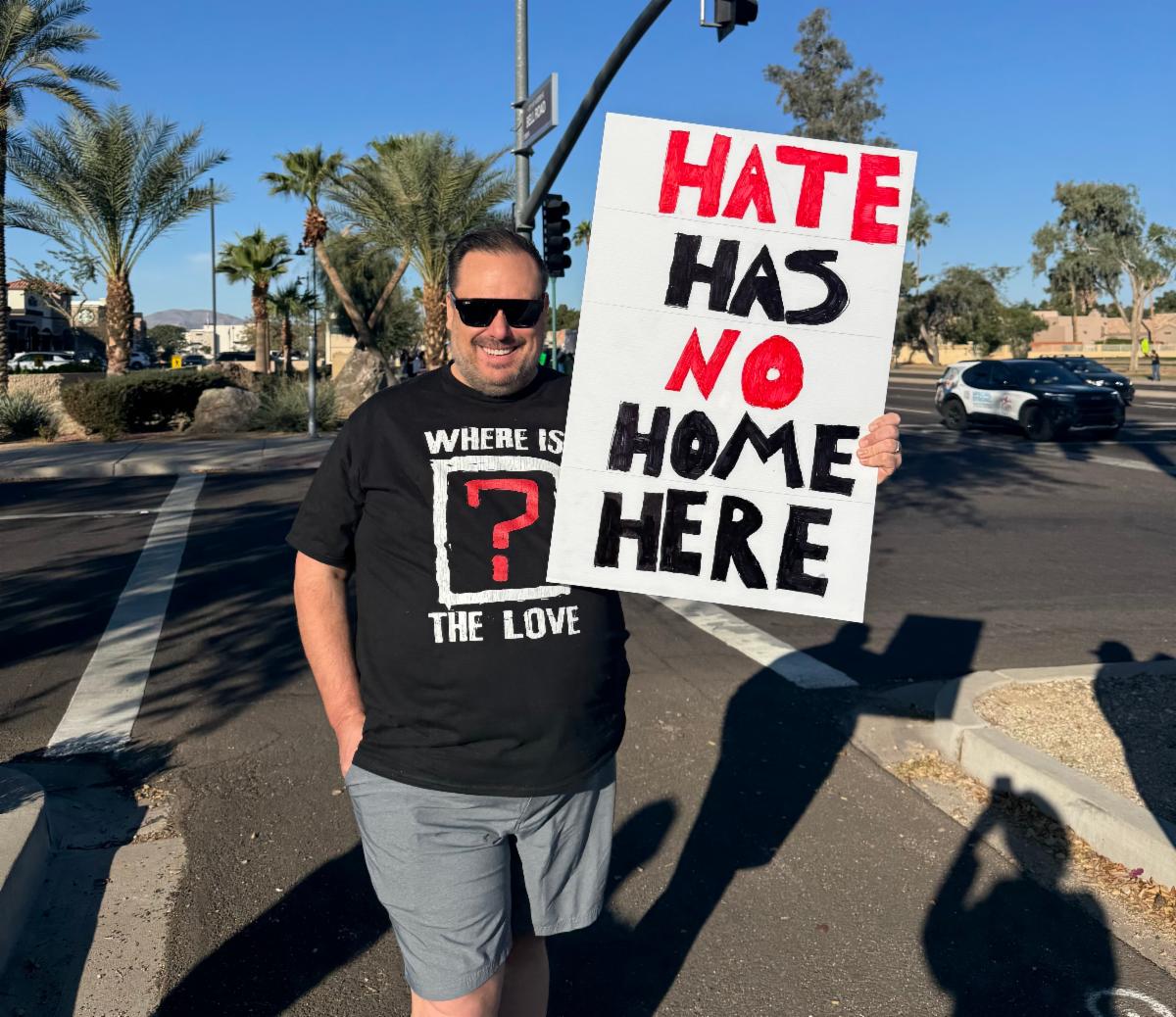
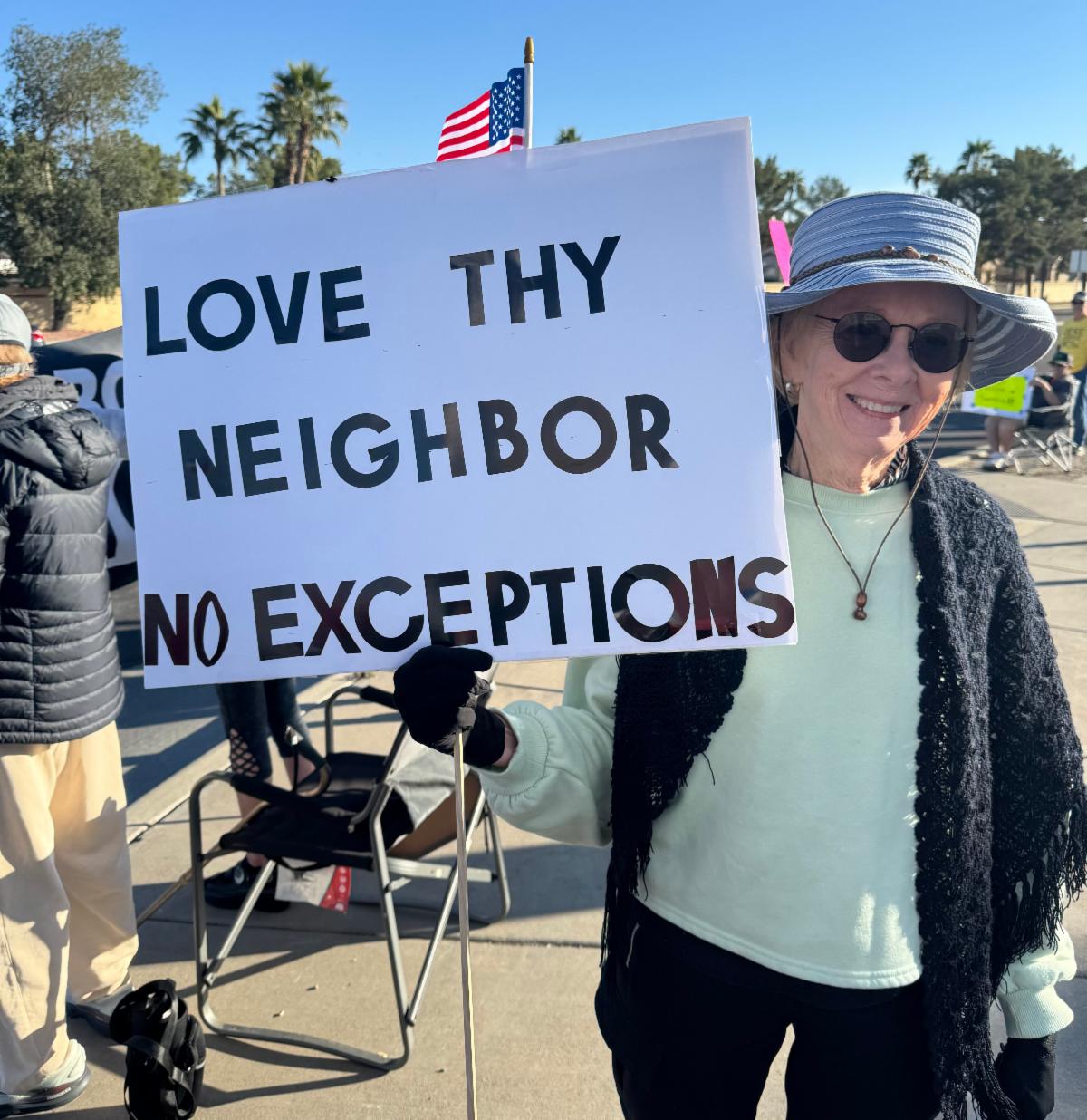
The sidewalks were lined with people on both sides of the street for blocks. Music played in several areas, including one man playing a saxophone. People were smiling, laughing, and many had brought their dogs. The atmosphere was largely upbeat. I saw signs I agreed with—Justice and Liberty for All, Love Thy Neighbor, No Detention Center in Surprise—and others I strongly disagreed with. Some signs attacked President Donald Trump and the men and women of U.S. Immigration and Customs Enforcement. Most signs were free of profanity.
| |
Drivers passing by expressed a range of reactions: thumbs-up, honking in support, and occasionally trucks revving their engines in disagreement. Nearly everyone I spoke with—except for two individuals—was polite and willing to engage. There were several media outlets present, along with independent journalists. Honestly, most of the people I met I’d happily have coffee with. Some I wouldn’t mind having dinner with. They love this country too—we just see things differently.
I noticed one woman standing alone, holding no sign, simply raising her hand in a peace sign. We should all want peace.
| |
There was, however, a group of four individuals dressed entirely in black who did not identify as Democrats. They carried aggressive signs, one depicting a guillotine with blood and language threatening ICE agents. Even Brent expressed concern about them. We kept an eye on the situation, as did police. No one wanted bad behavior from anyone.
Around 10:00 a.m., a lone man arrived holding a large Trump flag. Initially, several protesters shouted at him. He did not respond. After a few minutes, most stopped—but a couple of individuals became increasingly intense. Brent, the police, and I stayed close to ensure his safety while allowing everyone to exercise their First Amendment rights. More than once, agitators were told to back up and give him space.
The situation was tense, but the Trump supporter remained silent and stood his ground. He had just as much right to be there as anyone else. Eventually, several Democrats began shouting at the Democrat agitators to stop shouting at the Trump supporter, “You’ve made your point—enough already.” I was genuinely pleased to see that.
At the end of the morning, what stayed with me most was this: there is more to life than politics. There are people who love this country deeply on all sides. We don’t have to agree—but we do have to coexist, listen, and remember each other’s humanity. That viewpoint does not make me a Republican or Democrat-it makes me an American. I love my Country and I love my Party but more importantly I love people.
| | | | |
|
PATRIOT HAPPY HOUR WITH FELLOW REPUBLICANS!
Join Us for Another Great Evening!
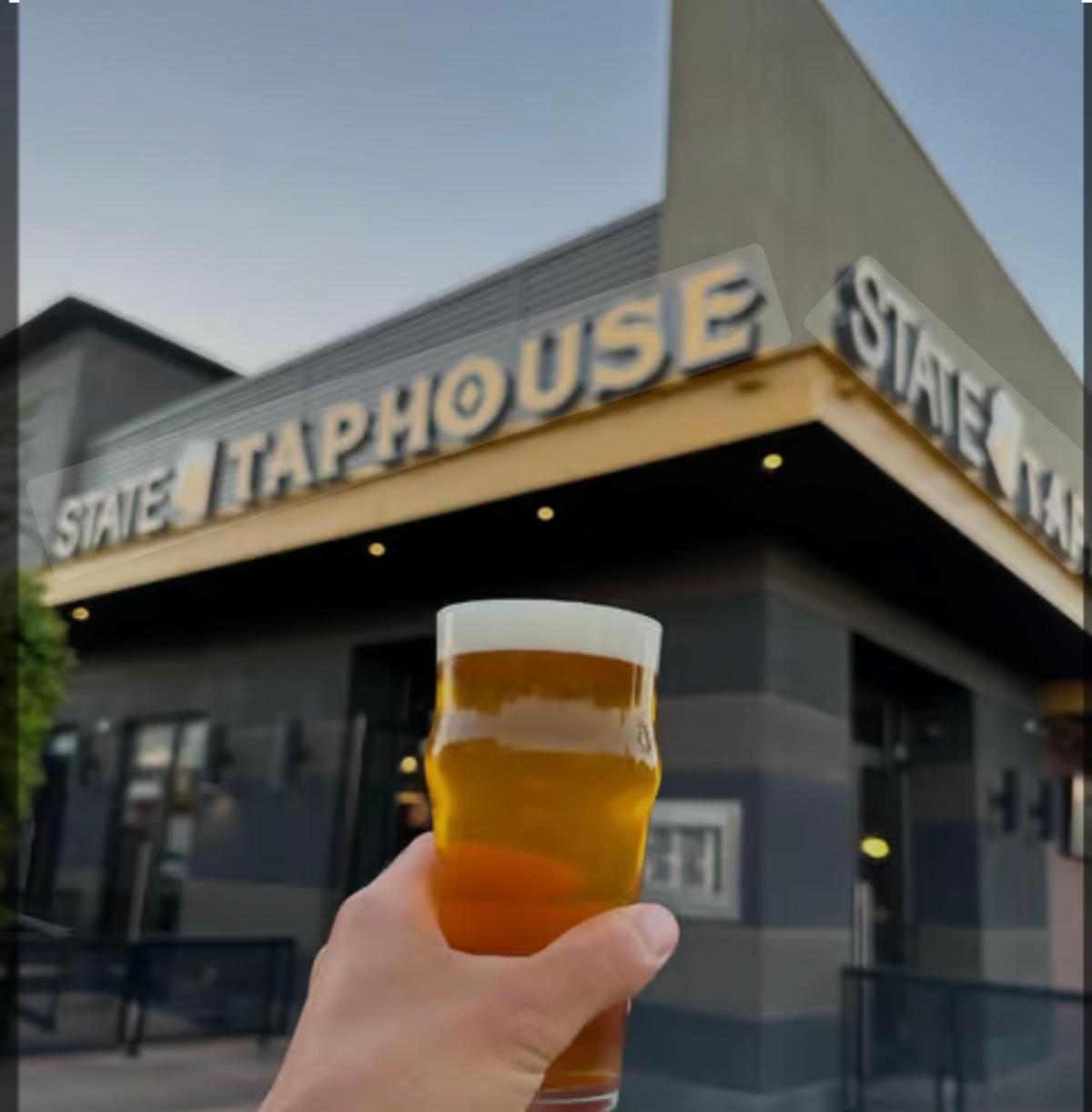
Due to overwhelming demand, we’re bringing back our Patriot Happy Hour at State 48 in Surprise! Last month’s gathering was a fantastic success, with great food, drinks, and, most importantly, meaningful conversations with fellow conservatives. Let’s do it again!
Where: State 48 Brewery - 13823 West Bell Road, Surprise, AZ 85374
When: Wednesday, February 25th
Time: 4:00 PM – 7:00 PM
This is the perfect opportunity to connect with like-minded individuals, get to know fellow PATRIOTS, and strengthen our local Republican community. Whether you're new to politics or simply want to make new friends everyone is welcome!
Bring a friend and join us for an evening of camaraderie, networking, and fun. Let’s keep the momentum going!
Patriot Happy Hour is always the last Wednesday of the month.
| | | | |
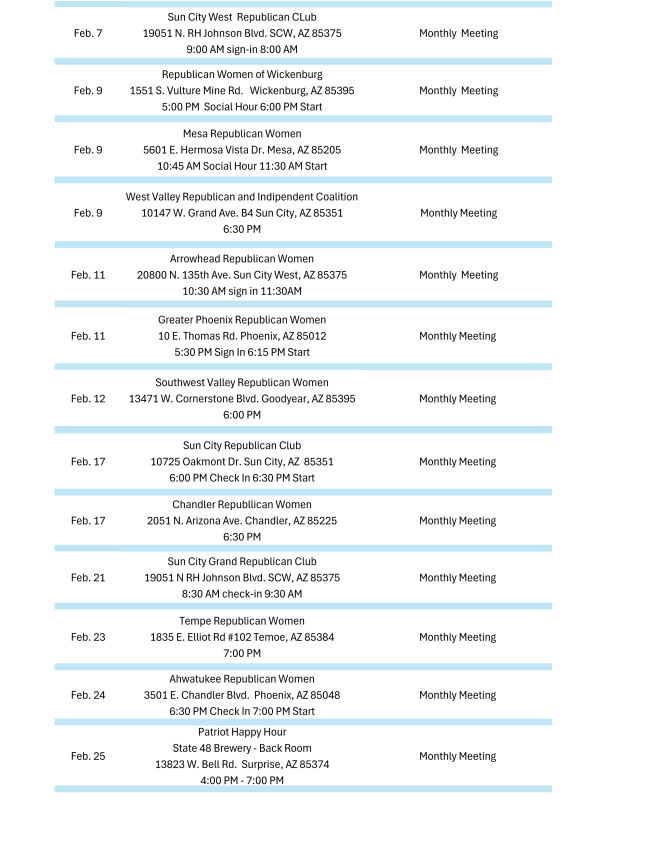
IF YOU WOULD LIKE YOUR CLUB LISTED PLEASE CONTACT ME | | | | |
| |
Thank you,
Lisa Everett
www.patriotnheels.com
Follow me on:
X - @patriotnheels
Facebook - @patriotnheels
Instagram - @patriotnheels
| | | | | | |