Wildlife Highlights Is Switching Over to Campaign Monitor | |
Starting in 2025, this newsletter will be distributed through a new email service, Campaign Monitor, in place of Constant Contact.
You can expect the same great content but with a slightly different appearance. We hope you have a great holiday season and look forward to 2025! Thank you for your continued support and interest in Connecticut's wildlife resources.
| |
2025 Hunting and Trapping Guide Now Available | |
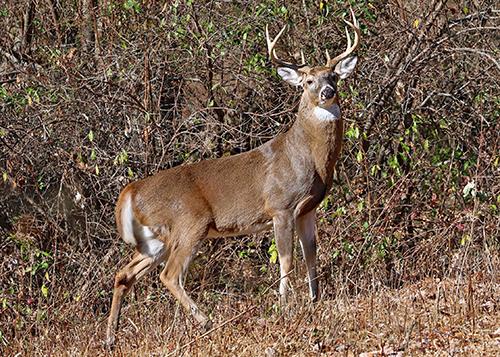
The 2025 Connecticut Hunting and Trapping Guide is now available online on the DEEP website. Limited quantities of the printed version will be available at town halls and vendors that sell hunting and fishing licenses in January 2025.
A PDF of the printed version of the guide, which can be downloaded to a mobile device and accessed while out in the field, is also available.
2025 licenses, permits, and stamps are currently on sale on DEEP's Online Outdoor Licensing System.
Hunters and trappers are encouraged to use the online guide to keep up to date with any regulation changes that might occur during the year.
Photo courtesy of Matt Balnis.
What's New for 2025 . . .
2025 Hunting and Trapping Guide . . .
| |
This Holiday Season, Be BearWise | |
|
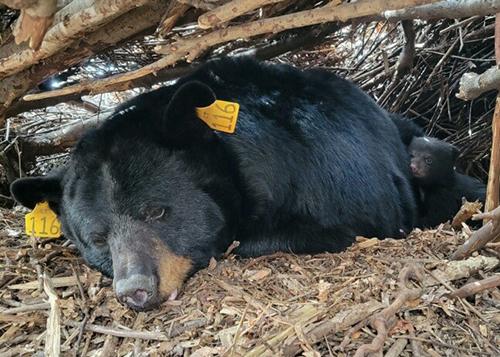
Black bears are not true hibernators and can be active year-round. It is important for Connecticut residents to continue to practice good habits of coexistence, even during the colder months of the year. During mild winter weather, black bears are more likely to remain active. Limited snow cover enables bears to easily access fallen acorns and other nuts. Given that there was a bumper crop of acorns this past fall, there is no shortage of natural food items on the landscape.
When it comes to black bears, some safe winter practices include holding off on putting out bird feeders until bear activity in your area has come to a halt and securing open areas under decks, sheds, or other crawl spaces to prevent bears from using those sheltered areas for denning.
More on how black bears spend the winter . . .
| |
Enter the 2025 Jr. Migratory Bird Conservation (Duck) Stamp Art Contest | |
|
Entries are now being accepted for the 2025 Connecticut Junior Migratory Bird Stamp Art Competition, part of a U.S. Fish and Wildlife Service environmental education program administered since 1987 by the Connecticut Waterfowl Association (CWA), in cooperation with the Connecticut DEEP Wildlife Division.
This annual contest is open to all students, kindergarten through grade 12, who are Connecticut residents. To enter, students create and submit a drawing or painting featuring native waterfowl (ducks or geese). There is no cost, and submissions must be postmarked by March 15, 2025.
Last year, there were over 120 pieces of student artwork submitted amongst the four age groups (grades K-3, 4-6, 7-9, and 10-12). Awards are given to the winners for each age group.
This effort is intended to encourage more young people to explore the natural world and increase conservation awareness. The “Best in Show” winner will have their art featured as the 2025 Connecticut Migratory Bird Conservation Stamp! The winning submission will also be entered in the Federal Junior Duck Stamp Contest.
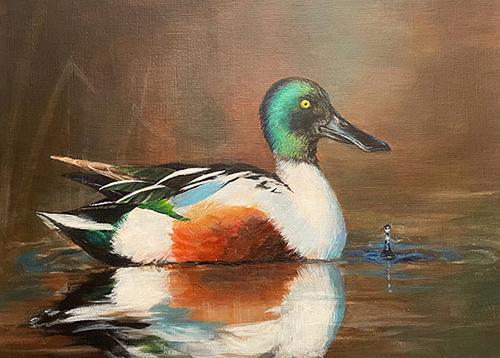
Pictured is last year's winning entry of a beautifully painted northern shoveler by Alice Han from Storrs.
Details on how to enter . . .
| |
The Importance of Young Forest Habitat | |
|
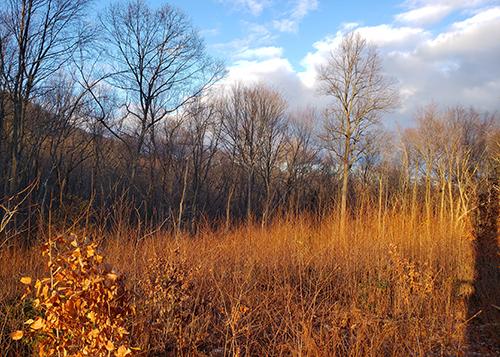
Young forests and shrublands provide habitat for many wildlife species. Unfortunately, due to human activity and changes in Connecticut’s landscape over many years, young forest and shrubland habitat has declined in our state. Connecticut's Wildlife Action Plan has identified over 50 wildlife Species of Greatest Conservation Need (SGCN) as being associated with young forests and in need of active management. These species include the American woodcock, eastern towhee, New England cottontail, prairie warbler, brown thrasher, and field sparrow.
The New England Cottontail Newsletter is published by the New England Cottontail Outreach Working Group, which is comprised of biologists and outreach staff from the fish and wildlife agencies of the six Northeastern states where New England cottontails occur, along with the U.S. Fish and Wildlife Service and USDA Natural Resources Conservation Service. This is a great resource to learn more about young forest management efforts throughout New England.
Fall 2024 New England Cottontail Newsletter . . .
| |
Hop to it: Give a Gift that will Make Them Leap for Joy | |
|
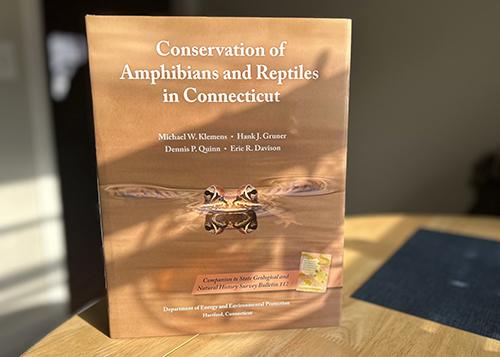
Looking for a great gift for the nature enthusiast in your family? Pick up a copy of Conservation of Amphibians and Reptiles in Connecticut.
This 305-page book includes 131 color photos, species account maps, and offers conservation solutions for the complex challenges Connecticut’s amphibians and reptiles face. This is an excellent resource for anyone interested in learning more about this fascinating group of animals.
All proceeds from the sale of this publication go into a dedicated fund established to conserve Connecticut’s reptiles and amphibians. Thank you for supporting Connecticut’s wildlife!
DEEP Online Store . . .
| |
|
This time of year, many people will start putting out bird feeders, as black bears are more likely to be in their winter dens. However, it is critical that bird feeders are removed if a bear gains access to them. In some areas of Connecticut, it is best to skip the bird feeders all together because black bears can still be active throughout winter, particularly during mild weather.
Here are a few helpful tips:
- Only put bird feeders out during the coldest winter days, when birds' calorie needs are highest and bears are least likely to be active.
- Only put out a small amount of feed. It is better to refill often than to tempt a bear with a free meal and teach it bad behavior.
-
Put up a roosting box for birds to shelter during winter.
-
Plant native vegetation this coming spring to provide natural food for birds next winter. Native plants also support native insect species. Insects are critical food for birds and are the primary food source for chicks. Find a list of native plants here.
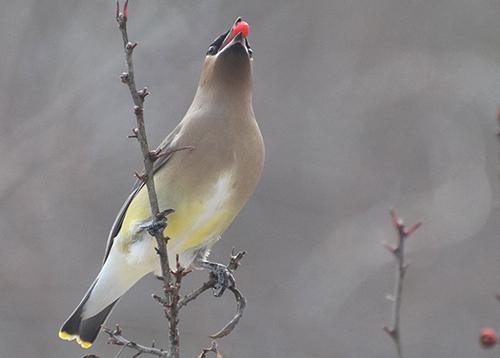
The most effective and natural way to support wild birds year-round is to promote their habitat needs in your yard. Late-season berries, wildflowers that have gone to seed, and tree mast (acorns, pinecones, fruits) all provide food for a far greater number of bird species than the dozen or so "feeder birds" you will attract with birdseed.
More on feeding birds during winter . . .
| |
|
Stay Connected!
Follow us on Social Media
| |
|
-- Quick Links --
Your Feedback Is Important to Us!
Send your comments or suggestions to deep.ctwildlife@ct.gov
| |
The Connecticut Department of Energy and Environmental Protection is an Affirmative Action/Equal Opportunity Employer that is committed to complying with the requirements of the Americans with Disabilities Act. If you are seeking a communication aid or service, have limited proficiency in English, wish to file an ADA or Title VI discrimination complaint, or require some other accommodation, including equipment to facilitate virtual participation, please contact the DEEP Office of Diversity and Equity at 860-418-5910 or by email at deep.accommodations@ct.gov. Any person needing an accommodation for hearing impairment may call the State of Connecticut relay number - 711. In order to facilitate efforts to provide an accommodation, please request all accommodations as soon as possible following notice of any agency hearing, meeting, program or event.
This program receives Federal financial assistance from the U.S. Fish and Wildlife Service.
Under Title VI of the 1964 Civil Rights Act, Section 504 of the Rehabilitation Act of 1973, Title II of the Americans with Disabilities Act of 1990, the Age Discrimination Act of 1975, and Title IX of the Education Amendments of 1972, the U.S. Department of the Interior prohibits discrimination on the basis of race, color, national origin, age, sex, or disability. If you believe that you have been discriminated against in any program, activity, or facility, or if you need more information, please write to:
Office of Diversity, Inclusion and Civil Rights
U.S. Department of the Interior 1849 C Street, NW
Washington, D.C. 20240
| | | | |