|
Welcome to Week 2 on this Season of Creation
Our Focus this week: Learn
Last week, we began with something very ordinary: turning on the faucet and noticing the water that appears almost without thought.
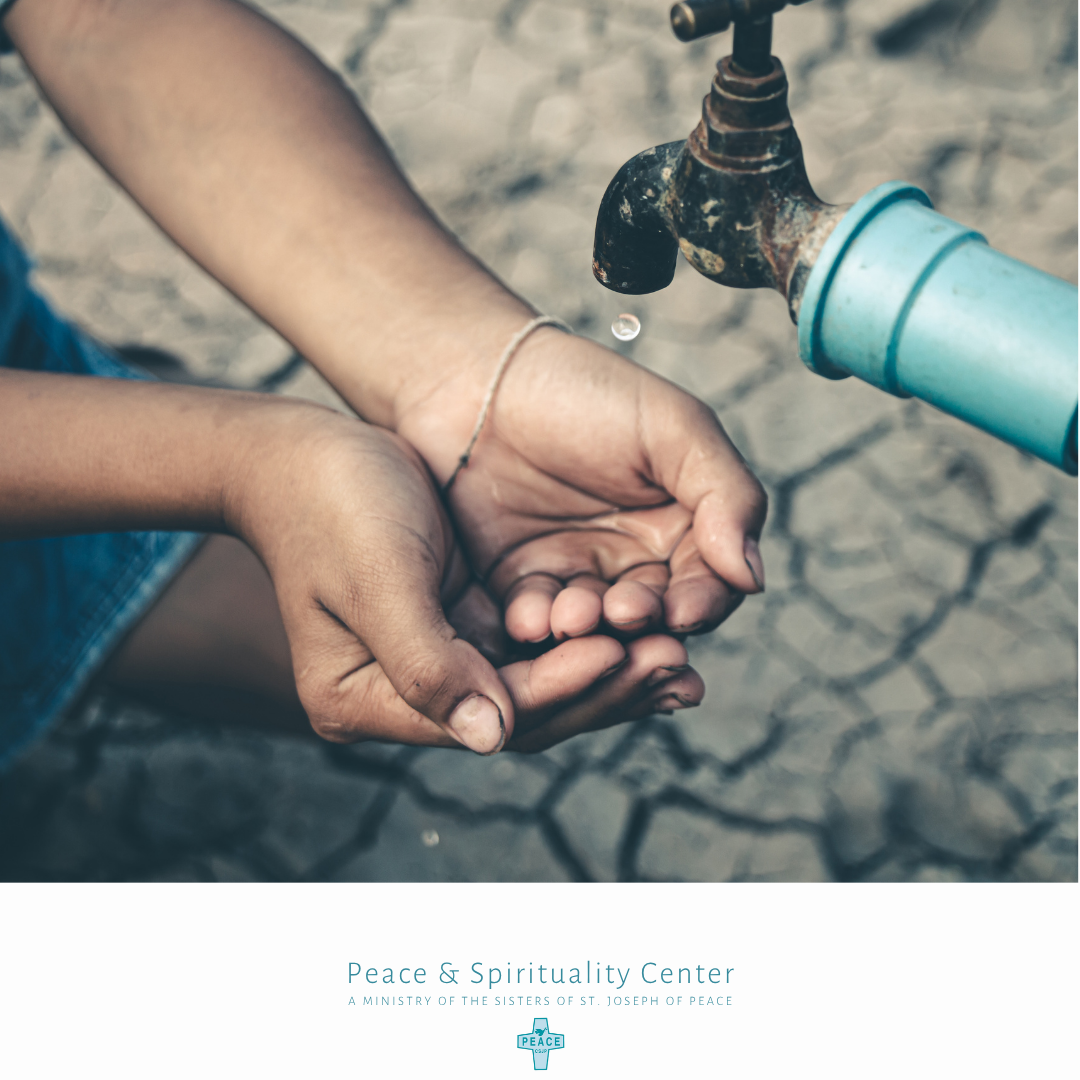
This week, imagine turning it on...and nothing comes out.
At first, it is inconvenient.
No shower. No coffee. No washing dishes.
But what if it lasts all day? Or several days? What if the problem isn't only your home, but your entire community?
Suddenly, water is no longer an environmental topic. It is today's problem.
NOTICE
Most people don't spend their days thinking about water scarcity, watersheds, drought, infrastructure, or climate.
And realistically, most of us can't.
There are jobs to do, people to care for, bills to pay, wars and disasters in the news, and plenty of concerns already competing for our attention.
But remove reliable access to water and many of those seemingly separate parts of life begin to connect.
Hospitals need water. Schools need it. Restaurants and businesses need it. Farms need it to produce food. Firefighters need it. Sanitation systems depend upon it.
A community does not simply become thirsty when water is unavailable.
Ordinary life begins to become difficult.
LEARN
Here is something that may seem strange: a community can have too much water and still not have enough safe water to drink.
After serious flooding, water can overwhelm sewage systems and carry bacteria, fuel, chemicals, and other contaminants into water sources. Homes may be surrounded by water while residents still depend on bottled or treated water for drinking and cooking.
At the other extreme, prolonged drought can affect far more than the amount of water available from a faucet. Less water can mean stressed crops, reduced food production, greater wildfire risk, pressure on businesses and agriculture, and difficult decisions about how a limited supply should be used.
Water shows how quickly one change in creation can move through everything else.
Water becomes food. Water becomes health. Water becomes work. Water becomes housing. Water becomes safety.
And eventually, water can become a question of who has options and who does not.
A family able to temporarily relocate, purchase what it needs, miss work, or pay for repairs experiences a crisis differently from a family that cannot.
That is one reason care for creation and care for people are so difficult to separate.
PRAY
Problems this large can make prayer feel inadequate.
What does one person's prayer do about a drought, a flood, a wildfire, or a community without safe drinking water?
Perhaps prayer does not always begin by trying to fix something.
Sometimes it begins by refusing to let someone else's suffering remain completely distant from us.
This week, think of one community you have heard about experiencing drought, flooding, unsafe water, fire, or another disaster.
No research is required. No perfect words are necessary.
Simply hold the people who live there in prayer:
God, be with those whose ordinary lives have been disrupted. Give them what they need today.
RESPOND
This is not an invitation to feel guilty because water comes out of our faucets.
Gratitude and guilt are not the same thing.
Instead, perhaps awareness can shorten the distance between their problem and our concern.
Last week, the invitation was simply to notice what we take for granted.
This week, we go one step further. And we leave you with one question:
When something I take for granted
becomes difficult for someone else, what does that ask of me?
With peace,
The Peace & Spirituality Center
|